EATING TREE NUTS REDUCES PANCREATIC CANCER RISK

Research Shows Reduced Pancreatic Cancer Risk from Consumption of Pistachios And Other Tree Nuts


Judy Hirigoyen, Director, Global Marketing for American Pistachio Growers released TODAY study results showing that women in a long-term health study who ate tree nuts two or more times a week had a reduced risk of pancreatic cancer, compared to those studied who did not include nuts in their diet. Published in British Journal of Cancer, this is the first study to measure the association between pancreatic cancer risk and nut consumption. Pistachios were among the tree nuts included in the study.

More than 75,600 women were followed in the widely-recognized Nurses’ Health Study. Those who consumed a one-ounce serving of serving of nuts, two or more times per week, significantly reduced their risk of developing pancreatic cancer, the fourth most common cause for cancer-related deaths in the U.S.

In addition to pistachios, the nuts consumed included almonds, Brazil nuts, cashews, hazelnuts, macadamias, pecans, pine nuts and walnuts. The study also showed that women with more frequent nut consumption were generally leaner, more likely to exercise, and less likely to smoke. Earlier studies have linked tree nut consumption to a reduced risk for diabetes.

The long-running Nurses’ Health Study, from 1980 to 2010, with follow up every two to four years, was funded by research grants from the National Institutes of Health with additional support in part by a micro-grant from the Biomedical Research Institute at the Brigham and Women’s Hospital, state cancer registries, and by an International Tree Nut Council Nutrition Research & Education Foundation grant for the tree nut component.
Pistachios are nutrient rich and full of antioxidants, vitamins, protein and fiber. A one-ounce serving of pistachios equals 49 nuts, more per serving than any other snack nut. They are cholesterol free; contain a significant amount of potassium, 300-mg per serving; and comprised of just 1.5 grams of saturated fat and 13 grams of fat per serving, the majority from monounsaturated and polyunsaturated fat.

The “Official Snack” of USA Water Polo, and sponsor of other sports, American Pistachio Growers (APG) is a non-profit voluntary agricultural trade association representing and funded entirely by more than 550 grower members in California, Arizona and New Mexico.

2016-05-31T19:43:08-07:00November 19th, 2013|

TACKLING CALIFORNIA’S GROUNDWATER CHALLENGES

The Simplicity of Complex Groundwater Management


Patrick Cavanaugh, Editor and Laurie Greene, Associate Editor

At the San Joaquin Valley Groundwater Overdraft Meeting in Tulare TODAY, David Orth, General Manager of Kings River Conservation District, Fresno, presented his assessment of the groundwater challenges California faces.

David Orth, General Manager, Kings
 River Conservation District
“We have tried to manage groundwater, but unfortunately, overdraft has become the report card and it is giving us somewhat of a poor grade just because of overdraft conditions,” Orth beganOrth thinks the challenge for all of us is to move beyond our lament, “‘If only we could get our surface water back, we could solve this issue.’ The reality is that things have changed; more demand and regulations have impacted our surface water. So we have to shift our discussion to, ‘How do we manage our groundwater going forward so that we can sustain Valley agriculture and deliver the economic base we rely upon.’”

“We will have to make some hard decisions,” warns Orth. “One of our challenges is that we have a tendency to want to make this really big Central Valley or the entire Tulare Lake Hydrologic Region level numbers, which are millions of acres, make big overdraft numbers.”

“If we break this down into little parts, local groundwater basins, and look at the tools that those groundwater agencies are using, and try to figure out what can we do to help them reach sustainability, I think we can find success,” he said.

“However,” Orth continued, “it will require discussions on: What are sustainable levels of groundwater pumping? What kinds of land use controls do we have to implement, if any? Do we need to become more aggressive in capture and recharge of flood flows into our groundwater basin, which takes investment in infrastructure?”

Concerned Growers Listen Intently to Speakers
Orth believes this is not that complicated. The only ways to achieve short-term groundwater balance are to reintroduce lost surface water supplies, thereby sustaining Valley agriculture, or take land out of production. Orth commented that it is a very tough choice, but it is no more complicated than that.

“Those are the only two options; there isn’t a silver bullet third piece of this,” Orth said.

“Things we need to do are going to be a different,” Orth stated. “I believe we are up to the challenge; a number of agencies in the Valley are already focused on this. And the real exciting thing is that our grower community, the people who actually pump and benefit from the ground water, are starting to recognize that it is in their long-term interest to be part of a solution.

“I think we are up to the challenge,” Orth said.

Kings River Conservation District is 1.2 million acres, covers the greater Fresno Area with the San Joaquin River on the north and the Tulare Lake Basin to the South. It serves as the umbrella agency for the 28 water rights holders in the Kings River System.


2016-05-31T19:43:08-07:00November 19th, 2013|

YES ON TECHNO GIZMOS; NO ON TECHNO FOOD—A COMMENTARY

We love our smartphones, but what about smart food?
TODAY, Bob Stallman, president of the American Farm Bureau Federation, elaborated on this question. He made the following [abridged] comments:
Our society and economy run, function and communicate via technology.  Technology is changing the way we do just about everything, and by all accounts we can’t get enough of it. Until we start talking about food technology, often referred to as biotechnology, and then our mindsets revert to the Dark Ages.
    
For years, farmers and ranchers have used technology to produce more food, feed, fiber and fuel, while using less acreage, chemicals and water. Now, facing quite possibly the biggest challenge of our generation—to produce 100 percent more food by 2050—we need technology. In fact, in doubling the amount of food grown in the next 37 years, 70 percent of that additional food will have to come from efficiency-enhancing technologies that will compensate for one of the few things technology can’t produce: farm and ranch land. 
 

Bob Stallman, American Farm Bureau Federation President

Through advancements in science and technology, agriculture production has made tremendous strides. Today, many crops in the U.S. are adopted from a biotech variety. Yet, there has not been a single documented, statistically significant incident of harm to human health or to the environment. 
Due to the stellar performance of biotechnology products, the U.S. government, the World Health Organization, the American Medical Association and the National Academy of Sciences have all embraced the safety and benefits of these critical advancements. 
To those who continue to be skeptical of biotechnology, please consider this: every choice you and I make involves risk. Waking up, eating breakfast, taking a shower, driving to work or even walking on the sidewalk has its hazards. And what about your new smartphone? There are risks associated with that, too. The reality is that we accept that technology can help mitigate these risks to the benefit of all society. 
    
Why are we still in the Dark Ages in our approach to food technology, but we’re giddy over the release of the iPhone 5s? With a partner in technology, farmers and ranchers are prepared to meet the food, fuel and fiber demands of the 21st century, but there, too, is a risk: the minority who contradict their own acceptance of technology could ultimately eliminate food options for those who would take a meal over the latest iPhone any day.  
2016-05-31T19:43:08-07:00November 19th, 2013|

EXTENSION OF FSMA COMMENT PERIOD TO NOVEMBER 22, 2013

Comment Deadline is now November 22

The FDA announced TODAY it has extended the Comment Period for the Proposed Rules for Produce Safety and Preventive Controls for Human Food to November 22, 2013.  


FDA invites public comment on its proposed rule on preventive controls for human food that focuses on preventing problems that can cause foodborne illness.


The proposed rule, which is required by FDA FSMA, would apply to many domestic and foreign firms that manufacture, process, pack or hold human food. These firms would be required to have written plans that identify hazards, specify the steps that will be put in place to minimize or prevent those hazards, identify monitoring procedures and record monitoring results and specify what actions will be taken to correct problems that arise. FDA would evaluate the plans and continue to inspect facilities to make sure the plans are being implemented properly.


The proposed rule is aimed at reducing the public health burden of foodborne illness. FDA estimates that 1 million cases of foodborne illnesses are attributable each year to the pathogens this rule is designed to eliminate or reduce. The economic cost of illnesses avoided is $2 billion a year.


The proposed rule has a first-year cost to industry of $701 million and an annualized cost of $472 million using a 7 percent discount rate according to Office of Management and Budget guidelines. The proposed rule would cover an estimated 97,600 domestic and 109,200 foreign facilities.
2016-05-31T19:43:08-07:00November 19th, 2013|

Cotton ELS Prices Good, While Upland Cotton is Bleak

Upland Cotton Prices Down; Extra Long Staple Types Are Up

By Patrick Cavanaugh, Editor


Upland cotton prices are still bleak, falling 10 cents per pound over the last month, and are now in the .85 to .95 cents a pound range. However, there is a glimmer of good prices ahead for extra long staple (ELS) cottons on the open market.
Many growers forward contracted the just-harvested crop that might have returned a decent price, but the Pima and other ELS types are still holding a good price,” said Cannon Michael, V.P. Bowles Farming Co., in Los Banos Calif., who farms more than 11,000 acres of row and field crops, including cotton throughout Merced County.
“I know some guys that have booked some pricing of ELS for 2014 at $1.60 to $1.70, but that’s a market that operates in a different world,” said Michael. “There has been good demand, the world crop is down, and California does not have that much Pima this year due to an overall decline in cotton acreage.”
In 2013 California growers planted 90,000 acres of Upland cotton, down 37 percent from last year. ELS plantings in the West declined nearly 14 percent to 206,000 acres with largest decline -35,000 acres in California.
“There is more optimism on the ELS side due to higher prices,” said Michael. “But there is so much pressure on Upland cotton as far as what China and other areas of world can grow, so the prices are on the depressed side.”
Michael noted that farmers in his area grow the Hazera type of ELS, an Israeli hybrid type which is not as strong as Pima, but has the staple length and other properties. “It performs like an Upland type in terms of yield in the north end of the Valley, but pays about 10 cents less than Pima.

“While the Hazera seed is more expensive and does not have any Roundup Ready traits,” Michael commented, “it has a better quality fiber that the mills are looking for right now.”

2016-10-05T13:35:38-07:00November 16th, 2013|

ACP Fines Are Starting to Show a Map of Infestation

ACP Map Slowly Being Developed

The recent detection of additional Asian Citrus Psyllids in Tulare County are a sobering reminder that there may indeed be a small infestation in the Valley.

According to Beth Grafton-Cardwell, UC Extension Specialist in Citrus, “It’s adding to general map of where we have a possible infestation. “We hope growers are vigilant in spraying the required sprays within 800 meters in and around areas where they are found,” she said.

Grafton-Cardwell noted that the industry should probably be spraying beyond the 800-meter treatment zone around each fine to insure better control. “We have to work hard to keep ACP populations down for as long as possible in the San Joaquin Valley,” she said.

ACP is the known vector of Huanglongbing (HLB), also known as citrus greening disease, is a bacterial plant disease that, while not harmful to humans or animals – is fatal for citrus trees. The disease destroys the production, appearance and economic value of citrus trees. Diseased trees produce bitter, hard, misshapen fruit and die within a few years of being infected. HLB is considered to be one of the most serious plant diseases in the world and currently there is no cure.

2016-05-31T19:43:08-07:00November 15th, 2013|

CDFA Seeks Grower Members of Standardization Committee

Growers Asked to Fill Standardization Committee

The California Standardization Advisory Committee is looking to fill eight member vacancies. Spots open include two to represent oranges, other citrus fruits or table grapes; one member to represent other fresh fruit commodities; four members to represent broccoli, lettuce and/or tomatoes; and two members to represent other fresh vegetable commodities.

The committee is tasked with making recommendations to the secretary of the California Department of Food and Agriculture on the Standardization Program, which serves to make sure fresh fruit, nuts and vegetables meet minimum market standards.

The committee is comprised of 13 voting members who have a financial interest, either personal or through their employment, in fresh fruits, nuts and vegetable commodities.

There are a total of 14 member seats, including one county agricultural commissioner that is a non-voting member. For more information, please contact CDFA’s Steve Patton at (916) 900-5203.

2016-05-31T19:43:08-07:00November 15th, 2013|

FDA EXTENDS COMMENT PERIOD ON FSMA

FDA Extends Comment Period on Notice to Determine Scope for the Environmental Impact Statement on Proposed Produce Safety Rule

TODAY The U.S. Food and Drug Administration (FDA) is extending the comment period for the “Notice of Intent to Prepare an Environmental Impact Statement for the Proposed Rule: Standards for Growing, Harvesting, Packing and Holding of Produce for Human Consumption,” which appeared in the August 19, 2013 Federal Register. 

Comments on the scope of issues FDA should include in the Environmental Impact Statement may be submitted until March 15, 2014. Comments were originally due by November 15, 2013.

Submit comments electronically on http://www.regulations.gov, using the docket number FDA-2011-N-0921. 

To submit comments by mail, send to FDA at:
Division of Dockets Management (HFA-305)
Food and Drug Administration
5630 Fishers Lane, Rm. 1061
Rockville, MD 20852
All submissions must include the agency name and docket number FDA-2011-N-0921.

2016-05-31T19:43:08-07:00November 15th, 2013|

BREAKING NEWS: THREE ACP DISCOVERIES IN TULARE COUNTY

ACP Spreads in Tulare County, Encroaches on Kern and Fresno Counties; Quarantine Expected


We will keep you updated.

Marilyn Kinoshita, Tulare Ag Commissioner


By Laurie Greene, Associate Editor

TODAY, Tulare County Agricultural Commissioner, Marilyn Kinoshita told California Ag Today that three new Asian Citrus Psyllid (ACP) discoveries were found on Sharpshooter yellow sticky traps on commercial groves in the county.
An ACP was found in each of Lemon Cove and Farmersville, located east of Visalia, and the third in Richgrove, in the south end of the County. Kinoshita was notified last Thursday night and the CDFA laboratory in Sacramento positively identified the ACPs on Friday.
Since the traps are pulled monthly, the dates and times of entrapment are unknown.
Kinoshita expects to receive the Pest Damage Reports in 1 to 2 days.
According to standard protocol, after the official identification is made, the state draws an 800-meter radius for containment and eradication, and a 5-mile radius typically using roads as boundary markers for the quarantine. Kinoshita’s staff members review the boundaries for any adjustments, and then the CDFA reviews the plan and issues a Quarantine press release.
The quarantine established for the last discovery (a residence in Dinuba) took three weeks to process; this discovery may take eight days, per Kinoshita.
Effective measures for eradication used in Tulare County include foliar and systemic insecticides and an area-wide approach within the 800-meter site that includes residences and commercial sites. Kinoshita believes the pests in Tulare County can be eradicated when they occur, and she does not expect any natural predator program to be initiated in Tulare County in the next few years.
These ACP findings are significant because this is the first ACP encroachment into Kern County, the findings create one large contiguous region, plus they reach an area near Dinuba that extends into Fresno County. The findings may portend spreading to Merced and Stanislaus County citrus groves, and possibly to Bay Area citrus nurseries. Wherever labor moves from location to location and where packing sheds, bulk product destinations and juices plants are located, these areas are susceptible to an influx of ACP.
Watch for updates.
2016-05-31T19:43:08-07:00November 14th, 2013|

Rural Crime Alert San Bernardino County


San Bernardino County Sheriff’s Department

Rural Crime Task Force

STOLEN PROPERTY

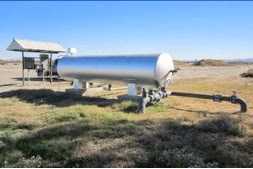
Water Tank removed from Meadowbrook Diary on or 
around 10-30-2013, in the El Mirage area of Sheep Creek and El Mirage Rd.  Value is approximately $10,000.

Any Information Please Contact:

Dep. Chris Wadkins/Dep. Kristie Dougan

Rural Crime Task Force

(909) 228-2276 / 760/954-1521

Case# 071304365

2016-05-31T19:43:08-07:00November 14th, 2013|
Go to Top