USDA, EPA PARTNER TO SUPPORT WATER QUALITY TRADING

Water Quality Trading Upcoming for California Growers

The U. S. Department of Agriculture (USDA) and the Environmental Protection Agency (EPA) announced TODAY an expanded partnership to support water quality trading and other market-based approaches that provide benefits to the environment and economy.

“New water quality trading markets hold incredible potential to benefit rural America by providing new income opportunities and enhancing conservation of water and wildlife habitat,” Agriculture Secretary Tom Vilsack said. “Additionally, these efforts will strengthen businesses across the nation by providing a new pathway to comply with regulatory requirements.”

“EPA is committed to finding collaborative solutions that protect and restore our nation’s waterways and the health of the communities that depend on them,” said EPA Administrator Gina McCarthy. “We’re excited about partnering with USDA to expand support for water quality trading, which shows that environmental improvements can mean a better bottom line for farmers and ranchers.”


Water quality trading is an innovative approach for achieving water quality goals at lower cost. Water quality trading can also provide additional environmental and economic benefits, such as air quality improvements, enhanced wildlife habitat, carbon capture and storage, and new income and employment opportunities for rural America.

Where appropriate, trading is a powerful and effective market-based approach to achieving cleaner water. Trading is based on the fact that sources in a watershed can face very different costs to control the same pollutant. Trading programs allow facilities to meet regulatory obligations by purchasing equivalent or superior pollution reductions from another source — achieving water quality improvements in a cost-effective manner.

EPA and USDA are working together to implement and coordinate policies and programs that encourage water quality trading. The Department and the Agency will identify opportunities to work collaboratively to help improve water quality trading programs across the country. Cooperative management and technical assistance will improve resource management and public services, and accelerate implementation.

USDA and EPA will:

  • Coordinate and enhance communications and outreach to states, agricultural producers, regulated sources, and interested third parties on water quality trading;
  • Engage expertise across agencies in the review of grants, loans or technical assistance programs focused on water quality trading;
  • Share information on the development of rules and guidance that have the potential to affect water quality trading;
  • Collaborate on developing tools and information resources for states and credit generators to guide decision making, reduce costs in program design and implementation, improve environmental performance, and foster consistency and integrity across regional initiatives;
  • Co-host a workshop by 2015 to share tools and resources available to assist in stakeholder decision making and opportunities.
The purpose of this policy is to support states, interstate agencies and tribes as they develop and implement water quality trading programs for nutrients, sediments and other pollutants where opportunities exist to achieve water quality improvements at reduced costs.

For a basic introduction to water quality trading, please check the EPA website site.

EPA’s Water Quality Trading Assessment Handbook will help users decide whether water quality trading will work in their watershed and when and where trading is likely to be the appropriate tool for achieving water quality goals.
2016-05-31T19:42:33-07:00December 4th, 2013|

CITRUS GROWER TAKES PRECAUTIONS AGAINST FREEZE

Protecting Citrus Against A Possible Freeze
By Laurie Greene, Associate Editor
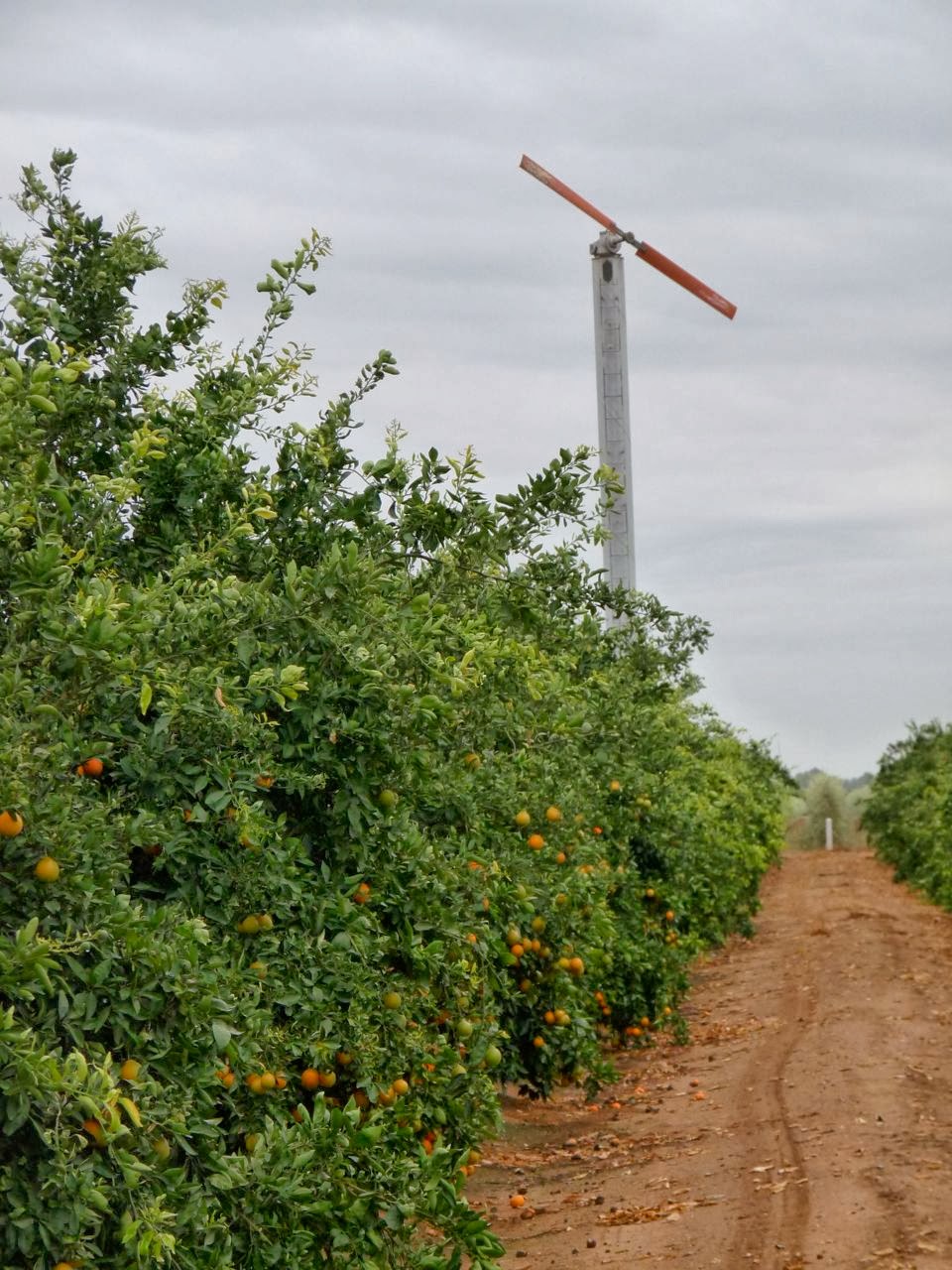
A Wind Machine Standing By to Help Protect

Citrus as a Freeze Moves into the Valley.
Philip LoBue, President and CEO, LoBue Citrus, a full-service grower, packer, and citrus shipper, based in Tulare County, spoke with California Ag Today.

According to LoBue, this week is a typical freeze event, though slightly earlier than usual. So, he is taking ordinary precautions with his citrus by using well water and wind machines.

Generally, early afternoon water application using standard irrigation, in this case micro-sprinklers within rows, creates a microclimate effect of surface heat. As the temperature drops at night, water freezes and gives off energy (heat), benefitting the trees. In the sunlight the next day, water melts into the ground allowing the ground to hold more heat during the day, and so the cycle continues.

The freeze stirs up an inversion layer 30 feet above ground at the treetops. Tonight’s inversion in the central part of the central San Joaquin Valley will be weak according to LoBue because the inversion’s elevation will be only one or two degrees warmer, and not six degrees for example.

The extent of freeze damage on crops depends upon the actual temperature, length of exposure time, and precautions taken. In citrus groves, the initial freeze damage starts outside of the grove on its borders and on the exterior of the fruit exposed on the treetops. The exterior rind of the fruit becomes physically damaged before the interior is affected. Exterior rind ice marks and other visual markers change the fruit’s export quality and value. As the freeze persists, the interior of the fruit becomes susceptible to damage.

LoBue says farmers are already taking additional standard precautions such as checking batteries for diesel or propane wind machines and copper or aluminum wiring for electric wind machines.

Of note, a brutal freeze on December 23, 1991, destroyed all fruit yet to be harvested.As a result, LoBue Bros. (former company name) shut down for most of the year. When it became apparent that government employment programs were inadequate in addressing the needs of unemployed workers, the LoBue staff and management secured both private sector and additional government assistance to help workers obtain food and shelter until the next season’s crop. LoBue Bros. received statewide recognition for its efforts on behalf of these workers.

Nearly 80 years in business, LoBue Citrus is an independent, family-owned grower, packer and shipper of fresh citrus and citrus juice products, including navel oranges, mandarin oranges, specialty citrus, lemons and juice.

2016-05-31T19:42:33-07:00December 4th, 2013|

FARM TO FOOD BANK MONTH: AG SURPLUS AGAINST HUNGER

Central Coast Farmers Give To Ag Against Hunger

As December is Farm to Foodbank Month, Lindsay Coate, Executive Director, Ag Against Hunger, posted TODAY that it is ironic that California produces the largest bounty of agricultural products consumed in the US, and yet, 4.7 million of our residents live in poverty and often don’t have access to fresh fruits and vegetables.

A solution to this problem was developed 24 years ago by farmers in Monterey, Santa Cruz and San Benito Counties when they realized that 20 percent of their product was going to waste. They collectively decided to create an agricultural nonprofit organization known today as Ag AgainstHunger to collect and distribute all of their surplus produce.

Ag Against Hunger’s primary function is to prevent the waste of fresh vegetables and fruit. Instead of disking full fields of produce or paying fees to get rid of harvested product, producers contact Ag Against Hunger to distribute the produce to food banks.

The Ag Against Hunger Program is simple:
  • We collect nutritious and fresh surplus vegetables, fruits and salads and from local growers and shippers.
  • We consolidate the surplus produce at our cooler.
  • We distribute the produce to food banks and non-profit agencies.
  • Food banks and agencies give the fresh produce at no cost to people in need.


Ag Against Hunger has started a new program with the Grower-Shipper Association Foundation, HELP, the Food Bank for Monterey County and Fresh from D’Vine in an effort to get more fresh and nutritious produce into local schools. The More Produce for Schools program provides students in Monterey County with a more balanced lunchtime meal that includes fresh produce. Currently, there are five school districts enrolled in the program: Salinas Union High School, Alisal Union, Greenfield, King City, and North Monterey County.

Gleaning session – photo courtesy of Ag Against Hunger
Ag Against Hunger’s portion of the program is being funded by a matching grant from Wells Fargo Foundation. In order to receive this grant, Ag Against Hunger had to raise $25,000 in funds by the end of November. 

The Ag Against Hunger organization is still supported by its founding community of local farmers, which provides board members along with financial assistance and, of course, produce.  Since 1990, Ag Against Hunger has distributed over 212 million pounds of fruits and vegetables to help our local food bank partners across California.

December as Farm to Food Bank Month is an initiative by the California Department of Food and Agriculture and the California Association of Food Banks to double farm contributions to food banks by 2015.
2016-05-31T19:42:33-07:00December 3rd, 2013|

COLD SNAP ACROSS CENTRAL CALIFORNIA

Weather Service Urges Growers to Take Precautions

The National Weather Service, San Joaquin Valley/Hanford has issued a Freeze Warning in effect from 2 AM TONIGHT until 9 AM Wednesday for the central and southern San Joaquin Valley areas.

A very cold weather system will move into the region starting tonight; below freezing low temperatures are expected as early as tonight in the San Joaquin Valley and the Kern County desert by Wednesday night. Subfreezing temperatures will likely last through Friday morning over much of the central California interior.

Jim Andersen, Meteorologist in the Hanford Weather Forecast Office confirmed that a Freeze Warning issued for tonight forecasts 28-32°F.

Andersen confirmed also that a Hard Freeze Watch is in effect from midnight Wednesday through Friday night for rural areas of the San Joaquin Valley with temperatures expected between 22 – 27°F. Saturday temperatures are expected to be warmer.

Andersen says these conditions are dangerous to all farmers in the region, particularly citrus farmers because there is still fruit on the trees. He urges all farmers to take precautions to mitigate damage to their livestock and plants.

This cold weather is unusual for early December. It is generally expected in late December and January, when citrus trees no longer carry fruit.

A common remember for frost conditions is to protect the 4 P’s: People, plants, pets, and pipes!


For more information, call the Frost Telephone numbers:

559-592-4140 or 800-713-7678

Information is UPDATED DAILY AT 10:00 AM AND 4:00 PM.
2016-05-31T19:42:33-07:00December 3rd, 2013|

COTTON PLOWDOWN REGULATIONS COMPLIANCE SET FOR DECEMBER 20, 2013

Annual Cotton Plowdown Deadline to Manage Pink Bollworm

It’s that time of year again when cotton growers are required to comply with the Cotton Plowdown Regulations.

The regulations were established in 1967 to combat the threat of spreading populations of Pink Bollworm, a worldwide pest of cotton. With grower support, the California Department of Food and Agricultural established regulations that required anyone planting cotton in the San Joaquin Valley to shred and uproot cotton stalks, and then mix the debris with the soil. Doing this was shown to kill overwintering Pink Bollworm larvae.

Growers were also prohibited from planting cotton prior to March 10th in an effort to provide a host-free period for any moths that might survive the winter and want a place to lay eggs in the spring.

To-date, the program has been very successful in managing Pink Bollworm in the Valley, and is the longest running area-wide integrated pest control program in the world.

The date for compliance with the Cotton Plowdown Regulations is rapidly approaching. All cotton stalks must be shredded, uprooted, and plowed by December 20, 2013. Starting on the 20th, the staff of the County Agricultural Commissioner/Sealer’s Office will be citing fields that are not in compliance with the regulations. Fines for non-compliance are set at $500 plus $5.00 per acre.

With the dry weather this fall and lack of fog, growers should have plenty of time to comply.

If you have any questions regarding the Cotton Plowdown Regulations and their enforcement contact Dennis Haines, Staff Biologist in the office of Tulare County Agricultural Commissioner/Sealer (559) 684-3350.

2016-05-31T19:42:33-07:00December 3rd, 2013|

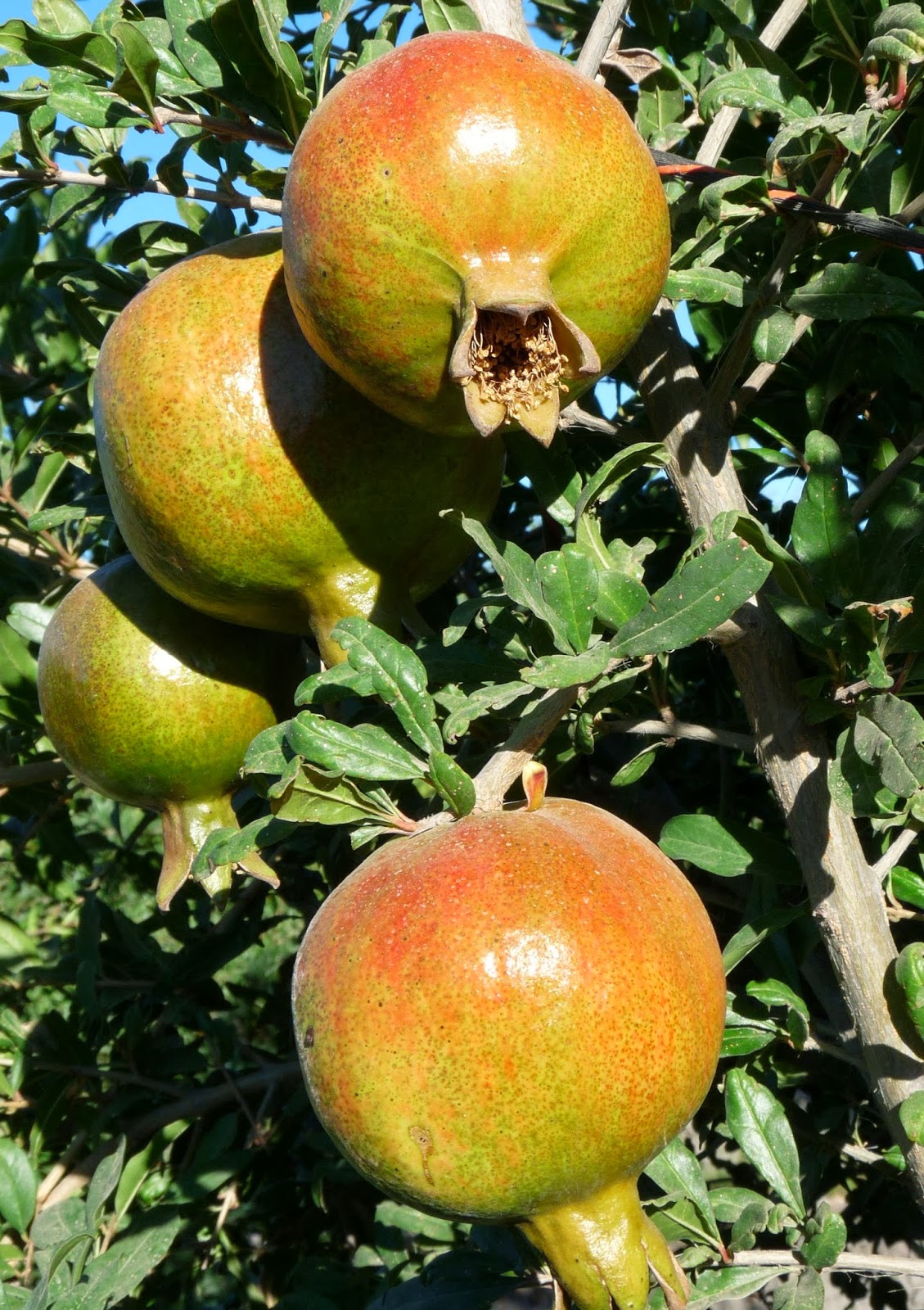
UC Publishes Pomegranate Pest Guidelines

Pomegranate Pest Guidelines Available Free


UC Cooperative Extension has published pest management guidelines for pomegranates.  They are available free by download by going to anrcatalog.ucdavis.eduand entering pomegranate in the search window.  The guidelines can then be saved to your computer. 

There are many other free publications available from Cooperative Extension at that web site.

2016-05-31T19:43:05-07:00December 3rd, 2013|

WEATHER ALERT: AVOCADO FREEZE ADVISORY

Coastal County Avocado Growers At Risk

The National Weather Service (NWS) has issued a Special Weather Statement for San Luis Obispo, Santa Barbara, Ventura and Los Angeles Counties. A cold low-pressure system from an Arctic air mass over Canada will bring an extended cold snap to Southwest California from Wednesday through Friday, December 4-6, 2013. They also warn of strong winds in advance of the cold front on Tuesday December 3, 2013. The front will be mostly dry with only scattered, isolated showers.

Wind
Winds from the west to north are expected to increase Tuesday afternoon into early Wednesday for much of the advisory area. Forecasts call for gusts up to 40 mph along the Central Coast and Santa Monica Mountains. Interior valleys could see gusts up to 50 mph. The winds are expected to diminish late Tuesday/early Wednesday and be followed by much colder air.


Freezing Temperatures
The cold air is expected to arrive Wednesday and last through Friday. There is the potential for hard freeze conditions (temperatures at or below 28 °F for several hours) in the interior valleys of San Luis Obispo and Santa Barbara Counties Wednesday night into Thursday morning and Thursday night into Friday morning. The lowest temperatures in the interior valleys are expected to be in the low to mid 20s, with temperatures remaining below freezing for several hours.


Along the coast and through Ventura and Los Angeles County valleys temperatures are expected to drop to right around freezing both Wednesday and Thursday nights. A gradual warming trend is expected for the weekend, but temperatures will remain well below average.


Freeze Protection
Most avocado growers rely on irrigation and/or wind machines for freeze protection. Growers in the area affected by the Special Weather Statement should use Monday and Tuesday to inspect their irrigation systems, checking for clogged nozzles, broken lines or other problems that would limit their ability to protect their groves. 
Wind machines should have already been serviced for the season, but if this hasn’t been done growers should try to get this task accomplished before Wednesday. Wind machine fuel tanks should be topped off and the machines should be started to make sure there would be no surprises when they are needed.


Growers are advised to watch for changes to this forecast on the NWS website. For the latest advisories and alerts go to http://www.weather.gov/ and enter your city and state or zip code in the search box in the upper left corner to find the latest alerts for your area. For more information on freeze protection for your avocado groves please visit http://californiaavocadogrowers.com/growing/cultural-management-library/freeze-protection.

2016-05-31T19:43:05-07:00December 3rd, 2013|

DAIRY CALF AND HEIFER ASSOCIATION CALLS FOR ANNUAL SCHOLARSHIP PROGRAM APPLICANTS

Applications due February 14, 2014


The Dairy Calf and Heifer Association (DCHA) announced TODAY it is now accepting applications for its annual scholarship program until February 14, 2014. The goal of this long-standing scholarship program is to invest in the future of the dairy industry by offering scholastic support to outstanding agriculture-focused students.

“As an organization focused on the future, we feel very strongly about investing in our industry’s youth,” says Jack Banker, calf and heifer raiser and current DCHA president. “Today’s youth are tomorrow’s leaders and we are pleased to offer a $1,000 scholarship opportunity to the DCHA membership this year to help shape our industry’s leaders.”

The annual DCHA scholarship is awarded to a student currently enrolled in agriculture-related field at an accredited college or university. 

Applicants must have completed at least one year of post-high school education. 

A person may receive the scholarship only once, and must meet the following requirements for consideration.


To apply for the scholarship, applicants must: 
  • Be a member of DCHA, or the son, daughter or legal dependent of a DCHA member
  • Have completed at least one year of post-high school education
  • Be attending an accredited college or university
  • Be enrolled in a field of agriculture (e.g., food science, horticulture, animal/veterinary science, agricultural technical course, ag communications, etc.) or in a course of study with relevance to agriculture
To download a copy of the application, go to: http://bit.ly/DCHAScholarship_2014

Applications must be postmarked by Friday, Feb. 14, 2014 and can be emailed to: info@calfandheifer.orgor mailed to: P.O. Box 1752, Madison, WI 53701.

The 2014 DCHA scholarship recipient will be recognized during the 2014 DCHA annual conference on April 1-3, 2014 in Green Bay, Wis., themed “Be a ‘Driver’ of Change.”


The Dairy Calf and Heifer Association (www.calfandheifer.org) was founded in 1996 based on the mission to help dairy producers, calf managers and those professionally focused on the growth and management of dairy calves and heifers. With a national membership of producers, allied industries and research leaders, DCHA seeks to provide the industry’s standards for profitability, performance and leadership, serving as a catalyst to help members improve the vitality and viability of their individual efforts and that of their business.
2016-05-31T19:43:05-07:00December 2nd, 2013|

AG CRIME ALERT: Sutter County

Thefts and Recoveries in Sutter County

Two growers in Sutter County have been recent victims of separate agricultural crimes. 

Stolen Implement Carrier

In the first incident, a new CAT, yellow tube type, 24-foot implement carrier was stolen from Nuestro Road in Sutter County, most like in the last two weeks.


In the second incident, during the night of Friday, November 22, an Orchard strip sprayer, tank, pump, 150 gallons of diesel fuel, and a 2.5 horse Honda motor off of a nurse tank were taken from a prune orchard off of Nuestro Road, west of Township Road, in Sutter County.

If you have any info, please contact Sutter County Sheriff’s Dept. at (530) 822-7307.


Stolen Property Recovered 

Meanwhile, a recently stolen strip sprayer was recovered Wednesday, Nov. 27th at a “chop shop” in east Biggs, after a Sutter County Sheriff’s Deputy recognized the equipment from Yuba Sutter Farm Bureau’s Facebook post. 

Other stolen items discovered at the location were: motorcycles, quads, trailers, boats, farm equipment (including a backhoe and smaller tractor) and license plates to stolen vehicles.  This was a very active chop shop. Because of the scale of the operation, the Sutter County Sheriff’s Department has called in the Highway Patrol’s Vehicle Theft Unit and turned it over to them.  

Growers who have had items stolen prior to last Wednesday and since September are encouraged to contact the CHP to see if their items were recovered. 

CHP’s Valley Division in Sacramento:  (916) 731-6300.
Thank you everyone for keeping an eye out.

2016-05-31T19:43:05-07:00December 2nd, 2013|

Pistachio Day Jan. 29 in Visalia

2014 Statewide Pistachio Day, Jan. 29

The Statewide Pistachio Day will be held on Wednesday, January 29, 2014 at the Visalia Convention Center in Visalia, California. Please save the date!

Pistachio Day is designed to deliver the latest research-based production practices in a format that enables prospective or current pistachio growers, production managers, and pest control consultants to better achieve their pistachio-growing goals.

The program covers diverse topics ranging from pest, nutrient, and disease management to characteristics of California rootstocks and varieties and includes an introduction to the pistachio collection in the USDA germplasm repository.

2016-05-31T19:43:05-07:00November 30th, 2013|
Go to Top