The Importance of California’s Agricultural Water Supplies

We cannot accommodate serious discussion on the demand side of water questions without working on the supply side

By Chris Scheuring, Special to CalMatters

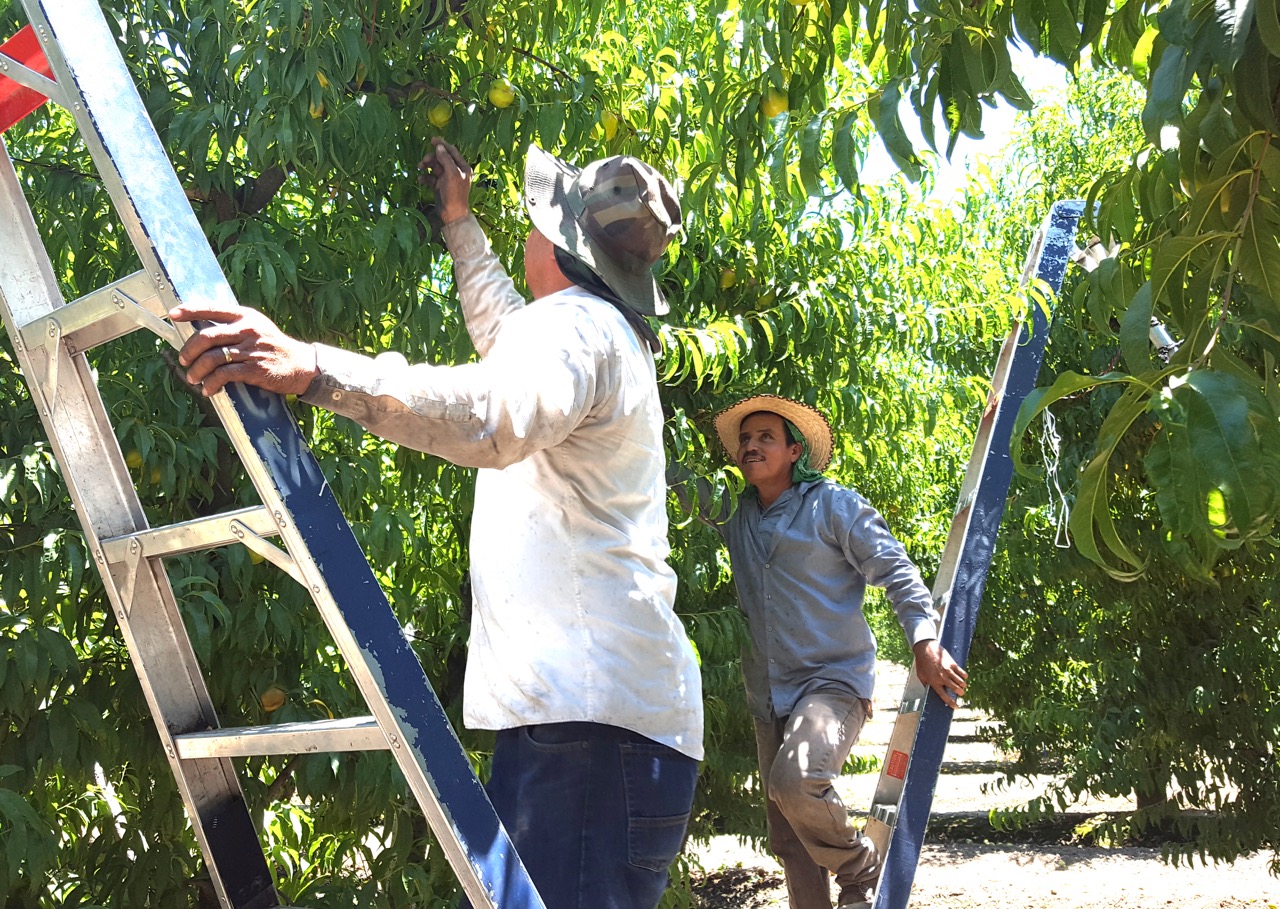
Wendell Berry famously said that eating is an agricultural act. That makes all of us into farmers, and nowhere is that more true than in water terms.

For farming is irreducibly the process of mixing dirt, water and sunshine to bring forth from the ground what we need to eat. And no matter who you are, it’s true:  somebody, somewhere, must devote a lot of water to the process of feeding you.

Some have been sidestepping this fact in the ongoing policy evolutions over the way we must capture, store and move water in California. Yet even the most ardent urban environmentalist finds herself at the local grocery store or the farmers’ market – filling her basket with California-grown nuts, fruits and vegetables.

Some of these crops can only be grown here, or in one of the few similar agricultural climates around the world, in an irrigation-based agricultural economy.

Take almonds, now and then the whipping-post of California water use: They cannot be grown in a place where it rains in the summer. Iowa, for example, is awfully cold in February – which is precisely when almonds need mild Mediterranean winter weather for their blossoms to be pollinated. Mediterranean crops need a Mediterranean climate, which usually means mild winters and hot, dry summers.

Beyond that, the case for California agriculture is made by our farming practices and their regulatory backdrop, whatever natural reticence California farmers may have about being regulated. We do it more efficiently here, and with more oversight, than in most alternative agricultural venues around the world. I would compare a California avocado favorably to an avocado anywhere else in the world, on those terms.

That’s why I have always thought that a subtle strain of NIMBYism runs through the retrograde ideas that some have about “reforming” agricultural water rights here and constraining the water projects that ultimately deliver food to the world.  With nearly 8 billion people on the planet, pinching off California’s agricultural water supplies is a game of whack-a-mole which will cause the same water issues to arise elsewhere.

Without question, we must continue on our trajectory of making California farming more water-efficient. If you have been watching California agriculture for a generation, you already know that much of the landscape has transitioned from old-fashioned flood and sprinkler irrigation to more efficient drip and micro-sprinkler techniques – even in the case of row crops. We must continue this path; new technologies related to irrigation continue to be developed, including better monitoring of applied water and crop water use.

We must also recognize inherent conflicts between agricultural water use and the flora and fauna that are dependent upon our rivers and streams.

Gone are the days in California when a grizzly bear might paw a salmon out of the Suisun Marsh, but we can work together to find non-zero-sum water and habitat solutions that would take advantage of opportunities to protect and rehabilitate species of concern, where it can be done without disproportionate human impact. Again and again through public enactment, California has demonstrated its will to keep the environment in mind as we move forward.

Further, we must also carry forward processes to develop new water supplies for California’s farms and growing cities, whether those are storage facilities above ground or below ground, or stormwater capture and aquifer recharge, or desalination or recycling. In the face of a changing hydrology and the expected loss of snowpack, we simply cannot accommodate serious discussion on the demand side of water questions without working on the supply side. Otherwise, we are chasing a receding goalpost – and we will not get there.

Finally, remember that farming is not a question of “if,” but “where.” We’re going to eat – all of us around the world – and we’re going to farm in order to do so. So we should protect California’s agricultural water supplies, because the case for California water being used on California’s farms is strong.

Chris Scheuring is senior counsel for water policy at the California Farm Bureau. He is also a family farmer in Yolo County, growing walnuts, almonds and pistachios.

2022-01-11T10:05:19-08:00January 11th, 2022|

California Table Grape Growers Continue Path to Mechanization and Automation

California table grape growers, collectively through the California Table Grape Commission, are working to mechanize and automate operational functions, with a goal of reducing costs and increasing the efficiency of vineyard operations

By California Table Grape Commission

California table grape growers, collectively through the California Table Grape Commission, are working to mechanize and automate operational functions, with a goal of reducing costs and increasing the efficiency of vineyard operations.

One of the priorities is to minimize the movement of labor and maximize production per foot travelled. A time and motion study conducted on harvest activities helped the industry understand where and how much time is spent on picking and packing tasks. A second time and motion study on in-house packing is in the process of being completed; the goal is to understand how labor is distributed across tasks and facilities, and identify potential areas of mechanization and automation.

Another priority is to introduce automation to the harvesting of table grapes. This work is being done with the use of autonomous carts that aid in-vineyard movement of freshly harvested grapes. Other cart capabilities being tested include utilizing sensors to detect ripe berries and robotics to pick ripe berry clusters without damaging the fruit. Other sensor research and development includes crop mapping and estimation via cluster counting, berry size measurement, and berry color detection as well as remote monitoring for increased water use efficiency.

The commission is also researching mechanized tools to improve vineyard pruning efficiency including hand-held battery-powered pruners, and tractor-mounted mechanical pruners workable in table grape trellis systems. A related product review on global tools and technologies available for mechanical pruning of table grapes was recently completed.

The commission is considering other categories of innovation such as sensing and spot treating for pests and diseases, automated production and packing practices, and new vineyard infrastructure to facilitate automation and mechanization.

2022-01-06T10:39:20-08:00January 6th, 2022|

New Sacramento Museum Educates Residents About Farms’ Water Needs

Farm Credit helps fund three exhibits at Museum of Science and Curiosity that demonstrate why farms need water and how farmers are conserving this precious resource

Despite recent heavy rains, California is still experiencing one of its worst droughts in history, so reminding the public and policy makers that food does not grow without water is a critical need for the state’s agricultural community. That’s why Mike Wade and Farm Credit were excited to see the new SMUD Museum of Science and Curiosity open recently.

The $52 million state-of-the-art science center in Sacramento contains dozens of interactive exhibits that allows visitors to explore the wonders of science, technology, engineering and math and specifically address global and local issues relating energy, water, health, nature, space and design engineering.

Wade, executive director of the California Farm Water Coalition, said the three water exhibits the coalition is sponsoring bring home the fact that water is essential to grow our food and that California farmers are leading the world in conserving the precious resource.

“The exhibits have been very popular with museum visitors so far. Both students and adults have been taking turns finding out about the water it takes to grow our food and how farmers use the latest technology to conserve it,” Wade said.

“It’s always been part of our mission to educate people about the connection between farm water and their food supply. It’s important that everyone know that farmers are using water in an efficient manner and that as consumers, we all depend on farmers.”

American AgCredit, CoBank and Farm Credit West collectively pledged $75,000 over five years to help build and maintain the exhibits. The organizations are part of the nationwide Farm Credit System – the largest provider of credit to U.S. agriculture.

Wade said one exhibit consists of a touchscreen monitor on which people can drag food items from an illustrated list to your plate. Once they’ve made their selections, they can click the “eat it” button and the display will show the nutrition value and water demand of the foods on the plate. And that in turn shows participants how close they are to meeting their nutritional needs and the amount of water needed to produce that food.

Mark Littlefield, President and CEO of Farm Credit West, said the exhibit will be an important learning tool for visitors.

“The exhibit helps people understand that it takes a significant amount of water to grow the food we eat. It’s eye-opening to select the right foods to eat and then see at the end of the game how much water it takes to grow that food,” he said.

Another interactive exhibit demonstrates how technology is helping farmers use just the right amount of water to grow their crops, said Curt Hudnutt, President and CEO of American AgCredit.

“The More Crop Per Drop exhibit lets visitors irrigate their field with a set water budget without giving them any information about how much water the crops need,” Hudnutt said. “Then they can try again after getting information from water sensors and then a third time with additional information from drones that pinpoint areas that have enough water and areas that need more. In most cases, participants will do better with additional information, making this a great way of showing how farmers are already at the cutting edge of technology.”

Wade said the third exhibit is a map of California that shows the state’s major water projects and conveyance facilities.

“The highlight here are quotes from five farmers from the five major ag regions who describe how storage and conveyance have made it possible for them to farm,” he said.

The exhibits will be on display for 15 years at the museum, located in a building that once housed a century-old powerplant on the banks of the Sacramento River. The building was rebuilt and modernized and a new wing added that includes a planetarium, offices, and a café. The agricultural water interactive exhibits are part of the Water Challenge Gallery, located in the historic power plant section of the museum.

Wade said Farm Credit’s support has been extremely valuable in making the exhibits a reality.

“None of this would be possible without Farm Credit and the other donors giving so generously,” he said. “Educating the public is a shared responsibility of the entire agricultural industry, and Farm Credit is leading by example.”

###

About Farm Credit: American AgCredit, CoBank and Farm Credit West are cooperatively owned lending institutions providing agriculture and rural communities with a dependable source of credit. We specialize in financing farmers, ranchers, farmer-owned cooperatives, rural utilities and agribusinesses. Farm Credit offers a broad range of loan products and financial services, including long-term real estate loans, operating lines of credit, equipment and facility loans, cash management and appraisal and leasing services…everything a “growing” business needs. For more information, visit www.farmcreditalliance.com

About the California Farm Water Coalition: CFWC is a non-profit, educational organization formed in 1989 to provide fact-based information on farm water issues to the public. The organization works to help consumers, elected representatives, government officials and the media make the connection between farm water and our food supply. For more information, visit www.farmwater.org.

2022-01-04T14:33:46-08:00January 4th, 2022|

Port Of Oakland Launches Program to Expedite Ag Exports

By Western Agricultural Processors Association

On Monday, January 3, the Port of Oakland announced an interagency effort to improve the flow of agricultural exports at the Port.  The program involves the use of additional yard space and equipment, restored export ship calls and assistance to export users.  The goal is to provide relief to agricultural exporters who are facing shortages of export capacity and skyrocketing logistics costs.   The Port will open and operate a 25-acre off-terminal, paved container yard equipped to move containers off chassis and store them for rapid pick-up.  The yard will provide access to equipment and provide faster truck turns without having to wait for in-terminal space. Agriculture exporters will be assisted by federal and state agricultural agencies to use the yard.

The situation was the catalyst for a convening of State and Port officials with farm producers and transportation executives to solve a year-old shipping crisis. At stake was the state’s multi-billion-dollar agriculture export industry. The meeting was led by Governor’s Office of Business and Economic Development Director Dee Dee Myers, State Transportation Agency Secretary David S. Kim and California Department of Food and Agriculture Secretary Karen Ross. Participants included seaport stakeholders within the broad and varied agricultural commodity sectors, freight forwarders, trucking and warehousing operators. The Association had two representatives from tree nut industry companies at the meeting to provide their expertise on the crisis.  The meeting resulted in a list of potential solutions to unclog the supply chain for agriculture exports.  The discussions have focused on short-term and long-term solutions to support American agricultural exporters. Long terms solutions include:

  • Asset management including availability of containers and the chassis used to transport them over the road;
  • Port and inland port operations, including off-dock container yards; and

Long-term supply chain strategies and increased investment in critical port infrastructure.

2022-01-04T14:12:01-08:00January 4th, 2022|

CA Minimum Wage Jan 1 is $15

New Minimum Wage Starting Jan. 1 2022


By Teresa McQueen, Western Growers Corporate Counsel

Effective Jan. 1, 2022, the minimum wage in California will increase to $15 per hour for large employers with 26 or more employees; it will increase to $14 for small employers with fewer than 25 employees.

The amount for small employers will increase again on Jan. 1, 2023 to $15 per hour.

State law requires that California workers be paid the minimum wage; in addition, some cities and counties have a local minimum wage that his higher than the state rate. Employers should keep this rule in mind: When faced with conflicting employment law standards, an employer must follow the standard that is most beneficial to the employee. Review the UC Berkeley Labor Center’s detailed list of local minimum wage ordinances for additional guidance.

Agricultural employers in California should also be mindful of the continued phase-in of agricultural overtime provisions. In 2016, California initiated a plan to phase-in agricultural overtime to the same basis used in most other California industries. The multi-year phase-in schedule continues in 2022 for large employers (26 or more employees).

As of Jan. 1, 2022, a large employer must pay overtime of 1.5 times the employees’ regular rate of pay for any hours worked over 8 hours per day or 40 hours per week. This is the last phase-in for large employers. Click here for important information on calculating the regular rate of pay.

Employers are required to post information on wages, hours and working conditions at a worksite area accessible to employees. In addition, employers must ensure that the wage rate is displayed on the employee’s pay stub and that employees are paid at least the minimum wage even when employees are paid at the piece rate.

Updated wage and hour notice posters (Spanish and English) can be found on the Department of Labor Standards and Enforcement website.

2021-12-31T10:15:48-08:00December 31st, 2021|

A Better Dairy Digester

Dairy Digesters Have Struggled

A digester that can turn manure from dairy cattle into renewable fuel is not a new concept, but over the years very few have lasted. Daryl Maas of Maas Energy Works is a part of a collaboration in Tulare County California that have developed a model to make it work.

“Up until 10 years ago, even five years ago, a lot of digesters had struggled in California and elsewhere. They didn’t have a strong revenue model. They were often under capitalized or not maintained well. Just the technology was overly complex, but a covered lagoon in Tulare county California is about the simplest digester you can imagine,” said Maas.

These covered lagoons are located on site and over a dozen dairies and the biogas is connected to Calgren Renewable Fuels via pipeline.

“As a practical matter in California what we do is we build a large tarp, a gas tight tarp over a pond of manure,” said Maas. “So if you can imagine several acres of liquid manure sitting there, which is something we imagine all the time here, we love these topics. If you were to put a gas tight seal over the top of it, the bacteria in that manure, they think there’s still in a cow. They continue breaking down the little bits of calories and releasing methane gas, which we can capture. And then we’ve got a collection of biomethane, which is mostly methane gas, which is the same energy as natural gas.”

2021-12-28T12:16:35-08:00December 28th, 2021|

Suppliers, Retailers Warn California Grape Growers of Herbicide Shortages

Supply-chain Crisis Forces Some to Pivot to Mechanical, Biocontrol Measures

By Mike Hsu, UCANR Senior Public Information Representative

Driving through her vineyards on a chilly morning in December, Hortencia Alvarado is taking comfort – for now – that the weeds she sees are all yellow. But there remains a nagging worry that, like the pesky plants, is merely lying dormant for the season.

When March rolls around, and the first signs of new green growth appear on the vines, Alvarado and other vineyard managers will again have to confront the ongoing shockwaves of the global supply-chain crisis.

Growers of grapes – the third-highest valued agricultural commodity in California at $4.48 billion in 2020 – likely won’t be able to access the herbicides that they usually apply.

“I definitely need to start thinking and considering it because I don’t want to be in that situation where I don’t have [the herbicide] when I need it,” said Alvarado, a vineyard manager in the San Joaquin Valley.

Imperfect alternatives

She first noticed the effects of the shortages this past August, during the application following the harvest of early varietals. Alvarado’s agricultural pest control adviser had recommended a different product, instead of their usual standby, Rely – because none of the handful of suppliers in California could find it. Then Alvarado’s foreman started reporting that the substitute wasn’t controlling the weeds.

“We were using some other stuff that wasn’t as good, so basically we were wasting money on stuff that wasn’t doing what we wanted it to do,” Alvarado explained.

They quickly pivoted to their mechanical weeder to chop up the weeds, but that’s been an imperfect solution. They only have one machine and it would take three or four machines to adequately weed the nearly 3,000 acres that Alvarado manages.

The need for more machines or labor is just one result of the herbicide shortage, said George Zhuang, University of California Cooperative Extension viticulture farm advisor in Fresno County. Zhuang has received “a lot” of calls from growers about the chemical supply issues, which are also affecting fertilizers. He’s been urging them to move away from traditional herbicides to mechanical means or biocontrol such as sheep or fowl – even though they might be more expensive.

Zhuang estimates that while a weed program comprises 5% to 10% of total production costs in a normal year with the usual herbicides, the use of nonchemical alternatives could hike that percentage up to 10% to 20%. In addition to their impact on the bottom line, effective herbicides are especially crucial to grape growers because vines – unlike tree crops – cannot naturally shade out weeds with expansive canopies.

“Right now, people can still scramble around and find some limited chemicals to make sure the crop is successful for the harvest, but if the situation goes for another year, I think there’s going to be a panic in farming communities,” Zhuang said.

Herbicide challenges expected to linger

Unfortunately, the availability of certain products is likely going to be “challenged” into at least the middle of 2022, according to Andy Biancardi, a Salinas-based sales manager at Wilbur-Ellis, an international marketer and distributor of agricultural products and chemicals. Biancardi said that the suppliers he talks to are advising people to make preparations.

The supply of glyphosate, the key component in products such as RoundUp (used by many Midwestern farmers), appears to be most affected, Biancardi said. As a result, that shortage has put the squeeze on alternatives such as glufosinate, used in products like Rely – the herbicide favored by many California grape growers.
“The cost of glufosinate has definitely gone up because there just isn’t enough, so everyone is obviously marking it up,” said Biancardi, who estimates that prices for both glyphosate and glufosinate are up 25% to 30% for growers.

“And that’s if you can get it,” he added.

Alvarado said that while large commercial operations are able to pay the premium prices or shift to other weed control measures, some smaller growers have essentially given up the fight – simply letting the weeds take over.
“They’re just letting it go wild until the dormant season,” she said. “They’re hoping that – by when they do start to spray [around March] – they’ll hopefully have that Rely.”

Silver lining to supply crisis?

Large-scale growers and retailers are buying up those scarcer products when they can, in anticipation of future shortages during critical times. Biancardi said that while his company traditionally runs inventories down at the end of the season, they are instead stocking up on herbicides that customers will demand.
“Careful planning and forecasting is going to be more important than ever, that’s really the key,” he said. “At this point we can’t guarantee ‘business as usual,’ based on what we’re hearing.”

Shaking off old habits might actually bring some benefits to business, according to Alvarado, as a forced shift away from chemicals could prove to be a selling point for customers, from a sustainability and marketing standpoint.

“Out of this shortage, there might be some good, some wins,” she said, “but at the same time, we’re going to need some answers – I think it’s going to be a bumpy road.”

Calling the confluence of drought, record heat and a shortage of chemicals a “perfect storm,” Zhuang said that consumers could start feeling those jolts as well.

“Eventually, somebody is going to eat the costs – either the farming community or the consumer is going to eat the cost, I hate to say it,” he said.

2021-12-20T15:42:14-08:00December 20th, 2021|

Strawberries Are A Big Fresh Market Crop

 Strawberries Are A big Crop in California


From the end of September through the end of October, strawberries are planted and harvesting occurs from mid- December through mid-July in Ventura County,  which produces more than 27 percent of the state’s strawberries. The peak harvesting season in California runs from April through June, when up to 10 million pint baskets of strawberries are shipped daily.

The largest producing state, California harvests 83% of the strawberries grown in the U.S. on approximately 24,500 acres. And with about 5,000 commercial acres, Florida is the second largest producing state. Ideal temperature for strawberry plants should not exceed higher than 78 degrees or lower than 55 degrees.

Every strawberry plant is hand-picked approximately every three days. This is the time in which it takes for strawberries to complete their cycle of turning from green to white to red. There is no storage of fresh strawberries. After picking, they are rushed to coolers where huge fans extract the field heat. Then they are delivered to supermarkets across the country via refrigerated trucks.

Strawberries are the largest available fresh fruit source for vitamin C. Frozen strawberries are America’s largest available frozen fruit source of vitamin C. Versatile and nutritious strawberries are easy to include in school meals and snacks. Low in calories and sugar, strawberries are packed with vitamin C and antioxidants, helping to boost immunity and brain health.

2021-12-16T07:42:03-08:00December 16th, 2021|

Important COVID Prevention at Almond Industry Conference

Almond Industry Conf. Offers Before-You-Go-Tips

Big Event will he at the SAFE Credit Union Convention Center

It’s almost here! The Almond Conference is just around the corner and we are looking forward to gathering in-person with our friends and colleagues in the almond industry. When the Board of Directors made the decision to move forward with an in-person conference at our meeting in June, we knew it would be a challenge given State of California restrictions on large indoor gatherings. We knew there was a risk in moving forward with planning when we could get the rug pulled out from under us at any time, but we felt the benefits of meeting in person outweighed the risks and voted unanimously to move forward.

Now here we less than one week out and we are full speed ahead! More than 3,000 industry members have pre-registered to join us in downtown Sacramento on Dec. 7-9. A record number of exhibitors will be arriving this weekend to set up for the largest trade show The Almond Conference has ever assembled. And staff have put together a tremendous lineup of educational sessions, keynote speakers and world-class entertainment!

In order to meet in person we must meet the State requirements for “mega events” (more than 1,000 people indoors). This includes requiring attendees to provide proof of vaccination or a negative COVID test taken within 72 hours of arriving in Sacramento. This is a State of California requirement, not an Almond Conference policy (these are the same restrictions that are in place to attend a Kings game at the Golden One Center). We understand this is an inconvenience and have tried to make it as easy as possible to provide this information so we can hold the event in person. See below for more information.

Also, at this time, the County of Sacramento requires masks be worn indoors in public spaces, including the Convention Center. Sacramento County’s Public Health Department will end their indoor mask requirement if the count reaches 5 or fewer cases per 100,000. We’re watching the numbers closely and currently Sacramento is on a downward trend at around 10 cases per 100,000. We are hoping the downward trend continues as we know many of you would prefer not to wear masks in the facility. We will update you if the County lifts the requirement. If not, you will need a mask to enter the Convention Center.

We appreciate everyone’s understanding and assistance as we navigate the various State and Local requirements to hold The Almond Conference in person. We hope you’ll agree that the opportunity to meet in person is worth it! Thank you for your patience and we’re looking forward to seeing you next week in Sacramento.

2021-12-01T16:48:11-08:00December 1st, 2021|

Reducing Food Waste by Creating Other Good Food

UC Master Food Preservers Turn Food Scraps Into Gifts Dec. 1


By Pam Kan-Rice, UCANR Assistant Director, News and Information Outreach

Free online class offers recipes for using food scraps, answers questions about food preservation

“Putting food in our bellies instead of landfills is good for the planet,” said Sue Mosbacher, University of California Master Food Preserver Program coordinator. In landfills, decaying food releases methane, a greenhouse gas that contributes to climate change.

“We can reduce food waste and save money by creating new foods from food scraps,” Mosbacher said. “Instead of throwing away a lemon peel after squeezing out the juice, use the lemon zest to make lemon curd or citrus salt. They make wonderful homemade gifts for the holidays.”

UC Cooperative Extension Master Food Preservers, a program of UC Agriculture and Natural Resources, provides ideas for using leftovers and advice for safely preserving food.

On Dec. 1, 6:30 to 7:30 p.m., UCCE Master Food Preserver volunteers of Amador and Calaveras counties will host a free online class to show samples of apple honey, citrus salt, strawberry vinaigrette, sugared walnuts and lemon curd. Recipes will be emailed to participants.

“Many of these gifts are inexpensive to make because you’re using food scraps – such as lemon rind or apple peel – and a few other ingredients. You can put the citrus salt in jars you’ve saved,” Mosbacher said. “It is easy to make and there’s no special equipment needed.”

After the “show and tell” session, the UCCE Master Food Preserver volunteers will answer participants’ questions about freezing, dehydrating and canning foods and food safety.

Because the class is online, anyone can participate, regardless of their location. Register for the one-hour Zoom class at https://mfp.ucanr.edu/Events/?calitem=516566.

The UCCE Master Food Preserver Program extends UC research-based information about home food safety and preservation to the public throughout the year. UCCE Master Food Preserver volunteers are located in 19 counties of California, most recently certifying volunteers in Modoc County, where they are offering pressure canner testing.

UCCE Master Food Preserver volunteers host monthly workshops on the first Wednesday of each month, with hosting duties rotating between Sacramento, El Dorado, Amador and Calaveras counties.

For 2022, the UCCE Master Food Preservers of Sacramento County are planning to offer the following workshops via Zoom:

  • Jan. 19 – Citrus for Super Bowl
  • Feb. 16 – Dehydration for Soups
  • March 16 – Soups & Roots
  • April 20 – “Night of Fermenting” Cheese/Yogurt/Sauerkraut
  • May 18 – Jams & Jellies
  • June 15 – “Ready for BBQ Season” Condiments & Beverages
  • July 20 – Red, White & Blue
  • Aug. 17 – “Tomato Mania” Salsas, Sauces & Peppers
  • Sept. 21 – Sausages & Mustards
  • Oct. 19 – “Apples, Pears & Persimmons Oh My”
  • Nov. 16 – Sides Dishes for your Holiday Dinner
  • Dec. 21 – Quick Gifts

To sign up for any of the workshops above, visit https://sacmfp.ucanr.edu.

To find other upcoming UCCE Master Food Preserver Program events, visit https://mfp.ucanr.edu/Events. To find a program in your county, visit https://mfp.ucanr.edu/Contact/Find_a_Program.

Resources for preserving food and more information about the UCCE Master Food Preserver Program are available at https://mfp.ucanr.edu.

2021-11-30T18:13:20-08:00November 30th, 2021|
Go to Top