Water Board urged by California U.S. Lawmakers to Delay Severe Water Cuts

California Senators Dianne Feinstein and Barbara Boxer and Congressmen John Garamendi and Jim Costa sent a joint letter on March 5, yesterday, to Tom Howard, Executive Director, California State Water Resources Control Board urging them to delay issuing a proposed order prioritizing water deliveries throughout the state, expected to be handed down as early as next week, until at least March 21.

In their statement, posted by the Bay Planning Coalition, the lawmakers urge the Water Board to delay its “extraordinarily far-reaching proposed order”. . . “to make sure it is correctly calibrated to minimize the potentially devastating effects on many Californians.”

No Water LogoThey acknowledge the coordinated efforts between difference levels of government, but urge the Board to “avoid catastrophic reductions of water deliveries to California agriculture”.

Continuing, allowing more time would provide the Water Board with the best available information for these “complex water delivery decisions that could affect large parts of California, especially those regions that are integral to our nation’s agricultural economy.”

“We acknowledge that the Board is eager to issue a decision so that senior water rights holders do not plant crops with the expectation of receiving a 40 percent CVP water allocation when public health and safety considerations may require a significant cutback.”

Finally, they ask that the water decision “be formulated with great care so that its burdens do not unduly fall on those who have already had to give up a great deal.”

2016-05-31T19:38:52-07:00March 6th, 2014|

Multidrug-Resistant Salmonella Heidelberg Infections Again Linked to Foster Farms Chicken

Centers for Disease Control and Prevention reports that the investigation continues into Salmonella Heidelberg infections likely related to Foster Farms chicken.

The CDC reports that last year’s Salmonella outbreak associated with Foster Farms poultry appeared to be over around mid-January 2014 when the number of reported  infections from all seven outbreak strains of Salmonella Heidelberg returned to baseline levels; however, the CDC investigation still  continued.salmonella (Food Safety News)

Ongoing surveillance identified in February that infections from two of the previously rare outbreak strains have again exceeded the number of infections expected to be reported to PulseNet*during this time of year. Investigations conducted by local, state, and federal officials indicate that consumption of Foster Farms brand chicken is the likely source of this outbreak of Salmonella Heidelberg infections.

As of February 28, 2014, a total of 481 persons infected with seven outbreak strains of Salmonella Heidelberg have been reported from 25 states and Puerto Rico, since March 1, 2013.

38% of ill persons have been hospitalized, and no deaths have been reported.

  • Most ill persons (76%) have been reported from California.
  • Information about illnesses is available from 472 persons.
  • The dates the illnesses began range from March 1, 2013 to February 11, 2014.
  • Ill persons range in age from less than 1 year to 93 years, with a median age of 18 years.
  • Fifty-one percent of ill persons are male.
  • Among 394 persons with available information, 151 (38%) reported being hospitalized.
  • Thirteen percent of ill persons have developed blood infections as a result of their illness.
  • Typically, approximately 5% of persons ill with Salmonella infections develop blood infections.
  • No deaths have been reported.
  • Illnesses that began after January 29, 2014, might not be reported yet due to the time it takes between when a person becomes ill and when the illness is reported. This takes an average of 2 to 4 weeks.
  • Antibiotic resistance testing results are not yet available from recent ill persons or from recent food samples. Results of this testing will be reported when they become available.
  • It is not unusual for raw poultry from any producer to have Salmonella bacteria. CDC and USDA-FSIS recommend consumers follow food safety tips to prevent Salmonella infection from raw poultry produced by Foster Farms or any other brand.salmonella-food-poisoning-concept-awareness-prevention-33467602

*Since 1996, PulseNet has connected foodborne illness cases together, using DNA “fingerprinting” of the bacteria making people sick, in order to detect and define outbreaks. PulseNet has detected thousands of local and multi-state outbreaks since it began, leading to prevention opportunities and continuous improvements in our food safety systems that might not otherwise have occurred. Since “foodborne illnesses do not respect any borders,” PulseNet International performs a similar role for worldwide foodborne illnesses.

2016-05-31T19:38:52-07:00March 6th, 2014|

Ag Secretary Vilsack’s Comments on 2015 USDA Budget and 2014 Farm Bill In a Nutshell

USDA Agriculture Secretary Tom Vilsack stated yesterday that the President’s 2015 USDA budget proposal and the tools provided in the 2014 farm bill:

  • Achieve reform and results for the American taxpayer
  • Foster opportunity and long-term, sustainable economic growth for the men and women living, working and raising families in rural America, where 85 percent of our nation’s persistent poverty counties are located.
  • Equip our farmers and ranchers with the tools they need to survive and thrive
  • Support innovation through strategic, future-focused investments.

Economically, the 2015 budget:

Agricultural Secretary Tom Vilsack

Agricultural Secretary Tom Vilsack

  • Supports farmers, ranchers and growers as they achieve net farm income well above the average of the previous decade
  • Assists mid-sized farms and livestock producers who continue to face challenges as a result of prolonged drought.

Implementation of the 2014 Farm Bill should:

  • Restore disaster assistance
  • Invest in programs to help and train beginning, small and socially disadvantaged farmers and ranchers
  • Invest in programs that will build the skills they need to get back into the workforce.
  • Provide much-needed stability for producers moving forward
  • Support hardworking Americans as they find and keep jobs and transition out of nutrition assistance programs

Last fiscal year, farm and ranch exports reached a record $141 billion and supported nearly one million American jobs. 
To help America’s producers break into new exports markets for farm and ranch products, and building off of President Obama’s recently announced “Made in Rural America” export initiative, USDA will continue funding for trade promotion and market expansion.

Supported by the recently signed 2014 Farm Bill, the budget:

  • US_Department_of_Agriculture circular logoEstablishes Regional Hubs for Risk Adaptation and Mitigation to Climate Change at seven locations around the country
    • The Southwest Climate Hub is: Rangeland Management Unit/JornadaExperimental Range, Agricultural Research Service, Las Cruces, N.M.
    • The Southwest “Sub-hub” is in Davis, California
  • Makes targeted investments in bio-based product manufacturing, local and regional food systems, and specialty crops and organic production.
  • Adds about 23 million acres of land to USDA conservation efforts Sustains 25 million acres enrolled in the Conservation Reserve Program, ensuring clean air, clean and abundant water and critical wildlife habitat for generations to come.
  • Makes strategic investments that further innovation and encourage creative approaches to solving rural America’s most pressing challenges
  • Increases funding by $325 million for our premier competitive grants program to support the cutting edge research that will help producers adapt and succeed in the face of modern challenges, including a changing climate
  • Provides $25 million each to three public-private innovation institutes that focus on bio-based product manufacturing, pollinator health, and anti-microbial resistance research, respectively.
  • Recognizes fiscal realities; it supports USDA’s ongoing efforts to modernize and update the way we do business.
  • Builds on our efforts through the Blueprint for Stronger Service, which in recent years has saved the American taxpayer a total of $1.2 billion while ensuring that USDA customers receive the best possible service
  • Continues to support our leaner workforce to find ways to implement increasingly complex programs with fewer resources.

The security of our nation’s food and fiber supply depends on what we do today to support a rural America that is increasingly nimble, diverse and responsive to changing consumer tastes.

2016-05-31T19:38:52-07:00March 6th, 2014|

California Milk Production in 2013

Sources: CDFA Dairy Marketing and Milk Pooling Branches

In 2013, 33 California counties recorded milk production, indicating that a total of 41.2 billion pounds were produced.

IMG_2709

This statistic represents a 1.3 percent decrease in overall milk production compared to that of 2012.

The top 10 milk producing counties were responsible for 94.9 percent of total California milk production; among the top three counties were Tulare, Merced and Stanislaus counties.

They alone were responsible for 52.9 percent of all the milk produced in California.

Fresno County showed the largest increase in milk production with a 2.02 percent increase, whereas, Southern California counties San Bernardino and Riverside showed the largest decrease.

Compared to 2012, milk production in San Bernardino went down 21.36 percent and decreased by 9.28 percent in Riverside, respectively.

2017-09-03T00:40:07-07:00March 5th, 2014|

MCFB will Celebrate 97 Years on March 6th

Merced County Farm Bureau (MCFB) would like to announce the 97th Annual Meeting of members to be held on Thursday, March 6, 2014, at the Merced County Fairgrounds, with a 5:30 social and 6:30 dinner. Coyote Catering will serve their coveted prime rib dinner and Director Dessert Auction will follow.

MCFB will continue its tradition of awarding scholarships to at least one senior from each high school in the county as well as a scholarship for a child of a farm employee.

Major donors for the night include: PG&E, Yosemite Farm Credit, American Ag Credit, Merced Irrigation District, Rabobank and State Fund. All proceeds from the auction benefit MCFB’s scholarship and education fund.

Please contact the office at 209.723.3001 if you would like to reservations.

2016-05-31T19:38:53-07:00March 5th, 2014|

Governor’s Interagency Drought Task Force Travels State as Drought Endures

CDFA Secretary Karen Ross (left) speaking about the drought today at a meeting of the California State Board of Food Agriculture. To Secretary Ross’ left are Dr. Mark Starr of the California Department of Public Health, Secretary John Laird of the California Natural Resources Agency, and Mark Ghilarducci, Director of the Governor’s Office of Emergency Services.

CDFA Secretary Karen Ross (left) speaking about the drought today at a meeting of the California State Board of Food Agriculture. To Secretary Ross’ left are Dr. Mark Starr of the California Department of Public Health, Secretary John Laird of the California Natural Resources Agency, and Mark Ghilarducci, Director of the Governor’s Office of Emergency Services.

CDFA reported on today’s UC Merced meeting between Members of Governor Brown’s Interagency Drought Task Force, local government leaders and the California State Board of Food and Agriculture.

Hundreds packed the meeting at UC Merced. Word on the street is that farmers are disappointed; the only quick solution is to turn the pumps on!

Task Force representatives were CDFA Secretary Karen Ross, California Natural Resources Secretary John Laird, State Water Board Chair Felicia Marcus, Office of Emergency Services Director Mark Ghilarducci, and Department of Public Health Deputy Director Dr. Mark Starr.

No Water LogoThe Task Force is planning additional meetings around California to listen to the concerns of local officials as the drought continues.

2016-05-31T19:38:53-07:00March 4th, 2014|

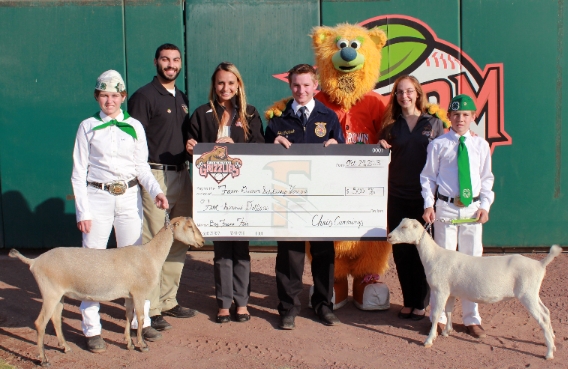
Farm Grown Announces Scholarship for HS Seniors

Know an outstanding high school senior?

We want them to apply to Farm Grown Schlarship

In partnership with Gar Tootelian, Inc., the Grizzlies Community Fund is proud to announce the inaugural Gar & Esther Tootelian Charitable Foundation Farm Grown Scholarship. We are pleased to award $1,500 to outstanding high school seniors who will be pursuing a degree in an agriculturally-related field.

The winner will receive $1,000 towards college tuition; an honorable mention finalist will receive $500.

See the Grizzlies Community Fund at  website for more information and to download the application (due April 1).

2016-05-31T19:38:53-07:00March 4th, 2014|

Snow Survey Presses State to Retrench and Reinforce

As we already know, calendar year 2013 closed as the driest year in recorded history for many areas of California, and current conditions suggest no change in sight for 2014.

No Water LogoAnd, California is experiencing the first zero allocation announcement for all customers of the State Water Project (SWP) in the 54-year history of the project.

According to California Department of Water Resources’ (CDWR) third snow survey of the season on February 27, twenty-nine public water agencies buy water from the SWP for delivery to 25 million Californians and 750,000 acres of farmland, revealing a continuation of California’s precipitation deficit during the state’s third consecutive dry water year (October 1, 2013 through September 30, 2014). And, the statewide snowpack water equivalent was 6 inches, or only 24 percent of the average for the date.

The snowpack, “California’s largest reservoir”, typically issues about a third of the water used by the state’s cities and farms. And, California’s major reservoirs, themselves, are dangerously low.

A CDWR statement issued yesterday evaluating the snow survey findings, called the results, “an improvement from the previous survey on January 30 that found the snowpack’s water content at 12 percent of average for late January.”

According to CDPR, although it is difficult to quantify an exact amount of precipitation that would alleviate the current drought conditions, it is highly unlikely given historic patterns of the remainder of the rainy season that the drought will end this water year. There just isn’t enough time for precipitation to accumulate at an acceptable rate to alleviate drought conditions or the anticipated impacts to drought-stricken communities.

SWP’s principal reservoir, Lake Oroville in Butte County, is at only 39 percent of its 3.5 million acre-foot capacity; Shasta Lake north of Redding, California’s and the (federal) Central Valley Project’s (CVP) largest reservoir, is at 38 percent of its 4.5 million acre-foot capacity; and San Luis Reservoir, a important SWP and CVP reservoir ,  is at 33 percent of its 2 million acre-foot capacity.

What’s being done about it? When Governor Brown declared a drought State of Emergency in January, he directed state officials to take all necessary actions to prepare for water shortages. CAL FIRE recently announced it hired 125 additional firefighters to help address the increased fire threat due to drought conditions, the California Department of Public Health identified and offered assistance to communities at risk of severe drinking water shortages and the California Department of Fish and Wildlife restricted fishing on some waterways due to low water flows worsened by the drought.

Also in January, the California Natural Resources Agency, the California Environmental Protection Agency and the California Department of Food and Agriculture also released the California Water Action Plan, which will guide state efforts to enhance water supply reliability, restore damaged and destroyed ecosystems and improve the resilience of our infrastructure.

Governor Brown has called on all Californians to voluntarily reduce their water usage by 20 percent and the Save Our Water campaign has announced four new public service announcements that encourage residents to conserve. Last December, the Governor formed a Drought Task Force to review expected water allocations and California’s preparedness for water scarcity. In May 2013, Governor Brown issued an Executive Order to direct state water officials to expedite the review and processing of voluntary transfers of water.

CDWR Snow

2016-05-31T19:38:53-07:00March 4th, 2014|

EPA Updates Pesticide Registration Info on Web

EPA has created a new area on its website containing all of its information on Pesticide Registration. Pulling from existing material, the new pesticide registration area is designed to help users find what they need easily and quickly.

Under clearly defined topic headings, visitors to this new Web area will have easy access to information on:

  • Pesticide registration
  • Fees and fee waivers
  • How to register a pesticide
  • Types of registrations under pesticide laws
  • Types of pesticides that can be registered
  • Registration forms and guidance documents

Under the Federal Insecticide, Fungicide, and Rodenticide Act (FIFRA), EPA regulates all pesticides that are sold and distributed in the United States.

The term “pesticides” includes pesticides, herbicides, rodenticides, antimicrobial products, biopesticides, and other substances used to control a wide variety of pests.

A pesticide product is defined as a pesticide in the particular form (including composition, packaging, and labeling) in which the pesticide is, or is intended to be, distributed or sold and includes any physical apparatus used to deliver or apply the pesticide if distributed or sold with the pesticide.

2016-05-31T19:38:54-07:00March 1st, 2014|
Go to Top