Tulare Water Rally Needs You on March 26th

finger-pointing

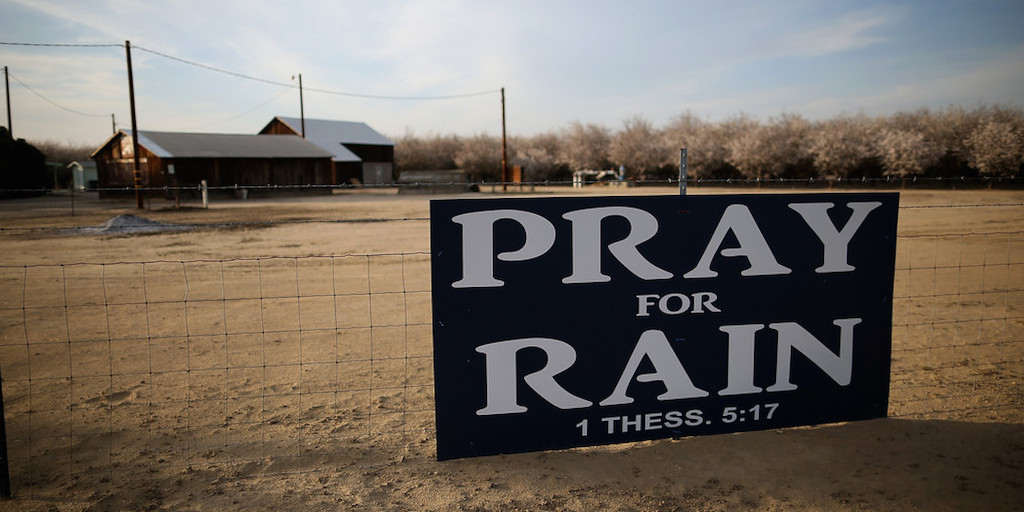
Water Rally in Tulare Needs You!

Mario Santoyo, Executive Director of California Latino Water Coalition, announced a Water Rally on Wednesday, March 26th in Tulare. We urge everyone with agricultural water interests to attend and advocate for increased water allocations!

Mario Santoyo

Mario Santoyo

Santoyo commented:

You all are very aware of the water crisis that has been plaguing the West Side farmers due to federal pumping restrictions, well now with this year’s historic drought combined with those same pumping restrictions the East Side farmers will be in the same crisis condition.

The only hope for farmers on both sides of this Valley to survive this year is a change in the Delta Operations by both the State and Federal governments in order to maximize the flexibilities they have under this crisis to deliver more water south of the Delta, so an upcoming rally is intended to send that message.

The initial event flyer for the rally along with a water supply update on the East Side farmers’ dire situation is below.

FWA Water Supply Information Meeting Flier No  1 (3-20-14) Final

2016-05-31T19:38:07-07:00March 22nd, 2014|

2014 AG Trends

 2014 Ag Trends and Land Values


By Patrick Cavanaugh, Editor

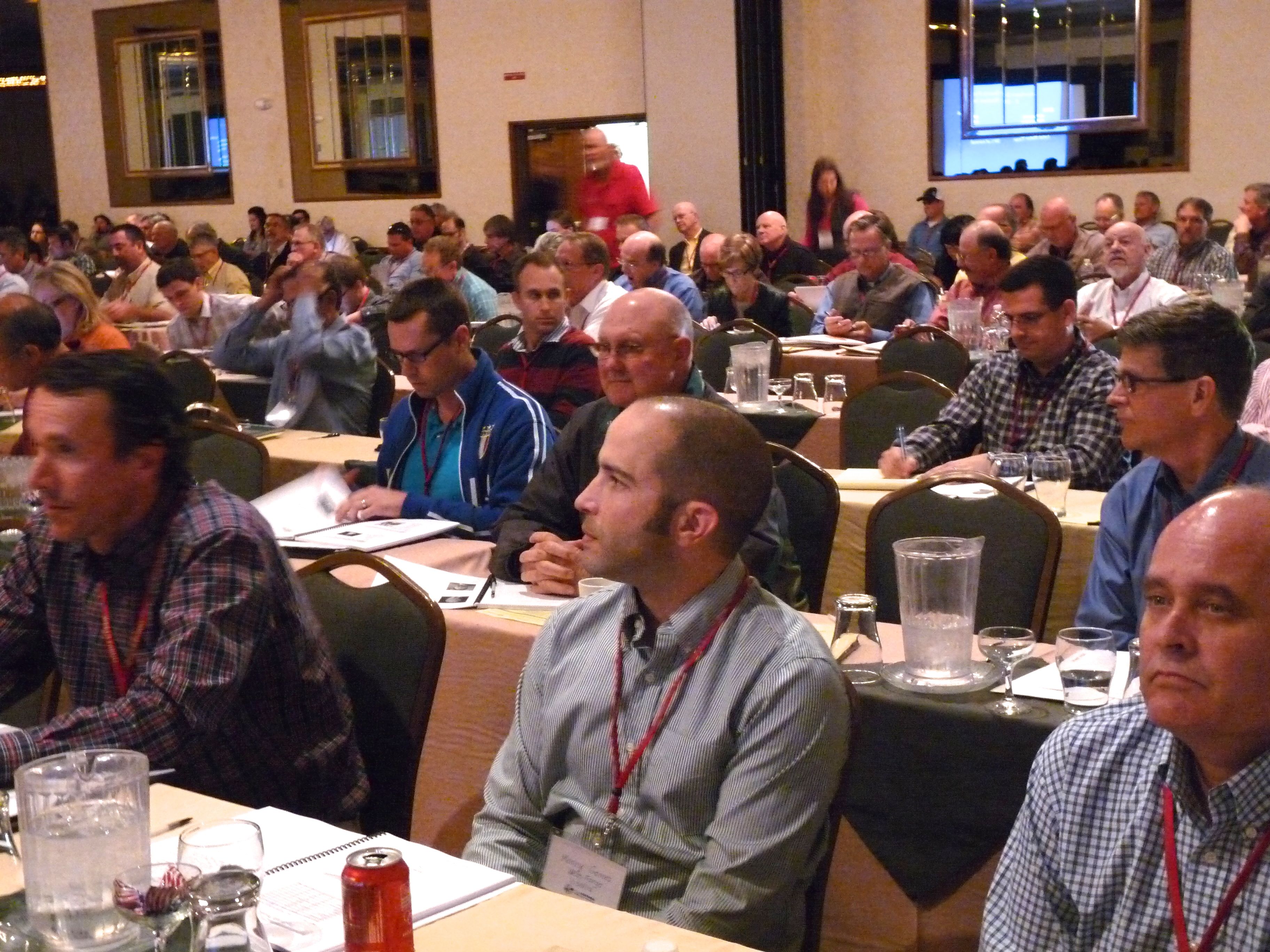
At the Outlook 2014 California Agriculture Thriving Through Change meeting about ag trends and land values, this week in Fresno, the crowd was upbeat despite the drought and regulations facing the farming industry.

Nat Dibuduo

Nat DiBuduo

Nat DiBuduo, President of the Allied Grape Growers is also an Accredited Farm Manager and President of the California chapter of American Society of Farm Managers and Rural Appraisers (ASFMRA), which hosted the conference.

“We talked about a lot of different commodities today starting out with citrus and ending with the dairy industry. And I am really happy to say that everyone, including the dairy industry are on a high,” DiBuduo said. “We do have our challenges; we have the drought issues and how that it is affecting things, but I would still say that California agriculture is positioned for a good future.”

“Granted, we have regulatory issues, drought issues, immigration issues to deal with, but the messages of the day’s meetings were positive,” noted DiBuduo.

It was also announced that ag land prices in all areas of the state and nearly all commodity prices are up.


2016-05-31T19:38:07-07:00March 22nd, 2014|

California Coming off Warmest Winter on Record

United States weather scientists have revealed California is coming off of its warmest winter on record, aggravating an enduring drought in the most populous US state.

The state had an average temperature of nine degrees Celsius for December, January and February, an increase from 5.8°C in 1980-81, the last hottest winter.

Reuters Newsagency reports that figure was more than four degrees Fahrenheit hotter than the 20th-century average in California, the National Oceanic and Atmospheric Administration (NOAA) said in a statement.

Warmer winters could make the already parched state even drier by making it less likely for snow to accumulate in the Sierra Nevada Mountains, NOAA spokesman Dr. Brady Phillips said.

“Winter is when states like California amass their main water budget, when snowpack is building,” said Dr Phillips, a marine biologist. “If you’re starting from a deficit and going into the dry season, it’s setting you up for a drier summer.”

Reuters reports California is in the grip of a three-year dry spell that threatens to have devastating effects on the state and beyond.

Farmers are considering idling 200,000 hectares of cropland, a loss of production that could cause billions of dollars in economic damage, and several small communities are at risk of running out of drinking water.

The state also recorded its driest winter to date by March, despite recent storms, with an average of 114mm of rainfall, compared to 297mm over the previous winter, NOAA said.

The agency is planning to release its spring outlook climate forecast tomorrow.

NOAA is an agency that enriches life through science. Their reach goes from the surface of the sun to the depths of the ocean floor as they work to keep citizens informed of the changing environment around them.

2016-05-31T19:38:07-07:00March 21st, 2014|

CDFA Honors UC Cooperative Extension Centennial

CDFA honors UC Cooperative Extension Centennial


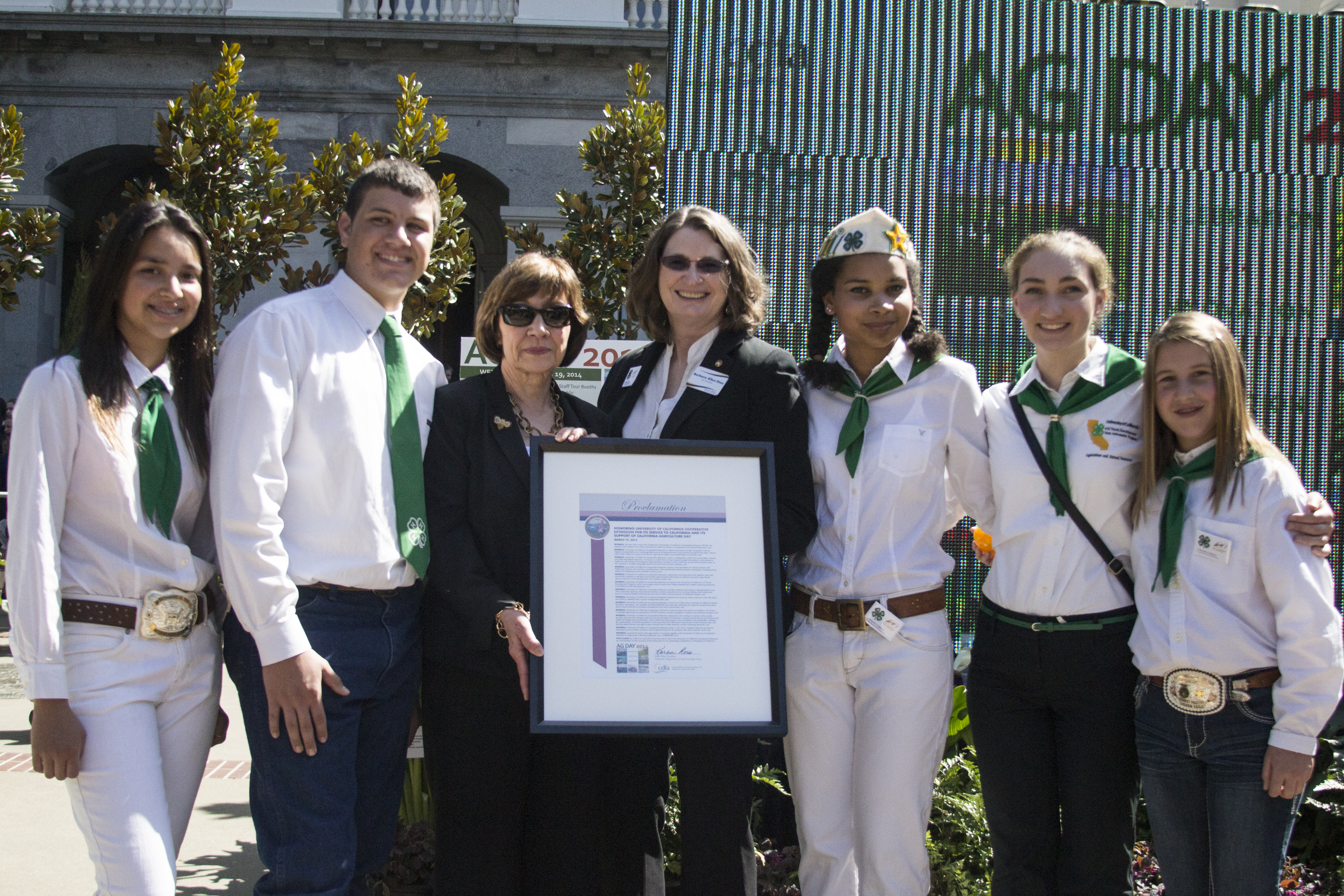
The annual Ag Day at the Capitol event yesterday (March 19) in Sacramento honored the University of California Cooperative Extension for its centennial. California Department of Food and Agriculture Secretary Karen Ross presented a proclamation to Barbara Allen-Diaz, UC vice president for Agriculture and Natural Resources, who oversees UC Cooperative Extension.

“I want to commend my good friend Barbara Allen-Diaz and Cooperative Extension,” said Ross. “You help us take all that great knowledge from the UC System and extend it directly to farmers and ranchers. It is a circle of innovation that sets us apart. It is absolutely crucial to our future and I’m really happy to be here to celebrate 100 years with you.”

UC Cooperative Extension, which has offices in counties throughout California, will be holding local celebrations throughout 2014. For more information about the UCCE centennial, visithttp://ucanr.edu/100.

2016-05-31T19:38:08-07:00March 21st, 2014|

Record California Table Grape Shipments

117.4M Boxes of Grapes Shipped Surpasses the $100M Mark for Second Time in History

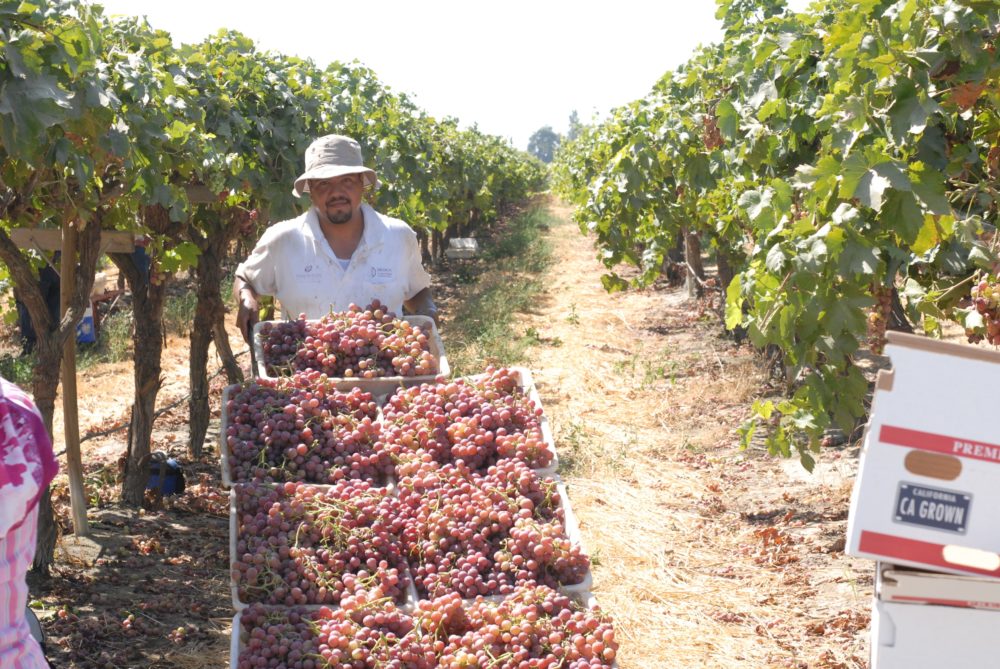
It was announced TODAY that California shipped a record volume of 117.4 million boxes (116.2 19-pound box equivalents) of fresh California grapes during the 2013 season, a total crop value of $1.7 billion.

The 2013 season started with shipments in early May and continued into February 2014. California produces 99 percent of the commercial fresh grapes grown in the United States.

“Over the past 10 years the volume has significantly increased,” said Kathleen Nave, president of the California Table Grape Commission. “In 2003 the crop was under 80 million boxes. In 2012 the 100 million box mark was crossed for the first time in history, and in 2013 another record was set with the crop totaling 117.4 million boxes.”

Exports also hit a new record in volume, with 48.6 million boxes shipped to export markets including Canada – a 17 percent increase over the previous year. The top export markets in volume included Canada at 11.9 million, followed by China/Hong Kong at 7.9 and Mexico at 6.6. The 48.6 million boxes exported represented 41 percent of the total crop volume.

With the 2014 season a little over a month away, the commission is gearing up its global campaign for Grapes from California which includes retail, consumer and foodservice programs.

2016-05-31T19:38:08-07:00March 20th, 2014|

Undersecretary, CA Natural Resouces Agency Janelle Beland Responds at Hearing

Packed House for Committee on Natural Resources, Janelle Beland, Undersecretary: Hearing Illuminates What is Going on with the State

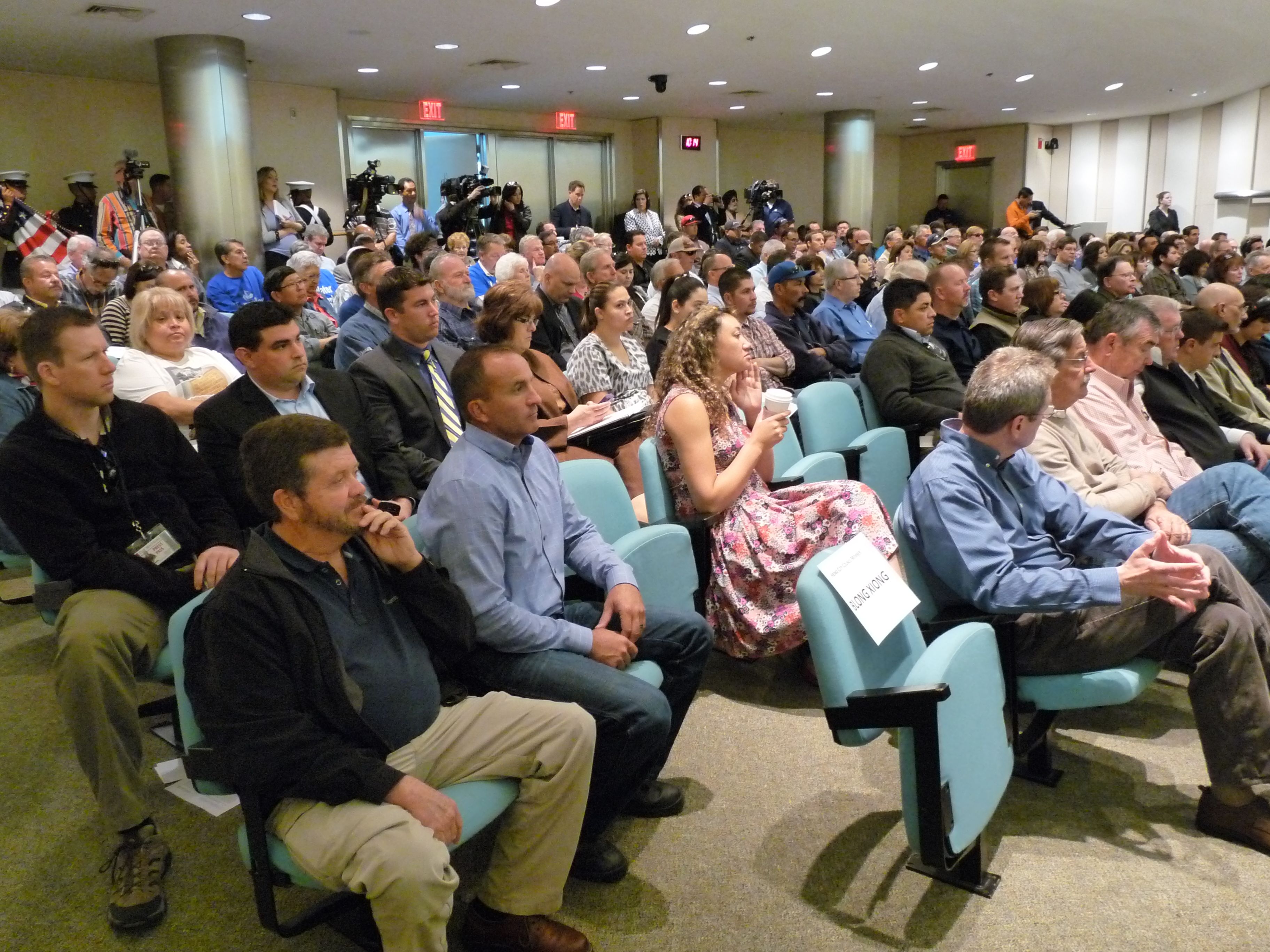
TODAY, About 500 people including farmers, farm employees and others tied closely to the agricultural industry packed the Fresno City Council Room at City Hall to hear from several members of Congress seeking legislation to help California, crippled by a drought and environmental restrictions.

Tom_McClintock,_Official_Portrait

And if you happened to be there for only a few minutes, you would have heard what defines a problem with  Governor Brown’s office in regard to offering solutions to the water crises.

Are you ready for this?

Janelle Beland

Question from Congressman Tom McClintock to Janelle Beland, Undersecretary California Natural Resources Agency:


Representative McClintock
: “Our subcommittee has asked [many months ago, with no response] why nearly 800,000 acre-feet of water went from the Delta to the ocean last fall knowing full well that we were heading into a potential catastrophic drought?  It drained Folsum Lake almost entirely  and certainly was not pumped into San Luis Reservoir.


Janelle Beland: “We were not anticipating that the drought would continue.”

2016-05-31T19:38:08-07:00March 20th, 2014|

Science Advisory Report Posted

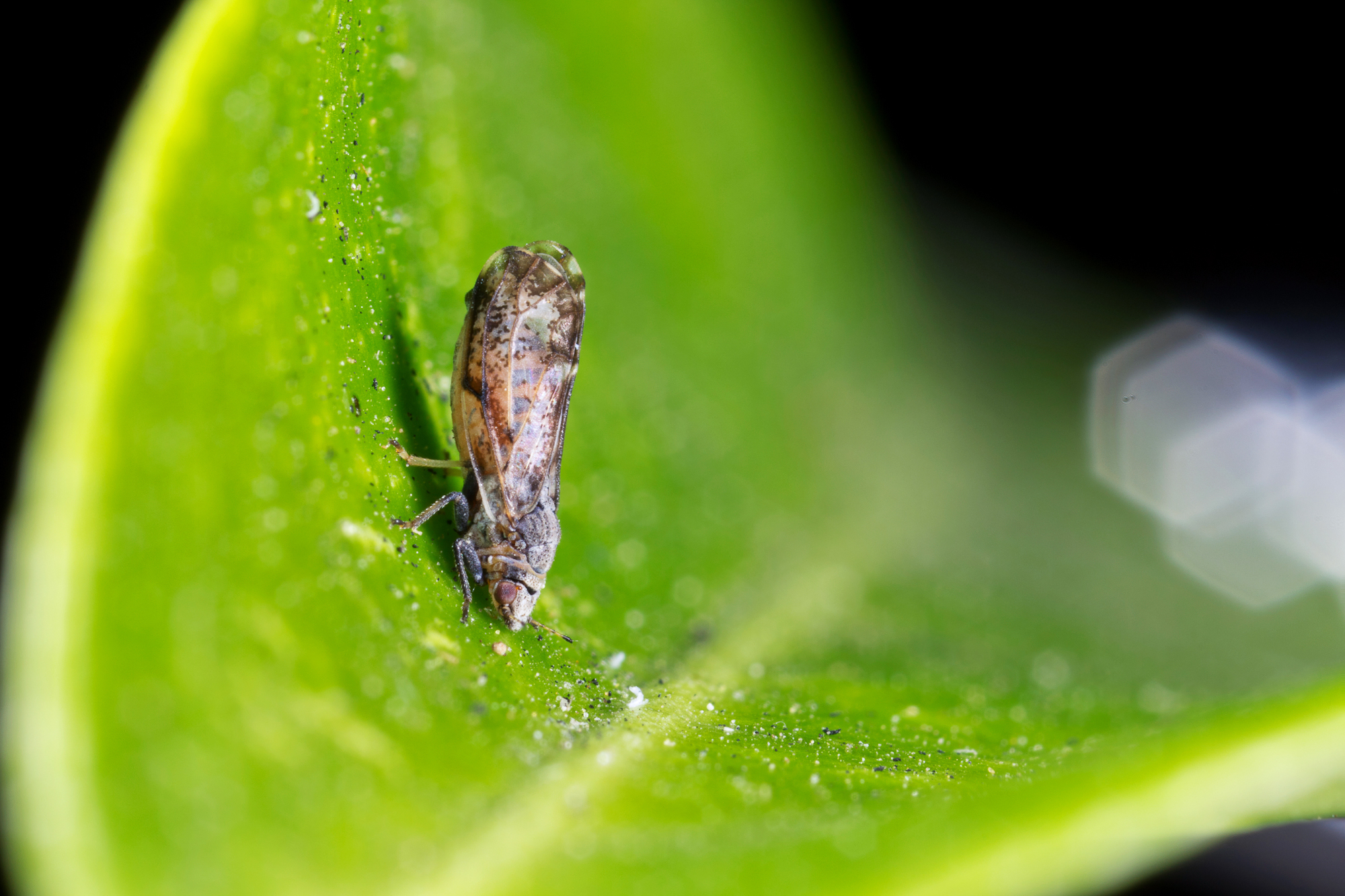
The California Department of Food and Agriculture‘s (CDFA) Asian Citrus Psyllid (ACP) and Huanglongbing (HLB) Ad Hoc Science Advisory Panel (SAP) is a group of scientists selected by the Secretary to provide scientific advice to the Department to ensure that they are using the best science available when developing program policy and protocols.

These scientists consist of experts from states that have already experienced the sequence of events associated with ACP/HLB infestation, as well as California-based scientists with local knowledge to ensure a diverse perspective.

The panel met in December 2013 and was tasked with providing recommendations on a series of non-regulatory questions vetted by CDFA.

This report contains the list of questions and the answers from the ACP-SAP. In addition, the report contains the SAP’s comments and recommendations for consideration in the development of ACP/HLB programs in California.

Among the many questions answered in the report, here are a few:

  • What is the appropriate size of treatment areas around ACP find sites in eradication zones under a variety of scenarios?
  • Would it be beneficial to freeze dry leaves from asymptomatic, VOC positive trees for future analysis, when technology improves?
  • With most of the ACP detections in Tulare County being on traps placed on poles rather than within the canopy, should we change trap placement for the ACP program?
  • On March 23, 2014 we will be 2 years without a HLB detection in California. What should be our exit strategy?

For a copy of the letter, click here.

 If you have any questions or concerns, please do not hesitate to contact the Citrus Program Manager, Victoria Hornbaker at 916-654-0317 or via email at Victoria.Hornbaker@cdfa.ca.gov.

2016-05-31T19:38:09-07:00March 19th, 2014|

California Strawberry Commission Economic Report: Industry Has Postive Local and State Impact

TODAY, the California Strawberry Commission released a first-ever statewide economic report detailing the $3.4 billion economic contributions of strawberry farming to the state. The report titled, Sustaining California Communities: Economic Contributions of Strawberry Farming (February 2014) showcases the positive impact strawberries have on local communities.

With the best climate in the world for sustainably growing strawberries, California continues to lead the United States and the world in strawberry production. California strawberry farmers are responsible for growing nearly 90 percent of U.S. strawberries. If California were a country, it would be the world’s largest producer of strawberries. California’s 400 family-owned strawberry farms generate an estimated 70,000 farm jobs, while growing strawberries on less than 40,000 acres (less than one percent of all California farmland).

“Not only does California have the best climate on earth to grow strawberries, it also has the most innovative and hardworking strawberry farmers in the world,” said Rick Tomlinson, President of the California Strawberry Commission.  “These 400 small family farms are the foundation for on-farm jobs, as well as packaging, shipping, processing, marketing, nutrition, science, and export jobs that create opportunity in our Central Coast communities and healthy food for consumers.”

Strawberry farming has a multiplier effect, creating jobs and generating revenue beyond the farm. For every farm dollar made, 97 cents is invested back into the community. Strawberry farming accounts for an estimated $108 million in annual tax revenue. This in turn supports local, state and regional government services. Taxes support teachers, police and firefighters, and through a dedicated program, college scholarships support higher education opportunities for children of strawberry farm workers.

just_add_ca_strawberries_rolling_banner-616_250

Source: California Strawberry Commission

“California strawberry farming is a tremendous asset to the state and nation,” said economist Jim Schaub, Ph.D. “The dollars that come into strawberry farms go back out as wages, land costs, payments for farm inputs and services, regulatory costs, and property and business taxes.”

From inception to harvest, the entire lifecycle of a strawberry begins and ends in California. In Northern California, roughly a billion plants are nurtured in open fields from October to February. These hardy, healthy nursery plants are then shipped to the Central Coast: the world’s premier region for growing strawberries. Every step of the way, strawberries provide hundreds of communities with jobs, income and tax revenue necessary to sustaining local economies.

The California Strawberry Commission is a state government agency located in Northern California that represents an industry of 600 growers, shippers and processors of California strawberries. With a focus on food safety education, Commission strategies also include production and nutrition research, trade relations, public policy and marketing communications.

2017-09-03T00:44:43-07:00March 18th, 2014|

PLF On 9th Circuit Biological Opinion

PLF statement on 9th Circuit Upholding Delta Smelt Biological Opinion

Last Week, a panel of the Ninth Circuit largely upheld the federal government’s 2008 “biological opinion” for the delta smelt, a regulation under the Endangered Species Act has that triggered draconian restrictions on water deliveries from the federal and state water projects to the San Joaquin Valley and Southern California.

Pacific Legal Foundation (PLF) attorneys represent some of the farmers in the case who are challenging the biological opinion as an abuse of federal power based on questionable science and shoddy regulatory procedures.

Damien Schiff, a principal attorney with PLF who represents farmers in the case, issued this statement today, in response to the Ninth Circuit’s ruling:

“The Ninth Circuit has done a reverse rain dance for California, practically guaranteeing that the impacts of our current drought will be more devastating,” said PLF Principal Attorney Damien Schiff.   

“The ruling gives judicial blessing to regulations that impose real punishment on people with only speculative benefits for a declining fish species.   Under these draconian regulations, water is withheld from farms, businesses and communities from the Central Valley to San Diego based on sloppy science and ideological agendas.    

“There’s a drought of common sense in the bureaucracies that impose these regulations – and in the perverse legal precedents that lead courts to uphold them.  In one notorious precedent, TVA v. Hill, the U.S. Supreme Court said the Endangered Species Act gives absolute priority to species over everything else, including the general welfare of the human community.    

We must all hope that California’s water crisis – made worse today by the Ninth Circuit – can prod the U.S. Supreme Court to reconsider its past decisions that are leaving us so parched.    

Indeed, the one hopeful aspect of today’s ruling is there’s a possibility the smelt case could get to the Supreme Court.  There, it might result in a decision that turns the tide of environmental law away from imbalance and zealotry, and back toward sanity.”

2021-05-12T11:06:02-07:00March 17th, 2014|

Temporary Experimental Variances are Available for Tractor-Mounted Platforms

Cal/OSHA has consistently taken the position, according to the Monterey County Farm Bureau, that use of tractor-mounted platforms to transport workers violates Cal/OSHA safety standards.

These devices are widely used in the state, particularly in the southern Central Valley and on the Central Coast.

Current Cal/OSHA safety standards prohibit “riders on agricultural equipment other than persons required for instruction or assistance in machine operation.”

On February 24, the agency released a memorandum describing how agricultural employers who wish to use tractor mounted personnel platforms to reduce employee fatigue may write to Cal/OSHA to apply for a variance from this standard.

The Occupational Safety and Health Standards Board grants permanent variances, but the employer must show that the proposed variance would provide safety equal to or better than the existing standard.

Information about applying for a permanent variance is available at the Board’s website.

Cal/OSHA grants temporary experimental variances (TEVs), which allow employers to “participate in an experiment . . . designed to demonstrate or validate new and improved techniques to safeguard the health or safety of workers.”

A TEV will allow you to gather the information necessary for the Board to evaluate a permanent variance application.

Generally, TEVs granted by the agency are valid for one year, and are envisioned to presage an employer application for a permanent variance.

Both permanent variances and temporary variances are granted to employers individually; an employer who has not been granted either type of variance may not use tractor transportation platforms because another employer has been granted a variance.

To apply for a TEV, you must send a signed letter to:

Juliann Sum, Acting Cal/OSHA chief

1515 Clay Street

Oakland, CA 94612

2016-05-31T19:38:49-07:00March 14th, 2014|
Go to Top