Senate Drought Bill Passes, Westlands Expresses Appreciation

This evening, the United States Senate passed, by unanimous consent, the Emergency Drought Relief Act, a bill to provide federal and state water agencies with additional flexibility to deliver water where it is most needed during California’s historic drought. The legislation, sponsored by Senators Dianne Feinstein and Barbara Boxer (both D-Calif.), Harry Reid (D-Nev.) and Dean Heller (R-Nev.), must now be reconciled with a separate bill passed by the House of Representatives.Dianne_Feinstein_official_Senate_photo_2

“Getting this bill passed was a true team effort.” Senator Feinstein credited the individuals above and added,  “Senator Murkowski, ranking member of the Committee on Energy and Natural Resources, displayed true bipartisanship in working across the aisle to address this disaster.”

Other cosponsors of the drought bill include Senators Robert Casey (D-Pa.), Dick Durbin (D-Ill.), Mazie Hirono (D-Hawaii), Jeff Merkley (D-Ore.), John Rockefeller (D-W.Va.), Debbie Stabenow (D-Mich.) and Ron Wyden (D-Ore.).

Senator Feinstein commented, “The drought in California is devastating and shows no signs of letting up. Snowpack is at 6 percent of its normal level and the state’s largest reservoirs are at or below half capacity. Congress must take immediate action to help alleviate the suffering of farmers, workers, businesses and communities throughout the state.”

Westlands Water District Round LogoWestlands Water District General Manager Thomas Birmingham issued the following statement on the drought bill passage:

“Passage of this legislation by the Senate marks an important milestone in the effort by members of California’s congressional delegation from both sides of the aisle to provide some relief from the disastrous human and economic impacts of drought and restrictions imposed on operations of the Central Valley Project and State Water Project under the Endangered Species Act and other federal regulations.

The fact that this bill passed by unanimous consent is a testament to the hard work of Senator Feinstein, with support from Senator Boxer and members of the House of Representatives, to explain to senators from other states the urgent need for and the importance of this legislation to the people of California.”

“Westlands Water District expresses its great appreciation for the hard work of Senator Feinstein and her colleagues in obtaining passage of this legislation. We look forward to working with Senator Feinstein and Members of the House in their efforts to reconcile this legislation with legislation that has already passed in the House.

It is Westlands’ hope that this process can begin quickly, and we are confident that Senator Feinstein and her colleagues in the House will be able to identify common sense solutions that will restore water supplies, while providing reasonable protections for fish.

The tens-of-thousands of people who otherwise will be unemployed and the welfare of people around the state depend on a meaningful compromise being reached quickly.”


Photo Credit: Westlands Water District Ranch on loopnet.com
 

2016-05-31T19:35:31-07:00May 23rd, 2014|

California Ag Today: California Walnut Growers Support its Board

CALIFORNIA WALNUT GROWERS OVERWHELMINGLY SUPPORT CONTINUTATION OF MARKETING ORDER

Ninety-five percent of eligible California walnut growers who voted and ninety-three percent of the volume represented in the referendum favored continuing the Federal Marketing Order and the efforts of the California Walnut Board.  This is the first continuation referendum vote ever held by the industry.

“It’s rewarding to know that the work of the California Walnut Board is recognized by the growers and handlers we strive to serve,” said Dr. Jerome Siebert, Chairman of the California Walnut Board.  “When we come together as an industry, we are powerful at addressing challenges and generating far-reaching results for all California walnut producers.”

Voting in the referendum took place from April 1 through April 19, 2014 and those eligible to vote were growers engaged in the production of walnuts within the state during the period September 1, 2012 through August 31, 2013.  In order for the referendum to pass, at least two-thirds of eligible producers must vote in favor of continuance.  Since the order was amended in 2008, a vote is now required every six years.

“We’re grateful for the continued support of our growers, who see the value of working together to benefit the entire industry,” said Dennis A. Balint, Executive Director of the California Walnut Board. “There is more work ahead, but we’re starting from a good place and will continue to build on several decades of experience, relationships, research and success.”

The California walnut industry is made up of more than 4,000 growers and 100 handlers. The growers and handlers are represented by two entities, the California Walnut Board and the California Walnut Commission.


California Ag Today

2016-05-31T19:35:31-07:00May 21st, 2014|

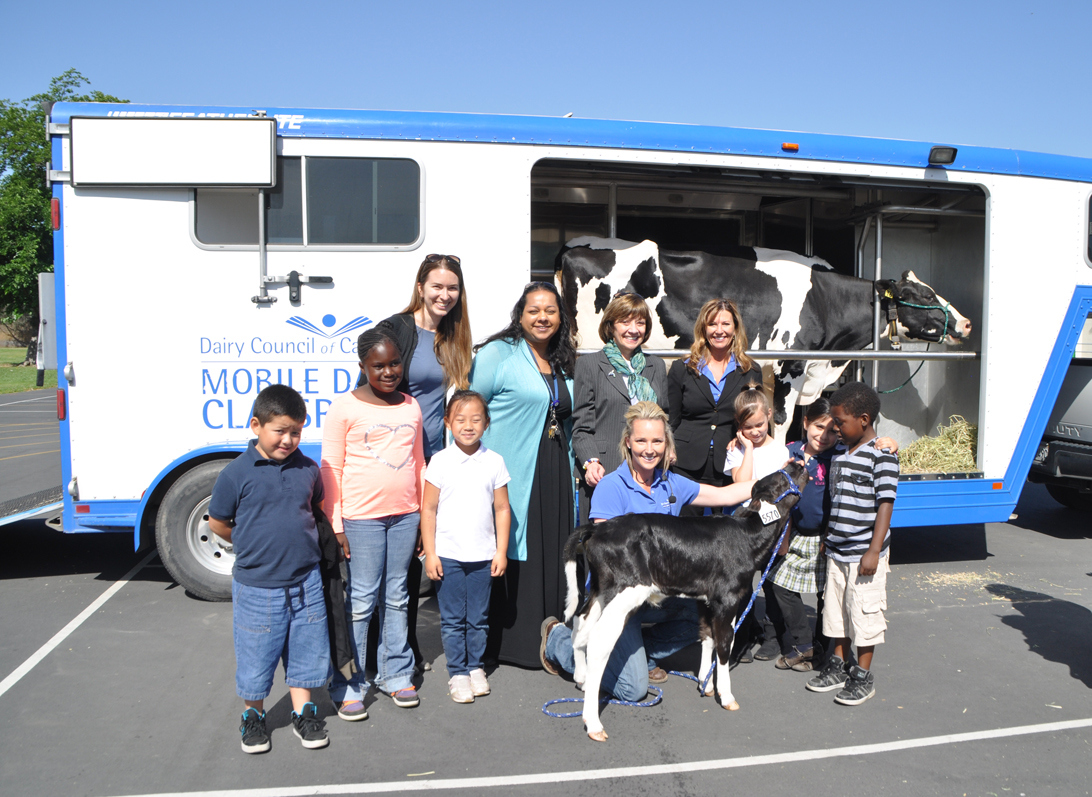
Secretary Ross Joins Elementary School Students to Experience Mobile Dairy Classroom

Source: Tammy Anderson-Wise, CEO Dairy Council of California

Earlier this month, CDFA Secretary Karen Ross joined students at Sacramento’s Pacific Elementary School for a visit from the Mobile Dairy Classroom, where an instructor shared fun facts like: cows have built-in fly swatters, and milk is warm when it comes out of the udder.

As the original farm to school program in California, Mobile Dairy Classroom has brought a bit of the dairy farm to schools across the state since the 1930s.

To help children better appreciate where their milk and milk products come from, the free assemblies provided by the Dairy Council of California teach children about agriculture and cows, healthy eating from all five food groups, and how to lead healthy, active lifestyles.

Mobile Dairy Classroom assemblies augment the Dairy Council of California’s classroom nutrition education lessons that are also free to schools as part of the dairy industry’s commitment to community health.

With six Mobile Dairy Classroom units across California, 400,000 students each year have the chance to make a personal connection with a cow and a calf, and better understand where their milk comes from.

Furthermore, the assemblies allow for a better appreciation for the role of the dairy farmer and milk processor in providing healthy food and why milk and milk products are an essential part of an overall balanced diet with foods from all five food groups.

2016-10-18T16:10:11-07:00May 20th, 2014|

Ventura County ACP Report Less Than Uplifting

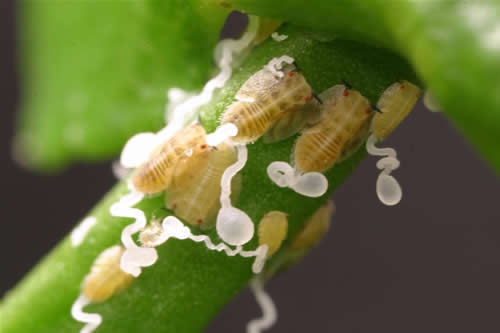
Joanne O’Sullivan, a licensed PCA and QAL (Qualified Applicator), and a Citrus Pest & Disease Prevention Program Grower Liaison in Ventura County, reported TODAY that four new urban settings with 25 or more citrus trees on the property have been discovered in Asian citrus psyllid treatment areas in recent weeks. These four finds are within the same area as the commercial Camarillo find in March.

CDFA deems these orchards also as commercial; therefore, the homeowners are financially responsible for the treatment.

O’Sullivan said, “The first two homeowners I contacted were more than willing to cooperate and take on the financial costs of spraying. They understand it is necessary for the benefit of both their trees and the health of Ventura County’s citrus industry. The third homeowner opted to remove 15 of his trees and CDFA then sprayed the remaining ten. The last and remaining homeowner will take a bit more convincing, but I am confident they will come to see the great benefits of working with us.”

“On a less uplifting note,” O’Sullivan continued, “it has been an unlucky month for Fillmore and Piru producers. Piru has been hit again in the Bardsdale area with two ACP confirmations in the same week. These same growers had completed the ACP psyllid spray protocol in November of last year. It goes without saying that the producers are less than delighted to be repeating treatment again so soon.”

She reiterated a very important element in the ACP/HLB program,
”The goal of the [Ventura County ACP-HLB] Task Force has been to delay as long as possible the introduction of HLB into Ventura County. As a result of the progressive and aggressive work from producers, packers, pest advisors, operators and the CDFA and county trapping programs, Ventura remains one of the most successful ACP/HLB programs in the state.

A critical element of ACP treatment protocol for organic growers is the importance of scouting post-treatment. All blocks must be aggressively monitored following applications, using the sampling protocol that is included in the ACP CONFIRMATION IN YOUR AREA packet.

Current protocol requires organic producers to sample every two weeks after the third treatment. Sampling every two weeks allows the grower to document control. Early detection and swift eradication is our best defensive against the introduction of HLB and its devastating effects on Ventura citrus producers.

Every producer – commercial and organic – should be familiar with the signs of Asian citrus psyllid. Literature on identifying ACP is available at the CRB, UCIPM, UC Cooperative Extension as well as from CDFA. Share it with your workers. If you have any doubts about your ability to identify adults, nymphs, and eggs, please contact me, I am always glad to meet with you on your ranch and help you scout.

In closing, I was forwarded an interesting short news article outlining the economic hit Florida has taken as the result of HLB, with annual production dropping from 1,000,000 boxes of fruit to 750,000. This news story is a not- so-gentle reminder of why it is vitally important that everyone working together in a cooperative spirit can keep Florida’s scenario from happening in California.

Take a look:

https://uk.news.yahoo.com/us-orange-production-hit-disease-041911170.html#rOCRoWr

And let’s all keep up the diligent efforts that help keep Ventura’s citrus industry strong.


CPDPP

The California Citrus Pest & Disease Prevention Program is a grower-funded program administered by the Citrus Pest & Disease Prevention Committee, which was established to advise the California Secretary of Agriculture and the agricultural industry about efforts to combat serious pests and diseases that could threaten our state’s citrus industry.

Key responsibilities are:

  • Develop informational programs to educate and train residential owners of citrus fruit, local communities, groups and individuals on the prevention/detection of pests, diseases and their vectors specific to citrus.
  • Develop programs for surveying, detecting, analyzing, and treating citrus pests and diseases.
  • Set box assessment to help pay for citrus pest and disease detection, treatment and educational outreach programs.

Photo Credit: UC ANR News Blog

2016-05-31T19:35:31-07:00May 20th, 2014|

UC Davis Report Shows Startling, Accurate Water Crisis Snapshot

The report issued today by the California Department of Food & Agriculture and the University of California, Davis presents an accurate water crisis picture of the reality resulting from federal decisions that will reduce the production of food and fiber, according to California Citrus Mutual.

Unfortunately, this picture is not complete. The report indicates the losses which have been incurred to-date, but does not and cannot begin to predict future impacts as permanent crops continue to be ripped out of production as we enter into the hottest months with zero access to surface water,” says CCM President Joel Nelsen.

“The report is a compilation of what the authors know is happening as a result of April calculations. Since then, the Bureau of Reclamation has challenged the Administration’s focus on obesity prevention, school lunch programs, and other campaigns focused on healthy eating by holding water that could otherwise be used for the production of food and fiber.

As such, growers are being forced to make difficult farming decisions that have and will continue to result in reduced plantings of annual crops and the removal of permanent crops.

“If there is a flaw in the report, it is the assumption that ground water supplies are available to offset surface water loss, which may be true in some production areas but certainly not all.

The authors do fairly acknowledge that the impacts to the Friant service area in particular are not yet calculated into this water crisis report.

“The report demonstrates the costs associated with the inability of the Central Valley to produce a viable crop due to zero or minimal water allocation.

As the actions of the shortsighted agencies manifest themselves into reality, the cost will be borne for years to come until permanent crop plantings are replaced and production is regained. Production, revenue, and jobs are in abeyance for several years to come.”

Image courtesy of TeddyBear[Picnic]/FreeDigitalPhotos.net


2016-05-31T19:35:32-07:00May 20th, 2014|

Pollinator Survey Shows Better Results but Significant Losses, Plus USDA Fall Summit on Bee Nutrition and Forage

While an annual pollinator survey of beekeepers, released yesterday, shows fewer U.S. colony losses over the winter of 2013-2014 than in recent years, beekeepers say losses remain higher than a sustainable level. According to the survey, conducted by the U.S. Department of Agriculture and the University of Maryland Bee Informed Partnership, the total loss (death) of managed honey bee colonies from all causes was 23.2 percent nationwide, well above the 18.9 percent level of loss that beekeepers accept as economically sustainable. Nevertheless, the losses were an improvement over the national 30.5 percent loss, and the California 28.6 percent loss, both for the winter of 2012-2013, and over the eight-year average loss of 29.6 percent.

More than three-fourths of the world’s flowering plants rely on pollinators, such as bees, to reproduce, meaning pollinators help produce one out of every three bites of food Americans eat.

“Pollinators, such as bees, birds and other insects are essential partners for farmers and ranchers and help produce much of our food supply. Healthy pollinator populations are critical to the continued economic well-being of agricultural producers,” said Agriculture Secretary Tom Vilsack. “While we’re glad to see improvement this year, losses are still too high and there is still much more work to be done to stabilize bee populations.”

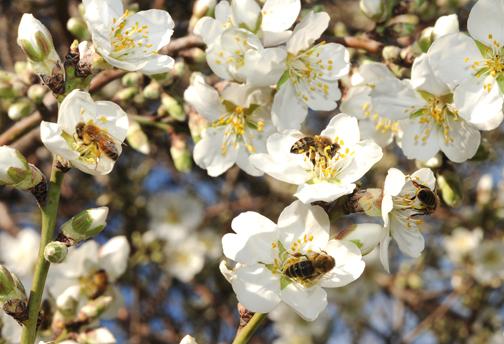
“Honeybees pollinate more than 130 California crops, including almonds, California’s largest agricultural export. More than 780,000 acres of almonds grow in California, and for pollination, they need an estimated 1.6 million hives, more than 60 percent of the nation’s total,” according to Debbie Arrington, Sacramento Bee.

There is no way to tell why the bees did better this year, according to both Dennis vanEngelsdorp, a University of Maryland assistant professor and director of the Bee Informed Partnership, and Jeff Pettis, research leader of the Agricultural Research Service (ARS) Bee Research Laboratory.

Although the pollinator survey shows improvement, losses remain above the level that beekeepers consider to be economically sustainable. This year, almost two-thirds of the beekeepers responding reported losses greater than the 18.9 percent threshold.

“Yearly fluctuations in the rate of losses like these only demonstrate how complicated the whole issue of honey bee heath has become, with factors such as viruses and other pathogens, parasites like varroa mites, problems of nutrition from lack of diversity in pollen sources, and even sublethal effects of pesticides combining to weaken and kill bee colonies,” said Jeff Pettis.

The winter losses survey covers the period from October 2013 through April 2014. About 7,200 beekeepers responded to the voluntary survey.

A complete analysis of the bee survey data will be published later this year. The summary of the analysis is at http://beeinformed.org/results-categories/winter-loss-2013-2014/.

***

The U.S. Department of Agriculture (USDA) also announced a summit in Washington D.C. on October 20-21, 2014 aimed at addressing the nutrition and forage needs of pollinators. Attendees will discuss the most recent research related to pollinator loss and work to identify solutions.

***

Additionally, in March of 2014, Secretary Vilsack created a Pollinator Working Group, under the leadership of Deputy Secretary Krysta Harden, to better coordinate efforts, leverage resources, and increase focus on pollinator issues across USDA agencies.

USDA personnel from ten Department agencies (Agricultural Research Service, National Institute of Food and Agriculture, Farm Services Agency, Natural Resources Conservation Service, Animal and Plant Health Inspection Service, Economic Research Service, Forest Service, Agricultural Marketing Service, Risk Management Agency and Rural Development) meet regularly to coordinate and evaluate efforts as USDA strives toward improving pollinator health and ensuring our pollinators continuing contributions to our nation’s environment and food security.

Photo credit: UC Davis Department of Entomology and Nematology

2016-05-31T19:35:32-07:00May 16th, 2014|

Heat Illness Prevention: Warning for Farmworkers This Week

Heat Illness Prevention

Extreme Heat Wave Expected to Continue Throughout this Week


With really high temperatures throughout the Central Coast, Cal/OSHA will probably focus enforcement in coming days in these areas. Please remember the key points of compliance with the Heat Illness Prevention Standard:Heat Illness Prevention


* Water — 1 quart per worker per hour, with a plan for replenishment throughout the work shift


* Shade — enough for 25% of the crew working at the location; use of natural shade is acceptable if no shadow is cast; air-conditioned vehicles are acceptable; provided at all times when temperature exceeds 85 degrees


* Rest — allow workers to rest in shade if they feel the need for no less than 5 minutes


* Training — workers & supervisors must be trained about heat illness and emergency response procedures before being exposed to heat


* High-Heat Procedures — ensure effective communications in case of emergency; observe employees carefully for signs of heat illness; remind employees to drink water throughout the shift; closely supervise un-acclimatized employees for first 14 days of exposure to high heat

2017-05-04T16:51:11-07:00May 14th, 2014|

Urgent: Protect Workers from Excessive Heat

Extreme Heat Wave Expected to Continue Throughout Week

With really high temperatures throughout the Central Coast, Cal/OSHA will probably focus enforcement in coming days in these areas; please remember the key points of compliance with the Heat Illness Prevention Standard:

* Water — 1 quart per worker per hour, with a plan for replenishment throughout the work shift

* Shade — enough for 25% of the crew working at the location; use of natural shade is acceptable if no shadow is cast; air-conditioned vehicles are acceptable; provided at all times when temperature exceeds 85 degrees

* Rest — allow workers to rest in shade if they feel the need for no less than 5 minutes

* Training — workers & supervisors must be trained about heat illness and emergency response procedures before being exposed to heat

* High-Heat Procedures — ensure effective communications in case of emergency; observe employees carefully for signs of heat illness; remind employees to drink water throughout the shift; closely supervise un-acclimatized employees for first 14 days of exposure to high heat

2016-05-31T19:35:32-07:00May 14th, 2014|

Central SJV Growers Frustrated Re: 100% Water Allocations in Northern California

Cannon Michael: There is a Complete Lack of Common Sense

Water Allocations Unfairly Distribute Suffering in the Central Valley


Feather River growers in Northern California have 100 percent water allocations and it’s very frustrating to Central Valley Farmers.

“True, it’s a drought year but there have been opportunities to get water south of the Delta that have been completely blown by mismanagement, over-regulation, a complete lack of common sense, and lack of understanding what the real needs are,” said Cannon Michael, a 6th generation California farmer in Merced County.

“The California Water Resources Control Board, and the Bureau of Reclamation have sent more than 1.8 million acre feet of water out the Golden Gate only for a possible need for fish. When you have such a dramatic need for humans, it’s just insanity; and at a some point, it all has to catch up with a lot of people,” said Michael, who has had to set aside 15 percent of his farm due to no water.

“The people who are regulating and the people who are legislating have insulation from this for a little while, but it eventually is going to catch them,” Michael said. “The problem for me is that these regulations hurt the poorest of the people and the minority community, who are already having a tough time.”

“These regulations and low water allocations are taking away valuable fresh food and milk, and all the things people need for life. It’s taking away jobs and will displace thousands of workers who will have to get in food lines to survive. And this is completely unnecessary,” said Michael.

“There could have been way more water allocations exported safely this year. There were no fish at the pumps and we have the data to prove it,” said Michael.

“We had good storms in February, March and April, but the majority of that water went out the Bay; it wasn’t even close,” said Michael.

“There are too many left-leaning decisions from the California Water Resources Control Board to the 9th Circuit Court in San Francisco, which made a recent ruling that hurt agriculture, agreeing that the Bureau of Reclamation did not consider the safety of the Delta Smelt several years ago when it exporter water south. And then on top of everything, Governor Brown pulls the funding from ag education. It is a constant barrage against agriculture, and when will it ever be enough?” asked Michael.

“There is no respect for California agriculture. There are so many people spinning lies about our industry. Do they want all the specialty crops that they enjoy eating coming from other countries? Again, it’s insanity,” he said.

And Michael said the farmer is always, always held accountable while the environmental community is never held accountable. “There is no accounting for what they use the water allocation for when it’s released it to the ocean. There is no report on what good it’s doing. They are not at all held to the same standards as California Farmers.”

2016-05-31T19:35:33-07:00May 13th, 2014|

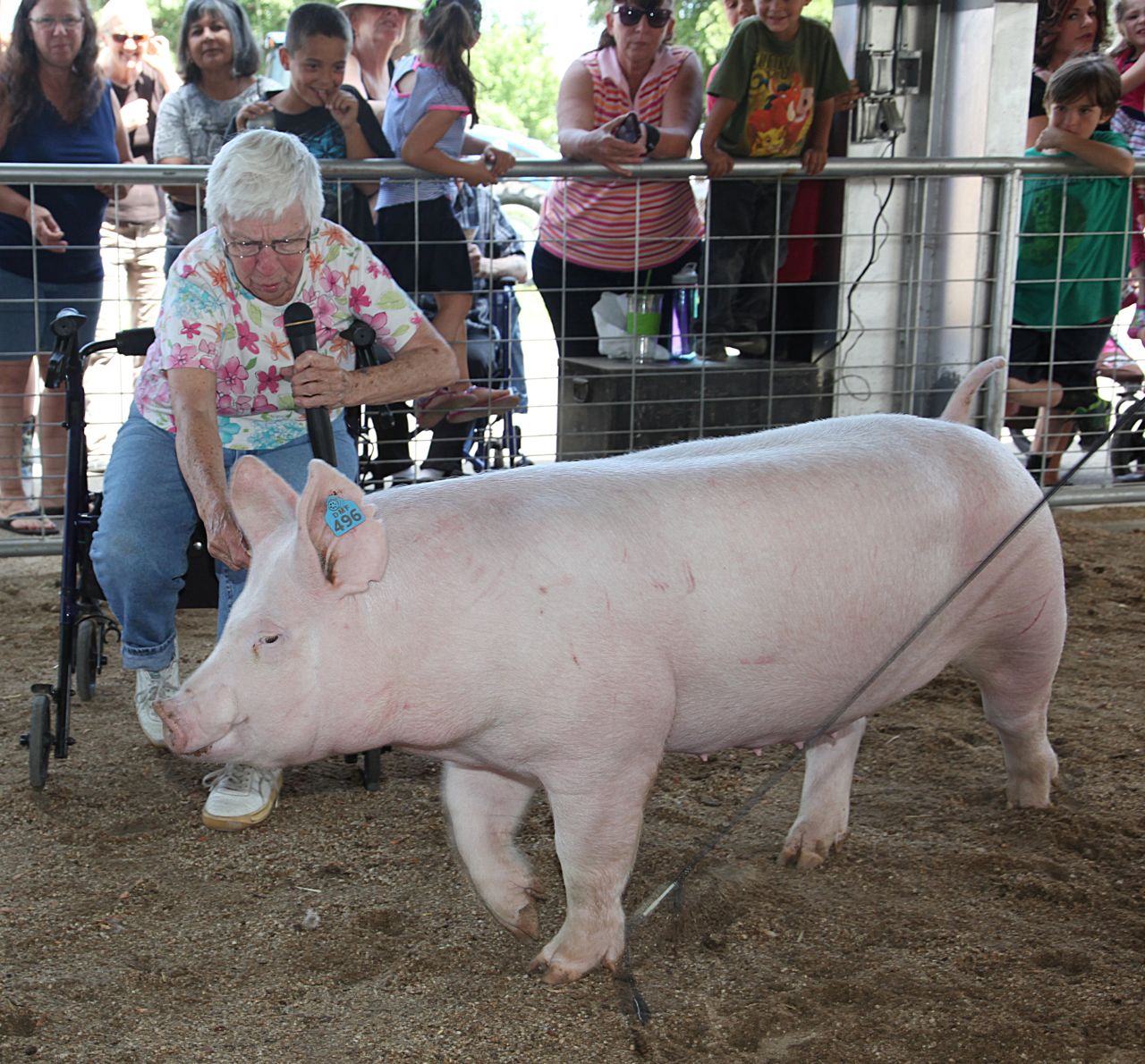
Great-Grandmother Wins Dixon May Fair Hogcalling Contest

Great-Grandmother Wins the Hogcalling Contest with Determined Voice

DIXON–Great-grandmother Helen Lang, 89, of Cordelia won the 2014 Dixon May Fair Hogcalling Contest “hams down.”

Lang coaxed a hog over to her wheelchair with a firm and determined voice. The hog readily obeyed.

“My dad used to raise Hampshire pigs,” she said. “And now my great-grandchildren do.”

Lang, who has been attending the Dixon May for more than 50 years, this year decided to enter the 12th annual hogcalling contest. Three of her great-grandchildren did, too: Christopher Lang, 9, his brother, Gabriel Lang, 3, and their cousin, Xavier Copeland, 11.  Christopher and Xavier, both members of the Suisun Valley 4-H Club, raised hogs for the fair. All three boys won awards in the hogcalling contest.

Emcee Donnie Huffman, president of the Friends of the Dixon May Fair and a former 4-H swine leader, urged the contestants to “bring home the bacon” and to get the hogs “hamward bound” and into “four-squeal drive.”

The judges scored the contestants on originality, creativity, audience appeal and hog response. The judges were Hendrick Crowell of Fairfield and Mary Harris of Vacaville, past presidents of the Dixon May Fair Board of Directors (Harris is also a current director); “Boss Hog” Nick Stacey of Dixon, the longest reigning hogcalling champion–eight years; and JoAnn Giannoni of Dixon, secretary of the Friends of the Dixon May Fair and one of the organizers.

Butler Amusements provided carnival tickets to the youth winners. The Dixon May Fair provided four tractor-pull tickets. Giannoni and co-coordinator Kathy Keatley Garvey provided pig-related prizes.

The contestants yelled everything from “Soo-eey” to “C’mon, piggy.” Contestant Mary Jane O’Neill, wearing a red rose in her hat, sang “The Days of Swine and Roses,” but the hog expressed no interest in trotting over to her.


The list of winners:

Adults, 18 and over:
 Helen Lang of Cordelia, first; Brianna Boyd of Dixon, second; Silvia Forcier of Dixon, third; and Mary Jane O’Neill of Davis, fourth.

Ages 6 through 13: 
Nathan Schittl, 7, of Vacaville, first; Xavier Copeland, 11, of Fairfield, second; Christopher Lang, 9, of Fairfield, third; and  Morgan Green, 9, of Vallejo, fourth.

Ages 5 and under:

Chloe Granillo, 3, of Dixon, first; Garrison Cruz, Dixon, second; Vinny Sicca of Vacaville, third; and Gabriel Lang, 3, of Fairfield.


Among the Dixon 4-H’ers providing the hogs were Cody and Morgan Meitrott, Amanda Phillips, Hannah Harvey, and Elizabeth and A. J. Granillo. Harvey’s hog was earlier named the 4-H Grand Champion.


In the age group, 14 through 17, all who initially signed up “chickened out.”


The Dixon May Fair ended a four-day run on Sunday, May 11.

2016-05-31T19:35:33-07:00May 12th, 2014|
Go to Top