Crystal Creamery of Modesto Launches Campaign Against Theft of Milk Crates

Source: John Holland; Fresno Bee

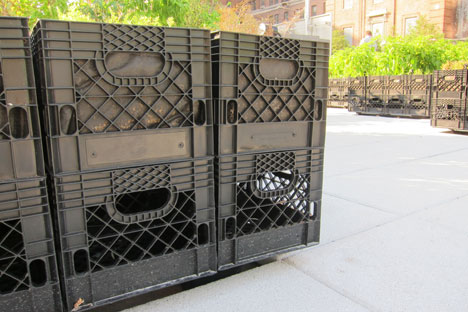
A Modesto-based dairy company has had enough of milk crate theft, which costs the U.S. industry an estimated $80 million a year.

Crystal Creamery, formerly known as Foster Farms Dairy, is working with law enforcement, grocers and other partners to combat the problem.

They are focusing mainly on large-scale thieves who try to sell the ground-up plastic to recyclers, although it’s also illegal to take a single crate for use as a toolbox or storage container.

“Milk crates have always disappeared, but in the last two or three years, the rate of disappearance is greater,” said Elliot Begoun, vice president of sales and marketing at Crystal.

He said the thefts have increased with the rising value of scrap plastic, which is based in part on the price of the petroleum used to make virgin plastic.

Begoun talked about the problem during an interview Tuesday at the Kansas Avenue headquarters of the company, still owned by the Foster family, which also is in the poultry business.

On a typical day, Crystal trucks haul about 60,000 crates filled with milk, sour cream and cottage cheese to grocery stores and food service customers from Bakersfield to the Oregon border. The drivers are supposed to bring back crates from previous deliveries, but they can be stolen if not secured at the customers’ locations, Begoun said.

Each time that happens, Crystal loses about $4, which is hard to take in an industry with tight profit margins, he said. Nationwide each year about 20 million crates are stolen, according to the International Dairy Foods Association.

Crystal is working with grocers on improved security, as well as with food banks, which sometimes get donations of dairy products in the crates.

The company also approached Stanislaus County Sheriff Adam Christianson. He said Tuesday that the crime is driven mainly by addicts looking for recycling income they can spend on drugs, similar to metal theft.

Christianson said he was surprised that the scrap value of plastic has risen so much. He noted other such commodities that are being stolen, such as used grease from restaurants, which rendering companies buy.

“Milk crates are no different,” the sheriff said. “It’s a material that can be recycled.”

Christianson said he is asking detectives to look into where the stolen crates are being ground up and recycled. They’re molded to include a warning against unauthorized use, and their distinctive appearance makes it hard to sell them intact.

The Institute of Scrap Recycling Industries warns member companies against accepting materials “that are clearly marked as property belonging to an entity other than the seller, such as beer kegs, milk crates and other marked materials.”

Crystal also is asking the public to resist the temptation to take a small number of crates for personal use. Begoun and Larry Diggory, director of food operations at the plant, said they have seen them used in retail displays, on the back of motorcycles and on plumbers’ trucks.

“What we’re trying to do is to create an awareness with the public that it’s theft and it’s a cost of business,” Begoun said.

 

2016-05-31T19:35:27-07:00June 10th, 2014|

Merced Irrigation District Growers to Receive Increased Water Supply

Merced Irrigation District officials say growers in the district will receive additional surface water, after action taken Tuesday by MID’s board of directors.

The increased water supply is the direct result of regulatory relief MID received from the state after months of planning a multibenefit water management action for the Merced River, according to a press release from Mike Jensen, MID spokesman.

MID growers were most recently expecting 0.9 acre-feet of surface water supply this growing season. However, MID officials noted increased water supply would be available, and recommended increasing the allocation to 1.1 acre-feet of water per acre.

Class II growers will receive 0.55 acre-feet after Tuesday’s MID board action. Deliveries are expected to continue until Sept. 7, according to Jensen.

“This year still remains among the most challenging we have ever seen,” MID General Manager John Sweigard said in the release. “Nevertheless, we are extremely pleased there was some surface water supply relief for our growers.”

Additionally, the board voted to decrease the in-season agricultural water rate for growers from $100.67 per acre-foot to $75 per acre-foot. The new rate is retroactive and applicable to all surface-water use for the 2014 irrigation season.

The reduction in the 2014 water rates comes after MID growers recently approved a rate increase to $100 per acre-foot, ensuring the financial health of MID during the drought crisis. Since that time, MID implemented the multibenefit water management action for the Merced River after months of planning and receiving final approvals from the state.

It involved obtaining 25,000 additional acre-feet of water from Lake McClure for growers, and providing 5,000 acre-feet of water for a critical-year spring fish-flow in the Merced River. The spring fish-flow water was transferred to other water users after it served its environmental purpose in the river system. MID received $5 million in revenue to help the district recover lost revenue associated with the drought.

In addition to the surface water supply from Lake McClure, MID is again implementing its Supplemental Water Supply Pool Program. Growers have already elected to receive additional water that is made available from conjunctive groundwater pumping. The district expects to provide approximately 28,000 acre-feet of water through the program this year, the release said.

MID began deliveries April 21.

Facing a third dry year with unprecedented drought conditions, the board of directors earlier this year enacted penalties for any water theft this season. For a first offense, a grower will be fined $1,000 and be charged $500 for each acre-foot used. For a second offense, the grower would receive the same fines and penalties while losing access to MID water this year.


2016-05-31T19:35:28-07:00June 6th, 2014|

CA Drought Devastates State’s Citrus Industry – June 6 in Bakersfield Orchard

California Citrus Mutual and Senators Fuller and Vidak to hold Press Conference June 6, 11:00 a.m. 

Please join California Citrus Mutual, Senator Andy Vidak and Senator Jean Fuller for a press conference on the current water crisis and its devastating impact to the Central Valley’s $1.5 billion citrus industry and local communities.

Senator Jean Fuller

Senator Jean Fuller

Senator Andy Vidak

Senator Andy Vidak

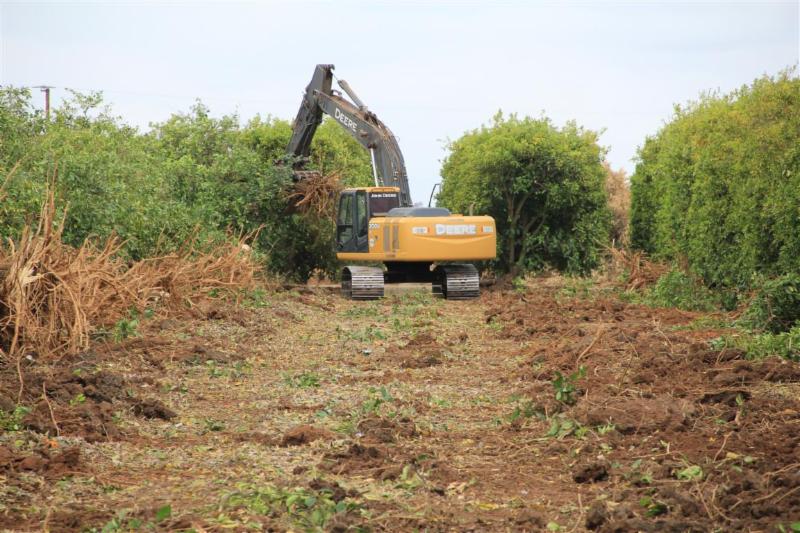
The event is on Friday, June 6 at 11:00 a.m.in a Bakersfield citrus grove that is being pulled out of production due to zero surface water allocation [21662 Bena Rd., Bakersfield, CA]. The scene of removed groves is, unfortunately, becoming a familiar one throughout the Valley as citrus growers are faced with zero water allocation for the first time in the Central Valley Water Project’s history.

“The situation our industry is now faced with is not the result of a drought,” says CCM President Joel Nelsen. “It is the result of inaction and indifference by state and federal regulators who have time and again demonstrated that the production of food and fiber is not a priority.”

California Citrus Mutual estimates that nearly 50,000 acres of citrus will receive zero water allocation this year. “The loss of citrus production in the Central Valley will undoubtedly have a ripple effect that will be felt in many local communities,” continues Nelsen.

“Due to the zero water allocation, thousands of acres of citrus trees have already been destroyed resulting in higher food prices and lost jobs,” says Senator Fuller. “Now is the time for regulators to act on behalf of the farmers and residents of the Valley, get the water moving to where it is needed most, and stop the planned removal of thousands of more acres of citrus.”

California Citrus Mutual President Joel Nelsen

California Citrus Mutual President Joel Nelsen

“The citrus industry is an economic driver in the Central Valley,” says Senator Vidak. “The loss of prime citrus production as a result of zero water allocation will have a lasting and devastating impact on jobs and our communities. This is not simply an agricultural problem; the impact will be felt by each and every one of us if water is not made available to our Valley.”

Speaking at the press conference will be CCM President Joel Nelsen, Senator Andy Vidak, and Senator Jean Fuller along with Valley citrus growers who have been directly impacted by this water crisis.


(Photo credit: California Citrus Mutual)

2016-05-31T19:35:28-07:00June 4th, 2014|

California’s ‘Exceptional Drought’

Long Term Solutions, Desperately Needed For California Drought


By John Vikupitz, president and CEO of Netafim USA in Fresno, California


Aaron Barcellos, a partner with A-Bar Ag Enterprises in Los Banos, is a fourth-generation farmer. His 7,000-acre operation produces crops, including pistachios, pomegranates, asparagus, and tomatoes.

The farm creates jobs for up to 40 people full-time and over 100 at peak season. This year, the operation took an unprecedented move in letting 30 percent of its productive acreage go fallow for lack of water, redirecting available water to permanent crops and to honor tomato contracts.  This fallowing of acreage has resulted in a loss of work for over 30 part-time employees and an estimated loss of $10 million to the local business economy from his operation, alone.

“It’s a ‘batten down the hatches’ year,” notes Mr. Barcellos. “We are trying to survive this year while hoping the severity of this drought will provide momentum for more long term solutions to our water crisis.”

California’s ‘exceptional drought’ – said by University of California (UC) Berkeley paleoclimatologist B. Lynn to perhaps be the worst in 500 years – places the state at a critical juncture.

California’s historic low precipitation of 2013 and the below normal 2012 precipitation left most state reservoirs at  between six percent storage in the Southern Sierra to 36 percent in Shasta – levels not been seen since the 1977 severe drought. Snowpack is nearly non-existent.

The U.S. Drought Monitor reports nearly half of the U.S. is in some form of drought.

Water is one of life’s greatest conveniences. Turn on the tap and water appears, often at less cost than other household bills, providing the lifeblood for food production, human health, climate, energy and the ecosystem.

We may take water for granted until we’re in danger of losing it as sources dry up. We may not contemplate the support system and cost that brings water to the tap: the extensive pipe conveyance system, treatment plant, chemicals needed for purification, labor and energy costs.

Consequently, every drop saved by one water user benefits all users.

Homeowners may do their part in water conservation by installing low-flow fixtures – often incentivized through government rebate programs – by washing vehicles less or taking shorter showers. The payoff: lower water bills.

The agricultural sector is doing its part, too, using water-saving technology investments that reap returns for Californians, as well as those elsewhere benefitting from its exports. According to the California Department of Food and Agriculture (CDFA), the state produces nearly half of U.S.-grown fruits, vegetables and nuts and leads the world in almond and pistachio production. California’s 80,500 farms and ranches received a record $44.7 billion for their 2012 output.  Exports totaled more than $18 billion.

Tens of thousands of productive acres are being fallowed. The number of jobs, specifically those of farmworkers, will subside as food prices increase. California, the nation’s top dairy producer, is shipping cows out of state due to water uncertainties with no guarantee that alfalfa and other crops cows consume will continue to be available.

It’s critical that people appreciate their food source. California’s regulations ensure safe and reliable food, while California’s highly progressive and efficient farmers enable that food source to be the cheapest in the world Mr. Barcellos points out.

Food safety and quality drive those innovations, as well as economics. Regulations mean the cost to produce food and get it to the store requires farmers to be highly efficient to remain competitive.

Mr. Barcellos farms in five different irrigation districts with various water rights and water supplies. A-Bar Ag Enterprises has converted 5,500 acres from flood irrigation to drip irrigation creating a combined water savings and production efficiency of over twenty percent.

“What we do in California with the different irrigation technologies creates significant efficiencies in water application without waste, enabling farmers to increase yields with fewer inputs. With that said, it doesn’t matter what the crop – it still takes water to grow it,” Mr. Barcellos points out.

According to The Center for Irrigation Technology at California State University, Fresno, Agriculture uses 40 percent of all dedicated water, including environmental, municipal and industrial uses in order to meet the needs of the eight million irrigated agricultural acres in California.

When farmers were short on water, they used to purchase it on the open market or pump more ground water. This year, there is no water to buy and wells are starting to run dry, says Mr. Barcellos.

While the federal government has offered temporary food money for farmworkers, “the people in our communities want to work, not receive handouts from a food bank,” Mr. Barcellos says, adding that it’s time to work on long-term solutions to water problems.

California’s water system was developed for 20 million people, with residents and farmers sharing the water supply, with those same resources later shared to meet environmental concerns. That – and the nearly doubled population – has taxed the water system, Mr. Barcellos says.

“We haven’t spent any serious funds to improve California’s infrastructure since the early 1970s to keep pace with population growth and environmental demands,” Mr. Barcellos says. “If the environment needs more water, let’s use sound science and invest in more storage and better conveyance systems for long-term solutions.”

Following Governor Edmund Brown Jr.’s January declaration of a drought emergency, the State Water Project cut water deliveries to all 29 public water agencies to zero for 2014.

Even if there is some short-term relief, mitigation is needed to protect against long-term unpredictable weather patterns.

UC Berkeley’s David Sedlak, professor of civil and environmental engineering, explains:  the drought notwithstanding, California’s aged infrastructure calls for increased investments in water recycling, rainwater harvesting and seawater desalination with a focus on local water supply development.

The United States Department of Agricultural (USDA) Natural Resources Conservation Services (NRCS), California indicates three priorities: protecting soils made vulnerable by water cutbacks, protecting drought-impacted rangeland, and stretching every drop of irrigation water using improved hardware and management Farmers and ranchers are encouraged to develop a water conservation plan and seek funding opportunities such as the $30 million available through USDA NRCS California to help drought-impacted farmers and ranchers with conservation practices and the $25 million to help pay for conservation practices through the Environmental Quality Incentives Program.

Irrigation is the final stop on the train that begins with water supply and continues with delivery methods. Water conservation technology – much of which has been proven overseas for decades on arid farmlands – offers a solution right now to apply water more precisely and even improve crop yields and quality.

Our world’s growing population calls for large-scale farming to provide food. For decades, California farmers with reasonable and secure access to water have used water conservation technologies to continue farming and create more water for other purposes, such as the needs of growing urban areas and for environmental remediation, which uses half of California’s water supply.

Farmers like Mr. Barcellos are great stewards of the environment. Many California farmers have successfully adopted this technology to a large degree, using water more efficiently and leaving more in the system for other uses. We need to expand that effort more.

2016-05-31T19:35:29-07:00May 31st, 2014|

Navel Orangeworm Pressure Imminent

Almond Growers Get Ready to Treat for Navel Orangeworm

Almond and Pistachio growers should be ready to fight back on a particular seasonal pest this year.

Joel Siegel is a research Entomologist with USDA ARS in the Fresno County Office in Parlier. He is an expert on troubling pest for Almonds and Pistachios called NavelOrangeworm. He said growers need to be ready.

“Ok the big thing this year is because of the heat. If the almonds, if the non [ prowlers?] are splitting earlier you better be prepared to be spraying earlier,” said Siegel. “Its really based on nut vulnerability in my opinion, so you have to make your plans now. Get your materials secured so that you’re ready to move.” he added.

Growers need to get ready to protect their crops. Siegel discusses how another important crop, Pistachios need to be protected from the Navel Orangeworm.

“With pistachios, its harder to predict vulnerability, but all of this heat means we have the potential for an additional generation at least. So there could be more pressure. And again there is going to be more of a need to scout, and again make your plans in advance, and make sure you have your materials lined up.

Because of the daytime heat, Siegel said we are ahead of last year, which was a bad year for NOW.

“Well what we are in terms of heat units, is depending where anywhere between four to eleven days ahead where we were last year. And again, from talking to people on the nonpareil seem to be, maybe eight to ten days earlier this year,”

Siegel said just like almonds, being prepared is the most essential.

“If everything is vulnerable earlier you have to be prepared to move earlier than you’re used to doing it. With pistachios, there might be that dragged out cluster development, and again if people are going to have to harvest late, there is going to be more pressure on the back end.” said Siegel.

Siegel was speaking at the recent Southern San Joaquin Valley Almond Symposium in Kerman California.

2016-05-31T19:35:29-07:00May 30th, 2014|

Friant Users Desperate For Alternative Water Supplies

A tiny amount of water has begun flowing in the Friant-Kern Canal as Friant Division contractors and users scramble to try to mitigate their looming losses and drought conditions by acquiring water through groundwater pump-ins, transfers and exchange programs. Friant Water Authority says that relief is a fraction of the need being felt by growers and communities alike. 
“Those programs are expensive and supplies are difficult to come by,” said Friant Water Authority General Manager Ronald D. Jacobsma. “While helping some, those programs fall far short of the critical water needs we have targeted as being 200,000 acre-feet. That is the amount upon which Friant barely got by in 1977. This year is wetter but the regulatory environment has left Friant with no project water at all. It’s incomprehensible.”

EXTREMELY LIMITED SUPPLIES

Among the extremely limited supplies of water that have been arranged are a few thousand acre-feet of water left unused when the San Joaquin River Restoration Program’sinterim fishery flows were suspended in early February. That emergency “health and safety” supply is being delivered, through a banking arrangement with the Fresno Irrigation District, to four East Side communities with no municipal water supply except the Friant-Kern Canal – Orange Cove, Lindsay, Strathmore and Terra Bella.

In addition, a total of several thousand acre-feet of water is being made available to Friant agricultural districts able to pay the higher costs associated with temporarily banking the unreleased restoration water. The City of Fresno has arranged to transfer 710 acre-feet of that water to the Orange Cove Irrigation District.
 Some carryover water still stored in Millerton Lake along with a small amount of “loss” water needed to operate the canal is sporadically being released into the Friant-Kern. A number of growers have received permission from the U.S. Bureau of Reclamation to pump local groundwater into the canal and transport it for use on other properties they own.

DROUGHT CONDITIONS

Continuing drought conditions, meanwhile, are beginning to be magnified as the typically hot and rainless valley summer begins. Despite a few mostly weak spring storms that fractionally improved runoff, the U.S. Department of Agriculture’s National Drought Mitigation Center continues to list all of California as drought impacted. The Friant Division is fully within the hardest hit drought region.

SUCCESS DAM

It doesn’t much matter in the midst of drought with Tule River runoff predicted to be just 10% of average during the current water year but full storage capacity has been restored in Lake Success east of Porterville, as reported by Friant Water Authority. Success Dam had been under a safety-of-dams storage restriction. For a time, the U.S. Army Corps of Engineers was considering construction of a new Success Dam to address the concerns. Corps officials last year announced that the dam’s safety was in reality not a problem, based on new studies of the structure’s strength and underlying geology.

Now, the capacity is back at more than 83,000 acre-feet although actual storage is 13,800 acre-feet because of the drought. In July, the Corps plans to release a baseline risk assessment report detailing the dam’s safety findings. That report could lead to a decision on whether or not to construct control facilities to further increase capacity.CaliforniaDroughtFriantArea

2016-05-31T19:35:30-07:00May 28th, 2014|

July 17th Sustainable Organic Production Seminar in Chico!

A seminar for growers and crop consultants focusing on the sustainable organic production of field crops, vegetables and orchards will be held on Thursday, July 17, 2014, 8:00 am – 3:00 pm. The seminar is presented by NorCal Chapter California Association of Pest Control Advisers, California Association of Pest Control Advisers and Organic Fertilizer Association of California. The seminar is being underwritten by Sierra Nevada Brewing Company, which is also hosting the event:

Sierra Nevada Brewing Co, The Big Room, 1075 20th Street, Chico, CA.

Subjects include:

  • Regulations
  • Almond production
  • Soil health
  • Rice weed control
  • Soil amendments
  • Micronutrient use

The program includes a grower panel discussing:

  • fertility and pest management
  • organic production challenges
  • exhibits by firms providing products acceptable for certified organic production.

CEUs are offered for:

  • Certified Crop Advisers (6 hours)
  • Licensed Pest Control Advisers 6 hours)

For more information, contact Steven Beckley, (916) 539-4107, sbeckley@aol.com.

2016-05-31T19:35:30-07:00May 28th, 2014|

Want to be happier? Eat your Fruits and Vegetables!

(Sources: Silver Lining Psychology blog and cited original research sources, all linked in the text; Photo credit)

When you were a kid, did your parents urge you to eat your vegetables? Did they reason that eating vegetables was part of a nutritious diet that would help to make you big and strong? What they didn’t know at the time, was that a well-balanced vegetable-rich diet also contributes to people feeling happier and attaining  greater emotional wellbeing, and research supports this finding.

***

The Psychology Department at the University of Otago in New Zealand asked 281 young people in 2013 to complete a 21-day online food diary. Head researcher, Dr. Tamlin Conner, said, ‘On days when people ate more fruits and vegetables, they reported feeling calmer, happier and more energetic than they normally did.’

Further analysis demonstrated that young people would need to consume approximately seven to eight total servings (the size that could fit in your palm, or half a cup) of fruits and vegetables per day to notice a meaningful positive change. Furthermore, eating fruits and vegetables predicted improvements in positive mood the next day, suggesting that healthy foods may improve mood. (Daily Mail Reporter)

***

In another study, in 2012, of 80,000 British adults found that high emotional wellbeing increased with the number of fruit and vegetables consumed daily. Like the previously-mentioned study, well-being peaked at approximately 7 portions per day.

***

A study of 5,731 Norwegian adults found that individuals who consumed a healthy diet were less likely to be depressed compared to those who ate a more typical Western diet filled with processed foods.

This study also found that a higher intake of processed and unhealthy foods is associated with increased incidence of anxiety.

***

In another study, these same researchers found in 2011 that a balanced and nutritious diet was associated with better mental health in a sample of 3040 Australian adolescents, compared to those who had a diet that was rich in processed foods.

***

The effects of nutrition on mental health may start in the womb, according to a study of the diets of Norwegian mothers during pregnancy and that of their children at various points during their first 5 years. Results showed that babies who were exposed to more unhealthy foods during pregnancy had more behavioral and emotional problems during early childhood.

***

Diet can also affect your cognitive abilities. Researchers provided twenty sedentary men a nutritionally balanced diet or a high-fat diet for seven days. Compared to the control group, the high-fat group showed decreased memory and attention.

***

The bottom line?  What you eat not only affects your body, it affects your mind.  Make the effort to eat a nutritionally-balanced diet that is filled with natural food sources and low on refined and processed foods.  Aim for 7-8 servings of fruits and vegetables a day.  Not only will it make you big and strong, it will also make you happier!

2016-05-31T19:35:30-07:00May 27th, 2014|

Fight For Water Film Can Now be Viewed and Rented On-Line

The Fight For Water Film, a farm workers Struggle– is now available to be viewed or rented on-line.

Juan Carlos Oseguera, an independent filmmaker who produced the Fight for Water Film, based on the 2009 California Water March protesting a reduced water allocation due to the Delta Smelt. He has received a lot of recognition regarding the film, which is now available on line if you have been able to see it at a screening.

Go to Fight for Water.com where you can view and rent the movie. Information is at the end of the trailer.

“If anyone has not been able to see the film at a screening or film festival, they can now go to the website to view the film which focuses on the a water situation that not only is effecting the valley but the entire state of California,” Oseguera said

Oseguera also noted that more schools and colleges are showing the film on their campuses. “We are seeing a lot of request to get the movie to colleges and universities. I am glad that they are responding because the film is an educational film about the water situation, about water rights, and about environmental rulings, which helps get the movie out there to more audiences.”


2016-05-31T19:35:30-07:00May 26th, 2014|

2013-14 Recipients of the UC ANR Distinguished Service Awards

Sources: Pamela Kan-Rice, ANR Assistant Director, News and Information Outreach; Kathy Keatley Garvey, Communications specialist (including photo credit)

This week, Barbara Allen-Diaz, vice president of UC ANR, announced the 2013-14 recipients of the ANR Distinguished Service Awards (DSA) which are given biennially for outstanding contributions to the teaching, research and public service mission of the Division of Agriculture and Natural resources.

Allen-Diaz thanked the DSA recipients for providing excellent service to the people of California.

Awards were given in six areas:

Extension apiculturist Eric Mussen in front of the apiary at the Harry H. Laidlaw J. Honey Bee Research Facility (Photo by Kathy Keatley Garbey)

Extension apiculturist Eric Mussen in front of the apiary at the Harry H. Laidlaw J. Honey Bee Research Facility (Photo by Kathy Keatley Garbey)

Outstanding Extension – Eric Mussen, UC Cooperative Extension apiculturist in the Department of Entomology and Nematology at UC Davis for bees.

Outstanding Research – Mark Battany, UC Cooperative Extension advisor in San Luis Obispo and Santa Barbara Counties for viticulture.

Outstanding New Academic – David Doll, UC Cooperative Extension advisor in Merced County for nut crops

Outstanding Team – Ken Tate, UC Cooperative Extension specialist in the Department of Plant Sciences at UC Davis, and Rob Atwill, director of Veterinary Medicine Extension at UC Davis, are the recipients of the Outstanding Team Award. Since 1994, Tate and Atwill have collaborated on a series of projects assessing the potential risk to rangeland surface-water quality and human health from livestock associated pollutants.

Outstanding Leader – Pamela Geisel, former director of the statewide UC Master Gardener Program. Although Pam retired recently,Master Gardenerssince this nomination package was very strong, I believe it’s appropriate and important to give Pam this much-deserved award.

Outstanding Staff – Michael Yang, UCCE agricultural assistant in Fresno County for small farms.

Each of the recipients will receive $2,000 and a certificate, except for the team award recipients, who will receive individual certificates and share $5,000.

2016-05-31T19:35:30-07:00May 25th, 2014|
Go to Top