CFBF 95th Annual Meeting Hosts Over Thousand Members
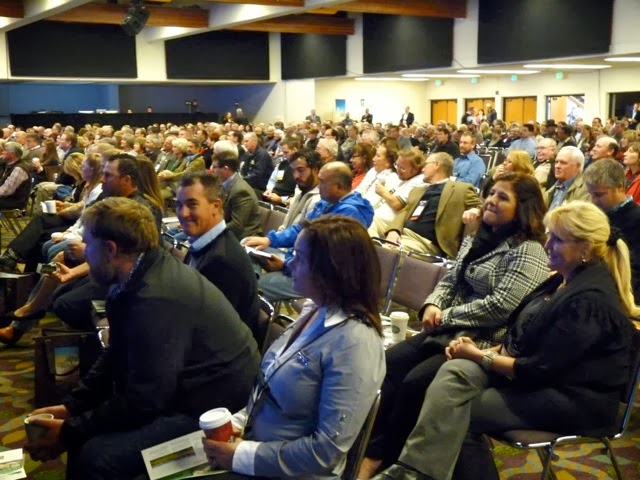
Statewide Farm Bureau Members listen to speakers during the General Session On Monday in Monterey

CALIFORNIA FARM BUREAU

ADVOCATES FOR ADVOCACY

AND AWARDS

TODAY, Farm Bureau President Paul Wenger welcomed more than a thousand members to the 95thCalifornia Farm Bureau Federation (CFBF) Annual Meeting.

CFBF President Paul Wenger

Wenger acknowledged that some could not be there as they were protecting their crops from the cold. He talked about agriculture being about quick adjustment to change and resiliency.

Wenger spoke about crop insurance, immigration reform, labor force, CFBF membership recruitment and retention, medical coverage, and new CFBF managers. He also addressed Prop 3, which caused past membership losses and risks potential ones as well, and CFBF’s positive working relationships with both state parties.

Wenger said that we are the only state among the 50, plus Puerto Rico, whose members rank advocacy and not insurance as the top farm bureau service they receive.

As promised at last year’s annual meeting, CFBF rolled out a new websiteto deliver great content in just a few steps and to facilitate new and renewed memberships.

Wenger’s overall message was, “We have the opportunity to change Sacramento; we need to step up. Make sure we are relevant and have a presence in Sacramento and Washington, D.C. If we are unwilling to fight when we are strong, when will we engage?”

Benny Jefferson
Claris Myers with President Wenger
Recognitions Presented at the Annual Meeting

The first county farm bureau in the country to turn 100 was Humboldt in 2013.  

Inaugural Lifetime Service Award Recipient – Helen Roberti, Plumas-Sierra County Farm Bureau

2013 Distinguished Service Award recipient – Claris Myers Shasta County Farm Bureau and Benny Jefferson, Monterey County Farm Bureau

2013 Leopold Conservation Award – Robert Giacomini Dairy, Marin County Farm Bureau

2016-05-31T19:42:31-07:00December 10th, 2013|

Citrus Growers Braved Another Night

Valley Citrus Growers Escape Major Freeze Damage

A mandarin orchard east of Clovis Ca braves the cold temps.
According to Exeter-based California Citrus Mutual, TODAY valley citrus growers breathed a collective sigh of relief last night as temperatures failed to reach projected lows.  In most areas temperatures stayed in the upper 20s and were manageable with frost protection measures. 

Field reports indicate that if there is damage to the Valley’s orange crop, it will be minuscule.  This is primarily attributed to the fruit’s maturity and high sugar content, which has provided additional internal protection from cold temperatures.  However, the less cold tolerant Mandarin crop is expected to incur some damage which will likely be concentrated in the coldest areas, particularly to the outside rows where frost protection is less effective.

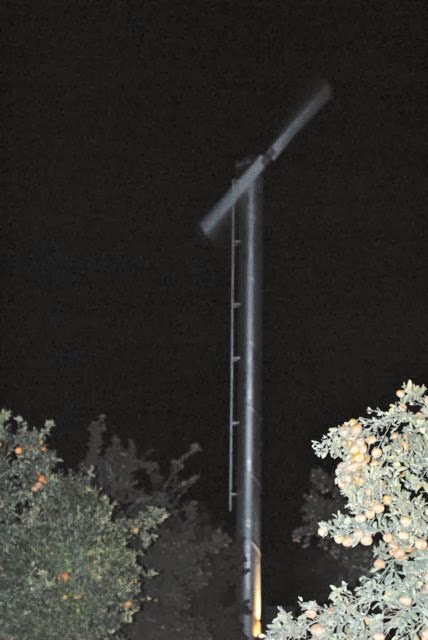
This wind machine was churning late
Saturday night to help ward off frost.
Field reports suggest that Friday night’s rain storm was more helpful than not by allowing weakened fruit a reprieve from cold temperatures. Last night’s warmer temperatures were also a welcome relief following significant concern Saturday that forecast extreme low overnight temperatures would expose fruit to external damage.  

Growers ran wind machines Saturday evening for an average of 9 hours in preparation for the cold temperatures that did not materialize. Citrus Mutual estimates that the total cost to the industry has been $17.5 million since Tuesday night to protect  roughly 80% of the Valley’s $1.5 million citrus crop which remains to be harvest. 

Overall damage will be determined in the coming weeks as temperatures rise across the Valley.  Internal damage cannot be accurately assessed until this freeze episode concludes. It is estimated that over 4.5 billion mandarins and 11 billion oranges must be evaluated for damage.

Critical temperatures are in the forecast for the next two nights. 

2016-05-31T19:42:31-07:00December 8th, 2013|

Groundwater Forum was Part of a Sobering Reality

Groundwater Forum Speaks Volumes on 

Reality of Over Draft Problems
By Don A. Wright, Special Correspondent

The American Groundwater Trust presented a forum titled “San Joaquin Valley Groundwater Overdraft” at the World Ag Expo in Tulare, California on Monday, November 18, 2013. More than 250 people attended the day-long event. There was a good representation of water community leaders; both on the four panels and in the audience. The presentation pretty much stayed on schedule. The speakers, with one exception we’ll get to later, were knowledgeable and kept the audience’s attention. No one droned on too long.

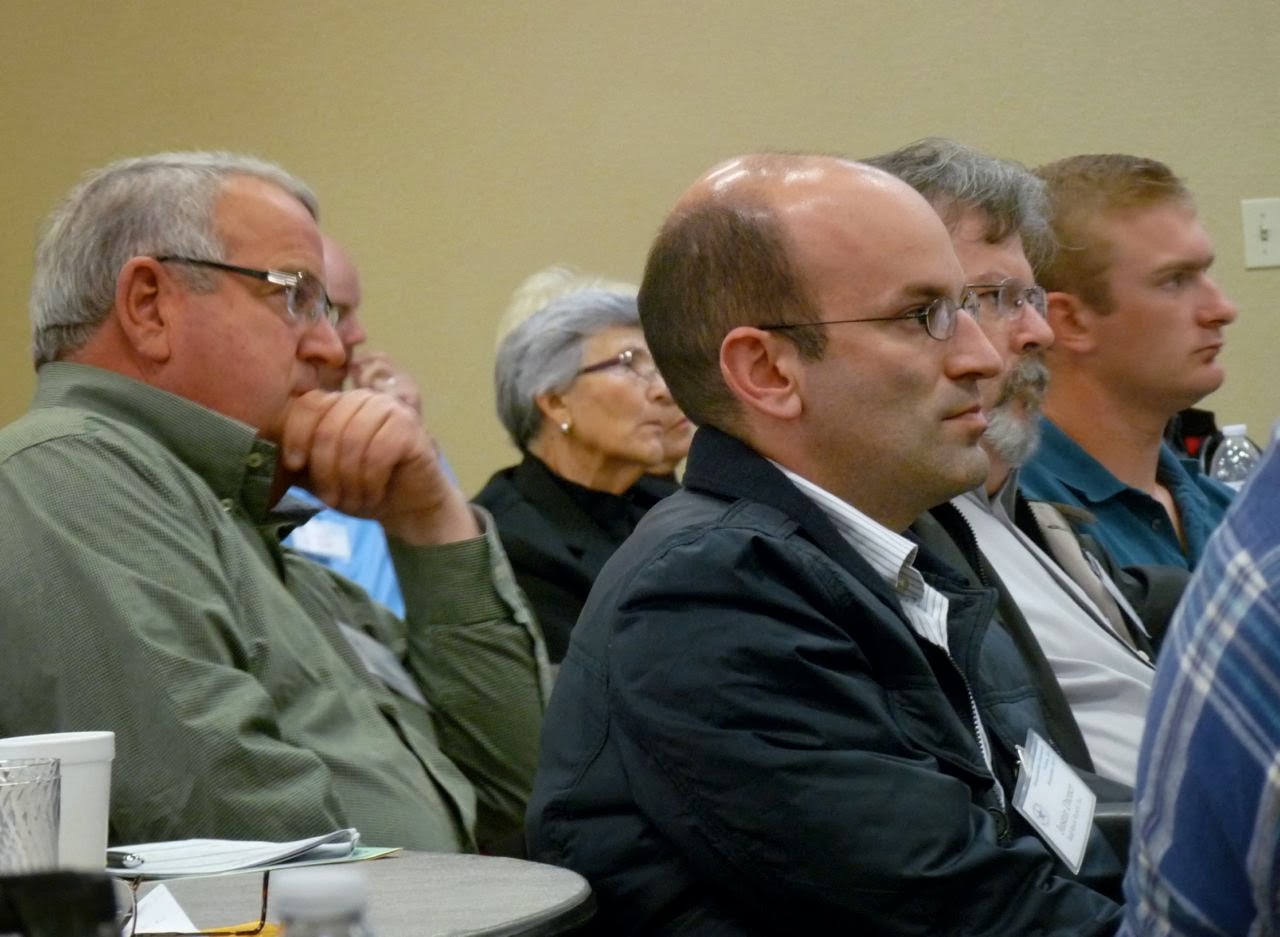
Concerned Growers Listen to the Speakers
That and free range coffee, fruit and snacks kept the butt fatigue at a minimum. In other words folks stayed seated and paid attention. While no silver bullet emerged to cure the Valley’s groundwater woes a lot of information was shared from a variety of perspectives. Certainly the Tulare Basin and Southern San Joaquin Valley has some major challenges with both surface and groundwater, the forum showed things could be much worse. I believe the overall arc of the forum could be summed up as – Unity is vital. The region will have to work together and everyone will have to become engaged. That’s not a new concept but rather one that has served groups of people facing big obstacles well.

Introductions

The presentation began with Paul Hendrix, General Manager of Tulare Irrigation District welcoming everyone and introducing Tulare County Supervisor Pete Vander Poel. Vander Poel in turn welcomed everyone and said Tulare County will continue to stand by agriculture. Vander Poel looks young; he’s a good speaker and understands the bedrock importance of ag to the Valley’s economy.

American Groundwater Trust’s Executive Director Andrew Stone made some remarks in what I took to be a British accent (I know we’re the ones with the accent.) Stone said AGT has the goal of, “. . . getting the truth out.” He said too often science can be trumped by politics. He quoted Article X, Section Two of the State Constitution that declares water must be used in a beneficial manner. Stone, like almost all the speakers used power point slides. One interesting crowd pleaser was the cover of a Delta Smelt cookbook.

First Panel

Dave Orth
The first panel was titled, “Groundwater Conditions: Then and Now in the Valley” and was moderated by Kings River Conservation District General Manager Dave Orth. Orth said groundwater management has been statutorily under local control in California, but overdraft status is the new scorecard for efficiency. The increased demand is outpacing surface supplies and data collection is becoming a priority for the regulators.

Claudia Faunt, Hydrologist with the U.S. Geological Service spoke about the history of groundwater in the Central Valley. She pointed out 25 percent of the United States food supply is grown here in the Valley. While there might be climate change she said there has always been climate variability in the Valley. Faunt thinks the San Joaquin Valley is the poster child for conjunctive use. She talked about subsidence and the relationship between draught, over-drafting and Corcoran clay. Something I didn’t know, 20-percent of the Valley’s pumping is M&I.

Dick Moss
Dick Moss, Provost & Pritchard spoke next about supplies and said there are 3 million irrigated acres in the San Joaquin Valley. The Tulare Basin is a closed region with little outflow during normal years. The Valley uses 12 million a/f annually. On an average year the Kings River produces 1.15 million a/f, the Kaweah River 404,000 a/f, the Tule River 136,000 a/f and the Kern River 714,000 a/f. State Water Project supplies 1.2 million a/f, the federal Central Valley Project supplies 2.7 million a/f.

The rest of South Valley supplies come from groundwater pumping. Due to biological opinions the SWP has lost 240,000 a/f, the CVP 325,000 a/f with San Joaquin River restoration posed to make matters worse. Up until the 1920s stream diversion was the main source of irrigation water. Then efficient pumps were made affordable. This caused a drastic decrease in groundwater and resulted in the SWP and the CVP. Things were rolling along pretty good until the late 1980s when Congressman George Miller pushed the CVP Improvement Act through congress. This killed the Mid Valley Canal; an additional Delta feed conveyance that would have serviced the center of the Valley.

Moss said there currently isn’t enough storage and new reservoirs are expensive. As supplies tighten and groundwater overdraft increases the options may include increased fallowing to preserve permanent crops, more urban conservation and more control over groundwater.

Please continue article by clicking read more

Greg Zlotnick, San Luis Delta Mendota Water Authority spoke about the State Water Resources Control Board. Zlotnick said the idea of unregulated groundwater is a myth. Most groundwater is under some form of local control. Recently the Delta Stewardship Council made the claim that groundwater overdraft is an impediment to the coequal goals of habitat and supply. This could pave the way for the State Board to take over groundwater management if the overdraft situation continues to worsen. And right now says Zlotnick, Southern San Joaquin Valley pumping is unstainable and is causing overdraft.

The State Board’s authority over groundwater is limited by Water Code Section 1200 that states the Board only has jurisdiction over underground streams. But, the State Board has other options. Zlotnick said a court ruling in 1971 (still under appeal) tied groundwater to the Scott River.

“We are confronted with insurmountable opportunities,” read a slide. Zlotnick asked, “Who will be the bad cop and who will be the good?” I think he seemed to feel it would be better to have the local folks be the bad cop, because it would still be better than what Sacramento could do.

Derrik Williams, president of Hydro Metrics talked about groundwater modeling and its role in setting policy. Williams started out by saying good groundwater modeling is integral to good policy. Stakeholder involvement is necessary and the model’s formulation starts with objectives. Models provide a catalyst for action; developing acceptance and consensus. The model should assess current and future conditions by helping to implement the variables of unseen and unintended consequences.

Williams won my heart when he said, “If you ask your modeler a question and the response is, ‘It’s very complicated’ – Fire him!” The modeler must be more than a number cruncher. He said some things to look for in a model are: stakeholder input, integration with demand side analysis and the economic function.

Q&A

 Orth said when he hears interest about groundwater coming from Sacramento he harbors great concern. When he hears interest about groundwater coming from growers he has hope.

The first questioner took the microphone and proceeded to address the audience about population growth and it was inappropriate and not germane to the topic. I though Orth handled it well by refocusing the rant as a question about population as a groundwater stressor. Zlotnick responded by reiterating a consequence of finite supplies will be an increase in urban conservation.

Moss said he expects more litigation against urban development over water supplies and growers may have to stop placing permanent crops in areas without surface supplies. Zlotnick added the purpose of storage has changed from flood control and supply to environmental usage. The panelists all agreed the local counties have to become partners in preventing further groundwater overdraft. “Counties have the land use police powers,” said Zlotnick.

Second Panel

Mark Larsen, General Manager of Kaweah Delta Water Conservation District moderated the next panel titled, “Groundwater Conditions: Impacts We Can’t Hide.”

The first speaker was Chase Hurley, GM of San Luis Canal Company who spoke about the serious subsidence taking place in Merced and Madera Counties along the Chowchilla Bypass. The land had been grazed and some row crops planted for decades. New landowners punched deep wells through the Corcoran clay layer and noticed some well head rising up a couple feet from the ground. The land has subsided almost two feet in less than three years.

The subsidence threatens the Bypass which in turn threatens flooding in the area. The SJR restoration could also be threatened as the Bypass is a possible route for salmon. Some solutions and efforts are underway to arrest the subsidence. The landowners are willing to work to correct the situation and plans to keep wells above 300 feet should help. Neighbors are sharing water and the option of annexing the land into Madera Irrigation District is being considered. There is also the possibility of a new diversion on the SJR to help provide recharge.

Jason Gianquinto, GM of Semitropic WSD talked about planning for improved groundwater management in Kern County. Gianquinto said when he’s asked about groundwater his reply is, “I’m on top of it.” He said most of the Valley portion of Kern County is in districts served by the SWP, CVP or Kern River supplies. If I heard correctly he said this surface supply totals an average of almost 2 million a/f. In 1991 the state project delivered zero a/f and that sparked the groundwater banking development. Kern County’s farm gate crop value was $6.2 billion in 2012. It takes 3-4 million a/f to water the 887,000 acres of farmland, with 54 percent of that land in permanent crops. Permanent crops show a return on investment many, many times that of other crops and Kern growers have come together to work on the area’s groundwater conditions. Thirty-one entities have gathered to develop principles of dealing with ground and surface water in a regional manner. Fifteen of those entities are funding the work to complete the Kern County Water Management Plan.

Peter Leffler is an Associate Hydrologist with Fugro Consultants and spoke about the pending oversight of groundwater in the Paso Robles Basin. Two-thirds of the water pumped has been going to ag use but M&I usage is increasing. Ag has been declining as alfalfa and other high usage crops are being replaced with grape vineyards for wineries. An urban/business corridor has formed around the north/south High Way 46 route. This increased density and groundwater usage has caused a 70 feet drop in groundwater levels. A 2010 study found the basin’s ability to recharge has been maxed out and San Luis Obispo County declared the area a Level Severity III. The county can control land use and building permits but doesn’t have a direct control of pumping.

Folks in the Paso Robles Basin are trying to form a regional water district that can help ensure any new development is water neutral and banking can be developed. This past August the Board of Supervisors passed an urgency ordinance. A moratorium on new ag development that isn’t water neutral is also in effect. There are two groups trying to form a water district. One group, supported by established farming interests wants a form of water district governance where the votes are weighed by acreage owned. The other group wants a form of irrigation district type governance with one man one vote counted. Leffler said, being political, the county is courting both factions.

Q&A


Larsen advised those looking for solutions to remember the importance of interaction with landowners. Don Mills of Kings County asked Hurley how the government is being portrayed to the landowners. Hurley said whenever possible he brings landowners to meeting with government agencies. He said the bureaucrats and elected representatives pay a lot more attention and the landowners sit up straight and stay alert. It does both sides good to hear from each other. Someone pointed out when land is fallowed nitrogen removal also stops. Larsen said the City of Visalia is charging a fee to convert farmland to urban areas with the revenues used to at least partially offset the loss of recharge and mitigate other matters that arise when ag land is converted.

Lunch


Lunch was next and the food was very good; beef, chicken steamed vegetables. There was some good bread with its own dipping sauce. I asked the server what kind of sauce it was and she said, “It’s bread sauce.” I didn’t push it. But the sauce did taste good. As soon as most folks had distended their abdomens a bit an almost palpable loss of energy settled over the sated congregation. That only made matters worse for the special guest speaker. State Senator Andy Vidak and Assemblyman Jim Patterson were slated to speak on overdraft in the Valley but Vidak was ill and couldn’t attend. That left things in Patterson’s hands or larynx as it were.


Patterson began his talk by stating he was a freshman legislature who is trying to learn. I know I learned a lot from what followed – the number one lesson being – if you don’t know what you’re talking about, keep it brief. The recurring phrase, “We’ve got to . . .” was used many times; i.e. we’ve got turn on the pumps, we’ve got to pass a water bond with storage, we’ve got to modernize our infrastructure and so on. Unfortunately there wasn’t any “How to” mentioned. And there were a couple of statements that had a bizarre ring to my ears.

Patterson said environmental policy was putting money in the bank accounts of the regulatory agencies (I didn’t realize the agencies had bank accounts) and he said, “The Republicans in Sacramento will be the very last to know about what will be in the water bond,” the very last to know? That’s a bit chilling. He closed by asking everyone to help restore Republicans to power in Sacramento.

Third Panel


Stone moderated the third panel titled, “Groundwater Management: How Are Others Taking on the Issues?


Dr. Bridget Scanlon, Senior Research Scientist, Bureau of Economic Geology in Austin Texas was the first to speak and her subject was, coming to terms with overdraft in Texas. In a charming Irish lilt Scanlon presented some fairly bleak findings and comparisons of the Texas high plans and the Southern San Joaquin Valley. Be glad the Valley’s aquifer isn’t fossil. The aquifer under primarily the Texas Panhandle is the Ogallala and whatever recharge that takes place is slow and minute as the land in mostly clay. Looking on the bright side Scanlon pointed out there are no problems with endangered fish as there are no rivers to speak of in the area.


Scanlon spoke about using satellites to monitor changes in the topography. The State of Texas has models for every aquifer in the state. There is some volunteer metering by landowners but so far the data is unclear. There is also a problem with salt build up.

Scanlon also spoke about “fracking” for oil and gas development. It takes water, but not so much as one would think. There are two large reserves or plays in Texas. One under Fort Worth known as the Bennett Play and over towards Houston there is the Eagle Ford Play. To fully develop the Bennett Play would only require 160,000 a/f. And, there is no harm to aquifers or wells from fracking. There have always been, even before any oil exploration, a number of areas where methane seeps into the groundwater and it will ignite at the faucet. That has nothing to do with fracking.

If you follow the Ogallala Aquifer to the north you’ll come to Kansas. The next speaker Burke Griggs is the Assistant Attorney General of Kansas and also the Consulting Professor at the Bill Lane Center for the American West, Stanford University. Griggs spoke about dealing with overdraft in the Ogallala Aquifer – the Kansas approach. Griggs said surface water counts for only five percent of usage in Kansas. The western portion of the state has experienced the most depletion and recharge is only one to two percent. Also looking on the bright side he said the USBR isn’t a problem because there are no suitable places for reservoirs. Kansas water law doesn’t differentiate between surface and groundwater. If there is any change in the use of water, the new use becomes junior to the other uses in the area.

Kansas has groundwa