University of California, Division of Agricultural and Natural Resources

Bountiful Plant Transpiration

Guy Kyser on Plant Transpiration, Phytoremediation

By Patrick Cavanaugh, Deputy Editor

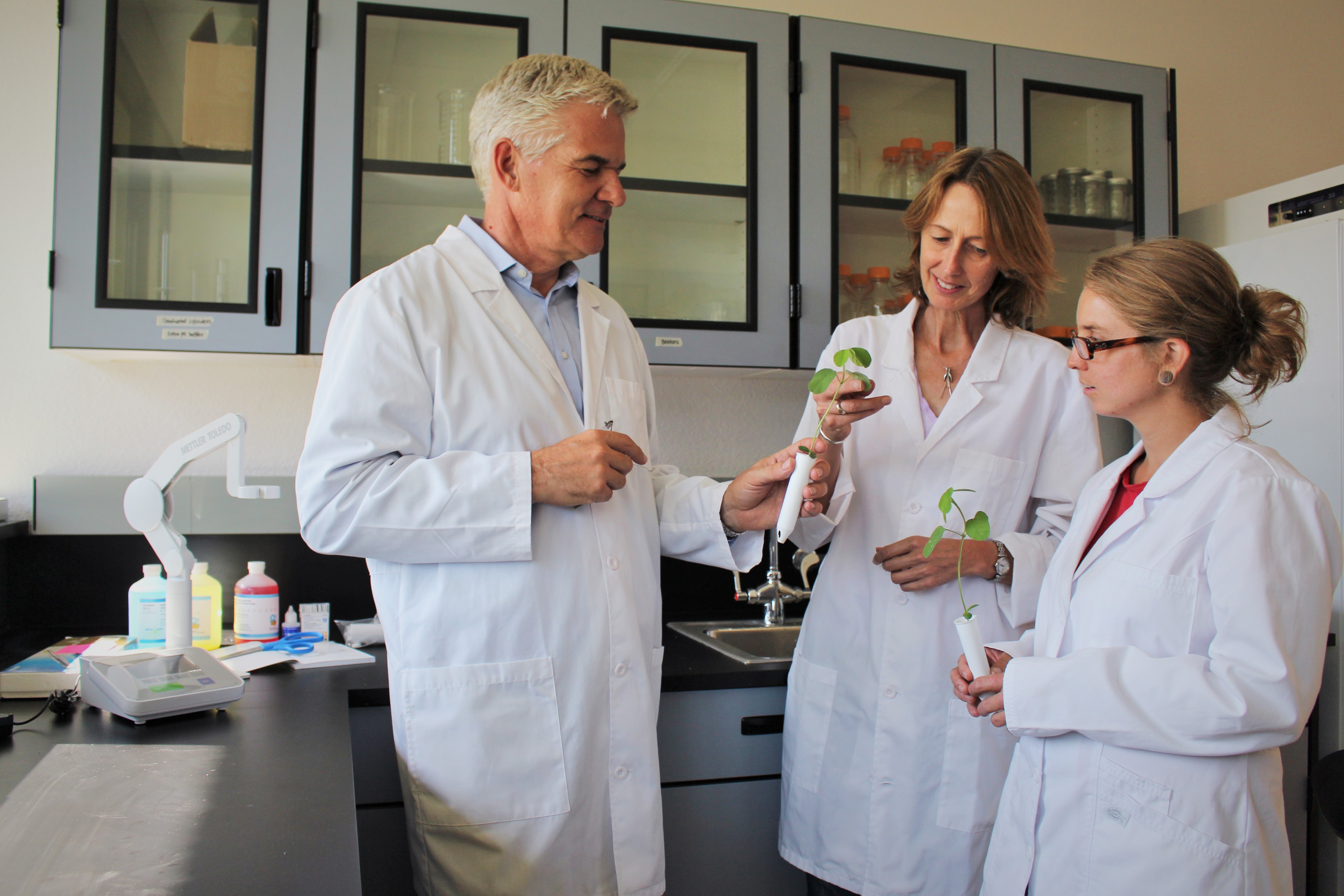
When plants get irrigated, not only do they provide food, but all plants transpire. Guy Kyser, a specialist at the UC Davis Plant Sciences Department, explained how plant transpiration transforms carbon dioxide into “food” for plants to grow.

“Water in the shallow soil is either going to evaporate, or it’s going to be transpired,” Kyser said, “which means it’s going to pass through a plant from the soil to the atmosphere. The transpiration process helps the plant fix CO2 and convert it into food or plant material. The plant is really a little solar powered machine that catches CO2 out of the atmosphere and turns it into something solid so it’s not a greenhouse gas anymore.”

Kyser also explained the phytoremediation* process that occurs in plants grown in less-than-ideal soil and water conditions, in which these plants take up polluted water from its roots while removing impurities from the soil, retain the impurities, and release pure water into the atmosphere. Kyser said, “So, with phytoremediation, you can use the plants to purify poor soil or water situations, then mow off the plant material when the process is done. All the toxins stay in the plant, and only the pure water goes through.” Despite being a slow process, phytoremediation is effective in toxin removal, environmentally friendly, and does not harm soil health.

*Phytoremediation: Ancient Greek for “plant” and Latin for “restoring balance”

2016-05-31T19:28:07-07:00August 13th, 2015|

Location! Location! Location!

UC ANR Research and Extension Centers Strategically Located

By Charmayne Hefly, Assistant Editor, California Ag Today

Bill Frost is the director of the University of California, Division of Agriculture and Natural Resources’ Research and Extension Center System that has nine different research and extension centers located throughout the state.

UC ANR Research and Extension Center System

UC ANR Research and Extension Center System

Describing the strategy in their geographic placement, Frost said, “We have located them in different growing zones, climates and environments. We have chosen everything from the desert region in El Centro, to cropland here in Kearney, to livestock grazing in both our Hopland and Sierra Foothill Research and Extension Centers, all the way up to Intermountain in Tulelake, where we research potatoes, garlic and crops that can be grown in that fairly short growing season.”

The goal, according to Frost, is to solve local issues from a local or regional perspective. “Each one of our centers has different environments, crops and pest issues to address,” he explained. “These diverse locations are critically important to us because we can do localized, applied research and get useful information out to people, whether they are homeowners in their gardens or growers managing a thousand acres of a crop.”

Frost noted the UCANR Research and Extension Center System has been actively seeking new personnel to better meet the needs of growers. “Just in the last four years,” he said, “we’ve hired almost one hundred new cooperative extension advisors and specialists around the state—many of whom are housed here at the Kearney Research and Extension Center. They are also housed on UC campuses and in our county Cooperative Extension offices.”

Frost commented, “We continue to be relevant. We continue to do cutting-edge applied research. Our programs provide information to everyone; from our youth development program in 4-H and our nutrition education, to master gardener programs that help homeowners with pest problems and water management.”

“And of course, we serve the agricultural community. We have a lot of good research going on and we’re generating lot of good information in commodity production, pest management and water management,” Frost said.

The nine UC ANR Research and Extension Stations are:

Featured Photo: UC ANR

2016-05-31T19:28:10-07:00July 20th, 2015|

HLB Found in LA

Huanglongbing Detected on LA County Pre-Symptomatic Kumquat Tree


By Patrick Cavanaugh, Farm Director; Laurie Greene, Editor, California Ag Today


#CitrusMatters

#CitrusMatters (provided by Bayer CropScience, in partnership with California Citrus Mutual)

“It’s disappointing, but fortunately it was found in a residential area,” commented Joel Nelsen, president of California Citrus Mutual (CCM), on the second discovery of Huanglongbing  [wong-long-bing] (HLB), or citrus greening, in California. CCM refers to HLB as “a death sentence for California citrus” as once the plant is infected with this bacterial disease, there is no known cure.

Joel Nelsen

Joel Nelsen, president, California Citrus Mutual

“HLB was detected in plant material taken from a kumquat tree in a residential neighborhood in the San Gabriel area of Los Angeles County,” Nelson stated. “The 20-year-old tree was in the front yard of a residence and had not yet shown any symptoms.”

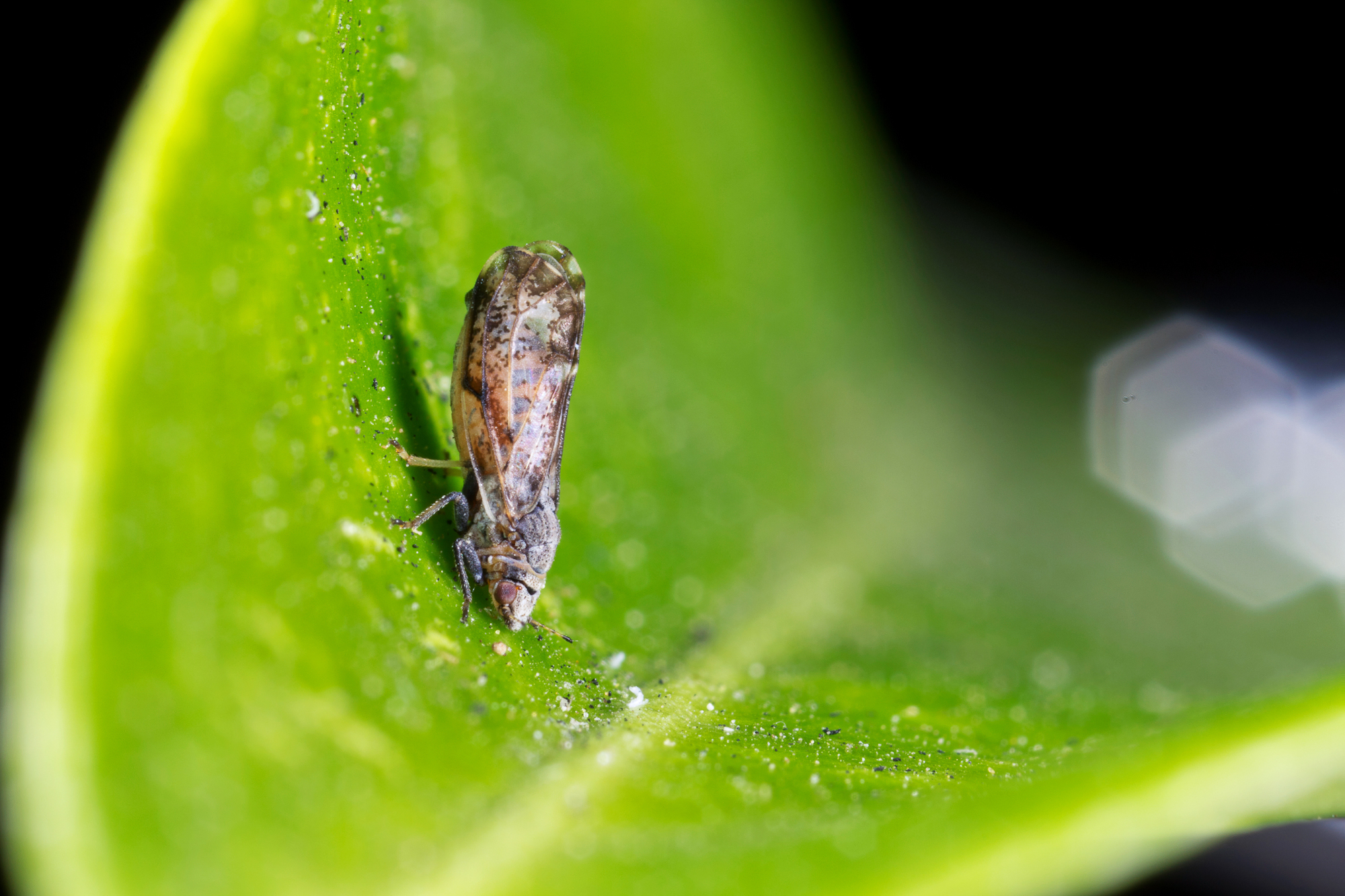
The San Gabriel neighborhood is located about 15 miles from Hacienda Heights, where the first HLB case in the state was detected in 2012 in a residential citrus tree. The  An aggressive trapping program for the Asian citrus psyllid (ACP), a pest known to spread the HLB bacteria as it feeds on citrus trees and other plants, has been ongoing ever since this first finding, including in the San Gabriel area.

“It’s fortunate that the homeowner is quite cooperative,” said Nelsen, “and other neighborhood homeowners are allowing officials to run PCR tests (polymerase chain reaction) on samples of their trees to determine if the disease is present.” PCR analysis is a sensitive research technique for detecting and identifying small numbers of bacteria in plants via DNA amplification.

Nelsen declared, “This find is exactly what the Citrus Pest and Disease Prevention Program is designed to do. PCR testing of a random sampling of leaves and stems in the area, as our program prescribes, enabled us to hit a positive” before symptoms appeared.

“We do not know how long the tree had been diseased,” said Nelsen, “but we do know that we have been trapping ACPs there for a long time and had not found any HLB before. You do not want to

Citrus Pest & Disease Prevention Program

find anything,” Nelsen said, “but when you do, you want to find it before it becomes an epidemic.”

In a statement on Friday, California Department of Food and Agriculture (CDFA) Secretary Karen Ross said, “Citrus is a cherished part of our landscape and our shared history, as well as a major agricultural crop.” CDFA has been planning and preparing for HLB detections since before the first ACP was detected in the state in 2008. Quarantines are now in place in 17 California counties.

Los Angeles County Agricultural Commissioner Kurt Floren will mobilize his team over this week to check on citrus trees in plant nurseries that fall within the 800-meter radius around the infected tree area. A spray protocol is already in place for all citrus trees within the 800-meter radius.

“More traps are going out so we can try to delineate the scope of the problem. Hopefully it will be nothing more than this one tree, like the solitary diseased tree we found in Hacienda Heights,” Nelsen said.

Resources

To support the citrus industry in its fight against HLB, go to California Citrus Mutual Action Center.


For questions about the ACP or HLB, visit or call CDFA’s toll-free pest hotline at 1-800-491-1899.


View the Distribution Map  of ACP, HLB and parasites in California published by the UNIVERSITY OF CALIFORNIA Division of Agriculture and Natural Resources.

USDA's free "Save Our Citrus" iTunes app

USDA’s free “Save Our Citrus” iTunes app


Visit the Citrus Pest & Disease Prevention Program.


Verify plant symptoms at USDA’s SaveOurCitrus website.


For information and ACP solutions, go to #citrusmatters, provided by Bayer CropScience, in partnership with California Citrus Mutual


2016-05-31T19:28:11-07:00July 13th, 2015|

UC ANR Horticulture Advisor Retires After 28 Years

John Kabashima wrapped up his horticultural career on July 1, after 28 years with University of California Agriculture and Natural Resources. Nursery professionals lauded the UC Cooperative Extension advisor’s service to the nursery and landscape industry and to homeowners in Orange and Los Angeles counties.

“He’s one of the few people who could translate science into business with a sense of candor and fact-based conversation,” said Robert Crudup, president of Calabasas-based Valley Crest Tree Company, of Kabashima.” John has long-term vision, which he used throughout his career to move the nursery industry forward.”

John Kabashima

John Kabashima, UC ANR

“He is smart about political science as well as plant science,” Crudup said. On a regular basis, Kabashima would warn growers about emerging issues that were likely to affect the nursery industry, such as regulations to control the spread of polyphagous shot hole borer, red imported fire ant and palm borer.

“He’s been very, very valuable,” said retired nurseryman Gary Hayakawa, noting that Kabashima not only contributed research on pest control and water issues for the nursery and landscape industries, but also persuaded people from UC campuses, the California Department Food and Agriculture and industry to work together. “Before he was involved in issues, the work was all separate. Industry didn’t have input,” Hayakawa said. “What John has done is to work with all three to form a coalition.”

Crudup, whose company has nursery operations in Los Angeles, Ventura, Alameda and San Joaquin counties, agreed.

“John’s biggest contribution was his work with the glassy-winged sharpshooter subcommittee,” said Crudup, who served on the subcommittee. “He brought a voice of reason that helped counterbalance emotional sides of the discussion.”

“His ability to act as the primary liaison between the nursery industry, CDFA, the UC, the county agricultural departments and the wine and grape industries was the primary reason this part of the GWSS (glassy-winged sharpshooter)  program was so successful and, more importantly has resulted in the continued viability of the California nursery industry in light of significant regulatory pressures,” said Bob Wynn, who was statewide coordinator of the CDFA Pierce’s Disease Control  Program and who  continues to oversee the program as senior advisor to Secretary Karen Ross.

“The CDFA, with advisement and counseling from John, developed what is known as the Approved Nursery Treatment Program, which allows nurseries in the infested areas of the state to ship by merely treating the plants with an approved treatment,” Wynn said.  “John was the primary author in the development of the nursery ‘Approved Treatment Best Management Practices’ document published in 2008. The use of this document has allowed the nursery industry to save millions of dollars in regulatory compliance costs over time.”

A native of Los Angeles, Kabashima says he started working in his family’s nursery business as soon as he was tall enough to water 1-gallon nursery plants.  “After killing thousands of plants, I was finally allowed to manage the family business from 1970 to 1976,” he quipped.

In 1976, his family sold the nursery and Kabashima enrolled at California Polytechnic University, Pomona. After he  earned a B.S. in agricultural biology from Cal Poly Pomona in 1979, he was hired by UC Riverside horticulture entomologist Pat Morishita as a lab technician. While working at UC Riverside, Kabashima earned a  master’s degree in pest management. He would later complete a Ph.D. in entomology at UC Riverside.

Kabashima earned his MBA at Pepperdine University in 1986 while managing the Ornamental Horticulture Division at Target Specialty Products. In 1987, the UC Division of Agriculture and Natural Resources recruited him to become a UC Cooperative Extension environmental horticulture advisor in Orange and Los Angeles counties.

Over the years, he has studied the management of insects, diseases and weeds in horticulture production systems, biological control of exotic pests, and water-related problems in landscapes, golf courses, nurseries, municipalities and watersheds.

In 1998 Kabashima took over the fledgling UC Master Gardener Program in Orange County, which as of now has trained more than 300 UC Master Gardener volunteers to extend research-based information on gardening and horticulture to the public.

The UCCE environmental horticulture advisor has also served as director of UC Cooperative Extension in Orange County and interim director of the UC ANR South Coast Research and Extension Center.

In 1994, when Orange County filed for bankruptcy and the Board of Supervisors voted to discontinue funding and housing for the local UC Cooperative Extension, Kabashima worked with Gary Hayakawa to keep UCCE in the county.

“When Orange County cut Cooperative Extension’s budget, we found out that without extension you don’t have 4-H or Master Gardeners,” Hayakawa said. To preserve the UC Cooperative Extension programs, Hayakawa, who was an Orange County Fair Board member, helped Kabashima  secure office space in trailers on the fairgrounds. In 2014, the UCCE office moved from the fairgrounds to UC ANR South Coast Research and Extension Center in Irvine.

Kabashima belongs to many professional organizations including the Entomological Society of America, California Association of Nurseries and Garden Centers, Nursery Growers Association, Western Chapter of the International Society of Arboriculture, United Agribusiness League, and San Diego Flower and Plant Association. The scientist has served on numerous government and industry advisory committees.

Throughout his career, Kabashima’s achievements in education and research have been recognized by various organizations. To name a few, he received the 1987 Education and Research Award from the Orange County Chapter of the California Association of Nurseries and Garden Centers (CANGC), 1993 CANERS Research Award from CANGC, 2002 Nursery Extension Agent Award from the American Nursery and Landscape Association, 2008 Western Extension Directors Award of Excellence, 2010 Entomological Society of America’s National IPM Team Award and the 2011 California Agriculture Pest Control Advisors Association Outstanding Contribution to Agriculture Award. In 2014, he and his friend Hayakawa were inducted into the Green Industry Hall of Fame.

Being a UCCE advisor has suited Kabashima. “I love learning new things, sharing that information with others, and using my skills to solve problems facing California, such as the ever-increasing arrivals of exotic and invasive pests,” he said. The avid photographer has been able to unite his avocation with his vocation. His photographs of insects have been used to illustrate textbooks, websites and news articles.

“Success in one’s field is often a combination of natural ability, informal and formal training and education, being mentored, and networking with collaborators and colleagues, all sprinkled with a little bit of luck and support from one’s family and friends,” Kabashima said.

In retirement, Kabashima plans to seek new culinary experiences with his wife Janet and daughter Misa, at  home and in their travels together. He has been granted emeritus status by UC ANR and he will continue his efforts to help UC Irvine save trees on its campus that are infested with polyphagous shot hole borer.

UC Agriculture and Natural Resources researchers and educators draw on local expertise to conduct agricultural, environmental, economic, youth development and nutrition research that helps California thrive. Learn more at ucanr.edu.

2016-05-31T19:28:11-07:00July 12th, 2015|

CROPS ACTUALLY BORROW WATER VIA TRANSPIRATION

Almonds and All Other Crops Borrow Water Via Transpiration

By Patrick Cavanaugh, Associate Editor

Editor’s note: We interviewed Allan Fulton, UC Cooperative Extension Irrigation and Water Resources Farm Advisor, Tehama County, on an important, yet overlooked, process of a plant’s water use in agriculture. We zeroed in on a major process all plants have called transpiration in which crops borrow water.

Allan Fulton

Allan Fulton, UC Cooperative Extension Irrigation and Water Resources Advisor,
Tehama County

California Ag Today (CAT): We hear in the media that our crops are using too much water. And while all plants need water to grow food, we also know that a big percentage of the water taken up by all plants actually transpires out of the plant, back into the atmosphere, to form clouds and precipitation, right?

Fulton: Yes, the water just returns to the hydrologic cycle.  Most of the crops we are distributing, whether within the US or globally, are actually very low in water content.

CAT: When we think about transpiration, the plants are actually borrowing the water. Isn’t that true?

Fulton: We get a lot of questions from the general public about why we irrigate our crops so much.

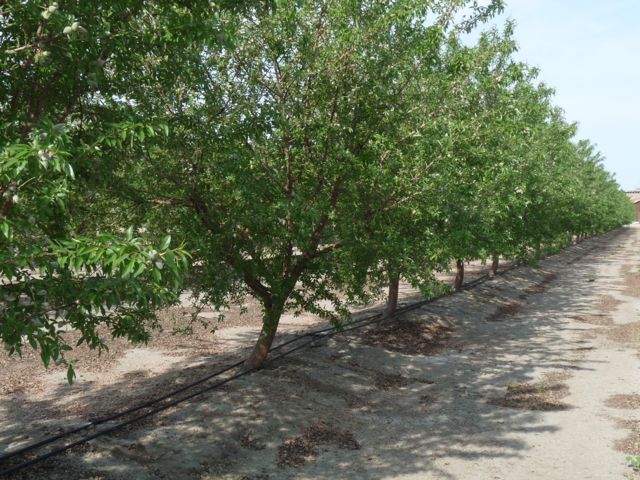
The truth is, plant transpiration is a necessary biological process. The water cools the tree so it stays healthy. The water exits the leaves through special cells called stomata. While they are open, stomata allow water to transpire and carbon dioxide to enter the plant for photosynthesis, making sugars and carbohydrates, which, in turn, are used to make the fruits and the nuts that we eat.

So if we don’t have an adequately watered plant that is allowed to transpire, the plant won’t get enough carbon dioxide. The plant will grow defective fruits, and nuts—smaller, shriveled, cracked, all the things that the typical consumer does not want to buy.

CAT: Now, when we are talking about transpiration, can we say  most of the water taken up by the plant ends up being transpired back to the environment for reuse? So the water transpired by the plant is definitely not being wasted?

Fulton: Definitely. Since we converted to pressurized systems, micro-sprinklers and mini-sprinklers, we have a lot more control over how much water we apply at any one time. We no longer measure water output in depths of acre-feet, or even 4-6 inches at a time anymore. Much like rainfall, we measure it in tenths of an inch, or 1 or 2 inches at most.

As a result, we use less water, so it doesn’t penetrate the soil very deeply, maybe only 1 or 2 feet each irrigation. We are very efficient with the water; but, we have to irrigate very frequently because we apply it in small doses, and we run our irrigation systems a lot. So,   we are definitely using systems that stretch the water supply, not waste it.

CAT: But again, the vast majority of the water that the tree takes up is transpired, right?

Fulton: Yes. Most of the time, at least 90% of the water we apply is taken up through the tree and transpired for photosynthesis to occur.

CAT: Does transpiration increase on a hot day?

Fulton: Yes, plus the plant looses a bit from surface evaporation  from the wet soil, but we try to control that with smaller wetting patterns and drip-confined wetting patterns.

When you think about it, the heat of the day occurs in the afternoon, and many systems don’t run because of energy costs.  There are incentives not to pump in the middle of the afternoon; but for those who do, try to confine the wetted area to limit evaporation. The hot hours of a day comprise about 4 hours of a 24-hour cycle, so a lot of irrigation occurs at night-time or in the early morning hours to lesson evaporative loss.

CAT: Growers are doing everything they can to conserve water. If the trees and vines are all transpiring most of the applied water, what is the problem with using water to grow food?

Fulton: I think the concept throughout the United States has always been to secure our food supply. That security has many benefits—economically and politically. In the end, we are trying to provide the general public with great quality, safe food, at the best price possible.

CAT: And nutritious food. We are growing the food people need more of.

2016-05-31T19:28:11-07:00July 10th, 2015|

BioConsortia Invents the Future

BioConsortia Plans New Ag Bio Products

By Patrick Cavanaugh, Associate Editor

Marcus Meadows-Smith is with BioConsortia, a research and development biodiscovery company in Davis, Calif. He and his company have big plans to invent the future for Ag.

“The company was founded about 20 years ago in New Zealand and was funded by a U.S. private equity,” said Meadows-Smith. “We decided to globalize the technology, and I became the founding global CEO of the company as it was established in the U.S. about 1 year ago.”

The company in New Zealand is called BioDiscovery. For many years, it was a contract research company that was very successful in the microbial space, working with companies like Monsanto and Syngenta. Then Biodiscovery made a R&D breakthrough. “We have totally restructured the company so that the global headquarters and global R&D are now run out of the United States,” noted Meadows-Smith, “and the New Zealand company has become the subsidiary that handles complementary R&D functions.”

Meadows-Smith mentioned that UC Davis and surrounding areas such as West Sacramento are teaming with bioscience researchers. “It’s turning into a bit of a hub for microbial expertise with several of the big players. Obviously you’ve got UC Davis, which is always credited as being the number one U.S. agricultural university. I’ve heard that it is now the world’s best agricultural university, so it’s a great place to be.”BioConsortia Logo

“We’ve got an excellent team of scientists in Davis, and the historic team in New Zealand has a lot of experience. They’ve been working together now for about five years, so the R&D down there is really humming at a great pace,” said Meadows-Smith.

“We’ve been able to rapidly bring together a group of scientists in the U.S.,” said Meadows-Smith, “that have jelled. We have set up a series of experiments, and we’re putting discoveries together. It’s a very exciting time to be doing pure research in the lab.”

“The other very exciting progression for us is we have just planted our second year of field trials, having completed our first year of field trials in 2014–just after the company was established,” he said.

The company is biological- and microbial-based. “We are looking at teams of microbes to improve plant traits and increase plant yield . We are developing products for fertilizer-use efficiency, abiotic stress tolerance, and biotic stress,” said Meadows-Smith.

“Pests and disease control are important, as well as metabolite expression,” he continued. “We’ve identified teams of microbes that instruct or enable the plant to deposit more sugar. As you can imagine, this provides the double productivity benefit of increasing both yield per acre and sugar content per plant.”

“While getting the plant to have increased sugar deposited in its leaf structure is a good thing; but that is actually not our main focus,” Meadows-Smith said. “We look at all the crops we want to target and ask what are the biggest needs today?”

“Fertilizer, for example, is a significant cost for the grower, so fertilizer-use efficiency products, we believe, would experience a large demand,”  Meadows-Smith stated. “There are also concerns about fertilizer leaching into groundwater, so the more efficient you can make plant take up the fertilizer, the better,” he added. “And of course, living in California, we are acutely aware of the importance of drought, so we are working on that as well. We are hoping for a yield increase per acre for the grower in everything we do.”

“We are moving products down the pipeline as we speak,” he commented, “and, obviously, we want a large body of data to demonstrate to growers how to best use our products. We are looking for two years of good field trial results and then we’ll go through the registration process. So we are expecting to get our first product on the market by 2017.

“We are developing products that contain beneficial bacteria, beneficial fungi, and good plant colonizers,”  Meadows-Smith declared. “Some will colonize the root system, and some the outside of the plant. Still others, endophytes, that will actually grow through the plant tissue. Just as we humans have microbes in our guts to aid digestion, plants actually have beneficial microbes, bacteria and fungi growing within the plant tissue,” Meadows-Smith explained.

Meadows-Smith said BioConsortia’s revolutionary platform will take biologicals to the next level “by assembling teams of microbes that perform complementary functions; so while some microbes will enhance the root system, others will aid the root in nutrient uptake,” he said. “This will bring consistency and superior performance to the marketplace. It’s a very exciting time for the industry as a whole,” he said.

“We are looking to transform food production in a way that is sustainable, bringing benefits to the grower and feeding the world with nutritious, affordable food. That’s what we are in this industry for. These are very exciting times!” Meadows-Smith said.

Featured photo: Marcus Meadows-Smith, with Bio Consortia Scientists.

2016-05-31T19:28:13-07:00June 20th, 2015|

Head, Heart, Hands & Health – The 4-H Pledge

The 4-H Pledge Means Dedication

By: Monique Bienvenue; Cal Ag Today Social Media Manager/Reporter


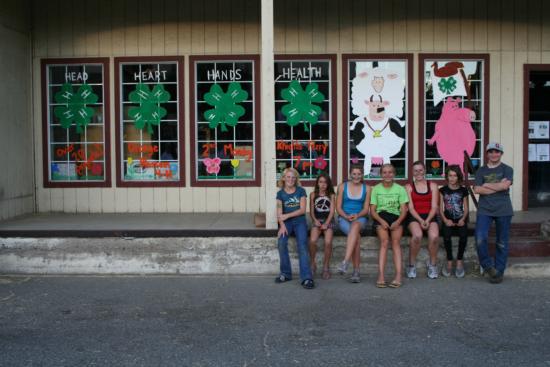
At a glance, one might not think twice about that four-word pledge. But to countless individuals, that short, simple phrase represents dedication to 4-H, a prestigious organization devoted to teaching America’s youth the skills necessary to become successful outside the classroom.

Agriculturally-based, 4-H began in the 1800s as a way for students to communicate new and innovative farming techniques to those who were disconnected from university campuses. Eventually, this education trend caught on and in 1902 the first 4-H club was formed.

4h-pledge, 4-H Head Heart Hands HealthThe Cooperative Extension System was later created in 1914, and in partnership with the National Institute of Food and Agriculture under the United States Department of Agriculture, 4-H was officially nationalized. Clubs were established all across the United States.

4-H


Today, there are hundreds of children involved in 4-H. From health issues to food security, there isn’t an issue that these young, energetic individuals aren’t taking on.

For more information about 4-H, visit their website at http://www.4-h.org.

2016-10-13T14:36:53-07:00October 13th, 2014|

Could CDFA’s ACP Control Policy Devastate Our Citrus Industry Like Florida’s?

Citrus Industry is Fired Up Over Softened ACP Control Policy

By Patrick Cavanaugh


It seems that CDFA officials are giving up on controlling the Asian Citrus Psyllid (ACP) in Central California citrus growing areas! It sure looks like it.

Ever since the May 12 ACP trappings in the Lindsay area of Tulare County, there has been a major back-step in what has been an aggressive mandatory spray program to control any possible live psyllids within an 800-meter radius around the trap.

Now CDFA is suggesting that the spray programs should be voluntary and only 400 feet around the trap find.

According to Joel Nelsen, president of the Exeter-based California Citrus Mutual, “The conversation relative to the change in eradicating or treating for the ACP came about with a discussion between a few members of the scientific community and the department.”

“Frankly, the industry was unaware of this possible change in the program. When it was first released to the AG commissioner, it shocked everybody–is my understanding,” Nelsen said.

“And as a result, last Friday afternoon, the executive committee members from our pest and disease management committee had a very direct conversation with senior leadership of the CDFA. I understand that the conversation was extremely candid, somewhat emotional; if the industry to is going to be supporting a program to the tune of 15 million dollars, they want a say in how the program is run. And evidently, the Department of Agriculture is making some subjective decisions that we don’t believe are appropriate.”

“From my perspective, there were mistakes made at the onset of this program that we had to learn from; and if we don’t take seriously—psyllid control, psyllid control, psyllid control!—we’re going to end up in the same type of quandary that our colleagues in Florida, Texas, Mexico and even Brazil are in.

Too many psyllids, an endemic population, some of which will contract citrus greening disease and eventually contaminate citrus trees, could devastate central California’s $2 Billion industry. “If we even allow one psyllid to continue to foster a population, then we have failed at our effort. And so from the perspective of Citrus Mutual, we are in an eradication mode,” Nelsen said.

“We are in a position in which we can find isolated psyllids and treat, and we are in position where continuous trapping and tapping (with bats and trays in searching for psyllids) and intensive trapping is not finding an endemic population. So for the department to argue that the population is endemic, its a ‘what if’ scenario that we don’t think is appropriate.”

Nelsen said that the pushback by his pest and disease management committee might have made a difference. “I haven’t received anything, but I think that conversation last Friday afternoon yielded some intended results. There’s a reconsideration, and I give a lot of credit to the industry members who stood up the department; but until it happens, its not real,” he said.

2021-05-12T11:06:01-07:00June 3rd, 2014|

ALERT: Immediate Action Needed for Thrips/TSWR

Source: Neil McRoberts

For those who have water and tomatoes:


Thrips numbers have increased rapidly in the southern arm of the Central Valley and Tomato spotted wilt virus (TSWV) has been reported in all of the areas we monitor,” according to Neil McRoberts, Assistant Professor, Plant Pathology Department, UC Davis.

There are numerous reports of TSWV symptoms in crops from Stanislaus County down to Fresno and Kings County particularly around the Huron area.


The current risk in Fresno County is high and we are recommending that growers who plan to use an insecticide program against thrips/TSWV take immediate action. The current mini heat wave will accelerate thrips development slightly and further bump up thrips numbers.

If you are planning to use an insecticide program against thrips/TSWV this season, you should target the next generation of thrips (generation 3).  If it is not possible to arrange for treatment in time to catch generation 3, target generation 4. Delaying treatment until later in the season will be much less effective at preventing damage from TSWV.  Coordinated spraying across large areas has an additional effect on thrips populations because it makes it difficult for them to avoid treatment by migrating.

Generation 3 adults are projected to peak on May 17th.  Sprays applied in the 14-day period before this peak date will check generation 3 and delay further population build-up and TSWV spread.  This means you need to take immediate action.

Generation 4 adults are projected to peak on June 11th.  Sprays applied in the 14-day period before this peak date will check generation 4 and delay further population build up and TSWV spread.  Treatment in the 14 days immediately following the generation 3 peak date will also be effective.


The current risk in the Merced area is high and we are recommending that growers who plan to use an insecticide program against thrips/TSWV take immediate action. The current mini heat wave will accelerate thrips development slightly and further bump up thrips numbers.

Generation 3 adults are projected to peak on May 22nd.  Sprays applied in the 14-day period before this peak date will check generation 3 and delay further population build-up and TSWV spread.

Generation 4 adults are projected to peak on June 16th.  Sprays applied in the 14-day period before this peak date will check generation 4 and delay further population build up and TSWV spread.  Treatment in the 14 days immediately following the generation 3 peak date will also be effective.


The current risk in eastern San Joaquin County is lower than in other southern Counties, but we think a precautionary approach is best. The current mini heat wave will accelerate thrips development slightly and further bump up thrips numbers.

If you are planning to use an insecticide program against thrips/TSWV this season, you should target the next generation of thrips (generation 3).  If it is not possible to arrange for treatment in time to catch generation 3, target generation 4. Delaying treatment until later in the season will be much less effective at preventing damage from TSWV.  Coordinated spraying across large areas has an additional effect on thrips populations because it makes it difficult for them to avoid treatment by migrating.

Generation 3 adults are projected to peak on May 28th.  Sprays applied in the 14-day period before this peak date will check generation 3 and delay further population build-up and TSWV spread.

Generation 4 adults are projected to peak on June 22nd.  Sprays applied in the 14-day period before this peak date will check generation 4 and delay further population build up and TSWV spread.


The current risk in Kings County is high and we are recommending that growers who plan to use an insecticide program against thrips/TSWV take immediate action. The current mini heat wave will accelerate thrips development slightly and further bump up thrips numbers.

If you are planning to use an insecticide program against thrips/TSWV this season, you should target the next generation of thrips (generation 3).  If it is not possible to arrange for treatment in time to catch generation 3, target generation 4. Delaying treatment until later in the season will be much less effective at preventing damage from TSWV.  Coordinated spraying across large areas has an additional effect on thrips populations because it makes it difficult for them to avoid treatment by migrating.

Generation 3 adults are projected to peak on May 22nd.  Sprays applied in the 14-day period before this peak date will check generation 3 and delay further population build-up and TSWV spread.  This means you need to take immediate action.

Generation 4 adults are projected to peak on June 14th.  Sprays applied in the 14-day period before this peak date will check generation 4 and delay further population build up and TSWV spread.  Treatment in the 14 days immediately following the generation 3 peak date will also be effective.


The current risk in western San Joaquin County is lower than in other southern counties, but we think a precautionary approach is best. The current mini heat wave will accelerate thrips development slightly and further bump up thrips numbers.

If you are planning to use an insecticide program against thrips/TSWV this season, you should target the next generation of thrips (generation 3).  If it is not possible to arrange for treatment in time to catch generation 3, target generation 4.

Delaying treatment until later in the season will be much less effective at preventing damage from TSWV.  Coordinated spraying across large areas has an additional effect on thrips populations because it makes it difficult for them to avoid treatment by migrating.

Generation 3 adults are projected to peak on May 28th.  Sprays applied in the 14-day period before this peak date will check generation 3 and delay further population build-up and TSWV spread.

Generation 4 adults are projected to peak on June 22nd.  Sprays applied in the 14-day period before this peak date will check generation 4 and delay further population build up and TSWV spread.


The web resource for integrated management of Western Flower Thrips and Tomato Spotted Wilt Virus in the California Central Valley contains two tools to help in disease risk management:  

A Field Risk Index tool uses simple information about field locations, land use, and agronomy to calculate a risk category for tomato crops.  This tool can be used before planting or early in the season to get a heads up about the general risk to a crop from TSWV.

A thrips population projection model, driven by degree-day accumulation at several Central Valley locations, aids in projecting when thrips generations are hatching, developing, and adult numbers are peaking.  This information is used to issue regular updates and provide broad guidelines for timing insecticide sprays to keep thrips numbers low enough to prevent TSWV from spreading.

The research behind these tools was supported by the California Tomato Research Institute (CTRI)

The model was developed in Collaboration with Dr. Len Coop of Oregon State University’s Integrated Plant Protection Center (IPPC).  The IPPC developed and hosts the USPEST web service which is a multi pest multi model tool that provides information on pest development and disease risk for the Contiguous 48 US states using a network of weather stations.


2021-05-12T11:03:06-07:00May 4th, 2014|

COTTON GROWERS URGED TO COMPLETE PLOWDOWN

Fresno County Ag Commissioner Urges Cotton Growers To Complete Plowdown 

 
Fresno County Agricultural Commissioner/Sealer Les Wright TODAY urged all cotton growers to complete their plowdown activities as soon as possible to maintenance a host-free period for pink bollworm. For the 2013 growing season, there were no native pink bollworm moths captured in Fresno County for 62,215 acres of cotton.
Cotton Plowdown Requirements:
Plowdown Dates for this growing season are:
December 20, 2013 – South Of Shields Avenue
December 31, 2013 – North Of Shields Avenue
Stalks must be shredded by a power-driven shredder that will effectively reduce stalks to a particle size, permitting burial and rapid decomposition.
Following shredding, tillage must be completed in such a manner that all stubs are loose from the soil around the roots and will prevent re-growth.
At this point, there are two options for cotton growers:
Conventional plowdown is done by discing all roots, plant stubs, shredded debris and trash remaining from harvesting or clean-up operations and soils around roots to the point that they are turned over and thoroughly mixed with surface soil. This method of plowdown is required in sections where pinkie has been found last growing season or this season until September 1, 2013.
Reduced tillage does NOT require the incorporation of all roots, plant stubs, shredded debris and trash remaining from harvesting or clean-up operations. If growers choose this option, they must submit a notification 10 days prior to tillage of their intention to reduce tillage on their acreage eligible for the program. Call the Department to find out which sections are not eligible for this program if you are not sure.
Once plowdown is completed by either method, any volunteer cotton must be destroyed that may appear during the host-free period, even if it is on ground that was not planted to cotton this season. If re-growth does occur during the host-free period in 2014, the grower/landowner will be cited for a violation of cotton plowdown regulations. Be sure to check fallow fields for isolated plants growing in the field and in easement areas.
Do your part to keep pinkie out of the San Joaquin Valley and finish your plowdown early to avoid the following penalties for noncompliance:
Violation Of Plowdown Date – Base fine of $500 + $5 per acre not in compliance
Repeat/Subsequent Violations – Base fine of $1,000 + $10 per acre not in compliance
In California, pink bollworm overwinters as a late stage larva in trash, at the base of cotton stalks, in soil cracks, and rarely in seeds in the unopened boll. Conventional plowdown, when done properly, kills pink bollworms in these overwintering sites. Conventional plowdown and March planting dates are designed to disrupt the life cycle of pink bollworm. It is not known whether reduced tillage practices give pink bollworm a foothold for next season. Fields using reduced tillage will be scrutinized during the host free period and next trapping season.
The late planting dates for cotton create the opportunity for “suicide emergences.” If pink bollworm emerges before the plants have begun to square, the female will lay her eggs on sheltered parts of the plant, but the larvae will die. Cotton planted too early or re-growth cotton will provide feeding and egg laying sites for pinkie.
Questions concerning proper plowdown procedure may be directed to any district office locations listed below:
Fresno                  600-7510     8:00 a.m.-5:00 p.m.
Firebaugh             600-7322     1:00 p.m.-2:00 p.m.
Huron                   600-7325     1:00 p.m.-2:00 p.m.
Kerman                600-7326     1:00 p.m.-2:00 p.m.
Reedley                600-7329     1:00 p.m.-2:00 p.m.
Sanger                  600-7331     1:00 p.m.-2:00 p.m.
Selma                   600-7327     1:00 p.m.-2:00 p.m.
The Fresno County Agricultural Commissioner’s offices will be closed on December 25, 2013 and January 1, 2014.

2021-05-12T11:06:02-07:00December 11th, 2013|
Go to Top