University of California, Division of Agricultural and Natural Resources

PCA Training At UC Davis

UC Davis Offers Pathway to PCA Training

By Laurie Greene, Editor


Frank Zalom, distinguished professor of entomology, agricultural experiment station entomologist, and extension specialist at UC Davis, teaches a class for students that forms a pathway to becoming a Pest Control Advisor (PCA). “It is the only class that a lot of them had ever taken in entomology,” said Zalom, “so we try to structure it to give them a good, solid background in entomology. Then we lead them through all the different pest management options. We even bring in someone from the California Association of Pest Control Advisors (CAPCA) Pathway to PCA program for the very last lecture.”

Zalom, whose research interests include integrated pest management (IPM), tree crops, small fruits and vegetable crop entomology, wants to provide a valuable education to his students. “Most of the kids taking my classes are interested in taking the PCA exams and there is a huge opportunity for those students out in the future.”

“We teach them about integrated pest management (IPM) and the pests,” Zalom noted. “Then we show them some of the many career opportunities for PCAs,”  he said, adding. “There will always be a big need for professional PCAs to help protect our crops from pests and diseases. They assist growers all over the state.”

________________________
Links:

California Association of Pest Control Advisors (CAPCA)

CAPCA Pathway to PCA

2021-05-12T11:03:03-07:00February 24th, 2016|

Lorsban Under Scrutiny

Chlorpyriphos (Lorsban) Must be Used More Carefully

By Patrick Cavanaugh, Deputy Editor

California Department of Pesticide Regulation (DPR) reports an important, broad-spectrum organophosphate insecticide known as Chlorpyriphos, or Lorsban, may be further restricted due to evidence of potential human health and environmental risks, presence (parts per billion) in some California waterways, and pressure from the EPA. Brian Leahy, director of the California Department of Pesticide Regulation, said, “Chlorpyriphos is an important tool and we know there are important times when you have to use it.”

Registered and widely used in agriculture across the nation for more than 40 years, DPR has made it a restricted-use material. Leahy said, “We are trying to work with the grower community to improve how they use it. We are also working with UC IPM to look at essential needs, but we know that as we look at Chlorpyriphos, we are going to have to put additional restrictions on it.”

“We simply need for it to stay on target, and not be getting into the human body. We are seeing that it is, and we are going to continue to make sure that people use it thoughtfully and wisely,” he said.

And Leahy is very confident that growers can use this material and keep it on target, “I have seen farms that use it only when they really need it, and that is what we want. We can’t lose this tool and we are going to keep it only by showing we can greatly reduce off-site movement to the human body and watersheds,” he noted.

___________________________

Resources:

According to the University of California Agriculture and Natural Resources 2014 Chlorpyrifos Report entitled, “Identifying and Managing Critical Uses of Chlorpyrifos Against Key Pests of Alfalfa, Almonds, Citrus and Cotton“:

Chlorpyrifos plays a critical role in many IPM programs for controlling pests that threaten the productivity and economic well-being of California producers and in maintaining the high quality standards required by consumers and international export markets. This active ingredient also allows production of animal feed to support the important dairy industry in California. For some pests, chlorpyrifos is one of the last effective organophosphate insecticides available and may provide an important alternative mode of action for insecticide rotations to prevent the development of resistance to newer insecticide products. For others, this product is one of very few products with international registrations with established maximum residue limits (MRLs) that allow unhampered trade. Chlorpyrifos may also be a key tool for controlling invasive pests as well as endemic pests occasionally found in extremely high population densities. 

The California Department of Pesticide Regulation reports that the combined use of chlorpyrifos in alfalfa, almonds, citrus, and cotton has decreased since 2006. 

Although newer insecticides are also available to manage some pests in these four crops, there is a continued need to preserve the availability of chlorpyrifos for specific situations.

Assessing the Health Risk of Pesticides,” California Department of Pesticide Regulation

2021-05-12T11:03:04-07:00February 16th, 2016|

EPA on Agriculture, Part 2

Ron Carleton, EPA on Agriculture, Part 2

By Laurie Greene, Editor

Editor’s note: In an exclusive interview with Ron Carleton, EPA Counselor to the Administrator for Agricultural Policy, we asked how the EPA views agriculture.

“Look, we want to work with agriculture,” said Ron Carleton, former deputy commissioner for the Colorado Department of Agriculture. “We have a number of issues and challenges we face across the country with water quality and other things. The thing that we often talk about is the adoption and implementation of conservation measures and best practices, and our producers are doing that,” he noted.

“Farmers are taking those very important steps,” explained Carleton, “to help get us from here to there. EPA Administrator Gina McCarthy is very committed to working with agriculture, to have that dialogue, to have that discussion, to have those two-way communications. So, hopefully, we can work better together as we go forward and find those opportunities to collaborate and to partner. That is so key, and something that I strongly am committed to and strongly support.”

Ron Carlton, EPA Counselor to the Administrator for Agricultural Policy

Ron Carlton, EPA Counselor to the Administrator for Agricultural Policy

Carleton elaborated, “I absolutely believe the EPA is always willing to look for outreach opportunities to be with our producers to sit down, to have those discussion with farmers,” towards a common goal.

“We’ve worked with our pesticide folks around the state very closely to resolve any issues that might arise with pesticide issues. We want to get those tools and those products out to our producers, but to do so in a safe way, in a way that also protects the environment. So, I think it is about collaboration. It is about discussion and dialogue, and we are committed to doing more of that.”

With the EPA’s commitment to collaboration and partnership, Carleton said hopefully in the long run, we could address the many challenges that we all have—not only in agriculture—but in the environment as well.

“I’ve always said that our farmers and ranchers are the best stewards of the land,” said Carleton. “We at the EPA need to continue working with them to support them to promote those efforts as best we can.”

“Now, we are not without challenges out there—environmental challenges with water quality, for example, with nutrient pollution in some cases, and air issues in other cases. But I think that the way we lick those problems, again, is by working together promoting those voluntary efforts. We must look for and embrace those opportunities to work together, not only with our Ag stakeholders, but also with the USDA and the NRCS.

“I think we just need to continue what we are doing, engage even more farmers and ranchers,” Carleton said, “and continue to seek technological advances, not only in irrigation, but land management and water quality. I’m confident and I’m optimistic that even with the challenges we have, climate change, a doubling of the population by 2050 and all the problems these will pose, I have every confidence in the world that we are going to find solutions to these problems, and I think that our farmers and ranchers are going to lead the way.

USDA Horizontal Logo“Farmers and ranchers are innovative and always trying to do the best they can to protect their land and water; but we all can do better. I think our producers respond to change in very good ways. Look, we have gone through technological advances; we are more technically precise in using fertilizers and water,” Carleton said.

He noted, “Water is going to be an interesting issue as the population doubles and as we have more development, particularly in the Western part of the United States, which is drier. But I think our farmers and ranchers are good at responding to that change, and good at helping to develop, adopt, and implement those technical advances in a way that not only is environmentally good, but increases productivity.”

“They are doing more with less,” Carleton said, “particularly given the challenges of a growing population, not only here in this country, but around the world, the loss of productive agricultural land everyday to development and the increase in extreme weather events, including droughts, floods and the like—and California farmers know all too well the weather extremes.”

2016-05-31T19:24:12-07:00February 12th, 2016|

Biocontrols Conference & Expo

Biocontrols Conference & Expo, March 3-4, 2016, Monterey, California 

Learn everything you need to know about agricultural biocontrols from the experts.  


Join your peers, leading organizations and industry experts at the Biocontrols Conference & Expo for two days of hands-on education devoted solely to the use of biocontrols in agriculture presented by Meister Media Worldwide, a media solutions provider for worldwide specialized agriculture, in cooperation with the Biopesticides Industry Alliance (BPIA), and the California Association of Pest Control Advisers (CAPCA). The Biocontrols Conference offers educational sessions, continuing education credits (CEUs) for pest control advisers (PCAs), certified crop advisers (CCAs) and other state certification programs, and an expansive Expo with top suppliers of biocontrol products and related services.

New for 2016!  

Two optional, concurrent add-ons on the last afternoon of the event (additional fees may apply):

1.Tour of two leading Monterey-area specialty-crop growing operations that use biocontrols as part of their integrated pest management programs:

-Biocontrols USA Tour

-Pacific Plug and Liner,  Watsonville, CA

2.Hands-on workshop on the use of beneficial insects in a greenhouse environment

lineclear

Agenda Sampling:

-8 Tips To Get The Most Out of Your Biocontrols Program

-A look at the most common active ingredients and how to handle them to get the best results, Lance Osborn, UF IFAS

-What’s Next In Biocontrol?

-Regulatory Update, Bob McNally, EPA

-Pipeline Update – what types of new products are coming?

-The Future Isn’t Biocontrol. It’s IPM

-Understand The Value of Biopesticides – Do they Pencil Out for You?

-How To Evaluate/Field Test a New Research Biopesticide

-Biopesticides and Beneficials: Make Them Work Together, Frank Sances, Pacific Ag

-Fruit and Tree Nuts: Hands-on, How-To Topics

-Using Green Lacewings in almond and pistachio, Brad Higbee, The Wonderful Co.

-Vegetables: Hands-on, How-To TopicsMycorrhizae: Why it Makes Sense in Strawberries, Johan Pienaar, Mycorrhizal Applications.

Monterey Bay, the conference location, is in close proximity to the heart of major California specialty-crop production: vegetables, fruits, and ornamentals in Monterey County and the Salinas Valley, and affords you the opportunity to tie-in a long weekend in the Monterey Bay area.

lineclear

Meister Media Worldwide and its leading family of brands including American Vegetable GrowerÂŽ, Western Fruit GrowerÂŽ / American Fruit GrowerÂŽ and Greenhouse GrowerÂŽ, CropLifeÂŽ,

lineclear

Having celebrated its 15th anniversary in September 2015, BPIA is dedicated to fostering adoption of biopesticide technology through increased awareness about their effectiveness and full range of benefits to a progressive pest management program.

lineclear

Dedicated to the professional development and enhancement of its members’ education and stewardship, the California Association of Pest Control Advisers (CAPCA) represents more than 75% of the nearly 4,000 California EPA licensed pest control advisers (PCAs) that provide pest management consultation for the production of food, fiber and ornamental industries of this state.

2021-05-12T11:05:58-07:00January 28th, 2016|

UC’s Karen Klonsky Retires

Karen Klonsky Retires, Gets Major Credit for CA Agricultural Cost and Return Studies

By Patrick Cavanaugh, Deputy Editor and Laurie Greene, Editor


This is an exclusive interview with Karen Klonsky, UC Davis Cooperative Extension specialist emeritus, in the UC Davis Department of Agricultural and Resource Economics. Her expertise has been farm management and production, sustainable agriculture and organic agriculture.

CAT: Congratulations on your recent retirement!UCANR 100 years logo

Klonsky: Thanks Patrick. I retired on July 1, 2015, after 34 years. I started at UC Davis in ’81, straight from graduate school.

CAT: What has been your primary research interest?

Klonsky: My primary research areas are sustainable and organic agriculture. I have approached these subjects from several dimensions, including the economic feasibility of alternative farming practices, the size and growth of organic production in California, and factors influencing the adoption of alternative farming systems.

CAT: Wow, what a great career! I understand your interest in alternative farming systems began with your dissertation work comparing alfalfa systems with integrated pest management.

Klonsky: I studied agricultural economics in graduate school and started working with a professor in my department who had a joint appointment in agricultural economics and entomology. And I just became very interested in that research area.

I worked with entomologists and researchers on a computer model of plants and alfalfa weevils, and their interaction, plus a management component. I studied the plant and bug components, then did the management part and imposed it on top and asked, ‘If you did this, how many bugs would die?’ The plant model showed how much the alfalfa would grow, and at what point you could cut the alfalfa and achieve the desired yield. I never actually did any fieldwork.”

CAT: Since 1983, you not only directed ongoing Cost and Return Studies, but the development of an entire archived library of Cost and Return Studies for the UC Davis Department of Agricultural and Resource Economics. You recently completed studies on pistachios and walnuts, right?

Klonsky: Yes, both “Sample Costs to Establish and Produce English Walnuts In the Sacramento Valley, Micro sprinkler irrigated” and “Sample Costs to Establish and Produce Pistachios In the San Joaquin Valley-South, Low-Volume Irrigation.”

Our library contains studies about field, tree and vine crops and animal commodities. But since I retired, Dan Sumner, director, University of California Agricultural Issues Center and Frank H. Buck, Jr. Distinguished Professor for the Department of Agricultural and Resource Economics has taken that over and I continue to be peripherally involved.

CAT: These cost studies have been recognized worldwide.ARE Cost and Return Studies

Klonsky: Yes, and it has been very gratifying work. We decided to put them online routinely, and we have had a million downloads per year. Around 2005, Pete Livingston, my staff research associate, got the idea of scanning in the older studies. All of the newer studies were in electronic file format, so posting was easy. However, most of the older studies were paper copies, so we got a grant to scan and add them to our new online archive.

CAT: What was the most interesting thing about doing those cost studies?

Klonsky: I loved doing those studies. I really learned a lot because all cost studies are done directly with farmers we met through county farm advisors. I really got to know what farmers were thinking about and what their options were.

CAT: So those were real costs, not university costs?

Klonsky: Those were not university costs. The farmers tell us what equipment they will use, and then we calculate the cost of using their equipment—the fuel used to operate the equipment and the repair costs—with an agriculture-engineering program.

CAT: Do you have a math background?

Klonsky: Yes, I got my bachelor’s at the University of Michigan in mathematics. It was very helpful.

CAT: And you also earned your Ph.D. at the University of Michigan?

Klonsky: Yes.

CAT: So did you grow up in Michigan?

Klonsky: No, I grew up in New York.

CAT: And you just had an interest in going to Michigan State University?

Klonsky: Well, I had an interest in agriculture because I had an uncle who farmed corn and vegetables in upstate New York. We would go up there and I thought it was the most wonderful thing in the world.

CAT: What were some of the highlights of your career?

Klonsky: For many, many years, I was involved in the long-term on-campus sustainable agriculture research on land that is now on Russell Ranch, but it started as Sustainable Ag Farming Systems. We looked at four different farming systems, organic, low input, high-input, and we did a lot of analyses with cover crops and rotations. It was great to work on that project.

CAT: And you worked with USDA on the trends of organic farms?

Klonsky: And then I worked quite a bit with Department of Food and Agriculture on using the registration data for their organic farmers to compile statistics about how many farmers they had, what they grew, and the number of acres they planted with each crop. They had this database, which started in 1992 I believe, but they weren’t using it. Now the most recent registration analysis is available for 2012.

CAT: Just to try to get more data on the organic movement and organic growth?

Klonsky: Yes, because there was no data at all about it. Now NASS (National Agriculture Statistics Service) conducts a nationwide Organic Census, in addition to the regular Census of Agriculture.

CAT: I understand you served as an editor of the Journal of American Society of Farm Managers and Rural Appraisers (ASFMRA). What did that entail?ASFMRA

Klonsky: Yes. I did that for many years. ASFMRA is a national organization. The Journal of the ASFMRA comes out annually. As editor, I corresponded with the authors, assigned reviewers, and ultimately, accepted or rejected submissions, like any journal.

CAT: Did you travel a lot with your work and presentations?

Klonsky: You know, not so much, I went to Spain one time and France once for work. But I did travel around domestically to symposiums and conferences to speak on the economics of growing a lot of different crops, including many presentations at the EcoFarm Conference.

CAT: You worked and collaborated with some really interesting people.

Klonsky: Most of my important collaborations were conducting trials with people in other disciplines. For instance, at Russell Ranch, I was the only economist involved in the collaboration with plant pathologists and pomologists who ran trials to discover fumigation alternatives in the preplanting of trees.

Then I worked with people at UC Santa Cruz on alternatives for strawberry fumigation. Most of my work has been interdisciplinary.

CAT: California farming in general is huge, diverse industry. We produce 60% of the fruits and vegetables, and nearly 100 percent of the nut crops that people across the country consume. Any comments on that and on how valiant and resilient farmers are to get through year after year, particularly lately with the drought and the lack of water deliveries?

Klonsky: When I first started, there was a land price bubble, and there were a lot of bankruptcies because people had these land payments they just couldn’t pay.

It was kind of like the mortgage crisis that housing saw in 2008, agriculture saw in the early 80s.

CAT: So as you have been editor for the Journal of the American Society of Farm Managers and Rural Appraisers, you see land values going up and that keeps agriculture strong—the high land values, right?

Klonsky: Well, but it keeps it expensive. So now there is more and more leasing of land. As farmers retire from permanent crops, they have an orchard, but they don’t really want to sell it, so they lease it.

CAT: There you go. Keep it somehow in the family.

Klonsky: Yes, they try to keep ownership in the family. Or what we see also are these development leases where a young farmer can’t afford to buy the land, so they lease the land, but they pay for the trees to be planted.

CAT: So you are still coming to your office at UC Davis?

Klonsky: I am officially retired, but we have what we call a ‘partial recall’ where you can do things if you have funding. I have a project along with Rachel Goodhue, Professor, UC Davis Department of Agricultural and Resource Economics, with the California Department of Food and Agriculture, funded through the California Department of Pesticide Regulation. The Department of Pesticide Regulations is required by law to do an economic analysis of all proposed new regulations. So that is what I am working on.

CAT: Give me a couple of examples. VOC regulations?

Klonsky: Yeah, we do VOC.

CAT: Are you looking at sustainable groundwater legislation?

Klonsky: No, just pesticide regulation. It is funded by the Mill tax on pesticides.

CAT: Did you work with a lot of graduate students at UC Davis?UC Davis Graduate Studies

Klonsky: Oh yeah, I worked with a lot of graduate students coming through. One of them was on different ways of pesticide management on eucalyptus trees. I said I went to Spain. On that trip, I spoke about growing eucalyptus for firewood.

CAT: That was an economic study, wasn’t it?

Klonsky: Yes it was. They grow it not for firewood, but for paper. But that never really caught on here.

CAT: Are you bullish on agriculture? Do you think Ag is going to continue thriving in California?

Klonsky: Oh, sure. Oh, sure. But I think that the water situation is definitely real, and I think agriculture already has definitely made tremendous strides in irrigation systems, especially the subsurface irrigation in vegetables, in particular processing tomatoes, which I worked on.

CAT: That was a huge improvement in growing tomatoes. And people didn’t think it was going to work, but it turned out to be fantastic.

Klonsky: Yeah, a really win-win on that one. And orchards are getting more efficient. If you look at the water per pound of crop produced, you see major improvements with water efficiency.

CAT: Absolutely. Of course, most plants transpire most of the water they take up through the roots, up through the leaves and the stomata cells. By the way, do you have any interesting stories regarding your career?

Klonsky: It’s not the highlight, but the weirdest thing of my career is I got an email from somebody in Ministry of Agriculture and Fisheries from the United Arab Emirates. They wanted me to give a live presentation about Cooperative Extension in California and how it’s organized.

So I had to go to this office building in downtown Sacramento at 10:00 at night because of the time difference. I went into a conference room that had a special kind of projector so I could see them and they could see me. And on the monitor I see all these men walked in—they were all men—and half of them were in Western dress and half of them were wearing a Sheik-like headdress, with a band that sits on top and holds it on.

That was crazy, just being downtown after everybody is gone and the whole building was dark and quiet, except the one room that I was in.

CAT: How long was the presentation?

Klonsky: Gosh, maybe an hour.

CAT: You needed to do some research for that presentation?

Klonsky: Yeah, I had to do some research, I had to think about Cooperative Extension in a different way—the big picture. 

CAT: Keep up the good work, and I hope you are enjoying retirement.

Klonsky: Yeah, I come in two days a week, so it is nice to see everybody. I still get a lot of emails, which I need to answer.

2016-08-18T13:54:40-07:00January 26th, 2016|

Ag Collaboration with the Netherlands

Karen Ross: Ag Collaboration with the Netherlands

By Charmayne Hefley, Associate Editor


One of the best ways to overcome the challenges that arise in farming, is ag collaboration with countries that have already found solutions to the issues we face.

Karen Ross, secretary, California Department of Food and Agriculture, led a delegation of Californians to the Netherlands last month, “for shared discussion on all of the ways we can collaborate on climate-smart agriculture,” Ross said, “including water-use efficiency and improved fertilizer use.”

“In particular, the Netherlands has a shared issue with us—nitrates in groundwater—and what we can do to improve our water management and fertilizer management to avoid that. They’re doing some interesting things with greenhouse technologies and salt-tolerant crops, so we saw some real opportunities. We had university people with us to do some trials here.”

Ross’s group was able to visit Wageningen UR (University & Research centre), Netherlands’ prominent agriculture university. She said between the University of California, Davis and the Dutch university, “we found ways that we can collaborate together to find the solutions that are not just about here in California,” Ross said. “If we can solve these problems on water-use efficiency, desalinating brackish water, and salt-tolerant crop issues in California, we will make a contribution to solving these problems on a global basis.”

Ross’s team also visited many farmers, primarily of specialty crops. Ross commented, “We saw some of their digester technology, which we know is one of the solutions for our dairies. We really want to advance that technology, make it affordable and provide value to our dairies.”

2021-05-12T11:05:58-07:00January 22nd, 2016|

Red Scale Challenges Citrus

Besides HLB, Red Scale Challenges Citrus

By Charmayne Hefley, Associate Editor

While much of the talk in the citrus industry is about how to fend off Huanglongbing (HLB) disease, one of the most devastating citrus diseases, Dr. Beth Grafton-Cardwell, director of the University of California Agriculture and Natural Resources Lindcove Research and Extension Center, reinforced that HLB isn’t the only pest that can overtake California’s citrus orchards.

Grafton-Cardwell explained how last year’s warm winter led to an increase in the California red scale, Aonidiella aurantii, population. “Normally we have cold conditions that kill off the younger instars of the scales and [basically] restarts the system. But we didn’t really have any low temperatures last year, so the scales didn’t go into their usual hibernating phase. They just kept cranking out crawlers and adding in an extra generation or two of production. So the higher number of scales on the trees made it much more difficult for the growers to control.”

Grafton-Cardwell explained while it is difficult to speculate whether this coming year will yield another large population of the CaSave Our Citruslifornia red scale, “We have already received more moisture as a result of seasonal rainfall, which should help hinder the pest. Hopefully we’ll get some cooler weather conditions too–not freezing because citrus groves don’t like freezing temperatures–but cold enough to knock out some of the scales and get the population back under a manageable level,” she said.

Nevertheless, despite the challenges that California red scale can cause, Grafton-Cardwell said, overall, citrus growers need to keep their focus on the fight against the Asian Citrus Pysllid (ACP), Diaphorina citri, and its ability to spread HLB. “Growers need to start thinking in terms of: California has the [HLB] disease and it’s going to start spreading in southern California soon,” Grafton-Cardwell said. “What do we do to prevent it from spreading up here into the San Joaquin Valley?”

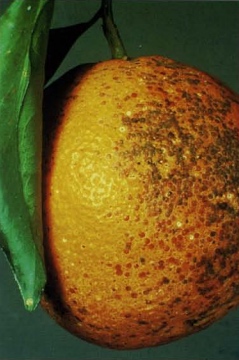
Photo source: “Life Stages of California Red Scale and Its Parasitoids,” UC ANR Publication #21529, by Forster, Lisa D.; Robert F. Luck; and Elizabeth E. Grafton-Cardwell; with photos by L. Forster and M. Badgley)

2021-05-12T11:03:04-07:00January 20th, 2016|

USDA Pesticide Data Program Report Confirms Food Safety

USDA Pesticide Data Program Report Confirms Food Safety:

More than 99 percent of sampled food tested below allowable pesticide residue levels!

The U.S. Department of Agriculture (USDA) has confirmed again in its annual report that American consumers can focus on the nutritional benefits of conventional and organic produce without concern for pesticide residues. Over 99 percent of fresh and processed food available to consumers tested below allowable pesticide residue levels, as detailed in the 24th Pesticide Data Program (PDP) Annual Report released on January 11, 2016 by the USDA Agricultural Marketing Service (AMS). Only .36 percent [0.36%] of the products sampled through the PDP had residues above the U.S. Environmental Protection Agency (EPA) established tolerances, giving consumers plentiful options to meet their daily nutritional needs.crop life america logo

“Today’s consumers can choose from food produced with a variety of farming methods and necessary crop protection strategies and be confident that it will sustain and enrich their families’ lives,” stated Jay Vroom, president and CEO of CropLife America (CLA). “Across the nation, our growers continue to use the most advanced crop protection technology available to target specific crop threats. From precision agriculture to integrated pest management, farmers in the heartland, the plains, coastal areas and everywhere in between are pushing forward with the best ways to produce food for their communities and for the country.”

PDP researchers tested a total of 10,619 samples of fresh and processed fruit and vegetables (8,582 samples), oats (314 samples), rice (314 samples), infant formula (1,055 samples), and salmon (354 samples). To ensure the samples were representative of the U.S., researchers collected data in a variety of states throughout different times of the year. The findings support the Dietary Guidelines for Americans 2015-2020, recently released by USDA and the U.S. Department of Health, which encourage consumers to eat more fruits and vegetables.ChooseMyPlate.gov

“With rapid advancements in computing technology, the space for developing new ways to fight agricultural threats is increasing exponentially,” stated Dr. Janet E. Collins, senior vice president of science and regulatory affairs at CLA. “Consumers have a number of options at the grocery store, thanks in large part to the work of the scientific community involved in research and development, the companies that are manufacturing products, and America’s farmers and ranchers. The 2014 PDP report demonstrates again that, with the sound science-based regulation of pesticides and commitment from the industry, farmers and other stakeholders, we can reach toward making sure that every American, no matter their wallet size or geographic location, can access healthy food.”

A 2012 report from CLA demonstrates that crop protection has made healthy food more financially accessible to the American consumer, providing a 47.92 percent savings in overall grocery bills for a family of four in the U.S.1 In addition, increased agricultural production, due to advanced pesticides, has created an additional 1,040,661 jobs generating more than $33 billion in wages—all while decreasing the need for tillage operations, thereby reducing fossil fuel use by 558 million gallons per year.

Recent reports from the United Nations also show that an increasing number of people worldwide have gained access to healthy food. Over the past 25 years, the number of people worldwide who are hungry has declined from one billion to about 795 million, or about one person out of nine—which means that 2 billion people have avoided a “likely state of hunger” given the global population increase of 1.9 billion people since 1990-92.2 Multiple factors have contributed to the decrease in global hunger, including the integration of family farmers and small holders in rural areas into well-functioning markets for food, inputs and labor.

The PDP was established in 1991 for the purpose of collecting data on pesticide residues found in food. Information collected by the PDP is sent to the EPA to help the agency conduct important dietary risk assessments. The USDA also uses this data in the development of integrated pest management objectives. Since the PDP program was initiated, 109 different commodities have undergone testing. A complete version of the 2014 Annual Summary is available at www.ams.usda.gov/pdp.


1 CropLife America. The Contributions of Crop Protection Products to the United States Economy.

2 Food and Agriculture Organization of the United Nations, the International Fund for Agricultural Development and the World Food Program. State of Food Insecurity in the World 2015.


Established in 1933, CropLife America (www.croplifeamerica.org) represents the developers, manufacturers, formulators and distributors of plant science solutions for agriculture and pest management in the United States. CropLife America’s member companies produce, sell and distribute virtually all the crop protection and biotechnology products used by American farmers. CLA can be found on Twitter at @CropLifeAmerica. CLA supports CropLife StewardshipFirst.

2021-05-12T11:03:05-07:00January 13th, 2016|

Protecting California Citrus from ACP

Protecting California Citrus from ACP

By Charmayne Hefley, Associate Editor

[embedvideo id=”ZWgOOjpxwE8″ website=”youtube”]


California’s $2.2 billion fresh citrus industry that supplies 85 percent of the nation’s fresh citrus is currently healthy and vibrant despite the background threat of the Asian Citrus Psyllid (ACP), according to Kevin Severns, a citrus grower in Sanger, CA; general manager of the Orange Cove-Sanger Citrus Association, a cooperative citrus packing house in eastern Fresno County; and  chairman of California Citrus Mutual.

“We’re quite concerned about it,” Severns said about the ACP—a tiny bug that is a known carrier or vector of “huanglongbing” (HLB), a devastating, incurable disease of citrus trees  that has already demolished the citrus industry in Florida. “We’ve been able to keep the bug at bay to this point,” Severins continued, “at least here in the Central Valley, but we’re very concerned about it. There are a lot of issues to be concerned about with this bug.”

Save Our CitrusCalifornia has taken note of the devastation of Florida’s industry, Severns said, and is taking steps to ensure the safety of California’s citrus. “Having gone to Florida with many of our citrus growers,” Severns explained, “I heard Florida growers tell we must control the bug. So we’re trying to keep this bug at bay and not allow [the infestation] to expand. We’ve had varied success in different areas of California, but so far, we’ve been able to keep the bug’s expansion here in the Central Valley to a minimum. We continue to have finds from time to time, but we haven’t yet had an explosion of the population of the ACP.”

Severns said, “We have a very successful partnership with the California Department of Food and Agriculture (CDFA).” While trapping ACP is critical, he emphasized the importance of enlisting the help of residential folks with citrus in their backyards to get involved in the conversation, to look for this pest, and to join in the fight. “The trap is very limited in its ability to pick up ACP, so it’s very important that we have visual surveys in which growers and homeowners actually go out and look at their trees for the bug.”

Severns said current measures against the spread of the ACP is helping to buy time for researchers to find a cure for HLB. “We realize every place on earth where the ACP has gone, eventually has been followed by HLB,” Severns said, “so we’re trying very hard to buy time and give our researchers and scientists a chance to come up with a solution to this disease—whether it is a resistant type of citrus variety or a cure for the trees.”

Preventing the spread of ACP and HLB, from commercial citrus growers to residential citrus growers, will require that everyone works together. To learn more, go to CaliforniaCitrusThreat.org or contact your local Ag Commissioner.

_________________

Did you know, the historical time period establishing the California citrus industry is known as the “other” California Gold Rush? (Source: California Citrus Mutual)

_________________

2021-05-12T11:05:58-07:00January 12th, 2016|

Grower-PCA Communication is Critical

Grower-PCA Communication is Critical

By Laurie Greene, Editor

Emily Symmes, UC Cooperative Extension Integrated Pest Management Advisor, Butte County, is amazed at the professionalism of growers and Pest Control Advisors (PCAs). “I deal directly with growers and land managers, as well as crop advisors and pest control consultants” said Symmes, “and everyone has so much to do out there, so grower-PCA communication is critical. Sometimes it is amazing how they get it all done. I feel lucky, as I get to focus on the pest management and other production activities throughout the season,” she noted.

Symmes maintains there has to be a lot of communication back and forth between the growers and PCAs and herself. “And within each question there is a deeper conversation,” she elaborated, “but it can get lost in the shuffle of running from one thing to the next. Everything is very time sensitive in agriculture; we don’t have control over weather and things that tend to drive pest population cycles.”

“So within each of those key pest management questions, there is a subset of questions:

  • How do we know that it is time?
  • Are we doing the right thing at the right time?
  • Are we using the right materials?
  • Are we considering the big picture?’”

“The other big key ingredient is follow-up—evaluating:

  • How did we do?
  • Did the treatment work?
  • Did it cause any potentially negative impacts that we weren’t aware of?
  • Did we have to come back and do something additional (after-the-fact)?
  • More questions about the treatment, time, and material.”

    PCA Responsibilities (CA DPR)

    PCA Responsibilities (CA DPR)

And on any California Department of Pesticide Regulation (DPR) recommendation, there is a question before the last signature line, ‘Have you thought of any other alternatives before you make this application?’ IPM practitioners sometimes misunderstand this to mean, ‘Well they don’t want us to treat.’ But it is really an acknowledgement that we know how important all of our management tactics are,” Symmes noted.

“Cultural practices are important, pesticides are important, but knowledge is really the key ingredient. Growers and PCAs are knowledgeable, have explored the alternatives and know what is going on in this particular orchard block they are signing this legal document for. Honestly, I think we do a great job.”

“I think California has done a fantastic job with this,” said Symmes,”but is there room for improvement? I think there always is.”

2021-05-12T11:05:59-07:00January 7th, 2016|
Go to Top