University of California, Division of Agricultural and Natural Resources
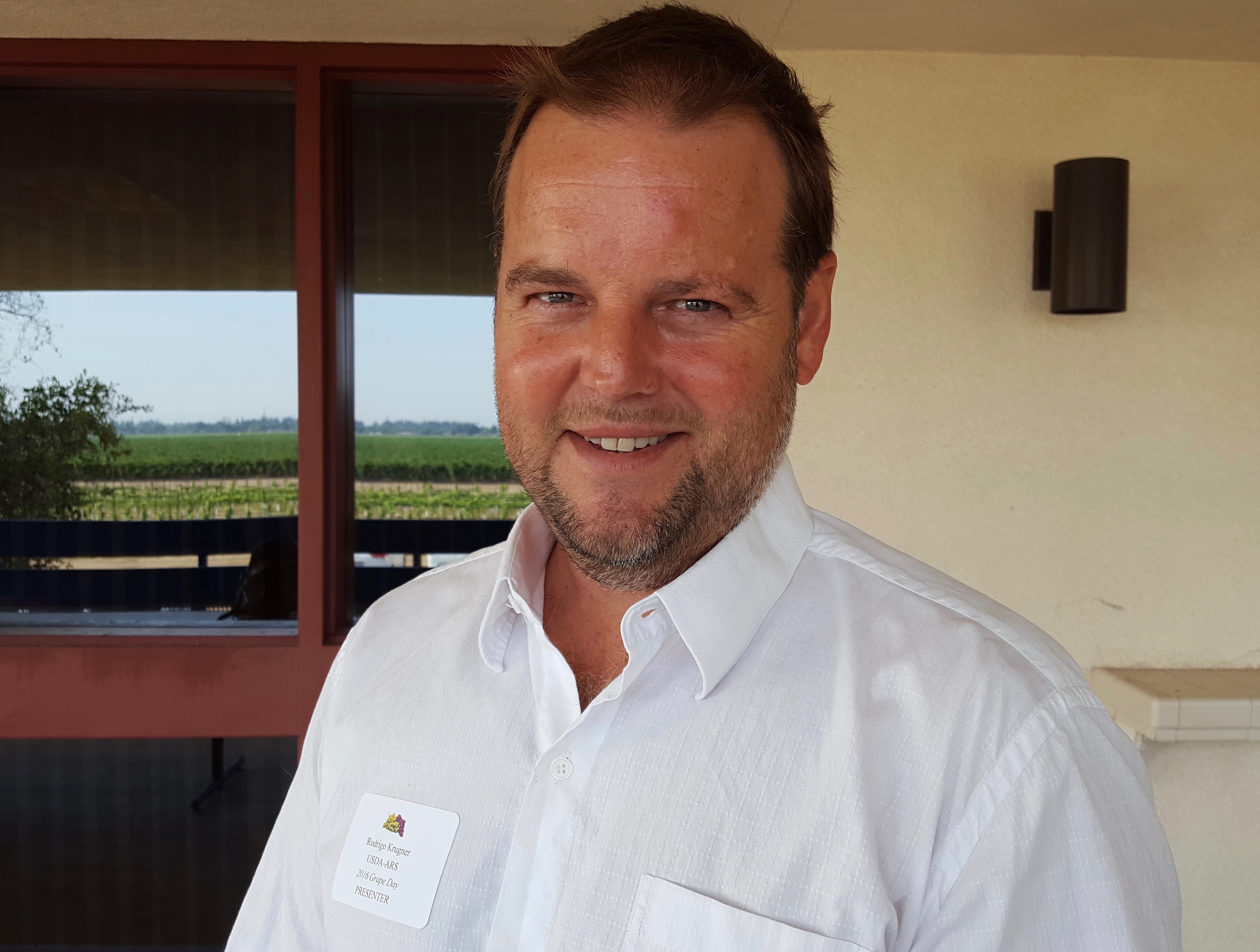
Jamming Leafhopper Signals

Jamming Leafhopper Signals to Reduce Insect Populations that Vector Plant Disease

By Patrick Cavanaugh, Farm News Director


An innovative team of researchers at the San Joaquin Valley Agricultural Sciences Center, USDA Agricultural Research Services (ARS) in Parlier Calif., are trying to confuse leafhopper communication in hopes of reducing certain devastating plant diseases. Of particular interest is the glassy-winged sharpshooter, a large leafhopper that can vector or spread the bacteria Xylella fastidiosa from one plant to another which causes devastating plant diseases such as Pierce’s disease in grapes and almond leaf scorch


Dr. Rodrigo Krugner, a research entomologist on the USDA-ARS Parlier team since 2007, explained, “We started on this glassy-winged sharpshooter communication project about two years ago. These insects use substrate-borne vibrations, or sounds, to talk to, identify and locate each other; actually do courtship; and then mate,” Krugner said.

Click here to hear LEAFHOPPER SOUNDS!

Glassywinged Sharp Shooter

Glassywinged Sharp Shooter


“This area of research started probably 40, or 50 years ago with development of a commercially-available laser doppler vibrometer (LDV), a scientific instrument used to make non-contact vibration measurements of a surface,” Krugner said. “Commonly used in the automotive and aerospace engineering industries, the LDV enabled an entomologist to listen to and amplify leafhoppers communicating,” Krugner said. “We’ve been doing recordings in the laboratory, learning about their communication with the idea of breaking, or disrupting, that communication. Once we disrupt that, we can disrupt mating and thereby reduce their numbers in vineyards and among other crops.”


Krugner noted the research team is evaluating two different approaches: one is to discover signals that disrupt their communication, and the other is lure them away from crops or towards a trap. “We may be looking at female calls, for example. An analogous system would be the pheromones, or long-range attraction volatile chemicals released by female lepidoptera, to attract males.” However, since leafhoppers use only sound, Krugner said, “We’re trying to come up with signals to disrupt their mating communication. We’re also looking at signals to jam their frequency range, 4000-6000 Hz, so they cannot hear each other,” Kruger said. “We’re also looking at signals that can be used to aggregate them, or lure them, into one section of a crop, or maybe repel them from the crop. These are all different approaches that we’re investigating right now.”


Krugner explained, “Researchers are attempting to perfect the disruptive sounds in order to do the things we need—to actually implement a management strategy for disrupting not only glassy-winged sharpshooter, but anything in a vineyard that actually communicates using vibrational communication. We know what they are saying to each other, which is very important. In the laboratory, the signals that we have look promising in disrupting the communication of these insects, so we’re taking them into the field.


Current mating disruption trials are underway in Fresno State vineyards. “We’re going to finish that research, hopefully, next year,” said Krugner, adding, “usually, fieldwork takes two to three years to show something.”


(Featured photo:  Rodrigo Krugner, research entomologist, USDA-ARS, Parlier)


2021-05-12T11:05:49-07:00August 15th, 2016|

Vigilant Seed Bank Reduction for Weed Control

Vigilant Seed Bank Reduction: Whatever it takes, don’t let weeds set seed.

By Patrick Cavanaugh, Farm News Director


For the past 15 years, Robert Norris, professor emeritus and vegetable crops weed specialist, UC Davis Department of Plant Sciences, has continued to attend Weed Day each year at UC Davis and to contribute weed photography for CalPhotos, a UC Berkeley Digital Library Project photo database of world-wide plants, animals, landscapes, and other natural history subjects developed to provide a testbed of digital images for computer science researchers to study digital image retrieval techniques. Norris was involved with initiating the Plant Protection and Pest Management Graduate Program at UC Davis.


“I’ve been a botanist since I was 14 years old,” Norris said, “and I still have a lot of passion regarding weed control.” Norris has a strong and steady philosophy on weed control and it all comes down to seeds. “The last 25 years of my work, I looked at population dynamics of weeds, like seed longevity in the soil and what we call the size of the seed bank also known as the seed production by weeds. That’s really where I spent most of my time.

Field Bindweed

Field Bindweed


“I found that most people have a very poor idea of how many seeds are produced by a weed. This led me to question some of our current management philosophies; namely, the one that comes out of entomology—the use of thresholds (or how many weeds need to be present before treating them),” noted Norris. “I felt that for weed science, thresholds were not the way to go, and my position has been vindicated by the problems we’ve run into using thresholds.”


Norris offered the example, “Barnyard grasses are probably one of our most serious summer grass weeds. A small plant can produce 100,000 seeds; while a big plant, well over a million. I can remember going put in a tomato field years ago and looking at one barnyard grass plant. Because I had been working with it, I can say that plant probably put out 50,000 seeds. If you spread those seeds around an acre, that’s enough to give you serious yield loss the next year,” Norris explained. “Again, that’s one plant, spread out over an acre. Obviously its seeds wouldn’t spread over an acre [on their own], but with our tillage equipment we would move it around quite a bit.”


“My bottom line for about 30 years now is: Don’t let the weeds set seed. Whatever it takes, don’t let them set seed,” Norris said. If you follow that philosophy, Norris said after a while you drive the seed bank down.


“Many people don’t realize this, but some of our really big growers got on to it a long time ago. One farming operation I worked with for years, J. G. Boswell Co., with most of its land in Kings County. “I knew the manager in the late ’50s, into the ’70s. He now is retired now, but he came to this conclusion himself back in the late ’50s,” Norris said. “I haven’t been on Boswell’s property now for 20 years, because I retired. However, if you go down there, you will not see a weed problem, at least not like most growers.”


“The difficulty really is, in order to carry out this philosophy, you need to use hand labor for weed management and it is becoming less and less easy to find,” explained Norris. “Most weed management is done on a one-year one-crop basis; whereas, the type of management we’re talking about where we’re really thinking seed bank dynamics, has to be done over multiple years. Another big problem that I still see is if you miss one year, you can undo 5 to 10 years of what you’ve just been doing, because of this high seed output,” he said.


NEVER LET ‘EM SET SEED, by Robert Norris, Weed Science Society of America.


2021-05-12T11:05:50-07:00August 8th, 2016|

Mechanical Weeding Would Help Veg Industry

Mechanical Weeding Saves Labor

By Patrick Cavanaugh, Farm News Director

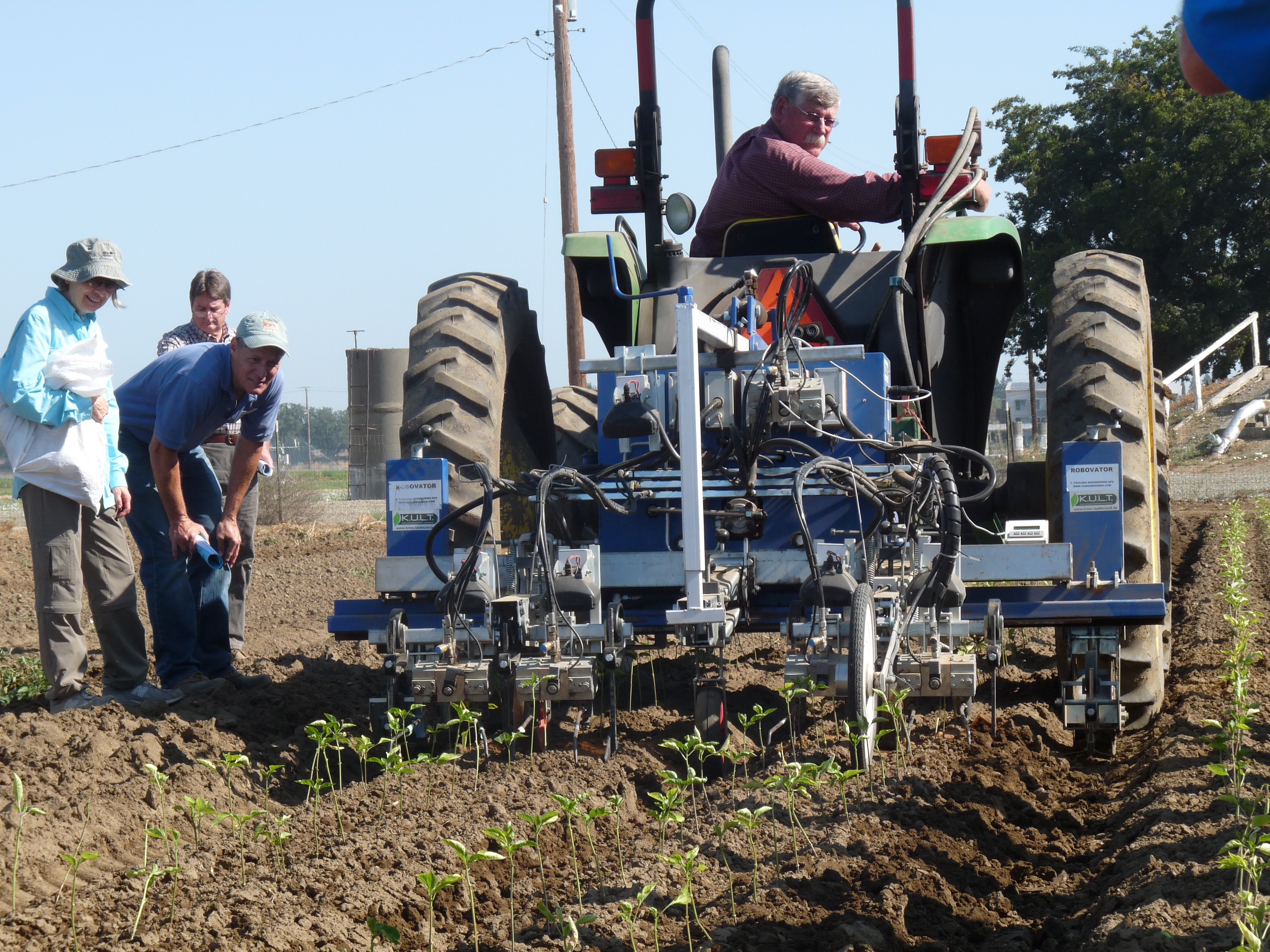
A machine that mechanically removes weeds from the rows of lettuce and other crops and thereby saves costly labor bills, is now commercially available. “The Robovator, made by F. Poulsen Engineering ApS in Denmark, works amazingly well,” said Steve Fennimore, weed specialist, UC Agricultural and Natural Resources Cooperative Extension, SalinasFennimore said companies in Scandinavia have had more incentive to develop labor-saving machines after having faced many major labor shortages, as well as significant restrictions on pesticide use throughout the European Union, including the use of herbicides.

Meanwhile, significant domestic demand for organic tomatoes and tomato sauce makes hand-weeding especially necessary. California fields of tomatoes and lettuce, among other crops, often have lines of workers using hoes to briskly cut away the weeds or thin the crop. “Including thinning, there are three passes of labor in organic lettuce,” said Fennimore.

Steve Fennimore UC Davis Dept. Veg Crops and Weed Science, Salinas 1-1-1

Steve Fennimore researches alternative methods of weed control.

“The Robovator is an intelligent machine with cameras and a computer processor onboard to direct reciprocating knives to open and close,” Fennimore began. “It can follow the pattern in the plant line and the knife mechanism moves sideways (in and out) as it goes down the row. The knives delve generally ¾ inch into the ground, open as they pass a tomato or lettuce plant and close in between to dig up the weed.”

“It worked really well in the lettuce plants,” Fennimore commented, “where you have that 18-inch spacing, double planted on a bed. Everything was going so well in the double-row bed, we told the tractor driver to kick it up a notch and see what we could do—of course, with the grower right there,” Fennimore said. “So he stepped on it and got up to five mph. It was so fast that we could not see the knives move,” he said.

“I don’t think it is totally perfected, but it is commercially good,” said Fennimore. “Of course everything can be improved, but unlike an herbicide— which is a molecule that you cannot alterthis is a machine that can be modified. You can make the knives longer or bend a shoe a little to get better performance, which is nice,” he added.

“If you get the weeds when they are small, such as nightshade, pigweed, or purslane, the machine just pops them right out of the ground, flipping them upside down so their roots are up. In Europe, especially on organic lettuce where they cannot use herbicides, producers typically send in a crew with hoes as often as once per week, and it’s an expensive labor force. Instead, growers are letting the crop grow, coming through with the machine every 7 to 10 days to kill emerging weed flushes and doing a great job,” said Fennimore.

lettuce“So far, we have used the machine on tomatoes, broccoli, lettuce and celery here,” he listed, “and we are starting to look at peppers. And I know that the Europeans have used it in cabbage, onions, and radishes. The machine has done a good job without injuring the plants. With transplanted tomatoes, the plants are much bigger than the cotyledon stage of a weed [before it reaches one inch in height]. So the knives stay open around tomato plants but then close over the weeds, which basically uproots them.”

“You always have to be aware of the safety zone,” Fennimore cautioned. “If the crop is getting bigger and has roots near the surface, the knives need to stay back and you will not get all the weeds. The problem weeds in a halo right around the plant stem are the most difficult and most expensive to get. If you force the knifes in and try to get really close, you will probably not be able to go five mph. You will have to go slower to allow the machine to kick out the weeds near the stem.”

Fennimore mentioned two Poulsen ApS machines are presently in use in California and another mechanical weeding machine made by Steketee IC (intelligent cultivator) from The Netherlands is being tested in the Salinas Valley,” Fennimore noted. Teams are attempting to determine how the machine could be improved for use here, and the machines are becoming available for growers to test.

The biggest crowd that has observed the Poulsen Robovator was at the UC Davis Weed Day in 2015. “We have also been going to individual farms, showing it to farmers and explaining what it does,” said Fennimore. “We brought the machine to a Ventura lettuce farm about a month ago, and a few weeks ago we had it in tomatoes,” he noted.Celery

With tomatoes, we are looking at less than 10,000 plants per acre,” Fennimore said, “so we can go about 5 mph in the tomatoes because the knives do not have to open and close as fast. However, with lettuce, we are looking at maybe 60,000 plants per acre, so you would have to go more slowly, around 1-2 mph in lettuce.”

Even on conventional vegetable farms, hand-hoeing is often done due to the lack of adequate herbicides. “We do not have a good spectrum of coverage,” said Fennimore, “and there are unsolved weed problems that are going to be hard to untangle.”

The development cost of the original machine prototype, the most expensive phase, was $11 to 15 million, as compared to the $250 to 300 million necessary to get an herbicide to label. And since 2010, only four new active herbicide ingredients have been developed worldwide. For lettuce applications, the last new herbicide was introduced about 40 years ago.

Yet another machine in development that Fennimore recently read about is essentially a weed-punch machine with electronics by Deepfield Robotics, a Bosch start-up company in Germany. “These guys drive through the fields, the machine finds the weeds and instantly punches them dead-center into the ground,” he elaborated.

Fennimore considered using such machinery on fields of garlic, onions or spinach that are densely planted, where back and forth knives would not work well. He theorized that machinery that can distinguished the weeds from the crop might work simply by punching the weed down into the soil where it’s not going to thrive. But perfecting this prototype is going very slowly, as it must accommodate a variation of cameras, weeds and crops. Yet, Fennimore expressed optimism, “I see a lot of potential with this type of technology because it can be modified.”

2021-05-12T11:02:59-07:00August 4th, 2016|

Mathesius is New UC Soil Scientist

Mathesius is New Agronomy Farm Advisor in Sutter-Yuba, Colusa Counties

By Patrick Cavanaugh, Farm News Director


Konrad Mathesius is the new Agronomy farm advisor at the UC Division of Agriculture and Natural Resources Cooperative Extension, Sutter-Yuba, Colusa Counties. Mathesius first explained his unusual last name. “It means ‘mathematics’ in Latin. I guess we had accountants in our family lineage back there somewhere,” he said.

Mathesius completed his undergrad degree in political science at Utah State, followed by two master’s degrees at UC Davis in Soils and Biogeochemistry; and in International Agricultural Development (IAD)—a graduate group within the Department of Plant Sciences. “The IAD is flexible in its curriculum, which allowed me to take many plant- and soil- specific courses. I took the opportunity at IAD to specialize in soils,” he said.

California Safflower Field

California Safflower Field

“Through the years, we have learned a lot through the pioneers of soil science and it’s an exciting field because there is still a lot to learn,” said Mathesius. “And everything that comes out of soil science, in one way or another, is applicable to life on the planet.”

“Soils also tell a story, and that’s one thing I really enjoy about it. It’s especially evident in California because there is a remarkable combination of parent material that has created an abundance of different soils in the state,” noted Mathesius. “And it’s very relevant to agriculture, ecology, and environmental science. Differences in soils create a stark contrast in how crops grow and how they need to be managed,” he said.

Mathesius is responsible for the agronomic crops grown in his region, including dry beans, oilseeds such as safflower and sunflower, fresh market corn and silage corn, and small grains such as barley, wheat, and rye.

“I’m a soil scientist by trade, but ultimately I am a UC Cooperative Extension Farm Advisor and available to growers to figure out what their crop issues are—which include pests, diseases and soil fertility,” noted Mathesius. “I am a resource, and the UC system has many other resources and personnel who can thoughtfully consider solutions to crop problems.”

2021-05-12T11:05:51-07:00July 26th, 2016|

Breaking News: Cal Poly Opens New Greenhouse and Insect Rearing Facility

New Greenhouse Facility Opens to Save Citrus from Psyllids that Vector HLB

Facility to Rear Tamarixia Radiata, Natural ACP Predator

By Patrick Cavanaugh, Farm News Director


Scores of citrus industry leaders, citrus growers, scientists and CDFA officials attended the ribbon cutting event TODAY at the opening of a new greenhouse on the Cal Poly Pomona campus to rear Tamarixia radiata, a tiny parasitic wasp imported from Pakistan because it is an Asian Citrus Psyllid (ACP) nymph predator. ACP, in turn, is a serious nonnative citrus pest that can vector Huanglongbing (HLB)—a deadly citrus disease also known as Citrus Greening—that has devastated the powerhouse citrus Screenshot 2016-07-25 12.24.41.png

industry in Florida, threatens to ruin additional citrus economies, and is the biggest threat the California citrus industry has ever faced.

According to the United States Department of Agriculture Animal and Plant Health Inspection Service (USDA-APHIS), infected citrus trees “produce fruits that are green, misshapen and bitter, unsuitable for sale as fresh fruit or for juice. Most infected trees die within a few years.” ACPs have been detected in Alabama, American Samoa, Arizona, California, Florida, Georgia, Guam, Hawaii, Louisiana, Mississippi, Northern Mariana Islands, Puerto Rico, South Carolina, Texas and the U.S. Virgin Islands. Of those locations, the HLB disease has been detected in California, Florida, Georgia, Louisiana, Puerto Rico, South Carolina, Texas and the U.S. Virgin Islands.

ENTER:  Tamarixia radiata

Use of the ACP predator, Tamarixia radiata as a biological control for ACP was discovered by Mark Hoddle, biological control specialist and principal investigator, UC Riverside ( UCR), Department of Entomology. The first release of Tamarixia was in December 2011 after USDA-APHIS cleared the natural enemy for release from the Quarantine Facility at UCR.

Mark Hoddle UC Riverside Department of Entomology

Mark Hoddle UC Riverside Department of Entomology

“Tamarixia can kill ACP nymphs in two different ways,” explained Nick Hill, a Tulare County citrus producer and Citrus Pest & Disease Prevention Program (CPDPC) chair.  “The first is parasitism. In this instance, a female parasitoid lays an egg underneath a fourth or fifth instar—the larger and final developmental stage of the ACP nymph before becoming an adult—nymphs that are most preferred by Tamarixia for parasitism. When the egg hatches, the Tamarixia larva begins to feed on the under-surface of the ACP nymph. Eventually the larva completely excavates the body cavity of the ACP nymph and pupates inside the empty shell of its host.”

Hill explained the first releases of the tiny and harmless wasp will occur this fall in urban areas, “to help control ACP so that we do not have to do mitigations such as spraying in those areas. We hope to get to a point where we no longer need to go into people’s yards and ask if we can treat the trees.”

“The issue,” commented Valerie Melano, professor and chair, Cal Poly Pomona Plant Sciences and interim chair, Cal Poly Agribusiness & Food Industry Management/Agricultural Science, “is that we need to come up with the best possible ways to raise enough wasps for big releases to prey on ACP. We will have CDFA employees working in this green house, as well as student workers who have participated in our research program all along,” noted Melano.

Nick Hill, CPDPC chair

Nick Hill, a Tulare County citrus producer and Citrus Pest & Disease Prevention Program (CPDPC) chair.

Hill added, “The idea is to get enough Tamarixia out there so they start reproducing themselves and they become self sufficient. This is tough to accomplish, but researchers think if they can get big numbers of the wasp into the urban areas, they can put a big dent in lowering the populations of ACP.”

Cal Poly Pomona Greenhouse

The new Cal Poly 5,040-square-foot research greenhouse, built in collaboration with Citrus Research Board and constructed through a $400,000 grant from the Citrus Pest & Disease Prevention Program, will house the second Tamarixia production program in California. CDFA’s Mount Roubideaux facility in Riverside houses current production. Both facilities will support the CPDPC biological control program that oversees releases in urban areas with high ACP populations.

The new greenhouse should produce a 1-ACP Research Greenhouse1.5 million wasps. “It’s a very nice facility,” said Hill. “We are trying to boost the biological control program to produce four million Tamarixia a year.”

California Quarantine

The California Department of Food and Agriculture (CDFA) operates an extensive monitoring program to track the distribution of the insect and disease in both residential areas and commercial citrus groves. Results have determined quarantine zones, guided releases of biological control agents, and prioritized areas for a residential chemical control program. Nearly all of southern California is under quarantine for ACP, due to the fact that more than 15 residential trees have been discovered to be in infected with HLB.

The ACP quarantine in California includes parts of the following counties:  Fresno, Kern, Kings, Madera, Monterey, San Benito, San Joaquin, San Luis Obispo, San Mateo, Santa Clara, and Stanislaus; and the following entire counties: Imperial, Los Angeles, Orange, Riverside, San Bernardino, San Diego, Santa Barbara, Tulare County, and Ventura.

Asian Citrus Psyllid Cooperative Program California, Arizona, Baja California, and Sonora (USDA-APHIS)

Asian Citrus Psyllid Cooperative Program
California, Arizona, Baja California, and Sonora (USDA-APHIS). Visit our Citrus Diseases page to identify a plant infected by citrus greening, citrus canker, citrus black spot and sweet orange scab. If you detect an infected plant, report it  immediately.

2021-05-12T11:05:51-07:00July 25th, 2016|

Field Bindweed Control Requires Multiple Programs

Consistent Management Needed to Eradicate Bindweed

By Laurie Greene, Editor

Kassim Al-Khatib, professor, UC Davis Department of Plant Sciences and UCANR Cooperative Extension specialist in weed science, discussed field bindweed, a problematic weed that has the ability to regrow even with chemical and mechanical control.

“This is weed has been around for a long time,” Al-Khatib said. “It adapted pretty well to hot, dry land areas because it has a long root with a lot of reserve in it. Whatever you try to do, the plant still has reserve in the root and can regrow again.”

The weed scientist explained that bindweed is so problematic, it has to be assessed and managed every season in a variety of ways in order to control it. “If you do a mechanical control, the plant can come back. If you do chemical control, the plant will come back. If you think that you can control it with one shot or in one season, you’re going to be disappointed. This is a serious weed problem that requires a program with multiple approaches over multiple years,” he said.

Field bindweed (Photo by Jack Kelly Clark, UC Statewide IPM Program)

Field bindweed (Photo by Jack Kelly Clark, UC
Statewide IPM Program)

The weed is also difficult to eradicate, according to Al-Khatib, “because there’s a huge seed bank, plus these seeds have a hard coat, which means they can stay in the soil longer. If you try to germinate some of them this year, you’re going to have more seeds coming next year.”

Al-Khatib emphasized a multiple approach is still the best way to reach consistent, effective results. “The key point with field bindweed is to be consistent, have a program and envision what you can do over multiple years to get rid of it. Herbicide may suppress and weaken bindweed, but it is not going to control it or eradicate it. You need multiple approaches—chemical, mechanical, some biological.”

He offered that mites, if they can get established, have been found to feed on field bindweed, another example of using a multi-pronged eradication approach. Mildew can also weaken it. “The point I want to make,” Al-Khatib repeated, “is it takes a multiple approach, multiple tools, and multiple years before you get rid of it.”


Resources:

Field Bindweed, How to Manage Pests: Pests in Gardens and Landscapes, UC IPM


2021-05-12T11:05:52-07:00July 14th, 2016|

BREAKING NEWS: ACP QUARANTINES IN MERCED AND MONTEREY COUNTIES

ASIAN CITRUS PSYLLID (ACP) QUARANTINES IN MERCED AND MONTEREY COUNTIES

Quarantines are now in place in both Merced and Monterey Counties due to recent Asian citrus psyllid (ACP) detections.  One ACP was detected near the City of Merced in Merced County and two ACP in one trap within the City of Salinas in Monterey County.

The quarantine zone in Merced County measures 123 square miles, bordered on the north by Kenney Avenue; on the south by W Dickenson Ferry Road; on the west by Shaffer Road; and on the east by

SaveOurCitrus

SAVE OUR CITRUS app is a free USDA iPhone to report and identify the four leading citrus diseases: citrus greening, citrus canker, citrus black spot and sweet orange scab. Report your symptoms, upload a photo and citrus experts will respond. ACP

E Yosemite Avenue. Monterey County’s quarantine measures 111 square miles and is bordered on the north by Pesante Road; on the south by the Salinas River; on the west by Castroville Road; and on the east by Gabilan Creek. The quarantine maps for both Merced and Monterey Counties are available online at: www.cdfa.ca.gov/go/acp-maps. Please check this link for future quarantine expansions in these counties, should they occur. Quarantines in new counties will be announced separately.

The quarantine prohibits the movement of citrus and curry leaf tree nursery stock, including all plant parts except fruit, out of the quarantine area and requires that all citrus fruit be cleaned of leaves and stems prior to moving out of the quarantine area.  An exception may be made for nursery stock and budwood grown in USDA-approved structures which are designed to keep ACP and other insects out.  Residents with backyard citrus trees in the quarantine area are asked not to transport or send citrus fruit or leaves, potted citrus trees, or curry leaves from the quarantine area.

ACP county-wide quarantines are now in place in Imperial, Los Angeles, Orange, Riverside, San Bernardino, San Diego, Santa Barbara, Tulare and Ventura Counties, with portions of Alameda, Fresno, Kern, Kings, Madera, Merced, Monterey, San Benito, San Francisco, San Joaquin, San Luis Obispo, San Mateo, Santa Clara, and Stanislaus counties also under quarantine.

The ACP is an invasive species of grave concern because it can carry the disease huanglongbing (HLB), also known as citrus greening.  All citrus and closely related species, such as curry leaf trees, are susceptible hosts for both the insect and disease.  There is no cure for HLB and once a tree becomes infected, the diseased tree will decline in health and produce bitter, misshaped fruit until it dies.  In California, HLB has only been detected on residential properties in Los Angeles County.  This plant disease does not affect human health.
Residents in the area who think they may have seen ACP or symptoms of HLB on their trees are urged to call CDFA’s Pest Hotline at 1-800-491-1899 or your local agricultural commissioner’s office (Merced County (209) 385-7431; Monterey County (831) 759-7325).  For more information on the ACP and HLB, please visit: www.cdfa.ca.gov/go/acp.

2021-05-12T11:05:52-07:00July 14th, 2016|

Jasieniuk on Weed Evolution

Tracking Herbicide Resistance in Weed Evolution  

By Emily McKay Johnson, Associate Editor


Marie Jasieniuk, professor and weed scientist at UC Davis College of Agricultural and Environmental Sciences, discussed her groundbreaking research, “I work on the population genetics and evolution of agricultural weeds and invasive plants,” she said. “We use molecular tools to look at the origins and spread of weeds. We also use molecular tools and genetic studies to understand the evolution of herbicide resistance in weeds,” Jasieniuk added, “to be able to propose management approaches that reduce the likelihood of further evolution and spread of resistant weeds.”

UC Davis Annual Weed Day 2016

UC Davis Annual Weed Day 2016

Jasieniuk and her team identify the origins of invasive plants, and determine how they were introduced. “We study how they were introduced, how they have spread and whether they have been introduced multiple times. Again, if we understand how they’re spreading, we can do something to try to stop the spread,” she said.

Italian rye grass, a weed Jasieniuk is currently studying, is problematic because it is resistant to Roundup, a popularly used weed and grass killer by growers. “UC ANR Cooperative Extension specialist, now emeritus, Tom Lanini, and I sampled over 100 locations of Italian rye grass and tested them for resistance to Roundup ten years ago,” she said about the project, funded by USDA. “Last year, we re-sampled all of those sites, and we’re re-testing to see if there’s been an increase or a decrease or no change in resistance to glyphosate, to Roundup,” she said.

Roundup isn’t the only weed and grass killer available on the market. “We’re looking at resistance to three other herbicides,” she said. Working with growers to determine the most efficacious weed treatments that also reduce the likelihood of wood resistance to herbicides,” Jasieniuk explained, “We interview growers about their herbicide use, non-chemical approaches, and integrated management techniques to identify management practices that correlate highly with low or no resistance,” she explained.

Resistance management is found to be more effective with a rotation of various herbicides. “What you want to do is rotate different types of herbicides with different modes of action,” Jasieniuk said. “Perhaps do tank mixes and incorporate non-chemical approaches as well,” she added.

Eliminating weeds can be as simple as disking and digging them out with a shovel when there are only a few. “I think, in many cases, this would have done a lot to prevent new weeds from coming in and certainly resistant weeds from spreading,” she noted.

2021-05-12T11:05:53-07:00July 11th, 2016|

Steve Koike on Resistant Cultivars

The Search for Resistant Cultivars

By Emily McKay Johnson, Associate Editor

In the second part of our series with Steve Koike, plant pathology farm advisor for UC Division of Agriculture and Natural Resources, Cooperative Extension in Monterey County, the focus is on the critically needed research on resistant cultivars. Koike, who has focused his research since 1989 primarily on the understanding of disease systems and the investigation of new methods of disease control, said, “The role or the need for resistant cultivars is tremendous.”

“Some good case studies of resistant cultivar research address soil-born problems on lettuce,” Koike explained. “For example, Fusarium wilt and Verticillium wilt on lettuce could be managed lightly; but in order to overcome those diseases, resistant lettuce varieties need to be in place.”

Steve Koike, UC Cooperative Extension, Monterey County.

Steve Koike, UC Cooperative Extension, Monterey County.

“First discovered in 1995 on the Central Coast,” said Koike, “Verticillium wilt has the potential to infect and damage numerous different crops. And although Fusarium wilt was typically unseen in the San Joaquin Valley, it has recently begun to appear on the Central Coast.”

Continued improvement of management techniques upon discovering initial disease symptoms is necessary, according to Koike. “Symptoms of the disease usually appear on the lower leaves of plants, around the edges, and the areas between the veins can turn a yellowish-brown.”

“Strawberries currently have three really important disease pressures state-wide: Verticillium wilt, Macrophomina (charcoal rot) and Fusarium wilt,” Koike commented. “Even the fumigation tools we have are not cleaning them up 100 percent, so we have problems.”

“We will continue to have problems,” Koike elaborated, “until there are truly resistant strawberry varieties to those pathogens. Plant breeders understand that IPM management of these diseases is so dependent on developing resistant varieties,” he said, “but we’re not there yet. We do not yet have truly resistant lettuce or strawberry varieties out in the field,” Koike said.

_______________________________

Koike and his fellow researchers discovered a new race of the downey mildew pathogen in spinach that has been designated race 16. While there are some varieties that are supposedly resistant to race 16, Koike noted that there is still more research to be done.

To read the first part of our series on Downey Mildew, click here.


2021-05-12T11:05:54-07:00June 27th, 2016|

Postharvest Short Course Focused on Taste and Quality

UC Davis Postharvest Course Covers Food Loss, Produce Handling

By Lauren Dutra, Associate Editor

The 38th annual Postharvest Technology of Horticultural Crops Short Course concluded TODAY, June 24 at UC Davis. Presented by Beth Mitcham, director of the Postharvest Technology Center, the course focused on postharvest produce quality and safety.

Beth Mitcham, Director of the Postharvest Technology Center at UC Davis.

Beth Mitcham, Director of the Postharvest Technology Center at UC Davis.

“This class provided a really broad overview of all the topics that are relevant for postharvest handling of produce, including fruits, vegetables, nuts, and also ornamentals,” said Mitcham. “We cover the crops that are grown in California, but because our audience includes a lot of people from around the world who want to learn the basics about postharvest handling, we also cover a few crops that aren’t grown in California for commercial purposes. Furthermore,”she noted, “we also address some of the latest technologies that are available for maintaining excellent quality,”

Maintaining a good cold chain throughout the entire shipping line is critical, according to Mitcham. “We talk a lot about temperature,” she elaborated. “In fact, we tell students the three most important things about postharvest biology and technology are: temperature, temperature and temperature. We discussed many other technologies during the week, but they are secondary to good temperature management,” she noted.

Mitcham also mentioned food waste and how to control it. “So much effort goes into growing the crop, which includes harvesting at the prime of ripeness and getting it in the pre-cooler, on the trucks and to the market. But, people buy it, put it in their refrigerator and then don’t eat it. It goes bad and they waste it. It does happen,” said Mitcham. “Our goal is to try to make the product as hearty as possible while retaining really good flavor so it can last in your refrigerator as long as possible but also so people want to eat it, so hopefully it doesn’t sit in there and degrade.”
UCD Postharvest Technology Center

In reducing postharvest losses, Mitcham commented on the dissonance between addressing postharvest flavor and consumer satisfaction, “In some ways they are two opposite ends of the spectrum; some of the things we do to reduce losses are counter to delivering good flavor to consumers,” she said. “We really need to do both, and that was a big part of our message this week.”

Also at the event, the California Leafy Green Marketing Agreement (LGMA) discussed food safety principles, and Trevor Suslow, a UC Davis Plant Pathologist with the Postharvest Technology Center, discussed good agricultural practices (GAP) for food safety.

2021-05-12T11:05:54-07:00June 24th, 2016|
Go to Top