Associations, Organizations, Educational and Research Institutions

Table Grape Ads Feature Growers

California Table Grape Ads Feature Growers

By Charmayne Hefley, Associate Editor

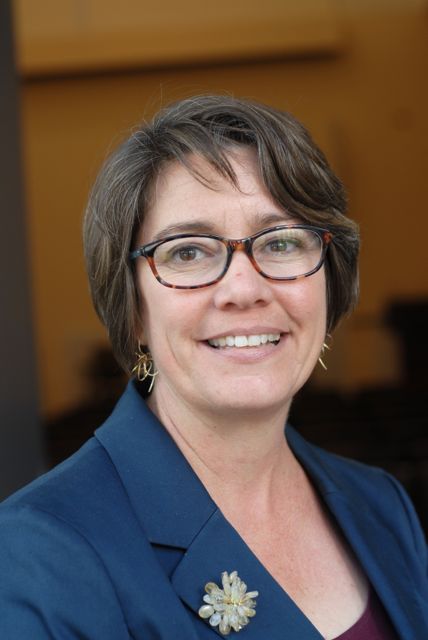
Kathleen Nave, California Table Grape Commission president

Kathleen Nave, California Table Grape Commission president

In an effort to shed a more positive light on agriculture and the growers who cultivate the food we eat, some advertising campaigns are focusing on bringing growers to the forefront. Kathleen Nave, president of the California Table Grape Commission, said this is exactly what the Commission’s campaign has been doing, and it has been receiving positive feedback. “The heart of the global campaign the Commission is fielding,” Nave said, “is very much about California table grapes and the heritage that growers bring to the table—the years of understanding the art and the science that go into growing table grapes.”

The California Table Grape Commission has generated commercials that focus on the family aspect of California’s grape growers and can be seen on Food Network television. “The heart of the campaign of table grape ads,” said Nave, “is basically branding California and the growers of California table grapes. We’ve portrayed our brand this way, in this particular campaign, for about eight years, and it really resonates. A National Consumer research study of the four advertising commercials we are currently fielding on the Food Network revealed very high marks.”

Nave explained the commercials help to create trust between consumers and growers by showing consumers the faces behind their food. “The two commercials that feature growers’ families interacting with one another, one set in a vineyard and another at home, resonated the highest with consumers,” Nave said. “Consumers have a huge amount of trust for growers. There is a hunger among consumers—not only in the U.S., but in other parts of the world as well—to understand who is growing the food they bring home to their own families. So showing consumers a California table grape ad that features the grower, the grower’s family, and their vineyard, really resonates. So the campaign is working well. I think it’s a campaign that we will be continuing.”

_____________________________

Links:

California Table Grape Commission
Grapes from California “Family Dinner” tv commercial

Grapes from California “Generations” tv commercial

2016-05-31T19:27:07-07:00October 13th, 2015|

#CitrusMatters Spreads Info

#CitrusMatters Helps Spread Word on Serious Citrus Greening Disease

By Kyle Buchoff, Assistant Editor

Steve Olson, senior product manager for Bayer CropScience has a big passion for citrus, an important U.S. crop currently at risk to Huanglongbing (HLB), also known as citrus greening, a bacterial citrus plant disease. The vector of the deadly disease is a tiny insect known as the Asian citrus psyllid. Bayer CropScience launched the #CitrusMatters initiative this year to fully convey the significance of HLB to the California public.#CitrusMatters

Olson said the initiative focused on California’s urban settings because more than 60 percent of homeowners in California grow citrus trees in their yards. “We felt we could have some influence on broadening public awareness of this very significant disease.”

“So we introduced the #CitrusMatters initiative with California Citrus Mutual to help spread through social media the importance of citrus and how people enjoy citrus,” said Olson. “We were trying to make that emotional connection, and I think to a degree we have had some success. We held a #CitrusMatters Day in San Diego on May 8 and in Los Angeles on July 2, and tried to engage mass media. I think it is a very important undertaking to really bring awareness to homeowners who have citrus in their backyards.”

For more information go to: citrusmatters.bayercropscience.us.

2016-05-31T19:27:07-07:00October 13th, 2015|

California Table Grape Commission
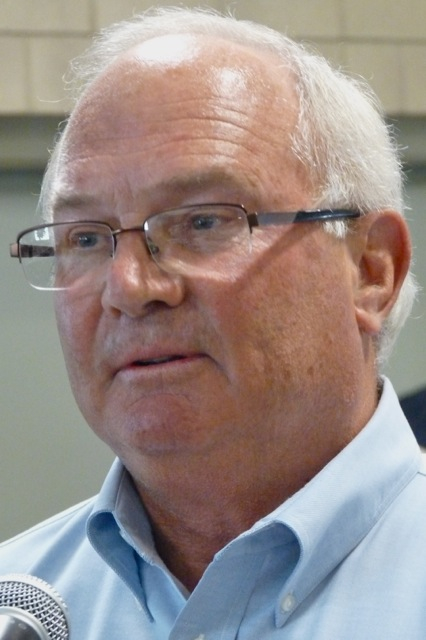
Kathleen Nave on the Table Grape Commission

By Charmayne Hefley, Associate Editor

Before the California Table Grape Commission was established in 1968, only 1.7 pounds of grapes were consumed per person annually, according to Kathleen Nave, president of the organization. She said the Table Grape Commission began at the request of growers working with California’s legislature to better promote grapes. Today’s annual consumption rate is 8 pounds of grapes per capita.
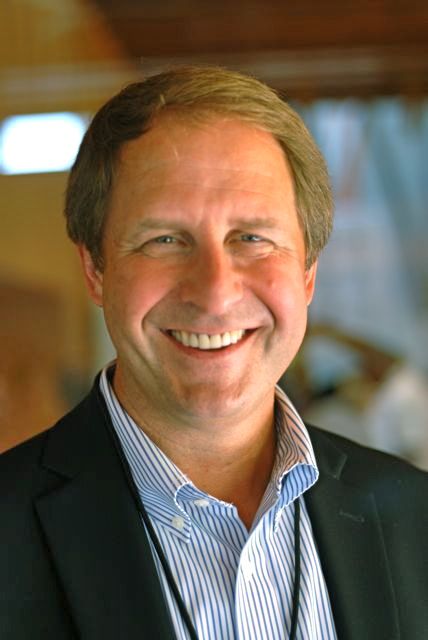
“I had talked to some of the founding fathers back in the late 50s, early 60s,” Nave said. “They told me there were so many changes happening in the world and in the retail environment at that time, they were afraid of losing the land their families had immigrated to from around the world. So they wanted to come together and pool a little bit of money from every box of grapes they sold to be overseen by the state of California and a board of table grape grower directors to increase demand for their product“To this day, the Table Grape Commission is still governed by growers who are nominated by their peers in each district in which grapes are grown in the state,” Nave said, “and it is all overseen by the California Department of Food and Agriculture.”

While the Table Grape Commission continues to promote table grapes and to create a domestic demand for them, Nave said the Commission is reaching beyond this basic consumer base, to foreign consumers. “Everything we do is designed to create demand,” Nave said, “to get that retailer to put more California grapes on the shelves, to promote and advertise them more often, to encourage that importer to bring grapes in, and to get consumers to go into their grocery stores and ask, ‘Where are the California grapes?’”

2016-05-31T19:27:07-07:00October 12th, 2015|

UC Davis Water Policy for Food Security

UC Davis Water Policy for Food Security Global Conference

By Laurie Greene, Editor

A Global Conference for Water Policy for Food Security was held at UC Davis earlier this week to focus on global ground water supplies. Many speakers came from around the world to talk about water supplies in their own countries.

The take-home message:  Supplies are limited, but growers are being very efficient and groundwater recharge is a priority.

Josette Lewis, associate director of the World Food Center at UC Davis said, “When I joined UC Davis, it was very clear that water is something in which this campus has enormous technical expertise and has expertise to inform and engage in state water policy,” she said.

“We are working with everything from farmers to state agencies that manage water resources. Part of the vision of the World Food Center is, how do we expand that impact? How can UC Davis have an impact on national and international issues? How do we get more benefit for society from what we do? It became very obvious that leveraging the expertise we had here in California to an international discussion of issues made a lot of sense.”

Lewis noted that the conversations during the two-day conference were an exchange of ideas on groundwater sustainability, “I think the quality of the discussion over the last few days exceeded our expectations,” she said.

“We really brought in some of the world’s leading experts in these areas. From talking to the participants some of them are walking away with a new and energized way of thinking about how we can create solutions to address the sustainability of our water supply and ensure that we have water available for food production globally,” Lewis said.

World Food Center at the University of California, Davis

International Food Policy Research Institute

Twitter  Join the conversation on Twitter at #WaterSecurity

2016-05-31T19:27:07-07:00October 8th, 2015|

JPA Could Save Temperance Flat Dam

Joint Power of Authority Could Save Temperance Flat Dam

By Patrick Cavanaugh, Deputy Editor

A Joint Power of Authority (JPA) is being formed to help preserve money authorized for construction of the Temperance Flat Dam with the passage of California Proposition 1, the Water Bond in 2014. Joel Nelsen, president of California Citrus Mutual, has been engaged in getting the project off the ground.

“It is unfortunate what has happened to the Friant Water Authority leadership and the lack of suitable talent there to run with it. The situation has adversely impacted getting a Temperance Flat water storage program in front of the California Water Commission, whose nine governor-appointed members are responsible for advising the director of California Department of Water Resources, approving rules and regulations, and monitoring and reporting on the construction and operation of the State Water Project. The Water Commission, which elicits preferred priorities from the agricultural industry, will award bond money in early 2017.

The Water Bond approved by voters last fall designates $2.7 billion for water storage. While this amount will help subsidize the construction of the dam, Nelsen noted there needs to be better organization in its planning, “because when we negotiated money for storage planning, we were set on two locations, Temperance Flat, behind Friant dam and east of Fresno, and Sites Reservoir, north of Sacramento. Of course, all along, we have known that farmers were investing a lot of money into it as well, but you have to have a plan,” Nelsen said.

Nelsen explained the JPA consists of city and county leaders as well as farm industry leaders from Merced to Bakersfield, including those from Fresno, Madera, Kings, Kern and Tulare Counties, and will require everyone’s cooperation to get the job done. “The inability to sustain some leadership at the Friant system right now has stalled our ability to make something happen in that regard.

“If we can use the talent within our counties right now to generate some of the proposals until we have the ability to get additional water experts online, I would give those who are working on the JPA all the credit in the world,” Nelsen said.

2016-05-31T19:27:08-07:00October 6th, 2015|

Bayer CropScience Horticulture Symposium Builds Relationships

Bayer CropScience Horticulture Symposium Builds Global Relationships for Collaborative Problem-Solving

By Patrick Cavanaugh, Deputy Editor


Nearly 200 professionals in the horticultural industry from across the food chain and the value chain, and from Europe and North, Central and South America, gathered this week at the Bayer CropScience Horticulture Symposium in Puerto Vallarta, Mexico. Attendees were treated to an inspirational mix of lectures, panel discussions, as well as an interactive poster session, all incorporating forward-thinking sustainable practices into contemporary agriculture. Among the crops discussed were tomatoes, citrus, grapes, potatoes, bananas.

Rob Schrick, strategic management lead, Bayer CropScience Horticulture, based in Research Triangle Park, North Carolina, said the event was the company’s second in a series of horticulture symposiums focused on international collaboration and problem-solving. “This is about bringing the best and brightest from across our industry,” said Schrick, “from influencers and universities to industry members like ourselves and the media. It’s about getting these creative minds together and discussing solutions. The solutions may not come from the symposium itself, but the connections that are made—you don’t know what will yield from those relationships.”

Jim Chambers, director of marketing, Bayer CropScience Food Production, said the Horticulture Symposium was all about sharing information on best management practices. “Bayer is a leader in the crop protection business within the horticultural space around the world, and this is a real opportunity to bring all of us within horticulture across the food chain and the value chain to talk, from the grower, to the processor, and to the consumer. It is a wonderful opportunity to work together to solve some very difficult challenges.”

“And, vivid to all attendees, was that members of the fruit and vegetable industry throughout the Americas have similar challenges to overcome,” noted Chambers. “It was very interesting; the issues that we talk and hear about in the specialty crop states such as California, Florida and Texas, are very much the same issues that people, for example in Mexico, Brazil, Argentina, or Central America, are facing. These issues do not go across just states or counties; they reach across the globe in solving these problems,” Chambers said.

Among the speakers were growers, commodity specialists from the industry and academia, and experts on sustainability practices, professionals on Maximum Residue Levels (MRLs), Bayer CropScience specialists and major agricultural association leaders such as Tom Nassif, ceo, Western Growers Association (WGA) and Dana Merrill, president, Mesa Vineyard Management Inc.

Bayer is a global enterprise with core competencies in the Life Science fields of health care and agriculture. Bayer CropScience, the subgroup of Bayer AG responsible for the agricultural business, is one of the world’s leading innovative crop science companies in the areas of seeds, crop protection and non-agricultural pest control. The company offers an outstanding range of products including high value seeds, innovative crop protection solutions based on chemical and biological modes of action as well as an extensive service backup for modern, sustainable agriculture. 

(Photo features Rob Schrick, Bayer CropScience – Horticulture strategic management lead)

2016-05-31T19:27:08-07:00October 2nd, 2015|

WUD: Yes on Federal Milk Marketing Order

Continued Coverage on Milk Hearing

WUD: Yes on Federal Milk Marketing Order

Hearing in Clovis is the Super Bowl for California Dairy Producers

By Charmayne Hefley, Associate Editor


Anja Raudabaugh, CEO of Western United Dairymen, which represents half of the dairies in California, is closely watching the USDA special hearing to evaluate four proposals to convert California’s State Marketing Order to the Federal Milk Marketing Order (FMMO).

On September 22, in Clovis, Raudabaugh said, “This is an historic day. It is like a Super Bowl for California dairy producer. We welcome the opportunity for fair prices and better prices for California dairy producers, and that is what we are to support today. We are hoping to get better opportunities for our producers.”

“We are going to be testifying in support of the Cooperatives Proposal,” said Raudabaugh.

The dairy cooperatives – California Dairies Inc., Land O’ Lakes, and Dairy Farmers of America – say a federal pricing structure would fix the inequity that exists between the state’s dairy farmers and the rest of the nation.

Raudabaugh said the industry will need to see what the USDA actually delivers in terms of a federal order. “We have a proposal that we’d like to see happen,” she said. “It all depends on what the ultimate outcome is. We will review it with our membership at that time.”

It could take up to a year for the USDA to issue its proposal.

___________________________________________

Western United Dairymen

2016-05-31T19:27:08-07:00October 2nd, 2015|

Armyworms Invade Rice

Luis Espino: Armyworms Invade Rice

By Charmayne Hefley, Associate Editor

Armyworm Larvae

Larva of the armyworm, Mythimna unipuncta.
Photo by Jack Kelly Clark, UC IPM.

Farmers face many threats to their crops on a daily basis. Luis Espino, rice farm advisor UC ANR Cooperative Extension, Colusa County, said rice farmers are on the lookout for two caterpillar infestations during the year when armyworms invade rice fields. “The first one occurs sometime in June,” Espino said. “At that time all they do is just eat the foliage, and you can usually see it when you walk into a field. Nevertheless, the rice has a very good capacity to recover from that type of injury.” Espino’s UC Rice Blog explains it is difficult to accurately estimate yield losses due to early armyworm damage because it can reduce tillering, delay the crop, and cause uneven maturity.

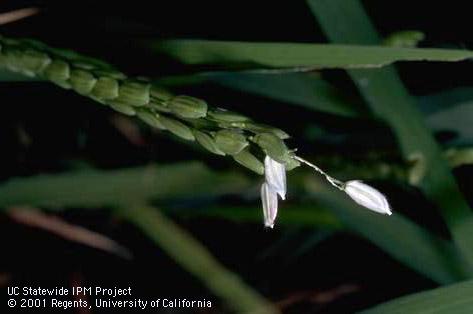
“Heading” occurs when the rice plant prepares to enter its reproductive phase. The first sign, called the ‘booting’ stage, is when the leaf stem that conceals the developing panicle bulges. Then the tip of the developing panicle emerges from the stem and continues to grow. Rice is said to be at the ‘heading’ stage when the panicle is fully visible. Flowering begins a day after heading has completed. As the flowers open they shed their pollen on each other so that pollination can occur. Flowering can continue for about 7 days.  (Source: Rice Development, Ricepedia.) 

“The second infestation usually occurs in mid- to late-August when the rice is heading out,” Espino said. “At that time, armyworms can feed on the panicles, [causing the kernels to dry before filling], resulting in blanks [without kernels to harvest] on the panicles and broken panicle branches. That’s when armyworms are more important.”

Espino said that the first infestation this year was relatively large, making it harder for the treatments to control the armyworms as they devastated the rice fields. “There were some areas in fields where the rice was down to the waters,” Espino said. “so all the foliage was consumed, and sometimes only a little stem was left standing.”

During the second armyworm infestation, however, Espino said the rice fields were not as badly affected as they had been in the first attack. “We did see some fields with armyworm injury,” Espino said,“ and some farmers had to treat their fields. The numbers were just so big that the treatments were not controlling them.”


Resources:  

2016-05-31T19:27:09-07:00September 30th, 2015|

Water and Nitrogen Use Research

Andre Biscaro on Water and Nitrogen Use Research

By Charmayne Hefley, Associate Editor


Many jobs exist solely for the improvement of agriculture. Andre Biscaro, agriculture and environmental issues advisor at the UC Division of Agriculture and Natural Resources, Cooperative Extension, Los Angeles and Ventura Counties said his job is to find ways to improve water and nitrogen use in fertilizing crops such as strawberries and celery.

“We’re measuring how much nitrogen the plant takes in and at what time,” Biscaro said, “so we can make more accurate recommendations for nitrogen fertilizers. It’s the same for water. We’re monitoring the crop growth of the strawberry plants—how deep the roots go and how the canopy develops—so we can make more accurate water recommendations. We’re assessing fields in Santa Maria and we are implementing the second phase here in Ventura County, Santa Maria and Watsonville.”

Biscaro is researching in strawberries and celery how to push salts in the soil beyond the root zone, the point beyond which plants will generally seek water unless they are stressed. “It’s essential to install soil moisture sensors at the end of your root system,”Biscaro said, “to make sure the soil is saturated every time you irrigate and then you need to push the water down. And it’s also really important to calculate the amount of water you’re applying because a lot of growers are irrigating without knowing how much water they are applying.”

“We calculate the leaching fraction [the portion of irrigation water that infiltrates past the root zone] based on the sensitivity of the crop to salinity and to the salinity of the water,” Biscaro explained. “And by only knowing how much water you’re applying, you can add a certain leaching fraction to your crop,” Biscaro said.

Nitrogen and water

2016-05-31T19:27:09-07:00September 29th, 2015|

Lygus Bug Control in Strawberries

Lygus Bug Control in Strawberries Can Prevent Significant Damage

By Patrick Cavanaugh, Deputy Editor

Adult Lygus Bug, Jack Kelly Clark, UC IPM

Adult lygus bug, Lygus hesperus.
(Photo by Jack Kelly Clark, UC IPM)

In the coastal areas of California where the majority of strawberries are grown, the top pest pressure comes from the lygus bugHillary Thomas, senior production research manager with Watsonville-based California Strawberry Commission, works on lygus bug control in strawberries, as it causes significant damage to the crop each season.

“We conservatively attribute between $150 and $250 million in damage each year to the lygus bug alone,” Thomas said. “We have only a few tools to handle this pest, including insecticide and vacuums, that can be used for the strawberry industry.”

Thomas explained vacuum use is widespread by both conventional and organic growers despite its drawbacks, beginning with the huge investment required by the grower. The vacuum is generally tractor-mounted with three or four vacuum fume hoods to one hydraulic system, and the entire vacuum system runs off the tractor’s PTO (power takeoff). The vacuum is so difficult to remove, it is typically installed on the tractor for the entire season.

Therefore, current research aims to make the vaccuum more useful, according to Thomas, by focusing on technological innovations to improve vacuum efficiency. She explained, “We are literally trying to suck up as many bugs as possible by moving the largest cubic volume of air and killing all the insects that move through the vacuum. We have created some standard operating procedures for vacuums as well as recommended short-term modifications to improve their efficiency by 25 percent. The Commission has also developed a series of trainings to disseminate information on the best management practices vacuums for growers.

2016-05-31T19:27:09-07:00September 28th, 2015|
Go to Top