Associations, Organizations, Educational and Research Institutions
Data Loggers Could Impact Cattle Comfort

Data Loggers Could be Hardship on Cattle Being Transported

By Patrick Cavanaugh, Farm News Director

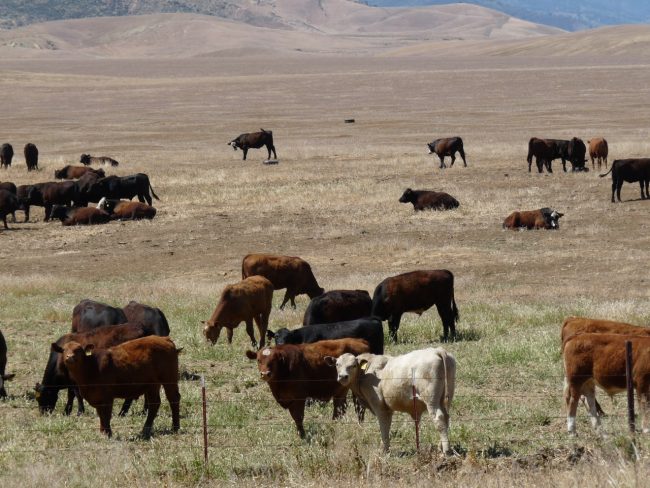
Transporting cattle, or any livestock for that matter, has special nuances so drivers can get to the destination quickly for the animals’ comfort. Occasionally a driver can self-adjust the drive time beyond the mandated limit.

But now a new regulation regarding electronic logging devices by the Federal Motor Carrier Safety Administration in Washington D.C., may be implemented December this year, forcing drivers to stop.

“It would essentially require commercial truck drivers to use a electronic device to comply with the hours of service schedule that they’re required to meet, which limits both on-duty time and driving time,” said Justin Oldfield, a California cattleman and vice president of governmental affairs with the California Cattlemen’s Association in Sacramento.

“We not only have the cattle’s welfare that we need to take into account for, but we’ve got to get to that destination and make sure those cattle are off-loaded properly and safely,” Oldfield said.

Oldfield said they’re looking at some alternatives that would help the California Cattlemen’s Association members. “One of the things that we are concerned about is our distance to a lot of buyers, which would be in the Midwest,” Oldfield explained. “So any additional cost that this regulation might cause would probably be felt more significantly farther from the Midwest, which would primarily represent California, other states in the West and the Southeast.”

The current regulation is maximum on-duty time of 14 hours, with maximum driving time being 11 hours, with a 10-hour break. If a driver hauling cattle was only 100 miles from the destination, he would want to keep going for the comfort of the cattle. But with the electronic logger in place, he’d be forced to take that 10-hour break.

“Some of the issues that we have, for instance, is technically you’re on-duty even if you’re waiting to load cattle. So there are situations to where maybe there’s eight trucks waiting to load cattle, and you could be waiting in line for 2, 3 hours. And that entire time is counting against your on-duty time,” Oldfield said.

“We’re looking at where we can try to ensure that those hours are not counted against your maximum on-duty time,” he said.

And another area that’s being looked at is an exclusion for drivers hauling live animals, in order to have time to get to destinations.

“Our membership is basically past policy that asks us to look at everything, including that. There’s of course the challenge politically of making these changes on the regulatory side. I can tell you that nothing is off the table at this point,” Oldfield said. “Again, the reform is not necessarily the electron log-in device. The reform itself is the hours of service.”

2021-05-12T11:17:10-07:00April 11th, 2017|

AgJobs4U Connects Employees and Ag Businesses

AgJobs4U.com Helps Workers and Farmers

By Brian German, Associate Broadcaster

Two years ago, Josh Pitigliano encountered a problem when coming into harvest season. He didn’t have enough qualified labor for his almond orchard.  Timing is critical during almond harvest, and Josh had sweepers and pickup machines parked because of a lack of labor.  That was the motivator for establishing AgJobs4U.com, a website that connects motivated employees to successful agriculture businesses.

Josh offered some insight as to how the website works.  “We are connecting farmers to employees and making that connection through a profile that the employee can create, that gives them access to a job board,” Josh said.

Last year at the World Ag Expo, Josh and his wife, Jennifer, officially launched AgJobs4U.com, and the website has been gaining momentum ever since.  There are over 4,000 job seekers in the database this year.

Jennifer and Josh Pitigliano

Jennifer said, “We have a handful that are outside of California, but we’re focused really on California to make sure that we’re doing a good job and offering a good service here before we would potentially expand out.”

Josh said the website has an overall goal of going national sometime in the future.

The website boasts that it was “created by a farmer, for a farmer, to alleviate the stress of finding skilled agricultural workers.”  They have a wide variety of positions listed on the website.  “Anything from irrigator checker, milker, feeder, mechanic, harvester, driver, specialized jobs like a shaker driver, to a bookkeeper, front secretary, packing house personnel, even PCAs,” Josh said.

Employers can purchase a subscription that will give them unlimited access to the database of employees available for immediate hire.  Employers can also post a job that is available in order to create a pool of candidates.  “For an employer, it works two different ways,” Jennifer said. “They can either wait to see who contacts them, or who has a profile in the database. … It’s beneficial for an employer to post a job, in addition to extracting people out of the database.”

The website is designed to be easy to navigate and fill the needs of both employers as well as those looking for ag jobs.  “When an employer puts a job on the job board, they have the choice, too, of whether it’s a part-time or full-time job,” Jennifer said. “That way, in case someone is looking for another job to supplement their current job, they have access to do that.”

AgJobs4U.com also helps to bridge the language barrier by offering a Spanish language option on the site. “Right at the top right of the website, with the click of a button, it will translate the whole website over to Spanish. … That way, me as someone who only speaks English, I can still find that person for that job by easing that translation barrier that’s between the two of us,” Jennifer said.

The company is 100% web-based.  It is also very mobile sensitive, so employers and potential employees alike can use their smartphones to navigate the site.  AgJobs4U.com is all about getting the right person for the right agricultural position.  “It is the American way,” Jennifer said. “People are trying to improve themselves, and if we give them the ability to do that by connecting them to different farmers, then at the end of the day, it’s a good job.”


2017-04-24T18:30:13-07:00March 16th, 2017|

Paraquat Resistance in Weeds?

Weeds Now Showing Paraquat Resistance

By Patrick Cavanaugh, Farm News Director

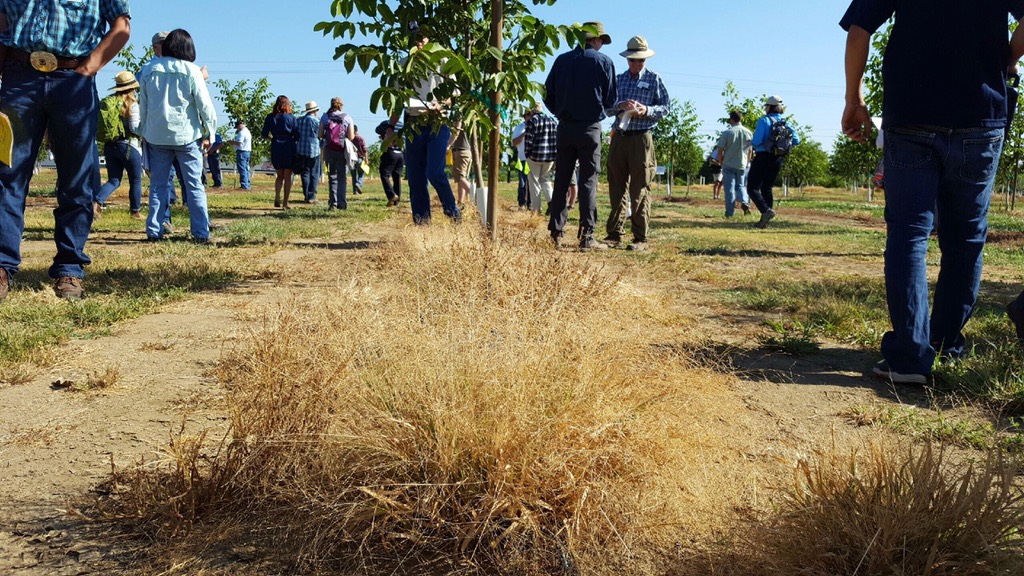
There’s been weed resistance to glyphosate herbicide, but now some weeds show resistance to paraquat herbicide.

“When we see paraquat resistance at often a very high level of resistance, it doesn’t cause any visual injury, which is different than a lot of cases,” said Brad Hanson, a UC Cooperative Extension Weed Specialist at UC Davis.

“We’re dealing with a lot of glyphosate resistant weeds right now, and when you spay glyphosate on the resistant weeds, they are slightly injured and then they recover,” said Hanson. “With paraquat resistance, it’s very stark. You often don’t see any symptoms at all. I describe it almost as immunity. It’s such a high level of resistance.”

“We have glyphosate resistance to annual ryegrass and hairy fleabane, and we have some populations of those same weeds that are resistant to paraquat,” Hanson said. “We see a very temporary reduction in the photosynthetic ability, but within a few hours it bounces back to normal.”

The plant is taking that active herbicide molecule, and it is being sequestered. It’s taking that molecule and putting it somewhere in the cell where it cannot get to the photosynthetic apparatus that’s its target site. It’s a very unique and interesting kind of resistance challenge.

“I think we’re talking about multiple resistance to paraquat and glyphosate. The grower likely switched to use paraquat in order to kill the glyphosate resistant weeds, and then the weeds selected paraquat resistance on top of that.”

2021-05-12T11:05:42-07:00March 6th, 2017|

Land-Based Learning Gets Donation

Donation to Center for Land-Based Learning Supports Next Generation of Local Farmers 

Raley’s announced in a news release last week that they are increasing commitment to supporting beginning farmers through the Center for Land-Based Learning’s West Sacramento Urban Farm Program.

 Raley’s has committed significant support for three urban farm sites in the City of West Sacramento. The Urban Farm Program, run by the Center for Land-Based Learning, supports beginning farmers through low cost land leases, professional mentoring and by helping farmers find markets for their crops.

According to Raley’s, “Urban farm sites increase access to fresh local produce, promote community sustainability, encourage volunteerism and stimulate educational opportunities. A percentage of produce grown will benefit Food For Families while creating a built in market for beginning farmers.”

“Our partnership with the Center for Land-Based Learning provides a full circle approach to Raley’s support of the entire food system,” said Becca Whitman, Community Relations Manager for Raley’s, in the news release. “By working together, we are strengthening the market channel for farmers, increasing agricultural workforce development opportunities, and providing our Food For Families partners fresh fruits and vegetables for the food insecure in our communities.”   

In 2014, the Center for Land-Based Learning planted West Sacramento’s first urban farm. There are now four urban farms within the city, all of which are managed by beginning farmers. The Farm at the BARN will be the fifth urban farm site and is slated to be planted in spring 2017. Three of the five sites are supported by Raley’s.

Raley’s said that ongoing efforts will be made to support farmers seeking to gain access to larger partners, including Raley’s own “Living Local” Program, which builds relationships with local farmers within 50 miles of its stores. Produce from the first urban farm is sold at the Raley’s in West Sacramento.

 “Contract growing, navigation of complex food safety rules and the ability for several small-scale farmers to aggregate their produce to fill large, weekly orders is a huge step toward sustainability for these beginning farmers,” said Mary Kimball, Executive Director of the Center for Land-Based Learning, in the news release. “Just like any other business, the first three years are make or break, but farming presents its own unique challenges, which Raley’s is helping to address with beginning farmers.”

The project supports Land-Based Learning’s mission to inspire, educate, and cultivate future generations of farmers, agricultural leaders, and natural resource stewards. “The ongoing support of Raley’s to the Center for Land-Based Learning is exactly the type of civic interaction that the city of West Sacramento seeks to foster,” said Christopher Cabaldon, Mayor West Sacramento, in the release. “The strong partnership sends signals throughout the community that we are dedicated to nurturing connections between residents, businesses and non-profits to improve the quality of life for all.”

2017-04-25T16:56:47-07:00February 20th, 2017|

Cheryl Foster Talks California CattleWomen

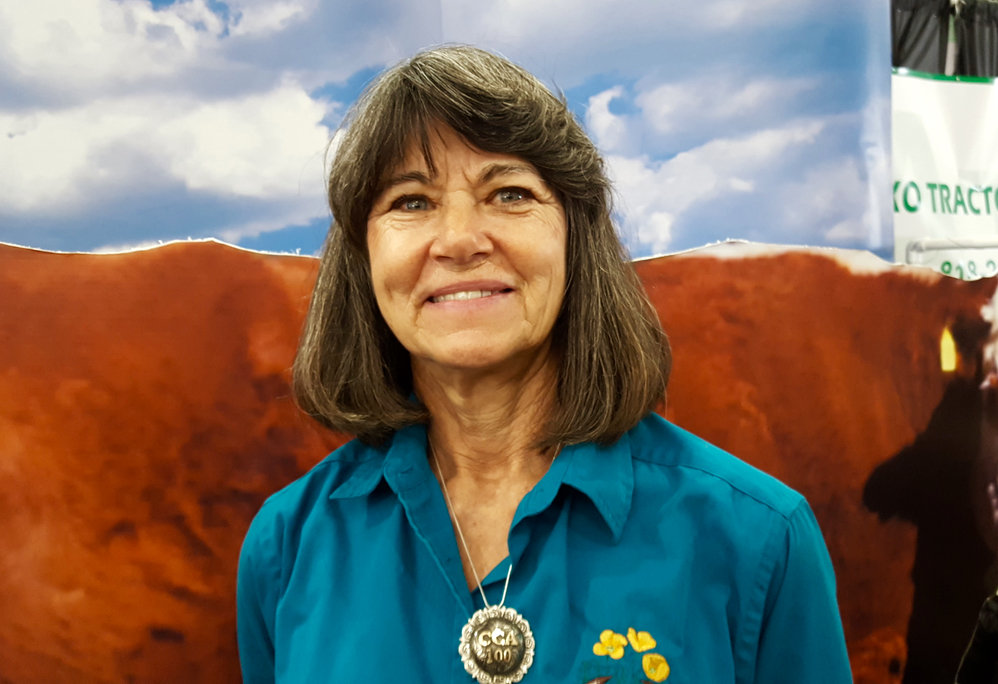
Meet Cheryl Foster, President of California CattleWomen

By Patrick Cavanaugh, Farm News Director

Cheryl Foster is the President of the California CattleWomen and a sixth generation rancher. Her operation ranch house is in Siskiyou County, about seven miles from the Oregon border. It’s a cow-calf operation on deeded ground, as well as forest service leased ground.

“It all started back in 1871, with a livery stable in Yreka, and then when that burned down, my family went out and bought the ranch land. My grandfather, John Foster is the one who really expanded the ranch,” Foster said.

The cattle breed on the ranch is predominantly Hereford and Red Angus cross. “That cross helps a lot with the fertility and longevity of the cow,” Foster said. “It’s Northern California and pretty tough country, with hillsides and lots of rocks. You put cattle where you can’t have row crops, so it’s rough!”

Foster’s husband is a CPA; she runs the cattle operation with her brother. “My brother is responsible for equipment, and I’m responsible for the cattle and the irrigating our 450 acres of hay, so we have it divvied up well,” she said.

Foster focuses on the primary tasks of California CattleWomen. “We are trying to get the women to be engaged with the truth about the industry and keep pushing, because it’s a very, very important industry,” she said.

“We get out and tell a positive story, because I think sometimes we are afraid of what to say to counteract when people come in with wrong information. So, real important to get good information out and get the ladies confident to get out and say that we are doing a good thing for the land,” Foster noted.

Foster explained the traditional roles of the men and the women in the California cattle industry. “The men’s organization has been going for a 100 years and the women have been going for 65 years,” she said.

“Initially, the men and their organization were more on the production, and the genetics of the herd. The women started being the beef promoters, to get out there and say, ‘It’s not just about the production. People need to eat our product,’ ” Foster explained.

The CattleWomen are out and about wherever they can spread the positive word on the beef industry. They go to fairs and trade shows and participate in the California Agriculture in the Classroom, where they engage in K-12 audiences and improve agricultural literacy.

2017-02-20T16:12:28-08:00February 17th, 2017|

Pyrethroid Review by EPA is Important

EPA Pyrethroid Review Vital for Many Reasons

By Patrick Cavanaugh, Farm News Director

David Haviland is a UC Cooperative Extension Farm Advisor based in Kern County, and he’s focused on etymology. He spoke to California Ag Today about the current review by the EPA on the pyrethroid class of crop protection materials. He noted that the EPA is concerned about the material making its way to waterways.

David Haviland

“It’s a legitimate concern in that pyrethroids can bind to sediment, and if that sediment was just hypothetically say, worst case scenario, what if you sprayed a product into a orchard or a field right next to a river on the day before it rained?” Haviland asked.

“We don’t do that, but hypothetically if you did that and that sediment washed from that orchard out into a stream, yes, those pyrethroids can affect aquatic invertebrates and of course little tiny organisms. These little invertebrates are the basis for food chains in the stream systems,” Haviland said.

“Just like if you’ve got a household cleaner, it says, ‘Store out of reach of children.’ So yeah, there’s a risk of that product, and you mitigate or solve that risk by only using it where it’s appropriate, storing it where somebody can’t get it,” Haviland said. “The same is true with pyrethroids. If you read the label, there’s very specific use instructions on where you can and can’t use the product as well as other details about waterways and buffer zones and things like that,” he said.

All that is taken into account to make sure that any risk that may occur doesn’t turn into an actual real problem. “That’s part of the review, for the EPA to look over that label,” Haviland said.

The EPA review is to make sure that any mitigations on the label and use patterns adequately take into account any risks that may be real. “I expect it will be done scientifically and prudently and based on that, I hope pyrethroids are in the tool box for a long time,” Haviland said.

2017-02-20T16:11:16-08:00February 16th, 2017|

Post Methyl Bromide Era Creates Questions

Without Methyl Bromide, Then What?

 By Brian German, Associate Broadcaster

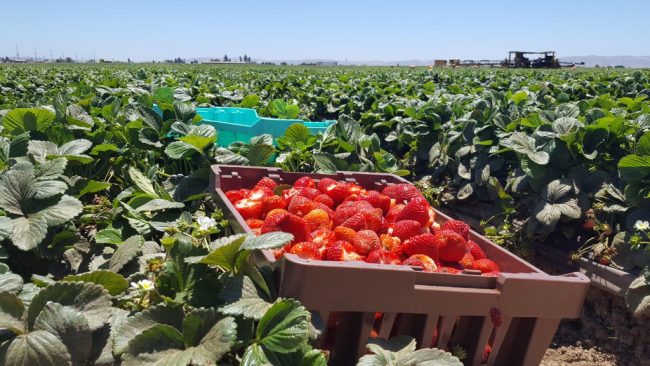
Methyl bromide was first identified as an ozone-depleting compound in 1991 and was scheduled to be phased out by 2005. California strawberry growers found it irreplaceable and fought for exemptions that allowed the fumigant to be used through 2016.  Mark Bolda is a UC Cooperative Extension Farm Advisor who specializes in strawberries and caneberries and also serves as the County Director for Santa Cruz County.  He discussed the work being done to find an effective alternative to methyl bromide.

Mark Bolda is working to help berry growers with the loss of Methyl Bromide

“It’s not just one thing does it all; it’s going to be one thing and then you add other things on top of that. … We don’t have the silver bullet anymore; it’s gone.  We need to figure it out using the systems approach,” Bolda said.

The inability to use methyl bromide is causing some concerns for strawberry growers, who are looking at what new type of management approach to take.  “Everybody’s familiar with the concept of integrated pest management for insects, and really, we need to approach this post methyl bromide era using integrated pest management,” Bolda said.

Growers are worried about how vulnerable their crops are going to be to various soil diseases without methyl bromide, as researchers have yet to find an alternative that is equally effective.  One of the ways to combat disease is to focus on the details of planting.

“In strawberries, you have different chill times. You know, if you add cold conditioning, you give the plant more vigor. The colors of the plastic that you’re using to manage the temperatures of the soil, the amount of fertilizer that your using, all of these things now, we need to start to integrate into the way we are growing the strawberries,” Bolda said.

Methyl bromide controls a variety of pests in agriculture.  It was also commonly used to treat commodities like grapes, asparagus and other imported goods to prevent introducing pests to the U.S.  Bolda expressed disappointment in the lack of preparation in finding an adequate replacement for methyl bromide. “Here we are, zero hour, and we don’t have this worked out. I think, to some extent, there’s been a lack of leadership in the industry,” Bolda said.

The quest for replacing the fumigant might have gotten a late start, but industry experts have been working double-time to find solutions. “We have got all of the researchers in this industry together, working as a unit, and there’s a lot of smart people working on this problem right now. …. What do we need to research? What do we know? What do we not know? Let’s go,” Bolda said.

Nearly 90 percent of methyl bromide use in California was for pre-plant soil fumigation in strawberries, nursery crops, grapes, and tree fruits and nuts.  Growers are preparing for a 5 to 10 percent drop in yield as a result of methyl bromide’s absence and are looking for ways to make up that deficit.

“Maybe using more precise fertility practices, adding cold conditioning to the plant, taking it away, using different varieties.  All of this is going to start to go into this system,” Bolda said

The phasing out of methyl bromide is most impacting to the strawberry industry, which is California’s third most valuable crop behind almonds and grapes, with annual farmgate sales of $2.5 billion dollars.  The biggest disease threats to strawberry fields are macrophomina phaseolina and fusarium, which can both have devastating results in crops.  “It’s plant collapse. You’ll see it kick in once the plant loads up in fruit and gets a little warm. It’s just too much stress for the plant,” Bolda explained.

Methyl bromide will be missed by growers, but its absence is allowing them to demonstrate their creativity in finding new solutions to a problem. “We’re starting to see some methods that are pretty interesting,” Bolda said. One such method is steam, which involves pushing steam into the soil to kill certain pathogens.

Breeding in resistance to disease can also be beneficial; however, it can have some negative consequences as well.  “When you have strong tolerance, you’re taking a hit on something else. There’s no such thing as a free lunch. You might have a plant that’s super resistant but then the yields are low, it doesn’t fruit until late. There’s always the trade off,” Bolda said.

Getting a good chill before planting can also be effective in making the plant more vigorous and better able to withstand disease pressure.  “It’s a little complicated because the longer you chill, the later you’re planting times get, and if you’re planting in the middle of December, [there’s] not a light of sunlight in the middle of December, so you know, there’s a trade off there too,” Bolda said.

Crop rotation can also assist with some soil diseases, but more research is needed to determine just how effective it is.

Methyl iodide was showing some success as a possible replacement for methyl bromide, but its use became a problematic issue.  “It became a political problem. I don’t think the industry stood it’s ground on it, and the industry, basically they struck their flags and left the field. Of course, the entire problem was defined by the opposition,” Bolda said.

Growers might have some difficulty working out a new pest management program without the use of methyl bromide, but Bolda explained that understanding the problem at hand is an excellent step in the right direction.   “Don’t just turn scientists loose and just say, ‘study and do experiments.’ No. Define the problem. I think what we’ve done with the fumigants over this last two years. Getting everybody together and working as a unit, we have defined the problem and now that mental energy and that mental potential is moving. You need to define it in order to bring the people in to solve it,” Bolda said.

It’s going to take some time to work out a program that best replaces methyl bromide, but Bolda is optimistic about the future.  “Sometimes the solutions aren’t so obvious, but they’re starting to show up and you know, the thing is that some of these will be radically different,” Bolda said.


2017-02-20T16:10:40-08:00February 13th, 2017|

California Cattlemen Challenge Illegal Listing of Grey Wolf

Ranchers Fighting to Protect Livestock

By: Jessica Theisman, Associate Editor

On January 31, the California Cattlemen’s Association (CCA) and the California Farm Bureau Federation filed a lawsuit challenging the California Fish and Game Commission’s June 2014 decision to list the grey wolf as an endangered species under the California Endangered Species Act. This decision went into effect on January 1, 2017, and has many farmers and ranchers upset.

“The organizations are represented by the Pacific Legal Foundation, a nationwide leader in litigation aimed at ensuring limited government, private property rights and sensible environmental protections. The suit alleges that endangered listing of the gray wolf under the California Endangered Species Act was improper for three reasons,” the CCA said in a news release.

This subspecies of grey wolf originally descended from Canada. It is not native to the state of California, as the law requires, and definitely not an asset for California’s agriculture industry. Secondly, there is an abundant and healthy population of this species throughout the western United States. The Commission focused too much on the California populations, the CCA alleges. Lastly, the commission impermissibly listed the grey wolf based on the occasional presence in California by a single wolf at that time.

“The Fish and Game Commission took a big bite out of its own credibility with this unjustified listing,” said Damien Schiff, PLF Principal Attorney, in the CCA’s release. “The agency managed to label the gray wolf as ‘endangered’ only by myopically and illegally ignoring its population outside California.”

Ranchers’ livestock fall prey to these predators, and this new policy will cause a huge impact on the rural economies that depend upon agriculture. CCA president and Butte County cattleman Dave Daley said in the news release that the lawsuit is necessary for ranchers to ensure the humane treatment of their livestock.

“Under California law, you can’t even pursue a species that is listed as endangered,” Daley said. “If a rancher sees a wolf attacking one of his or her calves, he or she can’t chase the wolf away without breaking the law. Ranchers are not seeking open season on wolves, we just want sensible wolf management that also allows us to protect our livestock. That will require delisting the gray wolf.”

The case is California Cattlemen’s Association, et. al. v. California Fish and Game Commission, filed in the Superior Court of California for the County of San Diego. Those interested in the case can visit www.pacificlegal.org for more information.

2021-05-12T11:17:10-07:00February 7th, 2017|

Ag Unite Works to Bridge Gap with Consumers

Ag Unite Program Brings Industry Together

By Jessica Theisman, Associate Editor


The Stanislaus County Farm Bureau was recognized recently with a Program of Excellence Award from the American Farm Bureau. California Ag Today spoke to Wayne Zipser, a walnut and almond grower and Executive Director of the Stanislaus County Farm Bureau, about the news.

“About one of 20 counties throughout the nation are selected for their unique programs. We submitted our Ag Unite, a kind of brand that started in Butte County Farm Bureau. The theme is Uniting Agriculture, getting all the industry together, not just farm bureau members, but the industry together in one room at one time to talk about how we can come together and unite our industry. We can be a stronger industry. Stronger with a stronger voice” Zipser said.

“We had over a thousand people at the Ag Pavilion in Modesto Junior College last May. We brought in a couple of guest speakers, but the theme of it was, again, uniting our industry together to make a stronger voice.”

Zipser said the inspiration for Ag Unite came from Colleen Aguilar of the Butte County Farm Bureau. “It was her idea; she wanted it to be brought down through the other farm bureaus to not only raise awareness, but to raise money and be a stronger political voice. We did that. It was very, very successful, and Colleen was the brainchild of this.”

Aguilar and the staff from the Stanislaus County Farm Bureau were in Phoenix recently at the American Farm Bureau meeting, where they received the award.

“It was collective effort. We did the application and, certainly, we included Butte County Farm Bureau,” Zipser said. “We must get farmers and ranchers involved in the political process. We’ve seen more than a thousand people come together in Modesto on a water hearing last month and that was a show of unity,” he said.   “I think it’s vastly important in agriculture, because there’s so few of us producers. We need to come together and unify ourselves and to stand up to these over-burdensome regulations that are facing us every year and every day in California,” he added.

Part of that gap that they need to fill is between the farming industry and consumers. “I think there is a parallel between the producer and the consumer because we all want to have safe and reliable food supply. We are continuing to work with our consumers to make sure that they feel that they’re getting the value, not only in the value of the product that they’re consuming, but also the safety and the reliability of it as well,” Zipser said.

A clever way they are staying in touch is through YouTube. There are film clips available from both Butte and Stanislaus counties if users type in “Ag Unite.” Local offices for both farm bureaus can also be contacted for information.


2017-01-29T20:11:49-08:00January 29th, 2017|

Fresno County Growers Grateful For Rainfall

Rainfall Helps Water Cover Crops

By Brian German, Associate Broadcaster

The amount of rainfall the state has already received comes as a delight for many growers.  Joe Del Bosque, Commissioner of the California Water Commission, noted how appreciated the rainfall has been.  “It’ll help replenish the moisture in our fields. We also have some cover crops growing that need rain and some dry land wheat that we’re growing that needs some rain,” Del Bosque said.

Del Bosque is also the president and CEO of Empresas Del Bosque Incorporated, a diversified farming operation on the west side of Fresno County in Firebaugh.  He talked about a cover crop he’s got going for their organic melons. “We plant it in the wintertime. We don’t irrigate it because we can’t afford to buy water for a cover crop. We plant it in the wintertime so the rains will provide for it, then we mulch it in the spring and then plant our melons,” Del Bosque said.

That cover crop also helps to build tilth and adds important organic matter to the soils, really helping those organic melons grow.  The success of that cover crop depends largely on the amount of rain, which is much better this year than many years prior.  “It’s good for the trees to get wet, to get cold and go into dormancy. There have been years where we didn’t get hardly any rain in January. We couldn’t put on our dormant sprays because the bark was dry. This year we should be able to do that,” Del Bosque said.

It cab be a bit of gamble planting the cover crop, but it seems to have paid off for Del Bosque this year.  “Absolutely, yeah, if we don’t get rain, we don’t get a crop because we can’t afford to buy $1,000 water for our cover crop. We have to save that for our main crop,” Del Bosque said.

Del Bosque said they have laid about a third or more of their acreage fallow because they don’t have adequate water to grow anything on it; but idling farmland has its own set of consequences: “We found that laying land idle because of a lack of water for two or three years in a row starts to hurt that soil. So we decided recently to try putting in dry land grain just to keep something growing on that land and keep it alive.”

At the Empresas Del Bosque farm, they grow cantaloupes, almonds, asparagus, cherries and tomatoes on about 2,200 acres.  Del Bosque expressed his hopes that almond prices will stabilize after so much fluctuation.  “They came down a lot from 2015. They firmed up a little bit. We hope they don’t go down any further. … That’s the thing that, when we were selling almonds for $4 a pound and paying $1,000 water, we were coming out okay. Now that the almonds are $2 a pound, we can’t afford $1,000 per acre foot of water. We hope the cost of water comes down significantly this year so that it comes out all right.”

2017-01-26T20:48:25-08:00January 26th, 2017|
Go to Top