Associations, Organizations, Educational and Research Institutions
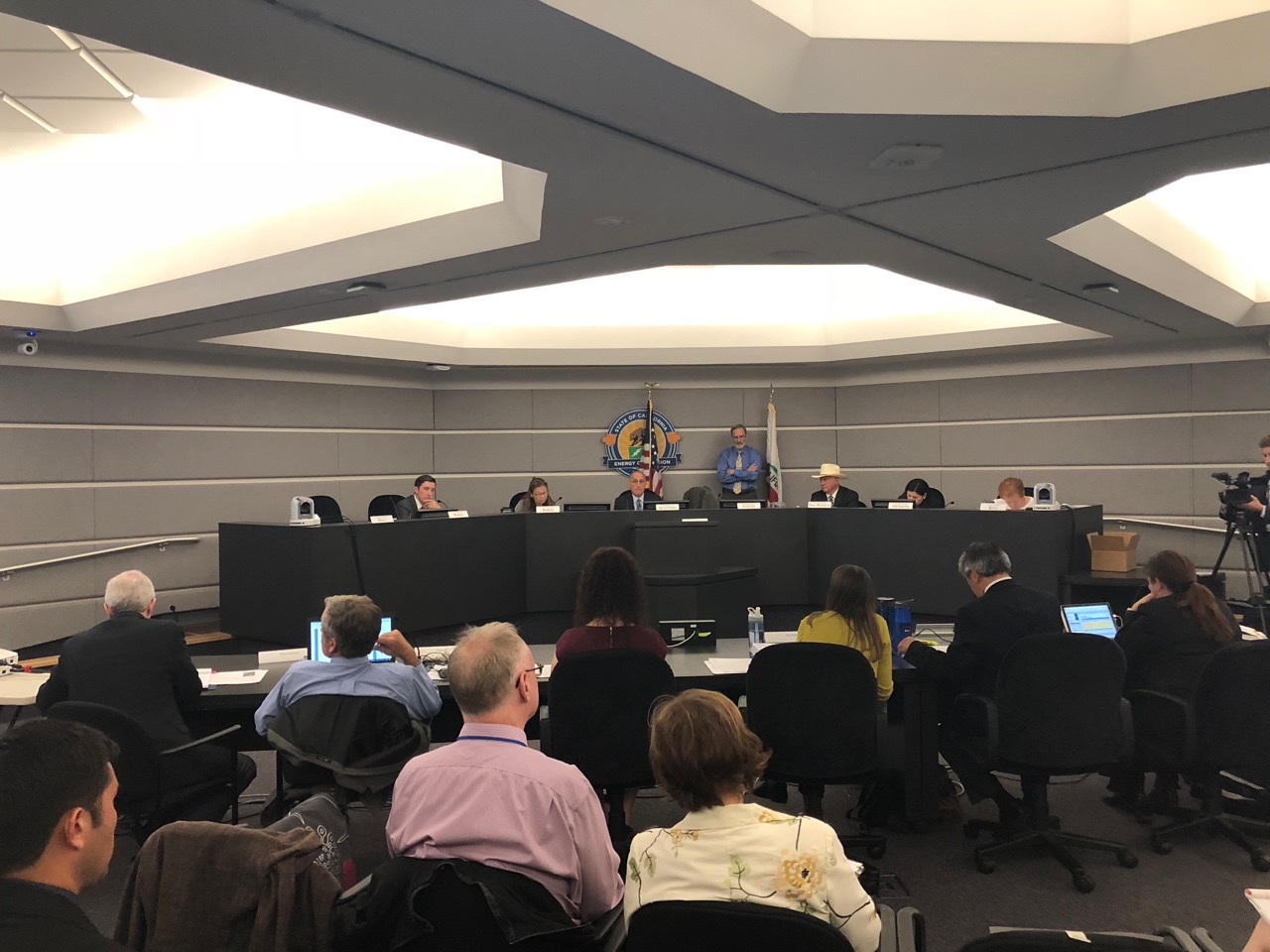
Letter to California Water Commission on Failure to Approve Temperance Dam

CWC Decision is a Black Eye to State

Editor’s note: Valley legislators sent the attached letter to the CWC last week, reflecting both disappointment and concern over the CWC WSIP process as it relates to the Temperance Flat Reservoir Project. The letter asks for a reconsideration for the TFR ecosystem evaluation.

Clearly, we appreciate all our Valley legislators who have fought so hard for this project for many years. This letter at a minimum puts on the record their thoughts on how the CWC handled the TFR project.

May 17, 2018

California Water Commission: Mr. Armando Quintero, Chair, & Mr. Joe Yun, Executive Officer

P.O. Box 942836, Sacramento, California 94236-000

Dear Mr. Quintero, Mr. Yun and Commission  Members:

On May 3, 2018, The California Water Commission took action, perhaps the most definitive and historic action with regard to the Water Storage Investment Program (WSIP) state bond funding applications.

As members of the California Legislature, we have watched and participated in this entire application process. All Californians would benefit from water storage projects this money is intended to fund. However, this investment has been stymied by the commission staff’s narrow determination. The people we represent have expected a great deal of positive leadership from the Water Commission and we echo the public’s disappointment in how the review process has unfolded.

During the initial review of WSIP project applications, many of us joined in calling into question the policy and procedures of the application review process. From the beginning, we had concerns that the process developed by commission staff and the information provided would not adequately account the benefits of water storage projects throughout the state. Despite our concerns, little was done to address the problem resulting in six of the project scores receiving “O” benefits.

Temperance Dam

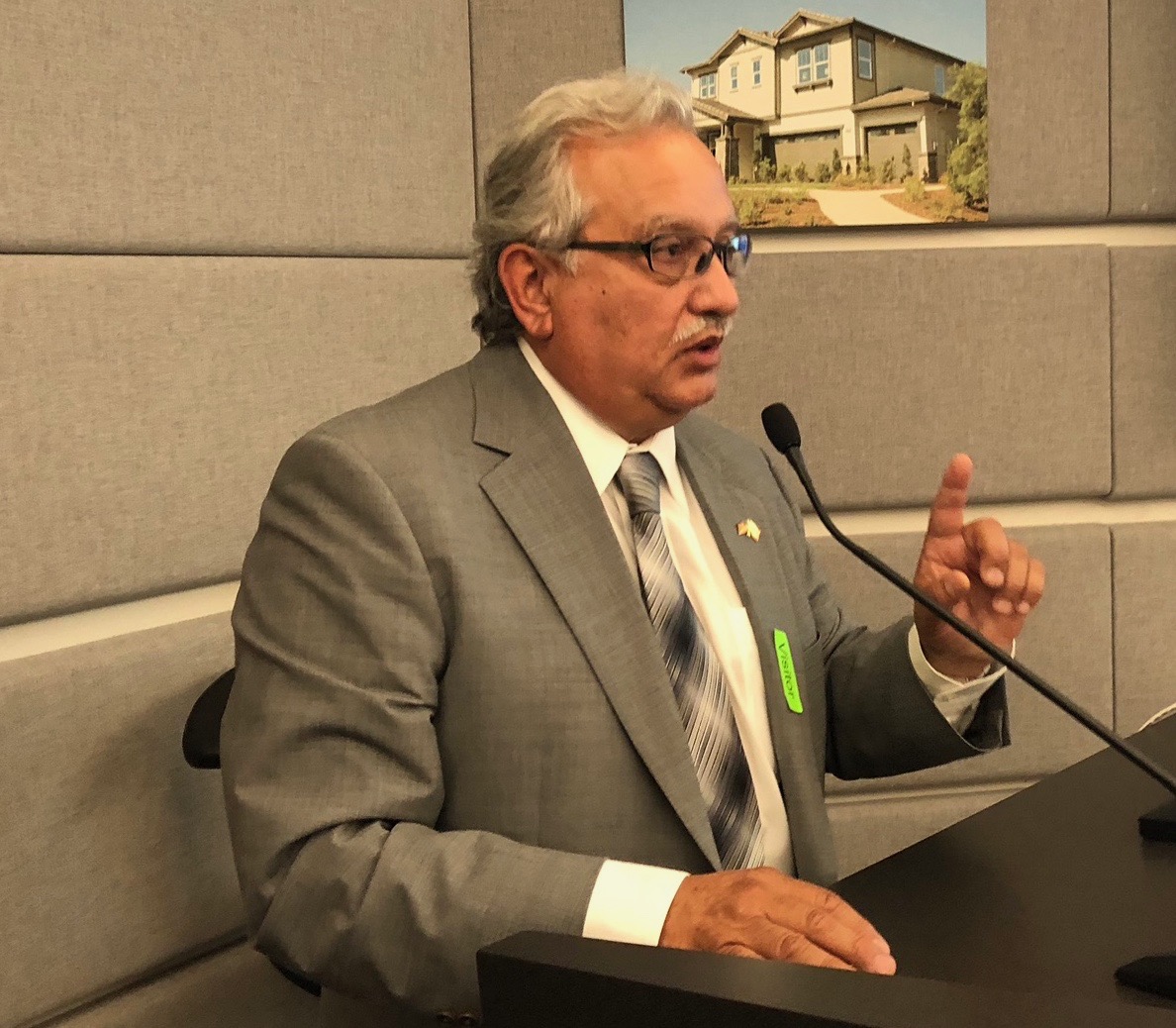
Mario Santoyo is Executive Director of the SJV Water Infrastructure Authority, which presented the Temperance Flat Dam Proposal to the California Water Commission​.

In 2008, the EDT model was selected by the state and federal agencies responsible for implementation of the San Joaquin River Restoration Program (SJRRP)—namely the U.S. Bureau of Reclamation, the U.S. Fish and Wildlife Service, the U.S. National Marine Fisheries Service, and the California Department of Fish and Wildlife (CDFW). In the Quantitative Fisheries Model Selection Recommendation Process, 2008, the SJRRP agencies state that EDT was rated ” … as the most appropriate quantitative fish population model for the SJRRP.” This report also states that “the EDT model is a framework that views salmon as the indicator or diagnostic species for the ecosystem. The salmon’s perspective (i.e., its perception of the environment) becomes a filtered view of the system as a whole.

The EDT framework was designed so that analysis made at different scales (i.e., from tributary watersheds to successively larger watersheds) might be related and linked. Biological performance is a central feature of the framework and is defined in terms of three elements: life history diversity, productivity, and capacity. These elements of performance are characteristics of the ecosystem that describe persistence, abundance, and distribution potential of a population. This analytical model is the tool used to analyze environmental information and draw conclusions about the ecosystem. The model incorporates an environmental attributes database and a set of mathematical algorithms that compute productivity and capacity parameters for the diagnostic species. …”

In 2014, the U.S. Bureau of Reclamation selected the EDT model for application to the Upper San Joaquin River Basin Storage Investigation—the federal feasibility study of Temperance Flat Reservoir—to quantify benefits. Prior to its application, Reclamation commissioned a scientific peer review of the EDT model to confirm the suitability of its use for quantifying benefits. It is our understanding that when the SJVWIA team asked if there were any models that could be used in place of the EDT, the CWC staff declined to respond. This is of clear concern and demonstrates the inconsistencies within the information provided by commission staff.

From the San Joaquin Valley’s perspective, the outcome of this process is a black eye for the state. The two-thirds threshold for Proposition 1 in 2014 would not have been met without the support of the San Joaquin Valley. Despite the bias by some opponents against large-scale storage projects, the language in AB 1471intentionally included Chapter 8 (Provision (a), section 797.1, page 22) to clarify that the Legislature’s intent for the $2.7 billion allocation was for  surface water storage projects with an emphasis on Sites and Temperance Flat Reservoir based on the CALFED Bay-Delta Program Record of Decision, dated August 28, 2000 (Section 2. Decision, 2.2 Plan for Action, 2.2.5 Storage, pages 42 through 45). We the members of the Legislature believed that by voting for Prop 1 funding that all projects including controversial storage projects in the CALFED Bay Delta Program would be given a fair and accurate evaluation in order to meet the overall water management strategy for the state.

In closing, we insist that the Water Commission reconsider its acceptance of the staff recommendation on the Temperance Flat Project’s ecosystem scoring or at the minimum direct the staff to go back and re-evaluate the application’s ecosystem public benefit utilizing the Ecosystem Diagnosis and Treatment (EDT) model cited in the Water Commission’s Technical Reference Document as being acceptable for use in the analysis required by the application.

Sincerely,

(Letter was signed by nine Valley state senators and assembly persons.)
2018-05-29T16:59:53-07:00May 29th, 2018|

UC Davis Pollination Ecologist Wins 3-Year Fellowship

Fellowship Comes From the Department of Defense

By Patrick Cavanaugh, Editor

Maureen Page Awarded Fellowship to Optimize Wildflower Plantings

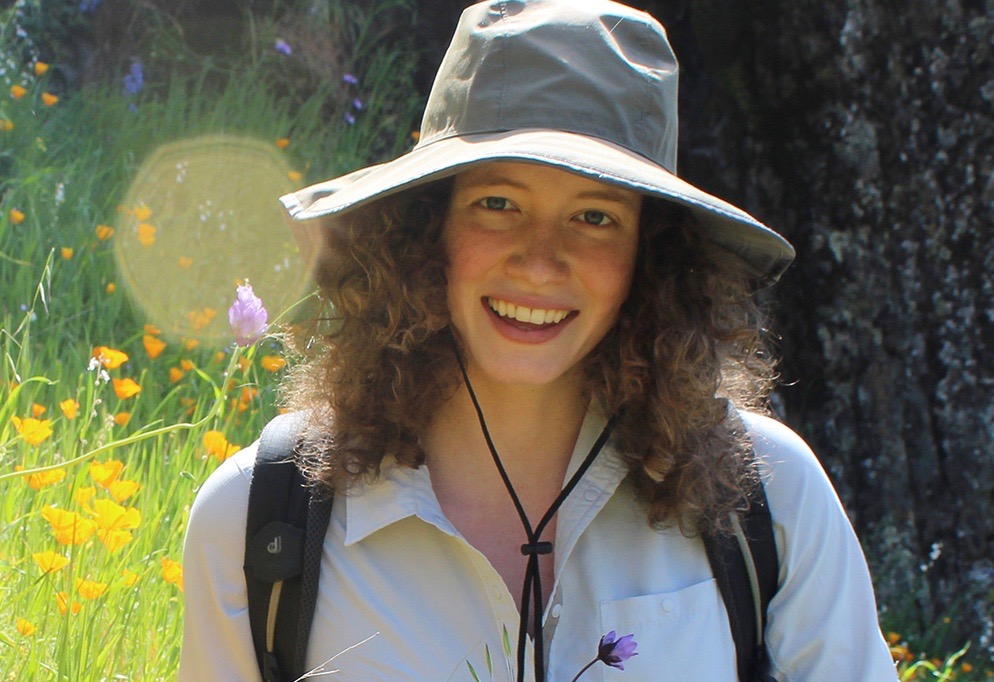
Doctoral student Maureen Page of the Neal Williams lab at the UC Davis Department of Entomology and Nematology is the recipient of a prestigious three-year fellowship, a National Defense Science and Engineering Graduate Fellowship for her research proposal: Promoting Food Security by Optimizing Wildflower Plantings to Support Wild and Managed Bees.

Page, a pollination ecologists, was one of 69 awardees selected from more than 3,600 applicants. The Department of Defense funds her fellowship.

“Most people probably are aware that both managed honeybees and many of the wild native species that we have in California as well as in the U.S. have major stressors that are contributing to declines in their populations,” Page said.

And of course, the bee populations suffer when there’s a lack of floral resources to pollinate. “Especially when crops are not in bloom and bees need pollen and nectar to survive. And so without enough resources, it can have dramatic declines in bee populations,” she said.

Page explained that bees are critically important to our food supply. “It’s estimated that about a third of the food supply directly benefits from insect pollination. Many of those crops are entirely dependent on insect pollination,” she said. “Without bees and other insects, those particular crops wouldn’t even be able to set fruit and many others, which while not wholly dependent on insect pollination benefit very much from insect pollination, which means more production and lower prices so that more people can afford healthy, nutritious food.”

2021-05-12T11:05:11-07:00May 25th, 2018|

Conventional or Organic Strawberries — All Safe to Eat

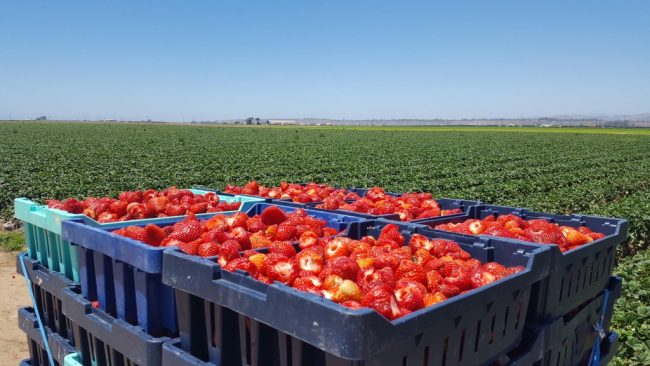
Strawberry Grower Says At PPB, Anything Can be Found

By Patrick Cavanaugh, Editor

David Peck is a longtime strawberry grower in Santa Maria. He objects to the Environmental Working Group’s (EWG) Dirty Dozen list, which had strawberries at the top of their list.

David Peck, COO and Farmer of Manzanita Berry Farms in Santa Maria

“If you take the data that the EWG is presenting, you can say, yeah, okay, that’s fair,” Peck said.

“Based on what they are presenting, they can find detectable amounts of whatever at however many parts per billion. I’ll buy that; but they’d have no perspective on the types of residues and what that means regarding human health, human safety, and human risk,” noted Peck, who grows both conventional and organic strawberries.

Peck said that even organic strawberries would have detectable amounts of residues.

“I tell people that I grow organic strawberries and that I do not put on the crop protection materials that the EWG is talking about,” he explained.

“At parts per billion (PPB), you can find dozens of carcinogens at minute levels. Where did they come from? Well, they are everywhere in such small quantities that no one should worry about it,” Peck said.

Peck said that the decision for consumers is not organic versus conventional, but to eat more strawberries and other fruits and vegetables.

“I say eating California produce in general is so much healthier than avoiding California fresh fruits and vegetables,” he said.

The Alliance for Food and Farming works hard to bring the truth to the EWG’s Dirty Dozen list. They report that all produce is healthy to eat and that consumers need to eat more every day. More Information at www.safefruitsandveggies.com

2021-05-12T11:05:11-07:00May 22nd, 2018|

New Study Reveals Economic Impact of California Citrus

Citrus Research Board Quantifies California Citrus Industry’s Importance

Edited by Patrick Cavanaugh
      Despite Tulare Mayor Carlton Jones posting a series of anti-ag comments on Facebook, causing a stir in the local community, agriculture provides a huge economic stimulus to his community. In fact, without agriculture in Tulare, the city would most likely be in economic ruin.
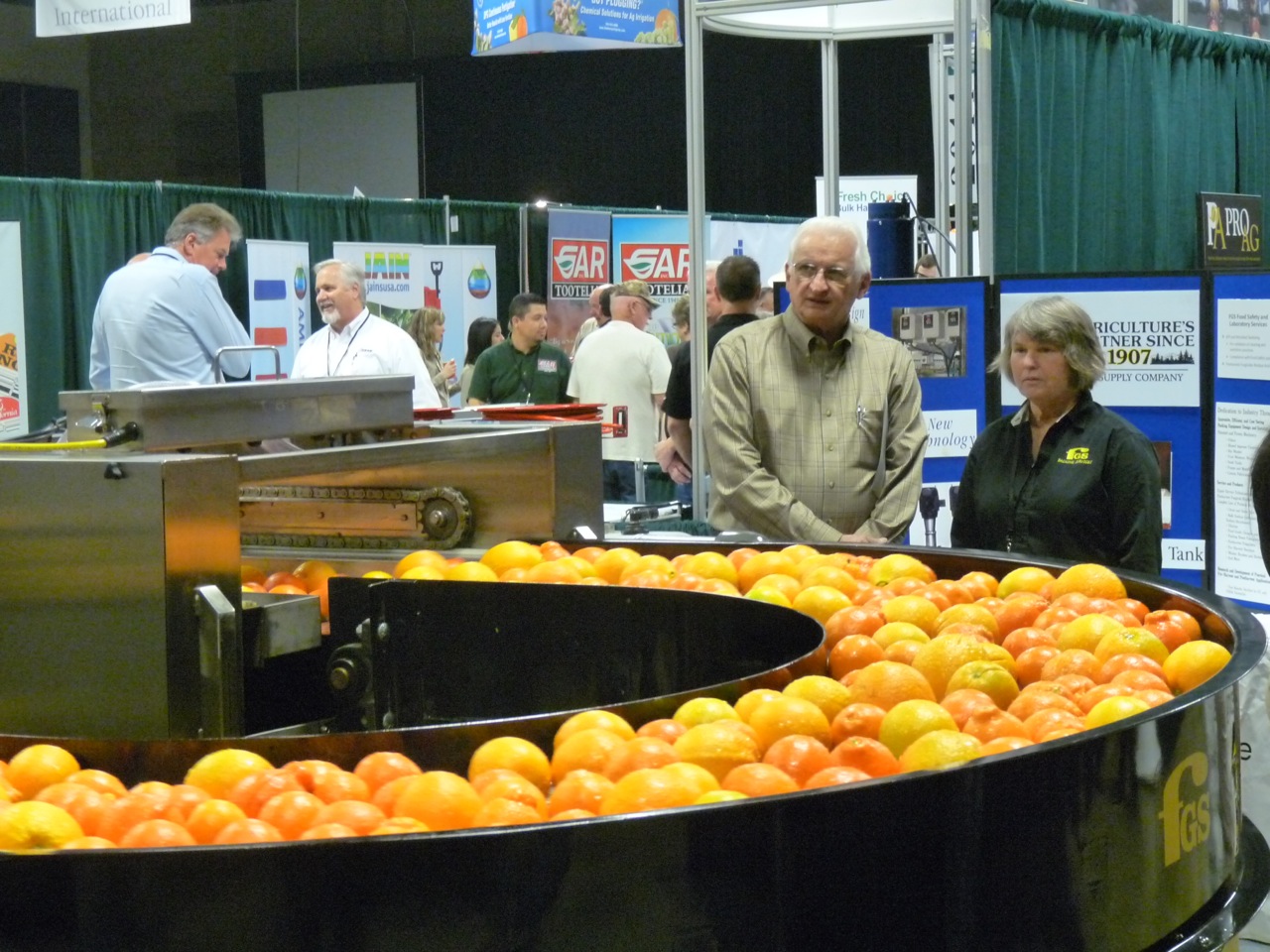
     Citrus is one crop that is grown in the county. And the total economic impact of the iconic California citrus industry is $7.117 billion according to a new study commissioned by the Citrus Research Board (CRB).
     “In updating our economic analysis, we selected a well-known expert, Bruce Babcock, Ph.D., a professor in the School of Public Policy at the University of California, Riverside, to conduct the research. His findings quantified the significant impact of citrus on California’s economic well-being,” CRB President Gary Schulz said.
     According to Babcock, the California citrus industry added $1.695 billion to the state’s Gross Domestic Product (GDP) in 2016.
     “California citrus is a major contributor to the economic value of the state’s agricultural sector and is much larger than just the value of its sales,” he said. “Estimated full-time equivalent California citrus jobs totaled 21,674 in 2016-17, and estimated wages paid by the industry during that same time frame totaled $452 million.”
     Babcock added, “The application of management skills and capital equipment to efficiently utilize land and water to produce high-quality citrus also generates upstream and downstream jobs and income that magnify the importance of citrus production beyond its farm value.”
     In 2016-17, the most recent marketing year of data compilation, Babcock found that the total direct value of California citrus production was $3.389 billion. This value generated an additional $1.263 billion in economic activity from related businesses that supplied materials and services to the citrus industry. Layered on top was another $2.464 billion in economic activity generated by household spending income that they received from California’s industry, according to Babcock, thus rendering a total economic impact of $7.117 billion.
     The study revealed that 79 percent of California’s citrus was packed for the fresh market and 21 percent was processed in 2016-17, which is economically significant because fresh market fruit has a higher value than processed fruit.
     Of further note, California produced about 95 percent of all U.S. mandarins in the most recent reporting season.
     California Citrus Mutual President Joel Nelsen said, “The ‘wow’ factor in this report is something, as it relates to gross revenues and positive impact for the state, people and local communities. This enthusiasm must be tempered by the fact that huanglongbing (HLB) can destroy all this in a matter of a year if the partnerships that exist between the industry and government cannot thwart the spread of this insidious disease. Just this week, coincidentally, Brazil authorities reported a 20% reduction in fruit volume. Reading how that would affect our family farmers, employees and the state is sobering.”
     The CRB study also looked at the possible impact of a potential 20 percent reduction in California citrus acreage or yield or a combination of the two that could result from increased costs associated with meeting government regulations, combatting the Asian citrus psyllid (ACP) and warding off the invasion of HLB, a devastating disease that has decimated citrus production in many other growing regions such as Florida. Babcock calculated that such a reduction could cause a loss of 7,350 jobs and $127 million in associated employment income and could reduce California’s GDP by $501 million in direct, indirect and induced impacts. The CRB currently is devoting most of its resources to battling ACP and HLB to help ensure the sustainability of California citrus.
     Babcock is a Fellow of the Agricultural and Applied Economics Association and has won numerous awards for his applied policy research. The economist received his Ph.D. in Agricultural and Resource Economics from the University of California, Berkeley, and his Masters and Bachelors degrees from the University of California, Davis.
     The CRB administers the California Citrus Research Program, the grower-funded and grower-directed program established in 1968 under the California Marketing Act as the mechanism enabling the State’s citrus producers to sponsor and support needed research. More information about the Citrus Research Board and the full report on the “Economic Impact of California’s Citrus Industry” may be found at www.citrusresearch.org. 
2021-05-12T11:05:12-07:00May 21st, 2018|

Citrus Psyllid Control Strategy Changes

Reducing Sprays in Areas, and Border Nets

By Jessica Theisman, Associate Editor
beth_grafton-cardwell

Entomologist Beth Grafton-Cardwell

Huanglongbing, vectored by the Asian Citrus Psyllid, (ACP) is the dreaded disease that has nearly wiped out the Florida citrus industry and is a potential problem for citrus growers in California. California Ag Today recently met with Beth Grafton-Cardwell, a UC Cooperative Extension Specialist. She specializes in integrated pest management; she discussed new strategies for the control of HLB.

“We have been surveying grower orchards in southern California and following how pesticide sprays are working, and I’m going to make some new recommendations on how to handle the populations down there,” said Grafton-Cardwell, who is also the director of the Lindcove Research and Extension Center. “Some regions of Southern California are easier to control psyllids than others. The pesticide treatment is less intensive due to the desert climate. San Diego is one of the areas that is less intensive due to the drier trees making them more hardened off, with less new flushes, where ACP is attracted.”

“There are other areas of southern California where the trees flush continually, providing great places for the psyllids to lay eggs, and that is where treatments are going to have to intensify,” she explained.

Areas such as Ventura, Riverside, and San Bernardino have to increase their treatments in the fall for better control.

And researchers are currently studying new prevention and control methods.

“Texas A & M has been looking at erecting net-like borders around the orchards because the psyllid tends to go to the edges,” Grafton-Cardwell said.

They want to treat the netting with yellow strips of sticky paper that would attract and/or apply insecticides to kill the psyllid.

“Our research is showing that often the infestation starts on the borders. Growers may have to intensify the number of treatments, but they don’t have to treat the entire orchard,” Grafton-Cardwell said. “Growers might be able to fight the psyllid with only treating the trees on the outer edges.”

2021-05-12T11:05:12-07:00May 10th, 2018|

Temperance Flat Denied Funding

All Hope Dries Up

By Patrick Cavanaugh, Editor

Again, it came down to fish, specifically Chinook salmon, that forced the proposed Temperance Flat Dam out of the race for Proposition 1 funding for building new water storage projects.

Mario Santoyo and Temperance Flat Denied Funding

Mario Santoyo fought hard for Temperance Flat Dam funding.

For more than 20 years, the Temperance Flat Dam proposal was passionately advocated with unwavering support by Central Valley cities and the San Joaquin Valley Infrastructure Authority (SJVIA) who were behind the application. Temperance Flat came crumbling down Wednesday at the California Water Commission (CWC) meeting in Sacramento on the second day of discussion.

On Tuesday, CWC staff members assigned to crunch the Public Benefit Ratios for the project were solidly encased in concrete, refusing to grant the project any consideration for its ecosystem restoration benefits. The Dam would provide critical cold water to flow down the San Joaquin River, thus helping the salmon spawn.

CA Water Commission kills Temperance Flat funding

CA Water Commission denied funding for Temperance Flat Dam.

And while the official public benefit calculation came up short today, proponents already saw that the project was already on life support Tuesday, with a dire prognosis.

“Stunned is an understatement,” said Mario Santoyo, executive director of the SJVIA, who has worked for more than 18 years on the project. “Temperance Flat is the most critical water project ever proposed for the Central Valley, which is ground zero for significant water shortages that will not go away.”

It all boiled down to the Ecosystem Diagnosis and Treatment (EDT) model that was approved by Bureau of Reclamation and the California Department of Water Resources. Despite both approvals, that model did not jive with the Commission staff’s model, which undervalued the project’s public benefit ratio, killing the opportunity for Temperance Flat Dam to receive funding of more $1 billion for construction.

“We are working in an area of great uncertainty in professional judgment,” Bill Swanson, vice president, Water Resources Planning & Management for Stantec, a global planning and engineering firm, who presented data for the SJVIA. “We do not have fish in the river. We do not have empirical data. The only issue available to us is a comparison of how the system would respond to changes in flow, temperature and habitat,” Swanson said.

“That’s the reason we used the EDT model, the same model that the Bureau of Reclamation has used in their models of flow,” Swanson explained. “The SJVIA’s challenge was how to take the results of that model and analyze them to a level of detail that distinguishes the precision that we might want to have around the results,” said Swanson.

Bill Swanson

Stantec’s Bill Swanson advocated for Temperance Flat Dam funding.

“I’m very disappointed with the way they scored a great project that needed to be built,” noted Santoyo. “And I am not happy about one commissioner from Orange Cove who stabbed us in the back and scolded us on why we did not meet the Public Benefit Ratio. We did meet and exceed that ratio, but the CWC disagreed with our ecosystem restoration model that had been used by both the state and the feds.”

Several Water Commissioners publicly wrangled with their staff on how they could make the project work. They sought areas to increase the project’s cost-benefit evaluation to get it funded.

Commissioner Joe Del Bosque read the ballot text of Prop 1, approved by California voters by 67 percent in 2014. He reminded those present that voters expected a water storage project to be built, adding, “We need to find more certainty in order to get Temperance Flat built.”

Commissioner Daniel Curtain distinguished two parts to the discussion—physical and monetary. “Take a look and see if there is a physical benefit for ecosystem restoration. Finding a potential benefit and attaching a potential monetary benefit could be helpful,” he said.

The project was also short on points for recreation opportunities on what would be a new lake behind the 600-foot high dam east of Fresno, behind Friant Dam. Commissioner Joseph Byrne said he hoped for more thought given to the recreation cost benefit. “Intuitively, zero benefit does not make sense. We need a higher level of confidence in the estimated recreation cost-benefit,” he said.

CWC staff stipulated that while the newly created lake behind Temperance Flat Dam would accommodate boating activity, the lack of camping, hiking, and other activities within the existing San Joaquin River Gorge neutralized any recreation benefits.

If built, the Temperance Flat Reservoir would contain 1.26 million acre-feet of new water storage above Millerton Lake, northeast of Fresno. Temperance would have helped provide a more reliable supply of fresh drinking water for disadvantaged Valley communities. It would have enabled below-surface groundwater recharge, addressed extreme land subsidence and provided critical help to farmers facing severe groundwater restrictions due to the Sustainable Groundwater Management Act (SGMA).

Santoyo said the SJVWIA spent more than $2 million on the California Water Commission application, utilizing what he said were the most qualified engineers to develop the technical data required by Commission staff. The U.S. Bureau of Reclamation, which administers California’s Central Valley Project for the U.S. Department of the Interior, has invested more than $38 million in studying the project. Santoyo said those studies supported the finding that the selected Temperance Flat site is the most preferred location for such a crucial project.

2018-05-03T15:42:58-07:00May 3rd, 2018|

UC Davis Tea Initiative Will Include Research and Teaching

Tea Initiative is First of Its Kind

By Jessica Theisman, Associate Editor

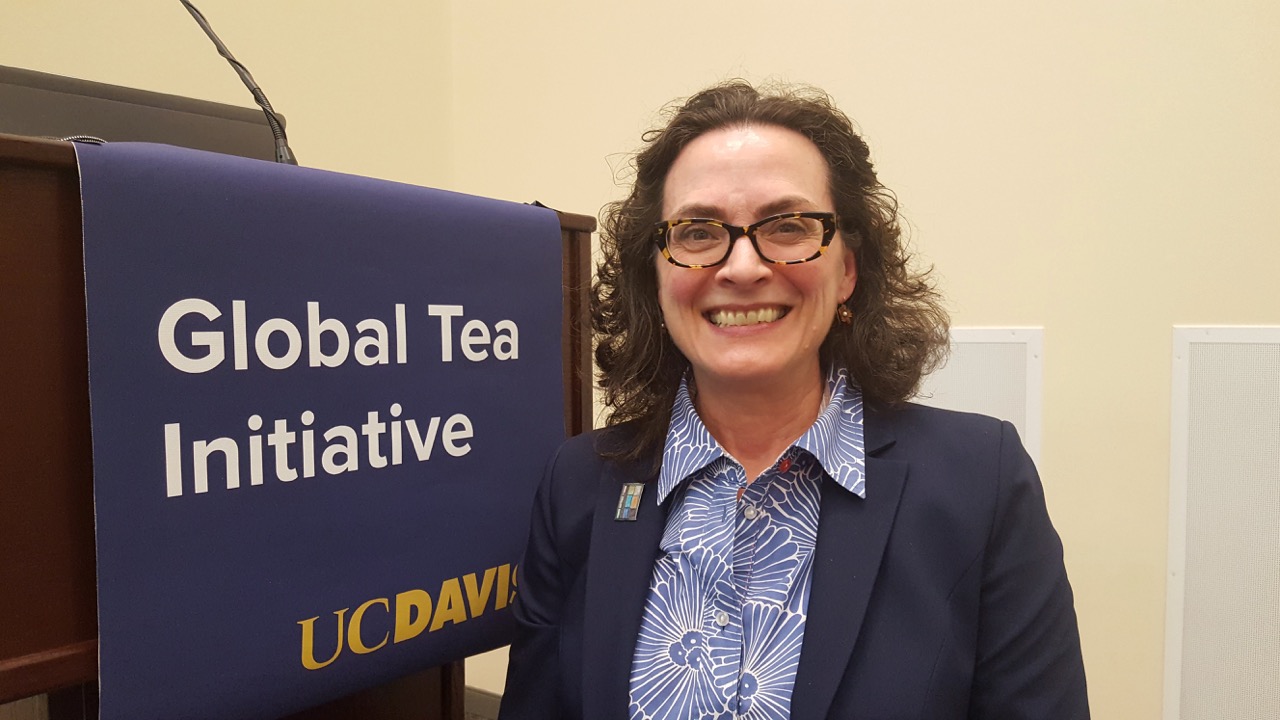
Katharine Burnett is a professor of Chinese Art History and Asian Art History at UC Davis. She spoke with California Ag Today recently about the Global Tea Initiative; a group focused on the culture and science of Tea through research outreach and teaching.

Katharine Burnett Will Head Up Tea Initiative

“The role of the Institute will be to tell the story of tea and all its dimensions, it will be to encourage research and to encourage interdisciplinary and transdisciplinary research along with teaching,” she said.

The Global Tea Initiative wants to develop a curriculum for undergrads and grads. They plan on developing international partnerships as a research institution.

“We want to be the … institution that can help the researcher, scholar, industry member, and community member to be able to access evidence-based knowledge about tea and to help the consumer and industry better understand what it is and what it can do for us,” Burnett said.

The Global Tea Initiative is the first of its kind.

“Other institutions study their national product or their local product either from the perspective of science or from culture, but they don’t bring science and culture together and they do not study from a global perspective,” Burnett explained.

California does not have very much tea production. UC Davis hopes to be a neutral site that can be trusted by the industry, farmers, and scholars.

2018-05-02T16:35:52-07:00May 2nd, 2018|

To Feed the Nation, Farmers Need Water

California Water Alliance is Good for All

By Patrick Cavanaugh, Editor

Founded in 2009, the California Water Alliance is the leading educational voice and authority on California water. The Alliance is a 501c4 nonprofit, nonpartisan organization that advocates for the water needs of California families, cities, businesses, farms, and the environment. The California Water Alliance is working to assist the farming community in multiple ways. Being transparent is at the forefront.

William Bourdeau

William Bourdeau is executive VP of Harris Farms and a board member of the Alliance. The alliance is telling the truth and being transparent, and that is very important, he said.

Bourdeau explained that California farmers, need water to feed the nation, and it is important to take an interest in the agricultural industry.

“The farmers in the San Joaquin Valley are the most regulated, the most skilled, and the hardest working people I’ve ever met in my life,” he said. “Water and food are critical to any nation, and it’s not only important so we can provide the food for our children, but it’s important for national security reasons.”

“And this is not a California-centric issue. We grow food that people eat all across the country, and so everybody needs to take an interest in this and understand that it’s important that we have a vibrant agricultural industry because, without it, we will become vulnerable,” Bourdeau said.

The understanding of what factors are associated with farming in California is important for the general public to be educated. Anyone that is consuming safe, affordable, nutritious food needs to better understand where that food comes from and what effort is required to produce it.

“This isn’t easy. There are many, many factors that increase the challenge and risk associated with growing food. It’s capital intensive. It requires water. There are many, many opportunities to fail and we’re underappreciated and over-regulated,” Bourdeau said.

2018-04-25T16:45:32-07:00April 25th, 2018|

Jason Phillips Talks Water Issues

Jason Phillips on Groundwater Recharge, Water Bond, and Subsidence

Editor’s Note: Jason Phillips is the CEO of the Friant Water Authority, as well as a member of the Board of Directors with the San Joaquin Water Infrastructure Authority (SJWIA), which is behind the building of Temperance Flat Dam. Editor Patrick Cavanaugh sat down with Jason Phillips, and this interview reflects the topics discussed.

Cavanaugh: The California Water Commission rejected all of the storage proposals for Prop 1 money due to all applicants not showing enough in the public benefit ratio. They have all appealed to the Commission, and their decision will be at the end of July. It’s extraordinary that the California Water Commission does not see groundwater recharge as a public benefit.

Phillips: The law was written in such a way that groundwater recharge, which is what we desperately need, is not considered a public benefit. But I must say that the SJWIA team putting together the application did a great job of using water out of Temperance for multiple benefits, including salmon and keeping water in the valley for groundwater recharge, and I hope the Water Commission can see that.

Cavanaugh: The Commission requires a 1:1 ratio, meaning for every $1 spent on the project, it must benefit the public by $1. Temperance Flat Dam was shown that for each $1 spent, it would give back $3.

Phillips: That’s right, and that’s what is necessary. Anybody who looks into what salmon requires surviving—well, it’s cold water. So the ability to generate more cold water in the upper San Joaquin River is nearly impossible. So if you can get a new reservoir over 600 feet high and have a cold water pool, that would provide a benefit. And that’s what the consultant looked at. The commission in their initial analysis assigned zero benefits to salmon, so that’s why we got such a low score.

But if you look at alternatives to trying to provide that salmon benefit in the river, there aren’t a lot of other options, which is why it’s such a significant benefit for Temperance. And again, it’s not sending the water out of the valley by sending it to the San Joaquin River and recirculating it back to growers and cities … so that we can get the groundwater recharge.

Cavanaugh: Of course, Temperance Flat Dam will triple the current storage of Millerton Lake, and a significant benefit will be groundwater storage?

Phillips: It would almost exclusively help groundwater storage because the surface supplies that are generated in Temperance would be used to supplement what’s being pumped, so people can put that water in groundwater recharge basins or they’re able to use the water and not have their groundwater pumps running. That is the absolute best form of recharging, is somewhat able to shut their groundwater pump off, have a delivery of surface water instead of that, and let the natural recharge take place.

Cavanaugh: Let’s talk about the new $8.9 billion water bond that will be on the November 2018 ballot and written by Jerry Merel, a former deputy director of the California Department of Water Resources and a longtime water-project advocate.

Phillips: About 18 months, Jerry had a conversation with me about what would the San Joaquin Valley need in a water bond to help get it out of the problem that … it’s in with groundwater overdraft? And recognizing that Prop 1 was the state’s path for Temperance Flat and that there’s a different path for the tunnels, north of the Delta. So those two are not part of this November 2018 bond.

And I told Dr. Merel at the time that we needed to fix our canal system. We have to be able to move water when it’s available to the growers, into the cities, and never miss a drop of available surface water. And to do that, we have to fix the Friant–Kern canal and the Madera canal. We have to expand the conveyance between the existing canals. And he thought that was a great idea. It’s something that should have broad statewide support. It has support from conservation groups up and down the valley.

Cavanaugh: Is this specifically for canal infrastructure repair?

Phillips: It is specifically for infrastructure for conveyance projects that would help recharge the groundwater aquifer.

Cavanaugh: The $9 Billion has a lot of water for all regions of state?

Phillips: it’s broader than just infrastructure. It targets the different regions of the state for what they need most. Recycling and desalination are huge for the southern California coastal community. So it targets cost sharing money there. If you go to northern California, there are things that Sacramento rice growers really need to support their water needs. In the central valley, it’s more water infrastructure for conveyance that can complement new storage and water conveyance in the Delta. It also includes a lot of money to help the groundwater sustainability agencies fund their plans that are required under the groundwater law.

Water in Friant-Kern Canal

Water in Friant-Kern Canal

Cavanaugh: Prop 1 was $2.7 billion, and this one is nearly $9 billion.

Phillips: That is… it is real money. And I think what California will realize is that there’s a real need for that. And when you look at the size of California, and it’s projected that the bond money will be used as far south as San Diego and the Salton Sea and as far north for repairs at Oroville.

When you look at the scope of the state of California … you see that the need is much bigger than that, when it comes to the state’s water infrastructure.

And regarding the $2.7 for storage—on top of that, the projects will require substantial private investment. And we are all looking at that, and I think there’s a lot of interest. There’s still a need for more storage to the extent that even the water agencies themselves and the growers that are part of those agencies are willing to fund. And we’re still looking at whether the state or federal governments will help cost share it.

Cavanaugh: if the California Water Commission never funds Temperance Flat, is it possible to get it privately funded?

Phillips: Friant Water Authority and other water agencies in the valley are actively and aggressively looking at that right now, doing our feasibility studies to look at whether privately financing the reservoir would make sense. I think it probably will, but it’s a very complicated analysis that we have to do. So by the end of the summer, we’ll hear from the Water Commission, and we should know more about the feasibility of private financing will be available.

Cavanaugh: Regarding the Jerry Merel water bond, where can people go to get more information?

Phillips: People can go to waterbond.org. You can see whether you want to look at it in one page or whether you want to look at the actual text of the bond. It’s straightforward on that website.

Cavanaugh: From where would the investment for the new water bond come?

Phillips: It will all be state dollars and depending on the different categories of where the funding goes. Some of it is for cost-shared work, in the San Joaquin Valley on infrastructure, where it would 100 percent bond funded. No reimbursement required and the money would come straight to the Friant Water Authority for immediate use. We’ve already worked with Department of Water Resources to make sure that, that when the bond passes, we could start submitting requests for some of that funding immediately to begin working on the canal, as early as November 2018.

Cavanaugh: How bad is the subsidence along the Friant Kern Canal?

Phillips: It’s a big problem, and it’s growing. The worst part of it is near the middle of the 152-mile canal, where it has subsided three feet and continues to subside. That subsidence is since 2015. The capacity of the canal has been reduced by about 60%, due to subsidence.

To pass the same amount of flow through that section, the elevation of the water in the canal is very near the top of the canal. And five bridges are impacted by that section where the water comes right up to the bridge, and we’re only at 40 percent of the design capacity there.

2018-04-20T20:49:34-07:00April 19th, 2018|

Tea Initiative Becoming Reality At UC Davis

Katharine Burnett Pursuing All Things Tea at UC Davis

By Laurie Greene, Founding Editor

Katharine Burnett wears many academic hats at UC Davis: associate professor and co-chair of the Department of Art and Art History; director, East Asian Studies Program; and founding faculty director, Global Tea Initiative for the Study of Tea Culture and Science. In this last endeavor, Burnett is spearheading UC Davis’s global, intellectual and cultural exploration of tea, including hosting its annual tea symposium and researching the possibility of growing tea here in California.

“We started in 2012 as an idea and a research cluster called ‘All Things Tea,’ ” Burnett said. “After a couple years of working and pushing forward with support from the community, we broached the topic of an initiative to the Ralph Hexter, UC Davis provost and executive vice chancellor. The Provost gave us his blessing and said, ‘Make it blossom.’”

“And, so our initiative was born,” Burnett explained. “The recent 2018 Global Tea Initiative Symposium, the program’s third symposium, commemorates our third year of being an initiative. We are gradually transitioning from an initiative into an actual institute.”

Burnett foresees the institute’s role as, “to tell the story of tea and all its dimensions. It will encourage tea research in any discipline, any field, any approach, including both interdisciplinary and transdisciplinary research and teaching. We want to develop a curriculum for our undergraduates and graduate students and also develop international partnerships so that we can conduct faculty and student exchanges.”

To hear Katharine Burnett tell the story of the Tea Initiative at UC Davis click here: goo.gl/bf7svf

2018-04-18T17:03:35-07:00April 18th, 2018|
Go to Top