Associations, Organizations, Educational and Research Institutions
Cover Crops Research

Cover Crops Increase Iron Availability

By Jessica Theisman, Associate Editor

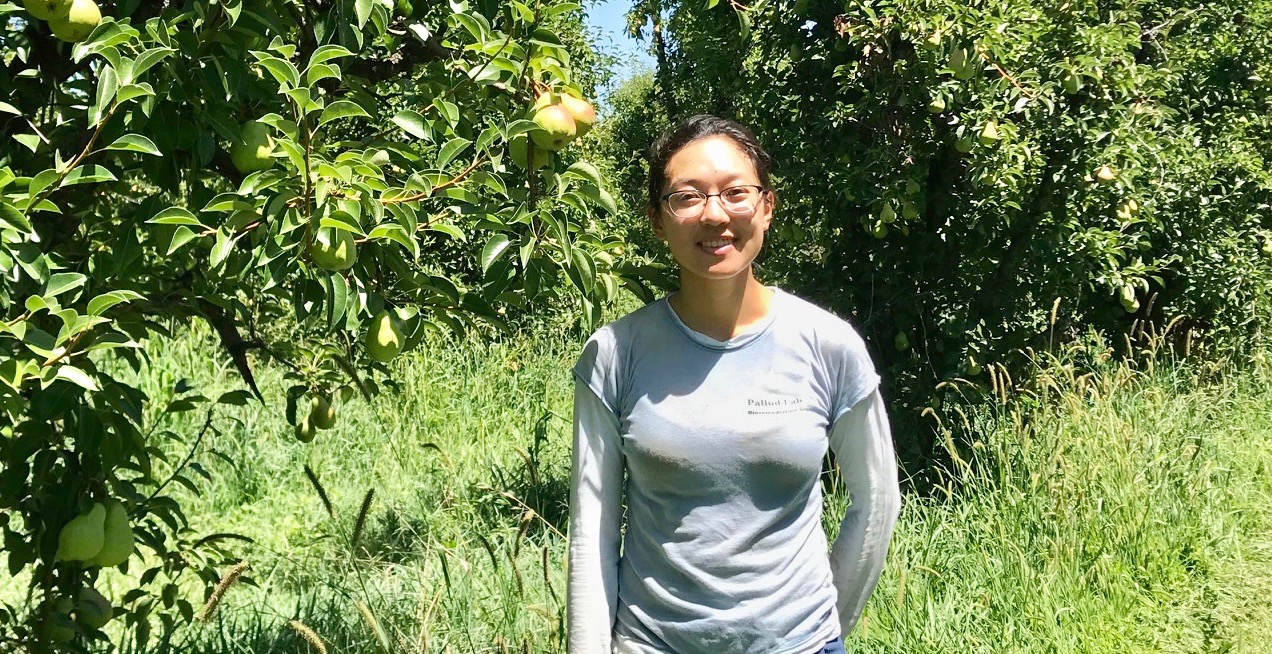
How can cover crops be a benefit to pear orchards? Juliana Wu was in the horticulture and Agronomy Graduate Program at UC Davis Study studying the benefits of cover crops.

“You’re looking at how the cover crop can benefit the pear roots and also the pear nutrition potentially as well as soil health,” said Wu.Cover crops as well as legumes which can fix nitrogen, will help in increasing nutrient uptake in crops.” 

Cover Crops in Pears Can Help with Nutrient Uptake

“I think the unique piece that I am adding is that cover crops such as legumes can acidify the soil which could potentially change nutrient availability,” said Wu. This is beneficial particularly in Lake County where their soils tend to have a lot of calcium carbonates and are more alkaline. There is low iron availability that can lead to chlorosis. “We are hoping to see that the cover crops can increase iron availability either through releasing chelators or through decreasing pH,” she said.

Wu’s main goal is to prove how cover crops such as legumes can have a benefit to pear orchards rather than compete with them for nutrients.

For more information on cover crops click here.
2019-08-01T09:58:58-07:00August 1st, 2019|

Field Bindweed is A Struggle to Control

Field Bindweed Difficult to Manage

By Jessica Theisman, Associate Editor

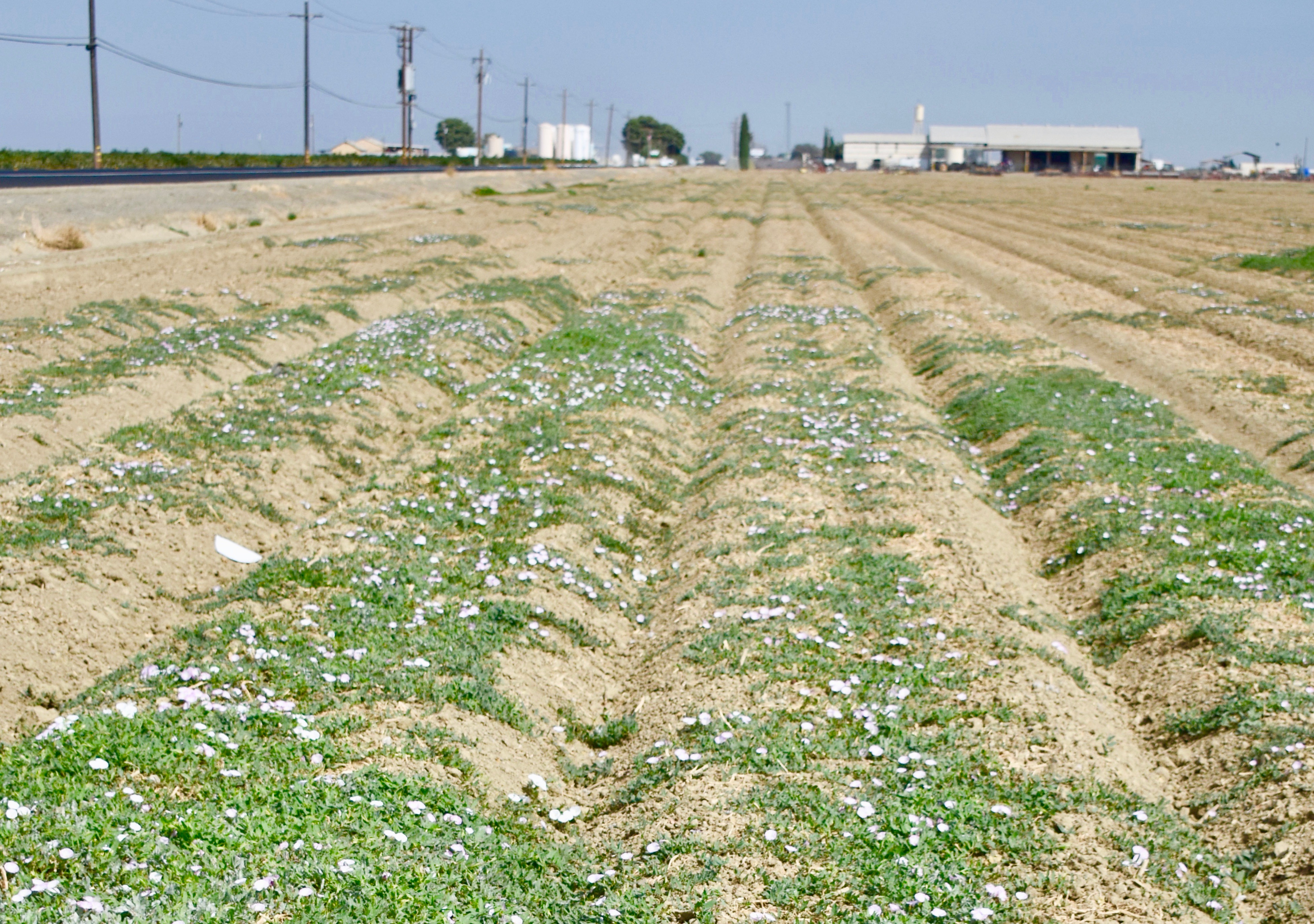
Field Bindweed is a struggle in the summer months. Scott Stoddard, UCANR Cooperative Extension Farm Advisor, Merced County, discussed with California Ag Today how to manage the weed during the summer in annual crops.

“Field Bindweed is predominantly a summer weed, so we are trying to manage it more in our summer annual crops such as cotton, corn, melons, and tomatoes,” Stoddard said.

This weed has been documented back 100 years but only recently has become more of a problem for farmers.

“It did not seem to be as universally impacting people as much as it does now,” Stoddard said.

Farmers are asking themselves what they are doing irrigation-wise that impacts the weeds.

“Does drip irrigation favor this weed? Does conservation tillage favor this weed? There are all kinds of unknowns,” Stoddard explained.

Stacking herbicides can help and control the Field Bindweed.

“Herbicides in the annual crop systems are marginal and you have to stack them. You have to combine the Roundup with something like a Treflan and then combine that maybe with some applications of other herbicides,” Stoddard said.

Even with stacking the herbicides, they are still marginal. On the herbicide angle, this is one of the things that makes weeds so challenging.

2021-05-12T11:01:46-07:00July 26th, 2019|

Abnormal Weather, Temperatures, and Pests

A Year of Unusual Weather Affects Vegetable Crops

By Mikenzi Meyers, Associate Editor

A year filled with abnormal weather is starting to show its effects on vegetable crops. Tom Turini of the University of California Cooperative Extension Fresno County, who is a plant commodity specialist, shared some of the early seasonal problems he has witnessed.

“We had unusual weather this year—a very cool, late spring—and with the rains we’ve had, we expected to see some issues that are unusual. We just didn’t see the incidence of those problems that we would have expected,” Turini said.

Turini added that levels of beet curly top are relatively low and tomato spotted wilt is densely populated in some areas. He also noted that the early appearance of the consperse stink bug seems to be having a measurable impact on crops, specifically on the west side of Fresno County.

2021-05-12T11:01:47-07:00July 25th, 2019|

Annual Alfalfa and Forage Field Day Sept. 19

Mark Your Calendars for the Annual Alfalfa and Forage Field Day

By Mikenzi Meyers, Contributing Editor

The Annual Alfalfa and Forage Field Day is fast approaching, and it’s one you won’t want to miss! The field day will be held on Thursday, September 19th at the UC Kearney Agricultural Research and Extension Center, and cover a variety of topics from forages to crops.

Nicholas Clark, certified Crop and Farm Advisor in Agronomy and Nutrient Management for the University of California Cooperative Extension (Kings, Tulare and Fresno), is eager to spread the word and increase attendance for what is sure to be an educational day for all attendees.

“We try to make it a very comprehensive program in terms of covering the bases of different forages that are popular or emerging in popularity in the southern portion of the San Joaquin Valley,” Clark explained.

Although alfalfa and other forages are on the forefront of the event, Clark added that management practices, silage crops, and possibly also sugar beets are up for discussion.

Make sure to mark your calendars for the Annual Alfalfa and Forage Field Day on Thursday, September 19th at the UC Kearney Agricultural Research and Extension Center.

2019-07-23T16:59:43-07:00July 23rd, 2019|

Activist Groups Promote Fear on Consumer Food Choices

Activists Driving Consumers to Organic Food Only—Beyond Consumer Affordability

By Safe Fruits and Veggies

Despite recent and repeated calls by scientists and nutritionists to increase efforts to improve consumption, activist groups have created and promoted new webpages and infographics designed to raise fears among consumers about the safety of the more affordable and accessible fruits and vegetables.

These groups continue to ignore peer-reviewed research, which has shown these tactics don’t just negatively impact consumers’ purchasing decisions regarding conventionally grown produce—consumers’ reluctance also includes purchasing of organic produce as well. In other words, the work of these activists isn’t meeting their goal of driving consumers toward organics and maybe driving them away from produce altogether. How crazy is this?

Let’s review just some of the study findings, which have been released during the time these groups chose to create and promote new fear-based content:

“Prescriptions” for healthy foods could save more than $100 billion in healthcare costs. The healthy foods included fruits and veggies plus seafood, whole grains, and plant oils. The study concluded: “These new findings support the concept of ‘Food is Medicine.’”

Eating and drinking better, including increasing consumption of fruits and veggies, could prevent one in five deaths around the world. The study concluded: “Our findings show that suboptimal diet is responsible for more deaths than any other risks globally, including tobacco smoking, highlighting the urgent need for improving human diet across nations.”

Low fruit and veggie consumption resulted in an estimated three million deaths from heart disease or stroke. “Our findings indicate the need for population-based efforts to increase fruit and vegetable consumption throughout the world.” Click here to continue reading and to “like” and share this blog post.

2021-05-12T11:05:02-07:00July 19th, 2019|

UC Davis Offering Beginner Beekeeping Classes

Do You Want to Become a Beekeeper or Learn More About Beekeeping?

News Release

The California Master Beekeeper Program (CAMBP), directed by Extension apiculturist Elina Lastro Niño of the UC Davis Department of Entomology and Nematology, is hosting two short beekeeping classes in early August: one on “Planning Ahead for Your First Hives” and the other, “Working Your Colonies.”

Each will take place from 9 a.m. to 4 p.m. in the Harry H. Laidlaw Jr. Honey Bee Research Facility on Bee Biology Road, west of the central campus. The deadline to register is Thursday, Aug. 1.

“These courses are foundational to beekeeping husband excellence,” said Wendy Mather, program manager. “They are great for folks who are thinking about getting bees next season, as well as those who currently have bees and want to ensure they’re doing whatever they can to ensure the success of their hives.”

The classes are not required to become a California Master Beekeeper, but are highly recommended, as “they will help folks prepare to become a science-based beekeeping ambassador,” Mather said. Instructors are Elina Niño and CAMPB educational supervisor Bernardo Niño, a staff research assistant in the Niño lab.

Planning Ahead for Your First Hives
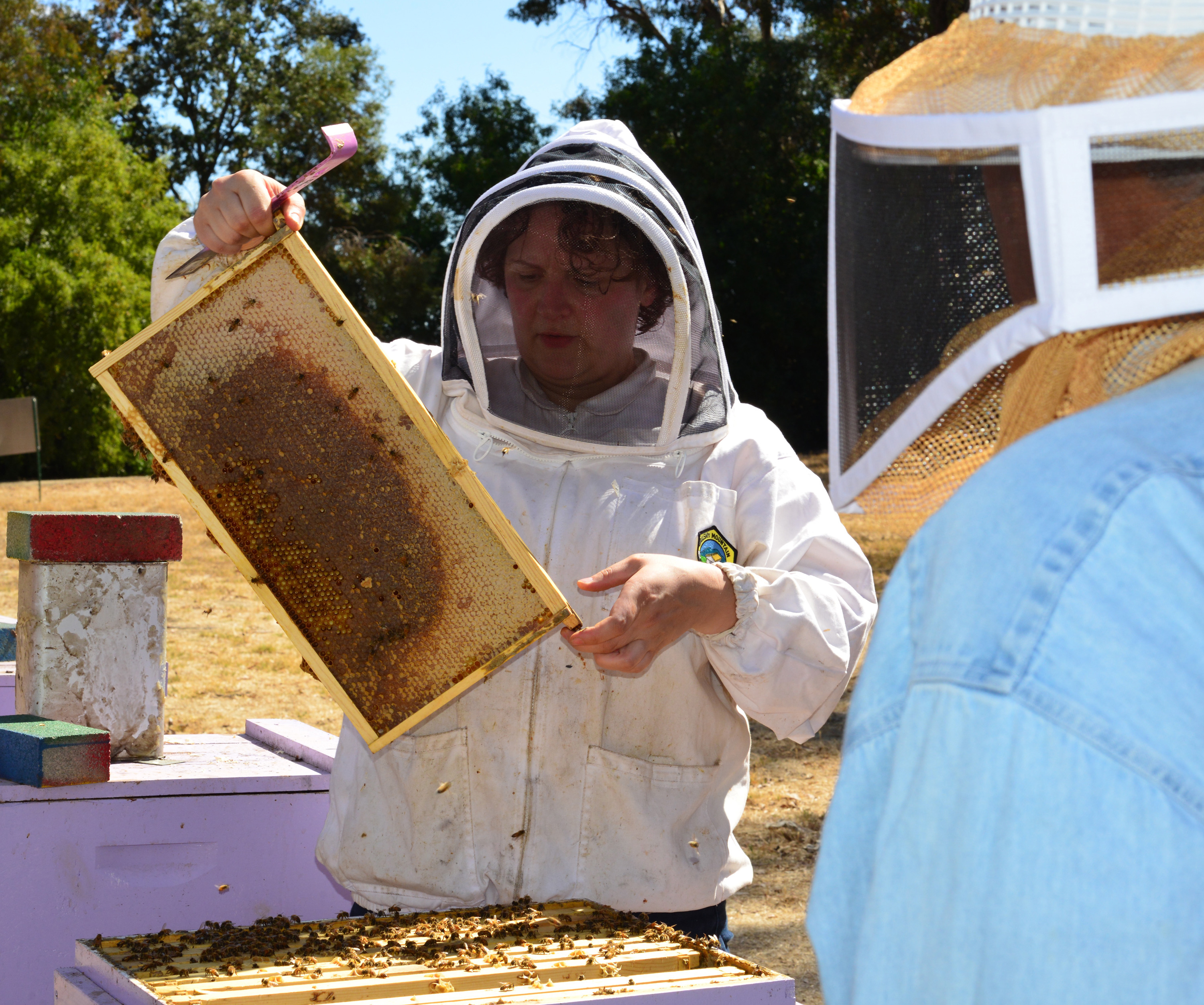
“Planning Ahead for Your First Hives” will take place Saturday, Aug. 3, and will include both lectures and hands-on activities. Participants will learn what’s necessary to get the colony started and keep it healthy and thriving. They will learn about bee biology, beekeeping equipment, how to install honey bee packages, how to monitor their colonies (that includes inspecting and monitoring for varroa mites) and other challenges with maintaining a healthy colony.

The course is limited to 25 participants. The $105 registration fee covers the cost of course materials (including a hive tool), lunch, and refreshments. Participants can bring their bee suit or veil if they have one, or protective gear can be provided. For more information or to register, see https://registration.ucdavis.edu/Item/Details/572.

 Working Your Colonies
“Working Your Colonies” will take place Sunday, Aug. 4, and will include both lectures and hands-on activities. Participants will learn what is necessary to maintain a healthy colony. Lectures will cover advanced honey bee biology, honey bee integrated pest management, and products of the hive. Participants also will learn about queen wrangling, honey extraction, splitting/combined colonies, and monitoring for varroa mites.

The course is limited to 25 participants per session. The $175 registration fee covers the cost of course materials, lunch, and refreshments. For more information or to register, see https://registration.ucdavis.edu/Item/Details/559.

Participants can bring their bee suit or veil if they have one, or protective gear can be provided. All participants are to wear closed-toed and closed-heel shoes, long pants and a long-sleeved shirt.

The California Master Beekeeping Program uses science-based information to educate stewards and ambassadors for honey bees and beekeeping. For more information, contact Mather at wmather@ucdavis.edu.

2019-07-15T14:19:28-07:00July 15th, 2019|

Four Students Selected to Represent Real California Milk in Asia, Mexico

Student Ambassadors Share California Dairy Message with International Audiences 

News Release

The California Milk Advisory Board (CMAB) has selected four students to serve as interns in the second year of the international dairy leadership program. Jessica Brown, Stefani Christieson, KayCee Hartwig-Dittman and Makayla Toste will serve as dairy representatives, working with marketing teams representing CMAB during the summer in Mexico, South Korea and Taiwan.

The interns, selected from students enrolled in agriculture-related programs at colleges and universities throughout the state, were chosen based on academic achievement, connection to the dairy industry, and a willingness to travel abroad and learn more about international dairy sales and marketing as well as a plan to work in the California dairy industry in the future.dairy cattle

Over the six-week period, each intern will spend time with in-country CMAB marketing organizations—Brown in Taiwan, Christieson and Hartwig-Dittman in South Korea and Toste in Mexico—to gain a better understanding of these markets, consumer buying habits, and promotional efforts on behalf of California’s dairy industry.

Brown is currently enrolled at Fresno State, majoring in agriculture business. She was raised on her family’s vineyard in Tracy and has always had a passion for agriculture. Her desire to learn about agriculture outside of the U.S. has provided her with opportunities to study abroad, most recently in Spain. Because of her love of travel and learning about other cultures, Jessica is focusing on international marketing at college, with plans to work in this field of study upon graduation in 2020. Brown is a member of the agriculture marketing team at Fresno State and will be working with Steven Chu and Associates in Taipei, Taiwan.

Christieson is a recent graduate of the UC Davis, where she received her B.S. in Political Science and minors in economics and French. She will be attending graduate school in the fall at Sciences Po in Paris, France, for a year and then will complete the program at Fudan University in Shanghai, China in year two. Christieson plans to complete her master’s degree in international economic policy and pursue a career as agriculture economic policy advisor for an agriculture export market organization to help California farmers continue to expand into emerging and established markets overseas. Christieson will be working with Sohn’s Market Makers, Ltd. in S. Korea.

Hartwig-Dittman is currently enrolled at Fresno State, where she is majoring in dairy science and is employed at the dairy unit on campus. She has a culinary arts degree from Diablo Valley Community College and has experience working in the restaurant industry in California. Her love of travel and food has allowed her to travel outside of the U.S., where she has learned to use dairy products in new and creative ways with hopes to find innovative ways to introduce dairy to consumers around the world. Hartwig-Dittman will also be working with Sohn’s Market Makers, Ltd. in South Korea.

 Toste, a second-generation dairy farmer from Newman, received her B.S. degree in Animal Science with an emphasis in dairy science. During her last year at Fresno State, Toste served as the assistant herdsman for the Fresno State dairy unit, where she was responsible for the day-to-day operations of the dairy and an officer for the Fresno State Dairy Club. After the internship, she plans to work in the California dairy industry in promotion and marketing to help keep the industry viable for the next generation of farmers. Toste will serve as an intern with the team at Imalinx in Cuernavaca, Mexico.

“California accounts for more than 33 percent of all U.S. dairy exports so international trade is essential for our continued growth. Over the last decade, the CMAB has worked closely with partners in Asia and Mexico to develop markets for California dairy products. This program is focused on providing insight into international dairy marketing for future leaders like Jessica, Stefani, KayCee, and Makayla, who will work in the dairy business and one day serve on dairy industry boards and lead industry groups,” said Glenn Millar, Director of International Business Development for the CMAB.

The goal of the CMAB International Internship program is to provide agriculture/dairy college students an opportunity to learn about dairy foods and marketing in the international marketplace. The program looks to develop leaders who will serve on dairy industry boards and work in dairy foods production, processing, or sales/marketing.

2021-05-12T11:17:08-07:00July 12th, 2019|

Even Organic Production of Strawberries Not Sustainable

Data Shows Even Organic Production Uses Resources

By Jessica Theisman, Associate Editor

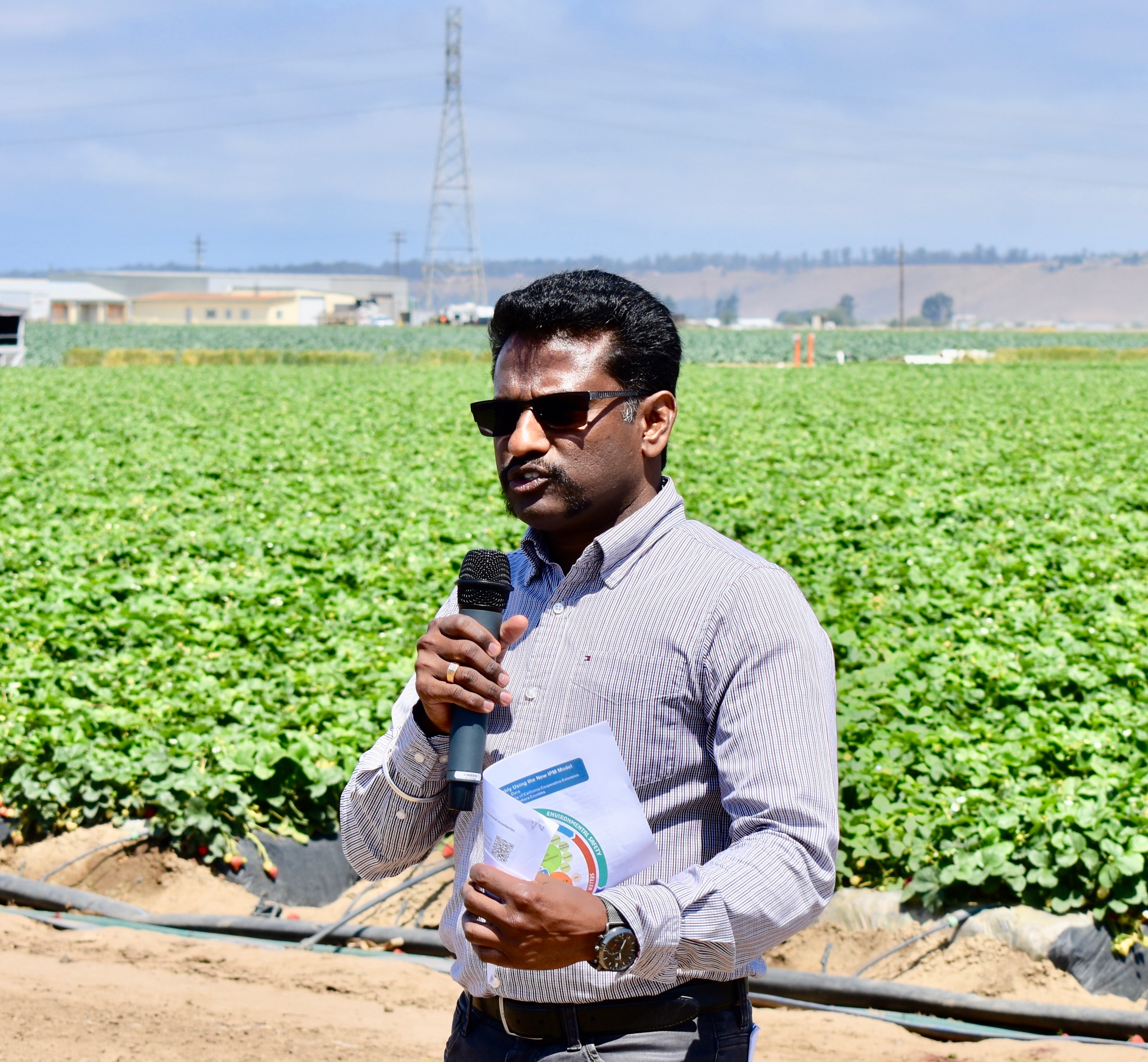
Is growing strawberries organically sustainable? That’s something that Surendra Dara is trying to find out. Dara is a UC Cooperative Extension Advisor in Entomology and Biologicals. He is based in San Luis Obispo County as well as Santa Barbara County. Dara met with California Ag Today recently and let us in on his research and some of his findings.

“I have not come across a mainstream grower that has told me that organic is sustainable,” Dara said.

After pulling in data and understanding the inputs, Dara is asking if there is anybody out there that has a different opinion.

“When we are talking about sustainability, we are looking only in terms of non-chemical being the sustainable, ecological practice,” he said.

There are such things as organic pesticides that harm natural enemies.

“Some of the organic ones can be as bad as some of the chemicals,” Dara said.

Data is showing that growing strawberries organically has not been sustainable economically. In terms of the carbon footprint and the bigger picture, “even organic production is not sustainable with the resources because certainly some resources are being used up,” Dara said.

2021-05-12T11:05:02-07:00July 10th, 2019|

2019 Strawberry Harvest is Brisk

Labor Tight, But Incentive Programs Keep Berries Harvested

By Patrick Cavanaugh, Editor

The 2019 strawberry harvest is going strong, and field employees are busy picking at the height the ripeness. Carolyn O’Donnell, a communication director for the California Strawberry Commission based in Watsonville, said lots of hands are harvesting the berries.

Carolyn O'Donnell

Carolyn O’Donnell, communications director, California Strawberry Commission

“We need to harvest the berries when ready,” O’Donnell said. “We can’t leave the ripe berries on the plant a few extra days, and we can’t harvest them early and then ripen them in some other modified atmosphere. They have to be picked when they’re ready to go. So, timing is part of it, as well as just having an adequate supply.”

O’Donnell explained how growers are handling the tight labor supply.

“It’s been a challenge. The growers have been doing all kinds of different incentive programs. Definitely, wages have been raised, different benefits have been offered, but we do find that growers are still struggling to keep up with their harvest,” O’Donnell said.

And when those harvesters out there picking the strawberries, they want to make the money, and they are in fact running back and forth with their trays to refill them.

“We are definitely in a busy harvest season right now. And so with a quick harvest comes incentive pay. And harvest workers will be hustling a little bit more. There are lots of berries to pick. There is money to be made,” O’Donnell said.

2019-07-08T16:37:07-07:00July 8th, 2019|

Help Avoid Cardiovascular Death—Produce is Medicine

Study: Low Produce Consumption Results in Millions of Cardiovascular Deaths

News Release

Over the last two months, the findings of three major peer-reviewed studies have led the lead authors to the exact same conclusion:  We must increase our efforts to promote produce consumption for the benefit of public health.

The most recent study published in Science Daily found that one in seven cardiovascular deaths could be attributed to not eating enough fruit, while one in 12 of these deaths could be attributed to not eating enough vegetables. Put another way, low fruit and veggie consumption resulted in an estimated three million deaths from heart disease.produce

“Fruits and vegetables are a modifiable component of diet that can impact preventable deaths globally,” according to lead author Dr. Victoria Miller, Tufts University, Friedman School of Nutrition Science and Policy. “Our findings indicate the need for population-based efforts to increase fruit and vegetable consumption throughout the world.”

Another study recently published found that “prescriptions” for healthy foods could save more than $100 billion in healthcare costs.  The healthy foods included fruits and veggies plus seafood, whole grains and plant oils. And the third found that improving eating and drinking habits could prevent one in five deaths around the world.  “Eating too few fruits and vegetables and too much sodium accounted for half of all deaths and two-thirds of the years of disability attributable to diet,” according to this study.

While these findings about the nutritional benefits of produce are significant and dramatic, the three studies simply support decades of research which found that a plant-rich diet leads to better health and a longer life.

This is why the Alliance for Food and Farming (AFF) strongly advocates for consumer choice by working to remove misguided safety fears as a barrier to consumption.  Click here to continue reading or to “Like” or share this blog post.

2021-05-12T11:05:02-07:00July 2nd, 2019|
Go to Top