Boron Affects Rootstocks

Excess Boron Threatens Orchards

By Brian German, Associate Broadcaster

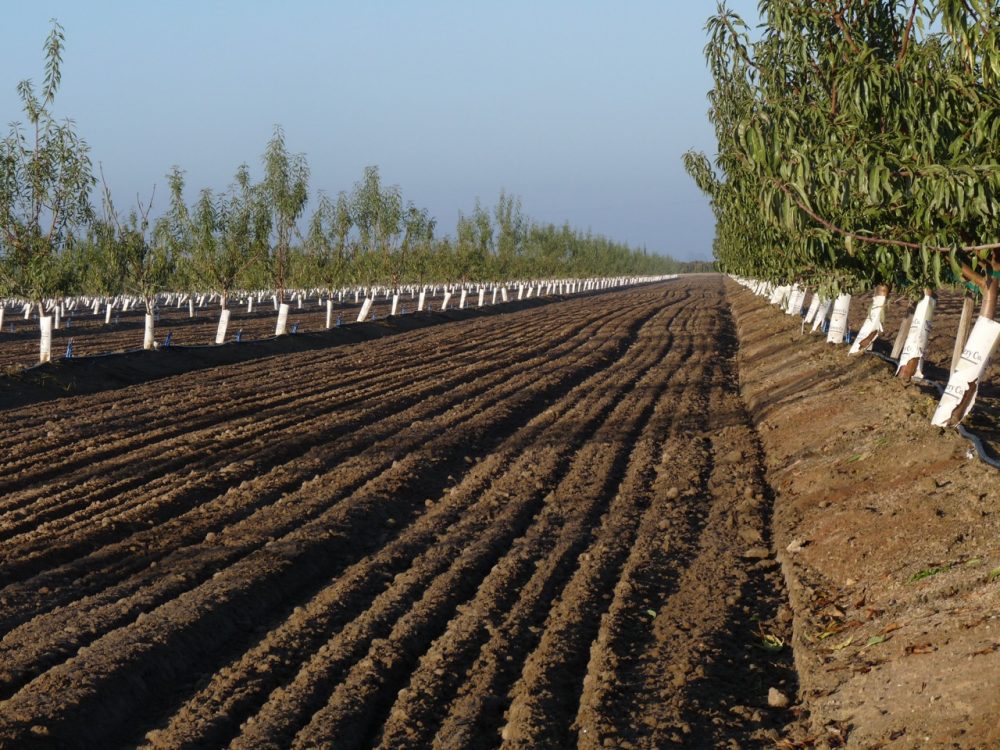
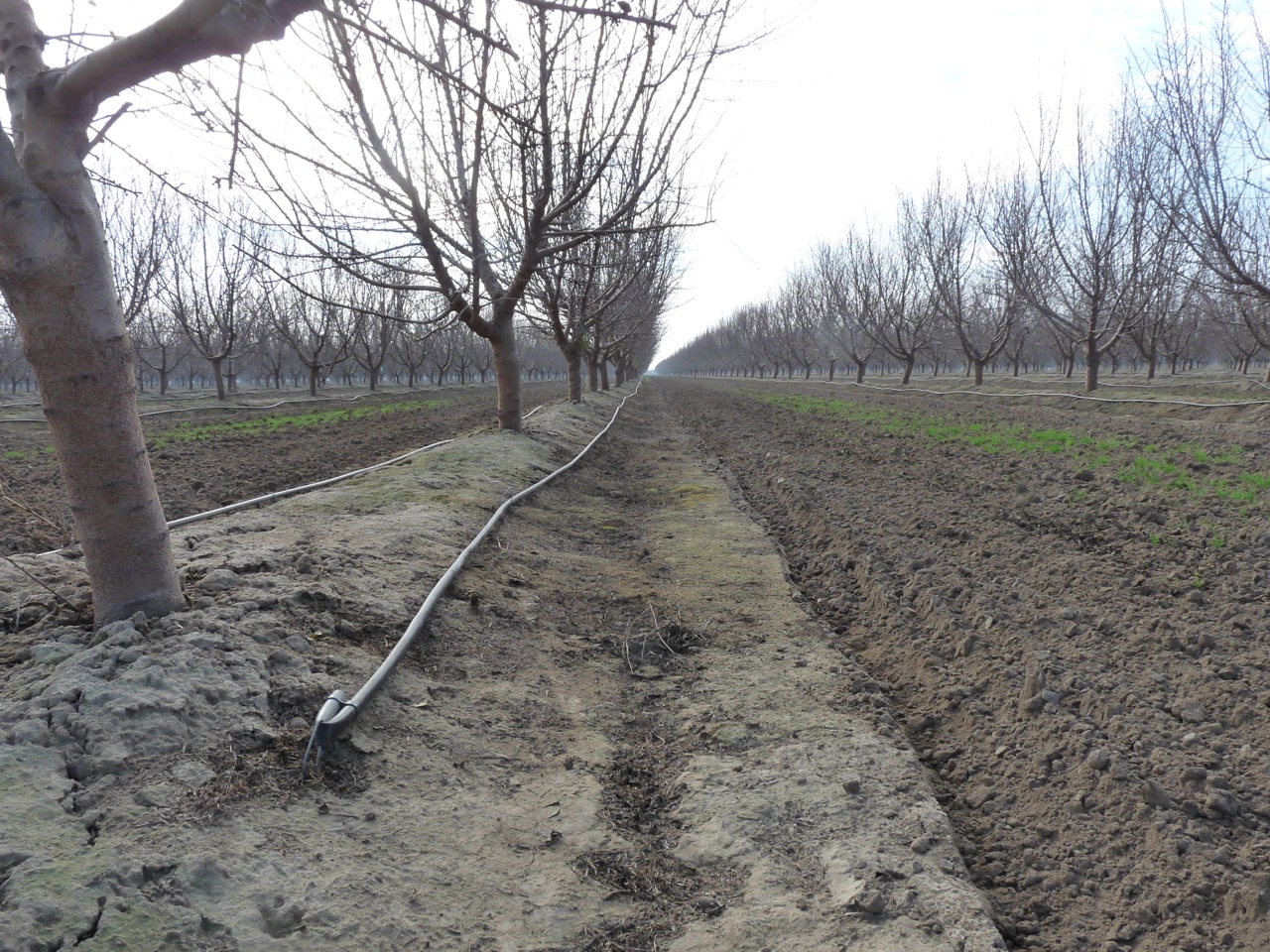
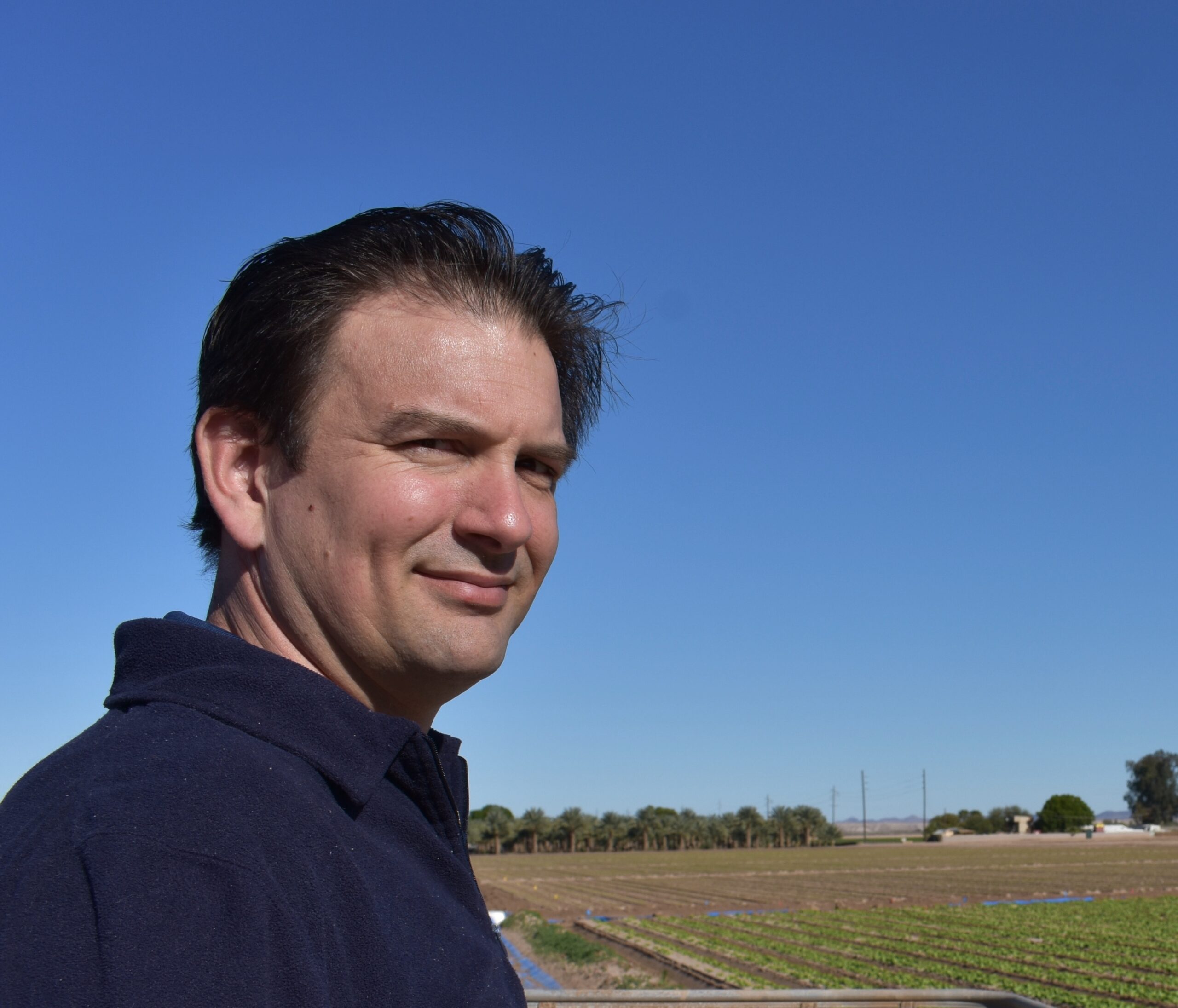
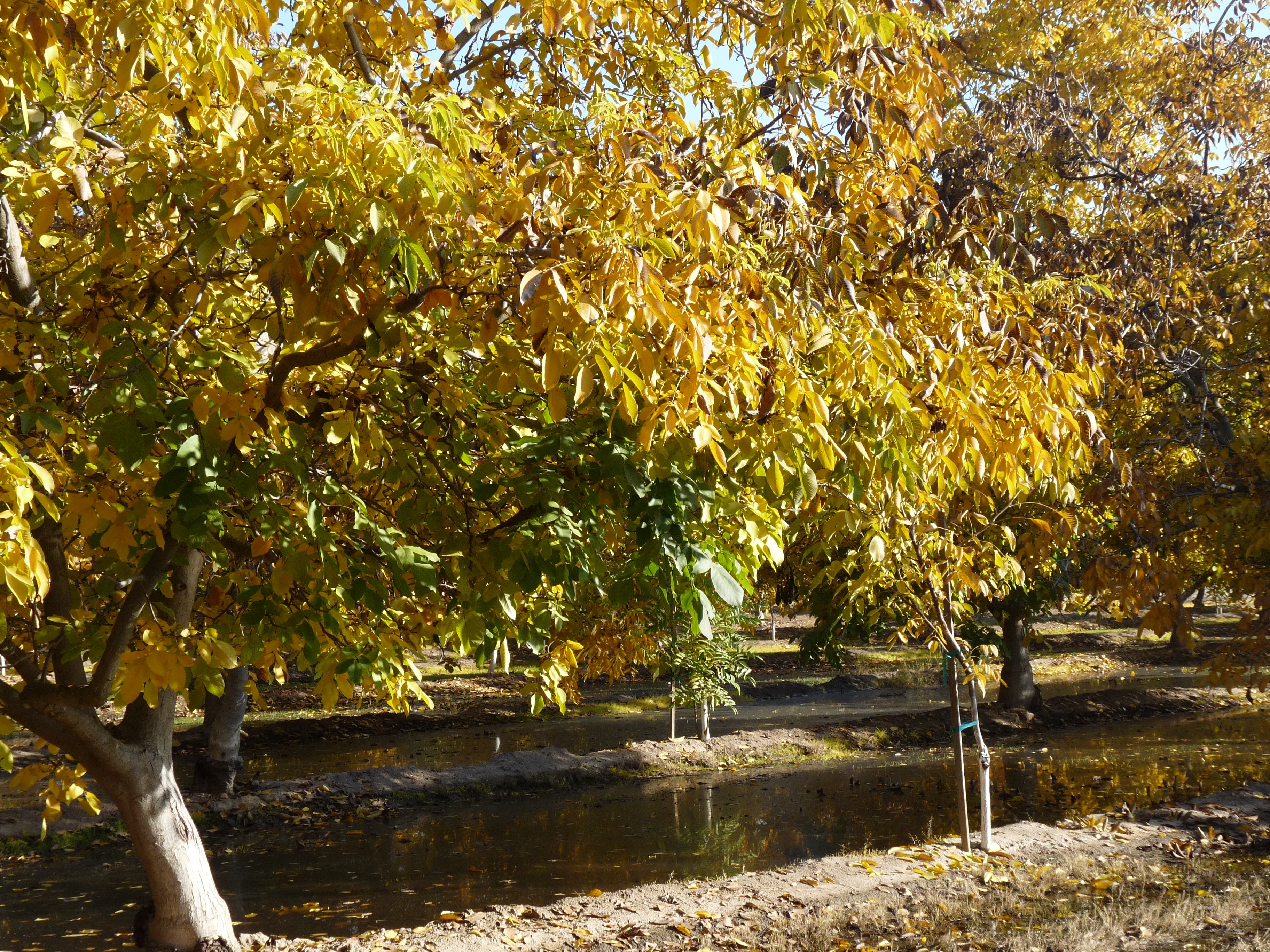
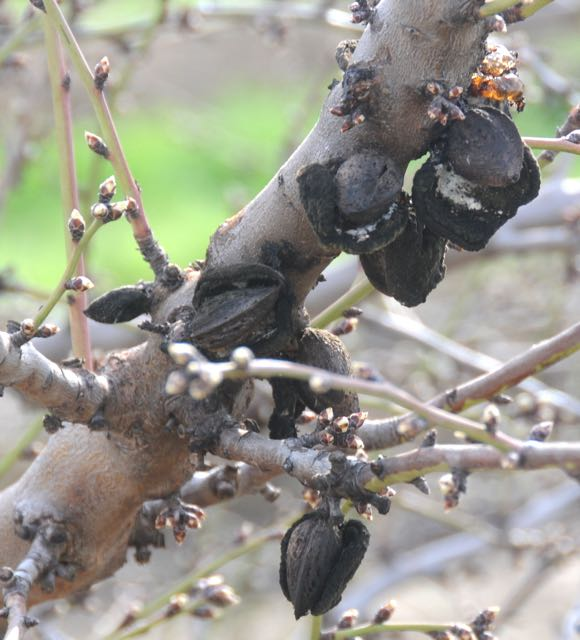
There has been some exciting research taking place examining the effects of high levels of boron on various types of rootstock. Katherine Pope is an Area Orchard Systems Advisor, covering a large area that includes Sacramento, Solano and Yolo Counties.  High concentrations of boron have been a big problem for some growers in the area.

“This is a bigger topic for Yolo County, and there’s a few areas on the west side of Fresno county and also areas in San Joaquin County … that have excessively high boron. There’s veins of boron that come out of the Coastal Range,” Pope said.

Katherine Pope, UC Cooperative Extension Farm Advisor, Yolo County warn growers of excess boron

Katherine Pope, UC Cooperative Extension Farm Advisor, Yolo County warn growers of excess boron

Pope’s work as a UC Cooperative Extension Farm Advisor has her involved in covering production research, education and assistance with almonds, prunes and walnuts.  Boron can cause a myriad of problems in orchards, making preparation before planting even more important.  “You would want to test your water and your soil before you plant. Because if you plant the wrong rootstock on high boron ground, boy, you’re going to feel it for the next 20 years,” Pope said.

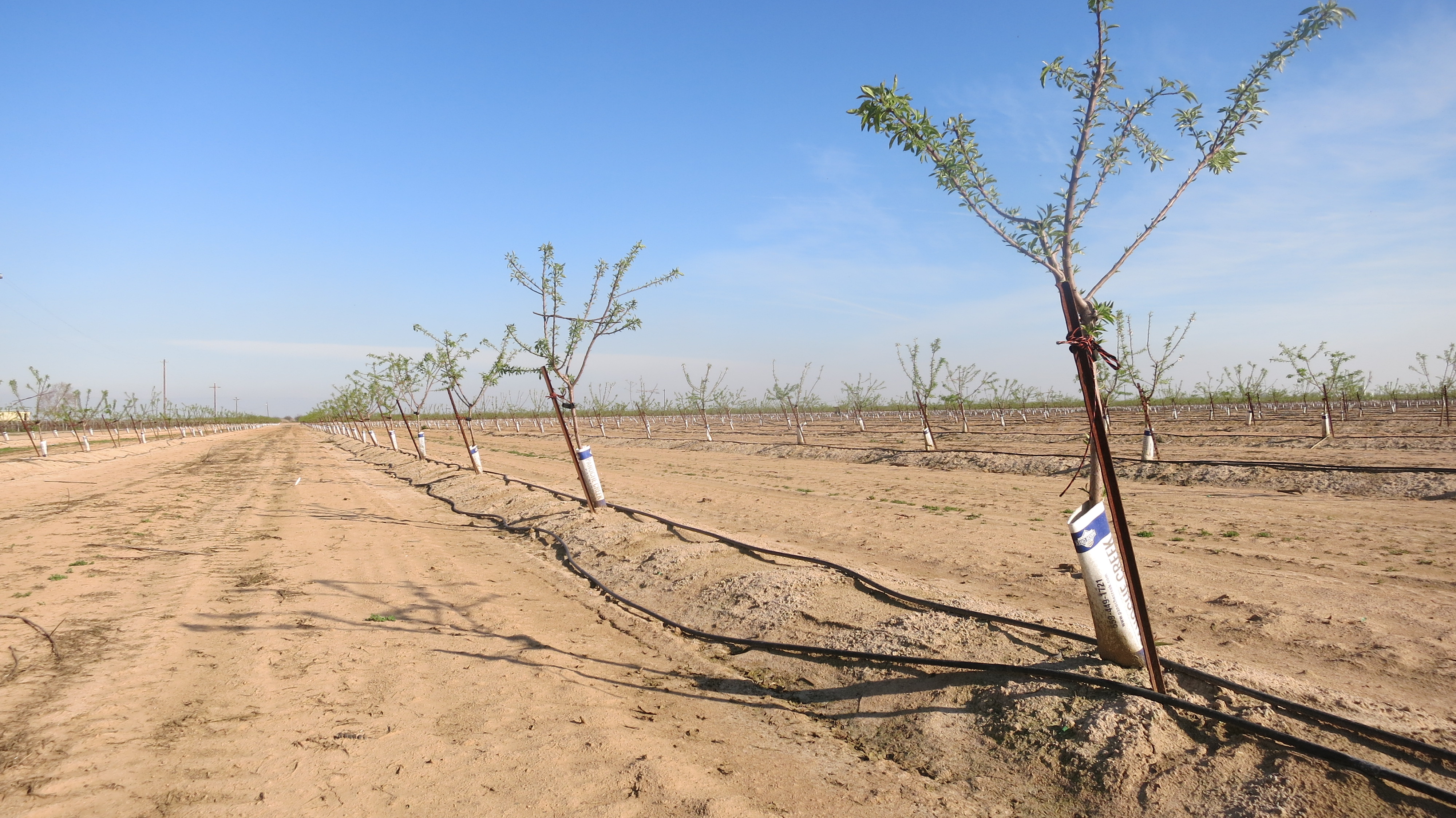
Some of the early findings of the project have shown there is not a steadfast rule regarding what rootstock variety fits what limitation.  “We have nine different rootstocks that we tried, of a lot of different origins. Peach-almond hybrids, some that have plum in them, or some that are just peach,” Pope said.  Other preliminary findings suggest that complex hybrids are more tolerant to high boron, sodium and chloride.

Some of the rootstocks that appear to be performing well under heavy boron conditions are both peach-almond hybrids.  “Both Titan FxA and Nickels performed really well last year. … That’s probably a mix of generally being vigorous trees, and so they’re higher-yielding no matter what, and the wider spacing we have them at,” Pope said.

The project has also shown that the rootstocks Lovell and Krymsk 86 continue to perform poorly under high boron conditions.  “Lovell – which is usually a fairly sizable, decently-yielding tree – and Krymsk have both had pretty low yields, about one-third of the yields of the highest yielding trees,” Pope said.  Researchers can tell that those rootstocks are letting a lot of boron up into the tree by looking at the boron numbers in the hull.  “Those two rootstocks do well in a lot of conditions but high boron is not one of them, according to the results we have.”

The trial is still fairly new, as the rootstocks were planted in 2011.  Last year was the first significant harvest.  Pope mentioned that if boron levels reach 0.5 parts per million, that’s  when it starts to become a concern.
2017-01-05T10:57:23-08:00January 5th, 2017|

Better Navel Orangeworm Spray Coverage

Navel Orangeworm Sprays Tough to Target

By Patrick Cavanaugh, Farm News Director

Naval orangeworm is the number one pest in almonds and pistachios, and there’s a lot of research going on to find ways to manage this pest. One important strategy is timely sprays, but Joel Siegel, a research entomologist with USDA Ag Research Service in Parlier, CA, said that it’s tough to get that spray on target.

Joel Siegel Navel Orangeworm Expert

Joel Siegel

“Spraying for naval orangeworm is learning to live with loss. Many years ago, my professor told me to assume that 90 percent of what you put out never goes where you want it to go. I didn’t know that he was being an optimist when he told me that,” he said.

To confirm this, Siegel set up a controlled experiment sponsored by DuPont.  “Using the best setup of spray rigs at two miles per hour, we’re basically getting 10 percent of what we calculated in the tank was actually getting on the nut,” he said.  “Then if you add the difficulty of saying, you want to get it in the suture on an early split almond, you’re probably getting about  two percent of what’s in your tank actually on that suture zone, so you’re dealing with a 98 percent loss.”

Siegel said the spray is getting in the tree, but not on the nut or the suture of the nut. “I’m talking about just getting on target. It’s getting on the leaves, it’s getting on the bark, it might be getting on the ground.”

Siegel noted that it’s actually better to spray at night, when the naval orange worm adults are flying. “That way, some of the drift can actually contact the adults. The other advantage of night spraying is that the humidity is higher, so you’re not getting that loss of having the droplets evaporate.”

2021-05-12T11:02:00-07:00December 29th, 2016|

Ag Industry Hopes USDA Leadership Will Come From California

Trump is Considering Abel Maldonado, Reports Say

By Patrick Cavanaugh, Farm News Director

The California agricultural industry is hoping that President-elect Donald Trump will pick a Department of Agriculture secretary from California. If not, perhaps he’ll consider a deputy secretary from the number one agricultural state.

Joel Nelsen

Joel Nelsen

And of course Trump’s selection could be decided any day now, so California Ag Today is monitoring closely, awaiting news of the announcement.

McClatchy Newspapers reported that Trump is considering nominating former California Lt. Gov. Abel Maldonado. The two were scheduled to meet Wednesday. Maldonado is the son of Mexican-American farmworkers.

Joel Nelsen president of the California Citrus Mutual in Exeter, CA, hopes that the Trump administration will think hard about selecting USDA Leadership from California.

“We obviously believe that there could be some positive activity here. We’re a little disappointed that not much noise has been made relative to the USDA secretary or the deputy secretary.  We champion the cause of individuals in the western side of the United States’ fresh fruit and vegetable industry to be part of that leadership team at USDA,” Nelsen said.

“Historically the secretary has come from a southern cotton or mid-western grain state,” Nelsen said.  “We’re suggesting that there should be a good fresh fruit and vegetable individual at the lead, or at a minimum there should be a fresh fruit and vegetable person at the number two spot.”

There is so much going on in the fresh fruits and vegetable industry, particularly with California growers.

“When you think about what’s going on in the trade arena, when you think about the invasive pests and diseases, when you think about nutrition and food security, it’s fresh fruits and vegetables that are sitting at the forefront of all that,” Nelsen said.

Somebody on the leadership team has to come from our perspective … from our fresh fruit and vegetable industry,” he said.

2016-12-28T18:02:39-08:00December 28th, 2016|

Understanding Purpose of CV-SALTS Program

CV-Salts Aims to Develop Salinity and Nitrate Management

By Brian German, Associate Broadcaster

The Central Valley Salinity Alternatives for Long-Term Sustainability, known simply as CV-SALTS, is a collaborative program to develop sustainable salinity and nitrate management planning for the Central Valley.

Stephanie Tillman is a Soil and Agricultural Scientist for one of the agencies consulting on the project: Land IQ.  The company is based in Sacramento and conducts science-based research in the agriculture industry.  “We have a group of spatial scientists, or what is known as remote sensing and GIS specialists as well,” Tillman said.

Stephanie Tillman, Soil and Agricultural Scientist, Land IQ, CV-Salts

Stephanie Tillman, Soil and Agricultural Scientist, Land IQ

Salinity problems can be very complex, especially when dealing with a large geographical area. CV-SALTS is a coalition of agriculture, city, industry and regulatory agencies working together to form a plan for managing salts and nutrients going forward.  “When there’s diverse interests at the table, the potential for success of the regulations is increased because we do things that way and everyone comes to some kind of consensus,” Tillman said.

Salinity and nitrate concentrations are happening with greater frequency and magnitude all over California.  As a response, the Central Valley Water Board, the State Water Board and other stakeholders began a joint effort to address those issues in 2006.  “One of the really interesting and good outcomes of the CV-SALTS process has been all the technical work that’s been done…so we know a lot more now than we did before about the ambient conditions and the projected conditions,” Tillman said.

Tillman has worked as a soil and agricultural specialist for 15 years in California and other western states.  She mentioned that they use remote sensing to gather their data, “which means we use imagery taken by satellites to help solve large-scale agricultural problems.”

The amount of data gathered throughout the process has also broadened the scope of the project from just salinity issues. “We also now know, through the Harter report and other studies, that we have a nitrate problem in the groundwater as well,” Tillman said.

One of the motivators behind getting the CV-SALTS program established was that, “in 2009, the state adopted the Recycled Water Policy, and when the state did that, it was required to write and adopt a salt and nutrient management plan. That includes salt, but it also includes other nutrients that impact groundwater quality,” Tillman said.

An unforeseen outcome of recycled water programs is the impact it has on water quality.  “If you want to recycle water, it necessarily means that the quality will go down, and so those are conflicting policies that have to be dealt with in the context of CV-SALTS,” Tillman said.

Another driver behind CV-SALTS is the outdated language within current basin plans. “When they were written, the problems that we have surrounding salt accumulation were not as well understood. Therefore, the regulations that we have…are not adequate to address those problems,” Tillman said.

In 2008, the Central Valley Salinity Coalition was formed to organize, facilitate and fund the efforts needed to fulfill the goals of the CV-SALTS program.  The CVSC is composed of many of the water quality coalitions throughout the Central Valley, along with public agencies, businesses, associations and other members. Collectively, the CVSC is working to advance the CV-SALTS effort by coordinating the meetings of the committees and managing various projects.

Most of the regulations that have come from the basin planning process have been drafted, but they are not yet final. The plans are projected to be adopted in June of 2018, leaving ample opportunity for formal and informal review, along with public comment throughout the next year. “Whenever the basin plans are opened up and changed, they are required to allow for public comment,” Tillman said.


2016-12-23T17:09:41-08:00December 23rd, 2016|

Capturing Flood Flows in Almonds, Other Crops

Sustainable Conservation working with experts to recharge below-ground aquifiers

By Patrick Cavanaugh, Farm News Director

The recent Almond Conference in Sacramento brought thousands of growers and other stakeholders of the almond industry together, and a big topic of the meeting was water use, which almond growers are doing a great job in conserving.

Daniel Mountjoy

Daniel Mountjoy

There’s also a lot of work focused on capturing flood flows due to heavy rains, and diverting it into almond orchards, with a goal of recharging the below-ground aquifer for use later when other surface water is not available. Daniel Mountjoy is with Sustainable Conservation, and he’s a director of resource stewardship.

Mountjoy is responsible for the management of three program areas: (1) Accelerating Restoration – through simplified permitting of small-scale restoration projects, (2) Rewarding Restoration – through payments for measurable outcomes and (3) Water for the Future – which demonstrates and incentivizes groundwater conservation and replenishment. “All our programs at Sustainable Conservation seek environmental solutions that make economic sense,” Mountjoy said.

“We’re focusing our effort on sandy soils where the infiltration rate is really fast. We haven’t had water to test this for the last couple of years, but in 2011, Don Cameron at Terranova Farms in Western Fresno County, captured 3000 acre-feet of water on 1000 acres of sandy farmland. He infiltrated on pistachios, grapes, and alfalfa fields and some fallow land during winter, as well as well into June and July on some of those crops.

Mountjoy said they’re working closely with the Almond Board to help secure more sites, especially the Sacramento Valley. “Because there’s more likelihood that we’re going to have more water supply there to test the concept so both UC Davis and Sustainable Conservation are out working with growers.

Researchers at UC Davis are also working on the crop health aspect in terms of how much excess water could be put on a crop, as well as focusing on how that crop could be managed once it’s flooded with water.


2016-12-22T17:17:32-08:00December 22nd, 2016|

Big Almond Crops Coming, Marketing Efforts Shift to Higher Gear

The Almond Board of California Has Eyes on European Consumers

By Joanne Lui, Associate Editor

The Almond Conference was held recently in Sacramento, and growers and pest control advisors heard lots of news from forward-thinking industry leaders. Stacey Humble is Vice President of Global Marketing and Communications for the Almond Board of California, which hosts the annual event. She told California Ag Today that extra big crops are coming.

Almond Board of California

Stacy Humble

“You know, we have a dramatic increase in production coming online – about 500 million pounds. So, in terms of marketing, we need to make sure that we are utilizing all the resources that we have to their maximum benefit and that we’re reflecting on lessons learned in synergies and opportunities that we can take from one market to the next,” Humble said.

The Almond Board is looking at how they can strengthen sales in new markets as well as existing markets.

“How we can do more in existing markets so that we’re balancing our investment portfolio?” Humble said. “We’re trying to do more quickly in some markets and establish ourselves for success in the long term in other markets.”

A good example of possible increasing sales is the big European market, such as Germany. They are the biggest importer of almonds, but consumers there do not eat them as a nutritious snack.

“The German consumer loves the flavor of almonds, loves almond products and is very familiar with it, but has the lowest top of mind awareness in any market that we work in when it comes to thinking of almonds as a snack,” Humble said. “That is a huge opportunity. It’s essentially a new market for us, within an established market where we have existing trade relationships, where the consumer is familiar with the product and seeks it out already but just does so as a bakery ingredient.”


2016-12-20T11:40:48-08:00December 20th, 2016|

Fine Tuning Almond Irrigation

New technology helps farmers use water to maximum effectiveness

By Patrick Cavanaugh, Farm News Director

At the recent big Almond Conference in Sacramento, there were a lot of discussions on water use in almonds. And while growers are doing a great job in conserving, there’s always ways to improve, according to Larry Schwankl, UC Cooperative Extension Irrigation Specialist Emeritus. He shared with California Ag Today the take-home points of his talk in front of several hundred growers.

larry_schwankl

Irrigation Specialist Larry Schwankl

“We have been researching, ‘How much do growers need to irrigate?’ We want to make sure that their irrigation system are effective and that they know how long to operate it and then ways of checking to make sure that they’re doing a good job and utilizing soil moisture sensors and devices,” Schwankl said.

Schwankl also suggested that growers use pressure bomb to accurately measure the pressure of water inside a leaf. When used, it’s possible to measure the approximate water status of plant tissues.

In using a pressure bomb, the stem of a leaf is placed in a sealed chamber, and pressurized gas is added to the chamber slowly. The device has been calibrated to indicate whether or not that leaf is stressed for water.

“We can predict how much water the tree’s going to need, and we can predict how much an irrigation system is going to put on, but there’s errors in all predictions,” Schwankl said.   “We need to go back and check and make sure that we’re staying on target. That’s where knowing the soil moisture and the plant water status really helps.”

2016-12-19T13:53:18-08:00December 19th, 2016|

Ciatti Co. Hoping for a Smaller Winegrapes Crop in 2017

Brexit Also A Concern for California Sellers

By Joanne Lui, Associate Editor

The Ciatti Company – a worldwide company headquartered in San Rafael, CA – has been in the wine, grape concentrate and spirit brokerage business since 1971. They are experts in the industry, and President Greg Livengood spoke to California Ag Today recently to give an update on this year’s harvest and prices around the globe.

Ciatti Co. President Greg Livengood

Ciatti Co. President Greg Livengood

“World supply is down a little bit this year from last. We saw some major weather events in the southern hemisphere to start out the year. … Starting in January in Argentina, we saw a fair amount of rain throughout the harvest. They were down a little over 30 percent from their three-million-ton average harvest and that really set the tone for South America,” Livengood said.

“Right behind that, the Chileans got going. They hit about the halfway point of their harvest when El Nino came and slapped them around a little bit. It rained very hard there – five major weather events – and their crop was down at least 20 percent, but in addition to that, they probably would have been down more, but they tried to salvage some of that fruit that suffered a lot of damage from the rain.”

According to Livengood, all of this may not affect pricing in California.

“It certainly helps to set a floor, a pricing floor, and that floor has come up,” Livengood said. “I don’t know that pricing necessarily will go in any direction here based on what happened down there, but … it’s a much more shallow dive that pricing could potentially take here if things go the wrong way.”

A real concern for California winemakers is actually Brexit – Britain’s exit from the European Union.

“ U.K.’s been a very good … market for wine. It is. They don’t grow a lot of their own so they’re buying it from everywhere else. It’s been a very good market for the U.S. The problem with Brexit is the economy. It’s the value of the pound, so the pound took a big hit when Brexit was announced. There’s concern it will take more of a hit. That decreases their buying power and that’s a concern for us here in the U.S. because our prices are generally a little bit higher than all of our competitors around the world,” Livengood said.

“We’re selling on the California name and we’re selling on quality and so as that consumer and as that retail buyer in the U.K. has less buying power, we do have concern that they may look for alternatives to California.”

Overall, Livengood actually hopes for a smaller crop worldwide because high crop yields in multiple years isn’t necessarily a good thing for the industry.

“You never want really long oversupply.  2013, worldwide, it was a bumper crop just about everywhere.  We had too much wine in ‘14 and ’15 … and it’s taken us almost three years to really eat through a lot of that inventory.  A shorter worldwide crop here in 16 is certainly something that we would welcome.”

2016-12-14T14:18:16-08:00December 14th, 2016|

California Ag Today Seeks Guest Writers, Story Suggestions

Are you a writer with a passion for agriculture? A student looking for publication experience? An organization that wants to highlight a great project or message?

California Ag Today is looking for guest writers to contribute ag-related content on a volunteer basis. Whether you just have a story idea you want to pitch or you want to write articles on a more regular basis to add to your portfolio, we would love to hear from you!

Please fill out the form below and leave us a brief message about your professional background and any potential topics you would like to write about. We’ll be in touch!

[contact-form-7 id=”21575″ title=”Guest Editorial”]

Feel free to share with your friends by clicking one of the links below!

2021-05-12T11:17:11-07:00December 12th, 2016|

Algae in Soils Increases Soil Health, Better Crops

Is Algae in Soils a New Frontier in Plant Health and Yield?


By Patrick Cavanaugh, Farm News Editor


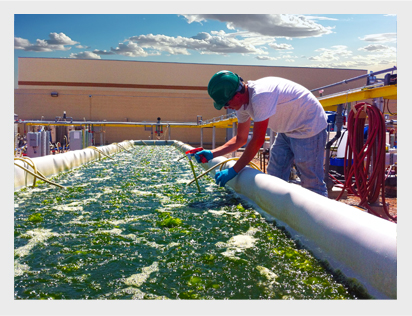
Could applying microalgae to the soil boost yield and strengthen plants? We spoke to Len Smith, chief business office, Heliae Development LLC., based in Gilbert, Arizona, in the southeast Phoenix metropolitan area. “Heliae is a company that is dedicated to unlocking the potential of microalgae,” said Smith. “We’ve been in business now for over eight years. We hope to be able to deliver microalgae products in a lot of areas, including in plant agriculture.”

“While we work with hundreds of algae species, the algae we are currently marketing for plant agriculture is a green algae. It is actually subject to genetic classification so I couldn’t even tell you the exact species at the moment,” noted Smith. “We’re working on several others as well. We have often seen in our early stage testing that many different kinds of microalgae have different positive effects on plant agriculture, so we’re bringing many of them along,” he said.

Unlock the secrets in the soil diversity

Natural Resources Conservation Service (NRCS) Soil Health Campaign

Smith said these algae are among the most common components in healthy soil. “A lot of what we’re doing is actually restoring what is already present in the soil. A lot of the scientists we work with think this is a critical component of the whole plant ecosystem below the soil line.”

Similarly, many university researchers are taking a closer look at algae. “We have about 30 university and contract research studies in, and we are working with growers. We have been selling the product in what I would consider almost a beta launch mode for about two years. So, we probably have about that same number of grower trials—maybe even double that,” said Smith.

Having the algae in the soil not only increased yields, according to Smith, it increased crop quality and strengthened the soil. “Benefits include root mass; in fact, we saw a 20 percent root mass increase in cotton. We have also seen the plant’s ability to grow in stressed environments such as heat stress and drought stress, in some of the work UC Davis did for us. We saw a 25 to 30 percent increase in overall yield in the stressed soils in which the algae was present, as compared to the control,” Smith explained.

Could it be that algae may be the new frontier in plant health and yield? “Yes, we’re very excited about what we’re doing. I would say we are opening a field here that nobody else is really paying attention to. I think that you will be seeing more of these products come to market, hopefully  helping growers get better results in a restorative and natural way,” Smith said.


Heliae Development LLC.

Phycoterra

2021-05-12T11:05:43-07:00December 5th, 2016|
Go to Top