About California Ag Today

This author has not yet filled in any details.
So far California Ag Today has created 2014 blog entries.

Pandemic Still Effecting Wineries

Ongoing Effects of the Pandemic on California Agriculture

By Tim Hammerich, with the Ag Information Network

Throughout the pandemic, we have regularly brought you stories of how various agricultural groups are faring during this difficult time. Here are a few more of those stories courtesy of the California Farm Bureau.

With tasting rooms closed due to the pandemic, many California wineries struggle to adapt. Some small wineries say their business has declined to “virtually zero.” Others have found success in online sales and tastings conducted via videoconference. Smaller wineries in particular tend to depend on tasting-room sales. Larger wineries that sold wine primarily through restaurants have suffered more than those that focus on retail sales.

Stress-related to the pandemic has affected the mental health of farmers and farm employees. A survey by the American Farm Bureau says two-thirds of farmers and employees reported mental-health effects since the pandemic began. Among rural adults more generally, more than half reported effects. Farm Bureau has advocated for improved mental health care in rural communities and offers resources on a website, farmstateofmind.org.

Efforts to grow the local-meat business in California have been hampered by a lack of processing facilities. A group of 16 ranchers in the Bay Area has tackled the problem by forming a cooperative. The Bay Area Ranchers Cooperative wants to raise enough money to purchase a mobile facility to process animals for local sale. The co-op president says demand for local meat has picked up during the pandemic, but there aren’t enough small meatpackers to serve that demand.

Souce: Califonria Farm Bureau
2021-01-19T16:24:57-08:00January 19th, 2021|

Congressman Harder Is Fighting For Valley

Harder, Already Appointed to Appropriations Committee, Successfully Secured Waiver to Serve on Ag

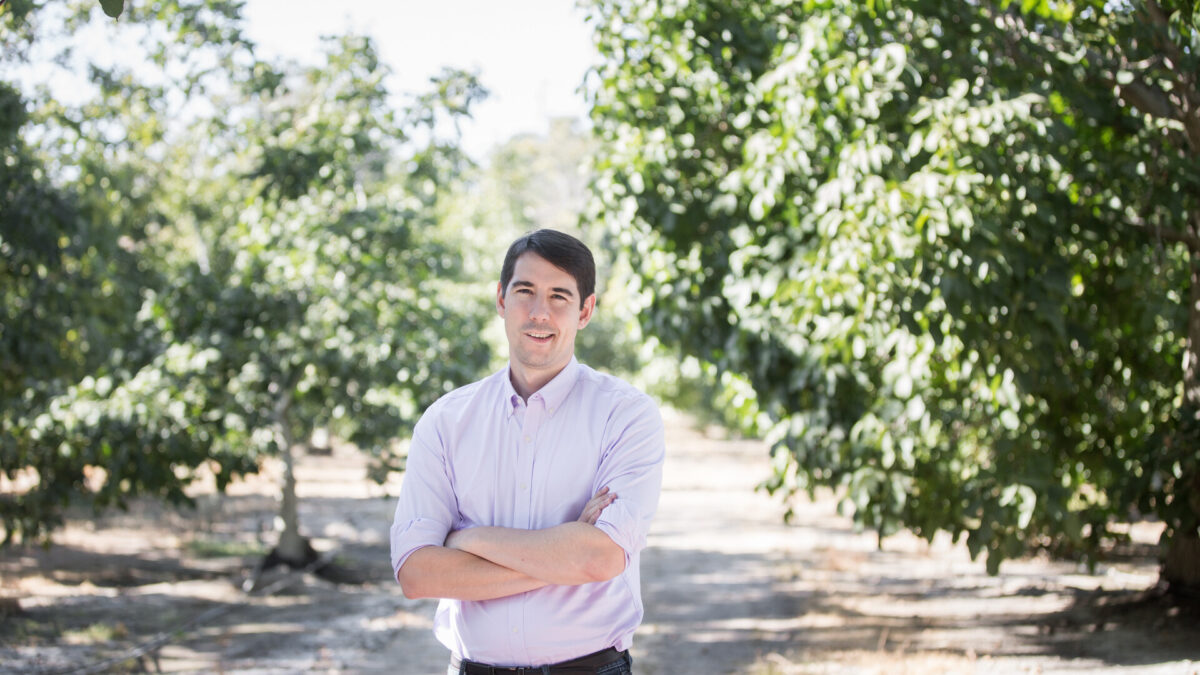
WASHINGTON – Representative Josh Harder (CA-10) will continue to serve on the House Committee on Agriculture for this term in Congress after successfully obtaining a waiver from the House Steering and Policy Committee. Members of the House who are appointed to the Appropriations Committee typically serve solely on that committee. If a member wishes to serve on an additional committee, they must seek out and obtain a special waiver allowing them to serve on an additional committee.

“This is the best-case scenario for the Valley. I get to fight for the funding we deserve on the Appropriations Committee – and I can continue my work on behalf of our farmers by serving on the Agriculture Committee once again,” said Rep. Harder. “It’s particularly important for me to serve on Ag this term as I’ll focus on our specialty crop producers when we look at drafting the next Farm Bill.”

Last month, Rep. Harder announced that he had been appointed to the House Appropriations Committee. The Committee is responsible for drafting all funding legislation in the House and will give Rep. Harder an opportunity to secure more funding for the Central Valley.

2021-01-18T18:21:53-08:00January 18th, 2021|

Gov. Newsom Proposed Budget

Governor Newsom Proposes New Fiscal Year Budget

Governor Newsom unveiled his Proposed Budget on January 8th, outlining his budgetary and policy priorities for the coming fiscal year. Following upon a tumultuous economic year with a $54 billion deficit, this year’s budget paints a rosier picture with a proposed $227 billion “balanced” spending plan, $22 billion in budget reserves and a one-time $15 billion budget surplus. This does not, however, reflect the $7.6 billion structural deficit projected for 2022-2033—one that will grow to $11 billion in 2024-2025. Below is a brief synopsis of proposed expenditures and policy changes offered in the Governor’s budget:
  • $ 6.7 million one-time General Fund ($3.35 million in the current year and $3.35 million in July 2021) with the University of California Cooperative Extension to provide technical assistance and grants to small, mid-sized and underserved farmers; this assistance may include business planning, compliance, and accessing state and federal funds
  • $8.7 million in federal funds and 24 positions at the Department of Food and Agriculture to implement the Food Safety Modernization Act
  • Climate smart agriculture funding (see the Climate Change section below)
  • $40 million General Fund for the State Water Efficiency and Enhancement Program (see the Water section below)
  • $6 million General Fund ($4 million for current year and $2 million in July 2021) to do an assessment of EPA/CDFA regulations and identify opportunities to streamline regulations, reporting, and develop a unified licensing portal for program regulation and payment
  • Proposed extension of the Carl Moyer Memorial Air Quality Standards Attainment Program (Carl Moyer Program) which provides grant funding for cleaner-than-required engines, equipment, and other sources of air pollution with the State Air Board and local air districts until 2024
  • Allow the Department of Industrial Relations to increase budget by $14.4 million and position allocations by 70 to hire additional Cal/OSHA inspectors
  • Provides $8.6 million and 43 positions to allow access to workers comp benefits under SB 1159 and investigate workplaces that violate COVID-19 specific guidelines and regulate businesses for adequate personal protective equipment stockpiles for future crises
  • Establish a new Department of Better Jobs and Higher Wages compromised of several existing Labor Workforce Development Act agencies involved in job training, labor market information, and apprenticeship programs
  • Replacing the current pesticide mill assessment structure (which is non-discriminatory on pesticide type), with a risk-based assessment strategy that charges a higher mill for higher risks (i.e. those pesticides with no classification or a ‘caution’ classification would go from 21to 26 mills, ‘warning’ would go to 40 mills and ‘danger’ would go to 45 mills)
  • $54 million in Cap and Trade expenditures ($30 million in current year and $24 million in July 2021) for the Safe and Affordable Drinking Water fund
  • $60 million in one-time General Fund ($30 million in current year and $30 million in July 2021) to DWR for implementation of the Sustainable Groundwater Management Act (SGMA) to support economic mitigation planning and implementation projects
2021-01-15T18:32:00-08:00January 15th, 2021|

Lemon Economics in Ventura County


Lemons Became More Popular, But then COVID Hit


By Tim Hammerich, with the AgInformation Network 

A recent study on the costs and returns of establishing and producing lemons in Ventura County was released by UC Cooperative Extension in Southern California and UC Agricultural Issues Center.

“We grow lemons along the coast because it doesn’t get hot, and we do a really good sour lemon. The trees flower year-round, and so there’s production year-round,” said Ben Faber, a Farm Advisor based in Ventura County.”

He says lemon prices had been stagnant for a long time but started to really rise in the past decade or two with the popularity of restaurant dining.

“And so the consumption just soared. Prices had been around five or six, eight dollars a box, and boy, they went up to $18 – $20 a box. So people saw a lot of money there.

“And so what do you do? You respond to it, and you plant. The market for strawberries had fallen, labor availability diminished. So along the coast here, a lot of people had said, ‘I don’t care. I’m going to risk it. I’m going to plant lemons’. And it doesn’t take a whole lot of labor to do, it takes less water. We’re stressed about water availability along the coast. And so, you know, the choice of lemons sounded really good until…boom…COVID.”

The pandemic has certainly taken its toll on lemon prices. Faber is hopeful they will recover but also concerned about the threat of citrus greening disease.

2021-01-14T18:10:18-08:00January 14th, 2021|

COVID Testing Onerous on Ag

Agricultural Coalition Challenges Cal/OSHA Emergency Standards


By Tim Hammericah with the AgInformation Network

A coalition of agricultural and business employers filed a lawsuit in Los Angeles Superior Court challenging the COVID-19 related emergency temporary standards.

“It’s addressing a problem that wasn’t there and creating a problem for our growers. It has not demonstrated that it actually protects workers, and certainly makes farmers and ranchers vulnerable for stiff fines and penalties without really protecting the health of our employees,” said Jamie Johansson, president of the California Farm Bureau, which is part of the coalition.

He says employee safety is of the utmost importance to farmers and ranchers, but these rules place unrealistic burdens on producers, especially those in rural areas.

“The first is mandatory, no-cost testing, which means that you have to test all of your employees on a regular basis. And we know in rural California, that from the beginning, having those tests available in rural California has been problematic, and that they’re not available,” noted Johansson. “So it doesn’t take into account, the chance that we wouldn’t even have the availability to do the required testing. And also the discrepancy in the cost of those tests in rural California. We’ve seen anywhere from $150 to $200 a test, to free if you’re in the urban areas. So then another burden placed on us as well,” Johansson said.

Johansson also points to the fact that the regulations will reduce or eliminate agricultural housing during a statewide housing crisis. “A reduction in already-scarce housing will directly impact farmworker communities and harm rural economies across the state that depend on agriculture,” Johansson noted

2021-01-13T17:46:10-08:00January 13th, 2021|

Schuil & Associates, Inc. Assisting on Land Purchases

Schuil & Associates, Inc. and New Current Water and Land, LLC Collaborate on Land Purchases in Westlands Water District

Schuil & Associates, an industry-leading, family-operated ag real estate firm, today announced a cooperative relationship with New Current Water and Land, LLC – a Fresno-based firm specializing in the assessment, development, management, acquisition, and banking of water supplies throughout the Western U.S. – to counsel those interested in purchasing farmland in the San Joaquin Valley including, importantly, the fertile Westlands Water District of California.

Providing water to farms in an area of approximately 600,000 acres (2,400 km²) in Fresno County and Kings County in California’s San Joaquin Valley, the Westlands Water District is the largest agricultural water district in the United States. The recent repayment of the District’s capital obligations to the Central Valley Project has resulted in a lifting of the acreage limitation provisions of Reclamation Law which previously had restricted allowable ownership of irrigated land to 960 acres (3.9 km²). This change has made Westlands’ farmland more compelling and accessible to farmers and investors alike.

Land in the Westlands Water District contains some of the best soil in the country but historically has sold for nearly half of the cost of the Eastside of the Central Valley (which has similar soil composition) presenting a unique investment opportunity. This highly-productivity, lower-cost land also offers two sources of water – surface water and groundwater.

“It is important that those interested in purchasing farmland in California, particularly on the Central Valley’s Westside, be provided excellent counsel on water issues,” said Marc Schuil, Principal and Agent, Schuil & Associates. “With our relationship with New Current Water and Land and their decades of water experience, we are better able to help clients navigate this critically-important sector.”

Fresno-based New Current Water and Land provides multi-faceted strategic planning services to investors, farming organizations, and others seeking to develop long-range approaches to water supply, water development, and water management.

“When it comes to agriculture, water is key,” Gary Sawyers, Principal, New Current Water, and Land said. “We’re excited to work with Schuil to help counsel their clients on the nuances of water issues in Westlands and open this region to investors.”

2021-01-12T19:14:26-08:00January 12th, 2021|

Effort to Stop Colony Collapse Disorder Underway

Scientists Developing Electronic Honeybee ‘Veterinarians’

By Jules Bernstein, UC Riverside, Senior Public Information Officer


The University of California, Riverside, is leading a new effort to stop and reverse a worldwide decline in honeybees, which threatens food security and prices.

Honeybees pollinate more than 80 agricultural crops, which account for about a third of what we eat. Several factors, including pesticide exposure and the spread of parasites and environmental changes, are to blame for the widespread collapse of bee colonies over the past decade.

To boost dwindling honeybee populations, the University of California’s Office of the President has awarded $900,000 to a four-campus network of bee researchers and engineers.

“This will become one of the largest honeybee health networks in the country,” said Boris Baer, a professor of entomology at UC Riverside and principal investigator of the project. “I’m very excited about so many different kinds of bee expertise joining forces through this project.”

The network, which includes researchers from the Davis, San Diego and Merced campuses, is approaching the problem in three main ways.

The first is through breeding programs — a particular focus of Baer’s laboratory. “We seek to identify and breed bees that are better able to cope with environmental stress,” he said.

A second goal of the new network is to develop medications and treatments for sick bees. Certain types of honeybees generate molecules that make them more tolerant of pesticides and parasites. New technology will enable the scientists to isolate those molecules and use them as a basis for drugs.

Finally, the group is looking to give beekeepers tools to better monitor bees’ health. Small devices will be able to ‘listen’ and ‘smell’ inside hives to give beekeepers indications about the health of the hive.

“We know bee queens have a special pheromone they give off when they’re hungry or dying, and these can be traced,” Baer said. “We are essentially building ‘electronic veterinarians.’”

Preventative devices like these are key to keeping bees alive, because once the colony collapses, it’s too late to bring it back, Baer said.

Read more: https://news.ucr.edu/articles/2021/01/07/scientists-developing-new-solutions-honeybee-colony-collapse

2021-01-11T18:21:20-08:00January 11th, 2021|

Agreeing on Water Needs

Sixth Generation Farmer and EDF Director Discuss Water Challenges

By Cannon Michael and Ann Hayden

Despite a seemingly endless era of upheaval – a surging pandemic, contentious election cycle and racial strife – we still have the responsibility to address pressing issues that cannot wait for calmer times. The future of California’s water is one of those issues.

While collaboration and relationship building have been made even more challenging due to distancing required by COVID-19, we believe that water is an issue where we can rise above party lines and entrenched perspectives.

Cannon Michael, Sixth Generation Grower

Water is the backbone of California’s agricultural economy, supports our iconic rivers, and of course, is essential to our survival.  Simply put, water is a lifeline that binds us together, and without it, we jeopardize our future and that of coming generations.

Could now be the time to collectively start down a better path for managing this precious resource and roll up our sleeves to make it happen? We think so.

For decades, fighting over water has stalled progress and sown deep mistrust across different water users.

We have forgotten that we are all stewards of California – a special place like no other, a rich connected tapestry of environmental beauty, diverse communities and productive agriculture.

We need to come together as Californians – not just farmers, environmentalists, rural community organizers and urbanites. We need to come together as Californians working for our children and future generations who are depending on us to leave them with a better California than we have today.

We need to come together to solve some admittedly difficult water challenges that affect the future of rural communities, cities, wildlife, farming in the Central Valley and consequently our country’s food supply. Drought and water scarcity are high on the list of these challenges. During our last major drought, the Sustainable Groundwater Management Act was enacted as one major piece of the solution to ensure we have enough water for future generations.

Looking forward, 2021 will be an important year for moving ahead on implementation of this sweeping change to water law. The state will be rolling out its first assessments of sustainability plans developed by regions with the most critically overdrafted groundwater supplies.

Balancing groundwater supply and demand, as required by the law, will no doubt be challenging: Some models say San Joaquin Valley landowners may need to take equivalent acreage to Yosemite National Park out of production to balance groundwater supply and demand.

To reach durable, fair solutions to such large challenges, we need to drop the baggage we’ve amassed over time. We need to come together as Californians to start collaboratively tackling problems – not just talking and arguing them. We need to come together and break the cycle of mistrust and take the time to truly understand how each side views the challenges and potential solutions.

It’s unlikely we will agree on everything – if we did California wouldn’t be the dynamic, diverse state it is today. But there is significant common ground we can build from. For instance, we all agree every single person in California should have clean and affordable drinking water when they turn on their kitchen faucet.

We also agree that replenishing groundwater is one of many solutions we will need to comply with the Sustainable Groundwater Management Act. But it’s not the only solution; it’s inevitable that we still will need to scale back some agriculture.

The question we need to address is, how can we make sure that agriculture can still thrive while some farmland becomes productive in new ways, whether it’s with less water-intensive ranching, low-impact solar projects, wildlife habitat or recreational areas for our families to enjoy on picnics and hikes?

Taking action to address these challenges may mean parts of our state and the very communities we live in will look different from how they look today. But if we can come together as Californians to get it right, California will evolve and endure as the special place it is today for generations to come.

We have decades of experience coming at water challenges from our silos. Let’s break down those silos, come together as Californians and see what happens. Isn’t it worth a shot?

Cannon Michael is a sixth-generation farmer and president and CEO of Bowles Farming Co., headquartered in Los Banos, cannon@bfarm.com

Ann Hayden is senior director of western water and resilient landscapes at Environmental Defense Fund, ahayden@edf.org

This document first appeared in WaterWrights.net


2021-05-12T10:52:43-07:00January 11th, 2021|

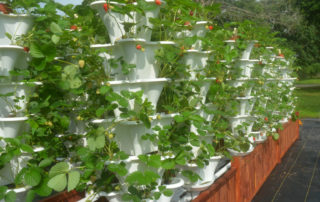
Driscoll’s Goes Vertical with Strawberries

(Featured photo courtesy of Tex AgriLife Today)

Driscoll’s and Plenty Team Up to Grow Strawberries Indoors

By Tim Hammerich, with the Ag Information Network

The concept of growing crops in vertical farms with plants indoors stacked on top of each other has been around for years. But this industry got some serious validation when Driscoll’s the global berry leader announced a partnership with Plenty – a San Francisco-based vertical farming company.

Plenty Chief Scientific Officer Dr. Nate Storey says this is a big deal for the evolution of vertical farming.

“It’s a big deal for several reasons. The first reason is, you know, people just need more delicious things – access to more delicious things. You know, that’s a source of excitement and joy and just part of the human experience. And the other thing is, I think it signals to folks that, you know, indoor ag is a thing,” said Storey. “It’s not a concept anymore-it’s a thing. And when you have people who know their business, who are serious about production, who have been in the space for a very long time and are kind of the best at what they do investing and engaging. You know, that’s a pretty big deal,” Storey.

Traditionally, one of the criticisms of vertical farming was it was somewhat limited commercially to leafy greens. Nate says this deal with Driscoll’s is exciting to expand their offerings into strawberries, and eventually, far beyond.

“At the end of the day, the number of crops that are going to move indoors, I think is going to surprise everyone. And, strawberries are just the first; definitely not the last,” noted Storey.

2021-01-11T16:47:17-08:00January 11th, 2021|

Stop Use Order on Agro Gold Organic Fertilizer


CDFA Issues Stop Use Notice and Statewide Quarantine on Organic Fertilizer Agro Gold Was

Agro Gold WS was found adulterated with glyphosate and diquat and CDFA has issued a stop order for use on organic farms in the state of California.

The California Department of Food and Agriculture (CDFA)  announced recently a Stop Use notice and statewide quarantine have been issued for the organic fertilizer product AGRO GOLD WS to all organic operations registered in California. CDFA lab analysis of the product detected the presence of Diquat and Glyphosate, which are substances prohibited by the U.S. Department of Agriculture (USDA) National Organic Program for use in organic production. Continued use of this product in organic production may jeopardize an operation’s organic status.

Pursuant to authority under the California Food and Agricultural Code (FAC), Division 17, Chapter 10, CDFA’s State Organic Program (SOP) in coordination with the Fertilizer Materials Inspection Program (FMIP) issued a Stop Use notice today for AGRO GOLD WS to all organic operations in California registered with the SOP. CDFA’s FMIP also announced today that all California operations registered as organic in possession of AGRO GOLD WS must hold the product and contact CDFA for quarantine instructions on how to handle it.

AGRO GOLD WS is manufactured by Agro Research International, LLC. It has been distributed in a co-packaged box that also contains the product WEED SLAYER. CDFA continues to provide follow up to this investigation and is working with state and federal agencies. CDFA received a complaint about the AGRO GOLD WS product and program staff collected product samples from various locations to conduct lab analysis in CDFA’s Center for Analytical Chemistry. FMIP is an industry-funded program that ensures consumers receive fertilizing materials that meet the quality and quantity guaranteed on the product label. Investigators located throughout the state conduct routine sampling and inspections, respond to consumer complaints, and enforce the laws and regulations that govern the manufacturing and distribution of fertilizing materials in California. CDFA’s State Organic Program protects the organic label through enforcement, education and outreach.

If you are in possession of AGRO GOLD WS and seek additional information, please contact the Fertilizing Materials Inspection Program at FMIP@cdfa.ca.gov. Any appeal of the determination that this product violates the Food and Agricultural Code must be filed with the Fertilizing Materials Inspection Program no later than 15 days from receipt of the Stop Use notice and statewide quarantine. See Food and Agricultural Code section 14659.

2021-01-11T16:47:17-08:00January 11th, 2021|
Go to Top