About California Ag Today

This author has not yet filled in any details.
So far California Ag Today has created 2014 blog entries.

Northern CA Walnut Trees Confused

Some Walnut Trees in Northern California Suffering from Lack of Sleep!

By Laurie Greene, Editor

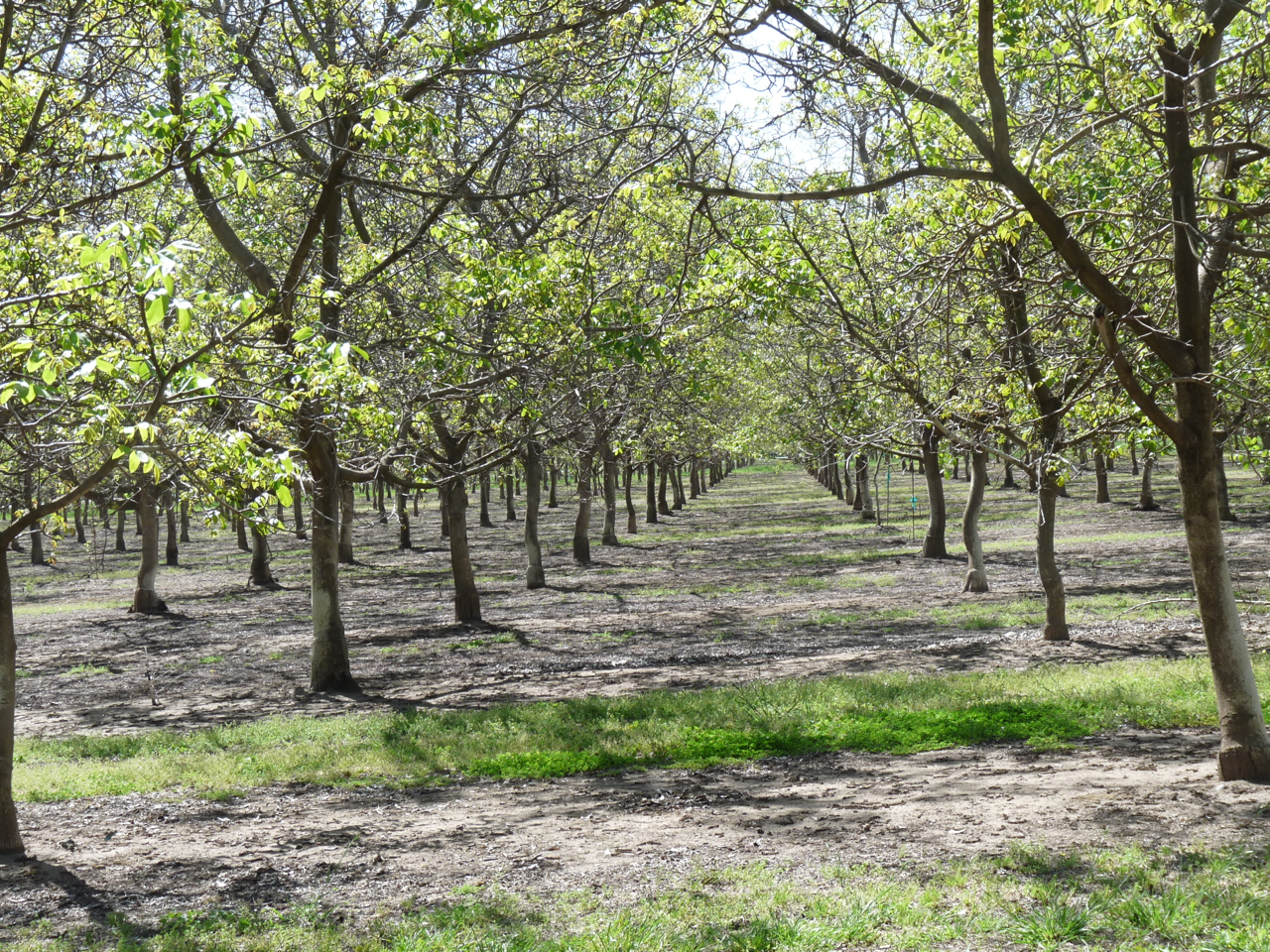
We all know what the day after a night of insomnia is like; befuddled, confused and tiring. Sometimes we cannot even get our act together. The walnut trees of Northern California are experiencing just that.

Richard Buchner, a UC Cooperative Extension Farm Advisor in Tehama County, explained, “Tehama has a lot of Chandler varieties and the trees are sort of behaving like they did not get too much sleep, in the case of the tree it is more like chilling, and we think that the lack of chilling is confusing them. We have trees with full leaves out, and trees that might have some flowers out, or maybe the right-hand part of the tree, is flowering and the left side is not or it’s flowering. They are really confused.”

Commenting on the potential crop, Buchner said, “We had a lack of chilling last last year, but had a pretty good crop, so we are not wholly sure what this means. It looks funny, but it is getting a little better as the trees grow older.”

“Walnuts need a pollinator to set the crop, but that cannot happen if the blooms have not opened,” noted Buchner. “The problem is if the bloom straggles way out, and we don’t get flowers pollinated, we can’t set a nut and sometimes we get lots of mixed nut sizes,” he said.

2016-05-31T19:30:25-07:00May 5th, 2015|

Fresno County 2014 Crop Report May Fall Further than 2013

Fresno Ag Commissioner Les Wright Concerned About Regaining #1 County Status

By Patrick Cavanaugh, Associate Editor

Recently, California Ag Today spoke with Les Wright, Ag Commissioner of Fresno County on how that county is traditionally the highest rated in statewide, and nationwide, in agricultural output of many specialty crops, but water restrictions have bumped the county down a few rungs.

“Fresno County, since 1954, has been the number one agriculture producing county in the world, with two exceptions. The most recent exception was in 2013, documented in our last crop report, when the water shortage was a West Side-only issue,” said Wright.

That year, the East Side received a nearly 50 percent allotment from the Friant Water Authority of the federal Central Valley Project. In 2014 there was a zero allocation for both an East-side and a West-side issue.”

“I’m not sure how 2014 will wash out, but other dynamics are also playing into it. Nut crops are very valuable, and they have high yields, and our Southern neighbors are planting a lot of nuts.”

But Wright said that things are different in surrounding counties. “They don’t have the diversity that Fresno County has. I’m very optimistic that once we get our water allotments back, we’ll be number one again. But until that occurs, I’m not sure where we are going to end up.”

2016-05-31T19:30:25-07:00May 3rd, 2015|

AHPA Leadership Urges Members to Support Voluntary Almond Industry PAC

By Laurie Greene, Editor

Almond Hullers & Processors Association (AHPA) Chairman Dick Cunningham and President Kelly Covello urged their membership to support the voluntary California Almond Industry PAC at the association’s 34th Annual AHPA Convention, held on the Big Island in Hawaii over the past three days.

Almond Hullers & Processors Association

Facing immense challenges such as the slowdown of West Coast ports, air quality laws and regulations, net energy metering (NEM), food quality and safety, worker safety, bees and bee health, wastewater treatment, crop protection regulation, aboveground petroleum storage Spill Prevention Control and Countermeasure (SPCC) Plans, competing research priorities and most urgently, unprecedented drought conditions and public misunderstanding and criticism of almond water usage, the Almond Industry aims to create a unified voice for candidate support, political information and education services.

Through a Memorandum of Agreement with the Almond Board of California (ABC), AHPA is able is able contract for a portion of ABC Logostaff time/expertise to assist in AHPA’s advocacy efforts and provide a unified voice for the industry. The ABC educates regulatory agencies and legislators but is prevented by the USDA Federal Marketing Order to advocate for government policy or legislation.

The California Almond Industry PAC will hold a fundraiser in Bakersfield on May 14th, at Imbibe, 4140 Truxtun Avenue, from 5:30-7:00pm, sponsored by Golden Empire Shelling, LLC., Landmark Irrigation, Inc., Pacific Ag Management, Inc., Paramount Farms, and Supreme Almonds of California.

Fundraisers will also be arranged in the Northern and Fresno areas in the upcoming months.

Sponsorship Levels include:

  • Platinum: $2500
  • Gold: $1500
  • Supporter: $500 (includes a guest)

You do not need to be an AHPA member to contribute or attend the event.

For more information, contact (209) 599-5800 or staff@ahpa.net.

California Almond Industry Political Action Committee

California Almond Industry Political Action Committee

2016-05-31T19:30:25-07:00May 1st, 2015|

USDA Awards California $19M Specialty Crop Block Grant

The United States Department of Agriculture (USDA) announced yesterday that California has been allocated $19.76 million in funding for the 2014 Specialty Crop Block Grant Program (SCBGP). The agency awarded approximately $66 million nationwide for projects that help support growers of specialty crops through research, market development, environmental stewardship and more.

The Specialty Crop Block Grant Program is designed to enhance the markets for specialty crops like fruits, vegetables, tree nuts, dried fruits, horticulture and nursery crops, including floriculture.

“California’s leadership in the production and development of specialty crops is due in large part to the innovative nature of our growers,” said CDFA Secretary Karen Ross. “The research, market development and other projects supported by this partnership with USDA help keep our farmers on the cusp of innovations from food safety to stewardship, from identifying niche markets to expanding international exports.”

Today’s announcement marks the beginning of the 2014 grant cycle. In 2013, CDFA was awarded approximately $18 million and solicited competitive proposals for projects including market enhancement, agriculture education, nutrition, and research. The 64 projects funded under the 2013 SCBGP reflect the diversity of California’s specialty crops across the state, including: creating economic opportunities for specialty crop producers through market development activities that focus on local, regional, or international markets; development of effective agritourism associations to enhance rural tourism and promote specialty crops; food safety benefits and training programs; growing community food systems in underserved neighborhoods; online irrigation nitrogen management tool for cool season vegetables; and research to mitigate impacts of invasive pests.

In addition, CDFA partnered with the Center for Produce Safety in the evaluation and recommendation of food safety related projects. These proactive research projects represent an ongoing effort to minimize outbreaks.

Information about the program, including California’s 2013 projects, is available online at www.cdfa.ca.gov/grants. Stay tuned for future announcements regarding the development and submission of proposals for the grant funds announced today. The USDA announcement, including award amounts by state, is available online at http://www.usda.gov/wps/portal/usda/usdahome?contentid=2014/04/0064.xml&contentidonly=true.

USDA posted the following:

Our dedication to strengthening rural America and increasing opportunities for specialty crop farmers will help keep our nation’s economy—and people—healthy for years to come.

As directed by the Farm Bill, USDA block grants are now allocated to U.S. States and territories based on a formula that takes into consideration both specialty crop acreage and production value. Nearly all states are seeing an increase in funds.

USDA’s Agricultural Marketing Service (AMS) encourages applicants to develop projects that enhance the competitiveness of specialty crops, sustain the livelihood of American farmers, and strengthen rural economies by:

• Increasing nutritional knowledge and specialty crop consumption among children and adults,
• Improving efficiency within the distribution system,
• Promoting the development of good agricultural, handling and manufacturing practices while encouraging audit cost-sharing for small farmers, packers, and processors,
• Supporting research through standard and green initiatives,
• Enhancing food safety,
• Developing new/improved seed varieties and specialty crops,
• Controlling pests and diseases,
• Creating organic and sustainable production practices,
• Establishing local and regional fresh food systems,
• Expanding access to specialty crops in underserved communities,
• Developing school and community gardens and farm-to-school programs,

Enhancing the competitiveness of specialty crop farmers, including Native American and disadvantaged farmers.

2016-05-31T19:38:01-07:00April 18th, 2014|
Go to Top