About Patrick Cavanaugh

This author has not yet filled in any details.
So far Patrick Cavanaugh has created 1490 blog entries.

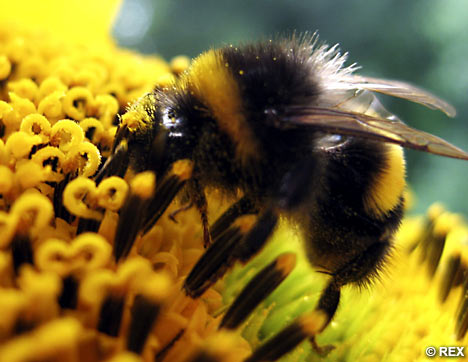
Program Looks to Give Bees a Leg Up

Source: John Schwartz; New York Times 

Here in California’s Central Valley, researchers are trying to find assortments of bee-friendly plants that local farmers and ranchers can easily grow, whether in unusable corners and borders of their land or on acreage set aside with government support.

Bees could certainly use the assist. Since 2006, the commercial beekeepers who raise honeybees and transport them across the country to pollinate crops have reported losing a third of their colonies each year, on average.

Native species of bees, too, have been in decline. That is taking a toll on crops that rely on bees for pollination, including many nuts and fruits. The Department of Agriculture says that one of every three bites that Americans take is affected, directly or indirectly, by bees. They cause an estimated $15 billion increase in agricultural crop value each year.

The causes of the decline, known as colony collapse disorder, are still being studied. But they appear to be a combination of factors that include parasites, infection and insecticides. Underlying all of these problems is the loss of uncultivated fields with their broad assortment of pollen-rich plants that sustain bees. That land has been developed commercially or converted to farming corn, soybeans and other crops.

The new program will encourage farmers and ranchers to grow alfalfa, clover and other crops favored by bees and which serve a second purpose of being forage for livestock. Other proposed changes in practices include fencing property for managing grazing pastures in rotation so that they can replenish, leaving living plants for the bees.

Jeffery S. Pettis, who leads bee research at the federal Agricultural Research Service in Beltsville, Md., said the effort to get farmers to plant more crops with pollinators like bees and butterflies in mind was intended to help the creatures weather the challenges of pathogens, parasites and pesticides. “If they have a good nutritional foundation, they can survive some of the things they are faced with,” Dr. Pettis said.

The federal agency that focuses heavily on these issues, the Natural Resources Conservation Service, began in the 1930s as a government effort to help farmers hold on to soil and prevent dust bowls. The 2008 farm bill called for the service to include fostering pollinator health in its efforts in all 50 states.

That, in turn, has led to about 43 million acres of land across the country incorporating conservation features that support pollinator health. From 2009 to 2012, the bill’s environmental quality incentive program spread around $630 million.

In the Central Valley, the research to support that work is done on 106 acres of prime farmland at a Department of Agriculture plant materials center. The results are beautiful: More than 2,200 feet of hedges and fields of blended crops present a feast for the eyes — and for bees — beginning in early spring. On a recent viewing, flowers dotted the landscape with color. The bright orange flowers of California poppies opened near rich purple lupines. Last year, an entomologist found about 50 species of bees and 1,500 other beneficial insects, birds and creatures of all sorts in the hedgerows.

Jessa Cruz, a senior pollinator conservation specialist with the Xerces Society, a nonprofit organization dedicated to improving pollinator health that is collaborating with the center, said drought-resistant plants that are bee friendly are increasingly important in arid California.

“It’s important to be able to tell farmers, ‘You’re not going to have to use your precious water to irrigate your hedgerows,’ ” Ms. Cruz said.

The use of hedgerows and cover crops is on display at nearby Vino Farms, whose grapes are bought by 180 wineries. Growing among the vines are peas and beans, aromatic sage, golden currant, wild rose and even daikon radish.

Chris Storm, the director of viticulture for the company, said that even though grapes are self-fertilizing and do not need bees in the way that the nearby almond orchards do, “We’re doing it for everybody else,” providing a habitat for bees pollinating other crops nearby.

Vino Farms receives other benefits from the plantings, which help reduce the use of pesticides by supporting beneficial creatures like the tiny wasps and green lacewings that kill pests. Mr. Storm has taken out rows of vines for some hedgerows, and has flowering plants growing at the base of vines.

His company’s efforts also allow it to assert that it grows grapes sustainably. The certified sustainable production, he said, can bring a 10 percent increase in price from winemakers looking for a green edge. That translates to anything from $250 to $500 more per ton.

“It doesn’t yet pay for itself,” he said, though he clearly expects it to. It also helps that Mr. Storm is as adept at raising money from government conservation programs as he is at raising grapes and pollinating plants. He is constantly on the lookout for federal and state programs that will help pay for new techniques.

A mix of plants that works beautifully in California’s Central Valley will not necessarily be much good in the Upper Midwest, said Laurie Davies Adams, the executive director of the Pollinator Partnership, which promotes the health of bees, butterflies and other plant helpers.

“When I talk about hedgerows to guys in Iowa, they just kind of glaze over,” Ms. Adams said. The big bushes would interfere with the giant equipment those farmers use, she said, but they might be persuaded to set aside small plots of land for pollen-rich plants, which can help accomplish the same conservation goals.

“This is not one size fits all,” she said. “This is one ethic fits all.”

A major commercial beekeeper, John Miller, said that the multimillion-dollar pollinator program for the Upper Midwest would not work miracles. Spreading the money across five states over several years, he said, doing a little “shirttail math,” means that “you’ve got about a Dixie cup worth of seeds going into a field” in any one season.

He added, however, that the program is good news because it means “the pendulum, perhaps, is beginning to swing back” to paying attention to the role of bees in the food supply.

Surging corn prices have led farmers to grow on every available acre, which has been bad for bee habitats. A. Gary Shilling, an economic consultant, asset manager and avid beekeeper in New Jersey, said corn prices had been coming down again, and that should affect the number of acres they plant. “There will be less incentive to plant fence-row to fence-row,” he said. So pollinator plantings could make a comeback, especially if social pressure encourages farmers to support bees.

“This is a business,” Mr. Shilling said. “Are these guys going to go out of their way for something that’s going to hurt their business, affect their bottom line? Not unless they think they’ll catch some flak if they won’t.”


2016-05-31T19:38:04-07:00April 4th, 2014|

California Grown Branding Becomes Available to Farm Bureau Members

Through a new strategic partnership between the California Farm Bureau Federation and the Buy California Marketing Agreement, Farm Bureau members in California now have access to a 50 percent discount on California Grown branding and licensing for their agricultural commodities.

CFBF, a member of the marketing agreement, will help to promote and strengthen its California Grown brand, popularized through use of a blue-and-gold “CA Grown” license plate logo affixed to agricultural products. The joint venture provides a discounted channel for Farm Bureau members to connect with shoppers who enjoy and seek out California-grown foods and farm products.

“Farm Bureau and California Grown each recognize that people are eager to learn more about where their food comes from and how it is produced,” CFBF President Paul Wenger said. “California Grown is a powerful brand that resonates with shoppers, and we look forward to helping widen its reach.”

The purpose of the California Grown brand is to increase awareness and consumption of the state’s agricultural products among California consumers. Established 12 years ago, the California Grown program has been successful in maintaining the integrity behind the California Grown brand.

The California Grown service mark is designed to be used in advertisements, collateral materials, in-store materials and other places to indicate support of the California Grown campaign. Farm Bureau members interested in the program and seeking more information about California Grown branding may visit the California Grown website at www.californiagrown.org or phone 916-441-5302.


The California Farm Bureau Federation works to protect family farms and ranches on behalf of nearly 78,000 members statewide and as part of a nationwide network of more than 6.2 million Farm Bureau members.

2016-10-24T16:51:09-07:00April 4th, 2014|

FDA Issues Final Rule on Record Access Requirements for Food Firms and Announces Guidance for Industry

What You Need to Know About Establishment and Maintenance of Records; Small Entity Compliance Guide

This guidance was created to inform domestic persons in the U.S. who manufacture, process, pack, transport, distribute, receive, hold, or import food for humans or animals, and foreign persons who transport food in the U.S., about final regulations that establish requirements regarding the establishment and maintenance of records.

http://www.fda.gov/Food/GuidanceRegulation/GuidanceDocumentsRegulatoryInformation/FoodDefense/ucm391329.htm?source=govdelivery&utm_medium=email&utm_source=govdelivery

FDA Records Access Authority Under Sections 414 and 704 of the Federal Food, Drug, & Cosmetic Act

This guidance document provides updated information pertaining to the Food and Drug Administration’s (FDA) authority to access and copy records under sections 414 and 704 of the Federal Food, Drug, and Cosmetic Act (FD&C Act).

http://www.fda.gov/Food/GuidanceRegulation/GuidanceDocumentsRegulatoryInformation/FoodDefense/ucm292745.htm?source=govdelivery&utm_medium=email&utm_source=govdelivery

Record Availability Requirements: Establishment, Maintenance, and Availability of Records

 More information can be found on this link: https://s3.amazonaws.com/public-inspection.federalregister.gov/2014-07550.pdf

2016-05-31T19:38:04-07:00April 3rd, 2014|

USDA Provides Farm Bill Funding for Pest and Disease Management Programs

U.S. Department of Agriculture (USDA) Secretary Tom Vilsack announced today the allocation of $48.1 million, provided by the Agricultural Act of 2014 (the 2014 Farm Bill), to projects across the country that will help to prevent the introduction or spread of plant pests and diseases that threaten America’s agriculture economy and the environment.

The economic stakes for stopping invasive species are high, with scientists estimating the total economic cost of all invasive species to be approximately $120 billion annually.

“Invasive pests cause billions of dollars in damage each year and endanger our nation’s food security,” said Vilsack. “The funds USDA is making available today will help partners and stakeholders develop strategies, products and treatments to safeguard our farms and natural resources from invasive threats.”

USDA’s Animal and Plant Health Inspection Service (APHIS) sought project suggestions from states and U.S. territories, universities, federal agencies, nongovernmental organizations, private companies and tribal organizations that would provide a direct impact in managing pests and diseases, as well as disaster prevention.

A list of selected projects and the FY 2014 funding plan are posted at http://www.aphis.usda.gov/newsroom/2014/04/pdf/fy14_farm_bill_spending_plan.pdf

Funded initiatives include $2 million for protection against exotic fruit flies in California.

Prospective projects were evaluated by teams comprised of USDA experts and industry representatives and were selected based on criteria that supported six goals:

  • enhancing plant pest/disease analysis and survey
  • targeting domestic inspection activities at vulnerable points in the safeguarding continuum
  • enhancing and strengthening pest identification and technology
  • safeguarding nursery production; enhancing mitigation capabilities
  • conducting outreach and education about these issues.

The teams also evaluated submissions based on expected impacts of the project, the technical approach, and how submissions would complement ongoing USDA programs and other previously funded projects funded under the 2008 Farm Bill (Section 10201).

The 2008 Farm Bill has provided funding for more than 1500 projects over the last five years and has played a significant role in protecting American agriculture and educating the public about the threat of invasive species.

Visit www.Hungrypests.com during April, which APHIS has proclaimed Invasive Plant Pest and Disease Awareness Month, to learn more about invasive plant pest and diseases impacting your area and how you can help. And, join the discussion about invasive plant pests via the HungryPests Facebook page.

2016-05-31T19:38:04-07:00April 3rd, 2014|

Asian Citrus Psyllid Quarantine Established in San Luis Obispo County

Breaking News: NEW ACP Discovery


Victoria Hornbaker, APHIS Citrus Program Manager, announced TODAY the first confirmed Asian citrus psyllid find in San Luis Obispo County as reported in a San Luis Obispo County Ag Commissioner’s press release.

APHIS LOGO

Hornbaker also announced a Science Advisory Panel Report Stakeholder meeting will be held on April 16, 2014 at 9 am at CDFA headquarters, 1220 N Street, Room 220, Sacramento, CA 95814. To participate via conference call, please call 866-692-3158 and use participant code 87947483.

The meeting agenda follows this article.

Martin Settevendemie, Agricultural Commissioner/Sealer, County of San Luis Obispo announced detection of an adult Asian Citrus Psyllid in an insect trap on March 26th in a residential landscape near Arroyo Grande. The discovery prompted a high-density trapping delimitation survey of the immediate and adjacent area – about a nine square mile area – and no other ACPs were found.

A quarantine restricting the movement of citrus nursery stock and citrus fruit within a five-mile radius around the detection site has already been established by the California Department of Food and Agriculture to prevent the spread of this serious plant pest. “We are working with growers to get everyone in compliance with the regulation. This will help them understand what the requirements are to move any product outside of the quarantine area,” said Settevendemie.San Luis Obispo County Ag Commissioner Logo

CDFA announced that they will be conducting spray eradication treatments approximately 800 meters around the detection to eradicate this pest.

The first detection of the Asian Citrus Psyllid in California occurred in San Diego County in 2008. Since then, it has been found throughout southern California.

“This insect pest is of serious concern to California’s commercial citrus because it is responsible for spreading Huanglongbing, also called citrus greening disease, a plant disease that is fatal to all types of citrus trees. This includes citrus trees in countless landscapes across the county as well as local commercial citrus orchards valued at over $13 million in 2013,” according to Settevendemie.

Over the past ten years nearly 50% of the commercial citrus groves in Florida have been killed by this disease. The University of Florida estimates the disease has tallied more than 6,600 lost jobs, $1.3 billion in lost revenue to growers and $3.6 billion in lost economic activity for the state. The disease does not affect human health.

A single orange tree infected with Huanglongbing was found in a Los Angeles County backyard in 2012. To date no additional detections of the disease in California have occurred.

Staff from the San Luis Obispo County Agricultural Commissioner’s office and officials from the California Department of Food and Agriculture continue to search for this pest by monitoring hundreds of insect traps placed in urban neighborhoods and commercial orchards throughout the county.

“It is difficult to close off all potential pest pathways into the county. An engaged community of all county residents is critical in successfully excluding pests such as Asian Citrus Psyllid,” said Settevendemie.

Community members can do the following to protect backyard citrus trees and the local citrus industry:

        Buy Local! Purchase citrus trees from reputable local sources selling plants that have been routinely inspected by the Agricultural Commissioner’s staff.
        Do not transport citrus plants or plant parts into the county from quarantine areas. Call 805- 781-5910 for information about quarantine areas.
        Check residential landscaping often for signs of unusual symptoms or strange insects. Contact the local University of California Cooperative Extension’s Master Gardener Program at 805-781-5939 for help in identification of unusual plant symptoms or pests.
        If asked, allow the Agricultural Commissioner’s staff to place an insect trap in your yard and cooperate with officials if it becomes necessary to exclude or eliminate Asian Citrus Psyllid from San Luis Obispo County.

For more information about the Asian Citrus Psyllid visit the California Department of Food and Agriculture website or the San Luis Obispo County Agricultural Commissioner/Sealer’s website.


AGENDA FOR: ACP/HLB Ad Hoc Science Advisory Panel Report

Stakeholder Review/Conference Call

April 16, 2014, 9:00 a.m.

CDFA LOGO

Call-in number: 866-692-3158

Passcode: 87947483

– This meeting is open to the General Public –


AGENDA

1. Call to order, introductions – Jason Leathers

2. Review of Science Advisory Panel Questions and Answers

3. Review of Science Advisory Panel Report

a. Rapid Detection of HLB Infected Trees and/or Psyllids

b. Longitudinal Study being Conducted at the UC Davis Containment Facility

c. Potential for Movement of CLas Infected ACP with Fruit Movement

d. Recommendations Regarding Areawide ACP Treatment Program

e. Recommendations Affecting Quarantine Area

f. Recommendations Affecting Citrus Nurseries

4. Additional Questions/Review Items


2016-05-31T19:38:04-07:00April 3rd, 2014|

Study Shows No Increased Cancer Incidence from Consumption of Conventional Foods

A peer reviewed study conducted by Oxford University and published in the British Journal of Cancer found that there was no difference in cancer rates of middle aged women who consumed organic foods compared to women who ate conventionally grown foods.

This research, released this week, was sponsored by a cancer research charity in the United Kingdom.  According to the charity’s health information manager, Dr. Claire Knight:

“This study adds to the evidence that eating organically grown food doesn’t lower your overall cancer risk.  Scientists have estimated that over 9% of cancer cases in the U.K. may be linked to dietary factors, of which almost 5% are linked to not eating enough fruits and vegetables.  So eating a balanced diet which is high in fruit and vegetables – whether conventionally grown or not – can help reduce cancer.”

While this study reinforces the safety of organically and conventionally grown foods, the study the Alliance for Food and Farming sent in yesterday’s update shows the clear health benefits of eating a diet rich in fruits and vegetables.  That peer reviewed study from the University College of London found that people who consume 7 or more servings of fruits and veggies a day reduces their risk of premature death by 42%.

Both studies underscore that the best advice for consumers is also the simplest:  eat more organic and conventional produce for better health and a longer life.  Both are safe and the right choice is to always eat more.

2016-05-31T19:38:05-07:00April 3rd, 2014|

Public Listening Session: Water Transfer Process Streamlining

The staff of the State Water Resources Control Board (State Water Board) and the California Department of Water Resources (DWR) will hold a listening session to solicit ideas on recommendations to streamline the review process for temporary water transfers, in which water can be transferred for up to one year.

The purpose of the listening session is to obtain input to inform efforts by the State Water Board and DWR to streamline water transfers. Information provided will be considered in the context of near-term and long-term planning for improvements in transfer processing.

Background and Agenda:

On May 20, 2013, Governor Edmund G. Brown, Jr. issued Governor’s Executive Order B-21-13 (Executive Order), for the purpose of streamlining approval for water transfers to address dry conditions and water delivery limitations.

The Executive Order directs the State Water Board and DWR to expedite processing of water transfers and to assist water transfer proponents and suppliers, as necessary, provided that the transfers are consistent with the Water Code, will not harm other legal users of water and will not unreasonably affect fish, wildlife, or other instream beneficial uses.

The State Water Board and DWR were also directed to make all efforts to coordinate with relevant federal agencies, water districts, and water agencies to expedite the review and approval of water transfers in California.

On January 17, 2014, Governor Brown issued a Proclamation of a Drought State of Emergency (Proclamation). The Proclamation finds that dry conditions and lack of precipitation present urgent problems to drinking water supplies and cultivation of crops, which put farmers’ long-term investments at risk.

The conditions also threaten the survival of animals and plants that rely on California’s rivers, including many species in danger of extinction. The Proclamation directed the State Water Board and DWR to expedite the processing of water transfers as set forth in Executive Order B-21-13.

Proposed Agenda
• Overview of State Water Board Transfer role and current process

• Overview of DWR Water Transfer role and current process

• Public Comments on Streamlining Water Transfers

This Listening Session is designed as a forum for public input on the agencies’ streamlined water transfer processes, rather than discussion of specific transfer projects. Input received during the session will be taken into consideration in determining whether to modify the agencies’ water transfer processes in the short and long term.

DWR and the State Water Board seek suggestions for improving:

• availability of information on water transfers

• responses to comments on water transfer proposals.

• coordination between transfer approval agencies

• available information on impacts due to water transfers

• evaluation of surface water, groundwater, and environmental impacts related to water transfers.

Each commenter may be asked to limit their remarks to five minutes, depending on the number of parties present. Parties of like interests are encouraged to consolidate their comments and may pool their allotted time in a joint statement.

Parties also may submit written comments, either in lieu of or in support of their verbal comments. Comments will be collected for consideration in future transfer efforts, however the State Water Board and DWR will not be providing formal responses to comments.

Click here for more information.

2016-05-31T19:38:05-07:00April 2nd, 2014|

Storms Allow Temporary Easing of Delta Pumping Restrictions

Source: Pamela Martineau; Association of California Water Agencies 

The National Marine Fisheries Service (NMFS) approved a temporary easing of pumping restrictions in the Delta on April 1 which will increase water exports from the estuary by as much as 10,000 acre-feet a day over the next week or two.

Officials from NMFS announced the temporary adjustment of the regulation April 1 during a conference call with reporters. Mark Cowin, director of the California Department of Water Resources (DWR), who also was on the call, said the easing of the seasonal pumping restrictions  won’t jeopardize protected salmonoid and is “consistent with the federal Endangered Species Act.”

“The adjustment will remain in effect as long as the rivers carrying stormwater into the Delta continue to run relatively high,” said Cowin.  “We expect that to last for at least a week and we’ll see how long those inflows are sustained.”

The temporary change is allowable in part because more water is moving through the system due to recent storms. The adjustment increases pumping levels from about 1500 cfs to 6000 cfs a day over the next few days.

DWR has set its initial water allocation estimate from the State Water Project at zero percent this year. It is unclear whether that estimate will change. California remains mired in drought despite the recent spate of storms.

On April 1, manual snowpack readings in the Sierra revealed a statewide snowpack water content at just 32% of normal for that date.

2016-05-31T19:38:05-07:00April 2nd, 2014|

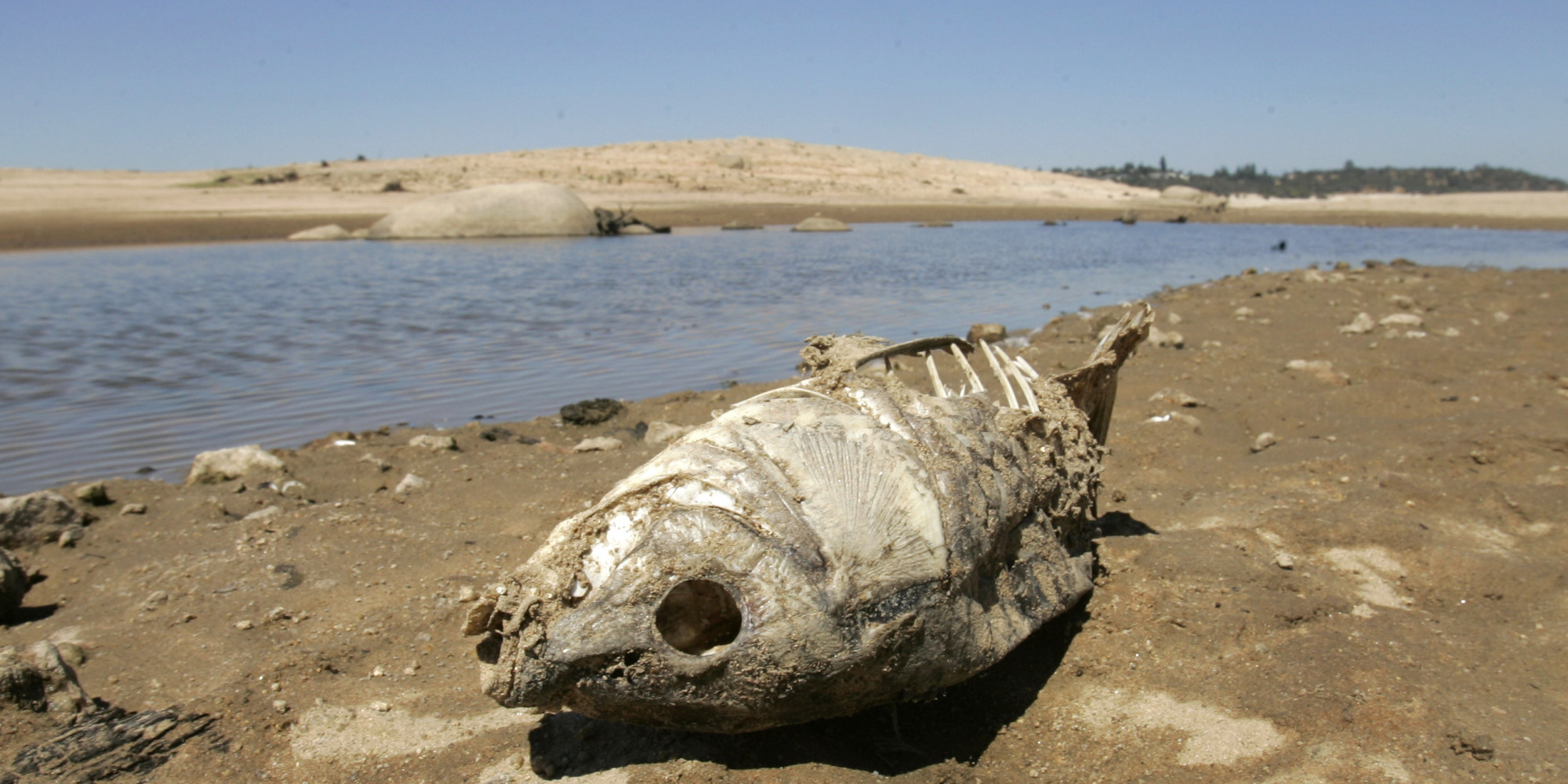
California Drought Hurts More Than the Ag Industry

Source: Shan Li; Los Angeles Times 

The California drought could dampen employment growth in coming years and have a ripple effect on several industries in the state, according to a UCLA report released Wednesday.

Economists said in the quarterly forecast that arid conditions in 2013, the driest year on record for the Golden State, could diminish the fishing and manufacturing sectors in the state. However, the effect depends on whether the drought is “normal” or the beginning of “a long arid period.”

California’s employment could be suppressed about 0.2% during the next few years because of the drought, the report concluded.

“If the drought is like the ones we had before, which are plentiful in California, then the data suggests it’s not a big deal economically,” said Edward Leamer, director of the UCLA forecast. “If this is really a climate change, that is a different story.”

Even without the weather factor, Los Angeles, among other cities, is grappling with major problems with its job market.

Among problems plaguing cities: the high cost of housing, congestion, lack of skilled workers and an unfriendly environment for businesses, said William Yu, an economist at the UCLA Anderson Forecast.

“It should not be surprising that a business is less likely to start up, relocate or expand its business in a city who is business unfriendly, especially when there are many other business-friendly cities from which to choose,” Yu wrote in the report.

Over the next year, however, UCLA economists do expect the state’s economy to continue growing.

The current drought in California not only affects the agriculture industry, but California as a whole. Individuals should take the initiative to conserve water during this tumultuous time. 

2016-05-31T19:38:05-07:00April 2nd, 2014|

Common Threads Award Recognizes Women in Agriculture

Last Thursday, California State University, Fresno hosted The Common Threads Awards Luncheon. Created to honor women in agriculture, this year’s honorees included Juliet Campos, Lorraine Machado, Alice Saviez, RoseAnn Serrano and Helen Sullivan.

“These women don’t expect any kind of recognition, yet they spend countless hours behind the scenes sharing their time, talents and treasures,” said Ag One Assistant Director of Development, Sadie Hemsath. “This type of event encourages younger generations to give back to their community and appreciate the effort that has been portrayed by those before them.”

The Common Threads Award was created in 1997 as a collaboration between Fresno State’s Jordan College of Agricultural Sciences and Technology, the California Agricultural Leadership Foundation and the Ag One Foundation. Nominees of the award demonstrate strong involvement in the agriculture industry and have made a difference in their community based on their volunteer work and philanthropic contributions.

Proceeds of the event support the Ag One Foundation, the California Agricultural Leadership Foundation, Fresno State’s Jordan College of Ag and charities of the honoree’s choice. This year, Catholic Charities, Children’s Hospital Central California, the Ag One Foundation, Hinds Hospice and Burris Park Foundation will receive donations from Common Threads.

Every year, individuals can nominate women from the Fresno, Kern, Kings, Madera, Merced and Tulare counties for the Common Threads award. In a time where agriculture literacy is amongst the utmost importance, the work of women in agriculture is imperative and appreciated.

“These five women, and the past honorees, have spent a lifetime giving back to their communities and concerning themselves with the welfare of everyone else,” said Hemsath. “It is such a joy to take a moment and recognize them and their hard work.”

2016-05-31T19:38:05-07:00April 1st, 2014|
Go to Top