About Patrick Cavanaugh

This author has not yet filled in any details.
So far Patrick Cavanaugh has created 1490 blog entries.

CDFA Official on California Farming Innovation

It is a big challenge to increase production for a hungry world.

CDFA Secretary Karen Ross spoke at a recent Soil Health symposium to discuss the critical need to increase production with less resources such as water.

“There’s a huge challenge for us to more than double our productivity and yet we are going to do it with less arable land, less available water on a global basis. So really understanding soil health and having the metrics to know what that is and what were doing is improves that as a way to maximize productivity and still get these environmental benefits that come with it. Its the demand of the time and I think California should be a leader,” said Ross.

Ross said that California has a good knowledge base to find answers.

“We’ve got some understanding world renowned Soil Microbiologists who are looking at this. But its not just going to come from academia its going to come from private companies, it’s going to come from  farmers and ranchers who are innovative themselves. And really bringing it all together, and creating that roadmap to prioritize what is it what we know? what are the gaps? How do we prioritize what needs to  happens next? and go out and seek the funding, the investment. This is a huge investment for the sustainability for our food supply and humankind,” said Ross.

Ross said that California growers are innovative in new systems of farming.

“And we see so many of our systems that are constantly adapting and seeking out the information,you know the early adopters who are willing to do some of those systems on their farm. One example is the just all the work on conservation tillage. and it usually takes a few who are willing to go first, kind of prove the concept and share it with their neighbors. Then all of a sudden it becomes the standard practice. It goes from best practices to standard practice,” said Ross.

Ross added: “But we can’t just stop with that, we have to be constantly looking at all those ways of adapting our systems.”

2016-05-31T19:34:19-07:00July 3rd, 2014|

CDFA Official on Success and Future of California Dairy

Karen Ross, Secretary for the California Department of Food and Agriculture, talks about the role of California Dairy has on the current global market, and what the future hold for the industry.

“So we really have seen a couple things going on. One is this huge constant demand for California milk-based products. the export markets looking for powders, they can’t get enough powders, they have huge confidence in the food safety of our milk production here, we‘re strategically located,” said Ross. “So that demand has really drive up prices, but at the same time fortunately for us our friends in the Midwest had great corn and soybean harvest and so those grain prices had moderated so that farmers are finally to the point where their realizing some margins and they need to rebuild their equity,” she added.

Ross mentions that industry leaders are already looking towards the future.

“We also to the credit of the leaders and the producers and processor community, are still meeting as part of their California Dairy Futures Task Force, and we actually have a couple different proposals for some reform to of our pricing system going forward, that we are taking a deeper dive in. We have some economists that are doing some analytics on that and concurrently the cooperative continues to work on the petition and we will find out people are willing to consider seriously going into a federally milk marketing order. ” said Ross.

Ross explains some aspects of the dairy industry need to change.

“So I think its healthy for the industry now that we have some margins in the business and to really think about our future and this almost 60-year old pricing system, and what works, and we want to retain and where we need to create some flexibility so that we can be very competitive  and maximize our opportunities in the export market.” said Ross.

2016-05-31T19:34:20-07:00July 3rd, 2014|

Thank a Farmer For Your Food Independence

As you fire up the grill this Independence Day, be sure to thank a farmer, whose contributions help keep the cost of a Fourth of July feast under $6 bucks a person, according to a recent survey by the American Farm Bureau Federation.

Considering Americans spend just 10 percent of our incomes on food – the lowest of any country – we are all indebted to the “thin green line” of only 210,000 full-time U.S. farms that produce a product that is safe, abundant and uniquely American.

These farmers are also critical to our nation’s “food independence.” This food security does not happen by accident. It is a blessing that is fostered by smart policy.

The roots of government involvement in U .S. agriculture are actually as old as the nation itself.   Government involvement began with the founding fathers of the nation and carries the fingerprints of other great Americans who followed.

In 1799, after years of colonies and states granting tracts of land to citizens encouraging people to plant crops and begin commerce, George Washington called for the establishment of the National Board of Agriculture to collect information on the nation’s agricultural inventories.

Not surprising since our first president was also quoted as saying: “It will not be doubted that with reference either to individual or national welfare, agriculture is of primary importance.”

President Abraham Lincoln then established the USDA in 1862, a department that has grown since then to include promoting agriculture trade, working to assure adequate and safe food and striving to end hunger in America and abroad.

Over the next 40 years, as the world population grows from 7 billion to 9 billion and demand for agricultural commodities doubles, we need such policies that encourage investment and constant improvement.

If done right, more nations and peoples will continue to know the happiness of a safe and reliable and affordable food supply.

2016-05-31T19:34:20-07:00July 3rd, 2014|

State Must Use Caution on Groundwater Management

By Danny Merkley; Ag Alert 

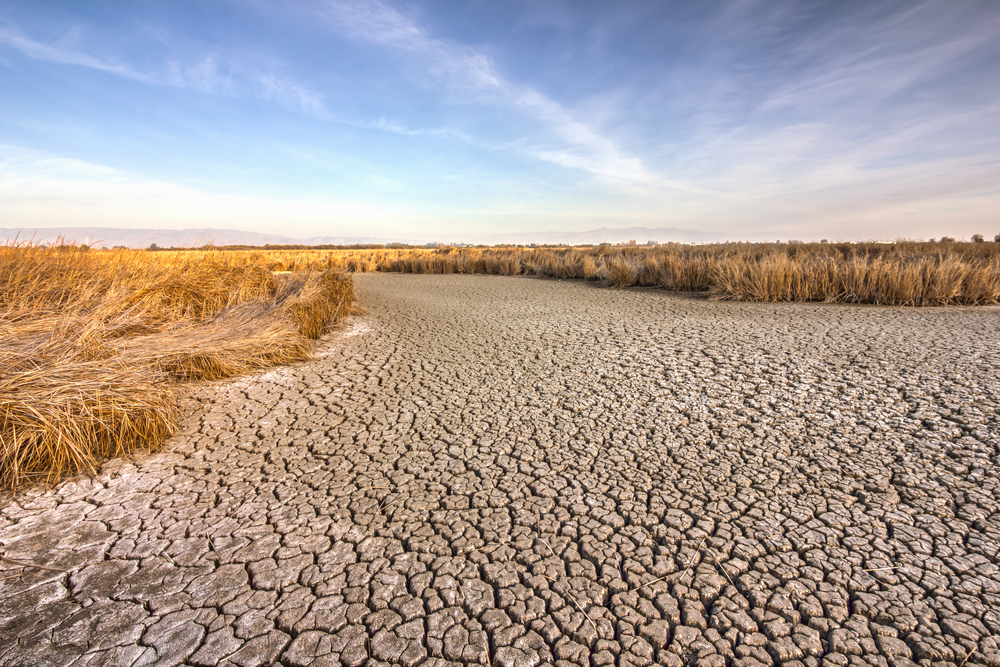
In the face of the California water crisis, many in the state Legislature appear to be rushing toward new groundwater management policy that could threaten certain property rights and the overlying groundwater rights of landowners.

Generally, legislation that has been introduced would require groundwater basins to be managed “sustainably” by local entities but would authorize the state government to step in if the local entities do not adopt management plans with certain components by a specified time.

Farm Bureau and other agricultural organizations continue to urge the Legislature to proceed with caution on the issue of groundwater management. Failure to take adequate time to address this complex issue could lead to huge, long-term impacts on farms and on state and local economies.

People’s livelihoods and jobs are definitely at stake. All involved in the effort to better manage groundwater need to focus on future ramifications of the various authorities and directives being considered.

Groundwater management is as diverse and complex as the 515 distinct basins and sub-basins in California. For that reason, Farm Bureau believes groundwater must be managed locally or regionally, while protecting overlying property rights. To their credit, most of the pending measures do provide for local management, but working out the details is certainly a challenge.

With members of the Legislature feel the need to do something about groundwater, Farm Bureau is working with other agricultural stakeholders and decision-makers to identify a path forward toward a reasonable and workable groundwater management system.

We have repeatedly stated that the reason we face groundwater challenges is not due to a lack of regulation, but because of lack of availability of surface water. It must be recognized that the state’s increased reliance on groundwater for growing food, fiber and other agricultural commodities has resulted not just from drought, but from restrictive environmental laws, court decisions, regulatory actions and “flashier” river systems, as watersheds receive rain instead of snow.

All of those factors have reduced availability of surface water—surface water that would help recharge groundwater basins and allow farmers to reduce their reliance on groundwater. Farm Bureau strongly believes groundwater recharge should be established as a beneficial use of water.

The reasonable and beneficial use of groundwater is a basic property right under California law. These rights must be recognized and respected under any groundwater-management framework. This does not mean that areas with significant overdraft issues should be ignored, but that in dealing with these areas, current groundwater rights must be protected.

It also needs to be recognized that restricting the use of groundwater has broad economic consequences for agricultural communities and the farm families, farmworkers and the related support, processing and supply enterprises in those communities. Drastic changes in groundwater policy will impact land values and the ability for farmers and ranchers to secure adequate financing, both for land acquisition and for operating expenses.

Appropriate protection of groundwater resources for future generations must be carefully thought out, not rushed through the legislative process to meet arbitrary deadlines. There’s no good time for hurried legislation, but during a critical drought year, when canals and ditches are dry and groundwater is the lifeline for farms, is absolutely the wrong time.

Please contact your representatives in the state Legislature to urge them to proceed carefully on new groundwater legislation, and to take the time necessary to adequately deliberate the issues and to identify and balance the benefits and risks going forward.

2016-05-31T19:34:20-07:00July 3rd, 2014|

Secretary Ross Teams Up With Visit California to Promote Agritourism

Two top state officials for agriculture and tourism paid Fresno a visit Monday to talk about how local growers can benefit from the fast-growing trend of agritourism.

About 60 agriculture and business leaders gathered at the California State University, Fresno campus to hear Food and Agriculture Secretary Karen Ross and Caroline Beteta, Visit California’s chief executive officer, explain how the CA Grown and Visit California brands will work with Sunset and Food and Wine magazines to promote agritourism.

Self-proclaimed foodies want to see where their meals comes from and meet the farmers behind this farm-to-fork movement.

“It’s about, ‘here’s what farmers and ranchers are doing as your neighbors,’ their environmental stewardship,” said Ross. “It’s about the pride of what we produce here, and it’s about this wonderful lifestyle and supporting the economy at the same time.”

Fresno County is the top producing agriculture county in the nation with the value of the 2012 crops reaching $6.5 billion. Of the $112 billion spent on tourism in 2012 in California, about a fourth of that was spent on food.

That same year, tourism brought $1.3 billion to Fresno County, according to Ross. Much of this is due to Yosemite tourists, the Blossom Trail and Fruit Trail, she said.

The Blossom Trail is a self-guided motor and bike tour of blossoming orchards along Fresno Country roads. The Fruit Trail is similar to a wine trail and features a drive through the county where visitors can taste and purchase local produce fresh from the farm.

The University of California at Davis runs the agricultural tourism directory for the state. Penny Leff, the agritourism coordinator with UC Davis and the Small Farm Program, said that from 2007 to 2012, agritourism has really picked up in California.

“Most families don’t have anyone on the farm anymore to go visit,” said Leff. “Farmers are interested in educating the public in what’s going on, what goes into making the food. They really want to share with the public and make them understand.”

According to UC data, the amount of sales from agritourism and recreation services has increased 84% in the state from 2007 to 2012, to $64.5 million.

A Sanger couple has seen the rise of agritourism first hand. Debbie Van Haun and her husband, Jim, own a bed and breakfast with a winery attached. She said that during the busy summer season, the area could use more businesses to handle all the tourists.

Van Haun said that most of their business comes from tourists traveling to Yosemite or Sequoia Kings Canyon National Parks, but they do see local couples trying to get away for an anniversary weekend.

“It’s a lot of hard work and is a labor of love,” Van Haun said. “We moved here thinking agritourism would make a difference in the area and it has.”

The couple opened Sequoia View Bed and Breakfast first about 15 years ago, and fixed up the vineyard in 2003. They produce 130 barrels, or 7,800 gallons, of mostly red wines annually.

Van Haun said that the Blossom Trail and Fruit Trail have increased the agritourism in the Sanger area, and the couple attributes much of the credit to the Fresno County Office of Tourism.

With the booming wine industry and traffic picking up at the bed and breakfast, Van Haun said she is seeing their revenue return to what it was in 2008.

Through CA Grown and Visit California, the state hopes to create the kind of interest in locally grown food to rival the desire people have for California wine, Beteta said.

2016-05-31T19:34:20-07:00July 3rd, 2014|

Specialty Crop School July 14-17 to Tour SJV Crops

San Joaquin Valley Specialty Crop School is July 14-17.

A compelling line-up of tours and speakers has been planned for the July 14-17 San Joaquin Valley Specialty Crop School.

This session will provide outstanding opportunities to delve into California specialty crop agriculture with its unique challenges and rewards. Tours will include almond and pistachio operations, citrus packing, table grapes and university research sites. Speakers will include Westlands Water District Public Affairs Director Gayle Holman and Mary Lou Polek with the Citrus Research Board.

This three-day course, organized by Visalia-based AgBusiness Resources has been designed to equip participants with a broad understanding of intensive crop production in California’s San Joaquin Valley- home to more than 300 different agricultural crops.

The classes will be of value to those new to horticultural crop production as well as seasoned agri-business professionals.

Pest Control Advisors and Certified Crop Advisors in attendance will receive 15 PCA and 15 CCA continuing education units.

Class size will be limited and seats are available on a first come first served basis. Early bird registration deadline is June 20.

The Salinas Valley Specialty Crop School will be Oct. 6-9.

For information about both schools, go to www.specialtycropschool.com.

2016-05-31T19:34:20-07:00July 3rd, 2014|

Organic Production Seminar in Tulare, Aug. 14

CALENDAR ITEM

 Sustainable/Organic Production in the Southern San Joaquin Valley

The all day seminar will focus on sustainable and organic production of field crops, vegetables and orchards in the San Joaquin Valley.

Subjects include: Update by Kings/Tulare County Ag Commissioners, Disease Control, BioControl, No Till Systems, Water Quality Regulations, Soil Health, Bee Health, Benefits of Compost and Soil Amendments, and a grower panel discussing challenges of fertility and pest control. Also exhibits by firms providing products acceptable for certified organic production. CEUs are offered for Certified Crop Advisers (6.0 hours) and licensed Department of Pesticide Professionals (6.0 hours)

WHO: Presented by the California Association of Pest Control Advisers, Tulare/Kings Chapter California Association of Pest Control Advisers and Organic Fertilizer Association of
California.

WHEN: Thursday, August 14, 2014, 8:00 am – 3:00 pm.

WHERE: International Agri Center, Banquet Hall, 4450 S. Laspina St., Tulare, CA

INFO: Contact Steven Beckley, (916) 539-4107, sbeckley@aol.com.

Program/registration is available at https://capcaed.com/august-14,-2014-tulare-sustainable/organic-production-in-so.-san-joaquin-valley/

2016-05-31T19:34:20-07:00July 2nd, 2014|

Stockton Wins Appeal to Pump From Delta

Stockton can continue to pump water from the Delta this summer, ensuring that its new $220 million drinking-water plant – funded by ratepayers – will not stand idle.

The city was one of thousands of junior water-rights holders in the Central Valley ordered to stop taking water in recent weeks because of the drought.

That water was needed by those with older, more senior water rights, the State Water Resources Control Board said at the time.

The city appealed, arguing that its circumstances are different. Under a special section of state water law, Stockton is allowed to pump only as much water from the Delta as it releases back into the Delta at its wastewater treatment plant, a few miles downstream.

Ultimately, the state agreed, acknowledging in a letter that the city’s permit is “unique” and saying that the city can continue to take the water.

“It’s good news,” said Bob Granberg, assistant director of the city’s Municipal Utilities Department. “We’ll be able to back off groundwater pumping, and that will definitely help.”

The Delta water should help the city avoid any unusually aggressive water conservation requirements or rationing, he said.

The fact that Stockton will be drinking from the Delta this summer after all does not diminish the need to conserve. While the city has not taken any unusual steps to reduce water use, the rules that are in place every summer still apply.

Those rules include no outdoor irrigation from 11 a.m. to 6 p.m., no washing cars unless hoses are equipped with nozzles, and no washing driveways and sidewalks except with pressure washers, among other requirements.

“We keep reminding people to conserve, and reminding them of the restrictions that are in place,” Granberg said.

2016-05-31T19:34:20-07:00July 2nd, 2014|

Agriculture Recognized by Governor’s Environmental and Economic Leadership Awards

Agriculture Environmental and Economic Leadership Awards

What do Joseph Gallo Farms, Gills Onions and Parducci Wine Cellars have in common? Yes, they are all California farms with well-known, high-quality products, but they have something else in common. They are all past winners of a Governor’s Environmental and Economic Leadership Award (GEELA), the state’s highest environmental honor.

This year, for the first time, GEELA has an agricultural category titled “Agricultural Ecosystem Services”. This category was designed for farmers and ranchers that demonstrate innovative and sustainable approaches to water conservation, efficiency and protection of working ecosystems.

CDFA has defined Ecosystem Services in agriculture as “the multiple benefits we gain from farming and ranching including crop and livestock production.

In addition to valuable open space and wildlife habitat, the management decisions and conservation practices of farmers and ranchers also enhance environmental quality, provide recreational opportunities and offer social benefits.”

CDFA recognizes there are many farmers and ranchers doing a lot on water conservation, especially in consideration of the drought.

In less than two weeks, the current application process will close for GEELA. Applications will be accepted through July 11, 2014. We hope farmers and ranchers will consider applying. Click here to apply.

2016-10-06T12:38:40-07:00July 2nd, 2014|

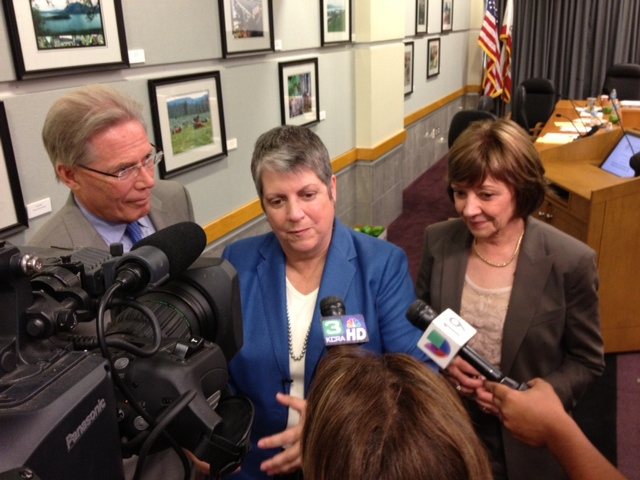
UC President Janet Napolitano Presents Food Initiative Plan to CDFA

University of California President Janet Napolitano today (July 1) presented the university’s plans for a comprehensive food initiative to the California State Board of Food and Agriculture.

The UC Global Food Initiative is intended to marshal the university’s resources — including curriculum and world-class research, student efforts and operational efforts in place across the university’s 10 campuses — to address global challenges related to food.

“This initiative grows out of a commitment made by all 10 UC campus chancellors and myself,” Napolitano said. “It is a commitment to work collectively to put a greater emphasis on what UC can do as a public research university, in one of the most robust agricultural regions in the world, to take on one of the world’s most pressing issues.”

The food initiative will build on UC’s tradition of innovative agricultural research to support farmers and ranchers. Future efforts will build on work already begun by UC’s 10 campuses and its Division of Agriculture and Natural Resources (ANR) to address internal and external issues with a variety of approaches.

UC research, for example, taught Californians how to remove salts from the alkali soils in the Central Valley, transforming that barren landscape into one of the world’s most productive farming regions, Napolitano noted in her presentation to the California State Board of Food and Agriculture.

Today, the World Food Center at UC Davis stands with 26 other centers dedicated to food and agriculture on that campus; students and faculty at UC Santa Cruz are transforming the field of agroecology; and the Berkeley Food Institute is studying the relationship between pest control, conservation and food safety on Central Coast farms. The cutting-edge Healthy Campus Initiative at UCLA taps all members of the campus community.

The initiative is not limited to seeking any single solution or set of solutions to the myriad food issues confronting the world, Napolitano said.

“The idea,” she said, “is to provide the intellectual and technical firepower, as well as the operational examples needed for communities in California and around the world to find pathways to a sustainable food future.”

In describing the building blocks for the initiative, Napolitano noted that the university’s agricultural outreach and public service programs — in every California county and more than 100 nations — bring UC resources to individuals and communities to help them access safe, affordable and nutritious food while sustaining scarce natural resources.

The university’s work also will help inform and drive policy discussions from the local to the international levels, and expand partnerships with government agencies such as the California Department of Food and Agriculture.

“This initiative shows great vision and leadership from President Napolitano and the University of California,” said CDFA Secretary Karen Ross, “Climate change and population growth will greatly strain our ability to provide healthy food to people here and around the world.

“President Napolitano’s proposal to leverage the strategic assets of the entire UC organization makes it a valuable partner in addressing the significant challenges and opportunities for our production agriculture and food system.”

Emphasizing that student engagement is key, Napolitano announced, as one of her first actions, the funding of three $2,500 President’s Global Food Initiative Student Fellowships to be awarded on each campus to undergraduate or graduate students. The fellowships will fund student research projects or internships.

Among other early efforts to be undertaken as part of the initiative are the following:

  • Internally, campuses will heighten their collective purchasing power and dining practices to encourage sustainable farming practices, and model healthy eating and zero food waste; food pantries and farmers markets that exist on some campuses will be spread to all 10. Partnerships with K-12 school districts to enhance leveraging procurement for these purposes also will be explored.
  • Food issues will be integrated into more undergraduate and graduate courses, catalogues of food-related courses will be developed, and demonstration gardens will be made available on each campus to increase opportunities for students to participate in experiential learning.
  • Data mining of existing information will be deployed to help develop insights and action plans for California agriculture and responses to climate change.

New policies will be enacted to allow small growers to serve as suppliers for UC campuses.

2016-05-31T19:34:20-07:00July 1st, 2014|
Go to Top