About Patrick Cavanaugh

This author has not yet filled in any details.
So far Patrick Cavanaugh has created 1490 blog entries.

Nut Yields May Be Reduced by Drought

Source: Christine Souza; Ag Alert

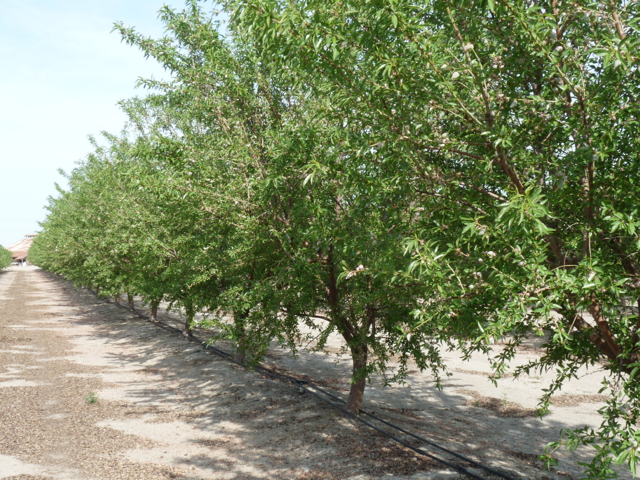
Enduring a drought that has lasted several years, growers of California’s primary nut crops—almonds, walnuts and pistachios—are finishing this year’s harvest and planning for what Mother Nature may or may not bring in the coming year.

“Location, location, location” proved critical to almond and pistachio crops in particular, and seemed to be the determining factor in whether trees had enough water and the required number of chilling hours.

Some farmers were luckier than others, including Larry Lowder of Madera. A grower of almonds and pistachios, Lowder said he was “very fortunate where we live and this year we were able to produce a crop, where others didn’t have that luxury.” He said his farm is located in a microclimate that received sufficient chilling hours during the winter, something that was lacking in other parts of the Central Valley.

Dealing with a surface water allocation of zero, Lowder said he had to rely on deep wells, and he saved as much water as possible by using drip irrigation, microsprinklers and upgraded wells.

Even with a relatively favorable situation, Lowder said his almond yields were down by about 10 percent, although pistachio yields were much better.

In some California pistachio and almond orchards, the drought resulted in a shorter crop and a higher incidence of “blanks,” when a shell lacks a viable nut or kernel.

“Some growers, who had the effect of poor pollinization as well as lack of water, their crops were significantly off and there will be crop insurance claims filed,” said Richard Matoian, executive director of Fresno-based American Pistachio Growers. “One grower said the orchard looked like it had 3,500 pounds per acre, but ended up with 800 pounds of nuts to the acre.”

The U.S. Department of Agriculture estimated this year’s California pistachio crop at between 485 million and 500 million pounds, Matoian said, which is smaller than expected because it was to be an “on year” for pistachios. New figures from the Administrative Committee for Pistachios have increased the estimate to 515 million pounds, which Matoian said was “larger than expected in midsummer but certainly lower than original expectations.”

Many pistachio growers purchased emergency supplies of water, Matoian said, paying as much as $3,000 per acre-foot. Reports from the almond sector showed some growers paid between $1,200 and $2,200 per acre-foot.

Reflecting on how almond growers negotiated the drought, Mel Machado, assistant director of member relations for Blue Diamond Growers, said some orchards were either removed or abandoned, and water was moved from older blocks of trees to younger blocks.

“Growers have learned a lot about how to manage the water they have, but even with good technology and good application, there are orchards that definitely had increased stress this year,” Machado said. “You can see it in the lack of growth of the trees.”

Farmer Stan Wilson of Shafter grows almonds and other crops, and said he made it through this season on well water, but had to reactivate old wells, add extensions to pumps and install an underground pipeline so that he could move water from one field to another.

“We made it through the year. We had no surface water at all, so the only water supply we had was from wells. It is the first year we had zero deliveries,” said Wilson, who fallowed about 160 acres of row crops as a result of the drought.

With harvest drawing to a close, Machado reported that this year’s almond crop is hovering at around 1.85 billion pounds, down from the earlier government estimate of 2.1 billion pounds. Machado said he has seen higher levels of rejects in the almonds produced, but there were problems in addition to drought that played a part, such as varying degrees of stress and salinity issues.

“Quite frankly, we needed the 2.1 billion pounds. A lot of people look at orchards planted over the past few years and say, ‘What are you going to do with those when they come into production?’ Well, we’re going to market them. There is demand out there for the product. We’re still in a demand-exceeds-supply situation,” Machado said.

With just a few more weeks left of harvest, California walnut growers expect a crop that is 545,000 tons, which would be a record, said Dennis Balint, CEO of the California Walnut Commission. No official production figure will be known until harvest is complete, but Balint attributed the expected increase to newly planted orchards and young orchards that are coming into production with higher yields.

He, too, reported continued strong demand.

“Traditionally, we’ve been the ingredient nut, but demand for walnuts is strong and health benefits are starting to drive demand for walnuts. We are seeing more snacking, which we are pleased with,” Balint said.

Marketers said the increasing demand for California nut crops in domestic and global markets is good news for growers. There are 200,000 bearing acres of pistachios in California, and 100,000 acres are non-bearing, Matoian said. For almonds, USDA reported there are 860,000 bearing acres, with 80,000 non-bearing acres. There are an estimated 280,000 bearing acres of walnuts in California, and 45,000 acres that are non-bearing.

For the almond business, Machado said, “the limitation on the crop is going to be water. Water is going to be the competing factor for the almond crop, just as it is for just about every other crop in the Central Valley.”

As winter approaches, nut growers said they are hopeful that the state’s water situation changes for the better, although, Matoian said, “Even if we have a good rain year, we are going to have a lack of water available to growers; that is inevitable. That is what we’re being told by water regulators.”

2016-05-31T19:32:17-07:00November 3rd, 2014|

CA Farm Bureau President Paul Wenger: We Need to Fix Disconnect

This Tuesday, We Urge Yes Vote on Proposition One

By Patrick Cavanaugh

“There is a big misconception between California urban areas and farmers,” said Paul Wenger, a Stanislaus County walnut farmer and President of the California Farm Bureau Federation in Sacramento. “The urban population really doesn’t realize what we do on our farms and ranches. They think we misuse water, they think that we are polluting the environment, and yet they are very happy to go to the store and have reasonably-priced food. This is a major disconnect,” said Wenger.

Paul Wenger, California Farm Bureau Federation President

Paul Wenger, California Farm Bureau Federation President

Wenger noted that all agricultural associations must get the word out about what agriculture does to provide nutritious food for all.  “But the best thing is to be more politically active and assert ourselves in the affairs of Sacramento and Washington, D.C.,” he noted.

“While most urban consumers think that farmers waste water, the truth is that farmers have doubled their production with the same amount of water that we have used each year in the last 40 years,” emphasized Wenger. “In fact, many farmers are providing nutritious food using far less water than they had just 10 years ago,” said Wenger. “And this is a problem, because everyone thinks farmers can continue conserving water,” Wenger said.

“We have heard from The Pacific Institute that if we would just use more conservation irrigation and low-flush toilets, we would have ample water for the foreseeable future, but nothing could be further than the truth,” Wenger said.

“With 38 million people in the state and California farmers growing for an increasing world population, we need more water,” noted Wenger.

Wenger urged all Californians to vote YES on Proposition 1, which will set the stage for increased water storage in heavy rain and snow years, which will allow for extra supplies during lean years.

2016-05-31T19:32:17-07:00November 1st, 2014|

CA FARM WORKERS TO HOLD ELECTION NIGHT VIGIL TO PROTEST LABOR BOARD VOTER SUPPRESSION

Let’s All Show Support for These Valiant Farm Workers, Who are Striving to Get their VOICES Heard


By: Laurie Greene; Cal Ag Today Editor/Reporter

Hundreds of farm workers will gather outside a California election office on election night to protest a state labor board suppressing their votes from a union decertification election.  The workers, from Fresno-based grape and fruit grower, Gerawan Farming Inc., voted to decertify the United Farm Workers (UFW) last November, but the California Agricultural Labor Relations Board (ALRB) locked up the ballots and is refusing to count them.

“It’s an outrageous attempt to help the UFW impose a contract on these workers that will take 3 percent of their pay against their will,” said Center for Worker Freedom executive director Matt Patterson.

So on Tuesday November 4, Gerawan workers, their families and supporters will hold a silent candlelight vigil at an elections office at 2221 Kern Street in Fresno, CA from 8:00 pm-9:30 pm.    The silence will represent their voices being stolen by the ALRB; the candles will represent their hope for freedom from the UFW.

“Everyone’s vote will be counted that night.  We want to remind people that we are still waiting for ours to be counted a year after our election” says Areli Sanchez, one of the thousands of workers denied their constitutionally protected freedoms of speech and assembly by the ALRB. “We have been screaming for Governor Brown to help us for a year.  Maybe now he will hear our silence,” said Sanchez, a 14-year Gerawan employee.

Meanwhile, on Wednesday, the Los Angeles City Council publicly supported a group of Gerawan farm workers seeking the union contract, as Gerawan sells its produce in Los Angeles stores under the Prima label.

In a letter to the LA Times editor on October 27, 2014, Kenneth Cleveland, Malibu, a management consultant who has worked with Gerawan Farming on and off for almost 30 years, said:


I know [Gerawan’s] operations well, and I know many of the company’s employees. The Gerawans are an immigrant family from Lebanon who many years ago started by farming several acres of peaches in Reedley, Calif. Today they are one of the county’s leading growers and processors of stone fruit and table grapes.


The working conditions at Gerawan Farming are excellent, and its wage scales exceed those of the United Farm Workers. It has provided many jobs for other immigrant families.


The Los Angeles City Council has no business interfering with an enterprise in Fresno County. The council’s motive is obviously to gain favor with the UFW, a big campaign contributor.


The council members should spend their efforts and their constituent’s resources on Los Angeles.


The California Agricultural Labor Relations Board was created in 1975 to ensure peace in the fields of California by guaranteeing justice for all agricultural workers and stability in agricultural labor relations, according to their website. The Board seeks to achieve these ends by providing orderly processes for protecting, implementing, and enforcing the respective rights and responsibilities of employees, employers and labor organizations in their relations with each other.

Founded in 1962 by Cesar Chavez, the United Farm Workers of America is the nation’s first successful and largest farm workers union currently active in 10 states, according to their website. The UFW continues to organize in major agricultural industries across the nation to provide farm workers and other working people with the inspiration and tools to share in society’s bounty.
The Center for Worker Freedom (CWF), a non-profit, educational organization dedicated to warning the public about the causes and consequences of unionization, is helping to coordinate the vigil. CWF supports freedom of association and believes every worker should have the right to decide for themselves whether or not they belong to a labor organization, according to their website.
CWF is a special project of Americans for Tax Reform, a nonprofit taxpayer advocacy research and educational organization.
2016-05-31T19:32:17-07:00October 31st, 2014|

SURPRISE: EWG recommends Fruits & Vegetables – Conventional or Organic

EWG to Continue Publishing  “Dirty Dozen” List of Conventional Produce

By Laurie Greene; CalAgToday Editor, Reporter

This week, Marilyn Dolan, the Executive Director of the Alliance For Food and Farming[1] (AFF) sent a letter to Environmental Working Group[2] (EWG) President Ken Cook requesting they discontinue their annual release of the so-called “dirty dozen” list. Scott Faber, EWG’s Vice President of Government Affairs responded online TODAY that “EWG’s top shelf advice is to eat your fruits and veggies. But, as EWG’s research shows, not all veggies are the same, and some have more pesticide residues than others. That’s why we will ignore the call to discontinue publishing our Shopper’s Guide.”Food Scoring Factors

This correspondence comes following EWG’s statement that organic and conventional produce are best foods for consumers and that organization’s new and strongly worded recommendation about the need for increased consumption of all fruits and vegetables – whether they are organically or conventionally grown. The statement accompanied the release of EWG’s Food Scores: Rate Your Plate, an easy-to-use food database and mobile app on October 27, 2014 that rates and shares information for more than 80,000 foods from about 1,500 brands in a simple, searchable, online format. “The new database is the most comprehensive food-rating database available to consumers,” EWG said in a statement. “Its scoring system factors in not only nutrition, but also ingredients of concern, such as food additives, and contaminants. It also estimates the degree to which foods have been processed.”

Each year, EWG publishes Shopper’s Guide To Pesticides In Produce “to help consumers find conventional fruits and vegetables with low concentrations of pesticide residues,” explained Sonya Lunder, EWG’s senior analyst and principle author of the report.  “If a particular item is likely to be high in pesticides, people can go for organic.”

While the annual Shopper’s Guide features a “Clean Fifteen” section of conventional produce with the least amount of pesticide residues, it is famous for its annual “Dirty Dozen” list of the most pesticide-contaminated produce and its Dirty Dozen™ Plus” highlights hot peppers and leafy greens – kale and collard greens – often tainted with unusually hazardous pesticides. The Alliance for Food and Fiber has worked hard to debunk the dirty dozen list,” said Dolan, “with good scientific evidence that even though produce may have crop protection product residues on a small percentage of the total volume of produce, the residue is far less than FDA standards.”

Here is the letter from AFF to EWG, in its entirety.

Mr. Cook:AFF

We noted your organization’s acknowledgment in the “Food Scores” database that both conventional and organic fruits and vegetables should be considered best food choices for consumers.  We also saw the Environmental Working Group’s new and very strong statement concerning the need to increase daily produce consumption for most Americans now posted on your website. 

As you are well aware, our organization, the Alliance for Food and Farming (AFF), has repeatedly requested that you discontinue the publication of your annual “dirty dozen” list because it is misleading to consumers, is not peer-reviewed and is not based on real risk.  The conventional and organic fruit and vegetable farmers we represent produce a very safe product that experts around the world agree we should all be eating more of for better health.  In addition, the USDA, FDA and EPA all clearly state that residues do not pose a food safety concern.

For these reasons, along with EWG’s new and strong acknowledgement of the health and safety of conventional produce, the AFF renews its call for your organization to end your annual release of the “dirty dozen” list.

While there is still much information to come with respect to the validity and credibility of your new “Food Scores” report, we are pleased to see that, for produce, this new report supports decades of nutritional studies showing the health benefits of a diet rich in fruits and vegetables – regardless of whether they are organic or conventional. We are sure you would agree that it is illogical for your organization to urge consumers to eat more conventional produce while simultaneously mislabeling these safe and healthy foods “dirty,” “toxic laden,” and “contaminated” among other things.

Therefore we ask you to stop unfairly disparaging conventionally grown fruits and vegetables with your annual “dirty dozen” list release.  Instead, please continue on the positive path you’ve established with your new statement urging increased consumption. That is the right message for consumers and also meets your organization’s stated objective to “empower people to live healthier lives.”

We look forward to hearing from you regarding your future intentions for the so-called “dirty dozen” list.

Sincerely,

Marilyn Dolan, Executive Director, Alliance for Food and Farming


Here is the Scott Faber, EWG’s Vice President of Government Affairs’s response to AFF TODAY in its entirety:

Food industry lobbyists are none too pleased with EWG’s new scoring system for foods, accusing EWG’s Food Scores of:

         “Misinformation”

EWG

         “Void of scientific rigor”

         “Inaccurate and misleading information”

         “Extreme and scientifically unfounded views”

Seems like we hit a nerve.

Apparently, helping consumers identify those foods with too much fat, sugar and salt  — as well as foods with unregulated food chemicals or too much mercury – is giving Big Food’s hired guns indigestion.

Of course, food manufacturers don’t like scoring systems like NuVal or Guiding Stars, so it’s no surprise they are already attacking Food Scores.

Could it be that so many packaged foods score poorly?

Here’s what we found: far too many packaged foods have too much sugar, salt and fat and many foods contain chemicals or other ingredients of concern.  Overall, 25 percent of the 80,000 products we reviewed received and 8, 9 or 10. (For EWG, less is more: the best foods score a 1, while the worst foods score a 10.)  

Big Food’s lobbyists contend that we relied upon “isolated studies” to include added sugars and some low-calorie sweeteners in our scores. By “isolated studies,” they mean peer-reviewed research by the Institute of Medicine, the health arm of the National Academy of Sciences.

Big Food’s lobbyists also claim that we used “online sources” to address the risks posed by arsenic and other food contaminants. By  “online sources,” they mean the Food and Drug Administration.

In fact, our scoring system is based upon hundreds of studies conducted by leading experts, including those at the World Health Organization. And, unlike industry-funded studies of food chemicals, the studies that served as our references are available for everyone to see.

Big Food’s lobbyists are especially peeved that EWG recognized that organic foods score better than conventional foods.

Well, duh. Unlike so-called “natural” foods peddled by food giants, certified organic foods cannot be produced with toxic pesticides, antibiotics and hormones. The U.S. Department of Agriculture has even stricter rules when it comes to what can go into “flavors.”  Nor can organic food use genetically engineered ingredients, though GE content doesn’t factor into our scoring system.

Even fruit and vegetable lobbyists took time to bash EWG’s new food scoring tool.  Top scores for actual fruits and vegetables weren’t enough for the Alliance for Food and Farming, a trade association that represents conventional produce growers, which accused EWG of making “disparaging, inaccurate safety claims” in our Shopper’s Guide to Pesticides in Produce. This is the same group that blamed EWG for scaring people away from healthy food and spent $180,000 of your tax dollars erroneously claiming the Shopper’s Guide discourages people from eating their fruits and veggies.

As regular users of the Shopper’s Guide know, EWG’s  top shelf advice is to eat your fruits and veggies. But, as EWG’s research shows, not all veggies are the same, and some have more pesticide residues than others. That’s why we will ignore the call to discontinue publishing our Shopper’s Guide.

It seems that some food and farm lobbyists can’t handle the food truth.

LessIsMore

[1]AFF, a non-profit organization comprised of approximately 50 agriculture associations, commodity groups and individual growers/shippers who represent farms of all sizes and includes conventional and organic production, works to provide a voice for farmers to communicate their commitment to food safety and land stewardship. Through outreach to the media and consumers, the Alliance provides information and scientific analyses on many food safety subjects, including foodborne illness and pesticide use, among others. “The Alliance for Food and Fiber has worked hard to debunk the dirty dozen list with good scientific evidence that even though produce may have crop protection product residues on a small percentage of the total volume of produce, the residue is far less than FDA standards.”

[2]The Environmental Working Group http://www.ewg.org/about-us, a non-profit, non-partisan organization dedicated to protecting human health and the environment, aims to empower people to live healthier lives in a healthier environment by driving consumer choice and civic action with:

  • game-changing investigations, research and debate on toxics and environmental health, food and agriculture, and water and energy
  • a team of scientists, policy experts, lawyers, communication experts and programmers who stand up for public health when government or industry won’t.
2016-05-31T19:32:17-07:00October 30th, 2014|

USDA to provide $4 million for honey bee habitat

By: Monique Bienvenue; Cal Ag Today Social Media Manager/Reporter

Agriculture Secretary Tom Vilsack announced that more than $4 million in technical and financial assistance will be provided to help farmers and ranchers in the Midwest improve the health of honey bees.

“The future of America’s food supply depends on honey bees, and this effort is one way USDA is helping improve the health of honey bee populations,” Vilsack said. “Significant progress has been made in understanding the factors that are associated with Colony Collapse Disorder and the overall health of honey bees, and this funding will allow us to work with farmers and ranchers to apply that knowledge over a broader area.”

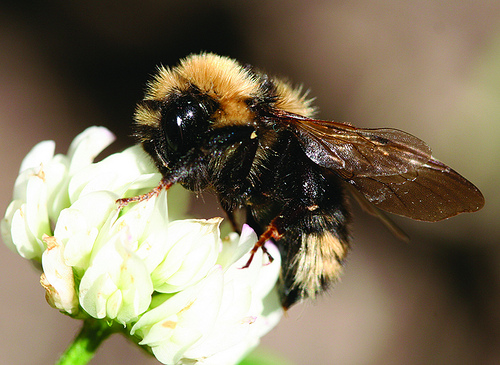
An estimated $15 billion worth of crops is pollinated by honey bees, including more than 130 fruits and vegetables. USDA’s Natural Resources Conservation Service (NRCS) is focusing the effort on five Midwestern states: Michigan, Minnesota, North Dakota, South Dakota and Wisconsin. This announcement renews and expands a successful $3 million pilot investment that was announced earlier this year and continues to have high levels of interest.

From June to September, the Midwest is home to more than 65 percent of the commercially managed honey bees in the country. It is a critical time when bees require abundant and diverse forage across broad landscapes to build up hive strength for the winter.

The assistance announced will provide guidance and support to farmers and ranchers to implement conservation practices that will provide safe and diverse food sources for honey bees. For example, appropriate cover crops or rangeland and pasture management may provide a benefit to producers by reducing erosion, increasing the health of their soil, inhibiting invasive species, and providing quality forage and habitat for honey bees and other pollinators.

This year, several NRCS state offices are setting aside additional funds for similar efforts, including California – where more than half of all managed honey bees in the U.S. help pollinate almond groves and other agricultural lands – as well as Ohio and Florida.


2016-05-31T19:32:17-07:00October 30th, 2014|

Research Targeting the ACP Olfactory System Shows Promise

A University of California Riverside Asian citrus psyllid (ACP) research team, led by Anandasankar Ray, associate professor of entomology, has found a new tool that targets the ACP olfactory system.  The ACP olfactory system is sensitive to a variety of odorants (odor molecules) released by citrus plants; in fact the ACP depends on its sense of smell to identify its citrus hosts, and this discovery offers an opportunity to develop new attractants and repellents, according to Ray.

Anandasankar Ray, UC Riverside Associate Professor of Entomology

Anandasankar Ray, UC Riverside Associate Professor of Entomology

As reported in Entomology Today, Ray’s research has identified a blend of odorants found in nature, including myrcene, ethyl butyrate and p-cymen, that can lure ACPs to sticky traps. In the study, odor-based traps caught nearly 230 percent more ACPs than conventional traps placed on the same trees.  “What’s particularly encouraging is that these three chemicals are affordable, useful in small quantities, and safe for human handling,” said Ray, with the potential of being developed into monitoring, masking and surveillance tools.

“We anticipate that this odor-based insect lure could be of use to growers in California and other parts of the world where ACP invasion is occurring,” Ray commented. “Our study also reports identification of odors that block the ACP olfactory system from detecting citrus odors and have potential for development into repellents.”

“Similar approaches can be taken to develop control strategies using odors for other insect pests of crops as well,” Ray explained.  UCR has great strengths in insect chemosensory research ranging from chemical ecology to olfactory and gustatory neurobiology of behavior. With expertise ranging from very basic science to applied areas, several UCR collaborating laboratories are working to find ways to control insects that transmit diseases like West Nile virus and malaria, in addition to citrus greening disease. UCR discoveries have the potential to bring about a paradigm shift in controlling these diseases. 

Study results on the lures were published in PLOS ONE, and the large-scale identification of odors detected by ACP was published in Chemical Senses.

2016-05-31T19:32:17-07:00October 30th, 2014|

ACP Quarantine in San Joaquin County, Guidelines and Scholarship

Expanded ACP Quarantine

Two portions of San Joaquin County have been placed under Asian citrus psyllid (ACP) quarantine following detections of one ACP within the City of Manteca and one within the City of Lodi. The quarantine zone in Manteca measures 105 square miles and in Lodi it measures 95 square miles.

The quarantine prohibits the movement of citrus and curry tree nursery stock out of the quarantine area and requires that all citrus fruit be cleaned of leaves and stems prior to moving out of the quarantine area. An exception may be made for nursery stock and budwood grown in USDA-approved structures that are designed to keep ACP and other insects out. Residents with backyard citrus trees in the quarantine area are asked not to transport citrus fruit or leaves, potted citrus trees, or curry leaves from the quarantine area.

Asian citrus psyllid (Source: UC ANR)

Asian citrus psyllid (Source: UC ANR)

The ACP, a tiny (0.125 in. length) mottled brown insect that is about the size of an aphid, is an invasive species of grave concern because it can carry the disease huanglongbing (HLB), also known as citrus greening. All citrus and closely related species such as curry trees are susceptible, and there is no cure. Once infected, a diseased tree will decline in health with yellowing shoots, asymmetrical leaf mottling and abnormally shaped bitter fruit until it dies—typically within three years.  HLB was detected once in California, in 2012, on a residential property in Hacienda Heights, Los Angeles County.  This plant disease does not affect human health.

Residents in the area who think they may have seen ACP or symptoms of HLB on their citrus trees are urged to call CDFA’s Pest Hotline at 1-800-491-1899.  For more information on the ACP and HLB, please visit: www.cdfa.ca.gov/go/acp

ACP Effective Treatments

The University of California Agriculture and Natural Resources’ Integrated Pest Management (IPM) Program  has developed treatment guidelines for citrus growers within the quarantine zones. A general principle when applying insecticides to control ACPs in commercial citrus is that no one insecticide fully controls ACP across all life stages because:

  • All stages are difficult to contact with insecticides; eggs and nymphs are tucked inside new foliage and adults can fly.
  • Some insecticides show better efficacy against one stage over another.
  • Because systemic neonicotinoid insecticides require root activity for uptake, they are best applied during June through September.

The UC IPM Guidelines for Citrus provides a ranked list of insecticides that are effective against the Asian citrus psyllid with the pesticides having the greatest IPM value listed first—the most effective and least harmful to natural enemies, honeybees, and the environment are at the top of the table.

According to Mark Hoddle, UC Riverside (UCR) Director, Center for Invasive Species Research, “The science of biological control, the use of a pest’s natural enemies to suppress its populations to less damaging densities,” shows promise against the ACP with releases over the last three years of Tamarixia radiata–a parasitic wasp from Pakistan–in urban areas of southern California Thus far, this natural ACP enemy helps to control ACP growth in residential areas, but is inadequate for commercial application.

Biological Control Scholarship Fund

Harry Scott Smith (Source: Citrus Research Board, "Citrograph")

Harry Scott Smith (Source: Citrus Research Board, “Citrograph”)

Harry Scott Smith was the first to use the phrase “biological control” in 1919 at the meeting of Pacific Slope Branch of the American Association of Economic Entomologists at the Mission Inn in Riverside. Smith worked on the biological control of gypsy moth with USDA, then moved to the University of California Riverside where he eventually created and chaired the Department of Biological Control, which offered the only graduate degree in biological control in the world.

The Harry Scott Smith Biological Control Scholarship Fund at UCR aims to attract the brightest students to study biological control by providing assistance to its students to attend conferences to present their research or to participate in training workshops. More information on the Scholarship, past awardees, and a list of donors can be reviewed on the website.

Sources: CDFA; UC IPM; UC Riverside (UCR); UCR Center for Invasive Species Research; USDA Animal and Plant Health Inspection Service (APHIS)

2016-05-31T19:32:17-07:00October 30th, 2014|

USDA Extends Dairy Margin Protection Program Deadlines

USDA is extending the deadlines for the Dairy Margin Protection Program. Farmers now have until Dec. 5, 2014, to enroll in the voluntary program, established by the 2014 Farm Bill. Coverage election in subsequent years will take place from July 1 through September 30.

The program provides financial assistance to participating farmers when the margin – the difference between the price of milk and feed costs – falls below the coverage level selected by the farmer.

Producers are encouraged to use the online Margin Protection Program Decision tool at www.fsa.usda.gov/mpptool to calculate the best levels of coverage for their dairy operation. The secure website can be accessed via computer, smartphone or tablet.

The U.S. Department of Agriculture (USDA) also extended the opportunity for public comments on both the Margin Protection Program and the Dairy Product Donation Program until Dec. 15, 2014Comments can be submitted to USDA via the regulations.gov website at http://go.usa.gov/GJSA.

The Dairy Product Donation Program (DPDP), authorized by the 2014 Farm Bill through Dec. 31, 2018, addresses low margins for dairy operations by using Commodity Credit Corporation (CCC) funds to purchase dairy products for donation to public and private nonprofit organizations that provide nutrition assistance to low-income populations. Purchases are only made by USDA during periods of low margins. No enrollment is required for dairy operators to benefit from the DPDP. The Farm Service Agency (FSA) and the Food and Nutrition Service (FNS) will administer DPDP if ever triggered.

2016-05-31T19:32:17-07:00October 30th, 2014|

Celebrate the Holidays – the Fun and Healthy Way

By: Monique Bienvenue; Cal Ag Today Social Media Manager/Reporter

Keeping your family healthy this holiday season can be tough. With festive cakes, pastries and candy lined up in every aisle of the grocery store, it’s easy to fall off the healthy train.

Fortunately for us, MyPlate has done a fabulous job of creating a beautifully comprehensive list of ways to incorporate healthy habits into your next holiday gathering. Here are some tips that could help you coordinate a fun and healthy event for everyone!

  1. Make healthy habits part of your holiday celebration: Make activities, not food, the center of attention at your next event. This will keep your guests moving and their hands off all the snacks.
  2. Make foods look festive: Use healthy foods, such as nuts or veggies, to decorate your meals.
  3. Add a bit of “health” to your drinks: Serve fruit infused water, or make ice cubes out of juice.
  4. Savor the flavor: Instead of scarfing down a whole meal, take time to enjoy each and every bite.
  5. Incorporate MyPlate.com to make sure every food group is represented in your main dish.
  6. Make moving part of the event: Make sure the music is on and that your guests are dancing!
  7. Experiment with healthy recipes: Make healthy recipes a mandatory part of your party-planning.
  8. Make the cleaning process fun: Get the kids involved! It’ll keep the moving and it’ll help you get the job done faster.
  9. Shop smart and eat smart: Healthy food can be expensive, try to buy products that are in season and fit your budget.
  10. Be a cheerleader for healthy habits: Children are like sponges; the more they see you maintain a healthy lifestyle, the more they’re likely to do the same.

Stay healthy this holiday season; go to http://www.choosemyplate.gov recipe ideas, nutrition facts and healthy tips. 


2016-05-31T19:32:18-07:00October 28th, 2014|

Upcoming CDFA Meeting to Discuss Dairy Digester Research Program

Dairy Digesters Are Needed to Reduce Greenhouse Gas Emissions

The California Department of Food and Agriculture (CDFA) is developing a new program, the Dairy Digester Research and Development Program, authorized by the Budget Act of 2014 (Chapter 25, Statutes of 2014). CDFA was appropriated $12 million dollars from the Greenhouse Gas Reduction Fund to provide financial assistance for the installation of dairy digesters in California, which will result in reduced greenhouse gas emissions.

CDFA will administer the program in two phases, beginning with Phase I, Dairy Digester Development and Phase II, Research. An estimated $11 million in competitive grant funding will be awarded to provide financial assistance for the implementation of dairy digesters that result in reduced greenhouse gas emissions and provide other environmental benefits (Phase I). An estimated $500,000 will be made available for research and demonstration projects that improve the economic performance of dairy digesters (Phase II).

Three public stakeholder meetings have been scheduled in November 2014 to explain the new program and to receive comments and suggestions. These public meetings will be held on the following dates and at the following locations:

Thursday, November 6, 2014 – 2:30 p.m. – 5:30 p.m.

University of California Cooperative Extension Stanislaus County

3800 Cornucopia Way

Room: HI

Modesto, CA 95358


Monday, November 10, 2014 – 1:00 p.m. – 4:00 p.m.

University of California Cooperative Extension Tulare County

4437 S. Laspina Street (Across the street from World Ag Expo)

Room: Tulare County Agricultural Building Auditorium

Tulare, CA 93274


Thursday, November 13, 2014 – 1:00 p.m. – 4:00 p.m. Includes Webinar access!

California Department of Food and Agriculture

1220 N Street Room: Auditorium

Sacramento, CA 95814


The meeting on November 13 will include a webinar to allow remote attendance.


More information about this program is available on the CDFA Environmental Stewardship websiteFor additional information on dairy digesters, click on: California EPA Digesters and California EPA Anaerobic Digestion.

2016-05-31T19:32:18-07:00October 28th, 2014|
Go to Top