About Patrick Cavanaugh

This author has not yet filled in any details.
So far Patrick Cavanaugh has created 1490 blog entries.

U.S. Will be first Country of Honor for Wine in Vinexpo 2015

U.S. is Largest Wine Consumer – Both in Volume and Value

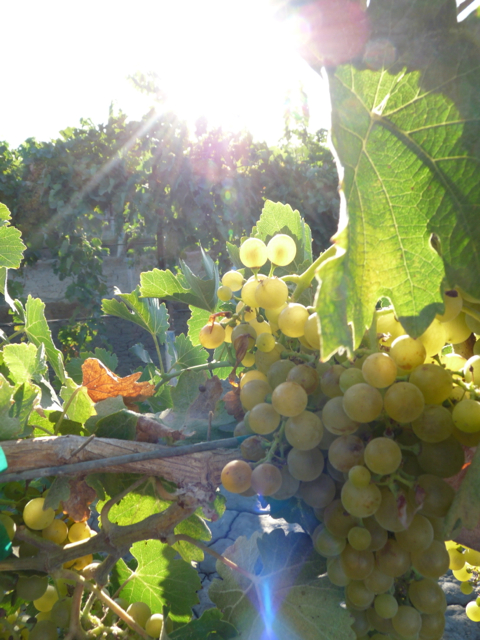
The world’s leading show for wine and spirits professionals, Vinexpo 2015 has designated the U.S. as its first-ever Country of Honor – a distinction that will give the American wine industry maximum exposure throughout the show. Of course California will be prominently featured.

The Theme “Taste the Unexpected,” Vinexpo 2015 will be held June 14-18 2015 in Bordeaux, France.VineExpo 2015

The Country of Honor designation acknowledges the U.S.’s ascendancy as the world’s top wine-consuming nation. A 2014 Vinexpo-commissioned study by International Wine and Spirit Research revealed that in 2011, the U.S. surpassed France and Italy to lead the world in wine consumption in both volume and value.

Between 2012 and 2016, American annual wine consumption is projected to grow by more than 12 percent, or 40.5 million cases, again mostly from wine produced in California.

 

2016-05-31T19:32:14-07:00November 18th, 2014|

Farmers, Agriculture Technology Providers Reach Agreement on Big Data Privacy and Security Principles Expected to Accelerate Technology Adoption

By: Monique Bienvenue; Cal Ag Today Social Media Manager/Reporter

A coalition of major farm organizations and agriculture technology providers (ATPs) announced an agreement on data privacy and security principles that will encourage the use and development of a full range of innovative, technology-driven tools and services to boost the productivity, efficiency and profitability of American agriculture.

The coalition supporting the principles includes: American Farm Bureau Federation, American Soybean Association, Beck’s Hybrids, Dow AgroSciences LLC, DuPont Pioneer, John Deere, National Association of Wheat Growers, National Corn Growers Association, National Farmers Union, Raven Industries, The Climate Corporation – a division of Monsanto, and USA Rice Federation.

“The principles released today provide a measure of needed certainty to farmers regarding the protection of their data,” said American Farm Bureau President Bob Stallman. “Farmers using these technology-driven tools will help feed a growing world while also providing quantifiable environmental benefits. These principles are meant to be inclusive and we hope other farm organizations and ATPs join this collaborative effort in protecting farm-level data as well as educating farmers about this revolutionary technology.”

The principles promise to greatly accelerate the move to the next generation of agricultural data technology, which includes in-cab displays, mobile devices and wireless-enabled precision agriculture that has already begun to boost farm productivity across the United States.

Central to the effort surrounding the principles will be grower education initiatives that will include an easy-to-use transparency evaluation tool for farmers. The tool would allow farmers to compare and contrast specific issues within ATP contracts and to see how the contracts align with these agreed-upon principles, and how ATPs manage and use farmers’ data.

“The privacy and security principles that underpin these emerging technologies, whether related to how data is gathered, protected and shared, must be transparent and secure. On this matter, we all agree,” said Stallman. “Farmers are excited about this new technology front, which is why Farm Bureau asked these groups to come together and begin this collaborative dialogue.”

The principles cover a wide range of issues that must be addressed before most farmers will feel assured to share their private business information with data providers. Highlights include:

  • Ownership: The group believes that farmers own information generated on their farming operations. However, farming is complex and dynamic and it is the responsibility of the farmer to agree upon data use and sharing with the other stakeholders with an economic interest such as the tenant, landowner, cooperative, owner of the precision agriculture system hardware, and/or ATP etc. The farmer contracting with the ATP is responsible for ensuring that only the data they own or have permission to use is included in the account with the ATP.
  • Collection, Access and Control: An ATP’s collection, access and use of farm data should be granted only with the affirmative and explicit consent of the farmer.
  • Notice: Farmers must be notified that their data is being collected and about how the farm data will be disclosed and used.
  • Third-party access and use: Farmers and ranchers also need to know who, if anyone, will have access to their data beyond the primary ATP and how they will use it.
  • Transparency and Consistency: ATPs shall notify farmers about the purposes for which they collect and use farm data. They should provide information about how farmers can contact the ATP with any inquiries or complaints, the types of third parties to which they disclose the data, and the choices the ATP offers for limiting its use and disclosure.
  • Choice: ATPs should explain the effects and abilities of a farmer’s decision to opt in, opt out or disable the availability of services and features offered by the ATP.
  • Portability: Within the context of the agreement and retention policy, farmers should be able to retrieve their data for storage or use in other systems, with the exception of the data that has been made anonymous or aggregated and is no longer specifically identifiable.
  • Data Availability: ATPs agree they should provide for the removal, secure destruction and return of original farm data from the ATP, and any third party with whom the ATP has shared the data, upon request by the account holder or after a pre-agreed period of time.
  • Market Speculation: ATPs will not use farm data to illegally speculate in commodity markets.
  • Liability & Security Safeguards: The ATP should clearly define terms of liability. Farm data should be protected with reasonable security safeguards against risks such as loss or unauthorized access, destruction, use, modification or disclosure.

Privacy and Security Principles for Farm Data can be found here: http://bit.ly/1zjQ4Sk.

2016-05-31T19:32:14-07:00November 17th, 2014|

NEW TULARE COUNTY ASIAN CITRUS PSYLLID DETECTIONS NEAR EXETER  

BREAKING NEWS 


The Tulare County Agricultural Commissioner’s office announced TODAY that one additional Asian Citrus Psyllid (ACP) has been detected on a trap south of the city of Exeter. The latest interception was confirmed by the California Department of Agriculture (CDFA). Maps and current information are available on the Agricultural Commissioner’s website by visiting: http://agcomm.co.tulare.ca.us/default/.

CDFA has already begun to saturate the affected area with detection traps in order to determine the extent of any infestation.The United States Department of Agriculture’s Animal and Plant Health Inspection Service (USDA-APHIS) and CDFA will work collaboratively to determine what steps are taken next.

The Asian citrus psyllid is an invasive species of grave concern because it can carry the disease Huanglongbing (HLB), also known as citrus greening. All citrus and closely related species are susceptible hosts for both the insect and the disease. There is no cure once a tree becomes infected. The diseased tree will decline in health, producing bitter, misshaped fruit until it dies. To date, HLB has been detected on just one residential property in the Hacienda Heights neighborhood of Los Angeles.

“Our staff will continue to support the efforts of our $750 million citrus industry, as well as our residential citrus owners,” said Tulare County Ag Commissioner Marilyn Kinoshita. “I want to emphasize that citrus fruit is safe to eat and the disease is not harmful to human health.”

Residents in the area who think they may have seen the pest are urged to call CDFA’s Pest Hotline at 1-800-491-1899 or the Tulare County Agricultural Commissioner at (559) 684-3350. Media inquiries related to technical questions about Asian Citrus Psyllid and Huanglongbing disease are encouraged to contact Katie Rowland, Account Coordinator for Nuffer, Smith, Tucker Inc. at (661) 817-3638. For additional inofrmaiton, click on the USDA’s Save Our Citrus website.


2016-05-31T19:32:14-07:00November 17th, 2014|

EPA Calls for Nominations for 20th Annual Presidential Green Chemistry Challenge Award

The U.S. Environmental Protection Agency (EPA) announced its call for nominations for the 2015 Presidential Green Chemistry Challenge Awards for companies or institutions that have developed a new process or product that helps protect public health and the environment.

“The Presidential Green Chemistry Challenge is an opportunity for EPA to recognize green solutions and help solve critical environmental problems,” said Jim Jones, EPA’s Assistant Administrator for Chemical Safety and Pollution Prevention. “Green chemistry is about designing products and processes that reduce energy, chemicals and water waste while cutting manufacturing costs, and sparking investments. Ultimately, these chemicals and products are safer for people’s health and the environment. This year, EPA is excited to be celebrating the 20th anniversary of the awards.”

Nominations for innovative technologies in six categories are due to the agency by December 31, 2014. The categories are: academic; small business; greener synthetic pathways; greener reaction conditions and designing greener chemicals; and a new category for climate change. The awardees will be honored at a ceremony in Washington D.C., in July 2015. 

Since the inception of the awards 20 years ago, EPA has received more than 1500 nominations and presented awards to 98 technologies. It has resulted in the reduction of more than 826 million pounds of hazardous chemicals and solvents, savings of 21 billion gallons of water, and elimination of 7.8 billion pounds of carbon dioxide releases to air.

More information on past award winners and how to submit entries may be found at: http://www2.epa.gov/green-chemistry .

2016-05-31T19:32:15-07:00November 15th, 2014|

U.S. Agriculture Secretary Makes Visit to AGRIscapes Facility

Source: Dan Lee; Cal Poly, Pomona

U.S. Agriculture Secretary Tom Vilsack toured the AGRIscapes facility, visiting the Farm Store and receiving presentations from students and faculty from the College of Agriculture.

It was the first time an agriculture secretary has visited Cal Poly Pomona, and Vilsack was greeted by President Michael Ortiz, Provost Marten denBoer, College of Agriculture Dean Mary Holz-Clause, the agriculture department chairs, and other university officials.

“The purpose here was to acquaint him with the resources we have, how we’re educating that next generation of agricultural students,” Holz-Clause said. “The USDA has been a funder of some of our research, so we wanted to highlight for him our discoveries. We had heard he was going to be in Southern California, so an invitation was extended.”

The secretary received a tour of the greenhouses at AGRIscapes, observing the orchids and lettuce that are grown there. He also heard presentations from faculty about USDA-funded research into fighting the citrus psyllid, an insect that has decimated citrus groves in the United States, and using drones to help manage water usage.

Vilsack spoke briefly with Associate Professor Eileen Cullen’s entomology class, which meets in the AGRIscapes complex.

Agriculture in the United States is so productive that the country does not need to rely on imports and spends less on food than most other countries, he told the students. The industry also is so efficient that it has allowed many people to leave farming, get an education and explore other careers, Vilsack added. A hundred years ago, many people would have had to stay and work on farms just to make sure their families had enough to eat, he said.

“We have this enormous capacity to do lots of different things in life because we have such great farms. We don’t appreciate that as much as we should,” Vilsack said. “As you learn, make sure you become an ambassador for agriculture and be proud of your connection to agriculture. You’ve got a good life here in America because of agriculture.”

Inside the Farm Store, Vilsack spoke with two students who have participated in Estudiante de Dietetica, a USDA-funded program  that helps students advise and educate the Latino community about diet and nutrition.

Stephanie Serpas Jacobo, a graduate student in nutrition who recently became a registered dietician through a Cal Poly Pomona internship program, said she spent time gaining clinical experience advising patients at San Bernardino Community Hospital and skilled nursing facilities in Los Angeles County.

“It’s a great honor to meet someone who has made it possible for someone like me through grant-funded programs to learn and to grow through dietetics,” Jacobo said of meeting Vilsack.

AGRIscapes is an educational and demonstration center at Cal Poly Pomona for food, agricultural and the urban environment that emphasizes economic and environmental sustainability.

It includes a building complex with meeting rooms, outdoor nursery, the Farm Store, theme gardens and agricultural research projects.

2016-05-31T19:32:15-07:00November 13th, 2014|

New Farm Bill Resource Now Available to Help Farmers and Food Advocates Navigate USDA Programs

By: Monique Bienvenue; Cal Ag Today Social Media Manager/Reporter

The National Sustainable Agriculture Coalition (NSAC) published a comprehensive digital guide to the key federal farm and food programs that support sustainable farm and food systems.  The Grassroots Guide to Federal Farm and Food Programs will help farmers and non-profit organizations navigate the numerous farm bill and other U.S. Department of Agriculture programs that have been championed by NSAC.

“The Grassroots Guide will be a valuable resource for farmers as they look for opportunities and financing to grow their farms and help build a more sustainable farming system,” says Juli Obudzinski, Senior Policy Specialist with the National Sustainable Agriculture Coalition.  “The Guide is specifically targeted to the farming community and distills very technical federal policies and programs in a way that is accessible to farmers and consumers alike.”

The Grassroots Guide includes up-to-date information on conservation, credit, rural development, research, and food programs authorized in the farm bill and other pieces of federal legislation – including recent policy changes made in the 2014 Farm Bill.

This new resource details over 40 federal food and farm programs that provide funding to farmers and organizations for conservation assistance, farm real estate and operating loans, outreach to minority and veteran farmers, beginning farmer training programs, value-added enterprises, support for farmers markets and farm to school programs, and more.  The Guide is organized into the following topic areas:

  • Beginning and Socially Disadvantaged Farmers
  • Conservation and Environment
  • Credit and Crop Insurance
  • Food Safety
  • Local and Regional Food Systems
  • Organic Production
  • Renewable Energy
  • Rural Development
  • Sustainable and Organic Research

For each program included, the Guide provides plain-language explanations of how the program works, who can utilize the program, examples of the program in action, step-by-step application instructions, additional resources, and a brief overview of the program’s history – including legislative and administrative changes and historical funding levels.

2016-05-31T19:32:15-07:00November 13th, 2014|

USDA’s Specialty Crop Block Grant Program Welcomes Proposals and Technical Committee Volunteers

By: Monique Bienvenue; Cal Ag Today Social Media Manager/Reporter

The California Department of Food and Agriculture (CDFA) is accepting proposals for the 2015 Specialty Crop Block Grant Program, which conducts an annual competitive solicitation process designed to enhance the competitiveness of California specialty crops–fruits and vegetables, tree nuts, dried fruits, horticulture, and nursery crops (including floriculture).

Grant awards will range from $50,000 to $450,000 per project with a duration of up to two years and nine months. Non-profit and for-profit organizations; local, state, federal, and tribal government entities; and public and private colleges and universities are eligible to apply.

Phase I of the competitive process begins with the submission of concept proposals. Concept proposals undergo both an administrative review conducted by CDFA as well as a technical review conducted by a volunteer panel of subject matter experts. Successful applicants will be invited to submit detailed grant proposals in Phase II of the process.

Details:  Applicants must access the 2015 Request for Concept Proposals at www.cdfa.ca.gov/grants for detailed application instructions. To streamline and expedite the application process, CDFA has partnered with the California State Water Resources Control Board to utilize their online application site, the Financial Assistance Application Submittal Tool (FAAST). Applicants must register for a FAAST account at https://faast.waterboards.ca.gov.

Concept proposals must be submitted electronically using FAAST by Friday, December 5, 2014, at 5 pm PST, and applications must include a letter of interest, short biography, and statement of qualifications identifying the Specialty Crop Block Grant Program funding category related to the applicant’s area of expertise. For a description of the funding categories, please reference the 2015 Request for Concept Proposals at www.cdfa.ca.gov/grants.

If selected, individuals will be required to complete the Form 700 Statement of Economic Interests and the Ethics Training Course. Prospective applicants may contact CDFA’s Federal Funds Management Office at (916) 657-3231 or grants@cdfa.ca.gov for additional information.

2016-05-31T19:32:15-07:00November 11th, 2014|

2014 NATURAL SEEDLESS RAISIN FIELD PRICE INCREASE

By: Laurie Greene; CalAgToday reporter

The Raisin Bargaining Association (RBA) Board of Directors has announced the 2014 Natural Seedless Raisin field price has been established at $0.8875 per pound ($1,775 per ton), representing a $0.0625 per pound ($125 per ton) increase over last year’s price.

The RBA reached agreement with all twelve of its signatory packers:

  1. American Raisin Packers
  2. Boghosian Raisin Packing Company
  3. Caruthers Raisin Packing Company
  4. Central California Packing Company
  5. Chooljian Brothers Packing Company
  6. Del Rey Packing Company
  7. Fresno Cooperative Raisin Growers
  8. Lion Raisins
  9. National Raisin Company
  10. Sun-Maid Growers of California
  11. Sun Valley Raisins
  12. Victor Packing Company


The price will be based on the following formula:

Base price $1,582.00 $0.7910
Moisture @ 10% 80.00 .0400
Maturity @ 75% 50.00 .0250
Container rental 21.00 .0105
Transportation (minimum) 15.00 .0075
RAC assessment 14.00 .0070
USDA inspection 13.00 .0065
2014 Announced RBA field price $1,775.00

$ .8875

 per pound

According to a statement released by Glen Goto, RBA chief executive officer, the MOU calls for growers to be paid in three (3) installments, as they were last year, with an initial payment of 65% due 15 days after completion of delivery or the release of delivered tonnage from Memorandum Storage. The second payment of 20% will be due on or before February 28, 2015, and the final payment of 15% will be due on or before April 30, 2015. Packers may choose to pay all their RBA growers in fewer payments with a shorter schedule.

Individual grower yields this season are significantly lower than the previous season. Today, there is general agreement in the industry that this year’s crop of Natural Seedless raisins will be less than 300,000 tons compared to the 365,000 ton crop, which over the last 12 months our packers have done a commendable job of selling and shipping the entire amount.

Compared to the 20% crop reduction, the increase in this year’s price was a significant compromise taking into full consideration Turkey’s unusually large crop which caused their sultana price to fall.Packers are reporting challenging selling conditions into parts of Europe where sultanas control significant market share. Still, the RBA is giving the industry a crop clearing price because sultana berries are very small and will not work for a large percentage of loyal California raisin customers who specify larger berries, stricter growing and specification requirements, longer shelf-life, and superior flavor.

Steve Spate, grower representative for the Raisin Bargaining Association, “This year’s price was definitely a compromise–one that may make make neither side happy. But, hopefully it will put us in a better position for next year.”

Despite the higher price, California raisin growers face a challenging year as they will receive less revenue in total from this year’s harvest. Price is not the only issue; amid other challenges, growers must deal with continued increases in cost and regulation for labor and water. These issues coupled with other more profitable crop options, such as almonds, walnuts and pistachios, are forcing growers to evaluate how to maximize the use of their land and water resources, contributing to the escalating acreage reductions we have witnessed. For the past ten years, the state has reported a 2%-3% annual reduction in raisin-grape acreage that is now accelerating. Spate said, “The conservative estimate is at least a 10- to 15,000-acre loss of the natural seedless variety by early Spring 2015.  You don’t have to drive more than two miles in the Central Valley to see a pulled raisin field or one in preparation to be pulled.”

Goto hopes this year’s modest price increase will encourage California raisin growers to continue producing enough of the safest, most high-quality raisins in the world to meet yearly demand.


Mark your calendars!

The 48th Raisin Bargaining Association Annual Membership Meeting

March 14, 2015
Location TBD
10:30 AM with luncheon to follow

2016-05-31T19:32:15-07:00November 11th, 2014|

Fresno State Club Austral Welcomes All to November 13th Fight for Water Film Screening

Fresno State Austral Hosts Fight For Water FilmFresno State Club Austral invites you to the film screening of The Fight for Water Film: A Farm Worker Struggle by filmmaker Juan Carlos Oseguera,at 8pm on November 13, 2014 at the Fresno State University Student Union, Room 308, 5241 N. Maple Ave, Fresno, CA.

Set during the California Water Crisis of 2009, The Fight for Water highlights the human impact a federal ruling had on a migrant farming community when their water supply was shut off, and the march they staged in order to fight for their water. Oseguera, a California Central Valley filmmaker, filmed this event and documented their story. The film features Hollywood comedian turned activist Paul Rodriguez and former Gov. Arnold Schwarzenegger.

Club Austral is a Fresno State organization founded by Spanish majors in 2008. The purposes of the organization are: to promote cultural awareness at Fresno State about the Hispanic Culture; to strengthen the character and academic skills of all club members according to their area of expertise, ethically and professionally; to further promote academic, as well as, artistic projects that will allow club members to develop their personal strengths and exercise their creative abilities; and to foster academic alliances with Department of Modern and Classical Languages and Literatures (MCLL), in the effort to find professional guidance and academic support.

2016-05-31T19:32:15-07:00November 11th, 2014|

Veterans and Youth Projects Announced as part of Veterans Day Observance

By: Monique Bienvenue; Cal Ag Today Social Media Manager/Reporter

Today, as part of the observance of Veterans Day, the United States Department of Agriculture (USDA) and the Corporation for National and Community Service (CNCS) announced the partners and projects that will be funded in this fiscal year to provide job and training opportunities to veterans and youth.

“Our continuing work to support the 21st Century Conservation Service Corps  (21CSC) is not only in concert with the Obama Administration’s goal of reconnecting Americans to the outdoors, it also furthers crucial projects that improve forest health, watershed restoration and recreational opportunities,” said Secretary Tom Vilsack. “This landmark partnership with AmeriCorps to jointly support service opportunities for youth and veterans is an all-around win for our young people and our public lands.”Screen Shot 2014-11-10 at 10.12.02 PM

“This is a great example of an innovative partnership that expands economic opportunity for young people, taps the leadership skills of veterans, improves our national forests, and puts a new generation on a lifelong path of service,” said Wendy Spencer, chief executive officer for CNCS. “Young people and veterans bring extraordinary skill and passion to conservation service, and we are thrilled to join with USDA to expand service opportunities that strengthen our environment and build economic opportunity for those who serve.”

The projects will create opportunities for 300 youth and veterans who will serve through AmeriCorps and as part of the 21CSC, working to restore and conserve natural and historic resources on National Forests and Grasslands in more than 10 states. The $3.7 million in joint funding for this effort was announced earlier this year.

USDA partnered with CNCS to identify and jointly fund high-quality projects. In addition, funding was allocated to partner organizations whose work helps accomplish key Forest Service priorities, including hazardous fuels management, watershed protection, trail maintenance, and recreation and facilities management. The new partnership also reflects the spirit of the Presidential Task Force on Expanding National Service, which is charged with addressing national challenges by expanding national service opportunities through interagency and public-private partnerships.

The Corporation for National and Community Service is a federal agency that engages more than five million Americans in service through AmeriCorps, Senior Corps, Social Innovation Fund, and other programs, and leads President’s national call to service initiative, United We Serve. For more information, visit  NationalService.gov.

2016-05-31T19:32:15-07:00November 11th, 2014|
Go to Top