From Merced, Stanislaus and San Joaquin Counties
Bacterial Spot Found in the San Joaquin Valley
Themis Michailides, and Jim Adaskaveg
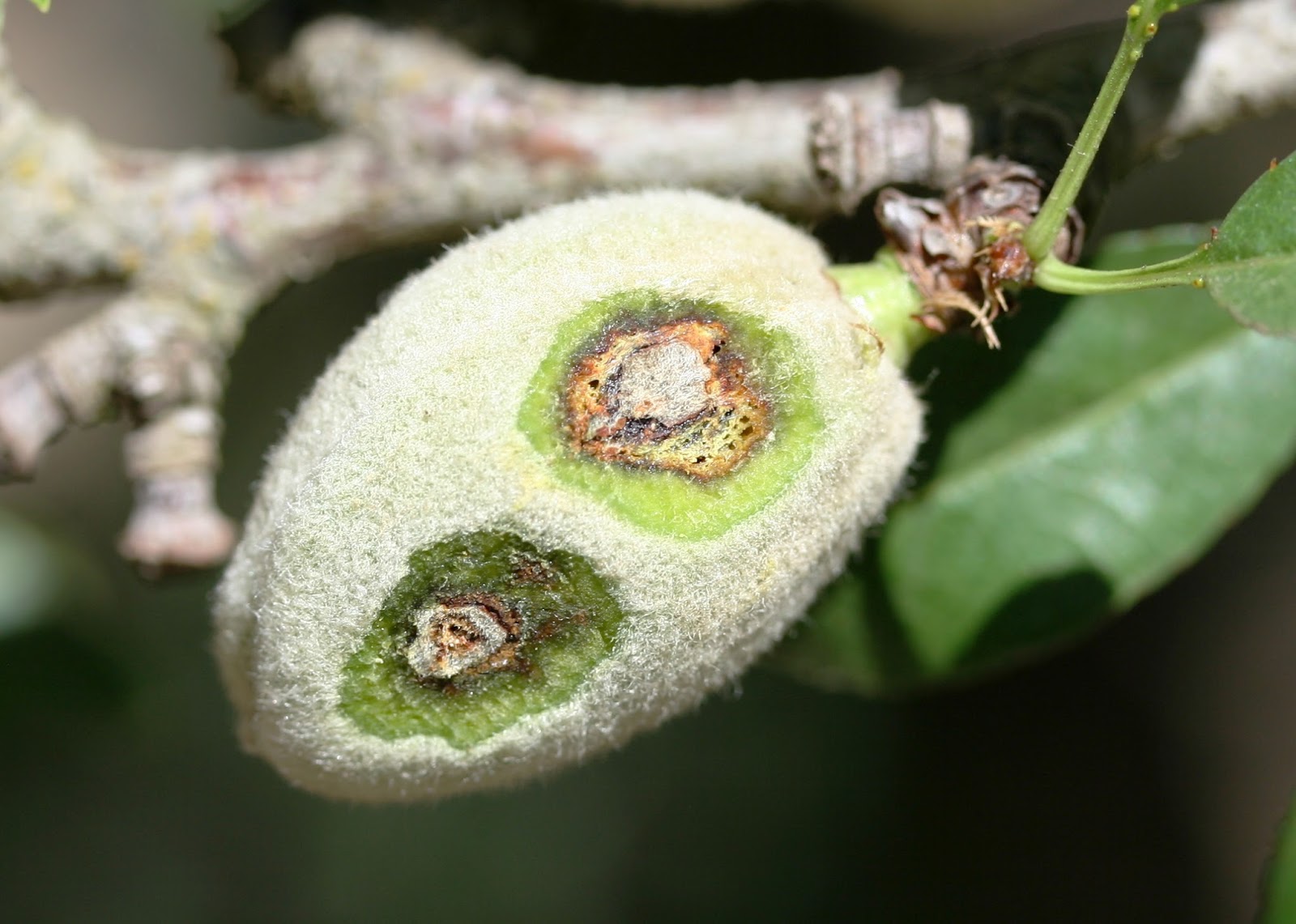 |
| Bacterial Spot Causes Lesion on hulls. |
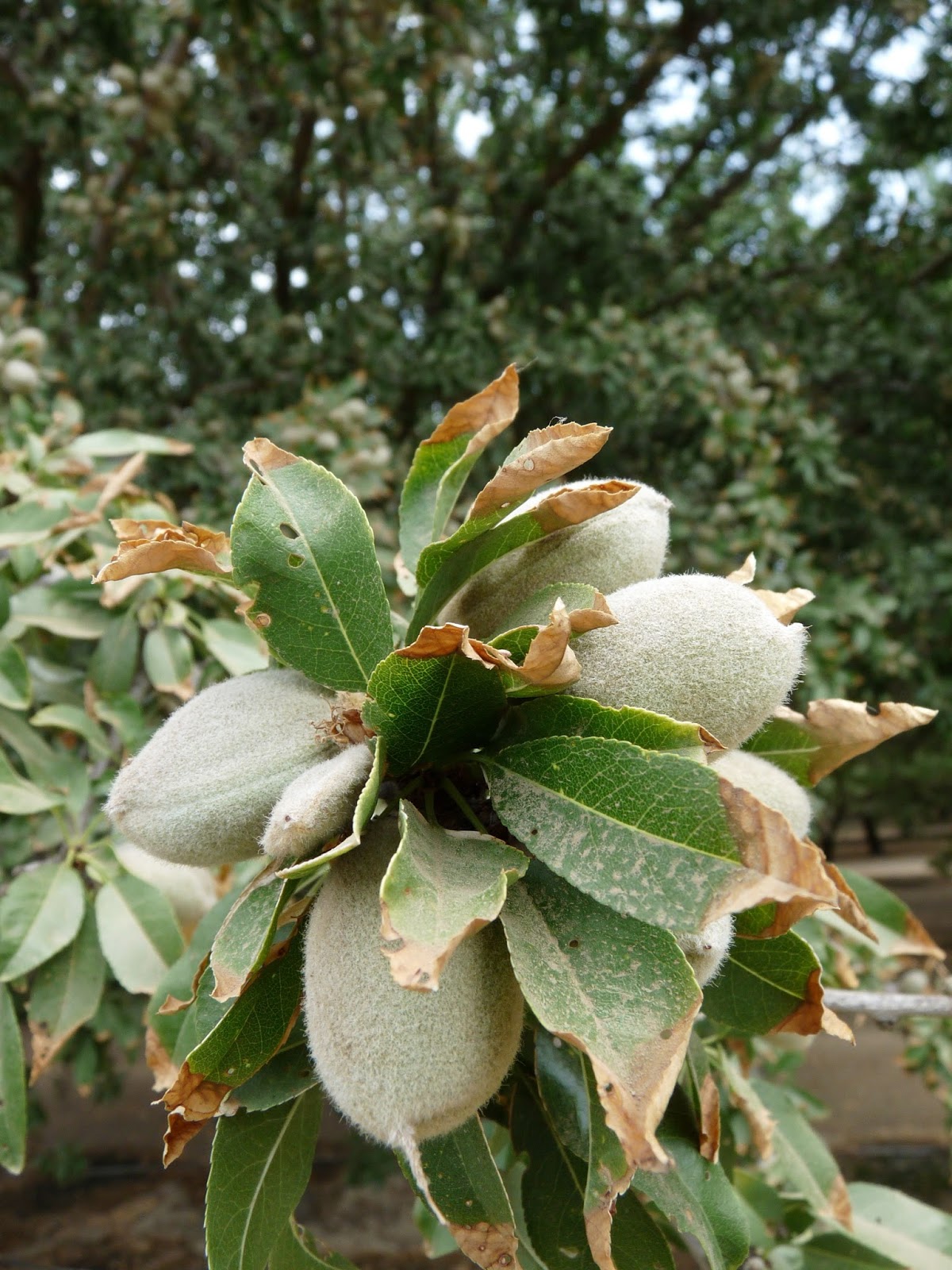
Over the past few years, we have observed these symptoms at about the same time in mid-April to early May. The damage looked similar to leaffooted bug (LFB-Leptoglossus clypealis) or anthracnose symptoms. Concern was raised when ‘Fritz’ containing orchards sprayed proactively three times for LFB or anthracnose again experienced the same symptoms.
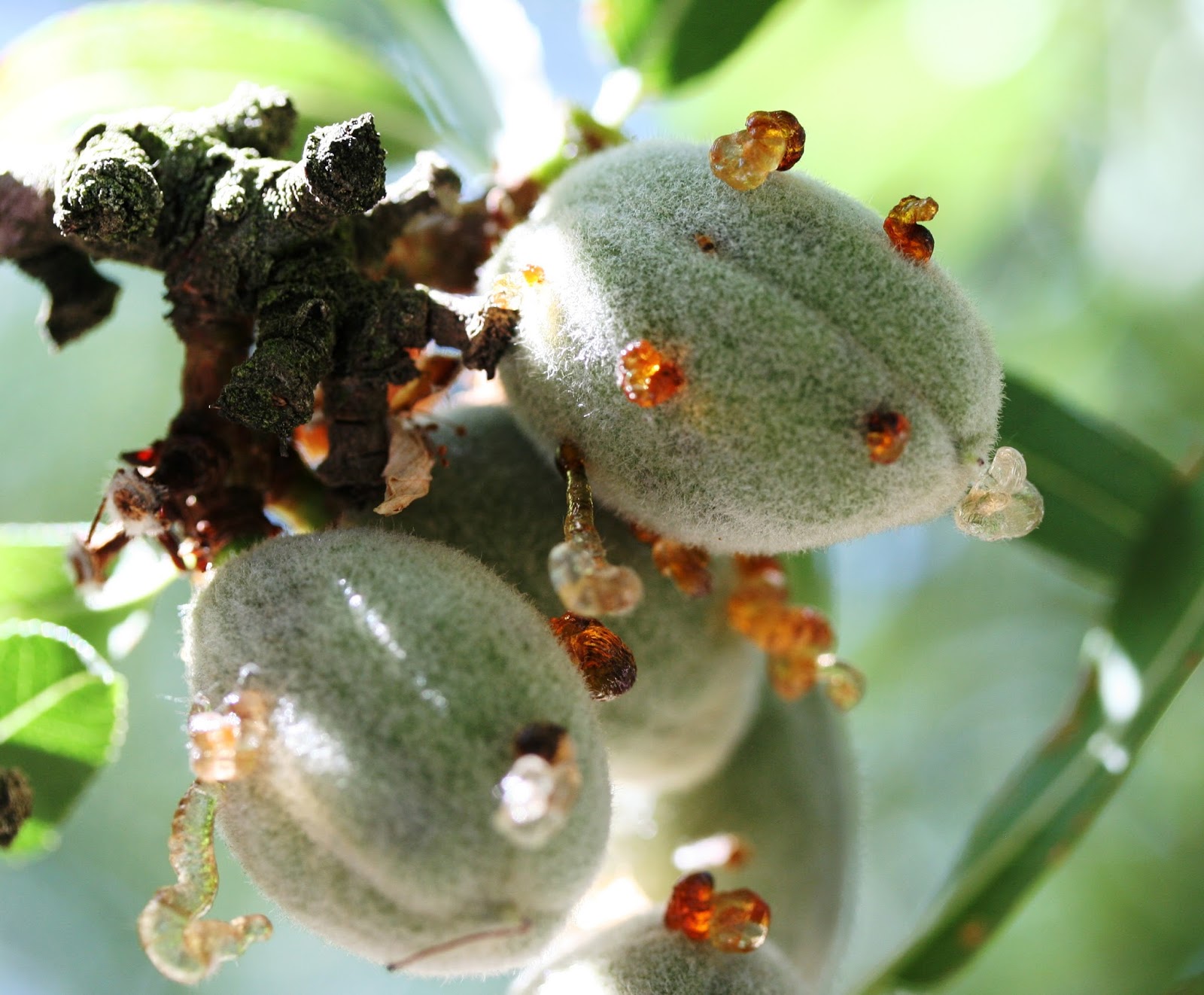 |
| Amber gum flows from the hull spots. |
Symptoms of infected nuts include the production of amber colored gum from spots on the hull (Figure 1). Cutting into the hull, there is no presence of LFB feeding, but there is a lesion about the size of a pencil eraser (Figure 2). Lesions may enlarge, become sunken and orange in color, or exude an orange slime similar to anthracnose symptoms. Leaves may show spots (Figure 3), turn yellow, and drop prematurely. Twigs may show visible lesions or cankers (Figure 4), which may be a source of overwintering inoculum. Infected nuts may stick on spurs and be found in close proximity to mummy nuts from the previous year, still showing dried up lesions (Figure 5).
Intensive spray programs with copper and mancozeb have not controlled Bacterial Spot “down under” while in the South Eastern United States, peach growers have applied copper plus the antibiotic oxytetracycline as preventative fall sprays with some success. Unfortunately, bacterial diseases are very difficult to control.