About Patrick Cavanaugh

This author has not yet filled in any details.
So far Patrick Cavanaugh has created 1490 blog entries.

Asian Citrus Psyllid Update

BREAKING NEWS 
From Tulare County


Porterville ACP Update

Five Mile Quarantines To be Announced

Gavin Iacono, Deputy Ag Commissioner Tulare county, overseeing Standards and Quarantines, notes that the state is waiting for the USDA sign-off on a new plan that proposes five-mile quarantines around the two blunder trap sites where six Asian Citrus Psyllids were found June 25-26.

The quarantines would overlap each other since the traps were about two miles apart.
Iacono said this is a proposed change from earlier quarantine protocols. “Originally all quarantines were county-wide, and the USDA, with justification, shrunk it down to a 20-mile radius. Now the state is proposing a five-mile radius, which is a big change of what it has been in the past,” he said.
No fruit can move out of the quarantine areas unless it has been treated and/or free of stems and leaves.

In the proposal, the state is going to require preharvest spray treatments not only for the proposed quarantines in Porterville but for all active ACP quarantine areas in the state.

There will also be an 800-meter eradication zone in place around each site. “What this means is that all citrus within 800 meters around the trap sites must be treated with control sprays,” Iacono said.

“Quarantines are automatically for two years. Within the two years, if nothing is found, the quarantine will be lifted. But no ACP quarantine in California has ever been lifted. We have been close, but then we find something just before the quarantine can be lifted,” Iacono said.

“On June 17, 2013, the state lifted a restricted zone in the Strathmore area following ACP trappings in mid-November 2012. And now, not a month later, we trapped more ACP in the nearby Porterville area,” Iacono said.

Based on science, the new finds are suspected to be more serious due to the possibility of a breeding population in the area. “But we are not able to find it. This is why there are mandatory spray programs in place,” said Iacono.

Officials are not sure why inspectors are finding the ACP in commercial orchard areas in the Valley. “In southern California, they first found the Psyllid in the urban area, and then it spread out from there into the commercial areas. In the Valley we keep finding it in the commercial areas,” Iacono said. 

“Intense inspections of traps in the City of Porterville, so far, have found no Psyllids. In fact, inspectors surveyed more than 300 residential properties yesterday and did not find anything,” noted Iacono.

Inspectors are fanning through orchards with white beat sheets that have been sprayed with soapy water. They beat branches three times and observe anything that falls on the white sheet. Because the inspectors are trained, they can quickly determine if a Psyllid has fallen on the sheet. The water holds what falls in place on the sheet. After each inspection, the water is wiped off and reapplied for the next inspection.

Many of these crews are coming up from Southern California where they have been doing this extensively for the past five years.

Iacono said that nurseries are also going to be affected in the quarantine area. “Unless it’s under a screened area, the nursery stock cannot be moved out of the restricted area. There are several small nurseries in the area, and one very large nursery that has part of its operation under screens,” Iacono said.  “And you also have the nursery centers at the Home Depot and Lowes locations that will be affected.  The state will begin to put Hold Notices on all citrus trees in nurseries that are not under screens.”

It’s important that everyone inspect his or her trees for the ACP. If you find it, act fast. Time is critical.

The ACP Hotline number is (800) 491-1899.
2016-05-31T19:47:10-07:00July 19th, 2013|

At UC Kearney Ag Center in Parlier

Grape Day, August 13

Half-day Event at Kearney Ag Center

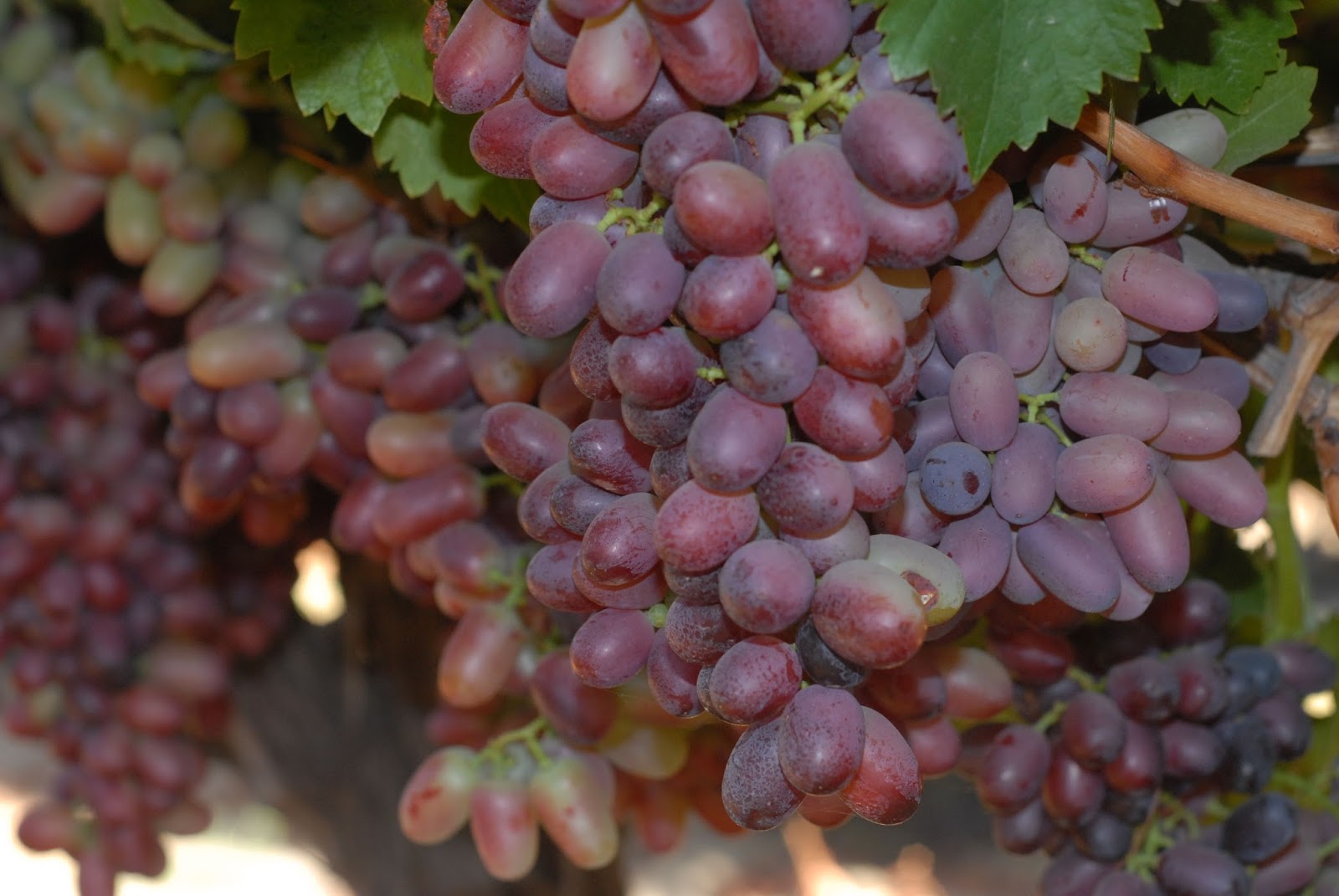
Grape growers, packers, wine makers, and others interested in the production of grapes and wine in the San Joaquin Valley are invited to the University of California’s Kearney Agricultural Research and Extension Center, on Tuesday, 13 August 2013, from 7:30 am until 11:00 am for Grape Day. 

Grape Day is a biennial event where UC scientists and their collaborators from other institutions showcase research results that are relevant to local viticulturists and enologists. 

Topics to be discussed this year will include: Effects of water deficits on water relations and productivity of numerous red wine grape cultivars grown in the San Joaquin Valley, Ecology of Mycotoxin-Producing Aspergilli in Raisin Vineyards, Effects of pre-harvest Calcium chloride and Chlorine dioxide applications on fruit quality of Crimson Seedless table grapes, Wood disease management options for grapevines in the San Joaquin Valley, Movento in Table Grapes: understanding use patterns and expectations, and Understanding Wine Oxidation.

1.5 hours of DPR continuing education credit hours have been applied for.

2016-05-31T19:47:10-07:00July 19th, 2013|

Immigration Reform Update

From Western Growers Association

Nassif In Washington to Push for Immigration Reform

With the urgent need for the House to act on immigration reform, Western Growers Association President and CEO, Tom Nassif returned to Washington this week for several meetings in the House and Senate, urging action.

On Wednesday this week, he met with the House Majority Leader, Eric Cantor and emphasized the need for the House to act, particularly as it relates to agriculture. He also had the opportunity to sit down with Congressman Paul Ryan, who has been an active participant in bi-partisan immigration talks underway in the House. With both these meetings, Nassif underscored that the House doing nothing is not an option, and agriculture is supportive of the House working its will but that must result in legislation passing the House.

Nassif along with other conservative leaders from the Business and Faith communities also met with the Senate Gang of 8 (Senators Schumer, Durbin, Menendez, Bennet, McCain, Graham, Rubio, and Flake) to discuss outreach and strategy to move legislation with the House.

Nassif also met with California Rep. Jim Costa and in addition to discussing Democrat support for however the House proceeds on immigration, also discussed the CA water crisis and challenges growers face with Affordable Care Act implementation.

2016-05-31T19:47:11-07:00July 18th, 2013|

Postharvest Produce Program

UC Davis Postharvest Technology Center
Offers Produce Certificate Program   

Participants in the Produce Professional Safety Program at UC Davis
Photo by Penny Stockdale, UC Davis Post Harvest Technology Center.
It takes a lot of knowledge and training to successfully handle produce from farm to plate. Wouldn’t it be nice if there were a mechanism that helped produce industry employers recognize qualified applicants and helped applicants validate their postharvest qualifications?

Now there is, thanks to the UC Davis Postharvest Technology Center’s new Produce Professional Certificate Program, the first of its kind in the world. Led by a cadre of the most respected experts in postharvest technology, the certificate program covers everything from safety, new technologies, physiology, harvesting, cooling, transportation, ripening, marketing fresh produce and more.

“It’s fantastic,” said Leo Kelly, a product development specialist with Monsanto Vegetable Seeds who focuses on developing tomatoes, peppers, melon, broccoli and other commodities with improved traits like flavor, nutrition, color and convenience. When the Postharvest Technology Center first started offering the Professional Certificate Program in early 2013, Kelly was among the first in line.

“I had attended some of their other courses and I really admire the instructors’ knowledge and expertise,” Kelly said. “This certificate program gives me a deeper understanding of the science behind postharvest technology, the reason you do the things you do, like store tomatoes at a different temperature than onions.”

Kelly has a Ph.D. in cereal biochemistry, 20 years experience in the food industry, and five years experience with Monsanto. And, he says, there is still so much more to learn.

The program allows participants to customize their curriculum through an a-la-carte menu of classes in addition to three core classes — the Postharvest Technology Short Course, the Produce Safety Course and either the Fruit Ripening and Retail Handling Workshop or the Fresh Cut Products Workshop. Some of the customized classes can be taken online and you have four years to finish.

“That’s very convenient for working people like me,” Kelly said. “You can keep your job and get the education.”

The program is designed for anyone in the fresh produce industry, no matter their specialty or level of experience. Postharvest technology involves people all along the supply chain — growers, shippers, packers, retail and others — and Kelly says participants benefit from that diversity.

“You network with people throughout the industry and from all over the globe,” Kelly said.

The produce professional certificate program will help employers, job-seekers and anyone who wants to expand their postharvest expertise, said Beth Mitcham, director of the Postharvest Technology Center and a postharvest biologist and Cooperative Extension specialist with the Department of Plant Sciences at the University of California, Davis.

“When produce industry employers are hiring, candidates with a Produce Professional Certificate will have an advantage over other candidates,” Mitcham said. “When you know the candidate has learned and demonstrated knowledge of best practices for produce handling, you’re confident they will be an assist to your company.”

Depending on which courses you chose, the certificate program will cost about $7,500 over four years. For more details, check out the Postharvest Technology Center website at http://postharvest.ucdavis.edu/

or contact the center staff at (530) 752-6941 or postharvest@ucdavis.edu.

2016-05-31T19:47:11-07:00July 17th, 2013|

In Monterey County

July 17, 2013

United Fresh Recall-Ready Workshop
Sept. 18-19 in Seaside, Calif.

United Fresh is offering its hands-on educational course, “Recall Ready Training Workshop” at Embassy Suites in Seaside, CA. This two-day, hands-on training program, September 18-19, will help you understand the fundamentals of a product recall, including your rights and responsibilities, the role of the FDA, liability limitation and customer expectations management. In addition, United Fresh will focus on how to build an in-depth customized communication plan in the event of a recall, and how to effectively communicate with the industry, customers, consumers and the media.

This course is designed for produce recall teams for companies throughout the produce supply chain including Growers/Shippers/Packers, Processors, Wholesalers & Distributors, Retailers, Restaurant Operators and Industry Organizations (including commodity boards and associations).

At the very least, your recall team should include management, technical staff and marketing/communications staff. In addition, United Fresh recommends attendance by Operations Staff, Food Safety Staff, Q&A Staff, Customer/Member Services Representatives, and your company Crisis Management Team.


Remember, a poorly managed product recall can quickly turn into a crisis situation. This course will combine recall protocols and communication management principles to ensure that all staff work together effectively and efficiently during product recall.

For more information please contact: Erin Grether, Government Relations Coordinator, United Fresh Produce Association, at (202) 303-3400 or egrether@unitedfresh.org, http://www.unitedfresh.org/recallready

2016-05-31T19:47:11-07:00July 17th, 2013|

From Santa Clara County

July 17, 2013

Guava Fruit Fly Under Treatment

In Santa Clara County


Edited By Laurie Greene, Associate Blogger

In the past few days, the California State lab confirmed three detections of Guava Fruit Fly in San Jose in Santa Clara County.  As a result of these finds, the Secretary of Agriculture issued an emergency proclamation authorizing an eradication project. 
Treatment is scheduled to begin today, Wednesday, July 17, 2013 in a 19 square-mile area surrounding the discoveries using the “male attractant” technique.  This technique uses ground-based, spot applications of minute amounts of insecticide and feeding-attractant lure.  The treatment is applied as small, dollar-sized spots on inanimate objects such as street trees and utility poles approximately 8 feet off the ground to prevent accessibility and disruption to the public.  The male fruit flies are attracted to the lure on these spots, and they die from feeding on the mixture. 
  
The Guava Fruit Fly infestation in San Jose marks the tenth time of detection in 17 years.  Eradication projects were conducted in 2000, 2001, 2002, 2004, and now in 2013.  The California Department of Food and Agriculture (CDFA) successfully eradicated the Guava Fruit Fly in each instance using the male attractant technique.    
The Guava Fruit Fly is known to occur in India, Pakistan, Nepal, Sri Lanka and Thailand.  If allowed to establish in California, the fly has the potential to become a major pest of citrus, peach, and several kinds of tropical and subtropical fruits.  Fruit damage occurs when the adult female fly lays eggs in the fruit which hatch into larvae or maggots that tunnel through the flesh of the fruit, making it unfit for consumption.
 
These infestations are likely the result of contraband fruit smuggled into California.  All those entering California should notbring fruit or vegetables back from your travels.  Exotic fruit flies threaten California’s multi-billion-dollar agricultural industry and its native and urban environments as well.  


2016-05-31T19:47:11-07:00July 17th, 2013|

Coming to Visalia and Salinas

United Fresh Town Hall Events Coming
Town Hall events bring together members across the supply chain, state officials and allied industry professionals to learn more about and provide a forum to discuss key issues including legislative, food safety, regulatory, traceability, nutrition, new market development, along with regional and commodity-specific issues that impact the produce industry.

United Fresh staff returns from these Regional Town Hall Meetings with great insight on the challenges faced by member operations and how United Fresh can best serve the needs of our membership.

Town Hall events are complimentary for both members and non-members, and lunch is provided.

For more information on Town Hall events, or to offer to host a Town Hall in your area, please contact Jeff Oberman, vice president of membership and trade relations, at 831-600-8922 or joberman@unitedfresh.org, or Miriam 
Wolk, Vice President of Membership & Marketing, at 202-303-3410 or mwolk@unitedfresh.org.

The schedule: 

 Aug. 8, Visalia, Calif.; hosted by California Grape & Tree Fruit League and California Citrus Mutual.

Aug. 9, Salinas, Calif.; hosted by Grower-Shipper Association of Central California.

More information on Fresh Impact Tour locations, as well as town hall registration options, is on the United Fresh website.


2016-05-31T19:47:11-07:00July 17th, 2013|

Fresno County

Mario Santoyo Speaks Out

Water Summit Welcomes Community Questions

Mario Santoyo, Director of the California Latino
Water Coalition.
The Delta Water Summit will be held on August 3, 2013 from 9 a.m. to 12:30 p.m. at Fresno State’s Satellite Student Union. The Summit is intended for farmers and the community as a whole to hear what’s going on from key legislators, administration (state and federal) and water agencies.

“What’s going on?” asks Mario Santoyo, Organizer of the Summit and Director of The California Latino Water Coalition, an organization dedicated expressly to helping constructively craft solutions to California’s water crisis and ensure that our state’s vital water supply needs are met now and in the future. Although formed as a voice for Latinos, the Coalition is a positive force benefitting all Californians.

“If I am a farmer, and I am having difficulty getting my water for farming, I would want to know—what people are doing?” said Santoyo. “This is an opportunity to bring all the key players to Fresno and give the community a chance to ask these types of questions.”

“There is no question this is an emergency situation now,” Santoyo clarified. “We constantly hear about the long-term solutions including the twin tunnels, but they won’t be built for ten years.”

“If I am a farmer today, struggling, and I hear that next year we’ll may have zero water allocation, or even ten or twenty percent, coupled with the current bad year, I am probably looking at going out of business,” warned Santoyo.

“I want to know what are our legislators are doing to help us find a solution for tomorrow,” Santoyo commented. “Our legislators can get focused, work in a bipartisan way and encourage their other colleagues to get involved. The key thought here is that they have to find a way to work together. I think our Valley legislators, for the most part, have been successful in that regard, but we have to be more successful.”

“I think it is important for all of us, in general, to get to a point to where we all know what we need to do, agree on how we are going to do it, and then work together to try to make it happen,” noted  Santoyo.

“If we don’t reach a temporary, interim solution within the next two to three months, we are guaranteed to have a crisis next year,” warned Santoyo. “So, we need to be doing something, and it needs to be now.”

2016-05-31T19:47:11-07:00July 17th, 2013|

From Tulare County

Recent Asian Citrus Psyllid Find in Porterville

Tulare County Officials Wait for Further Instructions

Today Gavin Iacono, Deputy Commissioner/Sealer, Standards & Quarantine, Tulare County Agricultural Commissioner/Sealer Office, commented on the invasive find on Citrus Psyllid in Porterville and the possibility of a quarantine.

Iacono said that the State and USDA were still waiting to determine if they have met the criteria to decide if there is an infestation.

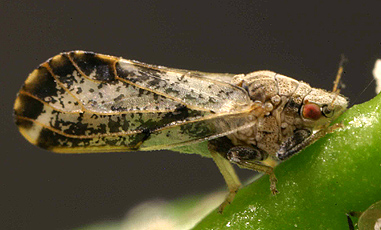
Adult Asian Citrus Psyllid Feeds on Citrus, with
immature nymphs nearby.

“These government agencies are not currently requesting growers to spray; they are not requiring growers to do anything.”

Yet, growers are concerned this can be a newly established population.

“The State and USDA are doing limitations around these refined sites,” explained Iacono. “In other words, there are 100 traps per square mile in the delineated section—one mile around each find site. In this core area, they check traps daily.”

“Outside that,” Iacono continued, “in the surrounding eight-square-mile-area, they set up 50 traps per square mile and check them every other day.”

Iacono remarked, “They’ve actually been checking these on yellow sticky traps, or blunder traps, for the last four or five days, through the weekend, and so far they’ve found nothing.”

“This is good news,” said Iacono.

2016-05-31T19:47:12-07:00July 16th, 2013|

Farm Workers are Targeted to Grow Illegal Weed

Marijuana Growers Threaten Farmers

Human Trafficking Also Suspected

The problem used to be in the foothills, but now marijuana growers are sourcing out areas on the Valley floor to plant the illegal crop for very high profits.

Manuel Cunha, President of Nisei Farmers
League, Fresno.

Recently, marijuana has been found on rangelands on the West Side. Furthermore, a high profile bust happened in southeast Fresno where the crop was planted among two acres in a carved-out area of a cornfield. During the raid by the Fresno County Sheriff Department, a suspect, a reputed gang member, was found with a gunshot wound, after an exchange of gunfire from a vehicle that had apparently just sped by the scene.

These fields are linked to medical marijuana cards and fields under cultivation, but the Sheriff Department notes that there is far more marijuana being produced than the approved permits.

“Farmers are at risk with the marijuana growers on their land,” said Manuel Cunha, president of the Nisei Farmers League in Fresno.  “Farmers could be considered suspects for a short time until more evidence is gathered, and at the same time, they could be in danger if they were to wander up on the field. The Feds can take the land away from the owner if they feel that the owner is involved,” Cunha said. “The Feds will sell the land and then put the money into the DEA program.”

Cunha said another major problem is human trafficking. “Many farmworkers must be let go from farms due to Immigration and Customs Enforcement (ICE) audits. The farmworkers who have lost their jobs hear that people are looking for workers, but there is no mention of marijuana. Instead, marijuana growers tell the workers they are being hired for maintaining irrigation and a drip system,” noted Cunha.  “Low and behold, workers find out they are dealing with marijuana growers; and the growers threaten to harm both the workers and their families if they do not stay on the farm and work.”

Again, the pot growers will eventually move back up into the hills as authorities keep busting them up on the valley floor. “Then the hills become dangerous to cattle grazers and backpackers in the area,” Cunha said.

2016-05-31T19:47:12-07:00July 15th, 2013|
Go to Top