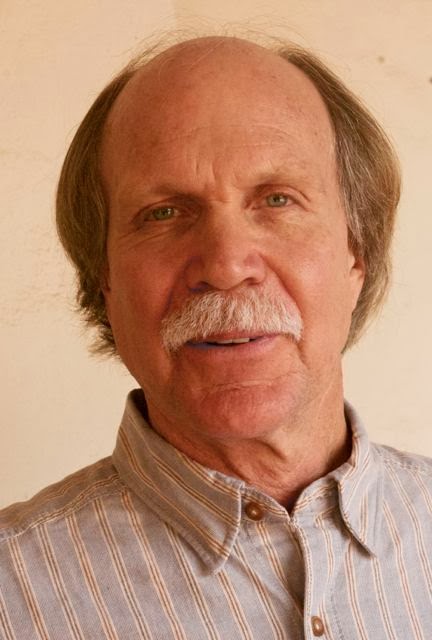
About Patrick Cavanaugh

This author has not yet filled in any details.
So far Patrick Cavanaugh has created 1490 blog entries.

EPA HEAD LAMENTS LACK OF CLEAN WATER IN SAN JOAQUIN VALLEY

EPA Leader Criticizes Government Efforts To Improve Rural Water Infrastructure


U.S. Environmental Protection Agency (EPA) Administrator Gina McCarthy said Thursday that she was disappointed by the slow progress state, federal and local governments have made in bringing potable drinking water to small towns in the San Joaquin Valley.
“We’ve got rural communities that don’t have clean water and there’s no plan on how to get it to them,” said in a meeting with Los Angeles Times editors and reporters.
McCarthy’s comments follow the federal government’s threat this spring to cut off clean drinking water funding because state officials have been sitting on more than $455 million in unspent federal money. The EPA also faulted the state Department of Public Health for a lack of financial accountability with the funds.
Residents and activists in small communities across the state said they were forced to pay for bottled water while remedies to the non-potable water that came out of their pipes were delayed year after year because of red tape.
The state public health agency issued a 16-page plan this summer to improve the distribution of federal money, including a pledge to distribute more than $800 million over the next three fiscal years — four times as much as in the last three.
McCarthy’s visit included stops in San Francisco and the Fresno area, where she met with farmers and activists about water and air quality concerns. 
**********
 
The EPA also announced this week that it has awarded California $174 million in federal funding to invest in water infrastructure projects, including $79 million to the California Department of Public Health for the its Drinking Water State Revolving Fundand $95 million to the California State Water Resources Control Board for its Clean Water State Revolving Fund.
“In the last 26 years, EPA has provided more than $4 billion in funding for California water projects alone,” said Jared Blumenfeld, Regional Administrator of EPA’s Pacific Southwest Region. “Without this investment at the federal level, many communities would not be able to satisfy Californians’ basic needs for clean and safe drinking water.”
Nevertheless, earlier this year, the state’s public health agency estimated that 200,000 Californians at any one time are served by a water system that violates state health standards. But some legislators say the number is as high as 2.1 million when communities not served by publicly regulated water systems are counted.

Sources:
U.S. Environmental Protection Agency and Los Angeles Times

2016-05-31T19:43:06-07:00November 24th, 2013|

Ethanol Rules Hurt California Dairies

WUD: EPA Ethanol Mandate Impacting

California Dairy Families

“If you eat, if you utilize any type of motorized transportation, if you care about the environment, the renewable fuel standard that utilizes corn-based ethanol is contrary to your interests.”

That was the message delivered first-hand Wednesday to USEPA Administrator Gina McCarthy by Western United Dairymen CEO Michael Marsh. Marsh was part of a small group discussion with Administrator McCarthy sponsored by the CDFA and the Fresno County Farm Bureau at the Efird Ranch in Fresno County. McCarthy was spending time in the valley getting a feel for the breadth of California agriculture.

The agency last week lowered the amount of corn-based ethanol that must be blended into U.S. fuel supplies from 16.55 billion gallons in 2013 to 15.21 billion gallons in 2014. Marsh applauded that decision but indicated that using food for fuel was folly and that the man-date must be repealed. “Our dairymen are just one Midwestern drought away from an-other economic calamity so long as the mandate remains,” related Marsh.

Administrator McCarthy responded that she was keenly aware of the challenges faced by livestock producers as a result of the mandate. She also expressed disappointment that other types of ethanol technologies utilizing waste products had been slow to evolve. She indicated the Agency would be looking to find additional incentives to stimulate more in-vestment in things such as cellulosic ethanol that would not be so harmful to California dairy operations.

WUD is supportive of a bill that Sens. Dianne Feinstein (D-Calif.) and Tom Coburn (R-Okla.) plan to introduce which would strip the conventional ethanol portion of the renew-able fuel standard while keeping the standard’s targets for advanced biofuels intact. In the house, WUD is supporting HR 1462, the Renewable Fuel Standard reform Act of 2013.

2016-05-31T19:43:06-07:00November 24th, 2013|

New QR Code Video Is Part of Merchandising Program

Pretty Lady Grapes Available

Through Holidays

The holidays are here!  Sunlight International is kicking off the season with the introduction of a brand new QR code video as part of their Pretty Lady for the Holidays Point-of-Sale Merchandising Program, shipping now. 

The new video, viewed by scanning the Pretty Lady QR code found on all holiday packaging, features “Santa’s Little Helper” cooking up an easy-to-make, delicious Mini Cheese Ball appetizer featuring Dulcich & Sons Premium California Table Grapes. 

The holiday video also contains other helpful tips for enjoying Pretty Lady Table Grapes throughout the season.  Joining the other P.O.S. materials that currently make up this highly successful and proven program, the holiday video is both fun and informative, with initial feedback being incredibly positive from viewers. 

In addition to the video, the full program is comprised of easy-to-rinse colander bags, free standing bins, display cards and posters. 

Just two years old, and already popular with customers thanks to the charming and colorful illustrated design, the full Pretty Lady for the Holidays Merchandising Kit allows retailers to easily deck their aisles with Pretty Lady Grapes, thus dramatically increasing sales.

“We’re really excited to expand our Pretty Lady for the Holidays Merchandising Program again this year,” says Nick Dulcich, Sunlight International Owner and Director of Sales.  “The Holiday QR Code Video is just one more way to let people know that Pretty Lady Grapes can help make the holidays more festive.  It’s our way of saying Happy Holidays to our valued customers and retailers!”

To order your Pretty Lady for the Holidays P.O.S. Kits, which are currently being shipped to retailers across the country, call Nick Dulcich at (661) 792-6360 or email at sales@dulcich.com.

ABOUT SUNLIGHT INTERNATIONAL

Home of the Pretty Lady brand, Sunlight International — the sales and marketing arm for Dulcich & Sons — is a progressive grower, packer and shipper of Premium California Table Grapes. 


Grown on 6,000 acres in California’s San Joaquin Valley, Dulcich & Sons’ vineyards produce a variety of red, green, and black grapes that are shipped worldwide.
2016-05-31T19:43:06-07:00November 24th, 2013|

Rare Photo Released Today of President Kennedy with Calif. Turkey

Photo Released Today of President Kennedy with Calif. Turkey


A photo was just released today on the 50th Anniversary of President John F. Kennedy’s assassination. The photo depicts the President along with other officials gathered around a California Turkey that was given to him a few days before the president was killed.


Leo Pearlstein, of Lee and Associates in Los Angeles handled the logistics of the turkey delivery to the President. California Ag Today interviewed Mr. Pearlstein today and you can hear the story about the turkey in the audio below.


Of course, Lee and Associates along with the nation were stunned to learn that President Kennedy had been killed, and the photo was never released.  Today, Lee and Associates decided that it would be released.


2016-05-31T19:43:06-07:00November 22nd, 2013|

Strawberry Meeting Focused on Fumigants, Pest Control

Fumigation Was Big Topic at Santa Maria Strawberry Meeting


New laws and regulations on fumigation for Santa Barbara and San Luis Obispo County strawberry growers were in place for the first time this season, and growers did a good job for the most part. This and other topics were discussed at the Wednesday’s annual Strawberry Production and Pest Management Meeting in Santa Maria.

According to Lottie Martin, Ag Biologist, Santa Barbara County Ag Commissioners office, for the most part, grower chose the right tarps for the right situation. “Growers must be careful to use a 60 percent tarp when capping a fumigation with the

Surendra Dara, crop advisor, UC Cooperative Extension, San Luis Obispo

Surendra Dara, crop advisor, UC Cooperative Extension, San Luis Obispo

1,3 D,” said Martin. “Growers should plan well in advance to make sure the tarp that is needed, is available.”

Martin said mandated buffer zones were noted and documented, however operators need to do a better job with required signage.

Surendra Dara, a Strawberry and Vegetable Crops Advisor, UC Cooperative Extension, San Luis Obispo, spoke about re-evaluating lygus bug IPM tools in strawberries with a focus on field vacs, monitory and economic thresholds. He spoke of an experiment with softer chemistry such as well as using B. bassiana, a soil fungus that acts as a parasite to lygus. “A combination of B. bassiana and azadirachtin.

Hillary Thomas, research manager, California Strawberry Commission

Hillary Thomas, research manager, California Strawberry Commission

Hillary Thomas, Research Manager with California Strawberry Commission in Watsonville also spoke about lygus. Her focus was third year bug vac research for lygus control.

Kirk Larson, pomologist and strawberry production specialist with the UC South Coast Research and Education Center, Irvine

Kirk Larson, pomologist and strawberry production specialist with the UC South Coast Research and Education Center, Irvine

Kirk Larson, Pomologist and Strawberry Production Specialist with the UC South coast Research and Education Center, Irvine spoke about advanced selections and non-chilling plug plants.

Mark Bolda, Strawberry and Caneberry Farm Advisor and County Director with UC Cooperative Extension, Santa Cruz County spoke about strawberry transplanting and the critical importance of chilling hours necessary for strawberry production.

Steve Fennimore, Cooperative Extension Specialist, UC Davis updated attendees on the use of steam to kill soil pathogens, in place of fumigants. He said work is focused on reducing the cost and outlined possible use of a prototype machine around certain higher risk areas near buffer zones on production fields.

Karen Klonsky UC Cooperative Extension specialist

Karen Klonsky UC Cooperative Extension specialist

Karen Klonsky, Cooperative Extension Specialist, UC Davis spokes about the economic considerations of alternatives to fumigation and producing a second year crop.

Also speaking was Thomas Flewell, Flewell Consulting, Watsonville-Salinas. His topic focused on evaluating pest management strategies with numbers. What do the numbers mean and how do we really know what we’re doing.

A more detailed report can be found in future issue of Vegetables West Magazine. Free subscription at VegetablesWest.com.

2021-05-12T11:06:02-07:00November 22nd, 2013|

THREE CALIFORNIA USDA 2013 COMMUNITY FOOD PROJECT GRANTEES

USDA Awards Projects Using Local Food to Address Hunger

TODAY, Agriculture Secretary Tom Vilsack announced the National Institute of Food and Agriculture’s Community Food Project (CFP) awards. These awards support organizations using local food to develop community-based solutions to address food insecurity and increase access to healthy food in low-income communities.

“This year’s grantees continue that tradition while representing exciting innovations and ideas. I look forward to seeing how their work will support our country’s farmers, expand local food opportunities, and increase healthy food access for generations to come,” said Vilsack.

Vilsack noted, “Community Food Projects are a perfect example of how America’s farmers and communities rely on Farm Bill programs to meet new markets, increase economic opportunities for farmers and ranchers, and address hunger.”

This year’s CFP awards total $4.87 million in funding to 26 projects in 15 states and the District of Columbia. California recipients include:

Inyo Mono Advocates for Community Action, Bishop, Calif., $23,760, Eastern Sierra Food Expansion and Sustainable Plan

The Health Trust, Campbell, Calif., $300,000, Neighborhood Produce Access Points

Food Bank Coalition of San Luis Obispo, San Luis Obispo, Calif., $299,940, SLO County Produce Project

Community Food Project awards are a cornerstone of the U.S. Department of Agriculture’s (USDA) Know Your Farmer, Know Your Food initiative which coordinates the department’s support for local and regional food systems.

2016-05-31T19:43:07-07:00November 21st, 2013|

T.G. Schmeiser Offers New Grader Blade Series

California Ag Today Supports New Products for Agriculture!

T. G. Schmeiser Intros SGB Grader Blade Series

Fresno-based, T. G. Schmeiser Co., Inc. introduces the Schmeiser Grader Blade (SGB) Series now available in 20’, 30’ and 40’ working widths.

The SGB Series Grader Blade offers high-quality grading where laser and precision scrapers are not necessary, as well as performing a superior final seedbed preparation for small grains.

Built to maximize daily productivity, the 40’ wide working blade is ideal to cover more land with fewer passes in less time, saving both fuel and labor costs. The smaller widths are designed to fit into smaller areas where tight turns and passes are necessary. The folding tongue reduces the transport width for all units to 8’ allowing the graders to be easily transported to multiple sites for optimum efficiency.

All Grader Blades are built tough and durable in the United States with reliable construction by T. G. Schmeiser Co., Inc. They feature a reversible cutting blade, self-lubricating bushings on high-impact pivot points, 27” curved bucket height to promote optimum soil roll and easy-to-adjust reversible guage wheels. Hydraulic depth control is standard.

T. G. Schmeiser Co., Inc. is a privately held company. For over 80 years, T. G. Schmeiser Co., Inc. has been manufacturing and delivering versatile solutions for progressive soil management. Equipment is designed to work in conjunction with many other farm implements to help save time and money.

Years of proven performance in the demanding agricultural arena also bring efficiency and reliability for other specialized soil management needs. Contact your local T. G. Schmeiser Co., Inc. dealer to find the right piece of equipment to meet your demanding requirements.

2016-05-31T19:43:07-07:00November 21st, 2013|

COMMENT PERIOD EXTENDED FOR ACCREDITATION OF THIRD-PARTY AUDITORS

FDA Extends Comment Period to January 27, 2014


Department Of Health And Human Services Food and Drug Administration announced TODAY it is extending the comment period for the proposed rule, ‘‘Accreditation of Third-Party Auditors/Certification Bodies to Conduct Food Safety Audits and to Issue Certifications’’ to January 27, 2014.


FDA is taking this action in response to requests for an extension to allow interested persons an opportunity to consider the interrelationship between this proposed rule and the proposed rule announced in October 2013 entitled “Current Good Manufacturing Practice and Hazard Analysis and Risk-Based Preventive Controls for Food for Animals.’’


For further information, go to: http://www.gpo.gov/fdsys/pkg/FR-2013-11-20/pdf/2013-27644.pdfor to: http://www.regulations.gov and insert docket number FDA–2011–N–0146.
2016-05-31T19:43:07-07:00November 21st, 2013|

CALIFORNIA CENTER FOR COOPERATIVE DEVELOPMENT RECEIVES USDA GRANT

CCCD Receives $200,000 to Establish Cooperatives
 

Agriculture Secretary Tom Vilsack announced TODAY the selection of 34 organizations for U.S. Department of Agriculture (USDA’s) Rural Cooperative Development Grant (RCDG) program grants to help rural cooperatives and small businesses expand and strengthen their capacity to serve rural citizens and communities.

The California Center for Cooperative Development (CCCD) received a $200,000 grant to establish cooperatives. CCCD supports a myriad of cooperatives in California (agricultural, child care, energy, housing, etc.) with start-up, management, and other technical assistance.
Agricultural cooperatives, user-owned and user-controlled businesses, are organized to help farmers gain market power by joining together to market their crops, increase their bargaining power by achieving economies of scale, processing their commodity to add value, and/or to purchase supplies and services. California has approximately 200 agricultural cooperatives and there are more than 4,000 nationwide.
Agricultural Cooperatives differ from other types of businesses in that they are owned by farmer-members, democratically controlled, run by professional management overseen by an elected board of directors, designed to distribute economic benefits to members on the basis of the member’s use of the cooperative (e.g. if more product, more economic gain).

2016-05-31T19:43:07-07:00November 21st, 2013|
Go to Top