California Coming off Warmest Winter on Record

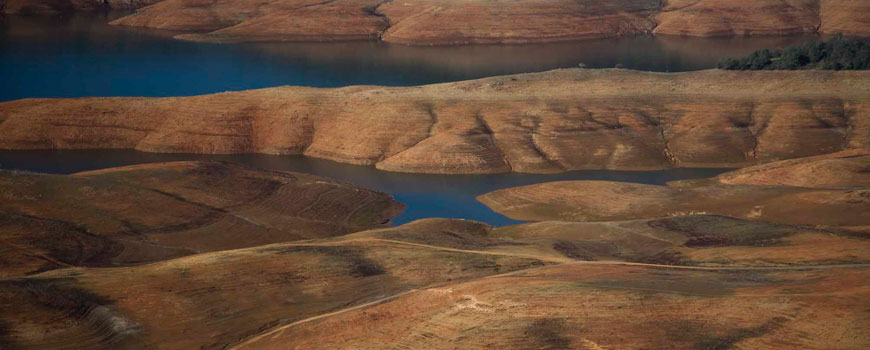
United States weather scientists have revealed California is coming off of its warmest winter on record, aggravating an enduring drought in the most populous US state.

The state had an average temperature of nine degrees Celsius for December, January and February, an increase from 5.8°C in 1980-81, the last hottest winter.

Reuters Newsagency reports that figure was more than four degrees Fahrenheit hotter than the 20th-century average in California, the National Oceanic and Atmospheric Administration (NOAA) said in a statement.

Warmer winters could make the already parched state even drier by making it less likely for snow to accumulate in the Sierra Nevada Mountains, NOAA spokesman Dr. Brady Phillips said.

“Winter is when states like California amass their main water budget, when snowpack is building,” said Dr Phillips, a marine biologist. “If you’re starting from a deficit and going into the dry season, it’s setting you up for a drier summer.”

Reuters reports California is in the grip of a three-year dry spell that threatens to have devastating effects on the state and beyond.

Farmers are considering idling 200,000 hectares of cropland, a loss of production that could cause billions of dollars in economic damage, and several small communities are at risk of running out of drinking water.

The state also recorded its driest winter to date by March, despite recent storms, with an average of 114mm of rainfall, compared to 297mm over the previous winter, NOAA said.

The agency is planning to release its spring outlook climate forecast tomorrow.

NOAA is an agency that enriches life through science. Their reach goes from the surface of the sun to the depths of the ocean floor as they work to keep citizens informed of the changing environment around them.

2016-05-31T19:38:07-07:00March 21st, 2014|

U.N. World Water Day, 2014

Excerpted from: Grants Pass; OR (PRWEB)

To water advocate and researcher Sharon Kleyne, United Nations World Water Day is one of the most important days of the year.

The annual March 22 observance, says Kleyne, offers an opportunity to reflect on advances and setbacks in the ongoing global fresh water supply crisis, and to further educate the public about this critical issue.

Kleyne believes that fresh water supply should be the number one priority of nearly every government on Earth.

Sharon Kleyne is Founder of Bio-Logic Aqua Research, a fresh water, atmospheric and health research and product development center.

According to Kleyne, one of the most comprehensive and readable books about the global fresh water supply is Steven Solomon‘s classic, Water: the Epic Struggle for Wealth, Power and Civilization (Harper Collins 2009).

Kleyne first interviewed Solomon, in Rome at the time, on World Water Day 2010. On subsequent appearances, Solomon has offered updates.

In his book, Solomon describes water as “Earth’s most indispensable resource.” Fresh water, according to Solomon, is critical to human survival and economic development, and is more important than oil.

Fresh water wars remains an important factor in US politics, says Solomon. Imported water is critical to desert cities such as Phoenix, Las Vegas and Los Angeles.

In recent years, Kleyne adds, Colorado has been having its own internal water shortages while California is in the mist of the worst drought in a century. In California, water allocation to farmers from the Central Valley Project and State Water Project have been greatly curtailed, forcing farmers in the nation’s number one agricultural state, to pump ground water for irrigation.

Kleyne noted that 1.6 billion people worldwide lack access to abundant and sanitary water (http://www.un.org/waterforlifedecade/scarcity.shtml).

Ironically, she says, most Americans do not drink the recommended eight to ten glasses of water per day even where available and inexpensive.

2016-05-31T19:38:08-07:00March 20th, 2014|

Undersecretary, CA Natural Resouces Agency Janelle Beland Responds at Hearing

Packed House for Committee on Natural Resources, Janelle Beland, Undersecretary: Hearing Illuminates What is Going on with the State

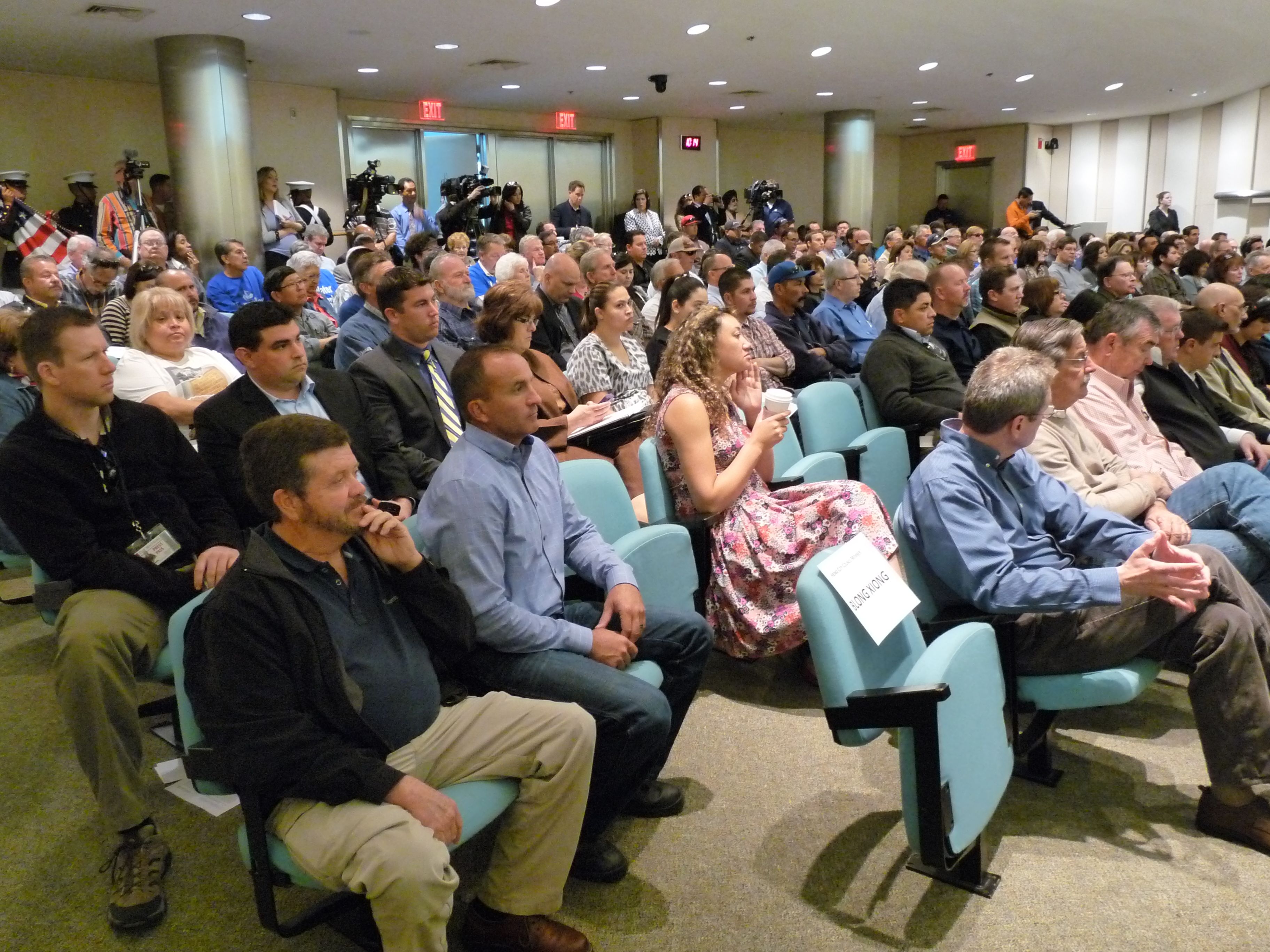
TODAY, About 500 people including farmers, farm employees and others tied closely to the agricultural industry packed the Fresno City Council Room at City Hall to hear from several members of Congress seeking legislation to help California, crippled by a drought and environmental restrictions.

Tom_McClintock,_Official_Portrait

And if you happened to be there for only a few minutes, you would have heard what defines a problem with  Governor Brown’s office in regard to offering solutions to the water crises.

Are you ready for this?

Janelle Beland

Question from Congressman Tom McClintock to Janelle Beland, Undersecretary California Natural Resources Agency:


Representative McClintock
: “Our subcommittee has asked [many months ago, with no response] why nearly 800,000 acre-feet of water went from the Delta to the ocean last fall knowing full well that we were heading into a potential catastrophic drought?  It drained Folsum Lake almost entirely  and certainly was not pumped into San Luis Reservoir.


Janelle Beland: “We were not anticipating that the drought would continue.”

2016-05-31T19:38:08-07:00March 20th, 2014|

California to Ease Water Restrictions

Excerpted from Sharon Bernstein; Reuters

Drought-plagued California will ease some protection for fish in the fragile San Joaquin-Sacramento River Delta, officials said Tuesday, a move expected to make more water available for farming and ease political tensions in an election year.

“California’s agriculture is critical to the world’s food supply,” said assemblywoman Kristin Olsen, who represents part of the San Joaquin Valley, who had lobbied hard against the restrictions. “An inability to produce that food would clearly be devastating to health and human safety not only in California but around the globe.”

Citing recent rains, regulators said Tuesday, there was enough water in the state’s reservoirs now to partially ease restrictions.

“We were quite concerned at that time about the issue of public health and safety,” Tom Howard, executive director of the State Water Resources Control Board, said in a conference call with reporters on Wednesday. “This really had the markings of a historic drought.”

Recent storms dropped nearly a foot of rain in some areas, boosting reservoir levels and the snowpack that the state relies on for drinking water in the spring, but still leaving supplies way below normal for this time of year.

Earlier this month, concern that the state was about to restrict water supplies to farmers even further swept through the agricultural community, spurring intensive pushback and a series of tense meetings with water regulators in the administration of Democratic Governor Jerry Brown.

“We are very concerned that if the current proposal as reported to us is enacted, it will have significant near- and long-term effects on the California economy and, more importantly, will not achieve the desired water supply security intended,” U.S. Senators Barbara Boxer and Dianne Feinstein and Congressmen Jim Costa and John Garamendi, all Democrats, wrote in a letter to the water board.

Under the new rules announced Tuesday, which Howard said may be modified again next month, the two massive public water projects responsible for pumping in the Delta will be able to deliver it to farmers and others, once the state determines that there is enough flowing to meet the health and sanitation needs of residents.

Scott Shapiro, an attorney specializing in water issues for the Sacramento firm Downey Brand, said expanding the allowable uses of tight water supplies was not just important for farmers.

“It’s not just for agriculture, because there are other needs that may be contracted for that go beyond health and safety,” Shapiro said. “It could include other municipal, industrial and agricultural needs.

In addition to allowing more of the water pumped from the Delta to be used for purposes other than meeting health and safety needs, the state planned to reduce by about a third the amount of water that the projects were required to leave in the Delta as a way of protecting fish, Howard said during the press briefing.

Mark Cowin, Director of California Department of Water Resources, commented that fish and wildlife experts consulted by his department said that endangered species in the Delta would not be harmed by the looser rules.

2016-05-31T19:38:08-07:00March 20th, 2014|

Federal Plans Begin to Address Climate Realities

Source: Dru Marion; CalCAN

Despite producing mixed results for sustainable agriculture interests, President Obama’s 2015 budget request is an encouraging sign that the federal government is getting serious about climate change, and particularly about adapting to its impacts.

The President’s proposal includes a $1 billion dollar Climate Resilience Fund, which is intended to strengthen preparedness of states and communities for increasingly extreme weather like floods, droughts, and wildfires.

The fund would support investment in research, technologies, and infrastructure across numerous agencies and sectors, including agriculture.

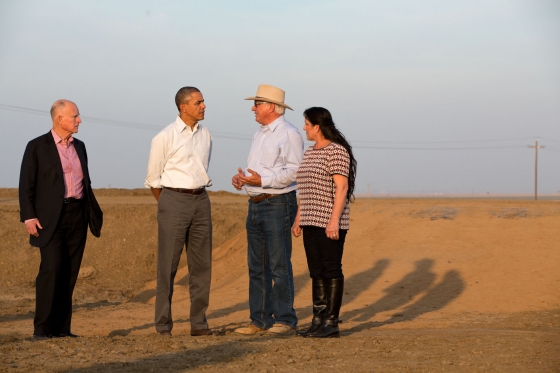
Word of the fund first came out in February, when Obama met with growers and ranchers in the San Joaquin Valley, the heart of drought-stricken California.

While touring the farm of Joe and Maria Del Bosque, who have fallowed their melon fields due to water shortages, the President emphasized the role federal support could play in alleviating drought impacts and preparing for the future.

“A changing climate means that weather-related disasters like droughts, wildfires, storms, and floods are potentially going to be costlier,” he noted, “And they’re going to be harsher.”

More and more, the President’s administration seems to be acknowledging the link between climate change and adaptation needs in agriculture.

Last month’s visit from the President followed close behind Agriculture Secretary Tom Vilsack’s announcement that the USDA will be launching seven ‘Climate Hubs’ across the country, intended to “deliver science-based knowledge and practical information to farmers, ranchers and forest landowners within each region of the United States to support decision-making related to climate change.” (See the USDA fact sheet).

It is uncertain exactly how the Climate Hubs will be funded, however, and USDA Climate Change Program Office Director Bill Hohenstein has declined to comment on the overall estimated costs of the program.

Meanwhile, the 2015 budget request for USDA comes in at $23 billion – about a billion dollars below FY2014 levels. The Climate Resilience Fund is an obvious place to provide needed financial support to the Climate Hubs, but it remains unclear as to whether the President intends for the Fund to provide that support, and also whether Congress will approve the expenditure.

Despite these uncertainties, National Farmers Union President Roger Johnson has voiced his support for Obama’s budget plan, saying, “The President’s proposed Climate Resilience Fund will provide farmers and ranchers with much-needed assistance after extreme weather events, which are occurring with increasing frequency.”

A growing acknowledgement of the link between climate change and agriculture on a federal level is heartening, to be sure, but it is worth noting that the budget plan leaves significant room for improvement with regard to sustainable ag programs more generally.

For a full overview of what the budget request means for sustainable ag interests, click here.

The California Climate and Agriculture Network (CalCAN) brings a sustainable agricultural perspective to climate change and agriculture policy. Their efforts are aimed at increasing funding for research, technical assistance and financial incentives for farmers whose practices reduce GHG emissions, sequester carbon, and provide many environmental co-benefits.

2016-05-31T19:38:09-07:00March 19th, 2014|

Drought Could Affect Current and Future Food Prices

California Farm Bureau Federation reported today that with hundreds of thousands of acres of farmland expected to be left unplanted this year due to water shortages, market analysts and economists say shoppers will likely begin to see higher prices on some food items later this year.

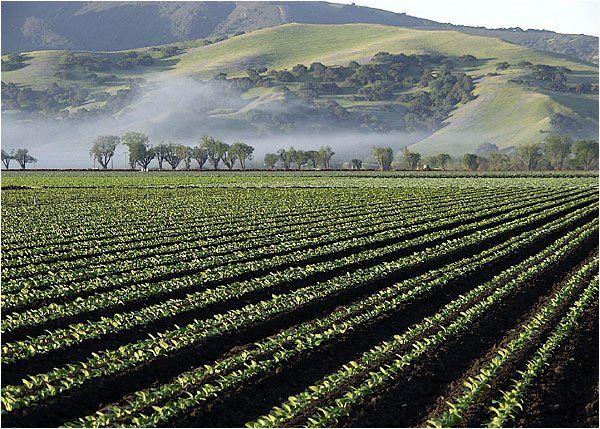
Sean Villa, president of Great West Produce, a produce broker in Los Angeles County, said he expects a number of products to be affected later this year, including broccoli, sweet corn and melons from growing regions in Fresno, Mendota and Huron, where farmers will likely cut acreage due to water shortages.

Gary Tanimura, a vegetable grower based in the Salinas Valley, said he will have to reduce his summer melon production in the San Joaquin Valley by about 20 percent due to lack of water.

Tanimura said spring and fall lettuce production in the San Joaquin Valley also could drop by 25 percent to 30 percent this year.

Cindy Jewell, director of marketing for California Giant Berry Farms in Watsonville, said farms in the Oxnard growing region—which typically plant a second crop in the summer for fall production—may not be able to do that this year.

“If the water situation continues to be this severe, there may not be as many of those acres replanted for fall production,” she said, adding that if the drought continues into fall and winter, when most strawberries are planted, it could affect what’s planted for next year’s harvest.

Because California supplies nearly 90 percent of the nation’s strawberries, Jewell said it is not likely that there will be much of a production shift to other regions.

“It’s not like someone else could step in and do that,” she said. “It’s all about climate and location.”

On the beef market, the California drought may have the most impact on niche products such as grassfed, organic or natural beef, said Lance Zimmerman, a market analyst for Colorado-based Cattlefax. Those programs typically rely more on local or semi-regional supplies, he said.

Retail beef prices have risen nationwide, Zimmerman said, because of improved demand and continued declines in supply caused by several years of drought in other major beef-producing regions in the Southern Plains and the Southeast.

In states where drought conditions have improved, ranchers are now trying to build back their herds, so they’re not sending as many animals to market, particularly mature cows, and that has driven up prices on meat cuts such as chuck roast and ground beef, he added.

On the produce market, fair weather accompanying the drought has, for now, caused vegetable crops to come to market ahead of schedule, creating an overlap of products from the desert region and the San Joaquin Valley.

That, combined with reduced demand from East Coast markets due to severe winter weather, has led to temporary oversupplies of some vegetables, Tanimura said, while Jewell reported that berry production has also been stimulated by warm winter weather.

2016-05-31T19:38:09-07:00March 18th, 2014|

Free Online Research-Based Advice On Weathering A Drought

The latest research-based advice on weathering a drought is now available free online.

Spring is here, and California farming is in full swing. But this year, the agriculture industry is operating under the burden of unrelenting drought.

The UC Division of Agriculture and Natural Resources is working to help farmers cope with the unwelcome outcome of historically low rainfall the last three years. UC scientists, with support from the California Department of Water Resources, have recorded video presentations on high-priority drought topics that are available for viewing on the UC California Institute of Water Resources drought webpages.

“We are bringing the latest research on drought and water from the UC system’s leading experts to as many farmers, farm industry representatives, communities and students possible,” said Doug Parker, director of the UC California Institute of Water Resources. “People working in the ag industry are busy this time of year. They can get information from these videos whenever and, using mobile devices, wherever it is convenient for them.”

The first seven presentations in the “Insights: Water and Drought Online Seminar Series,” each about half an hour in length, are now ready for viewing. Topics are:

Groundwater and surface water interactions under water shortage
Thomas Harter, UC Cooperative Extension specialist in the Department of Land, Air and Water Resources at UC Davis.

No Water LogoCrop water stress detection and monitoring
Kenneth Shackel, professor in the Department of Plant Sciences at UC Davis

Surface irrigation management under drought
Khaled Bali, UC Cooperative Extension advisor in Imperial County

ET-based irrigation scheduling and management considerations under drought
Richard Snyder, UC Cooperative Extension specialist in the Department of Land, Air and Water Resources at UC Davis

Salinity management under drought for annual crops
Stephen Grattan, UC Cooperative Extension specialist in the Department of Land, Air and Water Resources at UC Davis

Salinity management under drought for perennial crops
Stephen Grattan, UC Cooperative Extension specialist in the Department of Land, Air and Water Resources at UC Davis

Water-use-efficient tillage, residue and irrigation management
Jeff Mitchell, UC Cooperative Extension specialist in the Department of Plant Sciences at UC Davis

Some of the topics that will soon be added to the online drought series are:

Managing deficit irrigation
Marshall English, professor emeritus at Oregon State University

Managing rice systems with limited water
Bruce Linquist, UC Davis

Climate change and paleoclimatology: 2013/1014 in perspective
Lynn Ingram, UC Berkeley

Available tools for estimating soil suitability to groundwater banking
Antony O’Geen, UC Davis

Irrigation management of tomato under drought conditions
Eugene Miyao, UC Agriculture and Natural Resources

How Will Monitoring Soil Moisture Save Me Water?
Dan Johnson, USDA-NRCS California State Water Manager

Winegrapes water management under drought
Paul Verdegaal, UC Agriculture and Natural Resources

Irrigation management of fruit and nut crops under Sacramento Valley conditions
Allan Fulton, UC Agriculture and Natural Resources

Alfalfa water demand and management under drought
Daniel Putnam, UC Davis

Field irrigation monitoring for maximum efficiency under drought conditions
Blake Sanden, UC Agriculture and Natural Resources

Subtropical orchards management under droughts
Ben Faber, UC Agriculture and Natural Resources

Additional valuable information from California academic institutions for dealing with the drought in the short-term and long-term is available at California Drought Resources. The pages are regularly updated to bring new developments from the state’s university and colleges to a broad range of communities, including farmers, ranchers, landscaping professionals, policymakers and California residents.

For more information on Insights: Water and Drought Online Seminar Series, contact Faith Kearns, UC California Institute for Water Resources, faith.kearns@ucop.edu.

Photo: Oroville Lake, February, 2009. Photo courtesy of California Department of Water Resources.

2016-05-31T19:38:49-07:00March 17th, 2014|

PLF On 9th Circuit Biological Opinion

PLF statement on 9th Circuit Upholding Delta Smelt Biological Opinion

Last Week, a panel of the Ninth Circuit largely upheld the federal government’s 2008 “biological opinion” for the delta smelt, a regulation under the Endangered Species Act has that triggered draconian restrictions on water deliveries from the federal and state water projects to the San Joaquin Valley and Southern California.

Pacific Legal Foundation (PLF) attorneys represent some of the farmers in the case who are challenging the biological opinion as an abuse of federal power based on questionable science and shoddy regulatory procedures.

Damien Schiff, a principal attorney with PLF who represents farmers in the case, issued this statement today, in response to the Ninth Circuit’s ruling:

“The Ninth Circuit has done a reverse rain dance for California, practically guaranteeing that the impacts of our current drought will be more devastating,” said PLF Principal Attorney Damien Schiff.   

“The ruling gives judicial blessing to regulations that impose real punishment on people with only speculative benefits for a declining fish species.   Under these draconian regulations, water is withheld from farms, businesses and communities from the Central Valley to San Diego based on sloppy science and ideological agendas.    

“There’s a drought of common sense in the bureaucracies that impose these regulations – and in the perverse legal precedents that lead courts to uphold them.  In one notorious precedent, TVA v. Hill, the U.S. Supreme Court said the Endangered Species Act gives absolute priority to species over everything else, including the general welfare of the human community.    

We must all hope that California’s water crisis – made worse today by the Ninth Circuit – can prod the U.S. Supreme Court to reconsider its past decisions that are leaving us so parched.    

Indeed, the one hopeful aspect of today’s ruling is there’s a possibility the smelt case could get to the Supreme Court.  There, it might result in a decision that turns the tide of environmental law away from imbalance and zealotry, and back toward sanity.”

2021-05-12T11:06:02-07:00March 17th, 2014|

Governor’s Office Creates Drought Toolkit

Source: Matt Williams in Water News

The Governor’s Office of Planning and Research (OPR) has created a new toolkit for local governments that provides guidance for coordinating on drought response and meeting the governor’s call for a 20% reduction in water use.

The document, available here, contains a list of regional contacts for the Office of Emergency Services, State Water Board and other water-related state agencies; templates for a proclamation declaring a local drought emergency or a resolution calling for voluntary water conservation; web links to drought information and resources for local governments; and water-related curricula for grades K-12.

CA

Gov. Jerry Brown’s administration is encouraging local governments to enact water use reduction plans at their facilities, share well data, pursue emergency drinking water grants if necessary, and update local ordinances to encourage water conservation.

The tools were designed with city and counties in mind, and are appropriate for use by water districts, officials said.

OPR has launched a Local Drought Clearinghouse to ensure local governments can quickly access the toolkit and other resources.

For more information, contact Debbie Davis, local drought liaison, at (916) 327-0068 or drought.clearinghouse@opr.ca.gov.

2016-05-31T19:38:50-07:00March 13th, 2014|

New Water Supply for Monterey Peninsula

California American Water is concerned about the communities on the Monterey Peninsula; they are hard at work, developing new water sources with the Monterey Peninsula Water Supply Project.

A three-part solution will supply water to all the communities on the Monterey Peninsula, protecting the natural resources of the Carmel River and providing future protection from drought.

  1. A desalination plant located in Marina, will provide water for residents on the Monterey Peninsula.
  2. Expanded underground water storage will keep excess winter water underground. This reserve will act as an additional source for our communities.
  3. A replenished groundwater supply with highly treated recycled water will make even more water available for residents and businesses.

The need to develop a sustainable, drought-proof water supply for the Monterey Peninsula is as urgent as ever.

Because of state and court-ordered reductions to the community’s primary sources of water, the Carmel River and the Seaside Aquifer, a new water project for the Peninsula must be permitted and constructed without further delay.

The existing supply is being ramped down over the next decade to less than half of what is today.

Stay Connected: Keep updated on what’s going on by visiting www.watersupplyproject.org for the latest news and information. 


2016-05-31T19:38:50-07:00March 13th, 2014|
Go to Top