GOVERNOR CONVENES DROUGHT TASK FORCE

Task Force to Expedite Drought Preparedness
Association of California Water Agencies (CDWA) announced TODAY that Gov. Jerry Brown has directed state officials to begin meeting weekly to assess whether a drought declaration is needed.
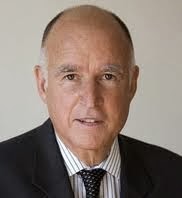
Governor Jerry Brown


Department of Water Resources (DWR) Director Mark Cowin, State Water Board Chair Felicia Marcus, California Department of Food and Agriculture Secretary Karen Ross, and Office of Emergency Services Director Mark Ghilarducci were instructed to immediately convene an interagency Drought Task Force, in a Dec. 17 letter addressed to those officials.

 “We must do everything we can to address the impacts of water shortages and move water from where it is available to where it is needed,” Brown wrote.
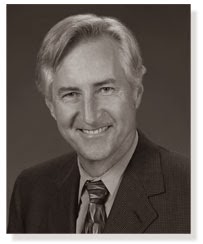
DWR Director Mark Cowin

The governor mentioned actions such as a clearinghouse for water shortage information, regional assessments, infrastructure improvements and trucking water. Last spring Brown directed state agencies to cut red tape for voluntary water transfers.

The impetuses for the task force, Brown said, are this year’s record-dry conditions and the unusually low 5% initial water allocation of requested deliveries projected from the State Water Project.

 “The federal government likely will soon follow suit,” Brown wrote, referring to the Central Valley Project.

The California DWR subsequently appointed two experienced managers to review water allocations and the state’s preparedness for what could be a third consecutive dry year in 2014, as well as coordinate with federal and local agencies.

DWR Director Mark Cowin has appointed Bill Croyle to lead the effort as department drought manager. Croyle has 30 years of experience in water operations, including seven years as DWR’s flood operations chief and 23 years with the Central Valley Regional Water Quality Control Board.

Cowin tapped Jeanine Jones as deputy drought manager. Also a 30-year veteran of DWR, Jones has directed the department’s statewide planning program and worked on climate change adaptation programs as DWR’s interstate resources manager.
Cowin said the goal of the drought preparedness effort is to mitigate harm to Californians and the state’s economy, particularly farmers who must operate with markedly less water than needed for crops and those who rely on groundwater. Especially vulnerable to dry conditions will be farmers –and the farm communities that depend on agricultural jobs — on the west side of the San Joaquin Valley.

DWR will also be watching for drinking water impacts in small rural communities whose fractured rock groundwater sources will be stressed by a third dry year. The U.S. Department of Agriculture declared California a drought disaster area in September.

As Background, CDFA and CWC held a joint meeting concerning the state’s water supply back on September 10th in Sacramento.

On December 9, U.S. Sen. Dianne Feinstein and Rep. Jim Costa (D-16) sent a joint letter to Gov. Jerry Brown asking him to declare a statewide drought emergency that would activate the state’s emergency plan and permit some relaxation of state regulations concerning water.

California members of the U.S. Congress and California State Legislature issued a letter to President Obama and Governor Brown On December. They urged immediate use of executive authority to mitigate the catastrophic effects of another natural drought exacerbated by environmental regulations to avoid jeopardizing our state’s trillion-dollar economy, to develop and implement comprehensive water plans that include additional storage and water rights, and to allocate any unanticipated water supplies to California’s families and farms and not to the Pacific. 

“It’s still early in the water year,” Cowin said in a statement Tuesday. “The January and February snow surveys will allow us to evaluate water conditions on a statewide basis. As we monitor water conditions, we will consider actions to be included in a potential governor’s drought proclamation.”

DWR and the Brown administration are working on an array of issues related to the ongoing dry conditions. In response to Brown’s direction last spring for DWR to take action to streamline water transfers, Cowin said the department is bringing in more expertise to work on the issue.

DWR also is working with the Bureau of Reclamation and the federal and state wildlife agencies to improve Delta operations in 2014 to improve water delivery.

“Voluntary water transfers will be key to DWR’s drought response, as they hold the potential to alleviate critical shortages,” Cowin said. “We are making arrangements to bring additional resources with expertise in water transfers to advise the Drought Management Team to assure that the 2014 water transfers approval process is administered efficiently.”

DWR has released a schedule and process for streamlining water transfers in 2014, as directed by Governor Edmund G. Brown Jr.’s May 20 executive order. “We will continue to work with voluntary buyers, sellers, the State Water Resources Control Board and the Bureau of Reclamation to ensure an efficient process,” Cowin said.

California Department of Food and Agriculture Secretary Karen Rosscomplimented DWR on its efforts to respond quickly. “While 2014 water allocations are not finalized until spring, farmers and ranchers make key decisions in January and February,” said Secretary Ross. “By acting now to streamline water transfers and provide clarity, the administration is helping our agricultural communities prepare for the coming water year.”

The department also is hosting workshops to prepare communities for dry conditions. The State Water Resources Control Board will discuss potential future actions related to drought at a Jan. 7 California State Board of Food and Agriculture meeting.

Sources: Matt Williams, ACWA: Water News
2016-05-31T19:42:26-07:00December 20th, 2013|

EPA FINES FOR PESTICIDE VIOLATIONS IN CALIF.

EPA Fines Ag Products Companies $74,880 For Pesticide Violations
The U.S. Environmental Protection Agency TODAY announced settlements with two companies selling agricultural chemicals in California and Arizona over improper storage and containment of federally regulated pesticides.

San Francisco, Calif.-based agricultural products company Wilbur-Ellis must pay $62,080 in civil penalties and, separately, Collierville, Tenn.-based agricultural products company Helena Chemical must pay $12,800 in civil penalties. Both companies had multiple violations under the Federal Insecticide, Fungicide, and Rodenticide Act (FIFRA), which regulates the distribution, sale and use of pesticides in the U.S.

“Failing to meet standards for properly managing pesticides puts workers and the environment at risk,” said Jared Blumenfeld, EPA’s Regional Administrator for the Pacific Southwest. “Regulated facilities must ensure that protection of our health and environment is a top priority.”

The violations were found during April 2011, January 2012, and January 2013 inspections conducted by the California Department of Pesticide Regulation and the Arizona Department of Agriculture, and have since been corrected.

Wilbur-Ellis facilities in Glenn, Calif., Hughson, Calif., and Buckeye, Ariz. had unsealed cracks in the floors and/or walls of the facilities’ pesticide containment areas, and, in addition, the Glenn facility was found to have an undersized containment area. The company’s Glenn and Hughson facilities were found to have improper safeguards for pesticide equipment, such as hoses and valves, which increases the risk of a pesticide release to the environment. Additionally, the Hughson facility was improperly using an external site gauge to monitor levels of liquid pesticide in a storage tank, a violation that increases the risk of a pesticide release. Further, Wilbur-Ellis was also cited for inadequate tank labeling, recordkeeping, and inspection documentation.

Helena Chemical’s Hanford, Calif. pesticide repackaging facility was found to have an inadequate containment area for potential pesticide spills that may occur during offloading of pesticides from trucks, and inadequate safeguards for pesticide equipment, which increase the risk of a pesticide release to the environment.

In total, Helena Chemical and Wilbur-Ellis operate hundreds of pesticide facilities nationwide.

For more information on EPA’s pesticide container/containment regulations, that include the requirements at issue in these cases, visit: http://www.epa.gov/pesticides/regulating/containers.htm

2016-05-31T19:42:26-07:00December 19th, 2013|

CALIF. CITY WINS EPA INNOVATION AWARD

Cupertino Wins EPA Food Recovery Challenge Innovation Award
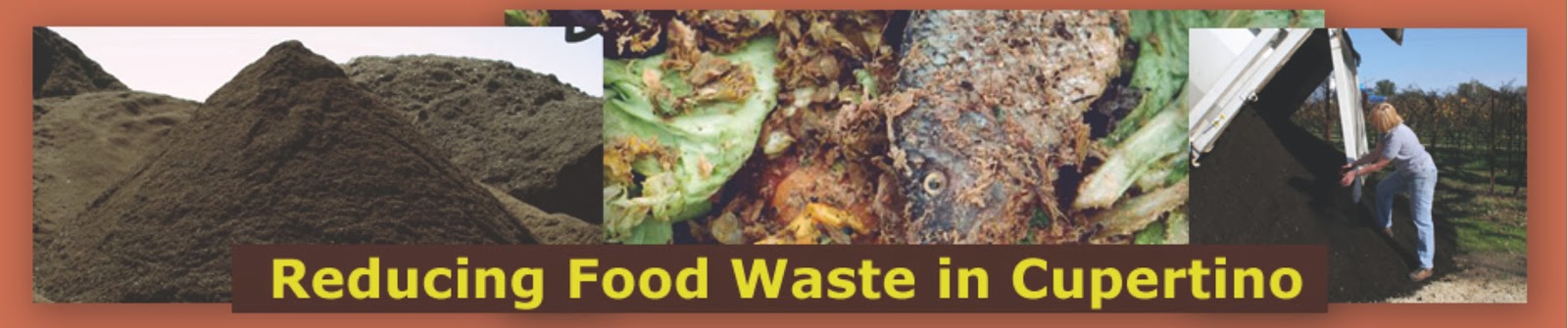
TODAY, the U.S. Environmental Protection Agency awarded the City of Cupertino its Food Recovery Challenge’sNational Innovation Award for the city’s extensive efforts to reduce food waste.  

Cupertino’s efforts include leading-edge work to integrate food waste reduction goals into its business partnership with a local waste hauler and to aid local businesses compost their food waste. The city was honored at an event held at Marina Food, a Cupertino Asian-foods specialty store that partnered with the city to reduce its food waste.


“Since the city established its 75 percent diversion goal, more than 2,000 tons of food waste generated by businesses and residents in Cupertino each year is no longer sent to landfills,” said Jared Blumenfeld, Regional Administrator for U.S. EPA’s Pacific Southwest Office. “Reducing food waste is a simple way we can cut our carbon footprint, move closer to zero waste and stop harmful climate-changing gases from polluting our air.”

Nationally, food is the single most common material sent to landfills, accounting for 25 percent of all waste sent to landfills. When excess food, leftover food, and food scraps are disposed of in a landfill, they decompose and become a significant source of methane, a potent greenhouse gas. So, limiting wasted food significantly reduces methane emissions.

Statewide, the California State Board of Food and Agriculture met last spring to determine ways to minimize food to help address food insecurity and discuss food waste in the context of energy production and composting.

“There are opportunities at all stages of agricultural production and distribution to reduce food loss,” State Food and Agriculture Secretary Karen Ross said at the meeting. “We should continue to look at approaches and innovations that allow farmers and processors to minimize food loss, generate revenue and contribute back to our communities.”

Craig McNamara, president of the state board, said at the time that the board will communicate with “key national partnerships that exist to address food waste and how these initiatives could be beneficial for California.”

So, Cupertino set a goal to increase overall recycling and composting to 75 percent by 2015, a 10 percent increase from 2010 levels. Its waste hauler, Recology, must meet this goal in order to renew its contract with the city set for that year. Diverting food waste from landfills is the primary method the city is using to meet the 75 percent goal.  

Cupertino, Recology and EPA worked closely to encourage local businesses to reduce their food waste. As a result, Marina Food now prevents an estimated 520 tons of food waste annually from entering landfills. 

The city is also working with local businesses to ensure that food waste and associated packaging does not enter storm water systems, which can contaminate water flowing into rivers, streams, and the ocean.

The Food Recovery Challenge is part of EPA’s Sustainable Materials Management Program, which seeks to reduce the environmental impact of food and other widely-used everyday items through their entire life cycle, including how they are extracted, manufactured, distributed, used, reused, recycled, and disposed.

Sources: EPA, CFBF, and CDFA

2016-05-31T19:42:27-07:00December 18th, 2013|

USDA FARM STORAGE LOANS AVAILABLE

California Farm Service Agency Offers Low-interest Storage Loans


USDA California Farm Service Agency (FSA) Executive Director, Val Dolcini, State Executive Director, reminds farmers and ranchers that Farm StorageFacility Loans (FSFL) are available through FSA.

The Farm Service Agency offers low-interest loans to grain producers to build new or upgrade existing storage facilities and permanent drying and handling equipment. Loan opportunities include, but are not limited to:
  • New conventional-type cribs or bins, oxygen-limiting and other upright silo-type structures, and flat-type storage structures designed for whole grain storage
  • Perforated floors, safety equipment, quality improvement equipment, electrical equipment and concrete components considered essential for a fully functional storage facility
  • Remodeling existing storage facilities to increase storage capacity.

Farm storage facility loans must be approved prior to site preparation, equipment purchase or construction, and must be secured by a promissory note and security agreement. The new maximum principal loan amount is $500,000. Participants are required to provide a down payment of 15 percent, with CCC providing a loan for the remaining 85 percent of the net cost of the eligible storage facility and permanent drying and handling equipment.

Additional security is required for poured-cement open-bunker silos, renewable biomass facilities, cold storage facilities, and hay barns for all loans exceeding $50,000. New loan terms of seven, 10 or 12 years are available depending on the amount of the loan. Interest rates for each term rate may be different and are based on the rate, which CCC borrows from the Treasury Department.
2016-05-31T19:42:27-07:00December 18th, 2013|

WORKSHOP FOR GROUNDWATER WORKPLAN INPUT

State Water Board Wants Input on Effective Groundwater Management Plan
State Water Resources Control Board will hold a public workshop to receive input on its draft The Groundwater Workplan Concept Paper.

Date, time, and location of workshop:

Wednesday, January 22, 2014 – 9:00 a.m.

Joe Serna Jr. – Cal/EPA Headquarters Building

Coastal Hearing Room

1001 I Street, Second Floor

Sacramento, CA 95814


With increased demands on the State’s water supply and projected decline in surface water runoff, the State relies more on groundwater. However, many of California’s aquifers are already experiencing contamination and/or overdraft. These challenges do not lend themselves to a “one size fits all” solution, given the varying physical and institutional characteristics of California’s groundwater basins.

The Water Boards are developing a workplan that aligns its current groundwater protection efforts, the ongoing actions of other entities with groundwater management responsibilities, and potential actions that the Water Boards and others could pursue.

A goal of the workplan is to promote collaboration and cooperation among local, regional, and State agencies and other stakeholders to help promote more effective groundwater management that supports beneficial uses over the long-term.

Whether implemented at the local, regional, or State level, the Water Boards believe that an effective groundwater management program generally requires five key elements to be in place.
  • Thresholds
  • Monitoring/assessment
  •  Governance/management
  • Funding
  •  Enforcement
*********************

2016-05-31T19:42:27-07:00December 18th, 2013|

A Gift of Ag Fan Plate Supports FFA and Others

The Holiday Gift That

Gives Back

By Karen Ross, California Agriculture Secretary


With the holiday season now fully upon us, I’d like to take moment to suggest a gift you may not have considered – the California Agriculture License Plate.This is an excellent way to show support for California agriculture while participating in a program that actually gives back. A portion of Ag license plate fees provides funding for agricultural education programs that are crucial to our future.

These programs are important for several reasons. The disconnect between consumers and the farming community has grown over the decades as fewer and fewer people have been involved in production agriculture.  Fortunately, there is a renewed interest by consumers to know where their food comes from, how it is produced and who produced it. 

This provides an opportunity to help people understand the unique advantages we enjoy because of the bountiful diversity California agriculture provides to this state, our nation and, increasingly, the world. 

Agricultural education programs introduce our young people to the wide variety of exciting career opportunities available throughout the agricultural production system in addition to environmental stewardship, leadership skills, community service and making nutritious food choices.

Just last week, I had a fabulous visit to the FFA Chapter at Pioneer High School in Woodland.  The chapter is the state’s second largest (850 students) and continues to see dramatic growth.  The officers who escorted me around campus were smart, articulate, confident and enthusiastic! The hands-on learning and leadership development they are exposed to in addition to rigorous studies have already equipped these young people with life-long traits that any employer would value.  Because of students like these, I am very optimistic about our future and our ability to double food production to feed a fast-growing world population that is expected to number nine-billion people by 2050.

Our future is in good hands if we pay attention to our food production infrastructure.  It starts with Ag education programs like 4-H, FFA, Ag in the Classroom and many other worthy programs.

So, please, take a look at the agriculture specialty license plate for the holidays. You’ll help raise agricultural awareness and help us prepare future generations to enter an honorable profession.

2016-05-31T19:42:27-07:00December 18th, 2013|

A Warning to Calif. Regarding Lack of Water

Bakersfield Gathering Identifies 
Major Stressors to Valley Water Supply
By Don A. Wright, California Ag Today, Contributor

A letter signed by 15 Congressmen, 11 California State Senators and 23 Assembly members was sent to President Obama and Govern Brown urging them to help avoid an economic and social disaster by (instructing federal and state agencies to) allow more water to be diverted for beneficial use. The letter also urges more storage and protection of water rights.


Congressman David Valadao R-21st and State Senator Jean Fuller R-18th held a press conference at the Kern County Water Agency headquarters TODAY. The elected officials were joined by state and federal water contractors to shout a warning that California’s system is far too heavy on regulation and far too light on infrastructure.

Abuse of the Endangered Species Act and an aging storage/delivery system designed to serve only half the state’s current population was identified as the two most serious impediments to secure water deliveries vital to the San Joaquin Valley’s economy.


California’s Department of Water Resources announced an initial allocation of only five-percent of contracted State Water Project supplies. While the US Bureau of Reclamation has yet to announced an allocation to Central Valley Project contractors Westlands Water District’s deputy General Manager Jason Peltier said his district is gearing up for zero allocations.

Peltier added this could force 400,000 acres of farmland to lie fallow this coming year. The cost to the local economy could easily total billions of dollars. Senator Fuller urged anyone desiring more information to contact the Kern County Water Agency.

2016-05-31T19:42:27-07:00December 18th, 2013|

WESTLANDS ASKS GOVERNMENT FOR WATER SOLUTIONS

Westlands Water District Supports Long- and Short-Term Governmental Solutions for Water Crisis

Westlands Water District expressed its support TODAY of federal and state governments’ efforts to address California’s water crisis and the conditions that are causing both near- and long-term water supply problems. 

“We applaud the leadership of elected officials to bring attention to California’s water crisis and the ramifications of current conditions and policies,” said Thomas W. Birmingham, General Manager, Westlands Water District. “State and federal government action is needed to resolve the immediate water supply shortages and provide farmers and communities with reasonable assurance that they have the water resources needed to operate their businesses and keep people at work.”

“We cannot afford another year of uncertainty that will harm an industry that generates billions of dollars in economic activity and plays such an important role in the lives of the people that depend on agriculture,” said Birmingham.

The San Joaquin Valley faces the prospect of a record low water allocation, an historic low point in water supply reliability, and yet another year of extreme economic hardship. Without substantive action to address water supply problems, agricultural production will be greatly impacted, which will have negative consequences for numerous industries and thousands of jobs that directly or indirectly rely on the agricultural industry. This problem affects not just the Central Valley, but also the whole state of California.

Westlands encompasses more than 600,000 acres of farmland in western Fresno and Kings Counties. The District serves approximately 700 family-owned farms that average 875 acres in size. Westlands farmers produce more than 60 high quality commercial food and fiber crops sold for the fresh, dry, canned and frozen food markets, both domestic and export. More than 50,000 people live and work in the communities dependent on the District’s agricultural economy.

If unaddressed, the drought would pose a potential economic impact to the region exceeding $1 billion dollars. Indirect ripple effects of an economic downturn in agricultural production could impact related businesses including food processing, distribution, retailers, grocers, and banking.  

Westlands is calling upon policymakers to learn from those lessons of the past. The previous water crisis in 2009 caused farmers to fallow more than 300,000 acres of land and change their crops and production levels. Statewide, income losses were estimated at $2.8 billion and more than 95,000 jobs were lost. High levels of unemployment left communities in financial peril.

Now, the same water supply conditions are creating the same ramifications that devastated San Joaquin Valley communities in 2009; however, impacts are expected to be more severe because there are fewer options and coping mechanisms available now. Groundwater supplies are low, land is subsiding, and reservoirs are far below average levels. Therefore, Westlands is encouraging state and federal policy changes to provide water now.

“Westlands strongly supports federal and state efforts to implement a long-term solution to improve water reliability through the Bay Delta Conservation Plan. We will continue to work with the agencies and officials to make that plan a reality. However, the current crisis demonstrates the need for a near-term solution. We cannot wait any longer. The time is now to recognize the importance of a reliable water supply and to take action to protect the hardworking families of the Central Valley, and the broader California economy,” said Birmingham. 

2016-05-31T19:42:27-07:00December 17th, 2013|

CDFA INVITES FREP PROPOSALS

CDFA Accepting Concept Proposals For 2014 Fertilizer Research And Education Grants

The California Department of Food and Agriculture’s Fertilizer Research and Education Program (FREP) announced TODAYit is currently accepting concept proposals for the 2014 grant cycle. FREP’s competitive grant program funds research that advances the environmentally safe and agronomically sound use of fertilizing materials.
The 2014 Request for Proposals (RFP) is consistent with several new initiatives put forth by the department to help effectively manage nitrogen fertilizers in agriculture. New this year is a call for research projects to fill gaps in nitrogen management information for specific crops grown in the San Joaquin Valley, including corn, pima cotton, processing tomatoes, walnuts, and citrus.

In addition, FREP is encouraging the development and submission of concepts that demonstrate experimental research trial data (e.g., prior FREP research findings) at the field scale in organic and conventional fertilizers. Other priority research areas are to evaluate strategies and potential technologies to increase crop nitrogen fertilizer uptake; reduce nitrogen movement off irrigated agricultural lands, including nitrate movement below the root zone; and minimize nitrous oxide emissions from nitrogen fertilizers.

Additionally, as in previous years, FREP seeks concepts on developing Best Management Practices (BMPs) along with proposals to provide education and outreach opportunities on effectively and efficiently managing fertilizing materials.

Applicants are invited to submit two-page concept proposals to FREP by Wednesday, January 15, 2014. Concepts submitted should be in line with at least one of the program’s identified priority research areas. Further information on the 2014 FREP request for concept proposals including timelines, application criteria, priority research areas, and examples of successful proposals are available at: http://www.cdfa.ca.gov/is/ffldrs/frep/CompetitiveGrantProgram.html. Applicants may also send e-mail inquiries to FREP@cdfa.ca.gov.

FREP’s Technical Advisory Subcommittee will review all concept proposals. The Subcommittee will invite promising concept proposals that support at least one of the listed priority research areas to be developed into full project proposals.

Since 1990, the Fertilizer Research and Education Program has funded more than 160 research projects focusing on California’s important and environmentally sensitive cropping systems. A database of completed and ongoing research is publically available at: http://www.cdfa.ca.gov/is/ffldrs/frep.html.

2016-05-31T19:42:27-07:00December 17th, 2013|

STATE ASSEMBLY HEARS BEE NEEDS

Almond Board Testifies on Bee Needs for State Assembly Committees
(Almond Board of California)

A joint oversight hearing was held TODAY to discuss the threat to California agriculture from the widespread loss of honeybees. Assembly member Luis Alejo (D-Salinas), chair of the state Assembly’s Environmental Safety and Toxic Materials Committee, said, “California’s agriculture depends on pollination by honey bees. The potential loss of bees is important for all of us who rely on agriculture for our jobs as well as our food supply.”

Added Assembly member Susan Talamantes Eggman (D-Stockton), chair of the Agriculture Committee, “Bees are vital to our economy and the food security of the nation.”

Gabriele Ludwig, ABC’s associate director of Environmental Affairs, testifying before the committees, noted that the Almond Board has funded research on bees for nearly 20 years, and on the basis on that research, she identified two changes that would most benefit honey bee health: better forage and nutrition, and a method for Varroa mite control.

Also presenting testimony was Gordon Wardell of Paramount Farms who spoke about Paramount Farms’ practices to protect bees and to make almonds the safest crop for bees.

Other presenters included Brian Leahy, director of the California Department of Pesticide Regulation, as well as several scientists, beekeepers and allied industry members.

The consistent points given to both the Environmental Safety and the Agriculture Committees were the complexity of this issue, the need for all stakeholders to work together, and the importance of funding for continued research and extension.

2016-05-31T19:42:27-07:00December 17th, 2013|
Go to Top