Fresno County Crop Value Drops to $6.43 Billion

For the first time in history, Fresno County has two $1 billion crops, and for the first time in 11 years, grapes are not the #1 crop. Now almonds are the top crop produced in Fresno County with a value of $1.1 billion, with grapes coming in second at $1.03 billion. However, despite these highlights, Fresno County crop value in 2013  was $6.436 billion in gross production—a decrease of 2.28 percent of 2012.

Fresno Ag Commissioner Les Wright

Fresno Ag Commissioner Les Wright

As it stands now, Fresno County loses it’s #1 position as top agricultural county in the nation, dropping behind Tulare County, which recently announced a $7.8 billion 2013 crop year. It could get worse when Kern County releases their report in August.

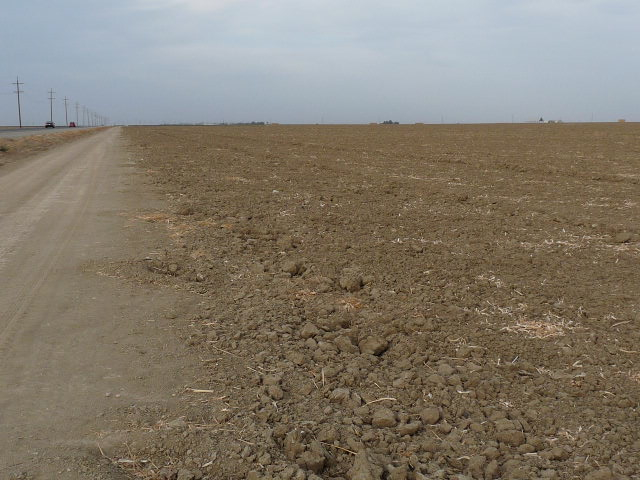
“Much of the decrease can be attributed to the shortage of water,” said Les Wright, Fresno County Ag Commissioner. “The impacts of drought began to show on our 2012 crop report with decrease of 2.29 percent from 2011. Producers are feeling the affects of the water shortage more in 2014 than in the previous two yeas.”

Water shortages in Fresno County with a large part of the West Side dependent on both state and federal surface water deliveries have meant the annual crop report’s gross value of production has dropped three years in a row.

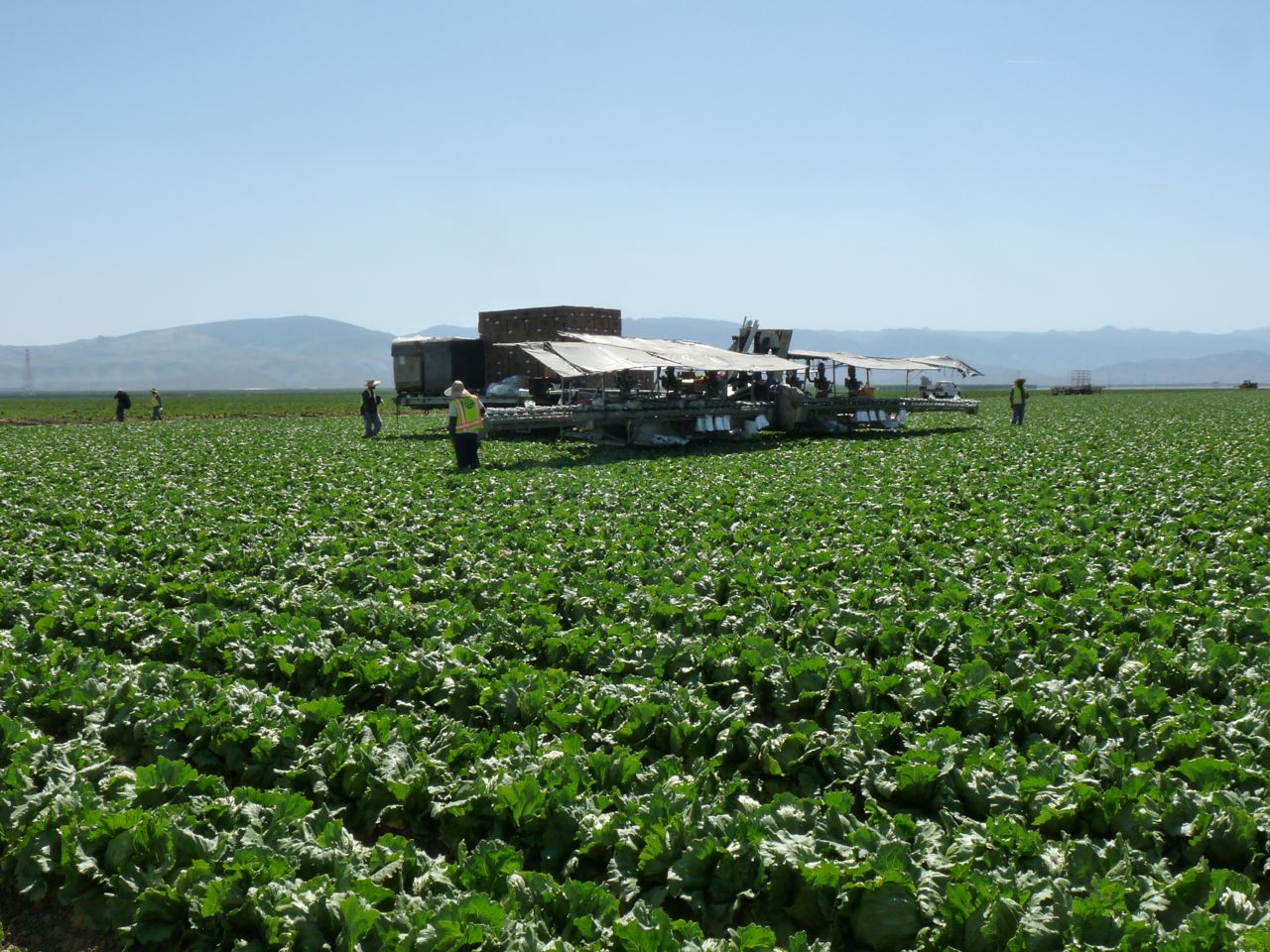
Details of the 2013 report include an increase of fresh vegetable production in 2013 by 3.8 percent in value led by garlic and fresh market tomatoes, while livestock and poultry decreased in value by more than 16 percent.

Field crops, representing barley, wheat, corn silage, cotton an alfalfa declined nearly 42 percent, while fruit and nut crops increased more than 8 percent.

Wright noted that Fresno County growers exported nearly 26,000 shipments to 99 different countries. “This tells us that we are still feeding the world,” said Wright.

“Once we get water back, we are going to see our ag economy rebound,” said Wright. “Just give the farmers water and they will do the rest.”


2016-05-31T19:34:16-07:00July 15th, 2014|

President/CEO Westside Produce on Food Safety

Stephen Patricio, President and CEO of Westside Produce, a grower, packer and shipper of cantaloupe for California and Arizona, talks about food safety of our locally grown foods.

“The Center for Produce Safety is a 7 year-old organization that facilitates science-based actionable research to improve the quality as well as the safety of the healthy fruits, vegetables and tree nuts we are so proud of,” said Patricio.

Patricio commented that in general, growers have a great understanding of food safety. “There’s been a tremendous awareness over the years I’ve been actively involved, and we’re maturing everyday. Realistically, the industry matures, the workers mature, because the elements of food safety don’t exist in an ivory tower or in an office, or in a tractor or in a shop; they exist everywhere on the farm,” said Patricio.

“From the absolute beginnings on the dirt all the way through the packing houses to the shipping docks to the sales offices; it’s a culture. Food Safety is a culture, not just an action,” he added.

And for those consumers worried about the nutrition and safety of their produce, Patricio reassures that everyone involved in produce cares just as much as they do. “What I continue to tell people is that there is not a farmer, producer, or grower anywhere who doesn’t eat the product that they produced themselves. And, they feed it to their family, their children, their grandchildren. And they’re proud of it, they’re happy with it.”

Patricio continued, “If that’s the approach that people simply take to their daily actions and activities, well, I don’t have to worry about the safety of food. We just have to use our heads and manage temperature and everything from spoilage to cross-contamination that can happen anywhere. But you do a good job of creating a safe product,” said Patricio.

The beauty of California produce, according to Patricio is that it is “not a sterile environment. Everything isn’t produced in a factory, taken off a shelf, or torn out of a plastic container. It’s all healthy and from nature. It’s in God’s container and we just have to do our job of not contaminating it.”

2016-05-31T19:34:17-07:00July 14th, 2014|

Ag Official on Asian Citrus Psyllid in Tulare County

Marilyn Kinoshita, Tulare County Ag Commissioner, talks about the Asian Citrus Psyllid and how its affecting growers in the area.

“Our growers have the heavy commercial production as opposed to the ranchettes in San Diego Count, so we got more emphasis on spray treatments immediately after a find. We’ve had really good success rate, and so our trapping program is top-notch, so if psyllids are found, we have the ability to eradicate immediately and keep it under control that way,” said Kinoshita.

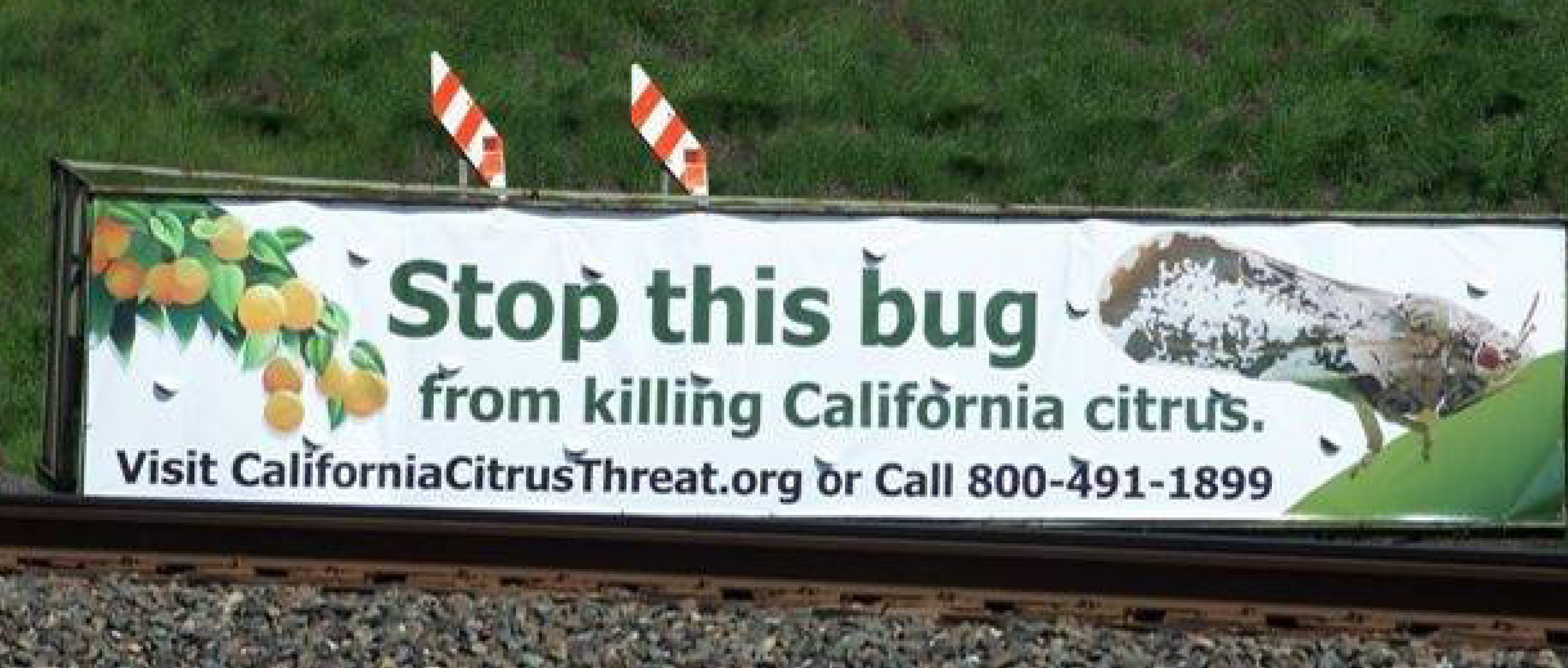
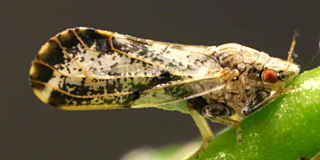
The Asian Citrus Psyllid, or ACP, is a tiny insect that acts as a carrier of the citrus disease Huanglongbing, also known as citrus greening disease. this bacterial disease is transmitted by the ACP, after it feeds on affected plant tissue.

Without proactive measures such as quarantine and eradication treatments, ACP could have dire consequences for the entire California citrus industry.

“We always knew that we were going to be ground zero. Because we’ve got the most packing sheds in the state, and the most juice facilities, and we’re receiving products from Mexico, Texas, Arizona, and Southern California and our growers need to stay diligent. We got all but 13,000 acres of citrus within the quarantine area, and so that can cause some problems with not having the entire county included,” said Kinoshita.

Citrus Greening Disease has only recently become a problem for California. The first infected plant was discovered in March 2012. It has still caused a concern in that short period of time, as the California Department of Food and Agriculture has found that here is no physical, cultural, or biological methods to completely eradicate ACP.

“So far we are dealing with it, and I have heard that this fall would kind of be the ‘trigger point’ that the Southern California counties saw at the two and a half year point of having Psyllids in their county. So we will see,” said Kinoshita.

2016-05-31T19:34:17-07:00July 14th, 2014|

The International Food Information Council Conducts Consumer Survey

The International Food Information Council took a look at what U.S. consumers think about food safety and food technology, and offered some insights on the results in a webinar in late June. The topics included some that are of interest to the produce industry, including sustainability and biotechnology.

IFIC staff noted that consumers are farther removed from the sources of their food than ever before, and that food is a personal and emotional topic. They also noted that labeling initiatives around the United States put biotech in the spotlight, and social media and speedy communications spread information more quickly than ever.

These are a few takeaways from the webinar:

Confidence in the U.S. food supply, at 67% (19% neutral, 14% not confident) remains about the same as it has for the past six years. Consumers’ top concerns remain disease/contamination (18%) and handling/preparation (18%), but those concerns have declined since 2008.

When asked whether they avoid certain foods, 53% said they did—primarily for health reasons. The types of foods they avoid (in order) were: sugar/carbs, fats/oils/cholesterol, animal products, snack foods/fast foods/soda, salt/sodium, artificial/additives, processed/refined foods, biotech (1%). These attitudes certainly bode well for fresh produce.

Fewer than one in 10 know a lot about sustainability in food production, and more than four in 10 know nothing at all. Yet two-thirds say it is important that foods are produced sustainably. However, in general, consumers won’t pay more for sustainable foods.

Consumers believe modern agriculture produces nutritious, safe, high-quality foods that can be sustainable. Just over half believe farms are still primarily family-run.

Overall, U.S. consumers have heard a little about food biotechnology, but only 11% have heard a lot. Compared to prior years, consumers’ impressions of food biotech has changed—favorable 28% (37% in 2012) and 29% unfavorable (20% in 2012).

Interestingly, nearly two-thirds of consumers believe vegetables and fruits are biotech products. When given rationales for using biotechnology (e.g. reducing carcinogens, protecting produce from insect damage which reduces pesticide applications), two-thirds or more of consumers say they are likely to buy them. One-quarter of consumers want additional labeling information, and of those 4% want biotech information (up from 1% and 0% in prior surveys).

Studies like this continue to show that consumers need and want information. It’s up to us to tell them.

2016-05-31T19:34:18-07:00July 9th, 2014|

Table Grape Harvest Now Underway in SJV

Source: Cecilia Parsons; Ag Alert

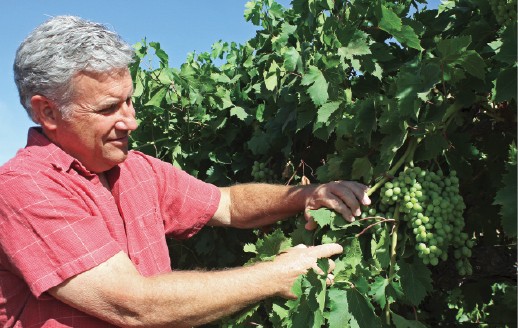
Color, sugar content and berry size of many early table grape varieties hit harvest targets last week in the southern San Joaquin Valley.

Harvest in the Arvin area of Kern County is a week to 10 days earlier than normal this year, according to grape grower Ryan Zaninovich. Harvest of the San Joaquin Valley’s 70 to 80 varieties of red, green and black table grapes will continue through November.

Zaninovich, chairman of the California Grape and Tree Fruit League and manager at Vincent B. Zaninovich & Sons Inc. in Richgrove, said warm spring weather is driving earlier harvests in all grape-growing regions of the state. The desert region table grape harvest began in late April and will wind down this month, as harvest transitions to the southern San Joaquin Valley.

Coming off a record-production year of 117.4 million 19-pound boxes for all growing regions in 2014, Zaninovich said yields from this crop are estimated to be about average to larger with excellent quality. An updated crop estimate will be released in July, prior to the peak of the California harvest. Coachella contributes about 5 million boxes to the total.

Zaninovich and retired Kern County Cooperative Extension viticulture advisor Don Luvisi said no serious pest or disease issues are looming for growers. Grape quality is expected to be excellent again this year, with only minimal sunburn where canopies are light.

“When we have good spring weather, that generally means the quality will be high,” Zaninovich said. Grape mealybug is always an issue, but growers have been able to keep them under control, he added. Growers keep up with pest control and suppress powdery mildew early, Luvisi said.

The biggest challenges this season for growers will be water and labor. Most depend entirely on groundwater supplies for irrigation. Adequate water not only ensures higher yields, but also protects vines from stress that invites pests and disease.

“We’re all relying on groundwater and hoping the wells don’t go dry. I’ve heard of a few growers who are having issues with their wells,” Zaninovich said. “We all have strategies for best water use and to protect the longevity of the vines.”

Zaninovich said different varieties of table grapes use different amounts of water during the year. Varieties that are harvested early in the season or have lighter yields use less water than heavier producers or varieties harvested later in the season.

Labor will cost more this harvest season and availability could become a problem for growers later in the season, and many varieties and other hand-harvested crops demand labor, said Barry Bedwell, president of the California Grape and Tree Fruit League.

“There are no reports of shortages now, but the crunch time comes in August and September, when we’re competing with other harvests,” he said.

Harvest crews are paid by the hour with bonuses per box. Bedwell said they average higher than minimum wage, but growers base their pay on the state minimum wage. The harvest requires skilled labor, and crew members can average $10 to $14 an hour, he said. Table grapes are field packed into boxes and trucked to cold storage prior to shipping.

California’s approximately 500 table grape growers are looking at strong prices and robust export sales this year, according to Bedwell. The trend for both is upward, as growers are coming off two strong sales years.

Kathleen Nave, president of the California Table Grape Commission, said table grape growers have been extending their harvest season with new early and later varieties of grapes. Red grapes dominate the top five. Flame, Scarlet Royal and Red Globe are the top three varieties in acres planted. Autumn King and Sugarone are two of the most popular green grapes, while Autumn Royal is the most popular black grape.

“With a longer harvest season and promotion efforts, we expect exports to be up,” Nave said.

Canada, Mexico and China are top export destinations for California table grapes. Bedwell pointed out that while California products are popular in China, that country’s table grape production far outpaces California. With annual production hitting 1 billion boxes, their Red Globe varieties alone equal all of California’s production.

China has begun the process of exporting grapes to the United States, Bedwell noted, and is currently in the pest review process—which could take another three years.

Luvisi said the biggest change in table grape production over the past 20 years has been the development of many seedless varieties.

“Seeded grapes are really hard to find now,” Luvisi said. Older varieties like Thompson Seedless are also being replaced with varieties that hit certain market windows. He noted Kern County table grape growers have planted a newer green variety, Superior Seedless, after taking out Thompson Seedless vineyards. Zaninovich said he has planted another newer green variety, Autumn King, which is a heavy producer.

In the past few weeks, Luvisi said, Kern County growers were checking vineyards for color, sugar and berry size to determine when to harvest. Market demand and prices also drive the decision, he said.

Recent weather has been an advantage. Temperatures above 95 degrees slow down development; cooler days with 85 to 95 degrees push maturity. When bunches of red grapes are 95 percent colored, Luvisi said harvest will begin. Green grape maturity is determined by sugar content. Berries will continue to size until picked, he added.

“We’ve had perfect weather for making sugar,” he said.

2016-05-31T19:34:21-07:00June 30th, 2014|

TV Campaign for ‘Grapes from California’ Kicks Off on Food Network

A new television campaign for ‘Grapes from California’ launched in June on the Food Network.

“These commercials showcase the natural beauty, easy versatility and great taste of California grapes while communicating the value of sharing life’s special moments with family and friends, and the care that growers put into growing,” said Kathleen Nave, president of the California Table Grape Commission.

One of the two new commercials has a grower theme and the other has a dinner party theme. Watch them here: www.grapesfromcalifornia.com.

These 30-second commercials, the first two of a planned series of six, are seen during shows like, “Trisha Yearwood’s Southern Kitchen,” “Sandra’s Money Saving Meals,” “Home for Dinner with Jamie Deen,” and “Diners, Drive-ins & Dives.”

The Grapes from California commercials will run through December and and will be used in future seasons.

2016-05-31T19:34:21-07:00June 26th, 2014|

America’s First Pear to Begin Harvest July 7

The first Bartlett pears of the season are set to harvest in California’s Sacramento River growing region July 7.

According to the official crop estimate set by the California Pear Advisory Board at its June 12th meeting, the state’s total crop of Bartlett pears is expected to be just over 2.6 million 36-pound packages, slightly down from the four-year average crop size of 2.9 million packages.

The majority of the state’s Bartletts, 1.5 million packages, will come from the early harvesting Delta River growing district, with harvest in Mendocino County expected on August 4 and on August 11 in Lake County.

California pear farmers are expecting an additional 550,000 packages of other pear varieties this season including 220,000 Golden Russet Bosc and 80,000 Starkcrimson along with smaller quantities of Bosc, Sunsprites, Comice, Forrelle, Seckel, French Butter and other red varieties.

In addition to setting its official crop estimate and harvest dates during its most recent Board meeting, the California Pear Advisory Board (CPAB) adopted a new brand positioning for Bartlett pears from California calling them “America’s First Pear.”

“We realized that Bartlett pears from California are unique because they have been produced in California since the very beginnings of the state’s commercial fruit industry dating all the way back to the California Gold Rush in the 1850s,” said Chris Zanobini, Executive Director of the CPAB.

“California Bartletts are also the very first pear of the season to be harvested in the U.S. each year and consumer research shows Bartlett pears are the first choice of consumers when it comes to selecting a flavorful pear variety.   The title of ‘America’s First Pear’ just seemed to be a good fit.”

Zanobini noted that CPAB has been working closely in its hometown of Sacramento, California to promote a locally-grown image and they have become a regular sponsor of the “America’s Farm to Fork Capital” program launched in the area in 2013.

The program promotes locally-grown agricultural products to Sacramento area consumers, retailers and restaurants. The concept of giving consumers locally-grown, sustainably-produced food is rapidly gaining in popularity throughout the country.

“California Bartlett pears fit a highly desirable image because they are produced by the kind of artisan farmers that today’s consumers want growing their food,” said Zanobini.

California Bartletts are grown by about 60 pear farming families, most of whom have been growing pears on the same land for generations. The average size of California Pear farm is 130 acres and the average age of the orchards are between 30 and 100 years.

“California Bartletts provide consumers with an heirloom experience because this is the same product people can find in their local farmers market. They have been sustainably-grown for over 100 years by smaller, family farmers who are trusted and safe,” said Zanobini.

The California pear industry’s claims about sustainability are not just marketing hype, but are backed by research. During the past three years, the CPAB has participated in a program with the independent sustainability program design firm, SureHarvest, to assess the level of sustainable farming practices utilized by farmers.

SureHarvest has found an exceptionally high level of adoption among California pear farmers of sustainable practices like non-chemical treatments for pests. According to the SureHarvest assessment, well over 90 percent of California pear farmers utilize practices like pheromone-mating disruption, scouting for pests and other Integrated Pest Management practices.

CPAB plans to launch an initial trade education effort this summer to communicate with grocery stores the benefits of selecting and staying with California Bartlett pears for the duration of the California pear season.

“This strategy allows retailers to maximize the pear category and to give consumers their favorite pear for longer,” explained Zanobini. “California pear farmers are confident we can work together with buyers to optimize their pear category profits.”

Zanobini noted the trade should look for new educational materials from CPAB along with some locally based innovative on-line consumer promotions beginning this season.

For more information, please visit www.calpear.com.


2016-05-31T19:34:21-07:00June 26th, 2014|

UPDATE: ACP Quarantine and Advocacy for Unimpeded Eradication

by Laurie Greene, Editor

CDFA filed a proposed emergency amendment TODAY to expand the ACP quarantine area in response to an “infestation” of the Asian citrus psyllid (ACP), Diaphorina citri, detected in the Farmersville/Visalia area (June 4, 2014), Tulare County. One adult female was found in the area. The proposed 14-mile expansion will include the Visalia area, and the state’s vast ACP quarantine will cover 46,544 sq. miles.

CDFA Secretary Karen Ross

CDFA Secretary Karen Ross

The regulation defines emergency as” a situation that calls for immediate action to avoid serious harm to the public peace, health, safety, or general welfare.” The government code provides,”if the emergency situation clearly poses such an immediate, serious harm that delaying action to allow public comment would be inconsistent with the public interest, an agency is not required to provide notice.”

CDFA Secretary Karen Ross believes that this emergency clearly poses such an immediate, serious harm that delaying action to give the notice would be inconsistent with the public interest. Therefore, Ross proposed that the CDFA Director may adopt reasonably necessary measures such as bypassing the mandatory notice five working days prior to emergency action in order to carry out emergency provisions. Additionally, she requested that the Director be permitted to establish, maintain, and enforce quarantine, eradication, and such other regulations necessary to circumscribe and exterminate or prevent the spread of any pest which is described in the code.

This comes after the California Citrus Industry’s recent backlash against the Executive Committee of the California Citrus Pest and Disease Prevention Committee’s proposed easing of the state’s ACP quarantine and eradication efforts.

Joel Nelsen, CA Citrus Mutual President

Joel Nelsen, CA Citrus Mutual President

And, while CDFA uses the word, “infestation”, Joel Nelsen, President of California Citrus Mutual, commented at the recent United Fresh Convention in Chicago, “There were two more ACP finds found in the northeast part of Tulare County. They were individual finds. Intensive trapping and tapping on the trees, looking for the ACP, hasn’t found any more. So one would argue that we’ve got a population—given the finds in the last year—but we’re still talking single digits.” Nelsen believes this demonstrates the eradication programs are working. “We’re supposed to find the ACP before finds a commercial citrus industry, and we’re doing that.”

Nelsen said the Executive Committee’s recent proposal to significantly modify the program was, “based upon some subjective analysis by a team of scientists who in fact believe that there’s more out there than what we can find.”

“So,” he continued, “we’re obligated to prove a negative; and as long as we do the intensive trapping program, as long as we continue the mandated treatment program, as long as we’re aggressively looking for the Asian citrus psyllid—I don’t see how, and industry doesn’t buy into the fact, you have an endemic population. We’re not finding them in volume; everything is isolated.”

“So, when the industry first became aware of this possible change in the treatment zones of the quarantine mandates, the industry challenged CDFA.”

Now, not only does the ACP program remain intact, but TODAY, CDFA Secretary Ross proposed measures for an unhindered and  immediate eradication response by CDFA to ACP discoveries.

Featured Photo Credit: Ted Batkin, Citrus Research Board, “Invasive Pests in California” 1/10.

2016-05-31T19:35:24-07:00June 18th, 2014|

Asian Citrus Psyllid Quarantine Expansion in Tulare County

An additional portion of Tulare County has been placed under quarantine for the Asian citrus psyllid (ACP) following the detection of two psyllids in separate traps in an unincorporated area northwest of the community of Ivanhoe in Tulare County. This brings the total quarantine area in Tulare County to 856 square miles.

The new quarantine zone measures 110 square miles in Tulare County, bordered on the north by Avenue 384; on the east by Road 180; on the south by E Main Street; and on the west by Road 80.

The new quarantine zone will connect existing quarantine zones already in place. A map is available online at: http://pi.cdfa.ca.gov/pqm/manual/pdf/maps/3435ACPTulareCounty.pdf

Also, a single ACP has been detected west of Exeter near the community of Farmersville recently and may lead to another quarantine expansion later this month. The parameters and size of that additional new regulated area are still being determined.

In addition to the developments in Tulare County, ACP quarantines remain in place in Fresno, Kern, Imperial, Los Angeles, Orange, Riverside, San Bernardino, San Diego, San Luis Obispo, Santa Barbara, and Ventura counties.

The ACP is an invasive species of grave concern because it can carry the disease huanglongbing (HLB), also known as citrus greening.  All citrus and closely related species are susceptible hosts for both the insect and the disease.

There is no cure once a tree becomes infected.  The diseased tree will decline in health until it dies.  HLB has been detected just once in California – in 2012 on a single residential property in Hacienda Heights, Los Angeles County.

HLB is known to be present in Mexico and in parts of the southern U.S.  Florida first detected the pest in 1998 and the disease in 2005, and the two have been detected in all 30 citrus-producing counties in that state.  The University of Florida estimates the disease has tallied more than 6,600 lost jobs, $1.3 billion in lost revenue to growers and $3.6 billion in lost economic activity.

Residents in the area who think they may have seen the Asian citrus psyllid are urged to call CDFA’s Pest Hotline at 1-800-491-1899.  For more information on the Asian citrus psyllid and HLB, please visit: www.cdfa.ca.gov/go/acp.

2016-05-31T19:35:26-07:00June 12th, 2014|
Go to Top