March is National Nutrition Month, California Agriculture Rules!

National Nutrition Month (NNM) this year focuses on following the Dietary Guidelines recommendations by combining taste and nutrition to create healthy meals. Consumer research confirms that taste tops nutrition as the main reason why one food is purchased over another. While social, emotional and health factors also play a role, the foods people enjoy are likely the ones they eat most.

NNM is a nutrition education and information campaign created annually in March by the Academy of Nutrition and Dietetics. The campaign focuses attention on the importance of making informed food choices and developing sound eating and physical activity habits. NNM also promotes the Academy and its members to the public and the media as the most valuable and credible source of timely, scientifically based food and nutrition information.

University of California Cooperative Extension – Imperial County is ready for NNM’s theme this year, “Enjoy the Taste of Eating Right.” Eating right can be challenging as healthy foods are often misunderstood to be bland, flavorless, boring, and not worth the time, but this isn’t always true! Eating right can be delicious, flavorful, quick, and easy, and enjoyable.

California Walnuts wants to help consumers defend health all year round, and especially during National Nutrition Month. Their message is including whole foods like walnuts as part of a healthy diet can provide valuable nutrition that defend against diseases. The Natural Defender’s Toolkit has a variety of components that can be used to track personal health and learn more about nutrition.

The BMI Chart allows people to find their BMI value based on height and weight. The Cholesterol Tracker allows people to track cholesterol levels after every doctor’s visit, along with exercise and diet goals. The Medicine Tracker aids folks in keeping track of medications. And, finally, the Personal Prevention Record helps defend people’s health against many preventable diseases. Use the forms in the Natural Defenders Toolkit, complete with nutrition tips from experts, to help people get started on a path towards wellness today.

The California Cling Peach Board suggests as we continue on through the month, we want to make sure we maintain a strong emphasis on the importance of nutrition.

California Strawberry Commission urges, “Just Add Strawberries for National Nutrition Month.”

Melissa Tamargo, on the UC Agriculture and Natural Resources Blog, says to choose fresh foods that are naturally low in sodium such as fruits, vegetables, lean meats and poultry, fish, eggs and milk. 

UC California Agricultural Tourism Directory instructs us to read the Nutrition Facts label to choose low-sodium foods and look for terms like “no added salt.”

The Hass Avocado Board tells us to celebrate National Nutrition Month with an avocado-focused menu. Avocados make a great dip for chips and veggies or a flavorful sandwich spread. For creative ideas on how to add Fresh Hass Avocados to menu, stop by AvocadoCentral.com/avocado-foodservice.

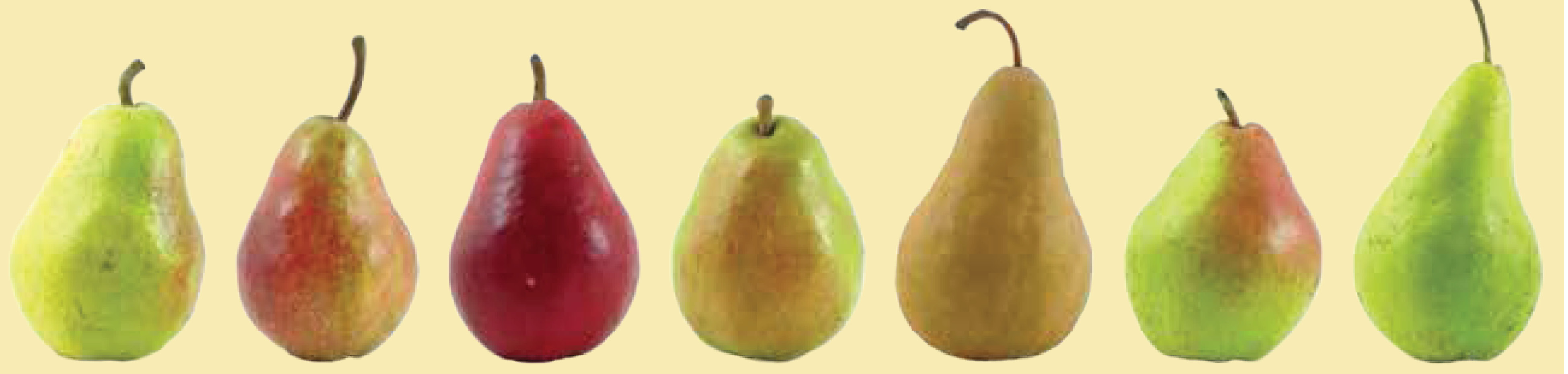
Why not celebrate National Nutrition Month by taste-testing different varieties of the same crop, as suggested by the California Foundation for Agriculture in the Classroom. Try some pears, for instance. After all, according to the CDFA, California provides us with more than 400 choices!


         Author: Melissa Tamargo

2016-05-31T19:38:54-07:00March 1st, 2014|

USDA ANNOUNCES WINNERS OF THE 2014 AGRICULTURAL OUTLOOK FORUM STUDENT DIVERSITY PROGRAM

Two California Collegians Win USDA Ag Outlook Forum Student Diversity Program


Posted TODAY, Agriculture Secretary Tom Vilsack announced the selection of 30 university students to attend USDA’s 2014 Agricultural Outlook Forum, titled “The Changing Face of Agriculture,” to be held Feb. 20- 21, 2014, at the Crystal Gateway Marriott Hotel in Arlington, Va. Twenty university juniors and seniors were chosen on the basis of their essays on “Agriculture as a Career,” and 10 graduate students were selected for their response to “The Greatest Challenge Facing Agriculture over the Next Five Years.”


“The future of agriculture and rural America depends on the upcoming generation of leaders in farming, ranching and conservation, and the students selected to attend the Agricultural Outlook Forum are among the best young leaders our country has to offer,” said Vilsack. “Participating in the Agricultural Outlook Forum will expose these students to a variety of perspectives on this country’s most pressing agricultural challenges and lay the groundwork for bright futures in food, fiber and forestry.”


The student winners from California are undergraduates:


Meredith Frisius, California Polytechnic State University and Ruben Sanchez, California State University, Bakersfield.


USDA’s Agricultural Outlook Forum Student Diversity Program is designed to introduce students to contemporary agribusiness, future trends, scientific research, and agricultural policy in today’s real world environment. The students are from land-grant, Hispanic-serving, and non land-grant agricultural and renewable resources universities.


Since the program’s start in 2007, annual sponsorship has been provided by CHS, Inc. and Farm Credit. USDA’s Economic Research Service, Agricultural Research Service, and Natural Resources Conservation Service also provide support. The University of Maryland Eastern Shore partners with USDA to make the program possible.


Registration for the public, two-day event is $375. Plenary speeches will be webcast after 6:00 p.m. EST on Feb. 21. Program details and registration information are available at www.usda.gov/oce/forum.

2021-05-12T11:06:02-07:00January 31st, 2014|

COMPREHENSIVE CALIFORNIA AVOCADO PRODUCTION COURSE

Apply for “AVOCADO PRODUCTION FOR NEW GROWERS”    a  6-Week Course  
 
Attention new and beginning California avocado growers,
Dr. Gary Bender, Ph.D., is offering a new six-week course entitled “Avocado Production for New Growers.” The course will be held on Thursday afternoons and conclude with a Saturday trip to the UC Cooperative Extension high-density trial and commercial grove.
 
The course is sponsored by UC ANR and UCCE-San Diego and supported by the California Avocado Commission.
 
The course schedule is as follows:
January 30  — Introduction to Agriculture in San Diego County, History of Avocado Production in California
February 6 — Botany, Flowering, Varieties, Harvest Dates, Rootstocks
February 14 (Friday) — Irrigation Systems, Irrigation Scheduling, Salinity Management
February 20 — Fertilization, Organic Production
February 27 — Insect and Mite Control, Disease Control
March 6 — Canopy Management, Tree Spacing, Frost Management
March 13 — Ag Waiver Water School Training
March 15 (Saturday) — Field trip to UC Cooperative Extension high-density trial and commercial grove
 
Because space is limited, register online early or mail in the registration form. The fee is $105 and includes class materials and a bonus publication. For more information, contact Cristina Lomeli at 760.752.4724.
2016-05-31T19:41:11-07:00January 23rd, 2014|

COTTON GROWERS URGED TO COMPLETE PLOWDOWN

Fresno County Ag Commissioner Urges Cotton Growers To Complete Plowdown 

 
Fresno County Agricultural Commissioner/Sealer Les Wright TODAY urged all cotton growers to complete their plowdown activities as soon as possible to maintenance a host-free period for pink bollworm. For the 2013 growing season, there were no native pink bollworm moths captured in Fresno County for 62,215 acres of cotton.
Cotton Plowdown Requirements:
Plowdown Dates for this growing season are:
December 20, 2013 – South Of Shields Avenue
December 31, 2013 – North Of Shields Avenue
Stalks must be shredded by a power-driven shredder that will effectively reduce stalks to a particle size, permitting burial and rapid decomposition.
Following shredding, tillage must be completed in such a manner that all stubs are loose from the soil around the roots and will prevent re-growth.
At this point, there are two options for cotton growers:
Conventional plowdown is done by discing all roots, plant stubs, shredded debris and trash remaining from harvesting or clean-up operations and soils around roots to the point that they are turned over and thoroughly mixed with surface soil. This method of plowdown is required in sections where pinkie has been found last growing season or this season until September 1, 2013.
Reduced tillage does NOT require the incorporation of all roots, plant stubs, shredded debris and trash remaining from harvesting or clean-up operations. If growers choose this option, they must submit a notification 10 days prior to tillage of their intention to reduce tillage on their acreage eligible for the program. Call the Department to find out which sections are not eligible for this program if you are not sure.
Once plowdown is completed by either method, any volunteer cotton must be destroyed that may appear during the host-free period, even if it is on ground that was not planted to cotton this season. If re-growth does occur during the host-free period in 2014, the grower/landowner will be cited for a violation of cotton plowdown regulations. Be sure to check fallow fields for isolated plants growing in the field and in easement areas.
Do your part to keep pinkie out of the San Joaquin Valley and finish your plowdown early to avoid the following penalties for noncompliance:
Violation Of Plowdown Date – Base fine of $500 + $5 per acre not in compliance
Repeat/Subsequent Violations – Base fine of $1,000 + $10 per acre not in compliance
In California, pink bollworm overwinters as a late stage larva in trash, at the base of cotton stalks, in soil cracks, and rarely in seeds in the unopened boll. Conventional plowdown, when done properly, kills pink bollworms in these overwintering sites. Conventional plowdown and March planting dates are designed to disrupt the life cycle of pink bollworm. It is not known whether reduced tillage practices give pink bollworm a foothold for next season. Fields using reduced tillage will be scrutinized during the host free period and next trapping season.
The late planting dates for cotton create the opportunity for “suicide emergences.” If pink bollworm emerges before the plants have begun to square, the female will lay her eggs on sheltered parts of the plant, but the larvae will die. Cotton planted too early or re-growth cotton will provide feeding and egg laying sites for pinkie.
Questions concerning proper plowdown procedure may be directed to any district office locations listed below:
Fresno                  600-7510     8:00 a.m.-5:00 p.m.
Firebaugh             600-7322     1:00 p.m.-2:00 p.m.
Huron                   600-7325     1:00 p.m.-2:00 p.m.
Kerman                600-7326     1:00 p.m.-2:00 p.m.
Reedley                600-7329     1:00 p.m.-2:00 p.m.
Sanger                  600-7331     1:00 p.m.-2:00 p.m.
Selma                   600-7327     1:00 p.m.-2:00 p.m.
The Fresno County Agricultural Commissioner’s offices will be closed on December 25, 2013 and January 1, 2014.

2021-05-12T11:06:02-07:00December 11th, 2013|

Strawberry Meeting Focused on Fumigants, Pest Control

Fumigation Was Big Topic at Santa Maria Strawberry Meeting


New laws and regulations on fumigation for Santa Barbara and San Luis Obispo County strawberry growers were in place for the first time this season, and growers did a good job for the most part. This and other topics were discussed at the Wednesday’s annual Strawberry Production and Pest Management Meeting in Santa Maria.

According to Lottie Martin, Ag Biologist, Santa Barbara County Ag Commissioners office, for the most part, grower chose the right tarps for the right situation. “Growers must be careful to use a 60 percent tarp when capping a fumigation with the

Surendra Dara, crop advisor, UC Cooperative Extension, San Luis Obispo

Surendra Dara, crop advisor, UC Cooperative Extension, San Luis Obispo

1,3 D,” said Martin. “Growers should plan well in advance to make sure the tarp that is needed, is available.”

Martin said mandated buffer zones were noted and documented, however operators need to do a better job with required signage.

Surendra Dara, a Strawberry and Vegetable Crops Advisor, UC Cooperative Extension, San Luis Obispo, spoke about re-evaluating lygus bug IPM tools in strawberries with a focus on field vacs, monitory and economic thresholds. He spoke of an experiment with softer chemistry such as well as using B. bassiana, a soil fungus that acts as a parasite to lygus. “A combination of B. bassiana and azadirachtin.

Hillary Thomas, research manager, California Strawberry Commission

Hillary Thomas, research manager, California Strawberry Commission

Hillary Thomas, Research Manager with California Strawberry Commission in Watsonville also spoke about lygus. Her focus was third year bug vac research for lygus control.

Kirk Larson, pomologist and strawberry production specialist with the UC South Coast Research and Education Center, Irvine

Kirk Larson, pomologist and strawberry production specialist with the UC South Coast Research and Education Center, Irvine

Kirk Larson, Pomologist and Strawberry Production Specialist with the UC South coast Research and Education Center, Irvine spoke about advanced selections and non-chilling plug plants.

Mark Bolda, Strawberry and Caneberry Farm Advisor and County Director with UC Cooperative Extension, Santa Cruz County spoke about strawberry transplanting and the critical importance of chilling hours necessary for strawberry production.

Steve Fennimore, Cooperative Extension Specialist, UC Davis updated attendees on the use of steam to kill soil pathogens, in place of fumigants. He said work is focused on reducing the cost and outlined possible use of a prototype machine around certain higher risk areas near buffer zones on production fields.

Karen Klonsky UC Cooperative Extension specialist

Karen Klonsky UC Cooperative Extension specialist

Karen Klonsky, Cooperative Extension Specialist, UC Davis spokes about the economic considerations of alternatives to fumigation and producing a second year crop.

Also speaking was Thomas Flewell, Flewell Consulting, Watsonville-Salinas. His topic focused on evaluating pest management strategies with numbers. What do the numbers mean and how do we really know what we’re doing.

A more detailed report can be found in future issue of Vegetables West Magazine. Free subscription at VegetablesWest.com.

2021-05-12T11:06:02-07:00November 22nd, 2013|

Cotton ELS Prices Good, While Upland Cotton is Bleak

Upland Cotton Prices Down; Extra Long Staple Types Are Up

By Patrick Cavanaugh, Editor


Upland cotton prices are still bleak, falling 10 cents per pound over the last month, and are now in the .85 to .95 cents a pound range. However, there is a glimmer of good prices ahead for extra long staple (ELS) cottons on the open market.
Many growers forward contracted the just-harvested crop that might have returned a decent price, but the Pima and other ELS types are still holding a good price,” said Cannon Michael, V.P. Bowles Farming Co., in Los Banos Calif., who farms more than 11,000 acres of row and field crops, including cotton throughout Merced County.
“I know some guys that have booked some pricing of ELS for 2014 at $1.60 to $1.70, but that’s a market that operates in a different world,” said Michael. “There has been good demand, the world crop is down, and California does not have that much Pima this year due to an overall decline in cotton acreage.”
In 2013 California growers planted 90,000 acres of Upland cotton, down 37 percent from last year. ELS plantings in the West declined nearly 14 percent to 206,000 acres with largest decline -35,000 acres in California.
“There is more optimism on the ELS side due to higher prices,” said Michael. “But there is so much pressure on Upland cotton as far as what China and other areas of world can grow, so the prices are on the depressed side.”
Michael noted that farmers in his area grow the Hazera type of ELS, an Israeli hybrid type which is not as strong as Pima, but has the staple length and other properties. “It performs like an Upland type in terms of yield in the north end of the Valley, but pays about 10 cents less than Pima.

“While the Hazera seed is more expensive and does not have any Roundup Ready traits,” Michael commented, “it has a better quality fiber that the mills are looking for right now.”

2016-10-05T13:35:38-07:00November 16th, 2013|

Record Crowd of Tree Nut Growers in Turlock

Big Crowd in Turlock for Tree Nut and Vine Expo

More than 800 growers and PCAs were at the Stanislaus County Fairgrounds TODAY, to hear from many speakers, visit with hundreds of exhibitors, talk about tree nuts and grape vines, and enjoy breakfast and a barbeque Tri-Tip lunch.

“It was the 18th annual event and with a record crowd. All growers were upbeat following a good harvest and good nut prices. Also, both domestic and export sales are increasing,” said Patrick Cavanaugh, editor of Pacific Nut Producer magazine and co-host of the event.
tree nut growers
Exhibitors speak with tree nut growers about products and services
“We are pleased that both the nut and grape industry are doing well in California. All we really need is a lot of rainfall this winter,” said Dan Malcolm, publisher of Pacific Nut Producer as well as American Vineyard magazine, and co-host of the show.
Crowd gathers outside to look over equipment.

Speakers came from UC Davis, Stanislaus County Ag Commissioner’s office, UC Cooperative Extension, Almond Board of California, California Walnut Board, Stanislaus County Farm Bureau, and CalAgSafety.

“We appreciate the support of the event sponsors and the record number exhibitors,” said Cavanaugh.
Ryan Genzoli with Cal Ag Safety speaks. tree nut growers

Ryan Genzoli with Cal Ag Safety speaks.

Sponsors Included:
    • Agromillora
    • American Ag Credit
    • Big Tree Organics
    • California Walnut Board
    • Compass Minerals
    • Dave Wilson Nursery
    • Diamond Foods
    • Fresno State Viticulture and Enology Dept.
    • JKB Energy
    • Novozymes
    • Principal Financial Group
    • Yosemite Farm Credit
2021-05-12T11:06:02-07:00November 13th, 2013|

CENTER FOR LAND-BASED LEARNING CELEBRATES 20TH ANNIVERSARY

Happy 20th Anniversary!

CDFA Secretary Karen Ross reported TODAY, “I had the honor and pleasure to help celebrate the 20th anniversary of the Center for Land-Based Learning, a non-profit organization in Winters started by California State Board of Food and Agriculture president, Craig McNamara, and his wife, Julie, to help connect young people with nature and agriculture.”


“In the last two decades, the Center has become a force in this state for its extremely effective youth development and beginning farmer education,” Ross continued.  “I want to commend Craig for his vision, passion and commitment of resources to make the Center an entity that touches so many people in such positive ways and is absolutely contributing to a better future for California agriculture.”
 

“Happy 20th Anniversary, Center for Land-Based Learning!”

_______________________________________


The Center for Land-Based Learning strives to inspire and motivate people of all ages, especially youth, to promote a healthy interplay between agriculture, nature and society through their own actions and as leaders in their communities.


The Center for Land-Based Learning envisions a world where there is meaningful appreciation and respect for our natural environment and for the land that produces our food and sustains our quality of life.
2021-05-12T11:06:02-07:00October 26th, 2013|

UPDATED MITE SAMPLING FOR AVOCADO ORCHARDS

Center for Invasive Species Researches the Mighty Mite

[dropcap size=big]E[/dropcap]very 60 days, California gains a new and potentially damaging invasive species. (UC Riverside)

This rate of invasion, on average, results in six new species establishing in California each year. Economic loses to California from invasive species are estimated at $3 billion per year.
The unique climate and geography of California provides diverse ecosytems that are perfect for the establishment of a diverse variety of new pests. UC Riverside’s Center for Invasive Species Research (CISR) researchers lead the way to determine how pests enter California, where invading populations came from and why these pests are successful in establishing California as their home.
Ricky Lara
Ricky Lara, a UC Riverside graduate student researcher with Mark Hoddle, Ph.D., Biological Control Specialist and Principal Investigator, is focusing on updating and reinforcing the integrated pest control program against the non-native persea mite that infests Southern California avocado orchards.
“High persea mite populations cause premature leaf drop and defoliation. Defoliation leads to sunburned bark and fruit, aborted or dropped fruit, and severely stressed trees, which ultimately reduces yields,” said Lara.
My first objective,” began Lara, “is to further develop a presence/absence sampling plan for growers so they can make keep track of pest densities throughout the growing season to guide spray application decisions. This sampling method will prevent misuse of pesticides and for PCAs to be able to provide growers with better information.”
“Because counting mites on avocado leaves is so difficult, we use a presence/absence method, or binomial sampling, by choosing 30 random leaves per tree, on orchard trees located where the mites prefer.” The sampling simply requires the numbers of avocado leaves infested with the persea mite and the numbers of clean leaves with no persea mites. This ratio of infested leaves to clean leaves is used to estimate the average number of persea mites per avocado leaf. Thus, binomial (presence vs. absence) sampling is fast and simple, and allows large areas of orchards to be surveyed quickly.

Persea Mite (UC Riverside)
“Next, I will figure out where the persea mite comes from and find and examine its natural enemies,” explained Lara. “The logic is that if a pest is not native to the area, its natural predators aren’t here either.”
Lara remarked, “Furthermore, I plan on assessing the risk that novel pesticides being developed for persea mite control pose to beneficial predatory mite populations that attack persea mite. By reducing pesticide use and conserving the presence of predators, we expect to enhance the avocado orchard ecosystem’s capacity for self-regulation of persea mite by making better use of natural enemies for pest control.”
The persea mite infests 99% of avocado acreage in California (There are no records of this pest in the San Joaquin Valley but it has been reported from avocados growing in San Francisco.) This mite is sensitive to high temperatures (>95oF) and low humidity when experienced over several consecutive days, and abrupt population crashes in the field have been observed under these conditions. The persea mite most likely originated from Mexico and arrived in California on smuggled plants.
Scientists at UCR have investigated the efficacy of releases of predatory mites for persea mite control. A highly effective natural enemy, Neoseiulus californicus,is commercially available and has been shown to be very effective, but is cost prohibitive. Seven commercial cultivars of avocado have been screened for resistance to persea mite feeding, and a new cultivar, Lamb Hass, is quite resistant to this pest.
Several species of predators occur naturally in California avocado orchards, and they have been observed to feed on persea mites. Yet, none of these natural enemies provides effective control of the mite. Nonetheless, their presence in orchards is desirable because they probably lessen the severity of persea mite infestations and will feed on other pest species.
Work is currently in progress monitoring persea mite populations, assessing predator quality after an imported shipment arrives, and refining release methodology, rates and timings of these predators.
2021-05-12T11:03:07-07:00October 9th, 2013|

TODAY’S MEETING IN FRESNO ADDRESSES ACP

Fresno County on Alert for ACP

 
Assemblyman Jim Patterson

Assemblyman Jim Patterson hosted the Citrus Industry Town Hall this morning at the Fresno County Farm Bureau office to discuss the current state of the Asian Citrus Psyllid presence in California, the quarantine situation, how Fresno County is preparing for the possible migration of ACP into the county, and how agencies, growers, and the state and federal governments are cooperating to control its spread in California.

Over forty people attended the meeting, including growers, PCAs, local government and industry leaders, researchers, and media.

Fresno County is the fourth largest citrus-producing county in California, having dropped in status due to freeze-damaged mandarin acreage last year, according to Les Wright, Fresno County Ag Commissioner.
Les Wright
“ACP spread is one of the most serious problems facing valley citrus growers especially those in the south valley,” said Wright.
 
To date, all contiguous counties in southern California are under CDFA Quarantine, as well the Porterville area of Tulare County, to prevent movement of ACP-ridden leaves and plant debris and unsanitary ag equipment into non-infested regions of the state and to bide time for agency mobilization and industry research to catch up. The effort also aims to prevent ACP from finding HLB-infected trees and spreading the incurable disease.
 
Though presently under quarantine, the effort in southern California to stop the spread of ACP, it was emphasized, was NOT a failure; rather, it bought precious time for other regions to prepare, and while many treatments did not work, other regions are learning from their attempts.
 
Creative Solutions
 
Dr. Beth Grafton-Cardwell

Dr. Beth Grafton-Cardwell, UC IPM Specialist and Research Entomologist, recently studied ACP found in Texas and Florida and reported that local agencies here are following Florida’s lead in organizing grower groups and local neighbors to treat their trees simultaneously.

She said that researchers are looking for natural processes, among others, to control ACP populations.
 
Victoria Hornbaker, CDFA, Program Coordinator, gave the example of Dr. Mark Hoddle, Extension Specialist and Director of the Center for Invasive Species Research at UC Riverside, who is working towards the massive release of Tamarixia radiata wasps, a natural predator of ACP, found in Pakistan. In studies of small releases of T. radiata, the wasps were found outside the areas where they were released—a good indication of their hardiness and potential effectiveness against ACP.

Victoria Hornbaker

While there is no cure for HLB thus far, researchers are looking at altering the ACP so it cannot pick up HLB disease, inserting a gene so it cannot carry HLB, and creating disease-resistant plants.

Organic insecticides against ACP are short-lived, so they must be applied more frequently than their conventional counterparts. Thus, organic farmers must be more aggressive in their treatments.
 
UC Davis is studying new efficacious organic products.
 
If an organic farm were in an eradication zone, the grower would be required to use conventional products, losing organic status for one year. Without compliance, the property would be abated.
 
It is recommended that when a grower sprays for a different pest, they should choose a product that also works on ACP.
 
Eradication and management strategies differ according to season.
 
Product spraying frequency and product choice are delicate decisions so as not to cause resistance in ACP.
 
Expert dog sniffers can detect the presence of ACP, and have detected infested shipments that were subsequently destroyed. California is vigilant at all points of entry including airports, border traffic, and ports. Not all counties have expert canines; however, Fresno has one such specialist. The USDA also provides dogs, one of which works in Fresno.
 
Take Action Now
 
Start sampling now.
 
Do not rely on (color-saturated) yellow-sticky traps for detection. Remember that psyllids are attracted to citrus trees, which have both color and scent.
ACP likes an orchard’s edges, so test for their presence around a field’s perimeter, as well as down the center for good measure.
 
Go to the following websites for information, quarantine maps, crop protection cost-effectiveness:
·       CDFAWebsite
In the event a homeowner or grower suspects ACP on their property, take the bug, if possible, put it in alcohol, and contact the Fresno County Farm Bureau; Sylvie Robillard, Fresno County Grower Liaison; the CDFA Hotline, 1-800-481-1899 or your local Ag commissioner (if outside Fresno County).
 
Joel Nelson
Joel Nelson, California Citrus Mutual, President, commented, “If it weren’t serious, it would be exciting” due to the talent of the people involved in the fight to suppress the ACP and thereby avoid HLB disaster in the state. With southern California producing $750,000 and the Central Valley producing $1.5 billion in citrus, California is the largest citrus-producing state in the country, providing 85% of the country’s fresh citrus.
 
Stopping the spread of ACP and eradicating Huanglongbing (HLB) is among the top five priorities of the USDA. The federal government has contributed $10 million to the California program toward that end.
 
A coalition of groups is conducting a public relations campaign starting in southern California that includes distribution of bookmarks and brochures (in several languages) that have a little magnifying glass inside to detect ACP; enlisting legislators and box stores, among others, to help spread information; and launching a PSA next week featuring Citrus Grower Kevin Severns speaking about this crucial situation.There are 6 versions of the PSA on CCM’s YouTube Channel.
 
Nelson emphasized that every step this coalition in California takes is globally unprecedented. And the government is flexible and ready to adopt new strategies; using this effort in California as a model for other programs planned to eradicate foreign invading pests.
 
Assemblyman Jim Patterson concluded by acknowledging, “Agriculture is more than a livelihood; it‘s a life.”
2021-05-12T11:06:03-07:00August 24th, 2013|
Go to Top