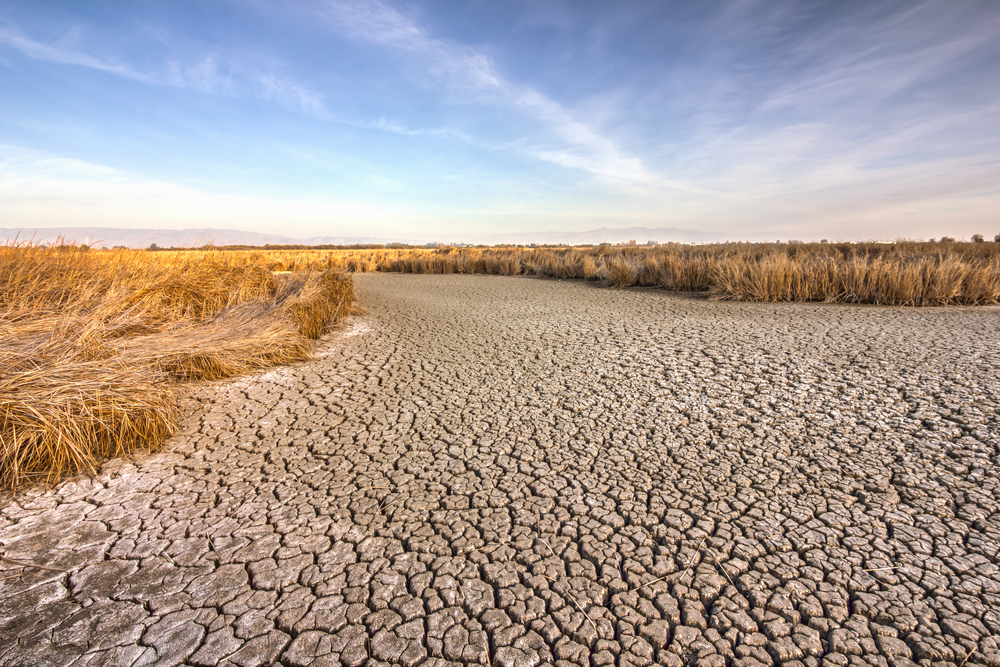
State Must Use Caution on Groundwater Management

By Danny Merkley; Ag Alert 

In the face of the California water crisis, many in the state Legislature appear to be rushing toward new groundwater management policy that could threaten certain property rights and the overlying groundwater rights of landowners.

Generally, legislation that has been introduced would require groundwater basins to be managed “sustainably” by local entities but would authorize the state government to step in if the local entities do not adopt management plans with certain components by a specified time.

Farm Bureau and other agricultural organizations continue to urge the Legislature to proceed with caution on the issue of groundwater management. Failure to take adequate time to address this complex issue could lead to huge, long-term impacts on farms and on state and local economies.

People’s livelihoods and jobs are definitely at stake. All involved in the effort to better manage groundwater need to focus on future ramifications of the various authorities and directives being considered.

Groundwater management is as diverse and complex as the 515 distinct basins and sub-basins in California. For that reason, Farm Bureau believes groundwater must be managed locally or regionally, while protecting overlying property rights. To their credit, most of the pending measures do provide for local management, but working out the details is certainly a challenge.

With members of the Legislature feel the need to do something about groundwater, Farm Bureau is working with other agricultural stakeholders and decision-makers to identify a path forward toward a reasonable and workable groundwater management system.

We have repeatedly stated that the reason we face groundwater challenges is not due to a lack of regulation, but because of lack of availability of surface water. It must be recognized that the state’s increased reliance on groundwater for growing food, fiber and other agricultural commodities has resulted not just from drought, but from restrictive environmental laws, court decisions, regulatory actions and “flashier” river systems, as watersheds receive rain instead of snow.

All of those factors have reduced availability of surface water—surface water that would help recharge groundwater basins and allow farmers to reduce their reliance on groundwater. Farm Bureau strongly believes groundwater recharge should be established as a beneficial use of water.

The reasonable and beneficial use of groundwater is a basic property right under California law. These rights must be recognized and respected under any groundwater-management framework. This does not mean that areas with significant overdraft issues should be ignored, but that in dealing with these areas, current groundwater rights must be protected.

It also needs to be recognized that restricting the use of groundwater has broad economic consequences for agricultural communities and the farm families, farmworkers and the related support, processing and supply enterprises in those communities. Drastic changes in groundwater policy will impact land values and the ability for farmers and ranchers to secure adequate financing, both for land acquisition and for operating expenses.

Appropriate protection of groundwater resources for future generations must be carefully thought out, not rushed through the legislative process to meet arbitrary deadlines. There’s no good time for hurried legislation, but during a critical drought year, when canals and ditches are dry and groundwater is the lifeline for farms, is absolutely the wrong time.

Please contact your representatives in the state Legislature to urge them to proceed carefully on new groundwater legislation, and to take the time necessary to adequately deliberate the issues and to identify and balance the benefits and risks going forward.
2016-05-31T19:34:20-07:00July 3rd, 2014|

Agriculture Recognized by Governor’s Environmental and Economic Leadership Awards

Agriculture Environmental and Economic Leadership Awards

What do Joseph Gallo Farms, Gills Onions and Parducci Wine Cellars have in common? Yes, they are all California farms with well-known, high-quality products, but they have something else in common. They are all past winners of a Governor’s Environmental and Economic Leadership Award (GEELA), the state’s highest environmental honor.

This year, for the first time, GEELA has an agricultural category titled “Agricultural Ecosystem Services”. This category was designed for farmers and ranchers that demonstrate innovative and sustainable approaches to water conservation, efficiency and protection of working ecosystems.

CDFA has defined Ecosystem Services in agriculture as “the multiple benefits we gain from farming and ranching including crop and livestock production.

In addition to valuable open space and wildlife habitat, the management decisions and conservation practices of farmers and ranchers also enhance environmental quality, provide recreational opportunities and offer social benefits.”

CDFA recognizes there are many farmers and ranchers doing a lot on water conservation, especially in consideration of the drought.

In less than two weeks, the current application process will close for GEELA. Applications will be accepted through July 11, 2014. We hope farmers and ranchers will consider applying. Click here to apply.

2016-10-06T12:38:40-07:00July 2nd, 2014|

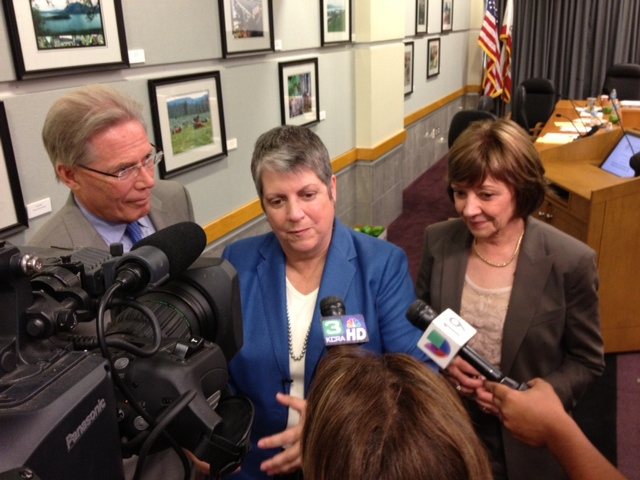
UC President Janet Napolitano Presents Food Initiative Plan to CDFA

University of California President Janet Napolitano today (July 1) presented the university’s plans for a comprehensive food initiative to the California State Board of Food and Agriculture.

The UC Global Food Initiative is intended to marshal the university’s resources — including curriculum and world-class research, student efforts and operational efforts in place across the university’s 10 campuses — to address global challenges related to food.

“This initiative grows out of a commitment made by all 10 UC campus chancellors and myself,” Napolitano said. “It is a commitment to work collectively to put a greater emphasis on what UC can do as a public research university, in one of the most robust agricultural regions in the world, to take on one of the world’s most pressing issues.”

The food initiative will build on UC’s tradition of innovative agricultural research to support farmers and ranchers. Future efforts will build on work already begun by UC’s 10 campuses and its Division of Agriculture and Natural Resources (ANR) to address internal and external issues with a variety of approaches.

UC research, for example, taught Californians how to remove salts from the alkali soils in the Central Valley, transforming that barren landscape into one of the world’s most productive farming regions, Napolitano noted in her presentation to the California State Board of Food and Agriculture.

Today, the World Food Center at UC Davis stands with 26 other centers dedicated to food and agriculture on that campus; students and faculty at UC Santa Cruz are transforming the field of agroecology; and the Berkeley Food Institute is studying the relationship between pest control, conservation and food safety on Central Coast farms. The cutting-edge Healthy Campus Initiative at UCLA taps all members of the campus community.

The initiative is not limited to seeking any single solution or set of solutions to the myriad food issues confronting the world, Napolitano said.

“The idea,” she said, “is to provide the intellectual and technical firepower, as well as the operational examples needed for communities in California and around the world to find pathways to a sustainable food future.”

In describing the building blocks for the initiative, Napolitano noted that the university’s agricultural outreach and public service programs — in every California county and more than 100 nations — bring UC resources to individuals and communities to help them access safe, affordable and nutritious food while sustaining scarce natural resources.

The university’s work also will help inform and drive policy discussions from the local to the international levels, and expand partnerships with government agencies such as the California Department of Food and Agriculture.

“This initiative shows great vision and leadership from President Napolitano and the University of California,” said CDFA Secretary Karen Ross, “Climate change and population growth will greatly strain our ability to provide healthy food to people here and around the world.

“President Napolitano’s proposal to leverage the strategic assets of the entire UC organization makes it a valuable partner in addressing the significant challenges and opportunities for our production agriculture and food system.”

Emphasizing that student engagement is key, Napolitano announced, as one of her first actions, the funding of three $2,500 President’s Global Food Initiative Student Fellowships to be awarded on each campus to undergraduate or graduate students. The fellowships will fund student research projects or internships.

Among other early efforts to be undertaken as part of the initiative are the following:

  • Internally, campuses will heighten their collective purchasing power and dining practices to encourage sustainable farming practices, and model healthy eating and zero food waste; food pantries and farmers markets that exist on some campuses will be spread to all 10. Partnerships with K-12 school districts to enhance leveraging procurement for these purposes also will be explored.
  • Food issues will be integrated into more undergraduate and graduate courses, catalogues of food-related courses will be developed, and demonstration gardens will be made available on each campus to increase opportunities for students to participate in experiential learning.
  • Data mining of existing information will be deployed to help develop insights and action plans for California agriculture and responses to climate change.

New policies will be enacted to allow small growers to serve as suppliers for UC campuses.

2016-05-31T19:34:20-07:00July 1st, 2014|

To Rid Body of Harmful Pollutants, Drink Your Broccoli, Study Suggests

How’s this for your unexpected health tip of the day—be sure to drink your … broccoli?

A recent clinical trial involving nearly 300 people living in one of China’s most polluted regions found that daily consumption of a half cup of broccoli sprout beverage produced rapid, significant, and sustained higher levels of excretion of benzene (known to cause cancer) and acrolein (a lung irritant).

Researchers from the Johns Hopkins Bloomberg School of Public Health, working with colleagues at several U.S. and Chinese institutions, used the broccoli sprout beverage to provide sulforaphane, a plant compound already demonstrated to have cancer preventive properties in animal studies.

The study was published in the June 9 online edition of the journal Cancer Prevention Research.

“Air pollution is a complex and pervasive public health problem,” said John Groopman, professor of environmental health at the School of Public Health and one of the study’s co-authors. “To address this problem comprehensively, in addition to the engineering solutions to reduce regional pollution emissions, we need to translate our basic science into strategies to protect individuals from these exposures. This study supports the development of food-based strategies as part of this overall prevention effort.”

Last year, the International Agency for Research on Cancer classified air pollution and particulate matter from air pollution as carcinogenic to humans. Diets rich in cruciferous vegetables—of which broccoli is one—have been found to reduce risk of chronic degenerative diseases, including cancer.

Broccoli sprouts are a source of glucoraphanin, a compound that generates sulforaphane when the plant is chewed or the beverage swallowed. It increases enzymes that enhance the body’s capacity to rid itself of these types of the pollutants.

In a 12-week trial, participants who drank a beverage containing freeze-dried broccoli sprout powder mixed with water, pineapple juice, and lime juice saw a 61 percent increase in their rate of benzene excretion beginning the first day and continuing throughout the trial. In addition, the rate of excretion of acrolein increased 23 percent.

“This study points to a frugal, simple, and safe means that can be taken by individuals to possibly reduce some of the long-term health risks associated with air pollution,” said Thomas Kensler, a professor at the School of Public Health and one of the study’s co-authors. “This while government leaders and policy makers define and implement more effective regulatory policies to improve air quality.”

2016-05-31T19:34:21-07:00July 1st, 2014|

Save Our Water Web Site Launches “Don’t Waste Summer” Campaign

As a drought-stricken California moves further into a hot summer, Save Our Water – a partnership between the Association of California Water Agencies (ACWA) and the California Department of Water Resources (DWR) – is launching Don’t Waste Summera campaign devoted to providing daily tips and news to help Californians find ways to conserve at home and at work every day.

Don’t Waste Summer kicks off this week with the official start of summer. Tips will range from simple ideas such as shutting water off as you brush your teeth, to checking for and fixing leaks, to helpful ways businesses big and small can do their part in saving water during the drought.

The campaign will also showcase the efforts of Save Our Water partners to conserve this summer.

The Association of California Water Agencies (ACWA) is the largest statewide coalition of public water agencies in the country. Its nearly 440 public agency members collectively are responsible for 90% of the water delivered to cities, farms and businesses in California.

The Department of Water Resources (DWR) is responsible for managing and protecting California’s water. DWR works with other agencies to benefit the state’s people, and to protect, restore and enhance the natural and human environments.

2016-05-31T19:34:21-07:00June 30th, 2014|

$9 Per Hour Minimum Wage Starts Next Week

By Christine Souza; Ag Alert

Starting July 1, the California state minimum wage increases to $9 per hour, a hike that growers say will result in more challenges on the farm and higher costs overall.

Monterey County strawberry grower Ed Ortega said, “In agriculture, nobody can pay just minimum wage.

“People will find a job doing something else that is much easier work than working in agriculture for minimum wage. They’d rather go and flip burgers for nine bucks,” Ortega said. “Our work demands more than a minimum wage employee, so every time the minimum wage goes up, the whole ladder in our entire pay structure goes up. There’s no such thing as paying the bottom guy more and not the top guy. The whole ladder rises.”

California’s minimum wage increase to $9 per hour is a result of the passage of Assembly Bill 10 by Assemblyman Luis Alejo, D-Salinas, in 2013. AB 10 also provided for a second hike in the California minimum wage to $10 per hour on Jan. 1, 2016.

Bryan Little, California Farm Bureau Federation director of labor affairs and chief operating officer of the Farm Employers Labor Service, said raising California’s minimum wage might have happened through a ballot initiative had AB 10 not become law last year.

Proponents of increasing the minimum wage argue it is needed to reduce poverty, while business groups and those opposed believe raising the hourly minimum wage would increase business costs and jeopardize California’s economic recovery.

“The majority of farmers already pay their employees much higher than minimum wage, so when these changes occur, employees making more than minimum wage expect to stay that much ahead of the increased rate,” Little said. “In the short term, it will increase costs to employers, but the labor supply is tight right now, so workers are already able to demand fairly high wages, but the increase still impacts operating costs and business profitability.”

Phil Martin, professor of Agriculture Economics at the University of California, Davis, confirmed that higher minimum wages affect some employers and workers more than others.

“Most farm employers have a wage structure, with some employees earning the minimum wage and others more. If the minimum wage rises by $1 an hour, workers earning more than the minimum wage normally expect a similar increase in order to keep their status in the wage hierarchy,” Martin said. “Employers often respond to higher wages with productivity increasing steps, from providing tools that enable workers to work faster to harvesting fields and orchards less often.”

Martin added that fewer new immigrants have already put upward pressure on farm wages and encouraged more use of labor-saving and productivity-increasing machines.

The new minimum wage has triggered other wage concerns for agriculture employers, Little said.

“A number of other costs associated with employing people are tied to employee earnings, like Workers’ Compensation and Unemployment Insurance; the increase in the minimum wage will directly and immediately impact employers’ costs for that. Also, if farm employers augment their workforces by bringing in farm labor contractors, the farm labor contractor is likely to increase the price of the workers they provide to cover that minimum wage increase and related costs.”

Farm labor contractors can be more efficient, and employ people year-round and spread their employment costs across more jobs than a farmer who employs a small number of people can, Little added.

“Farmers face several challenges in 2014, including implementing the Affordable Care Act and dealing with the effects of the drought,” Martin said.

This season, when it comes to the availability of employees, Ortega said, he is again experiencing a shortage of workers.

“We are experiencing the normal shortage that we experienced last year, which is a pretty extreme shortage of labor. Those who have less of a crop to harvest have a more severe labor shortage than those who have a crop to harvest,” Ortega said.

Whether a farm will attract the workers that are needed, Ortega said, depends on the size of the ranch and whether there is enough work to keep employees working. Smaller farms will have more limited opportunities.

“Any farmer who is experiencing a decrease in the water supply will also be experiencing extreme pest pressures, and if you have increased pest pressure, it means higher cost to the farmer,” Ortega said. “It’s an exponential factor. It’s not just raise the minimum wage a dollar; the associated costs go a lot higher than that.”

California is one of 18 states and the District of Columbia that have minimum wages above the federal minimum of $7.25 an hour and California’s $10 minimum is likely to be among the highest in the nation in 2016. Washington currently has the nation’s highest state minimum wage at $9.19 an hour.

2016-05-31T19:34:22-07:00June 25th, 2014|

UC Gets FAA Clearance to Research Drone Use in Ag

A UC laboratory at the former Castle Air Force Base in Atwater received clearance from the Federal Aviation Administration to fly dones at the Merced County Radio Control Club’s field, reported Thaddeus Miller in the Merced Sun-Star.

The unmanned aircraft are part of a project funded by the UC Division of Agriculture and Natural Resources that aims to study the possible use remote controlled aerial imaging to provide real-time information to farmers about water use and crop health.

The project leader, David Doll, UC Cooperative Extension advisor in Merced County, has put together a project team that includes UC Merced professors and graduate students, and UCCE advisors and staff.

Drones are also known as unmanned aerial vehicles (UAVs). Doll believes small, basic UAVs can provide a platform for imaging hardware that can vastly improve crop surveillance to enhance water usage and pest control.

Doll’s project will test the potential of UAVs for water management and pest monitoring. He also plans to write a curriculum to extend information to farmers and demonstrate the use of small, remote controlled aerial vehicles as imaging platforms.

UC Merced also has other plans for using drone technology in research. They are seeking FAA approval to fly the aircraft over the university’s protected land, which includes 6,500 acres of grassland and vernal pools.

Dan Hirleman, dean of UC Merced’s School of Engineering, said the university’s use of drones and development of new technology could set it apart from other schools.

“We’re kind of at the ground zero for a lot of what’s going on in those areas,” he said. “It’s just a perfect fit with our sustainability theme and the application area.”

2016-05-31T19:34:22-07:00June 25th, 2014|

Could more dryland farming be in California’s future?

By Todd Fitchette; Farm Press Blog 

Slate.com’s “Thirsty West: The No-Water Way” is the latest in a string of popular press articles to suggest that California might be better off relying less on irrigated agriculture and more on dryland farming.

Generations ago, California settlers and residents established a system of water conveyance that allowed great cities like Los Angeles and San Francisco to be built and agriculture to flourish.

Modern irrigation paved the way for greater crop yields and the ability to feed a growing society that left the farm starting with the industrial revolution.

What would an article in the popular press be without a few gross misstatements, such as the oft-repeated meme that California agriculture uses 80 percent of the state’s water supply in an average year?

This is far from an average year. Still, agriculture typically uses about 43 percent of the water allotted while 46 percent is consumed by the environment. For California, that means much of that 46 percent is allowed to flow unimpeded to the Pacific Ocean.

Urban users consume the remaining 11 percent, according to the State of California.

With no surface water allotted to much of California agriculture this year, and the ever-shrinking ground water supplies, California agriculture will have a fraction of its typical annual supply of irrigation water for the few crops farmers can maintain.

We really do not know how much remains in underground aquifers, though it’s a safe bet to suggest “not enough.”

The premise behind dryland farming comes at a time when drought awareness has increased, though not entirely in practice as California lawns remain watered and cars are washed in driveways.

While dryland farming has its challenges, maybe it’s time for modern agriculture to consider the benefits of the water-thrifty practice and tackle the challenges with all the fervor of a sergeant told by his lieutenant “that can’t be done!”

While dryland farming is utilized to a small extent in California, its close cousin could be the no-till practices recommended by researchers Jeff Mitchell of the University of California.

Mitchell continually promotes the benefits of no-till and strip-till conservation practices that help hold in soil moisture and provide a host of other benefits to growers. He’ll readily admit there are challenges under California’s current farming systems.

While farmers elsewhere in the U.S. successfully employ the practice, California farmers seem reluctant to do the same.

Still, Mitchell works with California growers to employ conservation tillage practices that work and to transform machinery used in standard farming practices to achieve results.

Since Mitchell works with UC Cooperative Extension, his efforts move beyond the purely academic to the practical.

As California agriculture continues to seek ways to be as water thrifty as possible, and new technologies are developed to meet those ends, we need not be so quick to say “that won’t work” and instead embrace ideas that right now might only be a “what-if” conversation between a third-year undergrad and her college Ag professor.

2016-05-31T19:35:22-07:00June 24th, 2014|

Organic Versus Conventional Divide Not Helping Agriculture

By Todd Fitchette; Farm Press Blog

I’m sure there’s much more to this than meets the eye – there always is. To the not-so-casual observer, the recent petition by 20 organic farm and consumer groups related to the National Organic Standards Board (NOSB) seems a bit hypocritical.

PR Newswire is reporting that 20 groups petitioned USDA Secretary Tom Vilsack “to protect the authority and permanence of the NOSB,” whatever that means.

Folks are apparently upset that the NOSB, created by Congress in the 1990 farm bill, does not have dictatorial control over organic policy and federal law. Instead, its stated purpose is to advise the USDA. Good enough.

Apparently it’s not.

Organic proponents apparently want their own control of all things organic, absent the kind of oversight conventional farming has.

Two of the petitioners include the Center for Food Safety and “Beyond Pesticides.” While the center’s name sounds sublime enough, the other group’s politics are front and center in the title.

It would seem that this petition is less about an egregious act committed by the USDA and more about fear mongering.

Can’t we all just grow up and have an adult conversation about food policy in America without the fifth-grade accusations?

Maybe America’s agricultural self-sufficiency breeds these kinds of ad hominem attacks that paint conventional farmers as evil and organic farmers as lazy. Isn’t there room at the dinner table for everyone, regardless of their chosen diet and the amount of money they choose to pay for produce?

The organic food industry certainly has a place in America’s free market. If people value what organic growers produce, they’ll buy it, plain and simple.

If folks choose to buy produce and meat produced conventionally, after it has been subjected to government oversight and inspection, then maybe I’m not going to worry so much about the chemicals used to kill pests in the California-grown tomatoes that become my bottle of catsup.

What does it matter if my Iowa-grown corn has a Bt gene in it that helps resist pests? Does it taste good and can I get it for a reasonable price?

American agriculture has too few people involved in it anymore for groups to balkanize each other and argue over issues that are inconsequential in the grand scheme of things.

Right now, nearly a million acres of farmland in California is fallow since the water which could have been used to irrigate a portion of that land was allowed unobstructed access to the Pacific Ocean during a severe drought. This happened since agriculture is not as politically effective as its antagonists. It’s really that simple.

Maybe it’s time for a little national pride in the fact we can produce 100 percent of our food needs in this country since we are blessed with the soil and climate and the technology to achieve it.

It sure beats the alternative of having to import much of our food supply because we can’t grow it ourselves.

2016-05-31T19:35:22-07:00June 24th, 2014|

Food Market Maker Aims to Connect Farmers

Nationwide Online System now Live for Farmers to Connect to New Markets

Chantelle Hougland, Business Development and Communication Strategist for Riverside Research, talks about the Food Market Maker program and their efforts to build an electronic infrastructure that would connect farmers with viable new markets.

“Food Market Maker has been developed for the past 10 years. It’s been a group of organizations universities, state departments of agriculture, who all came together to create a system to connect everyone along the food value chain from the producer all the way to the buyer. And just recently what we’ve done is we have opened up the system to expand from just 20 states into all 50 states which also includes California,” said Hougland.

The Food Market Maker program hopes to aid in the expansion of quality-driven food value chains, by reaching out to not only farmers but other entities as well.

“We are also looking for affiliate organizations, organizations that serve food producers and the value chain to work with us, to reach out to producers, to get them into our system.” said Hougland.

Hougland goes on to explain why the Food Market Maker program is not only beneficial to farmers, but the entire industry as a whole. Even consumers.

“I think we can reduce waste, we can help facilitate new markets, where we’re connecting demand with supply. For example, producers what to know what buyers want to buy. They want to know whether growing organic or some other means is actually going to produce them more money for them in the end,” said Hougland.

“If we can make those connections on the behalf of the farmers with the buyers, and help them understand better what they are doing and how much they can get for what they are doing, we might be able to expand the variety of foods that are available to consumers, the quality of food that’s available to consumers , and the flavorful and goodness of the food that’s available, while supporting farmers as well,” Hougland added.

And how is this program being funded?

“Well right now Riverside Research is doing that for us, so its a free system and its open to use for anyone,” said Hougland.
For more information, head to the Food Market Maker Website.

2016-05-31T19:35:23-07:00June 23rd, 2014|
Go to Top