Specialty Crop School Scheduled in Salinas Oct. 7-9

Salinas Valley Short-Course to Focus on Business and Regulatory Drivers for Coastal Crops

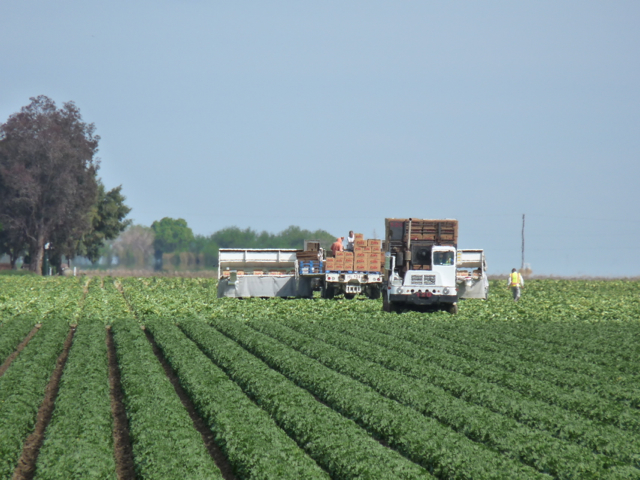
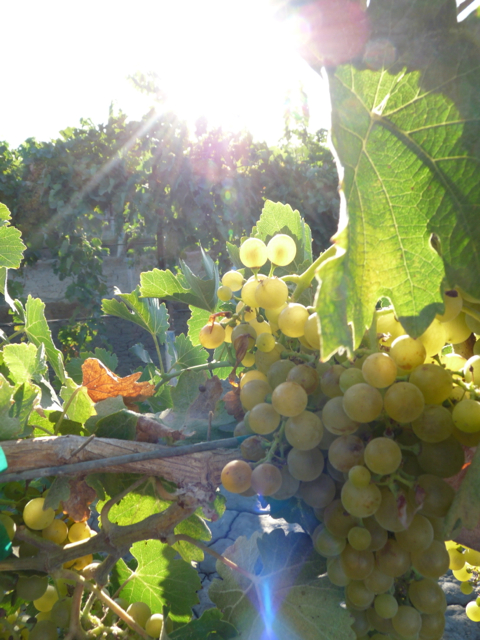
The October 7-9  Specialty Crop School features California’s Salinas Valley where lettuce, cole crops, strawberries and wine grapes reign.

This intensive 3-day course has been specifically designed for suppliers to specialty crop businesses who require an in-depth understanding of key drivers impacting Salinas Valley growers and their purchasing and management decisions. The year-round production cycle of the Salinas Valley sends fresh leafy greens, vegetables and other cool season crops to markets around the world.

Participants will return to their organizations equipped with new information to refine their business strategies according to new food safety, pest management, traceability and water requirements as well as meeting retailer demands.

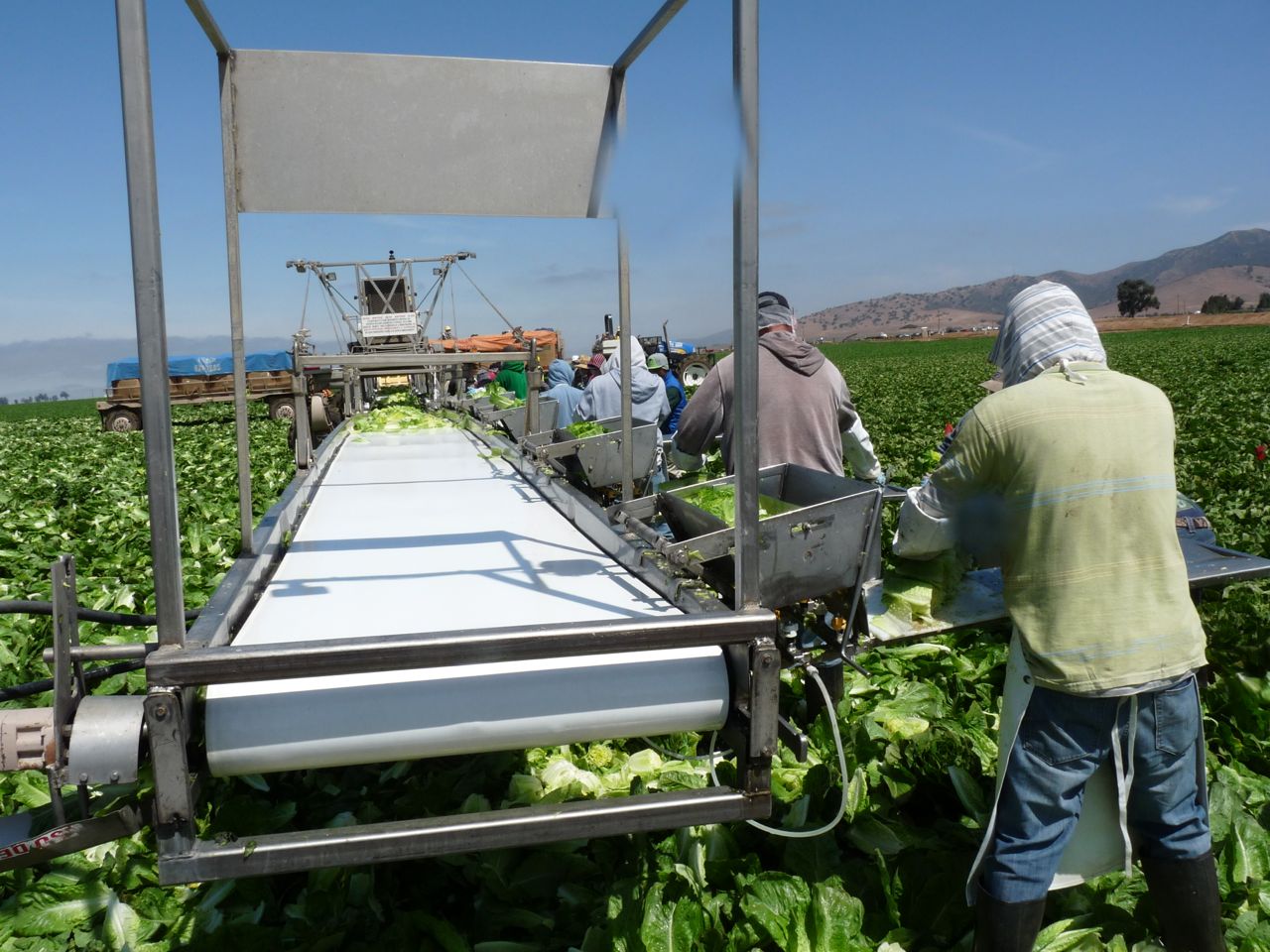
The Salinas Valley School, headquartered in Watsonville, will include field visits to farms, processing facilities and research centers as well as discussions with growers, pest management experts, agronomists, regulators and university scientists. Field stops are planned in lettuce, cole crops, artichokes, strawberries, seed production and winegrapes.

Featured speakers include Bonnie Fernandez from the Center for Produce Safety at UC Davis; Richard Smith, Monterey County Cooperative Extension; Becky Sisco from the IR-4 Minor Use Registration Program; Richard Spas, CA Department of Pesticide Regulation and representatives from several local farming companies.

Early-bird rates are available until September 10 and registration closes on October 1. Class size is limited and seats are available on a first come, first served basis.

For complete Specialty Crop School course topics and registration information, go to www.specialtycropschool.com
2016-05-31T19:33:29-07:00August 25th, 2014|

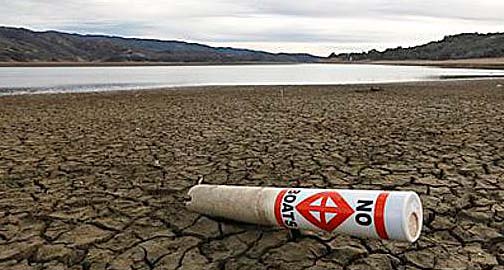
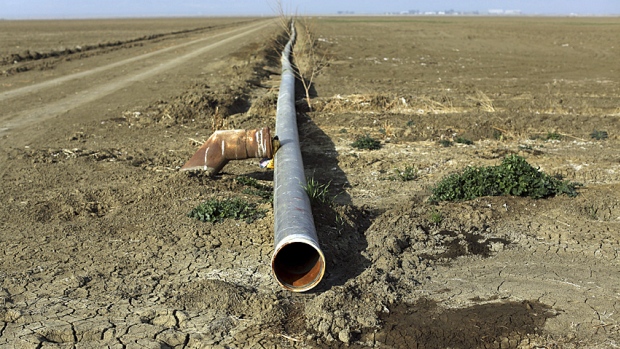
California has given away rights to far more water than it has

Source: UC Davis News and Information

California has allocated five times more surface water than the state actually has, making it hard for regulators to tell whose supplies should be cut during a drought, University of California researchers reported.

The scientists said California’s water-rights regulator, the State Water Resources Control Board, needs a systematic overhaul of policies and procedures to bridge the gaping disparity, but lacks the legislative authority and funding to do so.

Ted Grantham, who explored the state’s water-rights database as a postdoctoral researcher with the UC Davis Center for Watershed Sciences, said the time is ripe for tightening the water-use accounting.

“Given the public’s current attention on drought and California water, we now have an unprecedented opportunity for strengthening the water-rights system,” said Grantham, who conducted the analysis with UC Merced Professor Joshua Viers.

Better information might enable state regulators to better target water cutbacks in times of drought, Grantham said.

Grantham and Viers verified that water-rights allocations exceed the state’s actual surface water supply by about 300 million acre-feet, enough to fill Lake Tahoe about 2.5 times.

The state has allocated a total maximum allowable use of 370 million acre-feet of surface water — more than five times the 70 million acre-feet available in a year of good precipitation, according to the researchers’ review of active water rights on record. The analysis was published today (Aug. 19) in the journal Environmental Research Letters.

The scientists said the California’s water-rights allocation system is complicated and backlogged, which contributes to the mismatched accounting. For example, people sometimes take water, apply retroactively for the right to use the water and continue taking it — sometimes for up to a decade — while their applications are pending.

Inaccurate reporting by water-rights holders worsens the problem. Some may even deliberately overestimate so they do not lose as much if cutbacks occur. The result is that in most water basins and in most years, far more people hold water rights than there is water. In the San Joaquin River basin, for example, water-rights allocations exceed the river’s average annual flow by eightfold.

“All those allocations mean that in times of drought, it’s hard to tell who should have to reduce water use, causing delays in issuing curtailments,“ said Viers, director of the Center for Information Technology Research in the Interest of Society at UC Merced.

During the current drought, the state water board has for some watersheds ordered curtailments for all water users, to protect fish.

Viers and Grantham, now with the U.S. Geological Survey, are working to iron out issues with its database and make the information available to policymakers.

2016-05-31T19:33:30-07:00August 20th, 2014|

Water Crisis Reducing Valley Fruit Production

The impact of the worsening drought can be seen in the expected drop in crop production.

Valley fruit production is down on many farms, but the lack of water isn’t the only factor causing the lower expectations.

The grape crop is ready for harvest in many Valley vineyards but there’s not nearly as much of the sweet fruit this year. The U.S. Department of Agriculture expects grape production in California to dip 9 percent.

“We came off two big years in both wine grapes and Thompson seedless, so those vines are taking a little bit of a rest,” said Nat Dibuduo with Allied Grape Growers. “The other factor is obviously the drought. We’ve got growers that lost wells or they’re minimizing their irrigations to stretch out the water they do have.”

Table olives fared even worse with the dry conditions. Production is expected to dip 45 percent statewide but as much as 60 percent in Tulare County. 

“When olive trees go into dormancy they need some good deep soil moisture and they didn’t get it,” said Adin Hester with the Olive Growers Council. “The lack of moisture is something that certainly exacerbated, number one. Number two, we’ve got growers that are just flat out of water.”

Peach production is down 4 percent. We’re seeing peach, olive and grape growers rip out orchards and vineyards to put in more profitable crops like almonds and pistachios.

“I think there’s going to be not only Thompson seedless grapes pulled out after this harvest but also wine grapes throughout the San Joaquin Valley because they’re not making money, and they see their neighbors are making money with any of the various nut crops,” said Dibuduo.

Dibuduo is worried about this year’s outlook. He says winery demand for Valley grapes has taken a big hit because of international competition. Some grapes, he says, might not get sold.

Other crops like pears, apples and rice are also down from a year ago.

2016-05-31T19:33:30-07:00August 19th, 2014|

Kern County Ag Ranks Second in State, Fresno Drops to Third

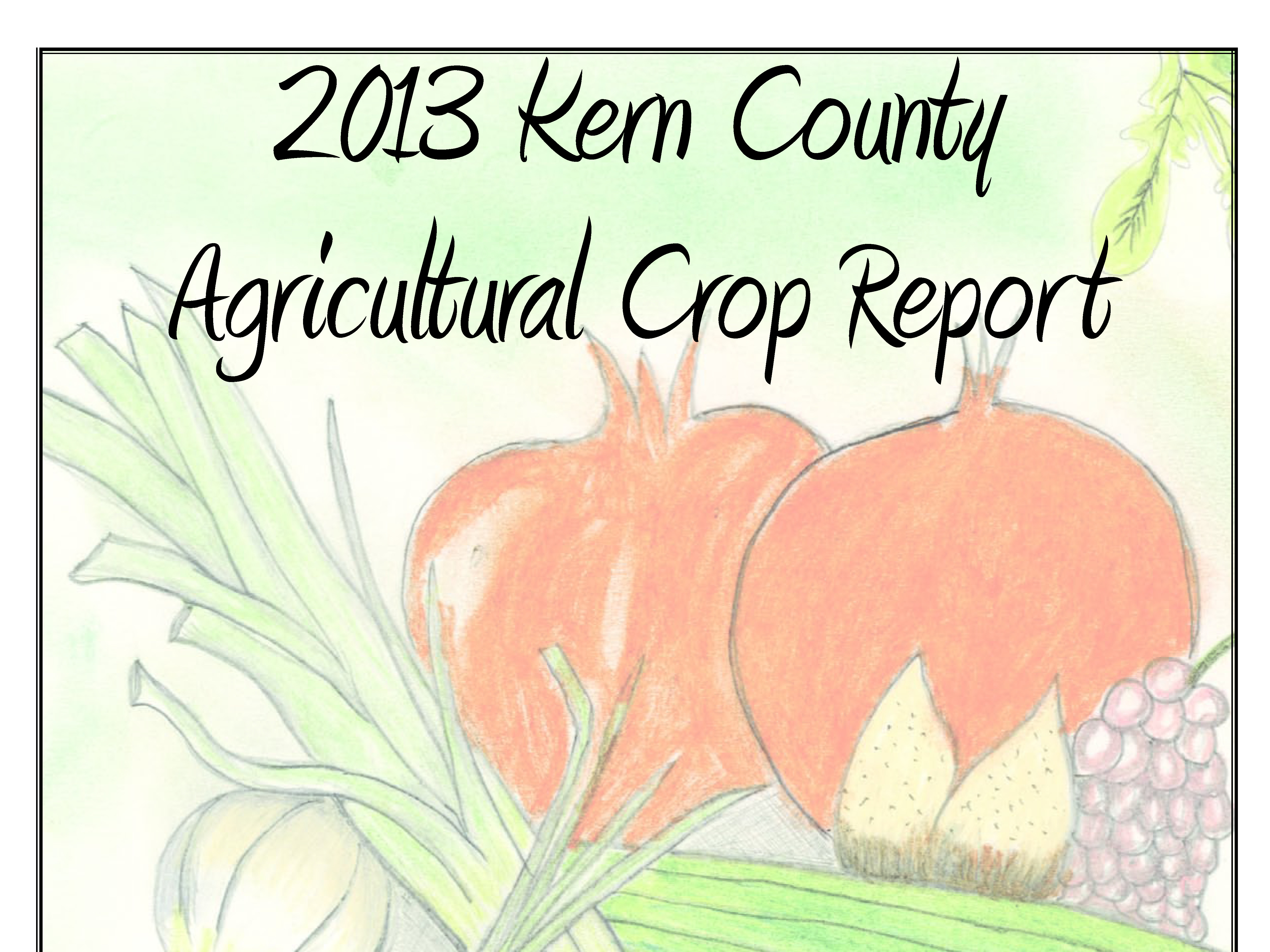
Ruben J. Arroyo, Kern County Agricultural Commissioner reported the 2013 gross value of all agricultural commodities produced in the county was $6,769,855,590, according to the 2013 Kern County Agricultural Crop Report, representing an increase (6%) from the revised 2012 crop value ($6,352,061,100). Thus, Kern County ag ranks second in state, with Tulare ahead, and Fresno behind.

Kern County’s top five commodities for 2013 were Grapes, Almonds, Milk, Citrus and Cattle & Calves, which make up more than $4.6 Billion (68%) of the Total Value; with the top twenty commodities making up more than 94% of the Total Value. The 2013 Kern County Crop Report can be found on the Department of Agriculture and Measurement Standards website: www.kernag.com

Tulare County reported gross annual production in 2013 at $7.8 Billion, Fresno County, $6.4 Billion, and Monterey County, $4.38 Billion.

As predicted by many, including CaliforniaAgToday on July 15, 2014, Fresno County, long-time top ag county in the state—and in the nation—now ranks third in the state and has regressed in ag growth since 2011.

Les Wright, Fresno County Ag Commissioner, attributes much of the decrease to the water shortage, particularly exacerbated by a large part of the West Side being dependent on both state and federal surface water deliveries that have been curtailed by pumping restrictions due to the Endangered Species Act.

2016-05-31T19:33:30-07:00August 19th, 2014|

Western Growers applauds US $7.5B water support proposal

Source: www.freshfruitportal.com

Western Growers has praised a deal struck by California lawmakers that would see a US $7.5 billion package to bolster the state’s water supply and infrastructure.

California residents will now vote on the matter in November.

In a statement, Western Growers president and CEO Tom Nassif said he was delighted with the passage of legislation by the California Assembly and Senate, which includes US$2.7 billion for water storage.

“We are especially pleased that the storage portion of this legislation is a continuous appropriation preventing the legislature from withholding funding. Passage of this legislation is an essential first step in adding capacity to our state’s existing storage infrastructure,” Nassif said.

“This legislation replaces the existing bond slated for this November’s statewide ballot. Our Association will work diligently with Governor Jerry Brown to garner support for the initiative.”

California is currently facing one of the worst droughts in decades, and many in the industry have raised serious concerns over the unsustainable rate at which the water supplies are being depleted.

Nassif also commended members of both parties who came together to support compromise legislation he described as ‘critical’ not only for growers but for all of the state’s residents and water users.

“Western Growers particularly appreciates Governor Brown’s leadership on this issue. We look forward to his support of this measure as we work together to gain voter approval for the initiative this November,” he said.

California Citrus Mutual president Joel Nelsen added his praise to the legislation that he said met the needs of all the state’s regions.

“I believe we have turned a corner in our State in which we quit destroying the land and the people that provide the world food and fiber,” he said in a press release.

“I applaud the hard work and dedication of Assembly Members Connie Conway and Henry Perea and Senator Andy Vidak in leading the legislature in an effort to strengthen a bond proposal that we feel was previously incomplete.

“To the Governor’s credit he and his team listened to stakeholders and came a long way from the $2 Billion for storage that was included in his original proposal to a more comprehensive package that addresses our Valley and the state’s needs for a real solution.”

He added the state now had more money for storage, a path towards cross valley connectors, and funding for ground water cleanup in disadvantaged communities.

“The previous proposals contained less money, no pathway for the connector, and in reality made too few happy,” Nelsen said.

“This is a positive step forward and I believe the Speaker and the Governor when they say we will work together to achieve all our goals.”

2016-05-31T19:33:31-07:00August 18th, 2014|

USDA study places cost of raising a child at nearly $250,000

Source: CDFA Planting Seeds Blog

The U.S. Department of Agriculture (USDA) released its annual report, Expenditures on Children and Families, also known as the Cost of Raising a Child. The report shows that a middle-income family with a child born in 2013 can expect to spend about $245,340 ($304,480 adjusted for projected inflation*) for food, housing, childcare and education, and other child-rearing expenses up to age 18. Costs associated with pregnancy or expenses occurred after age 18, such as higher education, are not included.

While this represents an overall 1.8 percent increase from 2012, the percentages spent on each expenditure category remain the same. As in the past, the costs by location are lower in the urban South ($230,610) and rural ($193,590) regions of the country. Families in the urban Northeast incurred the highest costs to raise a child ($282,480).

“In today’s economy, it’s important to be prepared with as much information as possible when planning for the future,” said USDA Food, Nutrition and Consumer Services Under Secretary Kevin Concannon. “In addition to giving families with children an indication of expenses they might want to be prepared for, the report is a critical resource for state governments in determining child support guidelines and foster care payments.”

The report, issued annually, is based on data from the federal government’s Consumer Expenditure Survey, the most comprehensive source of information available on household expenditures. For the year 2013, annual child-rearing expenses per child for a middle-income, two-parent family ranged from $12,800 to $14,970, depending on the age of the child.

The report, developed by the USDA Center for Nutrition Policy and Promotion (CNPP), notes that family income affects child-rearing costs. A family earning less than $61,530 per year can expect to spend a total of $176,550 (in 2013 dollars) on a child from birth up to age 18. Middle-income** parents with an income between $61,530 and $106,540 can expect to spend $245,340; and a family earning more than $106,540 can expect to spend $407,820.

“Food is among the top three expenses in raising children,” said CNPP Executive Director Angela Tagtow. “Parents have the challenge of providing food that is not only healthful and delicious, but also affordable. We have great resources such as ChooseMyPlate.gov that features tips to help families serve nutritious and affordable meals. I encourage parents to check out our Healthy Eating On a Budget resources, 10-Tips Nutrition Seriesrecipes, and MyPlate Kids’ Place, which features digital games for kids to get engaged themselves in healthy eating.”

For middle-income families, housing costs are the single largest expenditure on a child, averaging 30 percent of the total cost. Child care and education was the second largest expense at 18 percent, followed by food, which accounted for 16 percent of the total cost.

“Variations by geographic region are marked when we look at housing, for example,” said study author and CNPP economist Mark Lino, Ph.D. “The average cost of housing for a child up to age 18 is $87,840 for a middle-income family in the urban West, compared to $66,240 in the urban South, and $70,200 in the urban Midwest. It’s interesting to note that other studies are showing that families are increasingly moving to these areas of the country with lower housing cost.”

In 1960, the first year the report was issued, a middle-income family could have expected to spend $25,230 ($198,560 in 2013 dollars) to raise a child until the age of 18. Housing was the largest child-rearing expense both then and now. Health care expenses for a child have doubled as a percentage of total child-rearing costs during that time. In addition, some common current-day costs, such as child care, were negligible in 1960.

Expenses per child decrease as a family has more children. Families with three or more children spend 22 percent less per child than families with two children. As families have more children, the children can share bedrooms, clothing and toys can be handed down to younger children, food can be purchased in larger and more economical quantities, and private schools or child care centers may offer sibling discounts.

The full report, Expenditures on Children by Families, 2013, is available on the web at www.cnpp.usda.gov. In addition, families can enter the number and ages of their children to obtain an estimate of costs with a calculator via the interactive web version of the report.

2016-05-31T19:33:31-07:00August 18th, 2014|

Commentary: Proposed EPA ‘waters’ rule hangs farmers out to dry

Source: Don Parrish; Ag Alert

The U.S. Environmental Protection Agency proposal to expand the scope of “navigable waters” subject to Clean Water Act jurisdiction was drafted, according to the agency, to reduce uncertainty. It’s very clear the proposed waters of the U.S. rule is designed to allow the federal government to regulate every place water flows when it rains, including small and remote “waters” and ephemeral drains and ditches.

We all know that water flows downhill and that at some point, some of that water eventually finds its way into a creek, stream or river. Yet, based on nothing more than the flow of rainwater along a natural pathway across the land, the EPA wants to call vast areas of otherwise dry land “tributaries” and therefore “navigable waters.”

With its proposal to regulate land that is dry most of the year and miles from the nearest truly navigable water, EPA is putting farmers in a tenuous position. EPA and other supporters of the proposed rule have made much of a long-standing exemption for agriculture, and claim that it still stands; however, the proposed rule narrows that exemption and opens it up to litigation. The “normal farming and ranching” exemption only applies to a specific type of Clean Water Act permit for “dredge and fill” materials. There is also no farm or ranch exemption from Clean Water Act permit requirements for what EPA would call “pollutants.”

Ultimately, the new permitting requirements that would come with this proposal would mean that common farm activities could trigger Clean Water Act liability and the need for Section 402 National Pollutant Discharge Elimination System permits if pollutants could incidentally be deposited into ditches, ephemerals and other features that will now fall under federal jurisdiction.

At the same time EPA and the U.S. Army Corps of Engineers are telling farmers and ranchers they’re got nothing to worry about because the exemption puts them in the clear, the agency is moving forward with a guidance document that will govern how it interprets the “normal farming” exemption contained in Section 404 of the Clean Water Act.

This interpretive rule makes fundamental changes in how the exemption for normal agricultural activities at “established” farms will be applied and enforced. Contrary to assertions by proponents, this interpretive rule narrows how the exemption is applied and increases farmers’ liability by requiring that farmers comply with Natural Resources Conservation Service conservation standards, which were previously voluntary, in order to be exempt from Section 404 permitting.

Like the proposed waters of the U.S. rule, the interpretive rule conflicts with congressional intent. In 1977, Congress amended the Clean Water Act to exempt “normal” farming, ranching and silviculture from Section 404 “dredge and fill” permit requirements. However, EPA and the Corps are now asserting that farmers are exempt from Section 404 permits so long as any of 56 listed practices comply with NRCS standards, despite the fact that those practices have qualified as the “normal” farming, ranching and silviculture activities for 37 years.

The newly proposed interpretation of “normal farming and ranching” would apply only to farms and ranches that EPA determines to be “established” and “ongoing”—not newer or expanded farms and ranches. Where does this leave the children and grandchildren of farmers and ranchers who want to work the land but need to grow the operation to support an expanding family? What does this mean for the billions of people who will need to be fed in the future?

Worried about the answers to those questions and the many threats the proposed rule poses to agriculture, the American Farm Bureau Federation launched a website at ditchtherule.fb.org to help farmers, ranchers, landowners and others express the need for EPA to “Ditch the Rule.” Focused on topics and analysis related to the proposed rule, the site includes several sections: Take Action, Go Social, Find Answers and Get Resources. We encourage you to visit the site, sign up to learn more, comment on the proposed rule and send tweets using the hashtag #DitchTheRule. You should also voice your concerns to your state and local officials and your U.S. representative and senators.

2016-05-31T19:33:31-07:00August 15th, 2014|

Forest Fires Could Be Impacting Winegrapes

Smoke Taint Could Cause Off-Flavor Vines

Many forest fires throughout California have been near or upwind from many winegrape vineyards and could be causing problems for the grapes.

Jim Kennedy, a professor and chairman of the Department of Viticulture and Enology at the California State University of Fresno, explains a particular serious problem due to smoke enveloping vineyards.

“A lot of these fires are getting very close to the wine industry, and that’s a problem because the smoke that these fires generate, they come in contact with clusters of fruit. The compounds that are smoke get absorbed onto the fruit and the plant likes to modify these compounds, because it can be quite toxic to plant cells,” said Kennedy. “The wine gets made from that fruit and the wine ages, the smoke compounds become released again, and it’s a real problem. Your wine starts to resemble an ashtray, its smell and character,” he added.

Kennedy said the tragedy is that the fruit is exposed to the smoke and it’s not readily and obviously upfront as problematic.

“A winemaker goes through the wine-making process thinking their fruit has escaped the problem, and low and behold a year down the road its become an ashtray. And that is something as the grape and wine industry we’re really keeping an eye out on these forest fires, and consulting with winemakers in these different regions so they are aware that this is a potential issue,” said Kennedy.

Kennedy said that this problem, also known as “smoke taint” has been seen many times.

“The classic sample is Australia. With the bush fires in Australia a lot of the vineyards are very close to eucalyptus groves, and so there’s a lot of research that has come out of Australia in terms of how to measure the potential for smoke taint in fruit and how to deal with it once you got it. The Australians tend to be on the front-end of it because it’s an issue that has much more potential for disaster in their industry,” said Kennedy.

2016-05-31T19:33:31-07:00August 15th, 2014|

Native ecosystems blitzed by drought

Source: Alexandra Witze and Nature Magazine; Scientific American

Peter Moyle has seen a lot in five decades of roaming California’s streams and rivers and gathering data on the fish that live in them. But last month he saw something new: tributaries of the Navarro River, which rises in vineyards before snaking through a redwood forest to the Pacific, had dried up completely.

“They looked in July like they normally look in September or October, at the end of the dry season,” says Moyle, a fish biologist at the University of California, Davis.

Blame the drought. The Navarro and its hard-pressed inhabitants are just one example of stresses facing a parched state. From the towering Sierra Nevada mountains — where the snowpack this May was only 18% of the average — to the broad Sacramento–San Joaquin river delta, the record-setting drought is reshaping California’s ecosystems.

It is also giving researchers a glimpse of the future. California has always had an extreme hydrological cycle, with parching droughts interrupted by drenching Pacific storms (see ‘Extreme hydrology’). But scientists say that the current drought — now in its third year — holds lessons for what to expect 50 years from now.

“The west has always gone through this, but we’ll be going through it at perhaps a more rapid cycle,” says Mark Schwartz, a plant ecologist and director of the John Muir Institute of the Environment at the University of California, Davis. He and others are discussing the drought’s ecological consequences at the annual meeting of the Ecological Society of America, which runs from August 10 to 15 in Sacramento, California. He says that the state’s plant and animal species are at risk in part because California ecosystems are already highly modified and vulnerable to a variety of stresses.

Many of the state’s 129 species of native inland fish, including several types of salmon, are listed by federal or state agencies under various levels of endangerment. “We’re starting from a pretty low spot,” says Moyle. He hopes to use the current drought to explore where native fish have the best chances of surviving.

That could be in dammed streams such as Putah Creek near the Davis campus, where water flow can be controlled to optimize native fish survival. Another focus might be on spring-fed streams such as those that flow down from volcanic terrain in northernmost California and can survive drought much longer than snow-fed streams.

In the late 1970s, Moyle discovered that native fish in the Monterey Bay watershed recolonized their streams relatively quickly after a two-year drought. But today’s streams face greater ecological pressures, such as more dams and more non-native species competing for habitat.

Other challenges arise in the delta where the Sacramento and San Joaquin rivers meet, north-east of San Francisco. An invasive saltwater clam (Potamocorbula amurensis) has taken advantage of warming river waters and moved several kilometres upriver, says Janet Thompson, an aquatic ecologist with the US Geological Survey (USGS) in Menlo Park, California.

Potamocorbula out-competes a freshwater clam (Corbicula fluminea), and accumulates about four times as much of the element selenium from agricultural run-off and refineries as its freshwater cousin does. When endangered sturgeon feed on Potamocorbula, the fish consume much more selenium than is optimal. “That’s the biggest shift that we’ve seen that’s of environmental concern,” says Thompson. “These are the kinds of things that can have a lasting effect on a predator species.”

Teasing out the drought’s effects on terrestrial animals is tougher. Researchers have documented drops in various California bird populations this year, such as mallard ducks (Anas platyrynchos) and tricolor blackbirds (Agelaius tricolor). But many other factors — especially habitat loss — also come into play, so it becomes hard to isolate the effects of drought.

The drought’s effects on larger animals such as bears are also uncertain. Anecdotal reports suggest that more bears than usual are showing up closer to people this year, says Jason Holley, a wildlife biologist at the California Department of Fish and Wildlife in Rancho Cordova. Within the space of six weeks this spring, four black bears appeared along the Sacramento River corridor, much farther out of the mountains than normal. “Those sorts of calls definitely pique your interest,” says Holley, who thinks that dry conditions in the mountains might be pushing bears closer to populated areas.

The longest-lasting effect could be on California’s forests, including its iconic giant sequoias. The drought has handed forest ecologists an unplanned experiment, says Phillip van Mantgem, a forestry expert at the USGS in Arcata, California, who is speaking at the Sacramento meeting.

Researchers are gathering data to examine whether thinning of plots in the forest, in part to reduce fire risk, might help trees do better under drought. Tests may also help to reveal the main mechanisms by which drought kills different tree species, whether by interrupting the flow of water within the tree or by starving it. “I’m really curious to see how this turns out,” van Mantgem says.

There should be plenty of time to gather data. Climatologists expect an El Niño weather pattern to form in the Pacific this year, which usually brings more rain and snow to parts of California (see Nature 508, 20–21; 2014). But the pending El Niño looks to be weaker than first expected, and may not have much, if any, influence on ending the drought. Chances are that the state will remain dry well into 2015.


2016-05-31T19:33:31-07:00August 14th, 2014|

CaliforniaAgNews Streams 24/7, Globally

CaliforniaAgNews 24/7 Available on Any Platform


Clovis, Calif., August 14, 2014  Timely, relevant and important California agricultural radio news is now available for the first time ever –online, 24/7. Find it at www.CaliforniaAgNews.com.

Listen to the most comprehensive California agricultural news, updated continuously, on your smartphone, iPad, tablet, or any computer.

CaliforniaAgNews 24/7 includes the latest reports broadcasted on the CaliforniaAgToday Radio network, plus extensive in-depth interviews and reports, all presented to users in a state-of-the art, multi-platform format.

“CaliforniaAgNews 24/7 uniquely covers the state’s $45 billion dollar agricultural industry,” noted Ag News Director Patrick Cavanaugh, a thirty-year-veteran agricultural news reporter, often breaking stories.

“Our broadcast team is constantly in the field reporting news directly from farmers and other industry leaders throughout the state,” said Cavanaugh. “We also report relevant USDA news.”

“This new service will spread the word on what’s really happening in California agriculture during this severe drought crisis, worsened by federally-imposed environmental restrictions,” said Cavanaugh.

“In California, a major disconnect exists between the urban consumer and the farming community. CaliforniaAgNews 24/7 bridges the gap between the field and the fork; connecting the public to the land, resources, science & technology, politics and policies of California’s safe and local food, fiber, and fuel,” noted Cavanaugh.

“Hearing a farmers’ voice talking about how she or he provides a safe and nutritious crop will go a long way towards that city listener’s understanding of the farmer. On CaiforniaAgNews 24/7, listeners will hear, firsthand, about the concerns and challenges of farming in California – the leading and most diverse farming state in the nation,” said Cavanaugh.

2016-05-31T19:33:31-07:00August 14th, 2014|
Go to Top