ALERT: Immediate Action Needed for Thrips/TSWR

Source: Neil McRoberts

For those who have water and tomatoes:


Thrips numbers have increased rapidly in the southern arm of the Central Valley and Tomato spotted wilt virus (TSWV) has been reported in all of the areas we monitor,” according to Neil McRoberts, Assistant Professor, Plant Pathology Department, UC Davis.

There are numerous reports of TSWV symptoms in crops from Stanislaus County down to Fresno and Kings County particularly around the Huron area.


The current risk in Fresno County is high and we are recommending that growers who plan to use an insecticide program against thrips/TSWV take immediate action. The current mini heat wave will accelerate thrips development slightly and further bump up thrips numbers.

If you are planning to use an insecticide program against thrips/TSWV this season, you should target the next generation of thrips (generation 3).  If it is not possible to arrange for treatment in time to catch generation 3, target generation 4. Delaying treatment until later in the season will be much less effective at preventing damage from TSWV.  Coordinated spraying across large areas has an additional effect on thrips populations because it makes it difficult for them to avoid treatment by migrating.

Generation 3 adults are projected to peak on May 17th.  Sprays applied in the 14-day period before this peak date will check generation 3 and delay further population build-up and TSWV spread.  This means you need to take immediate action.

Generation 4 adults are projected to peak on June 11th.  Sprays applied in the 14-day period before this peak date will check generation 4 and delay further population build up and TSWV spread.  Treatment in the 14 days immediately following the generation 3 peak date will also be effective.


The current risk in the Merced area is high and we are recommending that growers who plan to use an insecticide program against thrips/TSWV take immediate action. The current mini heat wave will accelerate thrips development slightly and further bump up thrips numbers.

Generation 3 adults are projected to peak on May 22nd.  Sprays applied in the 14-day period before this peak date will check generation 3 and delay further population build-up and TSWV spread.

Generation 4 adults are projected to peak on June 16th.  Sprays applied in the 14-day period before this peak date will check generation 4 and delay further population build up and TSWV spread.  Treatment in the 14 days immediately following the generation 3 peak date will also be effective.


The current risk in eastern San Joaquin County is lower than in other southern Counties, but we think a precautionary approach is best. The current mini heat wave will accelerate thrips development slightly and further bump up thrips numbers.

If you are planning to use an insecticide program against thrips/TSWV this season, you should target the next generation of thrips (generation 3).  If it is not possible to arrange for treatment in time to catch generation 3, target generation 4. Delaying treatment until later in the season will be much less effective at preventing damage from TSWV.  Coordinated spraying across large areas has an additional effect on thrips populations because it makes it difficult for them to avoid treatment by migrating.

Generation 3 adults are projected to peak on May 28th.  Sprays applied in the 14-day period before this peak date will check generation 3 and delay further population build-up and TSWV spread.

Generation 4 adults are projected to peak on June 22nd.  Sprays applied in the 14-day period before this peak date will check generation 4 and delay further population build up and TSWV spread.


The current risk in Kings County is high and we are recommending that growers who plan to use an insecticide program against thrips/TSWV take immediate action. The current mini heat wave will accelerate thrips development slightly and further bump up thrips numbers.

If you are planning to use an insecticide program against thrips/TSWV this season, you should target the next generation of thrips (generation 3).  If it is not possible to arrange for treatment in time to catch generation 3, target generation 4. Delaying treatment until later in the season will be much less effective at preventing damage from TSWV.  Coordinated spraying across large areas has an additional effect on thrips populations because it makes it difficult for them to avoid treatment by migrating.

Generation 3 adults are projected to peak on May 22nd.  Sprays applied in the 14-day period before this peak date will check generation 3 and delay further population build-up and TSWV spread.  This means you need to take immediate action.

Generation 4 adults are projected to peak on June 14th.  Sprays applied in the 14-day period before this peak date will check generation 4 and delay further population build up and TSWV spread.  Treatment in the 14 days immediately following the generation 3 peak date will also be effective.


The current risk in western San Joaquin County is lower than in other southern counties, but we think a precautionary approach is best. The current mini heat wave will accelerate thrips development slightly and further bump up thrips numbers.

If you are planning to use an insecticide program against thrips/TSWV this season, you should target the next generation of thrips (generation 3).  If it is not possible to arrange for treatment in time to catch generation 3, target generation 4.

Delaying treatment until later in the season will be much less effective at preventing damage from TSWV.  Coordinated spraying across large areas has an additional effect on thrips populations because it makes it difficult for them to avoid treatment by migrating.

Generation 3 adults are projected to peak on May 28th.  Sprays applied in the 14-day period before this peak date will check generation 3 and delay further population build-up and TSWV spread.

Generation 4 adults are projected to peak on June 22nd.  Sprays applied in the 14-day period before this peak date will check generation 4 and delay further population build up and TSWV spread.


The web resource for integrated management of Western Flower Thrips and Tomato Spotted Wilt Virus in the California Central Valley contains two tools to help in disease risk management:  

A Field Risk Index tool uses simple information about field locations, land use, and agronomy to calculate a risk category for tomato crops.  This tool can be used before planting or early in the season to get a heads up about the general risk to a crop from TSWV.

A thrips population projection model, driven by degree-day accumulation at several Central Valley locations, aids in projecting when thrips generations are hatching, developing, and adult numbers are peaking.  This information is used to issue regular updates and provide broad guidelines for timing insecticide sprays to keep thrips numbers low enough to prevent TSWV from spreading.

The research behind these tools was supported by the California Tomato Research Institute (CTRI)

The model was developed in Collaboration with Dr. Len Coop of Oregon State University’s Integrated Plant Protection Center (IPPC).  The IPPC developed and hosts the USPEST web service which is a multi pest multi model tool that provides information on pest development and disease risk for the Contiguous 48 US states using a network of weather stations.

 

2021-05-12T11:03:06-07:00May 4th, 2014|

Fresno County Residents Join Immense Statewide Citizen Science Project

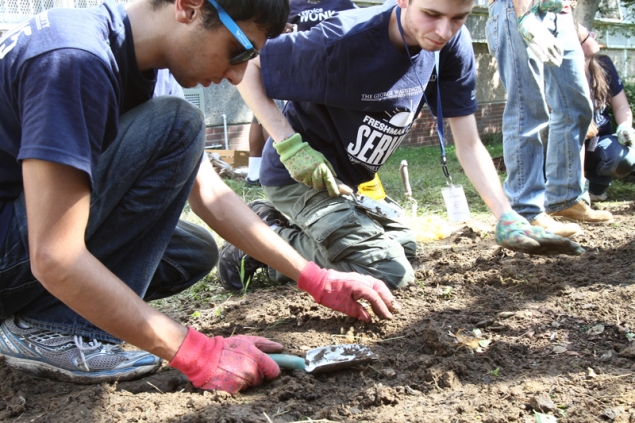
The public is invited to join hundreds of elementary school students, Master Gardeners, 4-H members, farm advisors, scientists and nutrition educators at the Garden of the Sun in Fresno from 10 a.m. to 1 p.m. May 8 for UC’s largest-ever one-day citizen science project.

The Garden of the Sun is at 1750 N. Winery Ave.

The event is part of the University of California’s statewide Day of Science and Service. Californians throughout the state will take to their smart phones and computers on May 8 to participate in the unprecedented crowd-sourced data collection effort.

(See details at http://beascientist.ucanr.edu.)

Everyone in California is invited to take part by recording observations on three questions:

  • How many pollinators do you see?
  • How do you conserve water?
  • Where is food grown in your community?

The Day of Science and Service marks the 100th birthday of UC Cooperative Extension. In 1914, Congress and the president realized that, in order to feed a great nation, ag research advances from top universities had to reach farmers, so they created the Cooperative Extension.

For 100 years, Cooperative Extension academics have worked side-by-side with farmers to boost yields, battle pests, ensure food safety, protect the environment and make the best use of available irrigation water.

“There is probably no other county that has benefited more from Cooperative Extension than Fresno County,” said Shannon Mueller, director of Fresno County UCCE. “Over the years, our county has become the No. 1 ag county in the world. Agricultural research and teaching have played a tremendous role in achieving that milestone and will continue to do so in the future.”

Fresno County residents can be part of the Day of Science and Service while they enjoy birthday cake, spin a prize wheel, stroll the Garden of the Sun and learn about the UC services that touch their lives and the local economy.

During the opening ceremony at 10:30 a.m., Fresno County Supervisor, District 1, Phil Larson will present a county proclamation honoring Fresno County UC Cooperative Extension’s centennial.

University of California Division of Agriculture and Natural Resources is celebrating 100 years of UC Cooperative Extension researchers and educators drawing on local expertise to conduct agricultural, environmental, economic, youth development and nutrition research that helps California thrive.

2016-05-31T19:37:59-07:00May 2nd, 2014|

Kings River Water Quality Coalition: Last Chance Enrollment Sessions

The Kings River Water Quality Coalition will hold “Last Chance Enrollment Sessions” at the Fresno County Farm Bureau office, 1274 W. Hedges, Fresno, on Friday, May 9.  Sessions are scheduledfrom 1-2 p.m., 2-3 p.m., 3-4 p.m. and 4-5 p.m.

All commercially irrigated operations must take action by May 19, 2014, to avoid penalties from the Regional Board. To comply, growers can either join the Kings River Water Quality Coalition or apply for an Individual Order through the Regional Board.

To enroll acreage at a session, growers will need to have with them the physical address and Assessor Parcel Numbers (APN) for each property they will be enrolling. They will also need to bring a checkbook for payment of the enrollment fee. Coalition membership forms will be available at the workshop.

To find out more about the Coalition, go to www.kingsriverwqc.org or call 559-365-7958.  

2016-05-31T19:37:59-07:00May 2nd, 2014|

Friday’s ‘Fight for Water II’ Media Day will Include News Conference on Valley Crisis

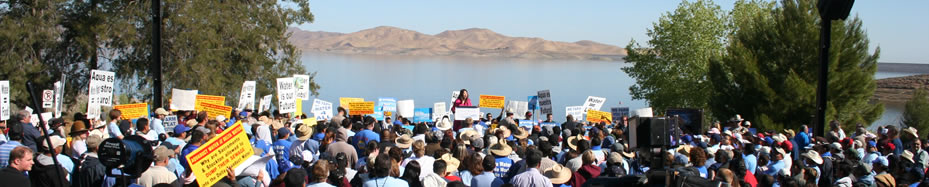
Two big fights – one for water and the other in the ring – will be in the spotlight Friday afternoon in Fresno during a media day featuring valley boxer Jose Ramirez and a news conference in which Central California’s rapidly worsening water crisis will be the focus of California Latino Water Coalition leaders and several valley elected officials during a news conference.

The Latino Water Coalition is co-sponsoring the May 17 bout featuring U.S. Olympian Ramirez at Fresno’s Selland Arena as “Fight for Water II,” to help call national attention to the total lack of water supplies now threatening large portions of the San Joaquin Valley’s East Side and West Side. Ramirez is a Coalition member.

The news conference and Fight for Water media event will take place:

Friday, May 2 at 2 p.m.

Thrive Gym — 5161 North Blackstone Avenue

ON BLACKSTONE BETWEEN SHAW AND BARSTOW AVENUES.

“This news conference will include statements by some of our local elected officials whose constituents are most at risk from economic and social disaster this summer because of the zero water allocations still in place over millions of acres along the valley’s West Side and East Side,” said Mario Santoyo, Latino Water Coalition Executive Director. “Don’t be surprised if what these county supervisors and mayors have to say to the federal and state governments is strong. Aside from some drought relief and eased regulations, there really hasn’t been much movement toward getting growers at least some supply to keep permanent plantings alive. The bottom line is we still have no water, trees and vines are about to start dying and valley people – particularly Latinos – will be hurting.”

Among the confirmed speakers are Fresno County Supervisors Phil Larson and Judy Case McNairy. They represent portions of western Fresno County and along the county’s East Side that would be hardest hit by a zero allocation.

Mayor Gabriel Jiminez of Orange Cove, an East Side community in the heart of an incredibly productive citrus region that has very little groundwater to cushion the total lack of Central Valley Project surface water supplies, will discuss his community’s worsening dilemma.

The City of Orange Cove itself relies totally on Friant-Kern Canal deliveries for municipal supplies and is going to have make do with a much reduced emergency supply of health and safety water arranged by the Bureau of Reclamation and Fresno Irrigation District.

While the prospect of massive economic losses and social problems caused by a lack of water is confronting Orange Cove and the East Side, such difficulties are much too familiar to Mendota Mayor Robert Silva.

He will speak on how Mendota is grimly preparing for another year of extreme water curtailments in the CVP’s nearby San Luis Unit, including the Westlands Water District. Unemployment is growing rapidly, fields are being fallowed and businesses and residents are struggling financially.

Also speaking will be Kings County Supervisor Richard Valle, San Joaquin Mayor Amarpreet Dhaliwal (who chairs the Council of Fresno County Governments), Clovis Councilman Jose Flores and other local leaders.

Cannon Michael, who farms east of Los Banos, will represent the San Joaquin River Exchange Contractors. A representative of California Citrus Mutual will explain the problems being faced by citrus growers along the East Side.

2016-05-31T19:37:59-07:00May 1st, 2014|

Crop Safety: How You Can Prevent the Spread of the Asian Citrus Psyllid

A new video aims to educate California citrus industry workers on what they should be doing in the field to limit the spread of the Asian citrus psyllid.

The three-minute video produced by the Citrus Pest & Disease Prevention Program demonstrates the best management practices needed to limit the spread of the psyllid and protect crops.

As the video mentions, the Asian citrus psyllid feeds on  leaves and stems of citrus trees, and properly managing this plant material will help avoid accidentally transferring the psyllid from one work site to the next.

Watch the video here: http://www.youtube.com/watch?v=Mdy4PtUA1a8

2016-05-31T19:37:59-07:00May 1st, 2014|

Groundwater Farming: a Blessing or a Curse?

By Michael Kuhne, AccuWeather.com

Mining groundwater for agricultural use in the San Joaquin Valley has not only created one of the most productive agricultural regions in the United States, but it has also simultaneously altered the surface of the land causing noticeable subsidence or sinking in the region, according to the U.S. Geological Survey.

“The maximum subsidence, near Mendota, was more than 28 feet,” USGS reported, citing a 1970 comprehensive survey.

Overall subsidence has slowed since the 1970s due to reductions in the pumping and recovery of groundwater, as well as the use of other types of surface water irrigation.

“At least some of the groundwater is stored in between clay deposits and within clay deposits,” AccuWeather.com Senior Meteorologist Ken Clark said. “When you extract the water, you take out the water surrounding (the) clay molecules, and this then allows the clay to compress. The more water you take out, the more compacting you have, and when that happens, the valley sinks.”

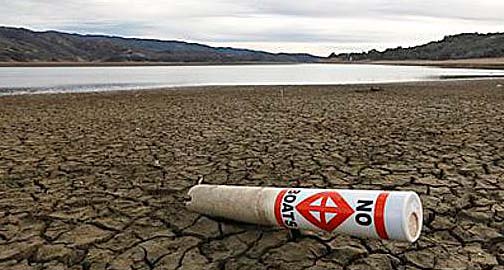
In the photo above, taken Tuesday, Feb. 4, 2014, a warning buoy sits on the dry, cracked bed of Lake Mendocino near Ukiah, Calif. Despite recent rains, the reservoir is currently only about 41 percent full. (AP Photo/Rich Pedroncelli)

According to U.S. Department of Agriculture National Agricultural Statistics Service Pacific Region Office Deputy Director Dave DeWalt, nearly 11.3 percent of the total value of U.S. agriculture commodities comes from California’s prime agricultural region.

“So far (in 2014) we’ve only seen about one-third of the precipitation we normally would have,” DeWalt said, referring to the Sacramento area.

With the drought continuing, food prices will spike.

“It is some of the richest farmland in the U.S.,” Clark said. “There is talk that some commodities may not be feasible as they take a lot of water to grow. Such as almonds, a huge cash crop. It takes one gallon of water to make one almond.”

According to Fresno State University Center for Irrigation Technology Consultant Sergeant Green, understanding the utilization of groundwater and the impacts on the Valley is not as simple as it seems.

“Water, crops and productivity are all dynamic,” Green said.

The current crops using the most water in the region are almonds and alfalfa, he said.

“Almonds are a critical export that helps with balance of trade, and alfalfa is critical for the dairy industry which is a huge part of the agriculture economy in the Valley,” Green said. “The three top agricultural commodities are almonds, grapes and dairy products.”

The San Joaquin Valley is part of the Central Valley of California, includes the Sacramento Valley and the Sacramento-San Joaquin Delta. This area produces about a quarter of the nation’s table food on only 1 percent of the country’s farmland, USGS reports.

Drought Map 140430The map above shows the impact of drought on California’s farms, forests and wild lands. (Credit: NASA Earth Observatory)

“Groundwater in the north of the Valley is relatively stable, the south Valley (Fresno south to Bakersfield) has declined consistently,” Green said. “Old pre-1960s subsidence stopped until surface water supplies from the Bay-Delta were cut back starting in the mid-’90s.”

According to the USGS, land subsidence in the Valley was first recorded in 1945 by Engineering Consultant I.H. Althouse.

“The history of land subsidence in the San Joaquin Valley is integrally linked to the development of agriculture and the availability of water for irrigation,” the USGS reported. “Further agricultural development without accompanying subsidence is dependent on the continued availability of surface water, which is subject to uncertainties due to climatic variability and pending regulatory decisions.”

The 10,000-square-mile area making up the Valley floor is comprised of continental sediments and includes fine-grained, stream and lake deposits, which are susceptible to compaction, the USGS reported.

“When farmers and ranchers have to rely on groundwater instead of stored above ground water during extended droughts, more water is being extracted than can be returned,” Clark said. “Once the clay is compacted, there is no way to ‘unpack’ it.”

According to AccuWeather.com Meteorologist Randy Adkins Jr., California has received less than their average rainfall for several years consecutively.

“It’s been a multi-year drought,” he said.

AccuWeather.com Meteorologist Jim Andrews said the last three winter rainy seasons (October to April) were drier than normal, the last winter being driest of the three. Cumulative rainfall (including melted snow) is as little as one half of normal amount for the three rainy seasons collectively, Andrews said.

“Fresno has only seen 55 percent of their normal for those three seasons,” he said. “That’s around 16 inches of rain less than normal.”

Andrews added that the Sacramento region has been doused with only 68 percent of their normal rainfall of 54.5 inches.

Green said rainfall is not adequate to recharge the groundwater, adding it needs to be stored, applied or recharged in specific areas that allow the capability to add more water than what is being extracted at those locations.

In addition, new developments in irrigation are being utilized currently, but the amount of water needed will continue to be based on what crops are in demand, Green said.

“Precision irrigation systems are now widespread and continuing to increase rapidly, but don’t always mean less water is used,” he said. “Crop requirements determine total demand, and permanent crops such as almonds have been increasing for some time.”

2016-05-31T19:37:59-07:00April 30th, 2014|

Subcommittee Examines Economics, Regulations 
Plaguing Livestock Industry

Rep. Rick Crawford, Chairman of the House Agriculture Committee’s Subcommittee on Livestock, Rural Development, and Credit, TODAY held a public hearing to review the state of the livestock industry.

Members heard from two panels of witnesses that ranged from the Chief Economist of the U.S. Department of Agriculture (USDA) to an array of experts representing the animal agriculture industry. Together, they highlighted issues, such as regulatory burdens, feed costs, drought, animal disease, and trade that are impacting this sector of the agricultural economy.

“Today’s hearing offered our members an opportunity to explore a variety of issues impacting the livestock industry. Our farmers and ranchers have endured a great deal over the past few years from record droughts to higher input costs and the ongoing burden and uncertainty associated with mandatory country-of-origin labeling rules.

Combined, all of these issues and others have tightened operating margins, which create challenging business conditions for our producers. I hope we will use what we have learned to work on real and lasting solutions to the problems we discussed,” said Chairman Rick Crawford (R-AR-01).

“In the San Joaquin Valley, our livestock producers are struggling to hold on in the face of a devastating drought, and farm workers who usually have tired hands from working the fields may soon be standing in line at food banks to feed their families,”  commented Ranking Member Jim Costa (D-CA-16).

“As harmful as this drought is to California livestock,” Costa continued, “the fact is that the industry nationwide is battling other factors like the country-of-origin labeling law and the RFS that endanger their bottom lines. Today’s hearing gave us the opportunity to highlight the natural, bureaucratic, and regulatory challenges facing the industry.”

2016-05-31T19:38:00-07:00April 30th, 2014|

Strengths of Sens. Boxer, Feinstein May Help Conquer Drought

Source: Elizabeth Held; Washington Bureau 

When it comes to water issues, stereotypes of California’s two Democratic senators ring true.

Barbara Boxer is the firecracker, guarding environmental protections, while Dianne Feinstein is the negotiator, working with Republicans and Democrats.

But those differences might make the pair particularly suited to get a California drought relief bill approved by the Senate and the House of Representatives and signed by President Barack Obama.

Environmentalists have sway in the Democratic-controlled Senate. GOP support is crucial in the Republican-controlled House.

Republicans advocate rolling back environmental regulations to provide more water to farmers in the Central Valley and points south. Democrats want agencies to make more water available while maintaining environmental protections.

Despite their philosophical differences, Feinstein and Boxer were able to agree on the drought-relief bill and jointly introduced the legislation in February, calling for, among other things, agencies to use as much flexibility as possible when enforcing water pumping regulations.

“Everybody in California has a direct stake in drought relief,” said Jack Pitney, a political science professor at Claremont McKenna College. The urgency of the situation plus the skills that Feinstein and Boxer demonstrate, Pitney said, might make this the year Congress will pass a bill.

“Their strengths are complementary,” Pitney said. “Boxer is good at mobilizing the liberal base. Feinstein is good at working with Republicans.”

Republicans in the House of Representatives, though, criticize Boxer and Feinstein for moving too slowly. In February, the House passed it’s own drought relief bill that relaxed environmental protections.

Matt Sparks, spokesman for the House Republican Whip Kevin McCarthy, said, “The onus is on the Senate Democrat majority to put forth California water legislation that can pass the full Senate.

“If 60 votes are required to move this process forward, then Senate legislation to provide relief to California farmers and families must be able to attract necessary bipartisan support.”

Boxer is viewed as the liberal from Marin County, said Steve Erie, a professorat UC San Diego, who has written extensively on California water. Feinstein, he said, “is a deal maker.”

DIFFERENT APPROACHES

Feinstein and Boxer have a history of being on different pages for managing California’s water.

In 2001, Feinstein introduced a bill with Rep. Ken Calvert, R-Corona, that would have streamlined the review process for certain California water infrastructure projects. Boxer and Rep. George Miller, R-Martinez, with help from the environmental community, killed the effort.

2016-05-31T19:38:00-07:00April 29th, 2014|

Benefits of Hedgerows on Farms in the Sacramento Valley

Hedgerows Benefit Farms


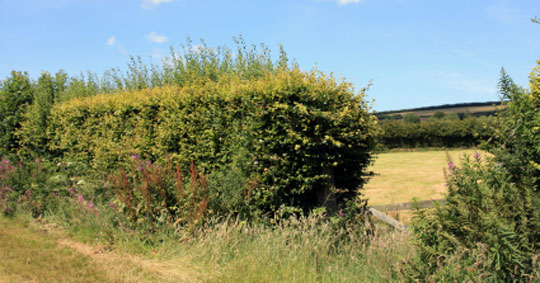
On April 30th, the Center for Land-Based Learning will host a workshop that will focus on the benefits of hedgerows of California native plants in agricultural landscapes, including enhanced populations of native bees and beneficial insects on farms.

They will also discuss establishment and maintenance practices for planting habitat on field crop edges and provide an overview of plant species appropriate for hedgerows in the Sacramento Valley and beyond.

Information

When: April 30, 2014 – 10:00 a.m. to 12:15 p.m.

Where: The Center for Land-Based Learning, 5265 Putah Creek Road, Winters

Schedule:

  • 10:00 – Welcome and DPR Grant Project Update
  • 10:10 – The Farm on Putah Creek
  • 10:20 – Tillage, Crop Bloom and Ground Nesting Bees
  • 10:35 – Hedgerows and Rodents
  • 10:50 – Establishing Hedgerows on Field Edges
  • 11:10 – Hedgerows, Birds and Codling Moth
  • 11:25 – Hedgerows and IPM
  • 11:40 – Hedgerow Plant Selection
  • 12:00 – Summary and Audience Survey

For more information, please go to https://www.facebook.com/CaPesticideRegulation

2016-10-16T21:10:58-07:00April 28th, 2014|

Citrus Growers Forced to Push Trees Due to Zero Water

Governor Brown issued an executive order on Friday to the Department of Water Resources and the State Water Resources Control Board to expedite approvals of voluntary water transfers to areas of need.

Citrus growers and communities within the Friant service area, however, are still without water despite the availability of additional supplies from recent storm events.

There have been many opportunities for the state water agencies to communicate with stakeholders the amount of water that will be delivered, yet they consistently fail to provide numbers.

A conference call was scheduled on Friday, but after being postponed twice it was cancelled.   “The lack of communication by Federal and State administrations to producers of fresh fruits and vegetables regarding future deliveries is unacceptable,” says Nelsen.

A vast majority of the Central Valley’s $1.5 billion citrus industry is located within the Friant Service Area. Due to the unwillingness of the National Marine Fisheries Service (NMFS) to cooperate with State and Federal lawmakers and agencies, an estimated 50,000 acres of citrus in the Central Valley is at risk of being forced out of production.

We now know that because of the February and March storms there is sufficient supply to service the Friant Canal’s minimum needs of 200,000 acre-feet. However, “NMFS fails to realize the disastrous impacts of their unwillingness to reevaluate the actual needs of the fish and reach a balanced solution for all stakeholders,” says CCM President Joel Nelsen. “Growers are now being forced to make difficult decisions as the bureaucrats at NMFS fail to reach a decision of their own.”

Acres upon acres of valuable citrus trees have already been pushed out of production. But, it is not just trees that will be pushed if Friant does not receive water – jobs will be pushed, people will be pushed, and the economy will surely suffer.

California Citrus Mutual estimates that a loss of 50,000 acres will result in a $3 billion hit to the California economy. “This is not just about trees, it is a matter of public health,” continues Nelsen. “Unless our growers receive their fair share of water from the Friant Canal our communities will suffer without the economic driver of a vibrant citrus industry in the Central Valley.”

“I ask, is it worth sending excess amounts of water down the river at the expense of an entire industry and the 20,000 jobs it creates,” concludes Nelsen.

2016-05-31T19:38:00-07:00April 28th, 2014|
Go to Top