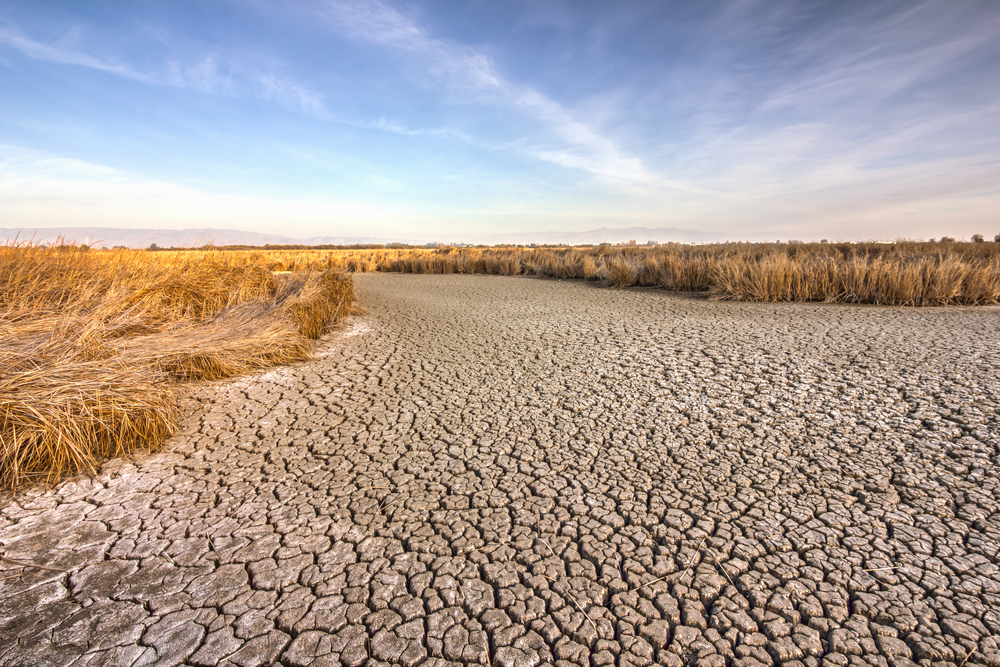
Federal Government announced that the production of food and fiber in California are no longer important.

Statement by CCM President Joel Nelsen

Today the Federal Government announced that the production of food and fiber in the nation’s number one agricultural state and the highest producing agricultural counties are no longer important.

Two agencies, the Bureau of Reclamation and the National Marine Fisheries Service have determined they can’t create a solution that allows an affordable food supply to be the strength of this nation.

They tie themselves up in knots relative to “what if” scenarios while trying to convey a desire to create a solution when in fact their solution has been and continues to be zero.

Over a million acre feet of water was added to storage since the Armageddon announcement earlier this year and yet not one drop can be made available to senior water right holders thereby forcing the Eastside of the San Joaquin Valley to go dry?

As managers they are woefully inadequate to be a positive influence inasmuch they have repeatedly allowed water to be released or not captured in the past several months that could have lessened the extensive nature of this drought.

They made the decisions to lose water; they made the decisions to keep water; and they made the decisions that negatively impact thousands of people all the while occupying an office hundreds or thousands of miles away from the impact center.

Ronald Reagan was right: “Government is the problem.” Now will the state and the Brown Administration allow the federal government to create a food, fiber, and economic disaster in this state and thus follow the leadership model perfected by two federal agencies?

Or will they and our elected officials not allow bureaucracies to do nothing and subsequently provide a solution path that undoes this unprecedented decision?

Former President Dwight Eisenhower was also correct when he stated it is real easy to farm when you are thousands of miles away from the property which for a bureaucrat is piece of paper and their plow is a pencil.

“This has to be one of the more ridiculous statements and decision ever made by any administration.”

2016-05-31T19:35:33-07:00May 14th, 2014|

California Certified Crop Adviser Exam Signup Open

Crop advisers in California and Arizona have the opportunity to register for the August 1, 2014 Certified Crop Adviser (CCA) Exam until June 20, 2104.  The exam will be given in Sacramento, Salinas, Tulare and Yuma.

Registration for the exam is available at  https://www.certifiedcropadviser.org/exams/registration.

There are over 850 active CCAs in California and Arizona that are playing an important role in helping growers with the efficient and environmentally sound use of fertilizer and crop management.

Many California CCAs recently completed the University of California/California Department of Food and Agriculture Nutrient Management Training Course which qualified them to complete nitrogen management plans for growers that are or will be required by the various California Regional Water Quality Boards.

“The California CCA program is the fastest growing CCA program in North America with more 200 individuals taking the January exam and we expect a large group to take the upcoming exam.

An exam preparation course has been scheduled in Sacramento on July 8 to help candidates prepare for the test”, said California CCA Chairman, Mike Huffman, The Lyman Group.   Registration for the exam prep course is available at https://capcaed.com/continuing-ed-seminars/july-8-2014-sacramento-ca-cca-exam-prep-workshop/.

More information on the California CCA program is at www.cacca.org.   You can contact Steve Beckley at (916)539-4107 or sbeckley@aol.com for more information.  The California CCA Program is also on Facebook.

2016-05-31T19:35:33-07:00May 13th, 2014|

California Program Helps Needy Families Buy Fresh Produce at Farmers Markets

Source:  Claire Fleishman

With tight budgets and children to feed, recipients of federal nutrition assistance were rarely seen at farmers markets, where the words “affordable” and “fresh” didn’t often mix. That is changing, thanks to a state program that is in line to get a big boost in federal support.

More and more recipients are stepping up to market managers’ tables, swiping their card from CalFresh (nationally known as SNAP or Supplemental Nutrition Assistance Program), and getting a bonus good for fresh produce.Under the Market Match Program, CalFresh recipients can get $10 a week in bonus scrip for fruits and vegetables for every $10 they spend at farmers markets. Over 30,000 CalFresh participants have used the scrip at 130 markets statewide, creating more than $1 million in additional income for farmers at these markets.

Locally, the bonuses are available at a number of farmers markets, including Altadena, Long Beach and Canoga Park. Federal and state officials are trying to expand the bonuses to other farmers markets to help stem an old problem: low-income recipients using federal nutrition assistance to purchase unhealthful products, particularly high-sugar sodas and junk food.

The matching money comes from the California Market Match Consortium, which was founded five years ago by farmers market operators and community organizations. The consortium is funded by the California Department of Food and Agriculture and a variety of private donors. Recently the Los Angeles County agency First 5 LA, which draws on tobacco tax money to help programs benefitting young children, became a partner.

More funding is on the way. The 2014 Farm Bill allocated $100 million over the next five years for incentive programs. A new California Assembly bill proposes a Market Match Nutrition Incentive Fund of $2.75 million per year for five years, to maximize capture of federal dollars. With these funds, all 854 markets in California could participate. SNAP, formerly known as food stamps, feeds one in seven people in the nation. It dispenses $8 billion in California. But beneficiaries of the program, especially children, also suffer high rates of obesity and diabetes, which have been linked to cheaper, sugary foods.

California has the most cases of diabetics in the nation, and spending in the state to treat the disease in 2012 approached $28 billion, according to American Diabetes Association data. New York City tried to ban the use of SNAP funds for buying high-sugar drinks in 2010. Beverage manufacturers and some civil libertarians objected, and the U.S. Department of Agriculture, which runs SNAP, vetoed the idea.

In lieu of curbing the supply of junk food — a politically unattractive option — public health advocates are working hard to change the demand by making healthful foods cheaper and more attractive.

Carle Brinkman of the Berkeley-based Ecology Center, which assists farmers markets statewide with implementation of electronic benefit transfer programs, said, “Instead of being punitive, we like to incentivize (healthful) food choices. We can give customers who wouldn’t normally shop at farmers markets a boost, and at the same time, send additional funds to small- and medium-size farmers.”

The question now is: Will the incentives change decades of entrenched habits? Initial signs are positive. In Massachusetts, a USDA Healthy Incentives pilot project followed 55,000 SNAP households for a year; some were credited with 30 cents for every dollar spent on targeted produce. Spending on fruits and vegetables was higher for those receiving incentives at a rate that was both “statistically significant and … nutritionally relevant,” the study concluded.

And a recent survey by the California Consortium found that nearly 3 of 4 Market Match shoppers came specifically for the match. They leave with bags of fresh produce and new ideas from nutrition classes frequently held in conjunction with Market Match.

At one market recently, a rapt audience of about 20 women and children absorbed a “Rethink Your Drink” lesson as a dietitian stirred a frosty pitcher of ice water laced with mint and cucumber slices. Delicious, several women agreed, and even cheaper than soda.

2016-05-31T19:35:33-07:00May 9th, 2014|

Grape Consumption May Offer Benefits for Symptomatic Knee Osteoarthritis

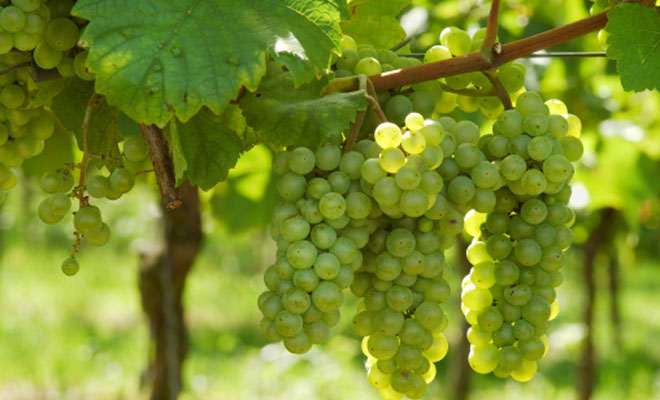
New research presented this week at the Experimental Biology conference in San Diego, California, suggests that regular grape consumption may help alleviate pain associated with symptomatic osteoarthritis of the knee, and improve joint flexibility and overall mobility.

Researchers attribute these potential benefits to the polyphenols found in grapes.

The sixteen week clinical study, undertaken by Texas Woman’s University, was designed to investigate the benefits of grape consumption on inflammation and osteoarthritis outcomes.

72 men and women with knee osteoarthritis (OA) were assigned to either consume grapes in the form of a whole grape freeze-dried powder, or a placebo powder.

The study results, presented by lead investigator Shanil Juma, Ph.D., showed that both men and women consuming a grape-enriched diet had a significant decrease in self- reported pain related to activity and an overall decrease in total knee symptoms.

This beneficial effect was more pronounced in females. Additionally, age-related differences were observed: there was a 70% increase in very hard activity for those under 64 years of age consuming the grape powder, while those receiving the placebo reported a significant decrease in very hard activity.

Participants over 65 years, whether consuming grapes or the placebo, reported a decline in moderate to hard activities.

Evidence of increased cartilage metabolism was observed in men consuming the grape- enriched diet; they had higher levels of an important cartilage growth factor (IGF-1) than those on placebo. This protective effect was not observed in the females. The researchers noted that no difference in range of motion was observed for either the grape group or the placebo group.

The serum marker for inflammation (IL1-β) measured was increased in both placebo and grape groups, although much less of an increase was observed in the grape group.

“These findings provide promising data that links grape consumption to two very important outcomes for those living with knee osteoarthritis: reduced pain and improvements in joint flexibility,” said Dr. Juma. “More research is needed to betterunderstand the results of the serum biomarkers, as well as the age and gender differences observed.”

Dr. Juma also shared results from a recent cell study that looked at the effects of whole grape polyphenols on cartilage cell integrity and markers of cartilage health.

Cartilage cells were first treated with various doses of whole grape polyphenols, and then stimulated with an inflammatory agent. Cell proliferation significantly increased – in a dose dependent manner – in the grape polyphenol treated cells in the presence of an inflammatory agent.

Additionally a marker for cartilage degradation was significantly lower with the three highest doses of the whole grape polyphenols when compared to control cells and cells treated with the inflammatory agent, suggesting a possible protective effect of grapes on cartilage cells.

Osteoarthritis is a condition where the natural cushioning between joints – the cartilage – wears away. Millions of Americans are affected by osteoarthritis: according to the Arthritis Foundation, more than 27 million people have osteoarthritis and knees are an area most commonly affected. Osteoarthritis is more likely to occur in people over 45 years of age, and women are more likely to have osteoarthritis than men.

The Experimental Biology conference is a multidisciplinary, scientific meeting focused on research and life sciences, covering general fields of study such as anatomy, biochemistry, nutrition, pathology and pharmacology. The conference is comprised of nearly 14,000 scientists and exhibitors.

2016-05-31T19:35:34-07:00May 9th, 2014|

Ag Theft Crime Ring Taken Down In the Valley

Source: Jessica Peres; ABC 30

Investigators say they’ve taken down a major crime ring. The suspect stole hundreds of thousands of dollars in agriculture equipment.

The Kern County Sheriff’s Office notified investigators that they found more than 1,000 pieces of ag equipment stolen out of Tulare County.

Lawn trimmers, sidewalk edgers and tree pruners are just a fraction of the pieces of equipment found in Southern California that were stolen out of Tulare County.

The equipment was taken from Fruit Growers Supply in Porterville, and Lawrence Tractor out of Tipton, over the last two weeks. Then on Friday, investigators got a break in the case.

Tulare County Acting Sheriff Mike Boudreaux said, “The Kern County Sheriff’s Department was conducting an investigation separate from the commercial burglaries in the Hawthorne area. While they were there they recognized some property that may or may not be related to our burglary.”

What they ultimately uncovered was a highly proficient crime ring, where suspects would steal hundreds of pieces of ag equipment and sell them on the street for one-third of the retail price.

Boudreaux added, “The particular people were not only selling it on the black market but they would send it to people to sell at swap meets.”

The Tulare County Sheriff’s Office arrested Rafael Gomez and Israel Garcia, both from Hawthorne, for the thefts.

Stihl branch manager in Visalia, Larry Blamer, says most of the tools sell for upwards of $300.00.

Blamer told Action News, “Stihl brand is not sold to any of the big box stores just independently owned family businesses throughout America and it’s those independent owners that take that hit.”

Stihl has a highly sophisticated serial number tracking system, that helped investigators confirm most of the 1,100 pieces of stolen equipment out of Tulare County. The tools were worth more than $300,000.00.

Blamer says most times when store owners call them about a theft, they’re lucky if they see 1-percent of it returned to them.

Blamer explained, ” I’ve been in business for 35 years and this is the biggest single find of power equipment I’ve seen.”

The sheriff’s office is still investigating the case and says there are more suspects they’re looking for.

They say the crime ring is wide spread. Some of the ag equipment was stolen from as far away as Hanford, San Luis Obispo and even Ohio.

2016-05-31T19:35:34-07:00May 8th, 2014|

North Hollywood High School Ag Students Keep Tradition Alive and Will Make Future Bright

Source: Karen Ross, California Agriculture Secretary

Many decades ago, now-urban Los Angeles County was agrarian. In fact, it was once the largest Ag county in California. In that more pastoral time, North Hollywood High School had a 100-acre farm.

Since then, it has seen its footprint shrink to eight acres and is now surrounded by apartment buildings and other developments. However, that smaller plot of land is still very productive! I had a chance to see it for myself recently.

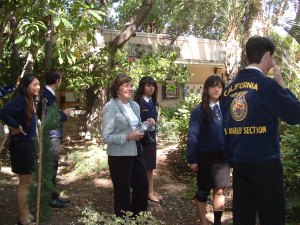
Ag students at North Hollywood High, including FFA members, work hard to maintain a farm that serves the community – including a flourishing community garden. The students raise money for the farm, themselves, without funding assistance from the school district.

When I visited, they had just completed their annual petting zoo fundraiser, which is widely supported by the community.  It was a special treat to see twins born earlier that morning to a pygmy goat!

As usual, I was impressed by the poised, confident, articulate students who are proud representatives of FFA.  I love spending time with them because they represent the promise of a future bright with possibilities.

Whether they go on to have careers in agriculture or not, they certainly will be better citizens and well informed consumers, which make for healthier communities!

There is no doubt in my mind that that North Hollywood FFA officers, Nicholas, Thomas, Jocelyn, Casey, Josh and Letitia have benefited from their FFA experience. Our future is in good hands with young people like them.

2016-05-31T19:35:34-07:00May 7th, 2014|

CDFA Announces Vacancies on the Fertilizer Research & Education Program’s Technical Advisory Committee

The California Department of Food and Agriculture is announcing four vacancies on the Fertilizer Research and Education Program’s Technical Advisory Subcommittee.

This subcommittee reviews and recommends fertilizer research and education projects for funding and implementation to the department’s Fertilizer Inspection Advisory Board.

The Fertilizer Research and Education Program funds and facilitates research to advance the environmentally safe use and handling of fertilizing materials within the agricultural sector.

The program serves growers, agricultural supply and service professionals, extension personnel, public agencies, consultants, and the public.

Applicants must demonstrate technical and scientific expertise in the fields of agronomy, plant physiology, production agriculture and environmental issues related to fertilizing materials use. This expertise can include, but is not limited to, issues related to nitrates in groundwater and greenhouse gas emissions associated with fertilizer use.

The term of office for subcommittee members is three years. Members receive no compensation but are entitled to payment of necessary traveling expenses. The subcommittee and research program are funded entirely through a mil assessment.

Individuals interested in being considered for appointment should send a resume to FREP staff at California Department of Food and Agriculture – FFLDRS Branch, 1220 N Street, Sacramento, CA 95814 or via e-mail at FREP@cdfa.ca.gov.

The application deadline is July 1, 2014.

For further information on the Fertilizer Research and Education Program, please contact FREP staff at (916) 900-5022 or visit http://cdfa.ca.gov/is/ffldrs/frep.

2016-05-31T19:37:58-07:00May 7th, 2014|

‘Curtailments’ and other woes tighten supplies

Source: Kate Campbell; Ag Alert

Facing severe drought, California farmers and ranchers are bracing for an increasing flow of bad news about water supplies.

State officials said last week they’re preparing to curtail diversions to holders of certain water rights; federal authorities said they have no immediate plans to increase the “zero” allocation for most of their farm water customers; and a new report detailed the pressure surface-water shortages have placed on California groundwater basins.

The State Water Resources Control Board said it is preparing to curtail water diversions from watersheds that drain into the Sacramento and San Joaquin rivers, the Tulare Lake Basin, and the Russian and Eel rivers.

In times of shortage, state water law says if there’s not enough water for all water right holders, the most junior will be curtailed before restrictions are imposed on more senior water right holders. Seniority is determined by the type and age of the water right.

Riparian water rights are generally the most senior rights, followed by older appropriative rights and then newer rights. Any water supply remaining in the watershed after appropriative water rights are shut off must be shared on a “correlative basis among riparian users.”

In most watersheds where curtailment is likely, the water board said notices will go to post-1914 water rights holders beginning in May; thousands of individuals and water agencies hold such rights, although it is not clear how many will receive the curtailment notices.

Holders of pre-1914 rights are also expected to receive curtailment notices, later this year, and it’s anticipated that supply this summer and fall won’t meet all riparian demands, requiring riparian users also to reduce or stop using water.

Given the dire shortages expected in coming months, the water board said after curtailment, it expects to allow limited diversions for public health and safety needs where no other water supply is available.

“We encourage management of water supplies to protect public health and safety, but we also must emphasize the need for adequate food production,” said Danny Merkley, water resources director for the California Farm Bureau Federation. “Having healthful, local food available is a big part of ensuring human health and safety.”

Also last week, the state Department of Water Resources’ final snow survey of the year found more bare ground than snow, with snow water content at only 18 percent of average for the date.

Officials at the U.S. Bureau of Reclamation, which operates the Central Valley Project, said last week they don’t know “when or if we’ll be doing another (water) allocation announcement.”

Economic losses in the billions of dollars are anticipated due to the zero water allocation for CVP agricultural contractors. The Friant Water Authority said its contractors are preparing for a “financial and social calamity,” as they prepare for the first-ever call on Friant water to supply San Joaquin River exchange contractors and honor their historic river water rights. The agency said all-out efforts continue to seek an emergency solution to the water cutoff.

The state’s citrus belt—Fresno, Tulare and Kings counties, where the bulk of fresh-market citrus is grown on about 50,000 acres—faces estimated losses of $3 billion. Many farms do not have access to groundwater or other alternative water sources, and some orchards are being pushed out.

“It is incredible that a system created to preserve agricultural production in this state is being leveraged to service environmental needs at greater levels than are necessary, while agriculture is left to go dry,” said Joel Nelsen, president of Exeter-based California Citrus Mutual.

The groundwater report is available at www.water.ca.gov/waterconditions.

Curtailment information by watershed is available at www.swrcb.ca.gov/waterrights/water_issues/programs/drought/analysis/.

2016-05-31T19:37:59-07:00May 6th, 2014|

State Board of Food and Agriculture to Discuss Agricultural Careers, Innovation and Industry Advancements

The California State Board of Food and Agriculture will discuss issues related to innovations, advancements and careers within the agricultural sector at its upcoming meeting on Tuesday, May 6th at the World Food Center at UC Davis.

This meeting will be held from 10:00 a.m. to 3:00 p.m. at the Walter A. Buehler Alumni Center, University of California, Davis One Shields Avenue, Davis, CA, 95616.

“California is at the cutting edge of innovation within the agriculture sector from water use efficiency to research advancements and product development,” said CDFA Secretary Karen Ross. “The careers of the future can be found in the agricultural sector and our universities and businesses are leading the way in supporting a vibrant, high-skilled jobs market.”

On average, California agriculture supports approximately 400,000 on-farm jobs related to crop production, harvesting and overall farming. This does not include the non-farm jobs directly related to agriculture such as transportation, marketing and sales.

Nationally it is estimated that more than 16 million jobs are supported through farm and agricultural related activities. As global consumer preferences, food manufacturing and agricultural production continue to evolve, the employment needs of businesses and employee skill-sets will need to change as well.

Invited speakers include: Chancellor Linda P.B. Katehi, University of California, Davis; Roger Beachy and Josette Lewis, UC Davis World Food Center; Lance Donny, OnFarm; Helene Dillard, Dean of the College of Agricultural and Environmental Sciences, UC Davis; Chuck Nichols, Nichols Farms; Dave Dever, Sun World; Dr. Tim Conner, Monsanto; Shane MacKenzie, Superior Farms; Jacob Gomez, UC Davis Aggie Ambassadors; Vanessa Alexander, CalPoly Agricultural Ambassadors; and Katie Fyhrie, California Farm Academy participant.

“Technology is making rapid on-farm advances that benefit farmers and farm workers,” said Craig McNamara, president of the California State Board of Food and Agriculture. “We need to encourage more individuals to see that all facets of agricultural production support highly skilled and technical career paths.”

The California State Board of Food and Agriculture advises the governor and the CDFA secretary on agricultural issues and consumer needs.

The state board conducts forums that bring together local, state and federal government officials, agricultural representative and citizens to discuss current issues of concern to California agriculture.

Follow the board on Twitter at: www.twitter.com/Cafood_agboard

2016-05-31T19:37:59-07:00May 5th, 2014|

Fresno County Residents Join Immense Statewide Citizen Science Project

The public is invited to join hundreds of elementary school students, Master Gardeners, 4-H members, farm advisors, scientists and nutrition educators at the Garden of the Sun in Fresno from 10 a.m. to 1 p.m. May 8 for UC’s largest-ever one-day citizen science project.

The Garden of the Sun is at 1750 N. Winery Ave.

The event is part of the University of California’s statewide Day of Science and Service. Californians throughout the state will take to their smart phones and computers on May 8 to participate in the unprecedented crowd-sourced data collection effort.

(See details at http://beascientist.ucanr.edu.)

Everyone in California is invited to take part by recording observations on three questions:

  • How many pollinators do you see?
  • How do you conserve water?
  • Where is food grown in your community?

The Day of Science and Service marks the 100th birthday of UC Cooperative Extension. In 1914, Congress and the president realized that, in order to feed a great nation, ag research advances from top universities had to reach farmers, so they created the Cooperative Extension.

For 100 years, Cooperative Extension academics have worked side-by-side with farmers to boost yields, battle pests, ensure food safety, protect the environment and make the best use of available irrigation water.

“There is probably no other county that has benefited more from Cooperative Extension than Fresno County,” said Shannon Mueller, director of Fresno County UCCE. “Over the years, our county has become the No. 1 ag county in the world. Agricultural research and teaching have played a tremendous role in achieving that milestone and will continue to do so in the future.”

Fresno County residents can be part of the Day of Science and Service while they enjoy birthday cake, spin a prize wheel, stroll the Garden of the Sun and learn about the UC services that touch their lives and the local economy.

During the opening ceremony at 10:30 a.m., Fresno County Supervisor, District 1, Phil Larson will present a county proclamation honoring Fresno County UC Cooperative Extension’s centennial.

University of California Division of Agriculture and Natural Resources is celebrating 100 years of UC Cooperative Extension researchers and educators drawing on local expertise to conduct agricultural, environmental, economic, youth development and nutrition research that helps California thrive.

2016-05-31T19:37:59-07:00May 2nd, 2014|
Go to Top