Lodi 10th Annual Zinfest a Celebration of Community

A message from Karen Ross; California Agriculture Secretary

I recently was invited to Lodi to join that region’s Winegrape Commission in celebrating the 10th annual “Zinfest.” It’s a great example of food and wine events that create local economic activity and foster direct communication between consumers and farmers.

Zinfest is very well done – a testament to the visionary leaders who created the Lodi Winegrape Commission, and to the outstanding farm families that have forged partnerships with the local community to make it known that Lodi is a premium grape-growing and wine-making region.

I’d like to thank the commission for its kind invitation and I hope I get to celebrate many more Zinfests!
2016-05-31T19:35:30-07:00May 23rd, 2014|

Stopgap Efforts Aim to Ease Water Shortages

Source: Kate Campbell; Ag Alert

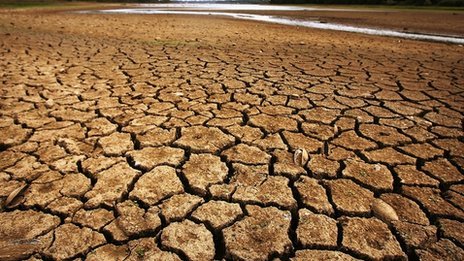
Farmers and water agencies throughout California are turning to the “Three Ts”—water transfers, trades and treated wastewater—as they try to fill some of the supply gaps caused by drought and resulting water shortages.

In farming communities around the state, neighbors are helping each other, for example by running pipes from more productive wells to a neighbor’s farm.

Late-season rains improved the possibility for water transfers among water districts. More regions are delving into making treated municipal wastewater available for irrigation.

“It’s definitely an ‘all-hands-on-deck’ approach to an emergency situation,” California Farm Bureau Federation Water Resources Director Danny Merkley said. “Some of these stopgap efforts may help farmers prevent orchards or vineyards from dying. We have been encouraging state regulators to remove bureaucratic barriers to short-term water supply plans, while keeping ourselves focused on the continuing need for long-term water storage projects.”

In one new initiative, the Sonoma County city of Healdsburg has moved ahead with plans to make 1 million gallons a day of treated wastewater available for vineyard irrigation and construction uses.

Efforts to make the water available began in mid-February, and the first deliveries through two 6,600-foot pipelines began last week. A new, purple hydrant outside the city treatment facility offers free water to farmers who sign up to take supplies by tank truck.

The city estimates the current supply will augment irrigation for about 25,000 acres of vineyards.

Healdsburg Mayor Jim Wood told people gathered to celebrate the treatment plant’s first transfers to tank trucks that gaining the necessary permits for the project “turned out to be a lot harder than we thought.” Wood said officials worked hard to finalize the project “in an amazingly short amount of time.”

The chair of the State Water Resources Control Board, Felicia Marcus, praised the Healdsburg project as an example of local leadership backed up by the work of the regional water board.

“To make recycled water more readily and easily available for other appropriate agricultural and outdoor uses, the state board has proposed a general permit to allow recycled water projects to opt into, or enroll, in a pre-permit program,” Marcus said, adding that the new permit program is scheduled for adoption in the first week of June.

There currently are about 250 water recycling plants operating statewide, with more planned for the future. About half of all treated wastewater produced in the state is used for irrigating crops, with additional projects in the planning stages.

“Water recycling will certainly be part of the solution for California’s long-term water problems, but farmers who use recycled water should not forfeit their existing, long-term water rights,” Farm Bureau’s Merkley said, “and the state’s water portfolio must also include a commitment to build new storage facilities, both above and below ground, to add the flexibility our current water system lacks.”

Water transfers can add short-term flexibility to the system, he added, noting that some transfers appear to be underway this spring to bring partial supplies to certain water-short farming regions.

“People are doing the best they can with the limited water supplies this year, but it won’t be enough for many farmers and rural communities that will still face crop failures, job losses and severe economic hardship,” Merkley said. “This is going to be a tough year for many people in many parts of California. We hope we can avoid such severe water shortages in the future by investing now in new storage plus recycling, desalination and other strategies to move our water system into the 21st century.”

2016-05-31T19:35:31-07:00May 22nd, 2014|

Rescued Calf Gets New High-Tech Prosthetics

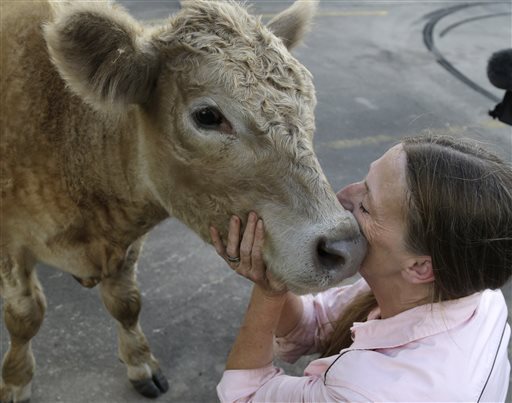
Hot and tired from a three-hour drive inside a trailer behind a pickup truck, the 600-pound English Charolais calf was content to lay on the grass behind a south Houston building while a team of technicians worked on its hind legs.

When the calf known as Hero heard its name called, the 15-month-old gingerly got up, unsteadily rocked a bit, then waddled away, tail wagging, eyes wide and tongue licking. It headed across a patch of concrete toward an appetizing snack of green shrubbery a few yards away.

Hero became what may be the nation’s only double-amputee calf with prosthetics on Wednesday when fitted for a new pair of high-tech devices attached to its back legs.

“I’m so proud,” Hero’s caretaker, Kitty Martin, exclaimed. “Look at you!”

It’s the latest step in a year-long effort that has taken Martin and the animal from Virginia, where she rescued it last year from an Augusta County farm where it succumbed to frostbite that claimed its hooves, to Texas.

Animal surgeons at Texas A&M University treated Hero for several months and affixed the initial prosthetics that the calf now had outgrown.

“This is our first cow,” Erin O’Brien, an orthotist and prosthetist for Hanger Inc., an Austin-based national firm that makes prosthetic limbs. She was among a team of about eight people working on the project for about two weeks.

“We did a lot of study of photos and video of cows just regular walking to see what it looks like and see if we can mimic that biomechanically,” O’Brien said. “It’s unusual, yes, but an opportunity.”

Surgeons at Texas A&M accepted Martin’s initial pleas for help, removing about two inches of bone to enable them to create a pad of tissue that would allow for prosthetics.

“Until I worked on him, I hadn’t ever done it before. And I’d not heard of (prosthetics) before in a bovine,” said Ashlee Watts, an equine orthopedic surgeon at the school.

Martin figures she has spent nearly $40,000 to save the calf.

“I don’t know how to explain it,” she said. “I’m an animal rescuer. And he had everything against him.”

Hero’s hooves are custom made of urethane and titanium, the connecting components are titanium and carbon fiber and the sockets that attach to his legs are carbon fiber and acrylic resin.

Martin and O’Brien declined to discuss the cost, but estimated that similar devices for humans go for between $4,000 and $8,000 apiece.

Hero’s sockets are painted with black and white cow spots. “Holstein legs,” O’Brien laughed.

“We like to customize legs to the person’s personality,” she said.

Martin, 53, a former veterinary technician and retired truck driver originally from Dalhart, in the Texas Panhandle, is moving with her husband from Greenville, Virginia, to Cameron in Central Texas.

She’s hoping Hero, who could grow to 1,500 pounds, can be a therapy animal for wounded veterans and special needs children.

“It makes my day,” Martin said. “He’s got a very bright future right now.”


2016-05-31T19:35:31-07:00May 22nd, 2014|

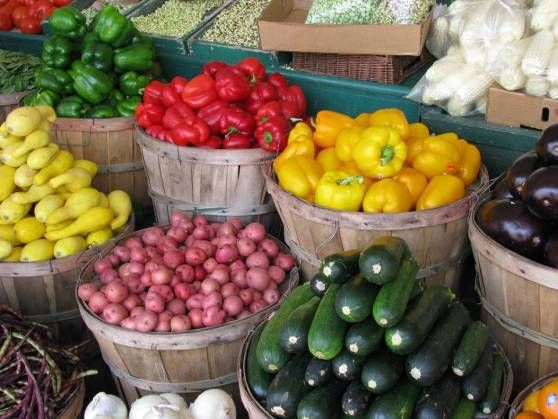
New Pilot Program Offers Coverage for Fruits and Vegetables, Organic and Diversified Farms

Agriculture Secretary Tom Vilsack today announced a new risk management option that will be available for fruit and vegetable growers and producers with diversified farms.

The policy, called Whole-Farm Revenue Protection, will provide flexible coverage options for specialty crop, organic and diversified crop producers. The program will be implemented in counties across the country and will expand in availability over the next several years.

Whole-Farm insurance allows farmers to insure all crops on their farm at once, rather than insuring commodity by commodity.

Traditionally, many fruit and vegetable crops have not had crop insurance programs designed for them—making it less attractive for a farmer that primarily planted a commodity crop like wheat or corn to use another part of his or her land for growing fruits and vegetables or other specialty crops.

This allows farmers greater flexibility to make planting decisions on their land.

“Crop insurance has been the linchpin of the farm safety net for years and continues to grow as the single most important factor in protecting producers of all sizes from the effects of unpredictable weather,” said Vilsack.

“Providing farmers the option to insure their whole farm at once gives farmers more flexibility, promotes crop diversity, and helps support the production of healthy fruits and vegetables. More flexibility also empowers farmers and ranchers to make a broader range of decisions with their land, helping them succeed and strengthening our agriculture economy.”

The 2014 Farm Bill requires a whole-farm crop insurance policy option, and paves the way for the Risk Management Agency (RMA) to make it broadly available to specialty crop, organic, and diversified growers.

The Federal Crop Insurance Corporation Board of Directors (FCIC Board) approved the Whole-Farm Revenue Protection pilot policy for RMA to offer it through the federal crop insurance program in 2015.

USDA has taken many steps to provide effective insurance coverage for diversified, organic and specialty crops. The whole-farm crop insurance policy provides flexibility to meet the needs of specialty crop growers, organic producers and those with diversified farms, and who have farm production and revenue history, including five years of historic farm tax records. This policy is also part of USDA’s commitment to small and mid-sized producers managing diversified operations.

USDA has been strengthening crop insurance by providing more risk management options for farmers and ranchers.

The policy offers coverage levels from 50 to 85 percent; recognizes farm diversification through qualification for the highest coverage levels along with premium rate discounts for multiple crop diversification.

The Market Readiness Feature, as outlined in the Farm Bill, simplifies insurance coverage for producers under the Whole-Farm Revenue Protection pilot policy by allowing the costs such as washing, trimming, and packaging to be left in the insured revenue instead of having to adjust those amounts out of the insured amount.

The new Whole-Farm Revenue Protection policy combines Adjusted Gross Revenue (AGR) and AGR-Lite along with several improvements to target diversified farms and farms selling two to five commodities, including specialty crops to wholesale markets.

The new policy is also designed to meet the risk management needs of diversified crop or livestock producers including those growing specialty crops and/or selling to local and regional markets, farm identity preserved markets, or direct markets.

As part of the pilot, Whole-Farm Revenue Protection will be available where AGR and AGR-Lite are currently offered, and will expand to other counties as data are available for underwriting and actuarial ratemaking.

RMA will release information on the policy later this summer when it becomes available. This information will be announced on the RMA website at www.rma.usda.gov.

According to the CDFA, California’s agricultural abundance includes more than 400 commodities. The state produces nearly half of US-grown fruits, nuts and vegetables. Across the nation, US consumers regularly purchase several crops produced solely in California.

2016-05-31T19:35:31-07:00May 21st, 2014|

Meat Price Trends Point to Increase in Poultry Sales

By: Ching Lee; Ag Alert

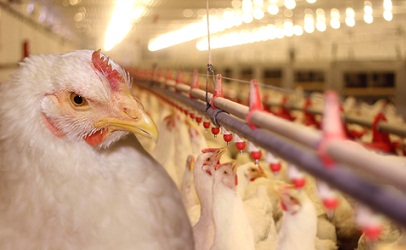
The Memorial Day weekend usually kicks off the summer grilling season, and Bill Mattos, president of the California Poultry Federation, said he expects shoppers will look more to chicken and other poultry products this year as less expensive protein alternatives to beef and pork.

“The barbecue season is a big time for chicken,” he said. “We think prices will probably go up for chicken, but not at all like we’re seeing in beef and pork.”

With the U.S. cattle herd at its lowest in more than 60 years—made worse in recent years by drought-related downsizing—and the porcine epidemic diarrhea virus lowering U.S. pork production, market analysts say poultry meats are poised to fill that market gap.

The bright outlook for poultry producers is expected to continue into 2015, as U.S. beef production is forecast to drop by nearly 6 percent this year, while pork production will also fall by as much as 7 percent, according to the Rabobank Food and Agribusiness Research and Advisory division.

William Sawyer, an analyst with Rabobank, said although overall U.S. meat consumption has declined in recent years—even before the recession—chicken consumption has stayed relatively stable and is now growing.

“That’s been largely driven by the fact that beef prices have risen significantly more than chicken has,” he said.

With the price of ground beef eclipsing that of chicken breast, Sawyer noted that fast-food restaurants such as McDonald’s are taking advantage of poultry’s lower price points by offering more new menu items featuring chicken.

Given how expensive it is to raise cattle compared to chicken in terms of feed cost, Sawyer said he expects chicken will continue to gain market share.

“Once consumers have the appetite for value, which is what we’ve seen in the growth in the chicken sector, it’s unlikely that beef is going to regain that per-capita consumption that it’s lost in the last seven or eight years,” he added.

Sawyer said consumers who buy specialty products such as organic, free-range or antibiotic-free are much less sensitive to price changes anyway, so producers who raise birds for these markets are not as impacted by current price trends in the conventional market.

Although USDA projects U.S. pork production will bounce back from the PED virus next year with a growth of 2.9 percent, beef production is expected to continue to decline, as ranchers retain their heifers in an effort to expand their herds.

That means meat prices will likely remain strong—and with lower corn prices, poultry producers will still have incentive to increase production, Sawyer said.

In addition, U.S. chicken exports, which take up 20 percent of total production, are expected to continue to grow, particularly to Mexico, and that will also help to support higher chicken prices, Sawyer said.

“So the outlook is very positive and very profitable,” he added.

2016-05-31T19:35:31-07:00May 21st, 2014|

USDA Announces $78 Million Available for Local Food Enterprises

Agriculture Secretary Tom Vilsack announced that USDA is making a historic $78 million investment in local and regional food systems, including food hubs, farmers markets, aggregation and processing facilities, distribution services, and other local food business enterprises.

“The 2014 Farm Bill has given USDA new tools, resources and authority to support the rural economy,” Vilsack said. “Consumer demand for locally-produced food is strong and growing, and farmers and ranchers are positioning their businesses to meet that demand. As this sector continues to mature, we see aggregation, processing, and distribution enterprises across the local food supply chain growing rapidly.

These historic USDA investments in support of local food give farmers and ranchers more market opportunities, provide consumers with more choices, and create jobs in both rural and urban communities.”

Vilsack said that $48 million in loan guarantees for local food projects is now available through USDA ‘s Rural Development’s Business and Industry Guaranteed Loan Program, and $30 million is available through competitive grants via the Agricultural Marketing Service’s (AMS) Farmers Market and Local Foods Promotion Program.

The 2014 Farm Bill requires USDA to set aside at least five percent of Business and Industry (B&I) program loan guarantees for projects that focus on local food business enterprises. Details on how to apply for local food funding through the B&I program are available on the Rural Development website. Applications are accepted on a rolling basis.

The B&I program has the authority to fund local food infrastructure in urban areas as long as the project supports farm and ranch income and expands healthy food access in underserved communities.

Rural Development’s B&I program provides financial backing for rural business development in partnership with private-sector lenders. It is one of several USDA programs that help finance local foods projects.

In 2013, Rural Development supported more than 170 local food infrastructure projects – from food hubs, to scale-appropriate processing facilities, to cold storage and distribution networks. Entities eligible for B&I loan guarantees include cooperatives, non-profit organizations, corporations, partnerships or other legal entities, Indian tribes, public bodies or individuals.

The 2014 Farm Bill tripled funding for marketing and promotion support for local food enterprises by creating the Farmers Market and Local Foods Promotion Program, administered by the Agricultural Marketing Service (AMS). This new program makes $30 million available annually to farmers markets, other direct producer-to-consumer venues, and other businesses in the local food supply chain.

Under this program, $15 million is now available for marketing and promotional support specifically for local food businesses, including food hubs, delivery and aggregation businesses, and processing and storage facilities along the local food supply chain, while $15 million is for marketing support for farmers markets and other direct to consumer outlets.

Since 2009, AMS, which administers this program, has funded nearly 450 projects totaling $27 million to support direct marketing efforts for local food. More information about how to apply is available on the AMS website. Applications are due June 20, 2014.

These funding opportunities are cornerstones of the USDA’s commitment to support local and regional food systems. USDA’s Know Your Farmer, Know Your Food Initiative coordinates the Department’s policy, resources, and outreach efforts related to local and regional food systems The Know Your Farmer, Know Your Food Compass maps nearly 3,000 local and regional food projects supported by USDA and eleven other federal agencies.

Secretary Vilsack has identified strengthening local food systems as one of the four pillars of USDA’s commitment to rural economic development, along with production agriculture (including expanding export markets and improving research), promoting conservation and outdoor recreation opportunities, and growing the biobased economy.

2016-05-31T19:35:31-07:00May 20th, 2014|

Secretary Ross Joins Elementary School Students to Experience Mobile Dairy Classroom

Source: Tammy Anderson-Wise, CEO Dairy Council of California

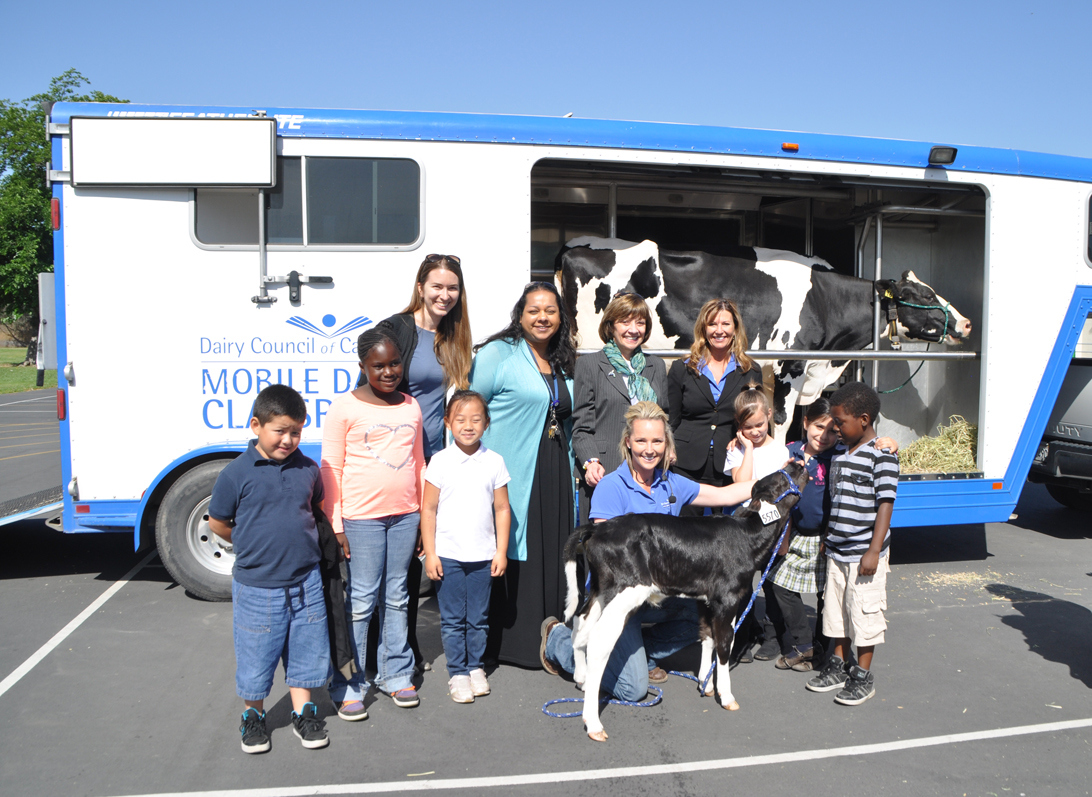
Earlier this month, CDFA Secretary Karen Ross joined students at Sacramento’s Pacific Elementary School for a visit from the Mobile Dairy Classroom, where an instructor shared fun facts like: cows have built-in fly swatters, and milk is warm when it comes out of the udder.

As the original farm to school program in California, Mobile Dairy Classroom has brought a bit of the dairy farm to schools across the state since the 1930s.

To help children better appreciate where their milk and milk products come from, the free assemblies provided by the Dairy Council of California teach children about agriculture and cows, healthy eating from all five food groups, and how to lead healthy, active lifestyles.

Mobile Dairy Classroom assemblies augment the Dairy Council of California’s classroom nutrition education lessons that are also free to schools as part of the dairy industry’s commitment to community health.

With six Mobile Dairy Classroom units across California, 400,000 students each year have the chance to make a personal connection with a cow and a calf, and better understand where their milk comes from.

Furthermore, the assemblies allow for a better appreciation for the role of the dairy farmer and milk processor in providing healthy food and why milk and milk products are an essential part of an overall balanced diet with foods from all five food groups.

2016-10-18T16:10:11-07:00May 20th, 2014|

JUST IN: UC Davis’ Preliminary Findings on Drought Impact in Central Valley

Source Office of Public Affairs

Photo Source-Aquafornia

California’s drought impact will be a severe blow to Central Valley irrigated agriculture and farm communities this year and could cost the industry $1.7 billion and cause more than 14,500 workers to lose their jobs, according to preliminary results of a new study by the UC Davis Center for Watershed Sciences.

Researchers estimated that Central Valley irrigators would receive only two-thirds of their normal river water deliveries this year because of the drought.

The preliminary analysis represents the first socio-economic forecast of this year’s drought, said lead author Richard Howitt, a UC Davis professor emeritus of agricultural and resource economics.

“We wanted to provide a foundation for state agricultural and water policymakers to understand the drought impact on farmers and farm communities,” Howitt said.

The Central Valley is the richest food-producing region in the world. Much of the nation’s fresh fruits, nuts and vegetables are grown on the region’s 7 million acres of irrigated farmland.

The center plans to release a more comprehensive report of the drought’s economic impact on the state’s irrigated agriculture this summer.

The analysis was done at the request of the California Department of Food and Agriculture, which co-funded the research, along with the University of California.

“These estimates will help the state better understand the economic impacts of the drought, ” said CDFA Secretary Karen Ross. “The research confirms where emergency drought assistance will be needed most, and efforts are already underway.”

The UC Davis researchers used computer models and the latest estimates of State Water Project, the federal Central Valley Project and local water deliveries, plus groundwater pumping capacities to forecast the economic effects of this year’s drought.

The analysis predicted several severe impacts for the current growing season, including:

▪Reduced surface water deliveries of 6.5 million acre-feet of water, or 32.5 percent of normal water use by Central Valley growers. An acre-foot is enough water to cover an acre of land in a foot of water, or enough water for about two California households for a year.

▪ Fallowing of an additional 410,000 acres, representing 6 percent of irrigated cropland in the Central Valley.

▪ The loss of an estimated 14,500 seasonal and full-time jobs. About 6,400 of these jobs are directly involved in crop production.

▪ A total cost of $1.7 billion to the Central Valley’s irrigated farm industry this year, including about $450 million in additional costs of groundwater pumping.

▪ About 60 percent of the economic losses will occur in the San Joaquin Valley and Tulare Lake Basin.

Growers are expected to replace much of the loss in project water deliveries with groundwater, California’s largest source of water storage during drought years, said co-author Jay Lund, director of the Center for Watershed Sciences and a UC Davis professor of civil and environmental engineering.

“Without access to groundwater, this year’s drought would be truly devastating to farms and cities throughout California,” Lund said.

The additional pumping will cost an estimated $450 million and still leave a shortage of 1.5 million acre-feet of irrigation water, about 7.5 percent of normal irrigation water use in the Central Valley, according to the forecast.

While the current drought is expected to impose major hardships on many farmers, small communities and the environment, it should not threaten California’s overall economy, Lund said.

Agriculture today accounts for less than 3 percent of the state’s $1.9 trillion a year gross domestic product.Other authors on the report are UC Davis agricultural economist Josue Medellin-Azuara and Duncan MacEwan of the ERA Economic consulting firm in Davis.

2016-08-18T13:45:51-07:00May 19th, 2014|

Documentary Film “The Fight for Water” premieres May 16 On Demand and at the Film’s Website

The award-winning documentary film, The Fight for Water: A Farm Worker Struggle, which highlights the 2009 Water Crisis as a cautionary tale on the current California drought, is making its way to Video on Demand May 16.  It will also be available for viewing through the film’s website at www.thefightforwaterfilm.com.

The film follows two farmers (Joe Del Bosque and George Delgado) and their farmworkers around their drought-stricken lands in order to understand how an environmental decision that took away their water impacted their lands, their way of life and their community.

Recently, Del Bosque was thrown into the national spotlight when President Barack Obama visited his drought-stricken farm to address the current water crisis in California.

Hollywood actor Paul Rodriguez is also featured in the film for his activism.  He helped organize a four-day march, in the style of Cesar Chavez, to draw attention to the dire situation that saw over 200,000 people in food lines. Former Governor Arnold Schwarzenegger also makes an appearance on the film.

The film was produced by Juan Carlos Oseguera, 40, a San Francisco State University alumnus who has been a published film critic and an accomplished producer and editor of several award-winning short films.

This is his first feature-length film.

The historical documentary, has screened at over 10 film festivals; winning accolades and worldwide recognition.  It received the Best Documentary award at the 2013 International Monarch Film Festival and at the 2013 Viña de Oro Fresno International Film Festival

The film also received runner-up honors for Best Documentary in Cinematography and for Best Political Documentary Film at the 2013 Action on Film International Film Festivalwhere it also received a nomination for Excellence in Filmmaking.

“It’s important that we understand that perspective of what the ‘Water Wars’ mean on a really, really human scale,” stated Lois Henry, a newspaper columnist who reviewed the film for The Bakersfield Californian. “People should see this film.”

For more information about the film visit: www.thefightforwaterfilm.com or www.facebook.com/thefightforwaterfilm

For interviews, film review requests or questions about the film, contact Filmunition Productions at filmunition@yahoo.com

2016-05-31T19:35:32-07:00May 15th, 2014|

California Women for Agriculture – Heels Hit the Halls of Sacramento Capitol Building

Over 70 members of California Women for Agriculture (CWA) from all over the state attended legislative and lobbying efforts in Sacramento on May 6th and 7th, 2014.

Last Monday’s meeting provided an overview of legislation currently in front of elected officials in Sacramento.

Attendees gathered talking points and discussed the merits of each bill individually including:  SB 1381 (Evans), AB 2033 (Salas), SB 935 (Leno), SB 1410 (Wolk/Nielsen), AB 2362 (Dahle), AB 1961 (Eggman), AB 1871 (Dickenson), AB 2413 (Perez) as well as Williamson Act Subvention Payments and several proposed Bonds addressing water storage and conveyance in California.

With over 70 women committed to lobbying last Tuesday, CWA was able to attend 86 appointments with elected officials.  Many of the appointments were secured through CWA’s Adopt-a-Legislator Program.

This program unites urban legislators with CWA Chapters to help educate them about pending legislation and other issues facing agriculture by committing to continue communication with the Adoptee throughout the year.

CWA honored two elected officials with their annual Cornucopia Award.  Assemblyman Bill Quirk representing District 20 and Senator Ricardo Lara representing District 33, were honored on the floor in Senate Chambers.

Recipients of the Cornucopia award are from an urban area and have displayed a commitment to agriculture through their work as an elected official.

Assemblyman Quirk currently serves on the Agriculture Committee. As Chairman of the Latino Caucus, Senator Lara has crossed party lines to support Agriculture and unite elected officials.

CWA hosted a Legislative Reception at Downtown & Vine in Sacramento.  This well attended event was open to all elected officials, their staff as well as trade organizations and state commissions.

For more information about California Women for Agriculture including membership, donations and chapter activities in your area, please call 916-441-2910 or email info@cawomen4ag.com.

 California Women for Agriculture is a non-profit organization boasting 2,000 plus members across the state. CWA is the most active, all volunteer agricultural organization in the state and members are actively engaged in public relations, education and legislative advocacy on behalf of agriculture.

2016-05-31T19:35:32-07:00May 14th, 2014|
Go to Top