Food Assistance Available In Counties Hit By California Drought

Source: CBS Sacramento

Families in areas hardest hit by California’s drought are getting some much-needed help as part of the state’s $687 million drought relief bill.

Yolo County is able to put some of that money to use by feeding families in need.

“Most of us here in town, they work on the fields, and they depend on the season,” said Claudia Covorrubias.

But she says this season, the drought is taking its toll, and her husband is out of his usual farm work. It’s a familiar story in Yolo County.

“We need the water,” she said. “If there’s no water, there’s no planting. So if there’s no planting, there’s no food.”

The need was seen by state leaders who set aside $25 million in the recent drought bill to help feed families like hers. The money is being spent on boxes going to food banks from 24 of the hardest hit counties where unemployment and agricultural work is higher than the state average.

COUNTIES AFFECTED: Amado, Butte, Colusa, Fresno, Glenn, Kern, Kings, Lake, Lassen, Madera, Merced, Modoc, Monterey, San Benito, San Joaquin, Santa Cruz, Sierra, Siskiyou, Stanislaus, Sutter, Tehama, Tulare, Yolo, Yuba

The Yolo County Food Bank began handing out more than 5,600 boxes of donations at two locations on Monday.

The boxes include nonperishable, nutritionally balanced food that can last four or five days for a family of four.

Families qualify if the drought has caused them to be unemployed. “It’s all on an honor system,” said Stephanie Sanchez. “We’re really trying to just help out families in need. If they can’t prove it, we don’t want to have to turn them away.”

Emmanuella Eliadiazzamora has a daughter and is expecting another child in less than a month. For her, the help is huge.


2016-05-31T19:35:28-07:00June 5th, 2014|

USDA Announces Programs to Conserve Sensitive Land, Help Beginning Farmers

WASHINGTON, June 4, 2014 – Agriculture Secretary Tom Vilsack today announced that farmers, ranchers and landowners committed to protecting and conserving environmentally sensitive land may now sign up for the Conservation Reserve Program (CRP). The Secretary also announced that retiring farmers enrolled in CRP could receive incentives to transfer a portion of their land to beginning, disadvantaged or veteran farmers through the Transition Incentives Program (TIP).Vilsack continued, “The average age of farmers and ranchers in the United States is 58 years, and twice as many are 65 or older compared to those 45 or younger. The cost of buying land is one of the biggest barriers to many interested in getting started in agriculture. The Transition Incentives Program is very useful as we work to help new farmers and ranchers get started.”

The Conservation Reserve Program provides incentives to producers who utilize conservation methods on environmentally-sensitive lands. For example, farmers are monetarily compensated for establishing long-term vegetative species, such as approved grasses or trees (known as “covers”) to control soil erosion, improve water quality, and enhance wildlife habitat.

CRP consists of a “continuous” and “general” sign-up period. Continuous sign up for the voluntary program starts June 9. Under continuous sign-up authority, eligible land can be enrolled in CRP at any time with contracts of up to 10 to 15 years in duration. In lieu of a general sign-up this year, USDA will allow producers with general CRP contracts expiring this September to have the option of a one-year contract extension. USDA will also implement the 2014 Farm Bill’s requirement that producers enrolled through general sign-up for more than five years can exercise the option to opt-out of the program if certain other conditions are met. In addition, the new grassland provisions, which will allow producers to graze their enrolled land, will enable producers to do so with more flexibility.

The Transition Incentives Program provides two additional years of payments for retired farmers and ranchers who transition expiring CRP acres to socially disadvantaged, military veteran, or beginning producers who return the land to sustainable grazing or crop production. Sign up will also begin June 9. TIP funding was increased by more than 30 percent in the 2014 Farm Bill, providing up to $33 million through 2018.www.fsa.usda.gov.

Both the CRP and TIP were reauthorized by the 2014 Farm Bill. The Farm Bill builds on historic economic gains in rural America over the past five years, while achieving meaningful reform and billions of dollars in savings for taxpayers. Since enactment, USDA has made significant progress to implement each provision of this critical legislation, including providing disaster relief to farmers and ranchers; strengthening risk management tools; expanding access to rural credit; funding critical research; establishing innovative public-private conservation partnerships; developing new markets for rural-made products; and investing in infrastructure, housing and community facilities to help improve quality of life in rural America. For more information, visit www.usda.gov/farmbill.

Cultivating New Farmers and Ranchers- CDFA

Farm demographics continue to change in California. The average age of a farmer is 58 years old, relatively few heirs are willing to take over farms, and fewer people are interested in becoming farmers because of a variety of challenges. This dynamic is made more troublesome by the fact that food demand is expected to double worldwide by the year 2050. As a result, the opportunity and need for California farmers will be significant, and the cultivation of new farmers and ranchers is more important than ever.


2016-05-31T19:35:28-07:00June 4th, 2014|

Governor Brown Issues Proclamation Declaring Real California Milk Month

Source: CDFA
Governor Edmund G. Brown Jr. issued a proclamation declaring June 2014 as “Real California Milk Month” in the State of California.


The text of the proclamation is below:

PROCLAMATION


California prides itself on its vibrant agricultural sector, of which the dairy industry forms a key part. Our dairy farms contribute in innumerable ways to the state’s economic prosperity. 

California’s dairy farmers’ hard work has made them leaders in the field. Their leadership has resulted in the annual production of over 40 billion pounds of milk, accounting for about twenty-one percent of the nation’s entire supply.

The landscape, economy, health, and nutrition of California would not be the same without our dairy farms. I urge all Californians to take time to appreciate the privilege of living in one of the world’s great dairy-producing regions, and to support our industry by buying milk and other dairy products from our Golden State.

NOW THEREFORE I, EDMUND G. BROWN JR., Governor of the State of California, do hereby proclaim June 2014, as “Real California Milk Month.”

IN WITNESS WHEREOF I have hereunto set my hand and caused the Great Seal of the State of California to be affixed this 29th day of May 2014.

2016-05-31T19:35:29-07:00June 3rd, 2014|

The Groundbreaking of the New Jordan Research Center to Take Place on June 13

Source: http://www.fresnostate.edu/jcast/jrc/

As the flagship university in the top agricultural region in the world, Fresno State is a fitting home for a world-class research center to discover and investigate the most advanced concepts and practices of agriculture, food and natural resources.

The new Jordan Research Center at Fresno State fosters collaboration between some of the brightest minds in agriculture, engineering, science and mathematics. The 30,000-square-foot facility is slated for groundbreaking in spring 2014, reinventing Fresno State as a leading research institution for decades to come.

Please join Fresno State for the groundbreaking of the new Jordan Research Center on June 13.

JRC

2016-05-31T19:35:29-07:00June 2nd, 2014|

Migrant Farmworker Housing: Part of the Solution for our Industry’s Workforce

By: Karen Ross; CDFA

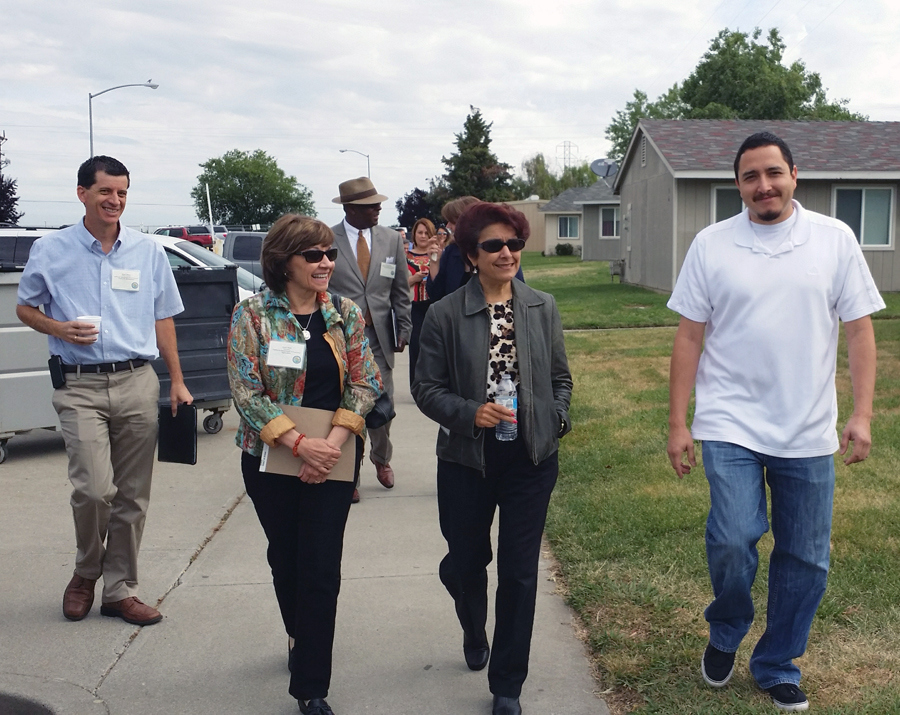
Recently, I had the privilege of taking part in a tour of several migrant farmworker housing centers hosted by the California Department of Housing and Community Development.

I was eager to participate in this tour with Business, Consumer Services and Housing Secretary Anna Caballero because of our shared commitment to work “across Cabinet” to improve existing and develop new affordable and decent housing for farmworkers and their families.

Access to safe, affordable housing is just one of many issues critical to our rural agricultural communities.

Earlier this year we received a report from the California Agricultural Workforce Housing and Transportation Project with recommendations to address the challenges and barriers to providing adequate housing and transportation to the agricultural workforce (www.aginnovations.org/workforce).

Seeing housing centers firsthand was very informative. We toured three centers  – Harney Lane Migrant Center (Lodi), Empire Migrant Center (Ceres) and Westley Migrant Center.

Our one-day tour underscored the critical importance of the effort that is needed in our rural areas to provide decent housing for hundreds of workers who plant, pick and process our fruits, vegetables, nuts and other agricultural commodities. These centers are not just a space to sleep and eat, but a place for families to live and belong.

The primary message I took away from this experience was a simple recognition of the progress that has been made. But there is much more that needs to be done!

The long-term viability of California agriculture depends upon agricultural workers who need safe, reliable and affordable transportation to their places of employment and a home that reflects their dignity and importance.

This will require effective coordination at the regional, state and federal levels to improve existing housing stock and develop new affordable housing for farmworkers and their families.

I applaud the dedication of the county housing authority leaders and center managers I met on the tour, and I look forward to working with my colleagues and stakeholders to make real, concrete improvements in the form of walls and floors and playgrounds that can make a difference today, and that will stand as examples for continued progress.

2016-05-31T19:35:29-07:00June 2nd, 2014|

Clean Water Act: Farm Bureau Takes Its Case to Head of EPA

Source: Christine Souza; Ag Alert 

As momentum builds encouraging federal agencies to abandon a proposal to expand their enforcement authority under the Clean Water Act, California Farm Bureau Federation leaders met with the head of the U.S. Environmental Protection Agency, urging her to see firsthand the impact the proposal would have on family farmers and ranchers.

During an annual federal policy trip to Washington, D.C., last week, a Farm Bureau delegation met with EPA Administrator Gina McCarthy, whose agency—along with the U.S. Army Corps of Engineers—proposed the rule changes last month.

The proposal would expand the definition of the term “waters of the United States” under the Clean Water Act, potentially allowing EPA and the Corps to regulate virtually every area of ground that gets wet or has flow during rainfall.

The change would expand regulatory authority to many land features including puddles, ponds, ditches, temporary and small wetlands, giving the agencies the power to regulate and potentially prohibit land-use and farming practices in or near them.

During her meeting with the Farm Bureau delegation, McCarthy said she is interested in understanding the concerns of agriculture and that she would like to maintain an open dialogue with those who would be affected by the proposed rule.

CFBF President Paul Wenger suggested to McCarthy that EPA officials take time to tour California farms and ranches, perhaps tying in the visits with a planned EPA outreach meeting on the proposed rule, tentatively scheduled for mid-July in Berkeley.

“We think it’s critical that people from the EPA see for themselves how this rule could hamstring routine farming and ranching activities,” Wenger said after the meeting. “We appreciate Administrator McCarthy taking the time to visit with us in Washington to hear directly from people who would be affected by the rule, and having EPA officials visit farms and ranches would provide them with information that no amount of written or verbal comments could provide.”

Aimee Meidinger, operations manager of Brokaw Nursery in Ventura, said the expanded definition of waters of the U.S. “could affect our ability and decisions to farm on my family’s avocado orchard. The definition of navigable waters is being changed to encompass almost all areas where water settles, regardless if they are seasonally wet or not.”

Farmers in California are very proactive in working with the current Clean Water Act regulations, Meidinger said, through use of irrigated-lands groups, surface and groundwater monitoring, pesticide use reporting and continuing education.

“We are good stewards of the land,” Meidinger said. “This proposal cannot be a one-size-fits-all national policy.”


2016-05-31T19:35:29-07:00May 31st, 2014|

Fresh Harvesting and Packing Co Relies on H-2A Workers

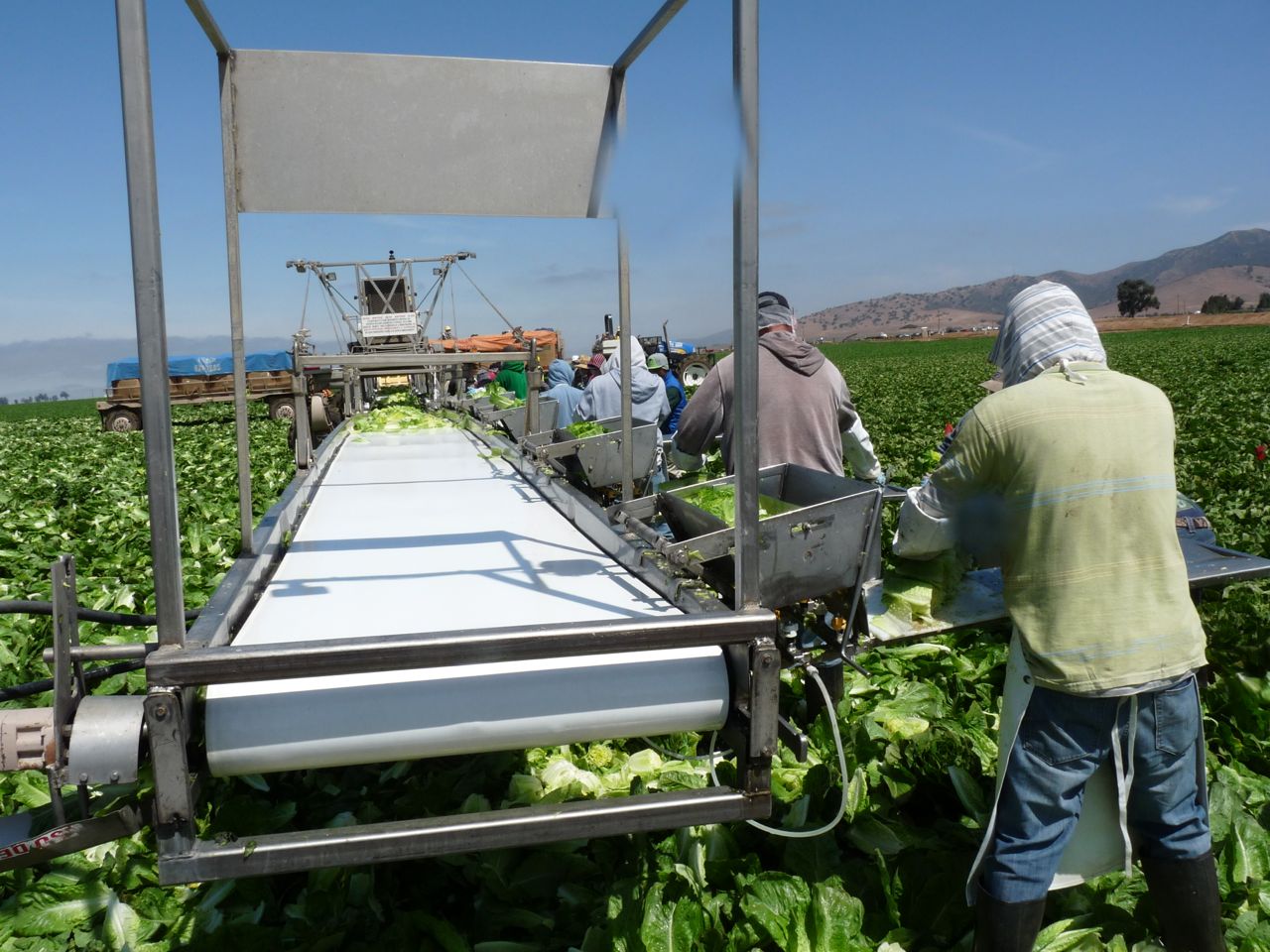
Steve Scaroni is a owner of Valley Harvesting and Packing, a major harvester of strawberries and leafy green vegetables in California and Arizona. At a recent romaine lettuce harvest operation in Salinas, Scaroni talked about how much labor and equipment his production utilizes.

Scaroni said much of his labor comes from Mexico, as part of the federal H-program, which allows temporary visas for agricultural labor workers.

“The H-2A is so important. We absolutely could not produce at the levels of volume that we do without H-2A labor. There is not enough legal labor for us to do the amount of volume that we are asked to do by our customers.”

Scaroni explains that having the H-2A visa program is essential to his produce production and harvesting, even for company that is not seen by the consumer.

“Between the different brands that we probably serve, we probably touch 20 percent of every salad eaten in america everyday. But you don’t see our name anywhere, you don’t hear about us, we are a vendor behind the scenes for the major brands,” said Scaroni.

With the demand and need for guaranteed freshness in produce, a constant flow of workers is even more crucial to the harvesting and production process.

“But we are the ones putting up the harvester equipment and we are making sure we have enough labor. The whole process is now “just in time”. See that’s the other thing, now we have freshness, food safety, but you know we have to have a consistent workforce because we are on just in time deliveries because that’s what the grocery store requires. It comes all the way come back to us.”

Scaroni explains the process by which his company obtains out of state workers, legally and those with good work ethic.

“We’re fortunate that we have what have a farming operation in Mexico, so we vet a lot of our workers that we bring up here. we vet them first in our operation in Guanajuato Mexico. And then the good ones we give them the opportunity to come up here to work two to three to four to five to six  months, making more in an hour than they can make in a day in Mexico.” said Scaroni.

Scaroni noted that there must be approvals from five different government agencies to get that worker out of Mexico and here working in California, legally with a H-2A visa.

“I have a great H-2A team, all they focus on is H-2A, the process, getting the workers up here, going to the consulate to do the intake process. Every worker is background checked, fingerprinted, and if they have any criminal history in the system, they’re excluded and cut off the border, and they can’t come.”

Scaroni said the job wouldn’t get done without them.

“In today’s labor reality I would not have a business at the volume that my customers bless us with. We would be at half of what we are, We’d be half the business we are now.” Scaroni added.

2016-05-31T19:35:29-07:00May 30th, 2014|

USDA Launches New “Healthy Eating on a Budget” Section of ChooseMyPlate.gov Site

Source: CDFA

The U.S. Department of Agriculture has unveiled Healthy Eating on a Budget – the newest addition to ChooseMyPlate.gov. Consumers continue to want more information about how to make better eating decisions with limited resources.

To meet this need, the USDA’s Center for Nutrition Policy and Promotion (CNPP) developed the new resource to include easy-to-use and insightful information about planning meals, shopping smart in the grocery store, and preparing foods that save money and time in the kitchen.

“Although healthy foods aren’t always more expensive, many low-income people face time and resource challenges when it comes to putting healthy food on the table,” said Agriculture Secretary Tom Vilsack. “Promoting nutritious food choices can have a positive impact on improving the health and diet quality of Americans. USDA offers a broad spectrum of strategies to empower low-income families to purchase healthier foods.”

Consumers who visit the Healthy Eating on a Budget section of ChooseMyPlate.gov will learn ways to plan, purchase, and prepare healthy meals. The new web pages provide families with tips and strategies to help save money and plan a healthier diet.

The new section includes the latest addition to the MyPlate 10 Tips Nutrition Education Series, Save More at the Grocery Store which emphasizes simple-to-use tips to help consumers make decisions as they walk down a supermarket aisle. Dozens of additional strategies are featured in the new section including using unit pricing, reading food labels to compare items, and checking sales on store brands.

“This resource not only demonstrates that it is possible to eat healthfully on a budget, but it shows how,” said CNPP Deputy Director Jackie Haven. “These new pages complement our existing resources on ChooseMyPlate.gov, allowing consumers to figure out how to improve their nutrition, and how to make it affordable.”

Healthy Eating on a Budget supports other initiatives in progress at USDA to encourage healthy eating among more Americans.

With so many food options available, it is often difficult for consumers to determine the best foods to put on their plates when the budget is tight. Healthy Eating on a Budget provides practical information to help more Americans understand their options and supports USDA initiatives to help families make healthy eating a priority in their daily lives.

2016-05-31T19:35:29-07:00May 30th, 2014|

2013-14 Recipients of the UC ANR Distinguished Service Awards

Sources: Pamela Kan-Rice, ANR Assistant Director, News and Information Outreach; Kathy Keatley Garvey, Communications specialist (including photo credit)

This week, Barbara Allen-Diaz, vice president of UC ANR, announced the 2013-14 recipients of the ANR Distinguished Service Awards (DSA) which are given biennially for outstanding contributions to the teaching, research and public service mission of the Division of Agriculture and Natural resources.

Allen-Diaz thanked the DSA recipients for providing excellent service to the people of California.

Awards were given in six areas:

Extension apiculturist Eric Mussen in front of the apiary at the Harry H. Laidlaw J. Honey Bee Research Facility (Photo by Kathy Keatley Garbey)

Extension apiculturist Eric Mussen in front of the apiary at the Harry H. Laidlaw J. Honey Bee Research Facility (Photo by Kathy Keatley Garbey)

Outstanding Extension – Eric Mussen, UC Cooperative Extension apiculturist in the Department of Entomology and Nematology at UC Davis for bees.

Outstanding Research – Mark Battany, UC Cooperative Extension advisor in San Luis Obispo and Santa Barbara Counties for viticulture.

Outstanding New Academic – David Doll, UC Cooperative Extension advisor in Merced County for nut crops

Outstanding Team – Ken Tate, UC Cooperative Extension specialist in the Department of Plant Sciences at UC Davis, and Rob Atwill, director of Veterinary Medicine Extension at UC Davis, are the recipients of the Outstanding Team Award. Since 1994, Tate and Atwill have collaborated on a series of projects assessing the potential risk to rangeland surface-water quality and human health from livestock associated pollutants.

Outstanding Leader – Pamela Geisel, former director of the statewide UC Master Gardener Program. Although Pam retired recently,Master Gardenerssince this nomination package was very strong, I believe it’s appropriate and important to give Pam this much-deserved award.

Outstanding Staff – Michael Yang, UCCE agricultural assistant in Fresno County for small farms.

Each of the recipients will receive $2,000 and a certificate, except for the team award recipients, who will receive individual certificates and share $5,000.

2016-05-31T19:35:30-07:00May 25th, 2014|

Golden Rice Refusal Kills Millions

Source: Don Curlee, Hanford Sentinel

A University of California report has exposed the injustice that prohibits a genetically engineered additive to rice. Without it, the death of millions of children has occurred, notably in Africa and India.

The researcher opinion lays the blame for the international prohibition of producing golden rice through genetic engineering on powerful forces that hide behind environmentalism.

California, one of the world’s major rice producers, is ready to supply the vitamin enriched product, especially for export.

The UC report appears in the current issue of the university’s respected Update, a bi-monthly publication compiled by the Agriculture and Natural Resources Department.  The authors are Justus Wesseler, professor for Agriculture and Food Economics at Technical University, Munich; Scott Kaplan, research assistant at Energy Biosciences Institute at UC Berkeley, and David Zilberman, professor in the Agricultural and Research Economics department at UC Berkeley.

The GE process for folding vitamin A into rice, transforming it to golden rice, has been well understood since 2000, but efforts to gain approval have been opposed by powerful regulators, particularly in India and Bangladesh.

Both countries are known for the staggering incidence of disease, disabilities and lagging development resulting from a lack of vitamin A in the diets of their citizens.

The authors of the UC report point out that the creation of golden rice could have saved millions of lives and avoided blindness, vulnerability to childhood infections, anemia and poor growth in millions since the engineering process for adding the vitamin was discovered in 1999.

The researchers recall that the nearly worldwide objection to creating golden rice was led by Greenpeace.  It was perhaps the most notorious radical environmentalist group at the turn of the century, characterized by a series of risky, but widely reported escapades aimed at derailing broadly-accepted programs and activities that were in the news.

The movement’s objections were always based on what it perceived as dangers to the environment.

patrickmooreChairSpokesperson

Dr. Patrick Moore, Chair and Spokesperson, “Allow Golden Rice Society”.

A 2012 Greenpeace publication states, “If introduced on a large scale, golden rice can exacerbate malnutrition and ultimately undermine food security.” Authors of the UC report elaborate by saying that Greenpeace fears that golden rice may accelerate the adoption in developing countries of other GE crops perceived by Greenpeace and others to be very dangerous.

The report also refers to the 180-degree turnabout by former Greenpeace leader and co-founder Patrick Moore, who now promotes a group called “Allow Golden Rice Society.” He has recognized that the poor have paid the majority of the price of the fight against GE technologies. Dr. Moore published a book in 2011 called, “Confessions of a Greenpeace Dropout: The Making of a Sensible Environmentalist”.

The UC report says that a large and growing body of literature indicates that GE varieties have produced a significant amount of real benefit throughout the world.

Publication of the report seems to be an invitation to everyday environmentalists, often fans of radicals and extremists like Greenpeace, to back off a bit and realize the harm and human suffering that have resulted from blocking the humanitarian approval of golden rice.

“Even though GE has been introduced in few crops, its impact on agricultural production is immense because it has increased productivity substantially,” the UC report states. “Furthermore, its impact on productivity has been higher in developing versus developed countries … (but) … its potential has not been realized.”

The UC paper suggests that policies regulating GE technologies need to be reassessed. Perhaps that reassessment needs to begin with a bunch of hangers-on environmentalists in your community and mine who haven’t yet determined that many environmentalist beliefs and policies have nothing to do with human welfare.

2016-05-31T19:35:30-07:00May 23rd, 2014|
Go to Top