Modesto Irrigation District leaders hustling to get growers more water

By: Garth Stapley; The Modesto Bee

Nut farmers and other Modesto Irrigation District customers can wait to water crops as late as Oct. 3. That’s two weeks later than initially planned, giving trees a better chance of surviving the drought and being healthy enough to produce again next year.

The MID board also agreed Tuesday to accommodate another round of farmer-to-farmer water transfers with a Sept. 2 application deadline. And the district might offer to sell some extra water reserved in April by a few farmers who haven’t asked or paid for it since then.

Faced with a third consecutive dry winter, district officials in February said the irrigation season would end Sept. 19, several weeks earlier than usual, and capped deliveries at 24 inches per acre, down from 36 in a normal year.

But farmers, especially those raising almonds, have been pressing for later deliveries.

Citing University of California research, Ron Fisher said trees that don’t drink just after harvest can lose 74 percent of nuts the following year.

Some almond varieties, such as padre, mission, Monterey and Fritz, harvest later than Sept. 19, growers told the board.

“I’ve farmed almonds over 50 years and I’ve never got my harvest completed by Oct. 3,” said Cecil Hensley, a former board member. “There is no use having (water) next year if we don’t keep our trees alive.”

Farmers won’t get more than their fair share with the extension; Tuesday’s unanimous vote simply allows them to apply their allotment later in the year, explained board member Jake Wenger, who farms.

Board Chairman Nick Blom, also a grower, reminded people that they can rent district wells and canals after the regular season ends, for late-season irrigating.

“It’s not the purest snow water, but it’s water,” Blom said.

To augment deliveries, scores of farmers this year have taken advantage of new programs allowing them to buy or sell MID shares in fixed-price transfers managed by the district or open-market sales at any agreed-upon price.

The district has accommodated more than 100 open-market deals for farmers who submitted transfer requests by deadlines of June 1, July 1 and Friday. Tuesday’s 4-1 vote, with Larry Byrd dissenting, adds a fourth deadline of Sept. 2.

“This gives everyone a little more time and flexibility,” Modesto farmer Aaron Miller said.

Wenger initially suggested an Aug. 15 deadline. Attorneys Stacy Henderson and Bob Fores said their clients would appreciate more time and noted that MID General Manager Roger VanHoy had acknowledged that his staff has experienced no difficulty processing transfer requests.

In April, 26 farmers indicated interest in the district’s allocation return program, meaning they might want to sell a portion or all of their MID water shares, or buy water given up by others. The cost was $200 per acre-foot on either end.

The district set aside enough water to cover those potential deals, but a handful of farmers – fewer than a dozen, said civil engineering manager John Davids – did not sign contracts and have not paid for the extra water they initially said they might buy.

Davids did not know how much water remains in that pot, but said it represents a potential $300,000 loss. Board member John Mensinger said that’s “regrettable” and Wenger suggested selling the water to others in what VanHoy termed “something like a last call.”

“Let’s make it available. I think people would take us up on it,” Wenger said.

VanHoy said he will suggest rules for such deals at a future meeting.

The board next meets at 9 a.m. Tuesday at 1231 11th St., Modesto.
 

2016-05-31T19:34:12-07:00July 31st, 2014|

Farmers Hit With New Regulatory Fee

Source: The Porterville Recorder

Farmers who are already reeling from a lack of water to irrigate their crops this summer are being hit with an annual acreage fee to meet a mandated program to monitor water runoff from irrigated lands.

The Central Valley Regional Water Quality Control Board in September of 2013 adopted new waste discharge requirements to protect ground and surface water from irrigated agricultural discharges for the Tulare Lake Basin area. That led to a plan to monitor groundwater and what impacts irrigation has on that groundwater.

Growers who irrigate agricultural lands for commercial purposes within the Tulare Lake Basin area must comply, but they do have a choice. They can either deal individually and directly with the Water Board, or they can join one of several regional coalitions that have been formed to assist growers in meeting all the requirements.

In the Porterville area, that coalition is the Tule Basin Water Quality Coalition. There is also a coalition in Kern County, as well as the Kaweah Basin Water Quality Coalition to the north. Some growers who have irrigated lands in both, will have to sign up with both, said Tulare County Supervisor and citrus grower Allen Ishida.

The deadline to sign up is rapidly approaching. Growers must sign up with their local coalition by Aug. 4, or they will be stuck dealing directly with the Water Board and having to monitor their groundwater on their own.

“If you received the letter, you better pay it,” stressed Ishida, explaining that monitoring even just a 10-acre plot could cost several thousand dollars a year.

The plan was put into place to improve the quality of groundwater, but Ishida said “They’re regulating without the base science.”

He contends the cause of nitrates in the ground, which is very common in Tulare County, has not been pinned down and that the Water Board is incorrectly blaming farmers. “We’re not the only ones contributing to high nitrates,” said Ishida, agreeing that some nitrates naturally occur, but no one has determined how much is natural.

David DeGroot, who is with 4 Creeks, an engineering firm working for the Tule Basin Coalition, said the only farming operations exempt from this latest order are dairy farmers because they are already under an irrigated management plan.

He said the basin began monitoring surface water in 2003 and now that has been extended to water pumped from the underground.

Farmers got the Water Board to agree to the coalition idea. “Rather than do this individually, maybe we can form a coalition to do the work,” said DeGroot of the idea. “It is a lot more cost-effective.”

The coalition will handle all the monitoring and reporting, which DeGroot said is extensive. Also, it will deal with the Water Board.

The cost for the Tule Basin Coalition is $5 per acre of irrigated land and a $100 participation fee. Both are annual costs. DeGroot and Ishida said the cost for the Kaweah Basin is higher. DeGroot said having to deal with the Water Board is much more expensive.

If a person ignores the order, then there are hefty fines. DeGroot also said if a grower misses the Aug. 4 deadline, they are prohibited from signing up later unless the Water Board grants them permission. Either way, not signing up by Aug. 4 will mean the grower will have to deal with the Water Board, and probably face a fine for not signing up.

According to the state, the Tulare Lake Basin Plan identifies the greatest long-term problem facing the Basin as the increase in salinity in groundwater. Because of the closed nature of the Tulare Lake Basin, there is little subsurface outflow. Thus salts accumulate within the Basin due to the importation and evaporative use of water. A large portion of this increase is due to the intensive use of soil and water resources by irrigated agriculture.

However, the order covers the entire San Joaquin Valley. DeGroot said the total acreage of the Tule Basin is 600,000 acres, of which 350,000 aces are irrigated ag land. He said basically the boundaries are roughly Avenue 196 on the north and the Kern County line on the south, the foothills on the east and the Tulare/Kings county line on the west.

The Water Board said the order requires “the implementation of management practices to achieve compliance with applicable water quality objectives and requiring the prevention of nuisance. The Order requires implementation of a monitoring and reporting program to determine effects of discharges on water quality and the effectiveness of management practices designed to comply with applicable water quality objectives.”

DeGroot said the initial objective is to summarize conditions in a basin. “Once those are approved, then we’ll go out and start monitoring wells,” he said. The plan is to test a well every nine sections.

So far, DeGroot said the sign-ups have gone well, but they know a lot of landowners have held off. As of late last week, he estimated 65 percent of farmers have joined the coalition.

2016-05-31T19:34:12-07:00July 31st, 2014|

California’s Malibu Coast winemakers secure AVA status

Source: Louis Villard in San Francisco

The Malibu coastline outside Los Angeles has become California’s newest American Viticultural Area (AVA), which winemakers hope will raise the region’s profile.

Officially named Malibu Coast AVA, the sub-region will stretch northbound along the Pacific Coast Highway for approximately 46 miles and inland to the Santa Monica Mountains for about eight miles.

Malibu currently has 198 acres of vines in production and over 50 grape growers and wineries.

Elliot Dolin, proprietor of Dolin Malibu Estate Vineyards, helped initiate the classification process and was delighted to see it approved.

‘In Malibu we’ve proven we can produce high-quality, award-winning wines,’ Dolin told Decanter.com. ‘With the AVA designation, we hope it will inspire a curiosity among consumers to explore our wines, and a commitment from producers to continue to improve.’

Despite the low profile until now, the first documented vineyard in the Malibu area was planted in the 1820s, which is venerable for California. The first modern operation, The Malibu Vineyard, was planted in 1985 with red Bordeaux varieties.

Malibu Coast joins two established AVAs in Los Angeles County: Malibu-Newton Canyon, which became a region in 1996, and the more recent Saddle Rock-Malibu, which was classified in 2006.

Malibu Coast elevations range from sea level to 3,111 feet. During the summer, days can be hot and sunny but this new AVA will benefit from a large diurnal shift with very cool nights.

Malibu is regularly in the news for autumn wildfires and a section of the AVA proposal suggested that planting vineyards could provide natural barriers against future fires, which could be beneficial for drought stricken California.

Currently a large variety of well-known international wine grapes are planted. Of those, Dolin believes ‘Chardonnay in the cooler-climate areas is of a great quality and the higher elevation vineyards do very well with Bordeaux and Rhone varieties’.

A second AVA was also established alongside Malibu Coast for the Upper Hiwassee Highlands in Georgia. The state’s first official AVA covers 690-square miles in Cherokee and Clay Counties, North Carolina, and Towns, and Fannin Counties.


2016-05-31T19:34:13-07:00July 29th, 2014|

UC leads a long tradition of environmental stewardship in California

By  Brook Gamble, Community Education Specialist, UC ANR California Naturalist Program, Hopland Research & Extension Center

Featured Photo:  Jeannette Warnert


Stewardship: \ˈstü-ərd-ˌship: the activity or job of protecting and being responsible for something.

In 1862 the Morrill Act was passed to support and maintain colleges of agriculture and mechanical arts, including a later provision that included the donation of public land. As one of the first land grant Universities, the University of California was well positioned to manage agricultural extension across the state as part of the Smith Lever Act of 1915. Today, many people think of California agriculture as strawberries, broccoli and rice; but it is livestock and forestry that dominated California working landscapes in those early days.

Farmer seeks assistance from UCCE farm advisor on the running board of a historic UC Cooperative Extension vehicle.

Farmer seeks assistance from UCCE farm advisor on the running board of a historic UC Cooperative Extension vehicle.

Research and extension efforts to improve forestry practices and range production throughout California have evolved over time. Research questions gradually changed over the last 100 years from a “how can we economically produce more” perspective to how can rangeland management practices improve ecosystem composition and function? How can extension programs be employed to educate stakeholders and help land managers implement change? How can we conserve working landscapes for biodiversity conservation in a period of rapid development? How can we assess and monitor management effectiveness?

This year, the University of California Division of Agriculture and Natural Resources celebrates 100 years of UC Cooperative Extension serving as a research and outreach partner in communities throughout California. For an interesting read on this rich history and the evolution of UC rangeland management perspectives, see M. George, and W. J. Clawson’s The History of UC RangelandExtension, Research, and Teaching: A Perspective (2014). Additionally, UC ANR California Rangelands Website includes a free Annual Rangeland E-book; current project descriptions, publications, and online learning modules: http://californiarangeland.ucdavis.edu/.

Maintaining and improving environmental quality on public and private land requires an informed strategy that encourages stewardship by land owners and community members. In present times, we face the challenges of managing land in the face of growing population, drought, invasive species, and climate change, just to name a few forces of global change. Out of necessity, our broader perspective on land management has shifted to one of “ecosystem stewardship” which is defined as a strategy to respond to and shape social-ecological systems under conditions of uncertainty and change to sustain the supply and opportunities for use of ecosystem services to support human well-being (Chapin et al. 2010). The stewardship framework focuses on the dynamics of ecological change and assesses management options that may influence the path or rate of that change.

Using an ecosystem stewardship framework, the UC ANR’s California Naturalist Program is building astatewide network of environmental stewards. The program is designed to introduce the public, teachers, interpreters, docents, green collar workers, natural resource managers, and budding scientists to the wonders of our unique ecology and engage these individuals in the stewardship of California’s natural communities.

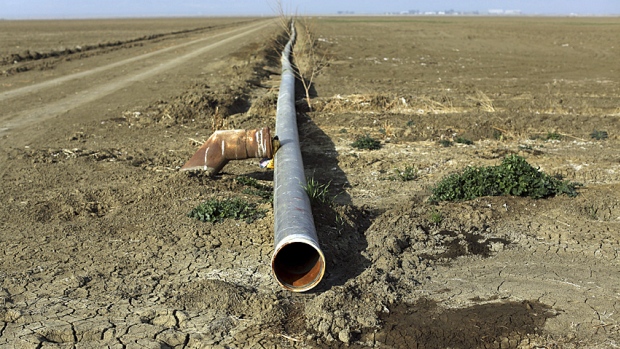
Tejon Ranch Conservancy California Naturalists help with a pipe capping project to keep small animals and birds from getting trapped (Photo: Scot Pipkin)

Tejon Ranch Conservancy California Naturalists help with a
pipe capping project to keep small animals and birds from
getting trapped (Photo: Scot Pipkin)

The California Naturalist Program uses a science curriculum which includeschapters in forest, woodland, and range resources and management, geology, climate, water, wildlife, and plants. Experiential learning and service projects instill a deep appreciation for the natural communities of the state and serve to engage people in natural resource conservation.

Land management is the focus of many of the partnering organizations that offer the California Naturalist Program. For example, land conservancies and preserves are involved including, Tejon Ranch Conservancy, at 270,000 acres the largest contiguous private ranch in California; Pepperwood Preserve, a private rangeland preserve dedicated to conservation science in the Northern SF Bay Area; UC Berkeley’s Sagehen Creek Field Station, a forested research station in the Sierra; UC Hopland Research & Extension Center, a rangeland research and education facility in California’s north coast region; and the Sierra Foothill Conservancy, a non-profit land trust in the Western Sierra Nevada including Fresno, Madera, eastern Merced, and Mariposa counties. Land trusts are increasingly responsible for conserving working landscapes and open space across the state and often rely on a trained volunteer corps to steward these valuable landscapes. UC ANR is pleased to advance training opportunities for those actively managing these lands.

California Naturalists trained at these locations and more are involved in ecosystem stewardship, rangeland management, watershed restoration, and helping outdoor education programs that benefit the environment and people of all ages. Naturalists have donated over 13,000 hours of in state service in the last three years. These types of stewardship opportunities are essential for the active adaptive management that both public and private lands need to ensure resilience and continue to provide ecosystem services that we all rely on. These trained environmental stewards are an important part of this growing community of practice who not only steward land but also pass on critical knowledge about California’s natural and managed ecosystems.

With Special Thanks to Brook Gamble.


UC Berkeley’s Sagehen Creek Field Station


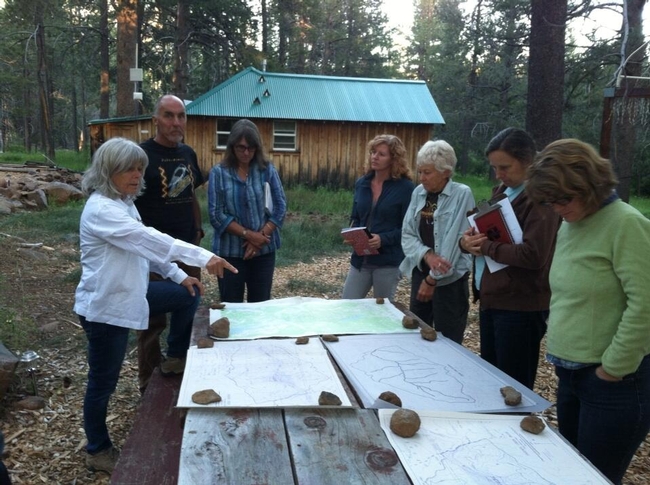
California Naturalists examine watershed maps

2016-05-31T19:34:13-07:00July 29th, 2014|

Drought to affect energy costs this year and next

By Christine Souza; Ag Alert

Although the amount of hydroelectricity generation is dropping along with reservoir levels during the lingering California drought, utility companies and state agencies predict adequate energy supplies for the remainder of the summer. But they say they expect the cost of electricity to increase.

“We’re going to have to purchase more replacement power on the open market—and that is generally more expensive—in order to meet all of our customers’ needs,” said Pacific Gas and Electric Co. spokeswoman Lynsey Paolo. “We’ve been trying to manage our reservoirs in a way that we’re keeping a reasonable supply so that we’ll have low-cost hydro available, but the overall impact is that there will be an impact on rates.”

Most of the energy used in California is produced within the state. More than half the energy used here comes from natural gas, followed by nuclear, large-scale hydroelectric facilities, renewable sources and a small percentage from coal. The California Independent System Operator, which operates the state’s high-voltage grid, said it is confident the state will have a secure supply this summer.

“The ISO forecasts that even under the most extreme weather scenarios studied, the state will have enough supply to meet its needs,” spokesman Steven Greenlee said. “Our biggest concern is wildfires that can trip transmission lines, which can make moving energy around difficult. Also, generation plants going off-line because of equipment problems are a concern.”

A reduced supply of hydroelectricity this year has been offset by an increase in renewable energy production, as well as out-of-state imports and increased use of gas power plants, he said.

A spokeswoman for the California Energy Commission, Lori Sinsley, said the mixture of replacement energy “is likely to be more expensive and have more air pollution and greenhouse gas emissions than hydropower.” She said higher power costs will be reflected in next year’s rates and, because most California hydropower is generated in Northern California, most of the impacts of its shortfall will be in that region, particularly in the Central Valley.

Karen Norene Mills, California Farm Bureau Federation associate counsel and director of public utilities, said it will be important for decision-makers “to recognize agricultural customers are uniquely impacted by the drought.”

With the drought reducing availability of surface water for irrigating crops, farmers have been pumping more groundwater to compensate—translating into higher energy loads and costs. The University of California, Davis, estimated last week that farmers could spend an additional $450 million in pumping costs this year.

“The complexity of electric ratemaking can create ripple effects in subsequent years as a result of the increased usage and costs,” Mills said.

San Joaquin County winegrape grower Brad Goehring said at this point in the season he must rely on groundwater for his winegrape crop, and the added pumping will result in higher electricity bills.

“We try diligently to use our pumps during the off-peak periods, but just recently we started irrigating on-peak (weekdays, noon to 6 p.m.) simply because there’s not enough hours in the day to run the pumps,” said Goehring, a PG&E customer. “In a drought year, we’ll have more pumps in that situation than in a normal year, because we have to make sure the vines’ needs are being met.”

Like many farmers, Goehring utilizes drip irrigation and relies on probes to measure soil moisture to ensure the winegrapes receive the appropriate amount of water. With the dry weather this year, he said he had to start irrigating earlier in the year.

Patrick Mullen, PG&E director of agricultural services, said the utility company has seen an overall 40 percent increase in pumping connections by its agricultural customers this year.

“Earlier this year, the volume of applications was 50 to 60 percent higher than the previous year. We’ve seen a substantial increase in the requests for new service in high ag areas,” Mullen said. “We’ve moved resources to those high ag areas, to directly address those increased applications for new services or to service more pumps or larger water pumps.”

In the Southern California Edison service area, Tulare County citrus grower Matthew Watkins of BeeSweet Citrus said he is using more energy to irrigate his crop.

“The majority of our increased energy costs are resulting from lack of district water, so we’re having to run more wells, more often,” Watkins said. “We’re drilling wells; we need to put pumps in some and are ordering power, which takes months. Depending on the horsepower and the load, it can be relatively inexpensive or it can be really expensive.”

Citrus grower Larry Peltzer of Ivanhoe said underground water tables are dropping, requiring more energy to bring water to the surface.

To help reduce cost, Peltzer switched to a time-of-use rate schedule, a structure that charges for energy depending on the time of day and the season the energy is used. He said the change resulted in an average energy-use savings of 15 percent for his ranch.

Watkins said BeeSweet plans to take advantage of Edison’s pump retrofit program next year.

“Edison has their pump incentive program where they do rebates on pump retrofits. The main issue there is Edison does a pump test and they are backed up quite a bit,” Watkins said. “I want to do all of the pump tests this year, so that next year I can do some major repairs and a new pump test and get some of those rebates.”

Southern California Edison spokesman Cal Rossi said that during this drought year, the utility will ensure quick response to the needs of its agricultural customers, knowing that that “could make the difference between a successful harvest and losing their crops.”

2016-05-31T19:34:13-07:00July 28th, 2014|

Young Women Changing the Face of California Farming

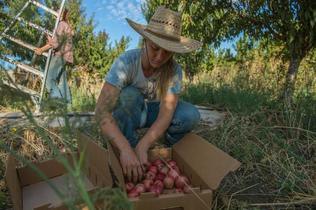
On most mornings, Katie Fyhrie, 25 and Emma Torbert, 35 meet at dawn at their Davis fruit farm.

As they scramble up ladders to pluck fruit and later sort it into delivery bins, they embody a demographic shift underway in agriculture: young, beginning farmers, many of them women, are entering the field at an increasing rate.

So far, the influx hasn’t been enough to offset the demographics of existing farmers, who are mostly older men. The median age of American farmers is 59, according to the last U.S. Department of Agriculture census in 2012.

But times are changing. The 2012 USDA census found that the number of new farmers between the ages of 25 and 34 had grown 11 percent since the previous census was taken in 2007.

The number of women farming in California has steadily increased over the past three decades. The 1978 USDA census counted 6,202 women who listed farming as their main occupation. By 2012, there were 13,984.

These new farmers are embracing different delivery methods that don’t involve bulk commodity sales to food processing companies. They’re peddling produce directly to consumers through farmers’ markets, farm stands and subscriptions for produce boxes. Those sales methods increased 8 percent from 2007.

Fyhrie and Torbert sell their peaches and other organic fruit directly to subscribers in Davis and also to stores such as the the Bi-Rite market in San Francisco’s Mission district.

Neither woman comes from a farm family, and neither inherited land. Both are college educated and found their way to farming from other pursuits. Torbert holds a Bachelor’s degree in physics from Princeton University, and Fyhrie recently graduated from the University of California, Berkeley, with a degree in biology.

Both are crazy about farming.

Upon graduation from UC Berkeley in 2012, Fyhrie returned home to Davis. “I didn’t want to jump into working in a lab,” she said.

Instead, Fyhrie took a job as a summer field worker at the Impossible Acres Farm in Davis. “I’ve always enjoyed jobs that kept me outside most of the time,” she said.

Fyhrie deepened her commitment to agriculture in February, when she enrolled in the California Farm Academy, a program run by the Center for Land Based Learning in Winters.

Twenty hopeful farmers are currently enrolled in the seven-month program, 14 of them women, said Jennifer Taylor director of the academy.

“Women getting into agriculture is a huge trend,” said Taylor, who herself began farming several years ago in a Wisconsin dairy operation. “In years past it was a very male-dominated profession.”

Taylor said the gender shift may be a result of societal changes.

“The idea that one can actually be a farmer without coming from a farming family is starting to feel like a reality to more people,” Taylor said.

One aspect that is appealing to women is how farming adds a sense of service to a community. “Some want to feed people, others want to see food justice happen. One way to do that is to be involved in growing food .”

At Princeton, Torbert studied fusion energy. However, it dawned on her that physics is not the kind of work where the tangible effects of one’s work is readily evident.

“I feel there are so many problems in the world that need to be changed sooner,” she said. “In my other jobs it felt like I was just monitoring. As a farmer, I feel like what I do can have an effect on the system.”

Torbert changed gears and pursued a graduate degree in horticulture at UC Davis. Fyhrie is following in her footsteps once she graduates from the farm academy program.

Torbert started her Cloverleaf farm four years ago when she leased 5 acres from Rich Collins, owner of the 200-acre Collins Farm.

Cloverleaf farm recently earned its organic certification, and is just now starting to show a profit, she said.

“Sometimes I feel less supported and find that there is more skepticism from older-generation farmers,” Torbert said. “People make assumptions that you do not know how to drive a tractor.”

Not all beginning farmers are under 35, said Michelle Stephens farmbudsman with Yolo and Solano counties. A lot of the women who she helps with farm permits are new farmers in the 40-year-old range.

“It’s less their full time business and more of an augmentation to what they are already doing,” said Stephens. “So, maybe they have some chickens and they decide they want to sell eggs.”

Some women entering the field hail from longtime farming families, like Kristy Levings, who co-owns Chowdown Farms, a livestock operation in the Capay Valley.

Levings, who is 35, defines herself as a third-generation farmer. At age 11, she was already in charge of a commercial sheep flock. But she has not handed the reins of her farm. She had to leave him and come back to the farming world by way of the big city.

“It was not a given that I would engage in farming,” said Levings, whose only sibling is a younger sister. Bias against females taking over a farm was a factor.

“If you grow up in a farming family, there are different expectations on you based on gender,” Levings said. “If you don’t grow up in a farming family, it is easier to think about farming without a gender filter.”

She left the farm after high school to pursue a degree in psychology and gerontology at San Francisco State University. After graduating she entered a career in social services.

When her mother grew sick in 2007, Levings moved back to the Capay Valley. A year later, an attractive parcel of property came on the market. Levings, then 28, bought it with her farming partner Brian Douglass. They sell lamb and other meat to such well-known local chefs as Randall Selland and Patrick Mulvaney.

Levings said she believes women farmers are bringing new talents to the field.

“Women bring to the table a certain way of thinking about things – from a multitasking perspective,” Levings said. “Like planning strategically.”

She likened farming to conducting a symphony. “There are a lot of moving parts all at once,” she said. “You have to be able to hear when the farm is out of tune.”

She said that with livestock it helps to be able to look at the field and see how the flock is interacting within it and how it interacting with what is growing on it

The only limitation Levings sees to being a woman farmer? Physical power. “I don’t have the same musculature as a male,” Levings said.

For her, that’s nothing more than a momentary drawback. “There’s nothing I cannot do – I’ll just do it in a different way,” Levings said. “If I have to lift something heavy, I’ll figure out how to use a machine instead of trying to muscle it myself.”

2016-05-31T19:34:14-07:00July 25th, 2014|

Wawona Packing Co. Takes Precautionary Step of Voluntarily Recalling Products

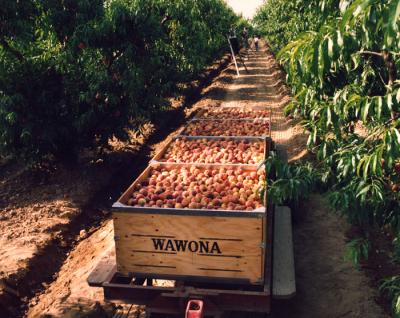
Wawona Packing Company of Cutler, Calif. is voluntarily recalling certain lots of whole peaches (white and yellow), nectarines (white and yellow), plums and plots packed between June 1, 2014 through July 12, 2014 due to the potential of the products being contaminated with Listeria monocytogenes

Wawona Packing has notified retailers of the specific lots being recalled. No other products are impacted by this recall. To our knowledge health officials have not linked any illnesses to this recall.

Listeria monocytogenes, an organism which can cause serious and sometimes fatal infections in young children, frail or elderly people, and other with weakened immune systems. Although healthy individuals may suffer only from short0term symptoms such as high fever, sever headache, stiffness, nausea, abdominal pain and diarrhea, Listeria infection can cause miscarriages and stillbirths among pregnant women.

The recalled products were shipped directly to retailers and wholesalers who resell the products. Because we do not know the locations of the companies that purchased the products from our direct customers, the company is issuing a nationwide recall. Consumers can identify the recalled products by the information on www.wawonapacking.com.

Anyone who has the recalled products in their possession should not consume them and should discard them. Consumers with questions may contact Wawona Packing at 1-888-232-9912, M-F, 8am – 11pm ET, or visit www.wawonapacking.com for a copy of this press release.

Wawona Packing has already notified its business customers and requested that they remove the recalled products from commerce. Wawona Packing is voluntarily recalling these products in consultation with the U.S. Food and Drug Administration.

The recall was initiated based on internal company testing. The company shut down the implicated packing lines, retrofitted equipment, sanitized the facility and retested. Subsequent daily test results have been negative.

“We are aware of no illnesses related to the consumption of these products,” said Brent Smittcamp, President of Wawona Packing Co. “By taking the precautionary step of recalling product, we will minimize even the slightest risk to public health, and that is our priority.”

2016-05-31T19:34:14-07:00July 24th, 2014|

Global agricultural research council appoints UC Davis sustainability leader

Thomas Tomich, director of the Agricultural Sustainability Institute at UC Davis, has been appointed a scientific adviser to the world’s preeminent agricultural research system, the Consultative Group on International Agricultural Research.

CGIAR is a publicly funded research consortium working in more than 100 developing countries to eliminate hunger and poverty, improve food and nutritional security, and sustainably manage natural resources. CGIAR programs around the globe focus on topics as diverse as increasing profitability for small-scale rice farmers in the Philippines and global efforts to adapt to climate change.

Tomich will be a member of CGIAR’s Independent Science and Partnership Council (ISPC), providing expert scientific advice to improve the quality, relevance, and impact of CGIAR’s research portfolio of over $1.1 billion per year.

“With this council appointment, I will stay at the cutting edge of global science on food systems and sustainable agricultural development, and bring that back to ASI and my research and teaching at UC Davis,” said Tomich, a UC Davis professor and W.K. Kellogg Endowed Chair in Sustainable Food Systems. “I hope this effort contributes to maintaining California’s leadership in agricultural science and innovation.”

Seven scientific advisers compose the Independent Science and Partnership Council representing disciplines in agriculture, environmental sciences, ecology, and economics. Council members are from Australia, Brazil, Japan, Kenya, and the United Kingdom. Tomich is the only U.S.-based member of the council.

“For half a century, CGIAR has been the single most effective use of development aid funding,” said Howard-Yana Shapiro, Chief Agricultural Officer at Mars Inc. and Chair of ASI’s External Advisory Board. “This indispensable institution has grown rapidly and is in the midst of reforming to meet huge 21st century challenges.” Shapiro currently serves on CGIAR’s midterm review panel, guiding its reform process.

“The Independent Science and Partnership Council plays a key role in ensuring scientific quality and integrity for the whole research system,” said Shapiro. “Tom is committed to the highest standards of science, and has the deep understanding of sustainability required to make transformative change at a global level. His appointment is a great opportunity to help shape the future of food on the planet and also to better link UC Davis to global agricultural research.”

Prior to his service at UC Davis, Tomich worked for the World Agroforestry Center, a CGIAR center, as principal economist and global coordinator of the ASB Partnership for the Tropical Forest Margins. He has worked in a dozen countries, including significant periods based in Egypt, Indonesia, Kenya, and now in his home state of California.

The Agricultural Sustainability Institute at UC Davis promotes the vitality of California agriculture through multidisciplinary research, education, and outreach. Formed in 2006, ASI was pivotal in developing UC Davis’ new undergraduate major in Sustainable Agriculture and Food Systems, and houses five programs, each dedicated to emerging issues in sustainability.


2016-05-31T19:34:14-07:00July 23rd, 2014|

Invasive Giant African Snails Seized at LAX


By Veronica Rocha; Los Angeles Times 

Two picnic baskets packed with 67 live giant African snails were seized by federal authorities at Los Angeles International Airport (LAX), authorities said.

The snails, which weighed a total of more than 35 pounds and reportedly were intended for human consumption, was apparently the largest seizure at LAX of the mollusks, which are sometimes fried and served as a snack.

The snails were discovered July 1 in two picnic baskets, which weighed more than 35 pounds, said Lee Harty of U.S. Customs and Border Protection (CPB). The snails arrived from Lagos, Nigeria, and were headed to San Dimas.

In the past, federal inspectors have discovered one or two of the large snails hidden in luggage, but this marked “the first time this pest has been encountered in such large quantity and as a consumption entry” in LAX, said Todd C. Owen, director of field operations for the customs agency.

Giant African snails, also known as land snails, can live as long as 10 years and grow up to eight inches long. The snails can carry parasites harmful to humans.

The U.S. Department of Agriculture deems the large snails as a damaging species, consuming more than 500 types of plants, according to federal authorities.

But when the snails can’t find fruits and vegetables to eat, they will “eat paint and stucco off of houses,” the customs agency said in a statement.

The incident remains under investigation.

2021-05-12T11:03:06-07:00July 22nd, 2014|

UC Davis Drought Study Assesses Current Losses and Potential Future Impacts

Source: CDFA

A new report from the University of California, Davis, shows that California agriculture is weathering its worst drought in decades due to groundwater reserves, but the nation’s produce basket may come up dry in the future if it continues to treat those reserves like an unlimited savings account.

The UC Davis Center for Watershed Sciences study, released today at a press briefing in Washington, D.C., updates estimates on the drought’s effects on Central Valley farm production, presents new data on the state’s coastal and southern farm areas, and forecasts the drought’s economic fallout through 2016.

The study found that the drought — the third most severe on record — is responsible for the greatest water loss ever seen in California agriculture, with river water for Central Valley farms reduced by roughly one-third. Groundwater pumping is expected to replace most river water losses, with some areas more than doubling their pumping rate over the previous year, the study said. More than 80 percent of this replacement pumping occurs in the San Joaquin Valley and Tulare Basin.

The results highlight California agriculture’s economic resilience and vulnerabilities to drought and underscore the state’s reliance on groundwater to cope with droughts. “California’s agricultural economy overall is doing remarkably well, thanks mostly to groundwater reserves,” said Jay Lund, a co-author of the study and director of the university’s Center for Watershed Sciences. “But we expect substantial local and regional economic and employment impacts. We need to treat that groundwater well so it will be there for future droughts.”

Other key findings of the drought’s effects in 2014:

  • Direct costs to agriculture total $1.5 billion (revenue losses of $1 billion and $0.5 billion in additional pumping costs). This net revenue loss is about 3 percent of the state’s total agricultural value.
  • The total statewide economic cost of the 2014 drought is $2.2 billion.
  • The loss of 17,100 seasonal and part-time jobs related to agriculture represents 3.8 percent of farm unemployment.
  • 428,000 acres, or 5 percent, of irrigated cropland is going out of production in the Central Valley, Central Coast and Southern California due to the drought.
  • The Central Valley is hardest hit, particularly the Tulare Basin, with projected losses of $810 million, or 2.3 percent, in crop revenue; $203 million in dairy and livestock value; and $453 million in additional well-pumping costs.
  • Agriculture on the Central Coast and in Southern California will be less affected by this year’s drought, with about 19,150 acres fallowed, $10 million in lost crop revenue and $6.3 million in additional pumping costs.
  • Overdraft of groundwater is expected to cause additional wells in the Tulare Basin to run dry if the drought continues.
  • The drought is likely to continue through 2015, regardless of El Niño conditions.
  • Consumer food prices will be largely unaffected. Higher prices at the grocery store of high-value California crops like nuts, wine grapes and dairy foods are driven more by market demand than by the drought.

If the drought continues for two more years, groundwater reserves will continue to be used to replace surface water losses, the study said. Pumping ability will slowly decrease, while costs and losses will slowly increase due to groundwater depletion. California is the only state without a framework for groundwater management.

“We have to do a better job of managing groundwater basins to secure the future of agriculture in California,” said Karen Ross, Secretary of the California Department of Food and Agriculture, which largely funded the UC Davis study. “That’s why we’ve developed the California Water Action Plan and a proposal for local, sustainable groundwater management.”

Failure to replenish groundwater in wet years continues to reduce groundwater availability to sustain agriculture during drought — particularly more profitable permanent crops, like almonds and grapes — a situation lead author Richard Howitt of UC Davis called a “slow-moving train wreck.”

2016-05-31T19:34:15-07:00July 22nd, 2014|
Go to Top