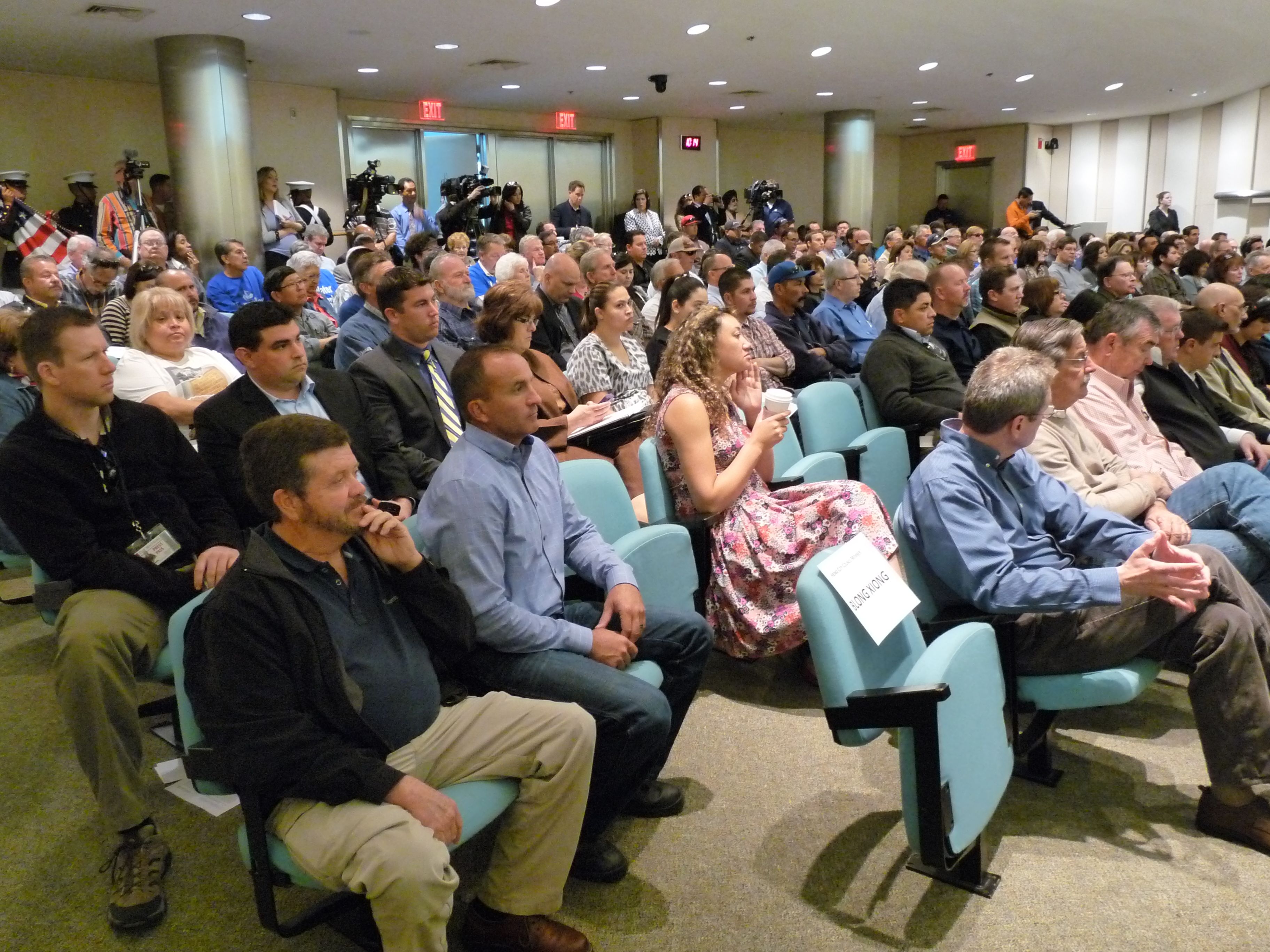
Undersecretary, CA Natural Resouces Agency Janelle Beland Responds at Hearing

Packed House for Committee on Natural Resources, Janelle Beland, Undersecretary: Hearing Illuminates What is Going on with the State

TODAY, About 500 people including farmers, farm employees and others tied closely to the agricultural industry packed the Fresno City Council Room at City Hall to hear from several members of Congress seeking legislation to help California, crippled by a drought and environmental restrictions.

Tom_McClintock,_Official_Portrait

And if you happened to be there for only a few minutes, you would have heard what defines a problem with  Governor Brown’s office in regard to offering solutions to the water crises.

Are you ready for this?

Janelle Beland

Question from Congressman Tom McClintock to Janelle Beland, Undersecretary California Natural Resources Agency:


Representative McClintock
: “Our subcommittee has asked [many months ago, with no response] why nearly 800,000 acre-feet of water went from the Delta to the ocean last fall knowing full well that we were heading into a potential catastrophic drought?  It drained Folsum Lake almost entirely  and certainly was not pumped into San Luis Reservoir.


Janelle Beland: “We were not anticipating that the drought would continue.”
2016-05-31T19:38:08-07:00March 20th, 2014|

California to Ease Water Restrictions

Excerpted from Sharon Bernstein; Reuters

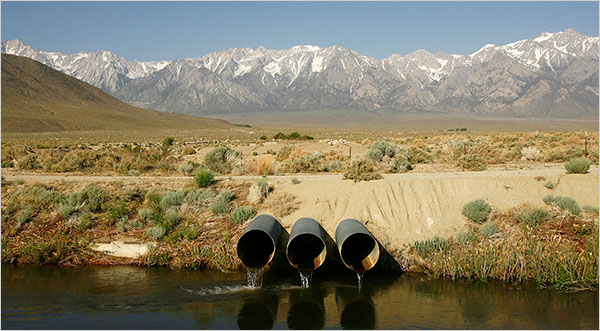
Drought-plagued California will ease some protection for fish in the fragile San Joaquin-Sacramento River Delta, officials said Tuesday, a move expected to make more water available for farming and ease political tensions in an election year.

“California’s agriculture is critical to the world’s food supply,” said assemblywoman Kristin Olsen, who represents part of the San Joaquin Valley, who had lobbied hard against the restrictions. “An inability to produce that food would clearly be devastating to health and human safety not only in California but around the globe.”

Citing recent rains, regulators said Tuesday, there was enough water in the state’s reservoirs now to partially ease restrictions.

“We were quite concerned at that time about the issue of public health and safety,” Tom Howard, executive director of the State Water Resources Control Board, said in a conference call with reporters on Wednesday. “This really had the markings of a historic drought.”

Recent storms dropped nearly a foot of rain in some areas, boosting reservoir levels and the snowpack that the state relies on for drinking water in the spring, but still leaving supplies way below normal for this time of year.

Earlier this month, concern that the state was about to restrict water supplies to farmers even further swept through the agricultural community, spurring intensive pushback and a series of tense meetings with water regulators in the administration of Democratic Governor Jerry Brown.

“We are very concerned that if the current proposal as reported to us is enacted, it will have significant near- and long-term effects on the California economy and, more importantly, will not achieve the desired water supply security intended,” U.S. Senators Barbara Boxer and Dianne Feinstein and Congressmen Jim Costa and John Garamendi, all Democrats, wrote in a letter to the water board.

Under the new rules announced Tuesday, which Howard said may be modified again next month, the two massive public water projects responsible for pumping in the Delta will be able to deliver it to farmers and others, once the state determines that there is enough flowing to meet the health and sanitation needs of residents.

Scott Shapiro, an attorney specializing in water issues for the Sacramento firm Downey Brand, said expanding the allowable uses of tight water supplies was not just important for farmers.

“It’s not just for agriculture, because there are other needs that may be contracted for that go beyond health and safety,” Shapiro said. “It could include other municipal, industrial and agricultural needs.

In addition to allowing more of the water pumped from the Delta to be used for purposes other than meeting health and safety needs, the state planned to reduce by about a third the amount of water that the projects were required to leave in the Delta as a way of protecting fish, Howard said during the press briefing.

Mark Cowin, Director of California Department of Water Resources, commented that fish and wildlife experts consulted by his department said that endangered species in the Delta would not be harmed by the looser rules.

2016-05-31T19:38:08-07:00March 20th, 2014|

Webinar to Examine Environmental Impact of Produce Safety Proposed Rule

Today the U.S. Food and Drug Administration announced it will hold a webinar on April 4 to discuss the scope of the Environmental Impact Statement (EIS) for the agency’s Food Safety Modernization Act (FSMA) proposed rule to establish standards for growing, harvesting, packing and holding of produce for human consumption.

The FDA is holding this meeting to seek public input on the issues and alternatives that it should consider when preparing the EIS and to inform the public of the provisions of the proposed rule that may significantly affect the quality of the human environment and anticipated alternatives FDA plans to consider.

In an update received earlier today, FDA noted that it is “identifying a number of issues and a range of potential alternatives to be considered in the EIS.”

Alternatives have been identified in areas where potential environmental impacts are likely, including the following:

  1. Microbial standard for agricultural water used during growing activities for covered produce using a direct water application method
  2. Minimum application intervals for biological soil amendments of animal origin
  3. Measures related to animal grazing and animal intrusion
  4. Scope of proposed rule and implications to land use and land management.

The meeting will be from 1:00-5:00 p.m. at the Harvey W. Wiley Federal Building in College Park, Maryland. The meeting will also be Webcast at 2 p.m. For more details on how to participate in person or online, visit the FDA website.

PMA members and industry are also encouraged to visit the FSMA Resource Center for additional information on the FSMA and its numerous proposed rules.

2016-05-31T19:38:08-07:00March 19th, 2014|

Federal Plans Begin to Address Climate Realities

Source: Dru Marion; CalCAN

Despite producing mixed results for sustainable agriculture interests, President Obama’s 2015 budget request is an encouraging sign that the federal government is getting serious about climate change, and particularly about adapting to its impacts.

The President’s proposal includes a $1 billion dollar Climate Resilience Fund, which is intended to strengthen preparedness of states and communities for increasingly extreme weather like floods, droughts, and wildfires.

The fund would support investment in research, technologies, and infrastructure across numerous agencies and sectors, including agriculture.

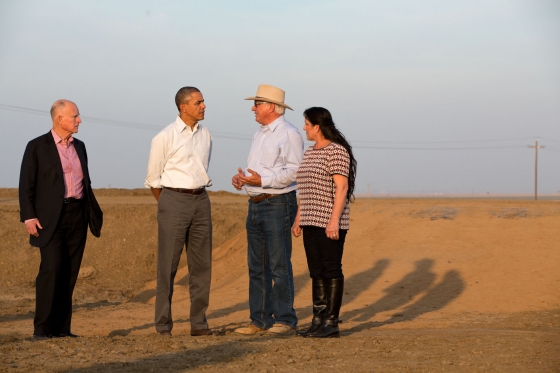
Word of the fund first came out in February, when Obama met with growers and ranchers in the San Joaquin Valley, the heart of drought-stricken California.

While touring the farm of Joe and Maria Del Bosque, who have fallowed their melon fields due to water shortages, the President emphasized the role federal support could play in alleviating drought impacts and preparing for the future.

“A changing climate means that weather-related disasters like droughts, wildfires, storms, and floods are potentially going to be costlier,” he noted, “And they’re going to be harsher.”

More and more, the President’s administration seems to be acknowledging the link between climate change and adaptation needs in agriculture.

Last month’s visit from the President followed close behind Agriculture Secretary Tom Vilsack’s announcement that the USDA will be launching seven ‘Climate Hubs’ across the country, intended to “deliver science-based knowledge and practical information to farmers, ranchers and forest landowners within each region of the United States to support decision-making related to climate change.” (See the USDA fact sheet).

It is uncertain exactly how the Climate Hubs will be funded, however, and USDA Climate Change Program Office Director Bill Hohenstein has declined to comment on the overall estimated costs of the program.

Meanwhile, the 2015 budget request for USDA comes in at $23 billion – about a billion dollars below FY2014 levels. The Climate Resilience Fund is an obvious place to provide needed financial support to the Climate Hubs, but it remains unclear as to whether the President intends for the Fund to provide that support, and also whether Congress will approve the expenditure.

Despite these uncertainties, National Farmers Union President Roger Johnson has voiced his support for Obama’s budget plan, saying, “The President’s proposed Climate Resilience Fund will provide farmers and ranchers with much-needed assistance after extreme weather events, which are occurring with increasing frequency.”

A growing acknowledgement of the link between climate change and agriculture on a federal level is heartening, to be sure, but it is worth noting that the budget plan leaves significant room for improvement with regard to sustainable ag programs more generally.

For a full overview of what the budget request means for sustainable ag interests, click here.

The California Climate and Agriculture Network (CalCAN) brings a sustainable agricultural perspective to climate change and agriculture policy. Their efforts are aimed at increasing funding for research, technical assistance and financial incentives for farmers whose practices reduce GHG emissions, sequester carbon, and provide many environmental co-benefits.

2016-05-31T19:38:09-07:00March 19th, 2014|

Farm Bureau Kicks Off ‘Our Food Link’ Program

According to the American Farm Bureau Federation, farmer and rancher members of the Farm Bureau from around the country officially kicked off the organization’s new “Our Food Link” program in conjunction with a conference for state leaders of Women’s Leadership and Promotion & Education programs.

“Our Food Link is a year-round program that county and state Farm Bureaus use to provide consumers of all ages and backgrounds with information about today’s agriculture,” explained Terry Gilbert, a Kentucky farmer and chair of the American Farm Bureau Women’s Leadership Committee.

“People want to know where their food comes from and who is growing or raising it,” Gilbert said. “Helping people connect with sources of clothing, food, shelter and energy in their communities is the foundation of this multifaceted new program,” she said.

Our Food Link activities range from outreach at supermarkets or farmers’ markets to hosting interactive booths at community events, speaking with lawmakers and neighbors about food and visiting classrooms to help students understand agricultural topics.

Other program ideas include: an Adopt-a-Farmer program, fun runs, garden projects and “Zest ‘n Zing” or other foodie events. Our Food Link activities may also include the collection of food and monetary donations for Ronald McDonald House Charities or other charities.

About 15 Farm Bureau members shopped for and donated food to Ronald McDonald House Charities of Greater Washington, D.C., earlier this month. The connection between Farm Bureau and Ronald McDonald House Charities was forged in the mid-1990s. Since then, Farm Bureau members have donated more than $3 million in food and monetary contributions to Ronald McDonald Houses and other charities.

The Our Food Link planning toolkit and publicity tools may be downloaded at http://bit.ly/1j1jH5H.

2016-05-31T19:38:09-07:00March 19th, 2014|

Science Advisory Report Posted

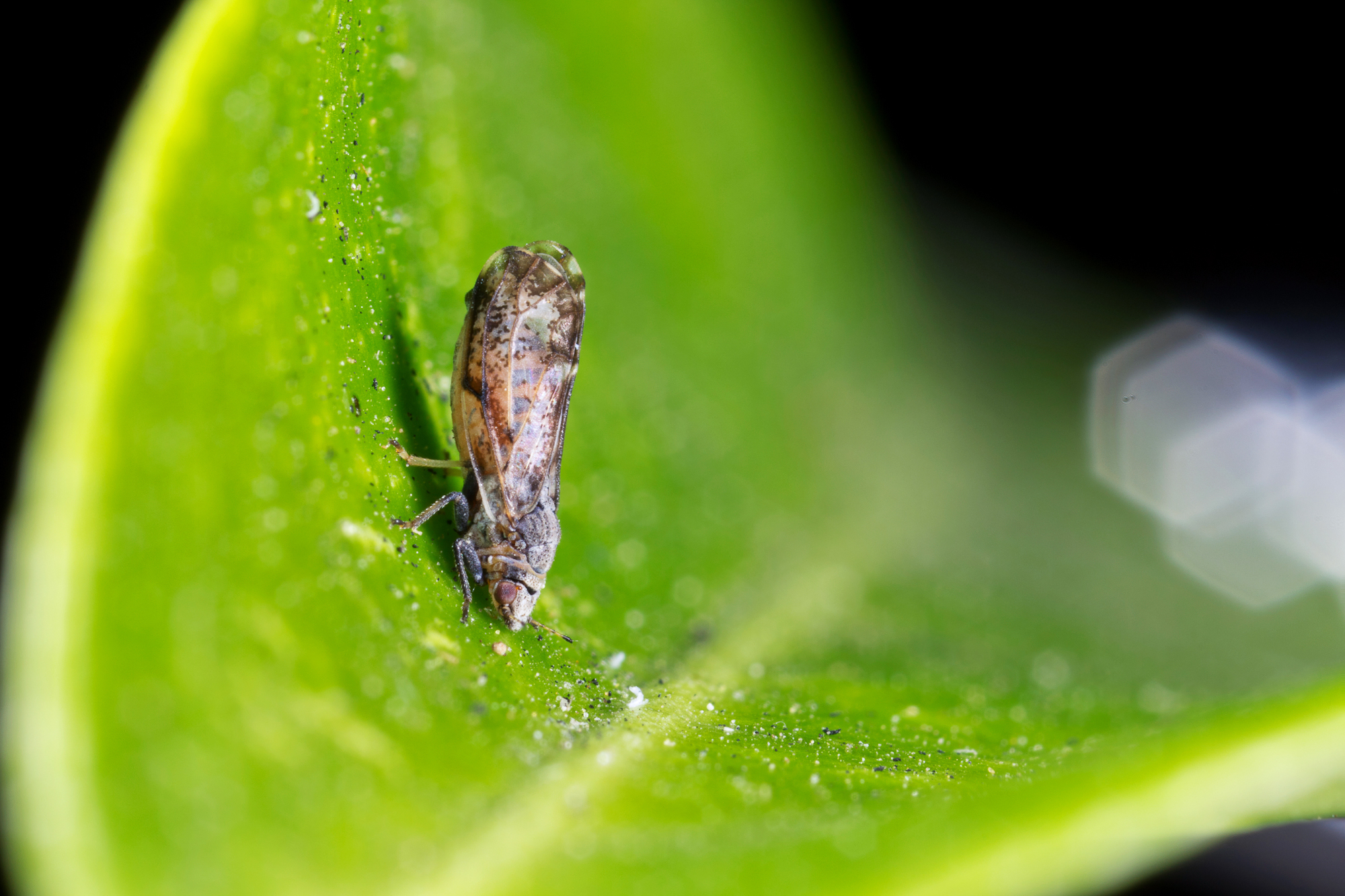
The California Department of Food and Agriculture‘s (CDFA) Asian Citrus Psyllid (ACP) and Huanglongbing (HLB) Ad Hoc Science Advisory Panel (SAP) is a group of scientists selected by the Secretary to provide scientific advice to the Department to ensure that they are using the best science available when developing program policy and protocols.

These scientists consist of experts from states that have already experienced the sequence of events associated with ACP/HLB infestation, as well as California-based scientists with local knowledge to ensure a diverse perspective.

The panel met in December 2013 and was tasked with providing recommendations on a series of non-regulatory questions vetted by CDFA.

This report contains the list of questions and the answers from the ACP-SAP. In addition, the report contains the SAP’s comments and recommendations for consideration in the development of ACP/HLB programs in California.

Among the many questions answered in the report, here are a few:

  • What is the appropriate size of treatment areas around ACP find sites in eradication zones under a variety of scenarios?
  • Would it be beneficial to freeze dry leaves from asymptomatic, VOC positive trees for future analysis, when technology improves?
  • With most of the ACP detections in Tulare County being on traps placed on poles rather than within the canopy, should we change trap placement for the ACP program?
  • On March 23, 2014 we will be 2 years without a HLB detection in California. What should be our exit strategy?

For a copy of the letter, click here.

 If you have any questions or concerns, please do not hesitate to contact the Citrus Program Manager, Victoria Hornbaker at 916-654-0317 or via email at Victoria.Hornbaker@cdfa.ca.gov.

2016-05-31T19:38:09-07:00March 19th, 2014|

FSA Celebrates American Agriculture Producers on National Ag Day

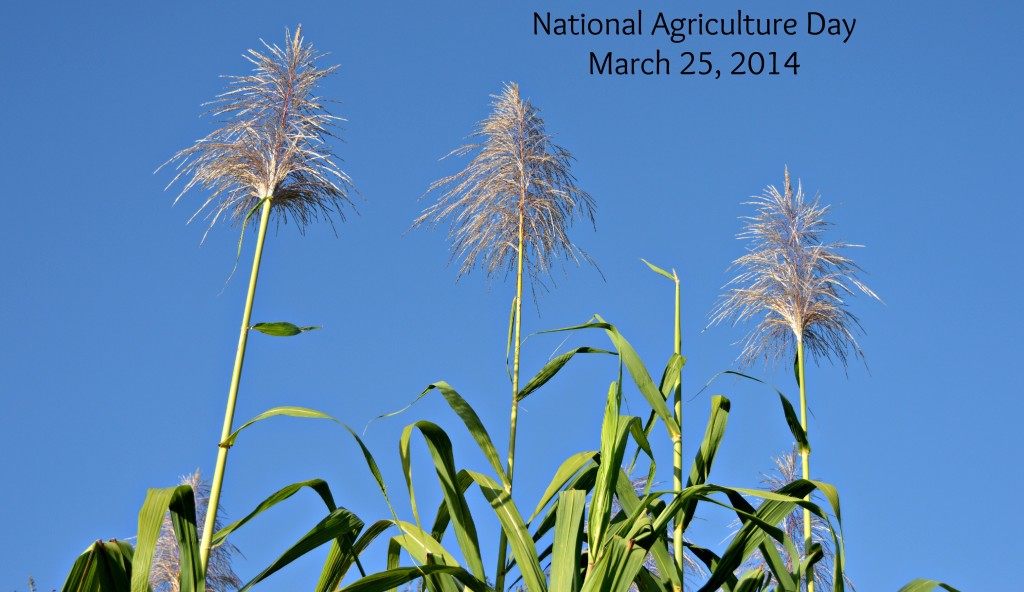
USDA California Farm Service Agency (FSA) Executive Director, Val Dolcini, encourages everyone to take a moment to appreciate the hard working farmers and ranchers in California on March 25, National Ag Day.

This year’s theme is “Agriculture: 365 Sunrises and 7 Billion Mouths to Feed.”

USDA is proud to stand behind the producers who rise before dawn 365 days a year in order to put food on the table for 7 billion people.

“We recognize the importance of agriculture and hope that the recent passage of a new Farm Bill is a sign that 2014 will be a ‘banner year for the industry,” said Val Dolcini. There is no better way to show our support for farmers and ranchers than to begin implementing a new Farm Bill – legislation that will provide farmers, ranchers and consumers alike supportive results.”

While the American economy is rebounding and gaining strength, the agricultural economy has remained strong and at its best.

Looking ahead, the U.S. has seen a trend towards aging farmers; however, according to the recent Census of Agriculture, the nation is beginning to reverse that trend. There is an increase in the number of farmers under the age of 35.

And although the agriculture industry promises a bright future, many farmers and ranchers are still recovering from natural disasters that occurred this year, including the continuing drought.

Fortunately, these producers were still able to grow the commodities that Americans rely on in order to remain a food-secure nation.

Please join FSA in celebrating America’s farmers and ranchers – a selfless group of individuals who make up less than two percent of the world’s population. They feed our country and make our nation secure. And, they supply quality foods to the rest of the world’s seven billion people.

None of the contributions of U.S. farmers and ranchers should be taken for granted, because no one can live without agriculture.

Ag Day is a project of the Agriculture Council of America. For further Ag Day information and events visit www.agday.org. For information on programs administered by FSA, please contact your local FSA office or visit us online at www.fsa.usda.gov.


2016-05-31T19:38:09-07:00March 19th, 2014|

California Strawberry Commission Economic Report: Industry Has Postive Local and State Impact

TODAY, the California Strawberry Commission released a first-ever statewide economic report detailing the $3.4 billion economic contributions of strawberry farming to the state. The report titled, Sustaining California Communities: Economic Contributions of Strawberry Farming (February 2014) showcases the positive impact strawberries have on local communities.

With the best climate in the world for sustainably growing strawberries, California continues to lead the United States and the world in strawberry production. California strawberry farmers are responsible for growing nearly 90 percent of U.S. strawberries. If California were a country, it would be the world’s largest producer of strawberries. California’s 400 family-owned strawberry farms generate an estimated 70,000 farm jobs, while growing strawberries on less than 40,000 acres (less than one percent of all California farmland).

“Not only does California have the best climate on earth to grow strawberries, it also has the most innovative and hardworking strawberry farmers in the world,” said Rick Tomlinson, President of the California Strawberry Commission.  “These 400 small family farms are the foundation for on-farm jobs, as well as packaging, shipping, processing, marketing, nutrition, science, and export jobs that create opportunity in our Central Coast communities and healthy food for consumers.”

Strawberry farming has a multiplier effect, creating jobs and generating revenue beyond the farm. For every farm dollar made, 97 cents is invested back into the community. Strawberry farming accounts for an estimated $108 million in annual tax revenue. This in turn supports local, state and regional government services. Taxes support teachers, police and firefighters, and through a dedicated program, college scholarships support higher education opportunities for children of strawberry farm workers.

just_add_ca_strawberries_rolling_banner-616_250

Source: California Strawberry Commission

“California strawberry farming is a tremendous asset to the state and nation,” said economist Jim Schaub, Ph.D. “The dollars that come into strawberry farms go back out as wages, land costs, payments for farm inputs and services, regulatory costs, and property and business taxes.”

From inception to harvest, the entire lifecycle of a strawberry begins and ends in California. In Northern California, roughly a billion plants are nurtured in open fields from October to February. These hardy, healthy nursery plants are then shipped to the Central Coast: the world’s premier region for growing strawberries. Every step of the way, strawberries provide hundreds of communities with jobs, income and tax revenue necessary to sustaining local economies.

The California Strawberry Commission is a state government agency located in Northern California that represents an industry of 600 growers, shippers and processors of California strawberries. With a focus on food safety education, Commission strategies also include production and nutrition research, trade relations, public policy and marketing communications.

2017-09-03T00:44:43-07:00March 18th, 2014|

Drought Could Affect Current and Future Food Prices

California Farm Bureau Federation reported today that with hundreds of thousands of acres of farmland expected to be left unplanted this year due to water shortages, market analysts and economists say shoppers will likely begin to see higher prices on some food items later this year.

Sean Villa, president of Great West Produce, a produce broker in Los Angeles County, said he expects a number of products to be affected later this year, including broccoli, sweet corn and melons from growing regions in Fresno, Mendota and Huron, where farmers will likely cut acreage due to water shortages.

Gary Tanimura, a vegetable grower based in the Salinas Valley, said he will have to reduce his summer melon production in the San Joaquin Valley by about 20 percent due to lack of water.

Tanimura said spring and fall lettuce production in the San Joaquin Valley also could drop by 25 percent to 30 percent this year.

Cindy Jewell, director of marketing for California Giant Berry Farms in Watsonville, said farms in the Oxnard growing region—which typically plant a second crop in the summer for fall production—may not be able to do that this year.

“If the water situation continues to be this severe, there may not be as many of those acres replanted for fall production,” she said, adding that if the drought continues into fall and winter, when most strawberries are planted, it could affect what’s planted for next year’s harvest.

Because California supplies nearly 90 percent of the nation’s strawberries, Jewell said it is not likely that there will be much of a production shift to other regions.

“It’s not like someone else could step in and do that,” she said. “It’s all about climate and location.”

On the beef market, the California drought may have the most impact on niche products such as grassfed, organic or natural beef, said Lance Zimmerman, a market analyst for Colorado-based Cattlefax. Those programs typically rely more on local or semi-regional supplies, he said.

Retail beef prices have risen nationwide, Zimmerman said, because of improved demand and continued declines in supply caused by several years of drought in other major beef-producing regions in the Southern Plains and the Southeast.

In states where drought conditions have improved, ranchers are now trying to build back their herds, so they’re not sending as many animals to market, particularly mature cows, and that has driven up prices on meat cuts such as chuck roast and ground beef, he added.

On the produce market, fair weather accompanying the drought has, for now, caused vegetable crops to come to market ahead of schedule, creating an overlap of products from the desert region and the San Joaquin Valley.

That, combined with reduced demand from East Coast markets due to severe winter weather, has led to temporary oversupplies of some vegetables, Tanimura said, while Jewell reported that berry production has also been stimulated by warm winter weather.

2016-05-31T19:38:09-07:00March 18th, 2014|

Farmer and Ranchers Voices from the Drought

A team of UC researchers is developing a project that will use digital tools to capture the voices of the farming and ranching families who are battling the worst drought they have witnessed.

On one front, the project, called Farmer and Rancher Voices from the Drought, is cultivating a following through a new Facebook group.

Today, however, they are launching a new audio component, where farmers and ranchers are interviewed and recorded by a friend, colleague or loved one.

They document their stories of the drought, explaining what practices have worked for them so that others dealing with these struggles can better cope.

Through the broad 100-year Cooperative Extension effort at the University of California, faculty, staff and researchers are reaching out to the extensive network of farming and ranching families across the state, encouraging each of them to share their stories.

How the ‘Voices’ project works:

The audio component of the project is hosted on SoundCloud, where anyone can easily record and upload an audio track to share.

The team is moderating the SoundCloud group and approving each recording. The tracks will be shared across our social media and web pages, where they will hopefully gain the attention of media, as well as the general public.

Here are a few guidelines to smooth the process:

  • Create an account. Recording is easy, but first you must go to the SoundCloud site and sign up. You can also download and record with their smart phone app.
  • Research your strategy. StoryCorps, a nonprofit project, has an excellent instruction guide for helping you record your interview. While you’re there, we encourage you to also upload your finished story to the StoryCorps DIY page, where it will be preserved at the Library of Congress.
  • Keep it short. By limiting your recording to three minutes, your story will keep listeners interested while maintaining its most essential parts.
  • Frame your conversation around questions. Have your interviewer select from this list and add follow-ups.

Directions:

  1. Provide your name, what you do and some background information on your farming or ranching operation.
  2. How has your operation been affected by the drought?
  3. What have been your management practices in response?
  4. What will you do differently if it continues?
  5. Is this the worst drought year you’ve experienced?
  6. What are your stocking and supplemental feed rates? Or how much land is planted versus fallow? Explain.
  7. What will your operation look like next year if the drought continues?
  8. How has this affected you and your family?
  9. What advice would you give others in similar situations?
  10. What should those outside California know about this drought?

Finally, name it. Once you have successfully loaded your conversation onto our SoundCloud group, let us know more about yourself.

Send us your feedback and some details so we can follow up: an email address or phone number, the storyteller’s name, the interviewer’s name, the company name (if you’re affiliated with an agricultural organization) and a photo.

2016-05-31T19:38:09-07:00March 18th, 2014|
Go to Top