Climate change’s impact on restaurants

By Patrick Mulvaney, chef and restaurateur; The Sacramento Bee

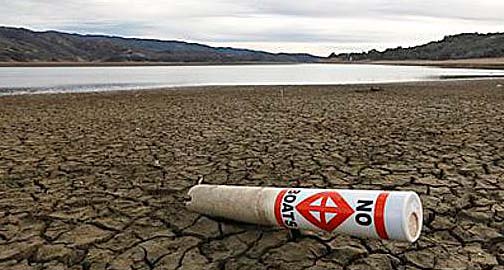
When I read about climate change, I learn about rising sea levels and shrinking polar ice caps – problems for 100 years in the future. But when I talk to my friends and customers about climate change, the focus is on what is happening today. It seems little things are already adding up.

As a chef, I have always believed that the completed dish will only be as good as the ingredients used. The bounty of the 12-month growing season is the main reason we decided to open our restaurant here in Sacramento. Because of our close relationships with local farmers, our “supply chain” is basically a truck and the farmer’s market. We can see how the drought has affected their crops.

Three years of drought have taken a toll on the ranchers and farmers we depend on. Lack of rain to refill the state’s reservoirs has reduced water levels to historic lows. Some water allocations have been cut entirely, and most farmers have been forced to scale back on planting. Forty-five percent of rice land went unplanted this year; farmers were forced to sell off cattle this spring. Researchers at UC Davis estimate that drought will prevent farmers from planting nearly 430,000 acres and cost the state $2.2 billion.

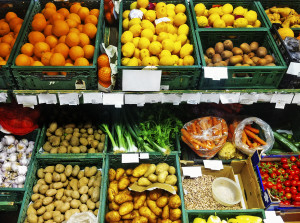
This isn’t just a Sacramento problem; it will affect the whole country. California grows nearly half of the nation’s fruits and vegetables, including 70 percent of the lettuce, 76 percent of the avocados, 90 percent of the grapes and virtually all of the almonds. Unfavorable conditions in California mean higher prices for restaurants across the country.

The U.S. Department of Agriculture said produce prices could increase 5 to 6 percent this year. Even though beef prices are at historically high levels, the drought has raised the prices of feed even higher, forcing ranchers to sell the majority of their herds. A few years ago, the U.S. had 102 million head of cattle. That number is now under 88 million and dropping. It’s the smallest herd since 1951, so prices keep rising.

In addition to drought, climate change is causing other kinds of severe weather swings. Last winter was unusually brutal in the Midwest, causing an almost complete failure of the cherry crop and raising doubts about harvests for the rest of the tree fruits this summer.

In some ways, we are lucky at my restaurant; our daily-changing menus have allowed us to respond to climate disruptions. And while we continue to serve the best of what’s coming out of the nearby land, some items have become harder to find at a reasonable price. During the past year, restaurants have changed their menus to reflect higher meat prices, sudden collapses in citrus yields and the lack of products as farmers are forced to let their land lie fallow.

I worry that extreme weather, like California’s drought, may become the new normal. Our agricultural partners face the greatest risks. Many businesses will experience climate change through limited supply and poor supply-chain quality.

There’s something we can do about this. California has long been a national leader on clean-energy policies. Gov. Jerry Brown is supportive of the Environmental Protection Agency’s new regulations that will reduce carbon pollution. He said, “Clean-energy policies are already working in California, generating billions of dollars in energy savings and more than a million jobs. Bold, sustained action will be required at every level, and this is a major step forward.”

Now is the time to continue California’s clean-energy leadership tradition by implementing changes that encourage business leaders to use resources more efficiently. This will help prevent more extreme weather events and make our economy more resilient.

 

2016-05-31T19:33:25-07:00September 16th, 2014|

Commentary: CA Reporters Discuss How and Why They Cover Agriculture Beat

Source: Dave Kranz; Ag Alert

As people have become more interested in the sources of their food, they have also become more interested in reading about where their food originates and about the people who produce it: That was the concept behind a seminar conducted in San Francisco last week titled “Journalism: The Agriculture Beat Resurgence.”

Hosted by the Commonwealth Club, the event featured three Bay Area-based reporters and editors who write about agriculture for regional or nationwide audiences.

The discussion provided insights into how the reporters view their work, and into the overall interest in agricultural reporting itself: The seminar attracted a nearly full-house audience of about 80 people on a Wednesday night.

It also underlined the continuing importance of Farm Bureau’s efforts to reach out to members, reporters and the general audience through all forms of media.

The moderator of the panel discussion, KQED Radio reporter/anchor Rachael Myrow, described the agriculture beat as “the intersection between fashion, health and politics.”

The panelists agreed, noting how agricultural news can be classified as a business story, an environmental story, a cultural story.

“Every story is an agricultural story,” said Andy Wright, deputy editor of Modern Farmer, which produces a quarterly publication and daily website updates aimed at an audience she described as young, urban and aspirational.

Where do they find story ideas? The reporters said they talk to farmers at farmers markets, talk to chefs, scan trade publications and websites, and listen to story pitches from farmers and people in the food business.

“Farmers are getting a lot more media savvy,” Wright said. “They’re on Facebook and Twitter. They understand the importance of connecting.”

Naomi Starkman of Civil Eats—a Web-based news service that says it aims to “shift the conversation around sustainable agriculture in an effort to build economically and socially just communities”—called social-media tools “essential” to promoting stories, and encouraged farmers to hire someone on their staff who does social media and other outreach as a part of their job.

Myrow noted that much of the current reporting on agriculture focuses on “small, niche” farms.

“Are too many publications chasing the foodies instead of informing the general public about their food?” she asked.

“What’s unproductive,” Wright responded, “is to pit big ag vs. small agriculture. What’s more important is to focus on what’s working.”

During part of the program devoted to audience questions, the panelists were asked if they consider themselves to have a mission to try to change people’s behavior.

Tara Duggan, a food writer for the San Francisco Chronicle, said she considered it her mission to “understand what readers are most interested in,” which, in her case, tended to be topics such as nutrition and sustainability.

In her case, Wright said, “I don’t know that it’s my role as a journalist to promote one way of eating vs. another. My role is to get stories to as wide an audience as possible.”

Duggan noted that writing for a general-interest publication such as the Chronicle presents challenges in presenting stories about farming and environmental topics. For example, she said, “With the California drought, I feel people have reached the saturation point, even though it’s a really important story.”

As the event’s organizers pointed out, the agriculture beat was once a key area of coverage for large media outlets but, as the staffs of mainstream media outlets have shrunk, agricultural reporting has been dispersed among writers who regularly handle business stories, environmental stories or general-assignment reporting.

Still, there’s significant interest in stories about farming and food among both the general media and the specialty publications, websites, blogs and other outlets that have proliferated in the last few years.

We’ve seen that here at the California Farm Bureau, where we respond to more than 450 news media inquiries a year. During 2014, driven by interest in the impact of drought on farmers and ranchers, we have spoken with reporters from throughout California and the nation, as well as to media outlets from Canada, Germany, Switzerland, France, Japan, Singapore and Australia.

For Farm Bureau, communicating with members and the non-farm audience has always been a core function, using all forms of media. That’s why, for example, stories from Ag Alert® appear not only in the newspaper, but online and as Facebook posts and tweets, as well.

Our California Bountiful® television program—produced for a non-farm audience—can be found on the air and also online and on YouTube. The TV program and California Bountiful magazine also reach out to general audiences via Facebook, Twitter, Pinterest and Instagram.

None of the outreach that Farm Bureau does would be possible without the support and cooperation of Farm Bureau members, who give of their time to talk to reporters from our media outlets and from other television, radio, newspaper and online news media every day.

As the San Francisco event showed, people are interested in what farmers and ranchers do, how they do it, and why. Only by telling their stories themselves can farmers and ranchers assure that others don’t tell their stories for them.

2016-05-31T19:33:26-07:00September 12th, 2014|

Got ice cream! (Thanks to UC Davis)

By Trina Wood

Chances are when you’re scooping that vanilla bean ice cream into your bowl for dessert, you’re focused on the flavor about to hit your taste buds, not on whether it may give you a foodborne illness.

That confidence in the safety of California’s dairy products  — the state’s top agricultural commodity, valued at nearly $7 billion in annual retail sales — results in part from the efforts of the San Bernardino branch of the California Animal Health and Food Safety laboratory system.

This network of laboratories, headquartered at UC Davis and administered by the UC Davis School of Veterinary Medicine on behalf of the California Department of Food and Agriculture, performs surveillance and diagnostic testing for livestock and poultry.

The San Bernardino laboratory carries out such work on milk and dairy products that are submitted by the state’s Milk and Dairy Foods Safety Branch. The lab’s on-site bacteriology section tests for a variety of disease-causing microbes including  ListeriaBrucellaSalmonellaCampylobacter and E. coli O157:H7 — all of which can cause severe illness and even death.

Protecting against foodborne diseases

The U.S. Centers for Disease Control and Prevention estimates that each year roughly one in six Americans (or 48 million people) get sick with a foodborne disease.  Of these, 128,000 are hospitalized and 3,000 die from these illnesses.

However, such diseases have almost been eliminated from licensed milk and dairy products, thanks, in large part, to a strong regulatory framework, including adherence to pasteurization and laboratory standards.

Approximately 1,500 samples of milk, dairy products and water arrive monthly at the San Bernardino lab resulting in approximately 4,200 tests conducted by a team of eight technicians. These microbiological assessments monitor bacteria populations and the effectiveness of pasteurization in destroying harmful bacteria.

Partnering with California

“The laboratory system has been a successful partnership between the state and UC Davis since 1987,” said its director, Richard Breitmeyer.

He noted that it was natural in the 1990s to expand the lab’s statewide regulatory testing services to include milk products. Before then testing was limited to samples from only Southern California.

In 2000, the California Department of Food and Agriculture was so impressed with the accuracy and timeliness of the California Animal Health and Food Safety laboratory system that it placed all such statewide regulatory compliance testing in the network of labs, in a move that  enabled the state to cut costs, speed analysis and consolidate testing.

The San Bernardino lab

Three years ago, the state asked the laboratory system to also begin testing  milk and dairy products for chemical components such as fat and protein content. The San Bernardino lab now provides this service.

“I’m proud of our efficiency,” says Jose Gallegos, the San Bernardino lab’s supervising dairy analyst, who has been with the laboratory system for 20 years and oversees the milk quality testing lab. “Results are rapid and consistent, and reduce the number of people who become ill in the event of an outbreak.”

The San Bernardino laboratory is considered the state reference lab for California and holds the distinction of being the only veterinary facility in the nation set up as a regulatory testing facility. In addition to running tests for the state, the laboratory also is certified by the U.S. Food and Drug administration, under the National Conference of Interstate Shippers program guidelines to run microbiological tests.

Testing dairy products

As part of this testing program, the state sends samples from three sources: the farm, processing plants and retail establishments where the finished product is sold. The lab also tests some exports such as ice cream for microbiological components and dry goods such as powdered milk.

State milk and dairy officials may submit samples from a location if a report comes in that someone has become ill after eating or drinking at a particular business. State and federal investigators also routinely check farmers markets and small establishments for raw or illegally processed milk and dairy products that could pose a serious health risk. Those products are sent to the San Bernardino lab to be tested for the presence of bacteria or improper pasteurization.

Samples sent to the lab must be transported at the proper temperature, arrive within 60 hours of collection and be properly packaged before they are tested for general bacteria populations. If the testing criteria aren’t met, those samples are rejected for testing and reported to the state for recollection. Any test results indicating the products were not produced in compliance with state regulations are reported to the California Department of Food and Agriculture, which is authorized to enforce the regulations.

After milk samples have been analyzed for bacteria and other indicators of improper sanitation at a facility, they move on to be tested for drug residue and other unwanted substances such as antibiotics, which may have been used to treat sick cows.

Farmers are required to keep milk out of the supply line until the medication has cleared from the cow’s system and the milk meets strict requirements established by the FDA. Other testing, such as checking for proper pasteurization and possible water contamination, complements the tools used by state officials to ensure the quality and safety of the milk supply.

“We’re always looking at developing better tests and working with our partners to provide the highest level of service,” Gallegos says. “Knowing all the quality testing processes in place, I feel great about drinking milk!”

About CAHFS

CAHFS is a public service program of the university. The primary objectives of the CAHFS are to provide appropriate and timely diagnostic support to safeguard the health of California’s dairy, livestock and poultry industries and to protect the public health from animal disease.


2016-05-31T19:33:26-07:00September 11th, 2014|

California Grown gets new chairwoman

By Mike Hornick; The Packer

Cherie Watte, executive director of the California Asparagus Commission, is the new board chairwoman of California Grown, succeeding Kasey Cronquist, chief executive officer of the California Cut Flower Commission.

The Buy California Marketing Agreement manages the California Grown campaign.

Executive committee members on the California Grown board include vice chair Spencer Halsey, associate director of the California Association of Gardens and Nurseries; and secretary treasurer Karla Stockli, chief executive officer of the California Fig Advisory Board.

Before becoming executive director of the California Asparagus Commission, Watte was director of international trade policy at the California Department of Food and Agriculture. She was also appointed manager of the department’s agricultural export program by then-Gov. Pete Wilson.

Prior to her CDFA appointment, Watte was the director of national affairs and research for the California Farm Bureau Federation. Other roles included legislative assistant to congressman Tony Coelho on the U.S. House of Representatives committee on agriculture. She is a former member of the U.S. Department of Agriculture’s agricultural trade advisory committee on fruits and vegetables.

“(Cherie) knows firsthand what it takes to be an active farmer in California, since she is the fourth generation of her family to farm in the Imperial Valley,” Nick Matteis, executive director of California Grown, said in a news release.

“We have a lot going on with consumer promotions and newly formed retail and foodservice partnerships,” Watte said. “Farmers and ranchers in California face many challenges, and this program is a bright spot for them.”

Cronquist guided the campaign through the revamping of its promotions program and membership expansion.

2016-05-31T19:33:28-07:00September 2nd, 2014|

Ag Alert update: Milk-pricing bill withdrawn

Source: Ag Alert

California Department of Food and Agriculture Secretary Karen Ross announced Wednesday that milk-pricing legislation will not be pursued during this legislative session.

In a statement, she acknowledged that timing on Assembly Bill 2730 “was not ideal,” but that she was “compelled to see if we could get something done this year.”

“Since the August 13th Task Force meeting, a tremendous amount of progress has been made, but not enough,” she said.

Ross did not say whether the department will pursue reform legislation again next year or discuss the future role of the Dairy Task Force.

Watch for further coverage in the Sept. 3 issue of Ag Alert. 

2016-05-31T19:33:28-07:00September 1st, 2014|

US rice farmers see opportunity in China – from the Los Angeles Times

By David Pierson

Gregg Yielding was given a quixotic task: travel to China and determine if consumers there would be willing to eat American rice.

So he set up tables at some of the most popular supermarkets in southern China, hung American flags and began dishing out steamy samples of rice from Arkansas and California.

“At first they’d say, ‘There’s rice in the U.S.?” said Yielding, head of emerging markets for the U.S. Rice Producers Assn., a Houston-based trade group. “And we’d have to show them a map to explain that it’s grown in California and the South. Then they’d try it, and they would really like it.”

Chinese importers, distributors and grocery chains lined up. Selling U.S. rice to China seemed like a slam-dunk. But eight years after Yielding’s first venture on behalf of the U.S. industry, not a single shipment of American rice has officially made it into Chinese hands.

That won’t happen until the two countries agree on a so-called phytosanitary protocol, which determines the necessary steps U.S. rice exporters must take to mitigate pests such as insects. The disagreement highlights the growing pressure on U.S. agricultural producers to either accommodate China or risk being shut out of the world’s largest emerging consumer market.

That might not have mattered a decade ago when U.S. farmers could rely on domestic buyers or traditional foreign markets such as Mexico and Canada. Today, China’s swelling appetite for food is touching agribusiness everywhere and forcing companies to choose whether to adapt.

Those that comply are seeing dividends. American agricultural exports to China rose to a record $25.8 billion last year from $5 billion a decade earlier.

Until a few years ago, no one would have considered exporting much rice to China, the world’s largest producer and consumer of the grain.

Tim Johnson, president and chief executive of the California Rice Commission, called it “the ultimate example of selling ice to the Eskimos.”

But starting in 2012, China went on a spree, scooping up millions of tons of the grain from countries such as Vietnam, Pakistan and India. China is now on pace to import a record 3.4 million tons of rice this year — six times more than it did in 2011, according to the U.S. Department of Agriculture.

Other industries remain shut out. The U.S. beef industry is still trying to overturn a 2003 ban on American cattle over mad cow disease. Starting late last year, nearly a million tons of U.S. corn have been rejected at Chinese ports because of inclusion of an unapproved genetically modified strain. And some American pork imports were halted this month over fears they contained traces of ractopamine.

“Demand is growing so quickly in China for so many food products — and with so many places to get them from — China can pick and choose,” said Jim Harkness, a senior advisor on China for the Institute of Agriculture and Trade Policy in Minneapolis. “From a U.S. perspective, it looks like the Chinese are being picky and erecting non-tariff barriers for political reasons. But I think from the Chinese perspective, the U.S. is an outlier in some cases. Ractopamine is banned in over 100 countries.”

In addition to China, the European Union and Russia also ban the additive. It’s deemed a risk to people with cardiovascular problems.

While other products struggle to win access, the U.S. rice growers are hopeful that officials in Washington and Beijing can come to terms as early as next year. If they do, analysts estimate, U.S. rice exports to China could reach several hundred million dollars a year. That would make China a top buyer of the American grain, on par with Mexico and Japan.

Though it produces only 2% of the world’s rice, the U.S. accounts for nearly 10% of the rice traded globally — enough to make it the fifth-biggest exporter. About half the rice grown in the U.S. ends up abroad. Still, rice consumption in China is so high the country could eat through America’s annual production in 17 days.

The growing Chinese appetite for imported rice may partly reflect surging food demand, analysts said. But it’s mostly driven by arbitrage, as government policies have kept domestic rice prices high to protect Chinese farmers. Rice mills in China decided it was cheaper to buy foreign supplies.

American rice producers can’t meet that sort of mass demand — nor do they want to. Their interest is in selling packaged rice to China to fill a high-end niche. The rice producers association’s survey of Chinese consumers buttressed that idea. Despite the concerns of Chinese regulators, shoppers in China overwhelmingly perceived U.S. rice as a safe alternative in a country hit by myriad food safety scandals.

Josh Sheppard, a fourth-generation rice grower in Biggs, Calif., about 60 miles north of Sacramento, said he’d welcome Chinese buyers because they probably would pay more for his grains than U.S. customers — much the way Japanese buyers currently do. That’s especially important now when drought has cut rice acreage in the state by 25%.

The cooperative is managed by Stuart Hoetger, co-founder of Stogan Group, an agricultural consulting firm in Chico, Calif.  Hoetger has arranged a partnership between the rice growers and Chinese food and agriculture conglomerate Wufeng.

Medium grain rice known as Calrose grown by the cooperative is being shipped in limited quantities to Chinese ports, where Wufeng is redirecting it to customers in small markets such as the Solomon Islands, the idea being Hoetger and his growers will be ready to ship to China shortly after a trade agreement is finalized.

“If China asks for something, you do it,” Hoetger said. “You ask any farmer that’s sold to China in the last few years and they’ll tell you they’ve made a lot of money.”


2016-05-31T19:33:28-07:00August 29th, 2014|

Drought leaves Tulare County homes without water

By Associated Press

Hundreds of rural San Joaquin Valley residents no longer can get drinking water from their home faucets because California’s extreme drought has dried up their individual wells, government officials and community groups said.

The situation has become so dire that the Tulare County Office of Emergency Services had 12-gallon-per person rations of bottled water delivered on Friday in East Porterville, where at least 182 of the 1,400 households have reported having no or not enough water, according to the Porterville Recorder.

Many people in the unincorporated community about 52 miles north of Bakersfield also have been relying on a county-supplied 5,000-gallon water tank filled with non-potable water for bathing and flushing toilets, The Recorder said.

Emergency services manager Andrew Lockman, said the supplies of bottled water distributed by firefighters, the Red Cross and volunteer groups on Friday cost the county $30,000 and were designed to last about three weeks but are only a temporary fix. To get future deliveries, officials are asking low-income residents to apply for aid and for companies to make bottled water donations like the one a local casino made a few weeks ago.

“Right now we’re trying to provide immediate relief,” Lockman said. “This is conceived as an emergency plan right now.”

Officials said the problem is partly due to the shallowness of some residential wells in East Porterville that are replenished by groundwater from the Tule River, the Fresno Bee said. But river flows are way down due to the ongoing drought, leaving some wells dry.

East Porterville resident Angelica Gallegos fought back tears as she described being without water for four months in the home she shares with her husband,, three children and two other adults.

“It’s hard,” she told The Bee. “I can’t shower the children like I used to.”

Farmworker Oliva Sanchez said she still gets a trickle from her tap, but dirt started coming out with the water about a week ago.

“I try to use the least possible. I’ll move if I have to,” she said.

Along with experiencing inconvenience and thirst, some residents have been reluctant to speak up about being waterless because they are afraid their landlords will evict them or social workers will take their children away, The Recorder reported.

“We want to make it abundantly clear we are not going to make this harder for anyone,” Lockman stressed. “These lists aren’t going anywhere. (Child Welfare Services) isn’t getting a list. They (CWS) made it abundantly clear they are not going to remove children because of no water. We just want to help the people.”

2016-05-31T19:33:29-07:00August 26th, 2014|

Voters to decide fate of water bond this November

Source: Kate Campbell; Ag Alert 

Finding agreement on the $7.5 billion water bond measure headed to the November ballot wasn’t easy—it involved years of hard work by many stakeholders, including the California Farm Bureau Federation—but participants in the discussion said it’s a key step in addressing the critical need to upgrade the state’s broken water system.

“The severe water shortages we’re currently experiencing result from 30 years of neglecting our water-storage system,” CFBF President Paul Wenger said. “That neglect is magnified by the drought, and it’s time to reverse that pattern of neglect. Placing this water bond on the November ballot gives Californians a chance to provide more water for our cities, for food production and for the environment.”

CFBF Administrator Rich Matteis said passage of the water bond bill last week marked the end of more than five years of sustained effort.

“Farm Bureau has been involved in this issue since the beginning, working for a bond that would maximize the investment in new water storage for California,” Matteis said. “But as much as the passage of the bond bill marked the end of that process, it also signaled the beginning of a campaign to show Californians the essential need to invest in our state’s water system.”

Matteis noted that the water bond will come before voters in less than 11 weeks, meaning that supporters of new water investment will need to move quickly to solidify support for the measure.

“Farm Bureau members are uniquely positioned to work at the grassroots level to educate and build public awareness for much-needed water improvements,” Matteis said. “Every Californian has a stake in the voter outcome in November, but none more than farmers and ranchers who depend on adequate, reliable water supplies.”

The revised bond measure includes $2.7 billion for water storage projects and that money will be continuously appropriated, Matteis noted, meaning that future Legislatures will not be able to redirect it to other uses.

“This bond represents the state’s largest investment in water storage in more than 30 years,” Wenger said, “and it couldn’t come at a more critical time.”

The current drought has shown that California has lived too long with an outdated water-storage system, he said.

“We need to update that system to match changing weather patterns, in which more precipitation will fall as rain rather than as snow,” Wenger said. “Additional surface storage can capture those strong storm surges when they come, reduce flooding and bank that water for later dry times.”

In addition to new surface and groundwater storage projects, proceeds from the sale of bonds—if approved by voters—would be used for regional water reliability, sustainable groundwater management and cleanup, water recycling, water conservation, watershed protection and safe drinking water, particularly for disadvantaged communities.

Association of California Water Agencies Executive Director Tim Quinn called the revised water bond the “right size at the right time for California.”

Noting the bond includes $100 million that can be used by local agencies for groundwater plans and projects, the Kern County Water Agency commended those who negotiated the final version of the measure. The water bond also includes new funding for a variety of local water programs through integrated regional water management plans, or IRWMPs. Specifically, the bond measure would allocate $34 million to IRWMPs in the Tulare/Kern watershed.

The California Water Alliance, whose members include Central Valley farmers and agricultural businesses, applauded the bond’s placement on the November ballot.

“Most importantly, it recognizes that Californians statewide, from all walks of life, cannot afford to carry the burden of a dysfunctional water system that has been exacerbated by the worst drought in California history,” said Aubrey Bettencourt, executive director of the alliance.

The drought, she said, has resulted in dramatic levels of unemployment, higher food prices, increased utility costs, water rationing and severe losses for California farms, many of which have had to fallow thousands of acres.

“This bond provides the means to begin upgrading California’s water system for the 21st century, including new storage facilities and clean water projects for underprivileged communities,” Bettencourt said.

2016-05-31T19:33:30-07:00August 22nd, 2014|

Table olive growers report a ‘real bad’ crop

By Ching Lee; Ag Alert

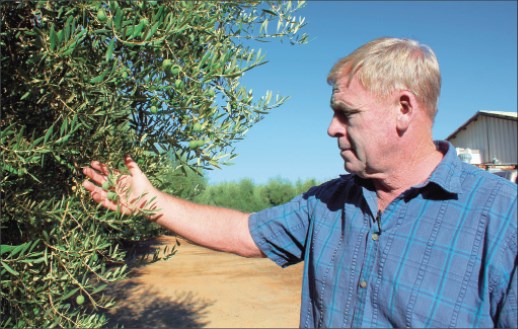
Freezing temperatures last winter coupled with impacts from the drought have left many California table olive growers in the San Joaquin Valley with not much of a crop this year.

Although the U.S. Department of Agriculture reported a production forecast of 50,000 tons—down from last year’s crop of 91,000 tons—Adin Hester, president of the Olive Growers Council of California, said he thinks the estimate is “on the high side” based on what growers are reporting in Tulare County, where there’s about 12,000 acres, or 60 percent of the state’s table olives.

“It’s real bad down here,” said Rod Burkett, a grower in Tulare County and chairman of the council. “We don’t have any fruit down here to speak of, between the frost, the extensive heat during bloom and the drought.”

Olive trees are alternate-bearing, and this would have been the “off” year, yielding a lighter crop, Hester noted. But with the added weather issues and the drought, growers had a particularly challenging year, he said.

Hester noted that at a growers meeting held by processer Bell-Carter Foods last week in Visalia, not one grower from the San Joaquin Valley predicted yields of 4 tons per acre. Very few said they had 2 to 3 tons per acre, while half of them said they’re not going to pick at all.

Meanwhile, the state’s oil olive crop appears to have fared better.

Patricia Darragh, executive director of the California Olive Oil Council, said estimates for the oil sector are not available until mid-September, but she expects the state will produce about 3.5 million gallons, similar to last year. She said the crop was going to be lighter this year anyway because of the alternate-bearing factor, but noted that some new trees have also come into production. Current acreage is about 35,000.

“Some of the growers have reported a little bit of an increase in production, but some have reported a decrease in production. It does vary throughout the state,” she said, noting that individual growers in certain areas may have suffered more freeze damage than others.

Unlike the state’s table olive production, which is concentrated in Tulare, Glenn and Tehama counties, oil olive production is “pretty far flung in the state,” Darragh said, “so that’s positive for us.”

Jack Bozzano, an olive oil producer in Stockton, said his crop is probably down by half this year, but he attributes that to the trees’ “off” year and said he did not experience much freeze damage.

Table-olive grower Burkett said the December freeze killed much of the new fruit wood that sets this year’s crop, leaving him with a total of 1 to 2 tons spread throughout his 30 acres. That’s compared to 4-and-a-half tons per acre last year.

“There’s no way that I can harvest,” he said.

Art Hutcheson, who also grows table olives in Tulare County, said in addition to frost damage, high temperatures during bloom hurt production. He described his crop as “light” and said he is debating whether it will be cost effective to harvest, even though his fruit will make good size.

“What we do pick is going to bring good money,” he said. “It’s just not going to be a whole lot of it.”

Growers in Northern California also experienced freeze damage, said Mike Silveria, a grower in Orland and chairman of the California Olive Committee. But their production was much better on the Manzanillo variety, which he described as an average crop, whereas the Sevillano variety appears to be a light crop.

The majority of the north state’s crop is in Glenn and Tehama counties, with about 6,000 acres of Manzanillos and 2,000 acres of Sevillanos, while Tulare County grows predominantly Manzanillos, Hester said.

Silveria said the olive committee’s statewide estimate is 32,500 tons, but he thinks yield will be higher—about 42,000 tons, with the north district’s production coming in at around 25,000 to 27,000 tons and the south district at about 15,000 tons.

Ross Turner, who grows both table and oil olives in Corning, said even though many farmers fallowed ground this year due to drought, there’s still concern about whether workers in the San Joaquin Valley would leave the area to travel north to pick olives, as they may not be able to find housing or may have family obligations that prevent them from leaving.

“Labor is an unknown quantity and we’re all scared to death about the availability of labor,” he said. “So many crops are coming on early this year and there’s going to be a competitive market.”

Turner said while he doesn’t have much volume on his trees, he thinks he has a “salvageable” crop that he hopes to pick. But the drought also increased his production costs this year because he had to pump water, he noted. Another added expense was trying to control the olive fruit fly, infestations of which have escalated, he said.

Silveria said his water district will be shutting off irrigation water around late September, but harvest in the north will probably run from early September into October, so growers will have to pick early before their water is shut off, unless they have access to groundwater.

Hester said a lack of water would shrivel the fruit, and processors would reject it. Water shortages could also impact next year’s crop, as water is needed to grow new fruit wood.

Silveria said olive trees are drought-tolerant and can survive with limited water, but growers still need water to make a good crop.


2016-05-31T19:33:30-07:00August 21st, 2014|

California has given away rights to far more water than it has

Source: UC Davis News and Information

California has allocated five times more surface water than the state actually has, making it hard for regulators to tell whose supplies should be cut during a drought, University of California researchers reported.

The scientists said California’s water-rights regulator, the State Water Resources Control Board, needs a systematic overhaul of policies and procedures to bridge the gaping disparity, but lacks the legislative authority and funding to do so.

Ted Grantham, who explored the state’s water-rights database as a postdoctoral researcher with the UC Davis Center for Watershed Sciences, said the time is ripe for tightening the water-use accounting.

“Given the public’s current attention on drought and California water, we now have an unprecedented opportunity for strengthening the water-rights system,” said Grantham, who conducted the analysis with UC Merced Professor Joshua Viers.

Better information might enable state regulators to better target water cutbacks in times of drought, Grantham said.

Grantham and Viers verified that water-rights allocations exceed the state’s actual surface water supply by about 300 million acre-feet, enough to fill Lake Tahoe about 2.5 times.

The state has allocated a total maximum allowable use of 370 million acre-feet of surface water — more than five times the 70 million acre-feet available in a year of good precipitation, according to the researchers’ review of active water rights on record. The analysis was published today (Aug. 19) in the journal Environmental Research Letters.

The scientists said the California’s water-rights allocation system is complicated and backlogged, which contributes to the mismatched accounting. For example, people sometimes take water, apply retroactively for the right to use the water and continue taking it — sometimes for up to a decade — while their applications are pending.

Inaccurate reporting by water-rights holders worsens the problem. Some may even deliberately overestimate so they do not lose as much if cutbacks occur. The result is that in most water basins and in most years, far more people hold water rights than there is water. In the San Joaquin River basin, for example, water-rights allocations exceed the river’s average annual flow by eightfold.

“All those allocations mean that in times of drought, it’s hard to tell who should have to reduce water use, causing delays in issuing curtailments,“ said Viers, director of the Center for Information Technology Research in the Interest of Society at UC Merced.

During the current drought, the state water board has for some watersheds ordered curtailments for all water users, to protect fish.

Viers and Grantham, now with the U.S. Geological Survey, are working to iron out issues with its database and make the information available to policymakers.

2016-05-31T19:33:30-07:00August 20th, 2014|
Go to Top