Publicity

Grape Commission Awards Education Grants

Schools in the table grape growing regions of California’s San Joaquin and Coachella valleys are benefiting from grants awarded this academic year.

In total, 36 education grants worth up to $750 were awarded by the California Table Grape Commission on behalf of California’s table grape growers. The funded projects will be implemented in the current academic year and will reach over 4,000 students.

“California’s table grape growers have been supporting local education for years,” said Kathleen Nave, president of the commission. “This program is one of the ways table grape growers give back to the communities in which they live and work.”

Examples of the projects include raised garden boxes for children with special needs, inspiring youth through chess and music, programming robots, growing grapes, and modern microscopy and cell metabolism.

The Innovation in Teaching education grant program was created in 1993 to support innovative educational projects in the table grape growing regions of California’s San Joaquin and Coachella valleys.

For more information, go to www.grapesfromcalifornia.com/EducationGrants.php.
2016-05-31T19:30:30-07:00February 17th, 2015|

The 48th Annual World Ag Expo

The 48th Annual World Ag Expo officially kicked off at 9:00 a.m. this morning.

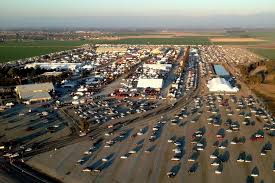
The largest annual agricultural exposition of its kind, World Ag Expo touts more than 1,500 exhibitors who display cutting-edge agricultural technology and equipment on 2.6 million square feet of show grounds. An estimated average of 100,000 individuals from 70 countries attend the show each year to learn about the latest advances in agriculture.

More than 35 seminars are offered in beef, dairy, hay and forage, international trade, irrigation and general agriculture categories. Seminars presented by professionals in the industry provide attendees with valuable information to improve their operations.

“From the locally-focused ag tours to the international attendees, World Ag Expo strives to live up to its name every year,” says Jerry Sinift, International Agri-Center’s chief executive officer. “Even as we grow and change, we remain grounded in the idea that agriculture is an invaluable asset to our communities and to the growing world. We’re here to be a consistent part of that through educational seminars and bringing in quality exhibitors for serious buyers.”

Live webcams of World Ag Expo’s show grounds, powered by Axis Communications, Valley Ag Software and HD Relay, can be viewed online at www.WorldAgExpo.org/live-webcams. Ten cameras on the grounds offer views of activity on the grounds, including exhibitors, attendees and volunteers.

World Ag Expo attendees can get the latest news, information and updates about the show by downloading the new 2015 mobile app. The free app provides mobile access to the schedule of events, an exhibitor directory, map of the show grounds and other visitor resources. The app is available for download by visiting your app store and searching for “World Ag Expo 2015.”

For a full schedule of events, more information about the show or to purchase tickets for World Ag Expo 2015, visit www.WorldAgExpo.org.

2016-05-31T19:30:31-07:00February 10th, 2015|

Fresno County 4-H Hosts Color Me Green 5K Run

On March 14, 2015, Fresno County 4-H members will host Color Me Green 5K Runs at California State University, Fresno. Fresno County 4-H is partnering with the Fresno State’s Jordan College of Agriculture and Science Technology for the Color Me Green 5K Run.

The Color Me Green 5K Runs are five kilometer runs designed to encourage youths and community members to increase their physical activity while also having fun! During each run, participants are showered with colored dye as they pass through each marker point. This run, hosted by 4-H youth members and Fresno State students, will be great opportunity for communities to come together and celebrate healthy living and being physically active.

 Through the Color Me Green 5K Runs, 4-H youth members and Fresno State students will encourage the health of Fresno County. In addition to planning, organizing, and leading the run, 4-H clubs and youth members will host interactive 4-H booths highlighting various project areas.

Online registration opened on February 1, 2015. Here is the link for the registration: http://ucanr.edu/colormegreenfresno4h


2016-05-31T19:30:31-07:00February 10th, 2015|

Zoldoske honored as state’s Irrigation Person of the Year

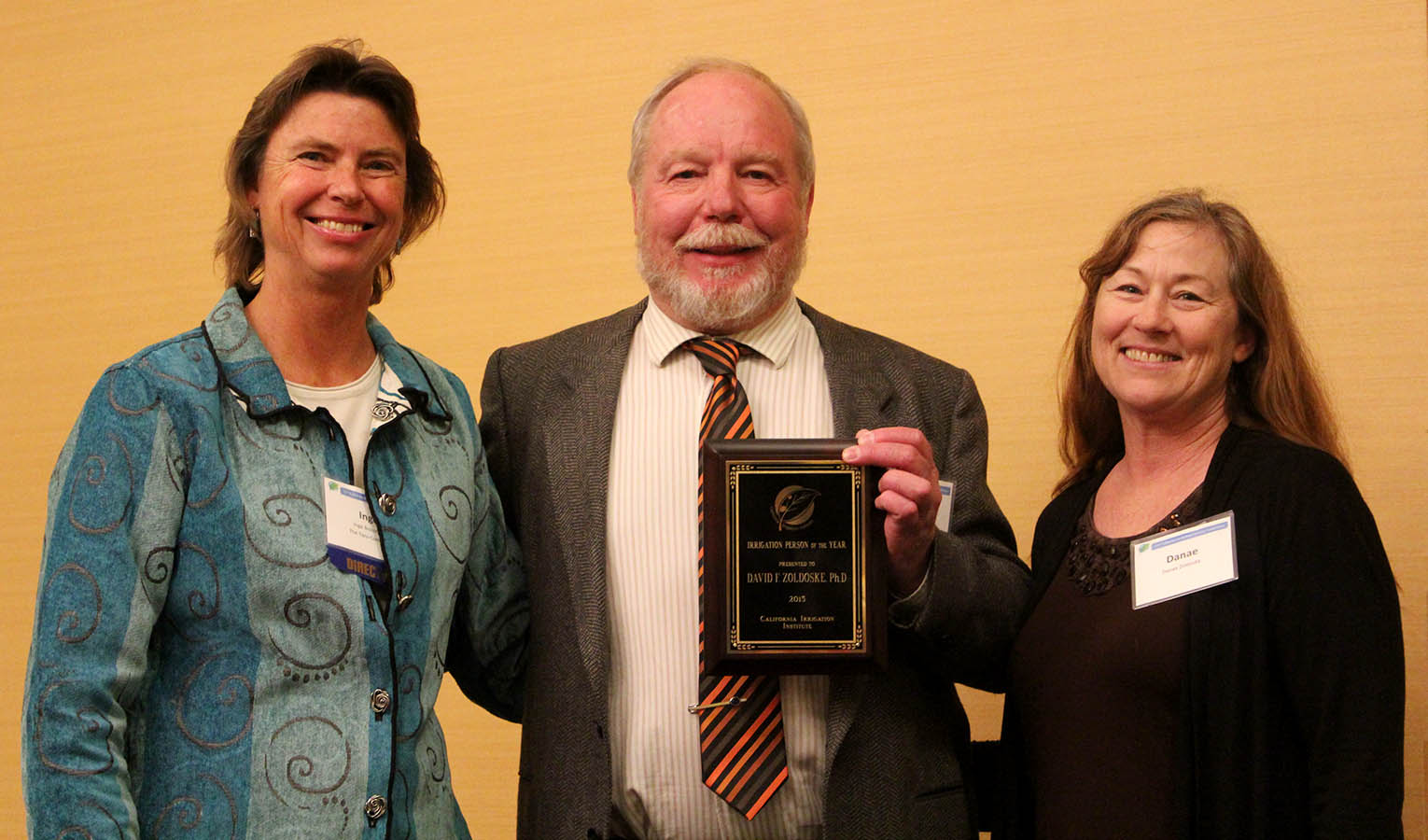
The California Irrigation Institute recognized Dr. David F. Zoldoske as its Person of the Year at its 53rd annual conference on Feb. 2-3 in Sacramento.

Zoldoske, director for the Center for Irrigation Technology at Fresno State, is the 36th recipient of the award sponsored by the state’s oldest independent forum on irrigation and water.

“On behalf of the board of directors, it is a pleasure and honor to bestow this award upon our friend and colleague, Dr. Zoldoske,” said Inge Bisconer, California Irrigation Institute board member and past president. “He has worked tirelessly for decades to promote water and resource use efficiency in agricultural and urban applications in California and beyond. We are fortunate that he chose to apply his passion, energy, skill and expertise to help address one of the most important topics of our generation: water.”

Zoldoske is the third recipient with Fresno State ties. Winston Strong, former plant science and mechanized agriculture professor was recognized in 1985 for his pioneering work in sprinkler testing, and former Center for Irrigation Technology director Kenneth Solomon was honored in 2004.

The annual conference brings together water experts, government agency representatives, water district managers, innovative farmers, urban water managers and commercial interests to focus on pressing water issues, explore innovative solutions, and discuss results of research and practical experience in the field.

Zoldoske was recognized with a similar national award in November 2013 as the Irrigation Association’s Person of the Year.

Fresno State has been involved in irrigation testing and research for more than 60 years, and Zoldoske has played a key role for four decades. He started his irrigation career as a graduate student research assistant before beginning work as a full-time research technician in 1983.

In 1994, he was named director of the center that is internationally-recognized as an independent testing laboratory, applied research facility and educational resource.

“It’s an honor to be recognized by a group representing all of California’s irrigation partners,” Zoldoske said. “The award is more of a recognition of our talented staff and all their successful and hard work. We have been tied closely with the California Irrigation Institute since the 1980s, and look forward to working with them for many years to come.”

2016-05-31T19:30:31-07:00February 5th, 2015|

Allen-Diaz honored by range management professionals

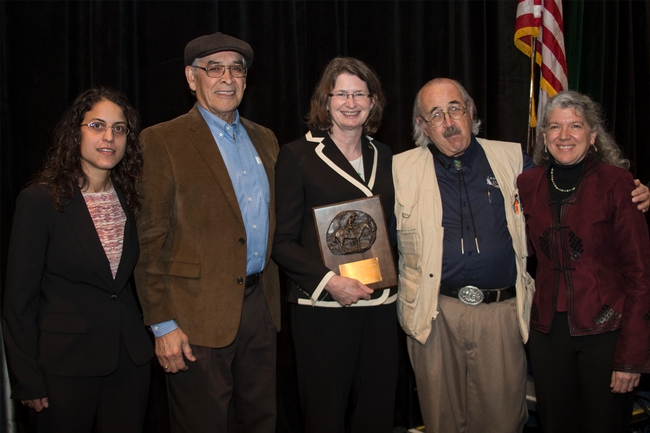
The Society for Range Management bestowed its highest honor, the Frederick G. Renner Award, on Barbara Allen-Diaz, UC vice president for the Division of Agriculture and Natural Resources at the society’s annual meeting today (Feb. 2) in Sacramento. A tremendous milestone, Allen-Diaz is the first female SRM member to receive the award in the society’s 68-year history.

The premier award is given annually to SRM members who have sustained accomplishments or contributions to rangeland management during the last ten years.

“Barbara has a record of outstanding research productivity that has affected the understanding and management of California rangelands and has had global impacts,” said Amy Ganguli, assistant professor of range science at New Mexico State University.

“Barbara is also a well-regarded educator who has mentored several graduate students and young professionals who are making significant contributions to rangeland and natural resource management,” said Ganguli, who, along with Fee Busby, Utah State University wildland resources professor, nominated her for the award.

This is not the first time Allen-Diaz has been recognized by her peers for her research on the effects of livestock grazing on natural resources, oak woodlands and ecosystems of the Sierra Nevada. The national society honored her with its Outstanding Achievement Award in 2001, and the following year the California chapter named her Range Manager of the Year.

In 2007, Allen-Diaz was among 2,000 scientists recognized for their work on the Intergovernmental Panel on Climate Change when the Nobel Peace Prize was awarded jointly to the IPCC and Vice President Al Gore. Allen-Diaz’s contributions focused on the effects of climate change on rangeland species and landscapes. She has authored more than 170 research articles and presentations. She has been an active member of the Society for Range Management, serving on its board of directors and on various government panels.

Allen-Diaz, who has served as UC ANR’s vice president since 2011, is also a tenured UC Berkeley faculty member in the College of Natural Resources and currently holds the prestigious Russell Rustici Chair in Rangeland Management. She has been with the University of California since 1986.  She earned her bachelor’s, master’s and doctoral degrees at UC Berkeley.

2016-05-31T19:30:32-07:00February 3rd, 2015|

CDFA Announces Dates for PD/GWSS Winegrape Grower Referendum

The California Department of Food and Agriculture (CDFA) has announced important dates for this year’s vote on the continuation of the statewide Pierce’s Disease and Glassy-Winged Sharpshooter (PD/GWSS) winegrape assessment.

Current plans call for the ballots to be mailed to California’s winegrape growers on or about March 30, 2015. The ballots will be due back 30 days after mailing, although this date can be extended. The results of the vote will be announced about two weeks after the voting period concludes.

Since 2001, the PD/GWSS assessment has been one of the primary sources of funding for research on PD and its primary vector, the glassy-winged sharpshooter. In 2010 winegrape growers voted to not only continue the assessment but authorized the PD/GWSS Board to spend assessment funds for research and outreach on other pests and diseases that are serious threats to California winegrapes. Since then, the Board has designated the European grapevine moth, red blotch, vine mealybug, and brown marmorated stink bug as serious threats to winegrapes.

Growers (whether individuals or companies) who paid the assessment on grapes grown in 2014 are eligible to vote. Accordingly, growers will receive a ballot for each of the separate legal entities they represent.  Growers are urged to verify that the number of ballots they receive is correct and report any discrepancies to CDFA. Winegrape growers with any questions about the assessment can contact the CDFA Pierce’s Disease Control Program at (916) 900-5024. Questions about the referendum (including the number of ballots you received) should be directed to the CDFA Marketing Branch at (916) 900-5018.

The PD/GWSS winegrape assessment was established in July 2001 to support scientific research to find solutions to Pierce’s disease. The PD/GWSS Board, composed of winegrape growers, advises CDFA on the use of the assessment.

Pierce’s disease has no known cure and, left unchecked, could be devastating to the winegrape industry. A study released in 2009 by the Wine Institute and the California Association of Winegrape Growers estimated the total annual economic impact of California’s winegrape industry at $62 billion within the state and $122 billion nationally.

2016-05-31T19:30:32-07:00February 3rd, 2015|

California State Fair announces first Extra Virgin Olive Oil Competition

Source: CDFA

The California State Fair is expanding its commercial competitions for 2015 to include a competition for extra virgin olive oil. Of all the olive oil produced in the United States, California produces 99 percent of it.

Extra virgin olive oils in more than 15 different classes and divisions, including blends and flavored olive oils will be judged during the competition. The entry deadline is April 1, 2015. The California State Fair Extra Virgin Olive Oil Competition is open only to California olive oil producers.

From July 10-26 the State Fair will feature a special California extra virgin olive oil exhibit with the award-winning extra virgin olive oils on display, interactive educational exhibits, free tastings and market research surveys.

On average, the world consumes approximately 2.25 million tons of olive oil each year and annual consumption in the United States has increased from 30 million gallons to nearly 70 million gallons a year over the last two decades.

Producers wishing to enter the Extra Virgin Olive Oil competition should visit CAStateFair.org to view the competition handbook for rules and entry information.

This project is supported by the Specialty Crop Block Grant Program, which is funded by the USDA and administered by CDFA. The goal of the project is to promote the awareness and availability of award-winning California extra virgin olive oils.

2016-05-31T19:30:33-07:00January 30th, 2015|

CVCWA Encourages Valley Residents to Join Chapter

Written By: Monique Bienvenue; Cal Ag Today Communications Manager

With the California Women for Agriculture recently celebrating its 40th anniversary, it’s no surprise that the Central Valley Chapter (CVCWA) is taking initiative to recruit new members.

“The CWA has been an integral part of my life,” said Central Valley Co-President Jane Bedrosian. “I may not have been present at the last Statewide Meeting in San Luis Obispo, but I saw renewed excitement about the CWA on the faces of the ladies who did get to go. I want to help share that excitement about agriculture with our friends and neighbors here in the Central Valley.”

The CWA is a statewide organization dedicated to bringing women together to “speak on behalf of agriculture in an intelligent, informative, direct and truthful manner.” Beginning in 1975, the CWA has been an instrumental organization in shedding positive light on what the agriculture industry is all about. From planning community events, speaking to politicians in Sacramento and promoting agriculture education – CWA members are determined to bridge the gap between agriculturalists and those removed from the industry.

“There is power in numbers,” said Central Valley Co-Presdient Marlene Miyasaki. “I believe that the stronger our presence is in our community, the easier it will be for us to inform others of the hard work necessary to provide food for the world.”

With 18 CWA chapters located throughout the state, there are ample opportunities for women to become advocates for agriculture within their communities. And the kindred spirit doesn’t end there; various statewide meetings are held annually, bringing together hundreds of CWA members from all over California.

The CVCWA has approximately 30 active members, but is looking to expand its membership. With issues like the California Drought and Immigration Reform currently taking the Central Valley by storm, agriculture literacy has never been more crucial.

The CVCWA is planning to make an appearance at the World Ag Expo in Tulare and Farm and Nutrition Day in Fresno; they are also currently working with Fresno County 4-H for other community events.

For more information about the CWA and its many chapters, click here.


2016-05-31T19:30:33-07:00January 30th, 2015|

USDA Seeks Applications for Conservation Innovation Grants

Agriculture Secretary Tom Vilsack has announced that applications are being accepted for up to $20 million in grants to facilitate the creation of new, innovative markets for carbon credits, providing additional revenue sources for producers to use to address natural resource conservation challenges. These grants are part of the Conservation Innovation Grant (CIG) program, authorized through the 2014 Farm Bill.

“USDA has been a leader in supporting market-based solutions to improve water quality and reduce carbon pollution,” Secretary Vilsack said. “With this opportunity, we are supporting the next generation of projects that will help mature these markets and bring them to scale to benefit both producers and the environment.”

For 2015, approximately half of the $20 million is available for environmental markets and conservation finance projects that engage agricultural producers. In past years, CIG has helped fund the development of the basic infrastructure of these markets. This year, USDA, through the Natural Resources Conservation Service (NRCS) is seeking applications for projects that will build on these efforts by maturing and scaling markets and accelerating efforts to leverage private capital and investment in private lands conservation. Improved quantification tools, multi-resource crediting, and projects that substantively engage corporate or financial partners are the types of activities NRCS is pursuing.

As an example, USDA, though CIG, helped fund the development of the first interstate water quality trading program in the Ohio River Basin. Administered by the Electric Power Research Institute, in April, the program is holding its first public auction of water quality credits, generated by farmers in the basin. USDA also funded a project led by the Delta Institute that culminated in the generation and sale of nitrous oxide credits on corn fields in the Midwest. This project demonstrated that greenhouse gas emissions can be reduced on cropland while maintaining corn yields.

USDA is also soliciting proposals for projects to stimulate natural resource improvements, including, but not limited to, improvements in water quantity, soil health, and wildlife habitat. Applications from this funding pool may also emphasize expected benefits to historically underserved producers, veterans, and organic producers. Applications in the fields of economics and sociology as they relate to natural resources are also being welcomed.

Under CIG, Environmental Quality Incentives Program funds are used to award competitive grants to non-Federal governmental or nongovernmental organizations, Tribes, or individuals. The 2014 Farm Bill also included language that has led to some changes in this year’s CIG funding announcement. One change eliminates the requirement that half the applicant’s match be in cash. Another expands eligibility for the 10 percent set-aside provision for historically underserved producers.

As in prior years, NRCS will accept pre-proposals for initial review before inviting entities to submit full proposals. Pre-proposals are due Tuesday, February 24, 2015. To apply electronically, visit http://www.grants.gov or contact a local NRCS office.

2016-05-31T19:30:33-07:00January 28th, 2015|

Agriculture Well-represented among GEELA Awards

CDFA Secretary Karen Ross joined colleagues from across state government this week to honor recipients of the annual Governor’s Environmental and Economic Leadership Awards  or GEELA Awards.

The GEELA program is California’s highest environmental honor – recognizing individuals, organizations, and businesses that have demonstrated exceptional leadership and made notable, voluntary contributions in conserving California’s precious resources; protecting and enhancing our environment; building public-private partnerships; and strengthening the state’s economy.

Secretary Ross was pleased to present awards to Parducci Wine Cellars, for its efforts to conserve and reclaim water; to the Lodi Winegrape Commission, for its rules for sustainable winegrowing; and the California Sustainable Winegrowing Alliance, for the development of metrics for water, energy, and nitrogen use, as well as greenhouse gas emissions.

Parducci Wine Cellars, over the course of 14 years, has come up with unique and innovative ways to reduce, reuse and recycle water at their winery. By using the surrounding landscape and natural ecosystems, Parducci has transformed a polluted pond into a bird sanctuary and created other recreational and habitat uses from its wastewater facility. In addition, the winery now recycles and cleans 100 percent of its wastewater and reuses it for irrigation, resulting in a 1.5 million gallon per year decrease in water usage even as production doubled. Parducci’s Water Reclamation System is proof that ecosystems can be valuable tools in creating efficient, cost-effective methods for water conservation that have tangible long-term environmental and economic benefits.

In 2005, the Lodi Winegrape Commission started California’s original sustainable winegrowing certification program. For their efforts, they were awarded a GEELA in 2006. Since their first year the program has expanded and evolved, and has established a reputation as a model certification program. The program grew from over 1,500 certified acres in 2006 to nearly 27,000 acres in 2013 while continuing to promote practices that enhance biodiversity, water and air quality, and soil health. Growth in the certification program allows for growers throughout the state to recognize the program’s value as a tool for implementing and codifying their practices that meet the triple bottom line of environmentally friendly practices, socially responsible business management and economic viability for maintaining vineyards for future generations.

The California Sustainable Winegrowing Alliance (CSWA) is a statewide sustainable winegrowing program introduced in 2002. CSWA was a recipient of a GEELA in 2004, and, after a major update to their program in 2006, they were also awarded a GEELA in 2010. They continued their trend of innovation after another update to their program in 2012, which includes online performance metrics for water, energy, nitrogen and greenhouse gas emissions, and a winery water guide for small wineries, in addition to new workshops and online tools focused on the results of a carbon footprint study on California wine. CSWA’s program has helped growers and vintners adopt sustainable practices that have improved efficiency and quality and conserved natural resources, reduced risks, and in some cases, reduced costs.

is administered by the California Environmental Protection Agency, in partnership with the Natural Resources Agency; the Department of Food and Agriculture; the State Transportation Agency; the Business, Consumer Services, and Housing Agency; the Labor and Workforce Development Agency; and the Health and Human Services Agency.

2016-05-31T19:30:33-07:00January 27th, 2015|
Go to Top