Biopesticides Play a Bigger Role in Pest and Disease Control

By Colby Tibbet, California Ag Today Reporter


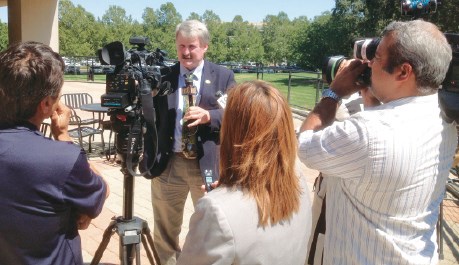
Pam Marrone, founder and CEO of Davis-based Marrone Bio Innovations, says biopesticides, a new frontier of pest control, works better when combined with conventional methods. “In the past, these biological products were standalone—like you see at your land grant colleges,” said Marrone.

“They would test standalone against the best cocktail chemicals. But where you see the best result is when they are incorporated into the mix,” said Marrone. “Likewise, nearly all the time, you see better results when biologicals are incorporated into the program than chemical-only programs, and you can validate that over and over again with on-farm demos,” added Marrone.

Marrone noted that biopesticides are price-competitive with traditional pesticides. “When you compare, dollar-for-dollar, today’s biopesticides are actually very cost-competitive. I think that’s a holdover from the past. There are high-priced and low-priced products—just like chemicals; you have sulfur and copper on the low end and chemical fungicides on the high-end.”

“It’s the same with biologicals. So, in our company, we looked at the full range of competitive products and priced in the middle-of-the-block to be competitive,” said Marrone.

“Historically the penetration has been in high-value fruits, nuts and vegetables,” Marrone said, “because of the issues of resistance, residues and worker re-entry. And that’s where the predominant use of these products remains, but there is now an interest is using them in the large-acre crops as well,” said Marrone.

2016-05-31T19:33:24-07:00September 24th, 2014|

Fresno State Alumni and Friends to Gather at Concannon Vineyard for Collaborative Event Oct. 4

The Jordan College of Agricultural Sciences and Technology and Craig School of Business at Fresno State are welcoming alumni and friends in the Livermore area to a gathering hosted at Concannon Vineyard on Saturday, Oct. 4 from 2 – 4 p.m.

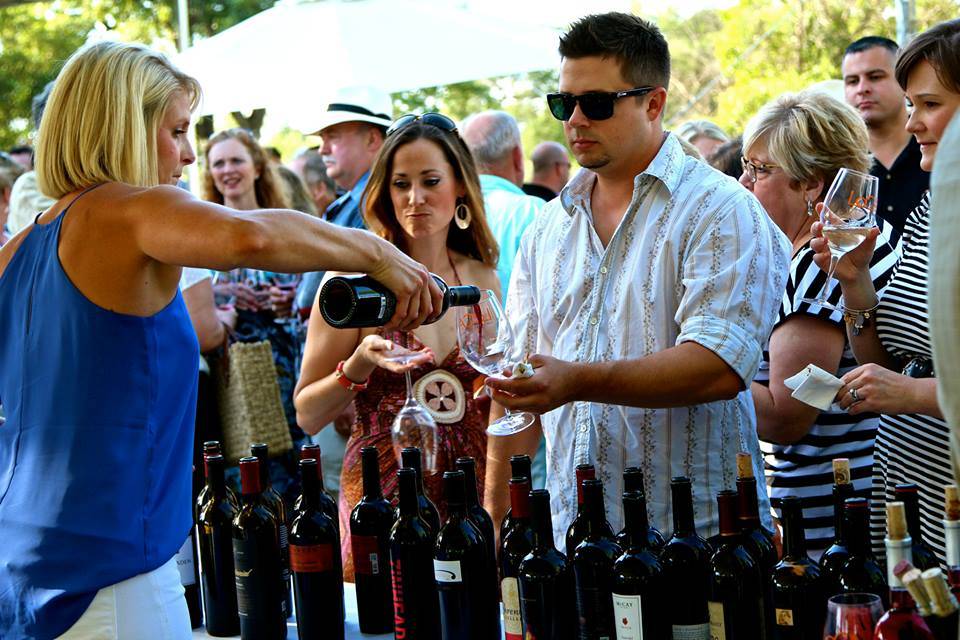
Guests will enjoy wine tasting with Concannon wine maker James Foster, a Fresno State alumnus, as well as Jordan College enology students who will be pouring Fresno State’s award-winning wine. Hors d’ oeuvres will feature Fresno State farm products.

Jordan College Dean Dr. Charles Boyer and Craig School Dean Dr. Bob Harper will share updates on their respective colleges. Following the program, attendees have the opportunity to enjoy a tour of the winery, with advance registration.

“Dean Boyer and I have a strong interest in fostering alumni relations in and around the Bay area,” Harper states. “We know there are many alumni in the area with fond memories of their time spent at Fresno State and strongly believe that their education prepared them well for professional careers. There is a strong synergy between agriculture and business, and the Craig School of Business is proud to partner with the Jordan College to sponsor this event.”

As a collaborative effort to engage alumni and friends outside of the Fresno area, this event was proposed by members of The Wine Group (TWG), the worlds third-largest wine producer by volume, which supports both the Jordan College and the Craig School. An independent, management-owned company, headquartered in Livermore, TWG’s portolio includes such leading brands as Cupcake, Franzia, flipflop and Almaden.

Dave Johnson, Executive Vice President of Finance with The Wine Group and member of the Craig School’s Business Advisory Council, proposed the idea at Concannon Vineyard, which is one of The Wine Group’s locations.

Concannon Vineyard is celebrating its 130th year of wine making at their beautiful estate located at 4590 Tesla Road, Livermore 94550. Cost to attend is $35 per person, $40 per person after Sept. 27. Advance purchase and tour sign-up required.

For more information, visit www.agonefoundation.org or contact Ag One/Jordan College at 559.278.4266 or by email at sfast@csufresno.edu.

Established in 1979, the Ag One Foundation benefits, promotes and supports the Jordan College of Agricultural Sciences and Technology at Fresno State. It has raised more than $16 million in endowed funds, with more than 3,350 students receiving more than $2.4 million in scholarships and grants.


2016-05-31T19:33:24-07:00September 23rd, 2014|

Commentary: Groundwater Legislation: “One Size Fits All” Just Doesn’t Fit

By Sen. Tom Berryhill; Ag Alert

In the waning hours of the legislative session, three bills that will drastically alter California’s groundwater management were passed with little vetting by the public or stakeholders impacted by the proposed changes. Senate Bill 1168 and Assembly Bill 1739 had been making their way through the legislative process, but in a completely different form than what was presented in the final days of the legislative session. Senate Bill 1319 was added to the package with just hours to go and voila, the legislative leadership declares a negotiated groundwater management package that works for all of California.

Far from it. “Negotiated” implies people of opposing viewpoints had input, something that did not happen.

Almost universally, agriculture was opposed, and I would imagine had it not been “negotiated” behind closed doors, there would have been an outcry from other regions and stakeholders throughout the state as well. Make no mistake, these groundwater bills will radically change decades of California water policy and give unprecedented authority to the state’s water bureaucracy to declare winners and losers. All without an appeals process. This is no way to craft policy.

Legislators of both political parties immediately sent a joint letter to Gov. Jerry Brown requesting that he veto the bills and call a special session of the Legislature to develop a reasonable groundwater management plan.

Earlier this summer, the Legislature put together groundbreaking water bond legislation. We did it in the light of day with months of negotiations and years of work behind the policy changes. These negotiations were a true victory for the people of California and a shining example of how well we can do something when we work together.

As a farmer and a Californian, I am absolutely concerned about increasing conditions of overdraft in many groundwater basins and the long-term effects on access to groundwater and land. But I believe California is playing a dangerous game if it pursues the one-size-fits-all approach of these bills.

Add into the mix a devastating drought that has severely tested our ability to prioritize where dwindling supplies of water should go—agriculture, environment or homes—and any solution becomes murkier.

Some basins have been critically overdrafted for decades, and in those instances state oversight may be an appropriate option as a way to spur local-management improvements. However, other basins have little or no overdraft problems or already have effective management systems in place. These bills treat all scenarios the same, a de facto punishment of the basins doing it right.

What started earlier this year as a legislative effort to remedy overdraft of aquifers in specific areas of the state morphed into a policy package that addresses issues well beyond mitigation of overdraft, all done at the last minute, without policy hearings, in the final weeks of the legislative session.

The regulatory regime for groundwater extraction enacted in these bills will not only invite lawsuits, it turns a blind eye to the differences between the 500-plus water basins in California and ignores ongoing local overdraft mitigation efforts. This is a bureaucratic power grab by the state’s water agencies, not an honest solution to a problem.

It took us more than 10 years to craft a good water bond that addresses the needs of a variety of communities, interest groups and industries. Was three weeks enough time to fully consider and seek consensus on the numerous, substantial policy changes made to groundwater management? I think not.

In the coming years and decades, the authorities granted in this bill will radically change the landscape of groundwater management. That will have a de-stabilizing impact on those who depend on groundwater supplies, particularly in Northern and Central California, thus the virtually unanimous opposition of the agriculture community to these proposals.

Yes, it is time to craft groundwater regulation that meets today’s needs, but these bills won’t get us there. Let’s go back to the drawing board and craft a narrower, more effective measure focused on basins where real problems exist, encouraging them to implement management measures modeled by other regions and providing a mechanism for the state to partner with areas when local management fails. We came together and passed the water bond; we can, and should, do the same for groundwater management.

2016-05-31T19:33:24-07:00September 21st, 2014|

Three UC Davis students named Switzer environmental fellows

Source: John Stumbos University of California, Davis

Three UC Davis graduate students—Angela Doerr, Sarah Moffitt, and Meredith Niles—have been awarded prestigious fellowships for outstanding environmental scholarship from the Robert and Patricia Switzer Foundation. Twenty-two such awards were made this year to students from New England and California.

“We are very grateful to the Switzer Foundation for again choosing UC Davis students for its highly regarded fellowship program,” said Jan W. Hopmans, associate dean in the UC Davis College of Agricultural and Environmental Sciences. “It is worth noting that all three awardees are conducting research on sustainable management practices for natural or agricultural ecosystems. These students recognize that informed policymaking demands a working knowledge of interdisciplinary science and that our top-ranked graduate groups are the best place in the world to get that education.”

“Today’s environmental issues are increasingly complex and require an ability to translate scientific, ecological, and social knowledge across disciplines and apply it in real-world settings,” said Lissa Widoff, the Switzer Foundation’s executive director. “The 2013 Switzer Environmental Fellows are at the cutting edge of science and policy and will be supported with funding, professional coaching, and a network of leaders to help them achieve results. Their problem-solving abilities and innovation will make a difference.”

The program began in 1986 and now has a network of more than 530 fellows. Each student will receive $15,000 to help them complete their degrees and advance skills and expertise needed to address critical environmental challenges. Their work covers a broad range of studies, including environmental policy, economics, conservation, public health, journalism, architecture, environmental justice, and business law, as well as traditional environmental science such as biology, chemistry and engineering. This year’s fellowship recipients from UC Davis are:

Marine scientist Angee Doerr studies lobster fishery in Bahamas

Angela “Angee” Doerr, a doctoral student in the Ecology Graduate Group, focuses on the sustainable use of natural resources. Her thesis work examines the intersection of policy, resource economics, and marine ecology in the Bahamian spiny lobster fishery. She is one of the first scientists working to develop a baseline of the use of small artificial habitats—locally known as “lobster condos—in the fishery there. She also serves as a subject matter expert for the U.S. Navy Civil Affairs Command, travelling internationally to both teach and present on aquaculture and sustainable fishing practices. Doerr earned her MBA while in the Navy through American Military University and holds a Bachelor of Science in Environmental Science from Duke University.

“Angee was a rising star in the Navy before coming to UC Davis to study natural resource policy and I know her commanding officer was not happy to lose her to graduate school,” said Doerr’s faculty adviser, environmental science and policy professor James Sanchirico. “Since coming to UC Davis, Angee has continued her trajectory. She is a natural leader and I have no doubt that Angee will make important contributions to the management of natural resources during her career.”

Coral reef studies lead Sarah Moffitt to climate science

Sarah Moffitt, a doctoral student in the Ecology Graduate Group, is working at the interface between oceanography, earth science, and ecology. Her dissertation research is focused on rapid environmental change in upper ocean ecosystems, specifically the western continental margin of North America. Her goal as an ocean and climate scientist is to improve communication among climate scientists, policymakers, and citizens. She graduated from Western Washington University with a Bachelor of Science in Biology, during which time she worked on coral reefs in the Caribbean region of Costa Rica and in Bermuda. She then spent two years working for NOAA’s Coral Reef Ecosystem Division in Hawaii as a coral reef specialist and scientific diver.

“Sarah truly embodies the word ‘interdisciplinary’ when she approaches a scientific problem,” said Moffitt’s faculty adviser, UC Davis geology professor Tessa Hill. “She sees things from the perspective of an ecologist, an oceanographer, and a climate scientist. With her dissertation work, she is trying to accomplish an admirable task—trying to extract lessons from the recent ‘paleoclimate’ record to understand what future, anthropogenic climate change holds for marine ecosystems.”

Farmer perceptions on climate drive Meredith Niles’ research

Meredith Niles, a doctoral student in the Ecology Graduate Group, examines the variables that cause farmers to adopt climate mitigation and adaptation techniques, and farmer perceptions of climate change and environmental policy. Her research is centered on New Zealand and Yolo County, Calif. She worked with a New Zealand research institute, participated in the Climate Action Reserve workgroup, and served as a board member of the UC Davis Agricultural Sustainability Institute. Her ambition is to work in public service at the interface of science and environmental policy. Niles is a summa cum laude and Phi Beta Kappa graduate in political science and environmental studies from the Catholic University of America.

“Meredith’s research focuses on public policy and decision-making in the context of agriculture and food systems,” said Niles’ faculty adviser, environmental science and policy professor Mark Lubell. “She has completed important empirical research on how farmers perceive and respond to climate change in New Zealand and California. As a Switzer fellow, Meredith is a proven leader with a deep commitment to doing research at the interface between science and policy.”

This is the 27th year of the Switzer Environmental Fellowship Program of the Robert and Patricia Switzer Foundation.

Fellowships are merit-based and rigorously competitive. Candidates must be recognized for their leadership capacity by their academic institution or by environmental experts. Applications are evaluated based on demonstration of environmental problem-solving, critical analysis and communication skills, relevant work and volunteer experience, necessary scientific or technical background for their field of study, the applicant’s career goals, and the potential of the candidate to initiate and effect positive environmental change.


2016-05-31T19:33:25-07:00September 18th, 2014|

California expects more competition for wine market

Source: Steve Adler; Ag Alert

A new report showing that the United States continues to lead the world in wine consumption is viewed as good news for the California wine sector—but it shouldn’t lead to complacency, according to three experts.

This country’s No. 1 ranking in total consumption in 2013 marked the third consecutive year of that achievement. U.S. wine consumption topped 3.3 billion liters, an increase of 5.4 percent compared to the previous year. France retained its hold on second place, with 2.8 billion liters—but that represented a 6.9 percent decrease in consumption.

California’s share of U.S. wine production is about 90 percent, although there are wineries in every state.

“Our consumption is growing in this country, but everyone realizes that the U.S. is the largest wine market in the world because we have such a large population base. Everybody in the world wants to sell their wines here, so there is a lot of foreign competition,” said Gladys Horiuchi of the Wine Institute in San Francisco.

Mendocino County grape grower and winery owner Bill Pauli said last week’s report on wine consumption underscores the importance of the U.S. market not only to California producers, but to producers around the world.

“With America’s expanding growth and improved economic times, consumption has improved and people are drinking better wines. But we still have to compete, not only amongst ourselves, but with all of the foreign competition. And that foreign competition is really the challenge in not only flavors, but price,” Pauli said.

The challenge comes not only in finished products, but from the foreign producers who sell bulk wines into California to be blended or bottled here, competing directly with California grape growers, he said.

Horiuchi said lighter crops produced in California prior to 2012 allowed foreign producers of bulk wines to make inroads. But because of the large crops in 2012 and 2013, the availability of California grapes has eased that threat, she said.

“The good news now is that the wineries are brimming with California wine of excellent vintages, so naturally the wineries have gone back to their local sources. But in order to maintain their shelf space, when the production in California is down, they will import wine from other countries,” Horiuchi said.

Competition from foreign producers was also noted by Glenn Proctor of the Ciatti Co. in San Rafael, who cautioned the state’s growers and wineries not to become complacent.

“When you are No. 1 in the world, it is not just California wines and U.S. wines that consumers are buying, but other countries are trying to get their wines into the U.S. market too,” he said. “So I think we will continue to see a very competitive environment.”

Proctor said it is important for California wineries to continue producing wines that U.S. consumers want, at prices that allow them to purchase more.

“We have to be on our game and remain competitive. The opportunities continue to grow, but we have to be ahead; we cannot be behind,” he said. “We’ve seen countries like Australia, Chile, Argentina and South Africa do a pretty good job of bringing bottled product into this country.”

While this year’s winegrape crop in California is projected to be normal in size, it follows two years of record production, resulting in large inventories in most of the state’s wineries. Proctor said that will allow California wineries to hold onto highly competitive shelf space.

“We have had two bumper crops in a row and this year looks to be a healthy crop, but not large per se. But we do have some excess of wine, especially in the Central Valley. I think we will work through the excess, and it is helpful that we don’t have a big crop this year. But we do need to increase our sales and grow. Any kind of stagnation in case-good sales would not be a good thing for the industry,” he said.

Proctor predicted that in the near term, there could be some “corrections” in prices that wineries pay to growers.

“Prices received by growers are healthy right now and some wineries may think they are too high,” he said. “We may see some correction in the marketplace in the Central Valley in the next year or two, to get inventory costs back in line.”

In the long term, he said, wineries will need a steady supply of grapes coming from California, “and you want to have new and efficient vineyards so growers and wineries can continue to be profitable.”

Proctor said some older and less-productive vineyards in the Central Valley will probably be removed and replanted, either with better-producing grape varieties or other commodities such as almonds or pistachios.

On the marketing side, Horiuchi said wineries continue to target baby boomers, people ages 50 to 68.

“The baby boomers are the ones who have the income and the ones who are dining in restaurants. But at the same time, there is a transition taking place as wineries are starting to market to the next generation, where the consumers are more involved with social media, taking pictures of wine labels and so on. They are willing to try a lot of different things,” she said.


2016-05-31T19:33:25-07:00September 18th, 2014|

Bayer CropScience’s New West Sacramento Facility to Focus on Biopesticides

Biopesticides Are Valuable Part of Pest and Disease Control


By Colby Tibbett

Bill Stoneman is the executive director of the Biopesticide Industry Alliance, which is dedicated to fostering adoption of biopesticide technologies through increased awareness about their effectiveness and full range of benefits to a progressive pest management program.

“These are very important tools in terms of resistance management because they allow us to target alternative modes of action against pests. Biopesticide technologies are tools in the quiver, as well as the chemistries we are currently using and developing,” said Stoneman.

Biopesticides offer many other benefits, such as no maximum residue level (MRL) issues, reduced preharvest intervals and decreased reentry intervals.

Bill Stoneman, Biopesticide Industry Alliance Executive Director

Bill Stoneman, Biopesticide Industry Alliance Executive Director

“What you’re going to find, is that they will be used in rotation with the chemical pesticides or other cultural methods to prevent plant diseases and insects. I think you’re going to see more development in the seed treatment area. Again, seed is a good delivery mode to get things to the plant’s roots, and that’s where a lot of these materials are effective, from the plant-disease perspective,” said Stoneman.

With regard to insect control, Stoneman said, “We’re going to see new things coming into the marketplace. Some insect-specific viruses are going to be expanding in the U.S. soon, with applications on a variety of crops—but very insect specific—so in other woBill Stoneman Bayer Crop Science West Sacramentords, they kill only that insect, so there is no harm to pollinators or beneficials,” said Stoneman.

This will be more common in the future, according to Stoneman, “I think we will see as a trend going forward more reliance on the biologicals, pollinators, tailored pest control programs and IPM approaches to preventing any damage to those natural control forces in agriculture,” said Stoneman.

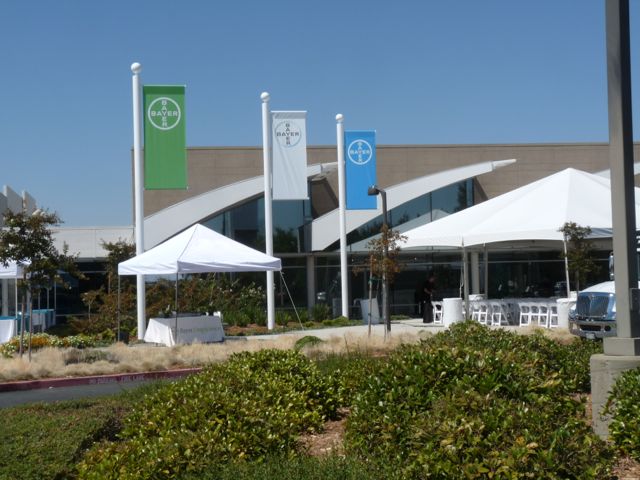
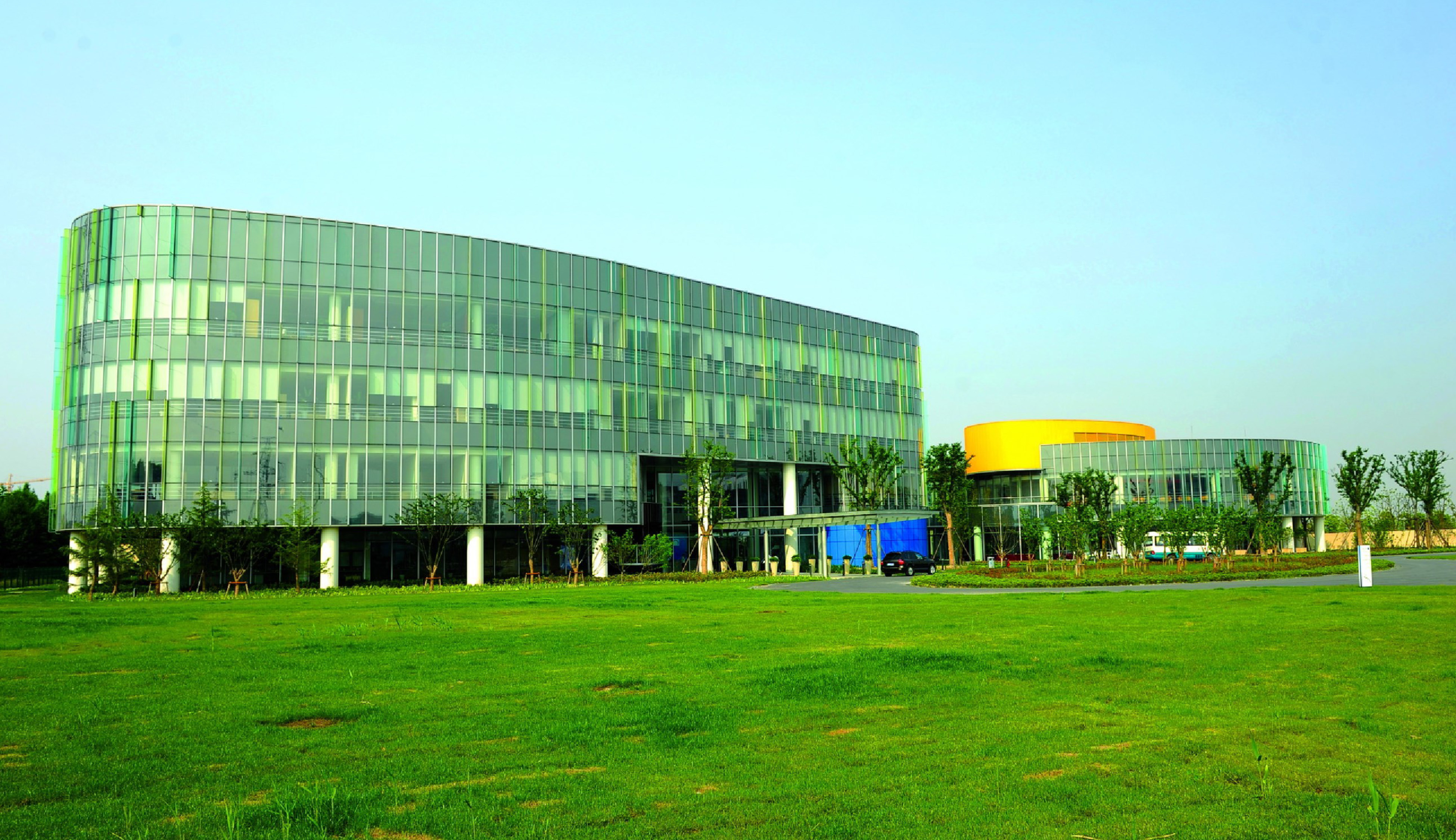
A big step for Biopesticides in California was the recent grand opening of the Bayer CropScience’s $80 million investment in their biologics and seed business in West Sacramento. It will focus on this new frontier of pest and disease control.


Adrian Percy, Bayer CropScience Global Research and Development (Source: www.bayercropscience.com)

Adrian Percy, Bayer CropScience Global Research and Development (Source: www.bayercropscience.com)

Adrian Percy, global head of research & development (R&D) with Bayer CropScience, explained Bayer’s decision for the West Sacramento location, “First and foremost, California is an amazing hub of agricultural innovation. We have UC Davis just down the road, which we have close ties to. In 2012, we purchased AgraQuest, which was based in Davis, so basically we’re moving them into this new facility which is much bigger and more state-of-the-art than what they were using previously,” said Percy.

“We’re really excited because here we will be researching brand-new applications based on bacterial-based products, fungicides, insecticides, etc. In addition, we will be developing new vegetable seed varieties,” said Percy.

Among the advantages of these new biologic tools for growers is avoidance of MRLs, a big boon for vegetable growers. “We see a lot of advantages for these types of products. And this is one of the fastest growing sectors both for us as a company, but also in general. What we are seeking to do now is bring next generation products to the marketplace which are even better than the ones we have today,” said Percy.

“These kinds of products, I think from a stewardship and management perspective, are very advantageous to the grower,” he added.

2016-05-31T19:33:25-07:00September 17th, 2014|

California Center in Shanghai Offers Direct Trade Gateway to Calif. Ag Industry

By Kyle Buchoff, Reporter

Strategically located in the new free trade zone in Shanghai, the California Center offers California companies a direct gateway to buyers and wholesalers in the Shanghai metro area (pop. 20 million) and beyond.  The California Center is a private entity but enjoys strong support from both the California and Chinese governments.

Gordon Hinkle, VP California Center

Gordon Hinkle, VP California Center

While the Center showcases a huge range of California products and services, agriculture comprises the single largest trade category. Gordon Hinkle, vice president of the California Center explains, “Our range of members runs across the gamut, but we do have a heavy [emphasis his] emphasis on ag because some of the highest demand for California goods and services is in ag and wine. We aren’t limited only to food and ag, but I would say it is the largest portion of what we are doing.”

The former international trade director for the California Asian Pacific Chamber of Commerce, Hinkle said, “We have a lot of different organizations and associations that are involved with us,” Hinkle continued, “to help promote their products.  Everything from processed goods to fresh fruits and vegetables…a very important part of what we are doing is working directly with the ag community.”

Recently Mr. Hinkle and other associates visited pistachio, raisin and olive oil producers in the Fresno area.  “These are the folks we are helping to introduce and increase their exports into China, and we have had very good early response.”

California Center LogoGordon also serves as a Committee Chair for the 150th Anniversary Celebration of the Chinese Workers Contribution to the Construction of the U.S. Transcontinental Railroad, which will be holding numerous events in 2015, recognizing Chinese contribution and significance to American history.

The California Center provides door-to-door service to bring products to Chinese buyer destinations in a seamless operation that includes: shipping, customs clearance, warehousing, sales transactions and customer services. Through the center’s portal, Chinese buyers can navigate through listed California companies seamlessly and with great ease!

2016-05-31T19:33:25-07:00September 17th, 2014|

FY 2014 Conservation Innovation Grant National Awardee

California Dairy Research Foundation (CA) $73,000

Improving Conservation Practice Adoption and Nutrient Management Plan Implementation through Utilization of Adapted Decision Support Tree eLearning Methods

California is home to 1.8 million dairy cattle, over 80 percent of which reside in the state’s Central Valley, an area rich in agriculture and responsible for nearly 20 percent of the nation’s milk supply. Central Valley dairy farms produce much of the forage necessary to feed their cows by utilizing manure nutrients to grow crops year-round. Cow manure is an important renewable resource used to fertilize crops, replenish soil nutrients and enhance soil quality.

Utilizing manure effectively is paramount to sustainable dairying and agriculture, but has been regulated since 2007. Regulatory requirements include the maintenance and implementation of both waste management and nutrient management plans.

The industry’s regulatory and environmental success depends on individual dairy producer ability to identify and adopt conservation practices and implement superior nutrient management to protect scarce surface and ground water resources. Multiple potential challenges exist which may prevent full implementation of all aspects of nutrient management and available conservation practices within a given operation.

Barriers are most often site-specific and require individual assessment of current systems, equipment and practices to determine optimal farm solutions. This project will develop, field-test and demonstrate the use of an electronically available teaching and learning (eLearning) system as an innovative approach to conservation practice adoption and nutrient management implementation. A proven decision tree support system will be adapted into an eLearning format to enable individual farm nutrient management needs assessment.

Its guiding principles will be communicating scientifically-proven yet practical, cost-effective options at various nutrient management system critical control points (decision tree nodes) to assist producers in identifying site-specific solutions for full nutrient management plan implementation. 

2016-05-31T19:33:25-07:00September 16th, 2014|

Climate change’s impact on restaurants

By Patrick Mulvaney, chef and restaurateur; The Sacramento Bee

When I read about climate change, I learn about rising sea levels and shrinking polar ice caps – problems for 100 years in the future. But when I talk to my friends and customers about climate change, the focus is on what is happening today. It seems little things are already adding up.

As a chef, I have always believed that the completed dish will only be as good as the ingredients used. The bounty of the 12-month growing season is the main reason we decided to open our restaurant here in Sacramento. Because of our close relationships with local farmers, our “supply chain” is basically a truck and the farmer’s market. We can see how the drought has affected their crops.

Three years of drought have taken a toll on the ranchers and farmers we depend on. Lack of rain to refill the state’s reservoirs has reduced water levels to historic lows. Some water allocations have been cut entirely, and most farmers have been forced to scale back on planting. Forty-five percent of rice land went unplanted this year; farmers were forced to sell off cattle this spring. Researchers at UC Davis estimate that drought will prevent farmers from planting nearly 430,000 acres and cost the state $2.2 billion.

This isn’t just a Sacramento problem; it will affect the whole country. California grows nearly half of the nation’s fruits and vegetables, including 70 percent of the lettuce, 76 percent of the avocados, 90 percent of the grapes and virtually all of the almonds. Unfavorable conditions in California mean higher prices for restaurants across the country.

The U.S. Department of Agriculture said produce prices could increase 5 to 6 percent this year. Even though beef prices are at historically high levels, the drought has raised the prices of feed even higher, forcing ranchers to sell the majority of their herds. A few years ago, the U.S. had 102 million head of cattle. That number is now under 88 million and dropping. It’s the smallest herd since 1951, so prices keep rising.

In addition to drought, climate change is causing other kinds of severe weather swings. Last winter was unusually brutal in the Midwest, causing an almost complete failure of the cherry crop and raising doubts about harvests for the rest of the tree fruits this summer.

In some ways, we are lucky at my restaurant; our daily-changing menus have allowed us to respond to climate disruptions. And while we continue to serve the best of what’s coming out of the nearby land, some items have become harder to find at a reasonable price. During the past year, restaurants have changed their menus to reflect higher meat prices, sudden collapses in citrus yields and the lack of products as farmers are forced to let their land lie fallow.

I worry that extreme weather, like California’s drought, may become the new normal. Our agricultural partners face the greatest risks. Many businesses will experience climate change through limited supply and poor supply-chain quality.

There’s something we can do about this. California has long been a national leader on clean-energy policies. Gov. Jerry Brown is supportive of the Environmental Protection Agency’s new regulations that will reduce carbon pollution. He said, “Clean-energy policies are already working in California, generating billions of dollars in energy savings and more than a million jobs. Bold, sustained action will be required at every level, and this is a major step forward.”

Now is the time to continue California’s clean-energy leadership tradition by implementing changes that encourage business leaders to use resources more efficiently. This will help prevent more extreme weather events and make our economy more resilient.


2016-05-31T19:33:25-07:00September 16th, 2014|

Commentary: CA Reporters Discuss How and Why They Cover Agriculture Beat

Source: Dave Kranz; Ag Alert

As people have become more interested in the sources of their food, they have also become more interested in reading about where their food originates and about the people who produce it: That was the concept behind a seminar conducted in San Francisco last week titled “Journalism: The Agriculture Beat Resurgence.”

Hosted by the Commonwealth Club, the event featured three Bay Area-based reporters and editors who write about agriculture for regional or nationwide audiences.

The discussion provided insights into how the reporters view their work, and into the overall interest in agricultural reporting itself: The seminar attracted a nearly full-house audience of about 80 people on a Wednesday night.

It also underlined the continuing importance of Farm Bureau’s efforts to reach out to members, reporters and the general audience through all forms of media.

The moderator of the panel discussion, KQED Radio reporter/anchor Rachael Myrow, described the agriculture beat as “the intersection between fashion, health and politics.”

The panelists agreed, noting how agricultural news can be classified as a business story, an environmental story, a cultural story.

“Every story is an agricultural story,” said Andy Wright, deputy editor of Modern Farmer, which produces a quarterly publication and daily website updates aimed at an audience she described as young, urban and aspirational.

Where do they find story ideas? The reporters said they talk to farmers at farmers markets, talk to chefs, scan trade publications and websites, and listen to story pitches from farmers and people in the food business.

“Farmers are getting a lot more media savvy,” Wright said. “They’re on Facebook and Twitter. They understand the importance of connecting.”

Naomi Starkman of Civil Eats—a Web-based news service that says it aims to “shift the conversation around sustainable agriculture in an effort to build economically and socially just communities”—called social-media tools “essential” to promoting stories, and encouraged farmers to hire someone on their staff who does social media and other outreach as a part of their job.

Myrow noted that much of the current reporting on agriculture focuses on “small, niche” farms.

“Are too many publications chasing the foodies instead of informing the general public about their food?” she asked.

“What’s unproductive,” Wright responded, “is to pit big ag vs. small agriculture. What’s more important is to focus on what’s working.”

During part of the program devoted to audience questions, the panelists were asked if they consider themselves to have a mission to try to change people’s behavior.

Tara Duggan, a food writer for the San Francisco Chronicle, said she considered it her mission to “understand what readers are most interested in,” which, in her case, tended to be topics such as nutrition and sustainability.

In her case, Wright said, “I don’t know that it’s my role as a journalist to promote one way of eating vs. another. My role is to get stories to as wide an audience as possible.”

Duggan noted that writing for a general-interest publication such as the Chronicle presents challenges in presenting stories about farming and environmental topics. For example, she said, “With the California drought, I feel people have reached the saturation point, even though it’s a really important story.”

As the event’s organizers pointed out, the agriculture beat was once a key area of coverage for large media outlets but, as the staffs of mainstream media outlets have shrunk, agricultural reporting has been dispersed among writers who regularly handle business stories, environmental stories or general-assignment reporting.

Still, there’s significant interest in stories about farming and food among both the general media and the specialty publications, websites, blogs and other outlets that have proliferated in the last few years.

We’ve seen that here at the California Farm Bureau, where we respond to more than 450 news media inquiries a year. During 2014, driven by interest in the impact of drought on farmers and ranchers, we have spoken with reporters from throughout California and the nation, as well as to media outlets from Canada, Germany, Switzerland, France, Japan, Singapore and Australia.

For Farm Bureau, communicating with members and the non-farm audience has always been a core function, using all forms of media. That’s why, for example, stories from Ag Alert® appear not only in the newspaper, but online and as Facebook posts and tweets, as well.

Our California Bountiful® television program—produced for a non-farm audience—can be found on the air and also online and on YouTube. The TV program and California Bountiful magazine also reach out to general audiences via Facebook, Twitter, Pinterest and Instagram.

None of the outreach that Farm Bureau does would be possible without the support and cooperation of Farm Bureau members, who give of their time to talk to reporters from our media outlets and from other television, radio, newspaper and online news media every day.

As the San Francisco event showed, people are interested in what farmers and ranchers do, how they do it, and why. Only by telling their stories themselves can farmers and ranchers assure that others don’t tell their stories for them.

2016-05-31T19:33:26-07:00September 12th, 2014|
Go to Top