Student Inventors Take Grand Prize

Source: Pat Bailey; UC Davis

A student team composed of some of the best and brightest young minds at the University of California, Davis,  took the grand prize in the finals of the global iGEM (International Genetically Engineered Machines) competition in Boston. The team also won the Best Policy and Practices Advanced Presentation Award.

The UC Davis students, all undergraduates, placed tops in what is known as the “overgraduate division.” A team from the University of Heidelberg was awarded the grand prize in the “undergraduate division.”

The competition, which this year featured 245 teams from Asia, Europe, Latin America and North America, annually challenges student teams to design and build biological systems or machines and present their inventions in the international competition.

The UC Davis team spent several months building a high-tech, palm-sized biosensor to quickly evaluate the chemical profile of olive oil. Their creation provides a prototype for quickly and accurately detecting low-grade or adulterated olive oil.

The UC Davis team is composed of undergraduate students Lucas Murray, Brian Tamsut, James Lucas, Sarah Ritz, Aaron Cohen and Simon Staley, with student Yeonju Song serving as an alternate or “shadow” team member. A team of faculty advisers guided the students. For more on the innovative olive oil biosensor and the iGEM competition visit, click here.
2016-05-31T19:32:16-07:00November 4th, 2014|

Nut Yields May Be Reduced by Drought

Source: Christine Souza; Ag Alert

Enduring a drought that has lasted several years, growers of California’s primary nut crops—almonds, walnuts and pistachios—are finishing this year’s harvest and planning for what Mother Nature may or may not bring in the coming year.

“Location, location, location” proved critical to almond and pistachio crops in particular, and seemed to be the determining factor in whether trees had enough water and the required number of chilling hours.

Some farmers were luckier than others, including Larry Lowder of Madera. A grower of almonds and pistachios, Lowder said he was “very fortunate where we live and this year we were able to produce a crop, where others didn’t have that luxury.” He said his farm is located in a microclimate that received sufficient chilling hours during the winter, something that was lacking in other parts of the Central Valley.

Dealing with a surface water allocation of zero, Lowder said he had to rely on deep wells, and he saved as much water as possible by using drip irrigation, microsprinklers and upgraded wells.

Even with a relatively favorable situation, Lowder said his almond yields were down by about 10 percent, although pistachio yields were much better.

In some California pistachio and almond orchards, the drought resulted in a shorter crop and a higher incidence of “blanks,” when a shell lacks a viable nut or kernel.

“Some growers, who had the effect of poor pollinization as well as lack of water, their crops were significantly off and there will be crop insurance claims filed,” said Richard Matoian, executive director of Fresno-based American Pistachio Growers. “One grower said the orchard looked like it had 3,500 pounds per acre, but ended up with 800 pounds of nuts to the acre.”

The U.S. Department of Agriculture estimated this year’s California pistachio crop at between 485 million and 500 million pounds, Matoian said, which is smaller than expected because it was to be an “on year” for pistachios. New figures from the Administrative Committee for Pistachios have increased the estimate to 515 million pounds, which Matoian said was “larger than expected in midsummer but certainly lower than original expectations.”

Many pistachio growers purchased emergency supplies of water, Matoian said, paying as much as $3,000 per acre-foot. Reports from the almond sector showed some growers paid between $1,200 and $2,200 per acre-foot.

Reflecting on how almond growers negotiated the drought, Mel Machado, assistant director of member relations for Blue Diamond Growers, said some orchards were either removed or abandoned, and water was moved from older blocks of trees to younger blocks.

“Growers have learned a lot about how to manage the water they have, but even with good technology and good application, there are orchards that definitely had increased stress this year,” Machado said. “You can see it in the lack of growth of the trees.”

Farmer Stan Wilson of Shafter grows almonds and other crops, and said he made it through this season on well water, but had to reactivate old wells, add extensions to pumps and install an underground pipeline so that he could move water from one field to another.

“We made it through the year. We had no surface water at all, so the only water supply we had was from wells. It is the first year we had zero deliveries,” said Wilson, who fallowed about 160 acres of row crops as a result of the drought.

With harvest drawing to a close, Machado reported that this year’s almond crop is hovering at around 1.85 billion pounds, down from the earlier government estimate of 2.1 billion pounds. Machado said he has seen higher levels of rejects in the almonds produced, but there were problems in addition to drought that played a part, such as varying degrees of stress and salinity issues.

“Quite frankly, we needed the 2.1 billion pounds. A lot of people look at orchards planted over the past few years and say, ‘What are you going to do with those when they come into production?’ Well, we’re going to market them. There is demand out there for the product. We’re still in a demand-exceeds-supply situation,” Machado said.

With just a few more weeks left of harvest, California walnut growers expect a crop that is 545,000 tons, which would be a record, said Dennis Balint, CEO of the California Walnut Commission. No official production figure will be known until harvest is complete, but Balint attributed the expected increase to newly planted orchards and young orchards that are coming into production with higher yields.

He, too, reported continued strong demand.

“Traditionally, we’ve been the ingredient nut, but demand for walnuts is strong and health benefits are starting to drive demand for walnuts. We are seeing more snacking, which we are pleased with,” Balint said.

Marketers said the increasing demand for California nut crops in domestic and global markets is good news for growers. There are 200,000 bearing acres of pistachios in California, and 100,000 acres are non-bearing, Matoian said. For almonds, USDA reported there are 860,000 bearing acres, with 80,000 non-bearing acres. There are an estimated 280,000 bearing acres of walnuts in California, and 45,000 acres that are non-bearing.

For the almond business, Machado said, “the limitation on the crop is going to be water. Water is going to be the competing factor for the almond crop, just as it is for just about every other crop in the Central Valley.”

As winter approaches, nut growers said they are hopeful that the state’s water situation changes for the better, although, Matoian said, “Even if we have a good rain year, we are going to have a lack of water available to growers; that is inevitable. That is what we’re being told by water regulators.”

2016-05-31T19:32:17-07:00November 3rd, 2014|

USDA to provide $4 million for honey bee habitat

By: Monique Bienvenue; Cal Ag Today Social Media Manager/Reporter

Agriculture Secretary Tom Vilsack announced that more than $4 million in technical and financial assistance will be provided to help farmers and ranchers in the Midwest improve the health of honey bees.

“The future of America’s food supply depends on honey bees, and this effort is one way USDA is helping improve the health of honey bee populations,” Vilsack said. “Significant progress has been made in understanding the factors that are associated with Colony Collapse Disorder and the overall health of honey bees, and this funding will allow us to work with farmers and ranchers to apply that knowledge over a broader area.”

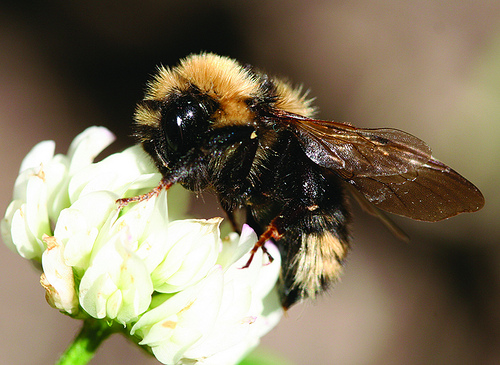
An estimated $15 billion worth of crops is pollinated by honey bees, including more than 130 fruits and vegetables. USDA’s Natural Resources Conservation Service (NRCS) is focusing the effort on five Midwestern states: Michigan, Minnesota, North Dakota, South Dakota and Wisconsin. This announcement renews and expands a successful $3 million pilot investment that was announced earlier this year and continues to have high levels of interest.

From June to September, the Midwest is home to more than 65 percent of the commercially managed honey bees in the country. It is a critical time when bees require abundant and diverse forage across broad landscapes to build up hive strength for the winter.

The assistance announced will provide guidance and support to farmers and ranchers to implement conservation practices that will provide safe and diverse food sources for honey bees. For example, appropriate cover crops or rangeland and pasture management may provide a benefit to producers by reducing erosion, increasing the health of their soil, inhibiting invasive species, and providing quality forage and habitat for honey bees and other pollinators.

This year, several NRCS state offices are setting aside additional funds for similar efforts, including California – where more than half of all managed honey bees in the U.S. help pollinate almond groves and other agricultural lands – as well as Ohio and Florida.


2016-05-31T19:32:17-07:00October 30th, 2014|

Celebrate the Holidays – the Fun and Healthy Way

By: Monique Bienvenue; Cal Ag Today Social Media Manager/Reporter

Keeping your family healthy this holiday season can be tough. With festive cakes, pastries and candy lined up in every aisle of the grocery store, it’s easy to fall off the healthy train.

Fortunately for us, MyPlate has done a fabulous job of creating a beautifully comprehensive list of ways to incorporate healthy habits into your next holiday gathering. Here are some tips that could help you coordinate a fun and healthy event for everyone!

  1. Make healthy habits part of your holiday celebration: Make activities, not food, the center of attention at your next event. This will keep your guests moving and their hands off all the snacks.
  2. Make foods look festive: Use healthy foods, such as nuts or veggies, to decorate your meals.
  3. Add a bit of “health” to your drinks: Serve fruit infused water, or make ice cubes out of juice.
  4. Savor the flavor: Instead of scarfing down a whole meal, take time to enjoy each and every bite.
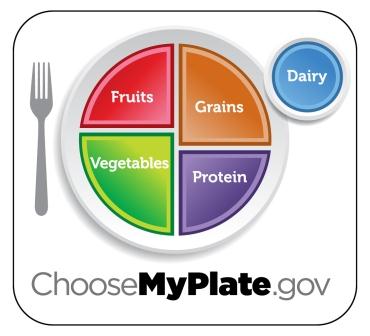
  5. Incorporate MyPlate.com to make sure every food group is represented in your main dish.
  6. Make moving part of the event: Make sure the music is on and that your guests are dancing!
  7. Experiment with healthy recipes: Make healthy recipes a mandatory part of your party-planning.
  8. Make the cleaning process fun: Get the kids involved! It’ll keep the moving and it’ll help you get the job done faster.
  9. Shop smart and eat smart: Healthy food can be expensive, try to buy products that are in season and fit your budget.
  10. Be a cheerleader for healthy habits: Children are like sponges; the more they see you maintain a healthy lifestyle, the more they’re likely to do the same.

Stay healthy this holiday season; go to http://www.choosemyplate.gov recipe ideas, nutrition facts and healthy tips. 


2016-05-31T19:32:18-07:00October 28th, 2014|

Secretary Ross Joins Ag in the Classroom Event

By: Monique Bienvenue; Cal Ag Today Social Media Manager/Reporter

More than 220 California educators and volunteers attended an annual California Agriculture in the Classroom Conference earlier this month to learn about agriculture and connecting Common Core to California crops. The conference, hosted by the California Foundation for Agriculture in the Classroom (CFAITC), was held October 16-18 in Santa Cruz County and provided participants with free resources and valuable avenues for teaching Common Core, STEM, and school garden/nutrition lessons.

The program, designed for educators, administrators, and community volunteers, presented opportunities to explore the agricultural industry and enhance existing curriculum with examples and scenarios about food and fiber production.

California Secretary of Agriculture Karen Ross welcomed the group of educators along with Dr. Jim Painter, professor emeritus at Eastern Illinois University. Renee Shepherd, owner of Renee’s Garden, also spoke to the educators and Michael Marks, Your Produce Man, closed the conference with trivia about the more than 400 crops grown in California. Conference participants were able to experience the variety of agriculture at the conference and were able to learn directly from leading agricultural experts.

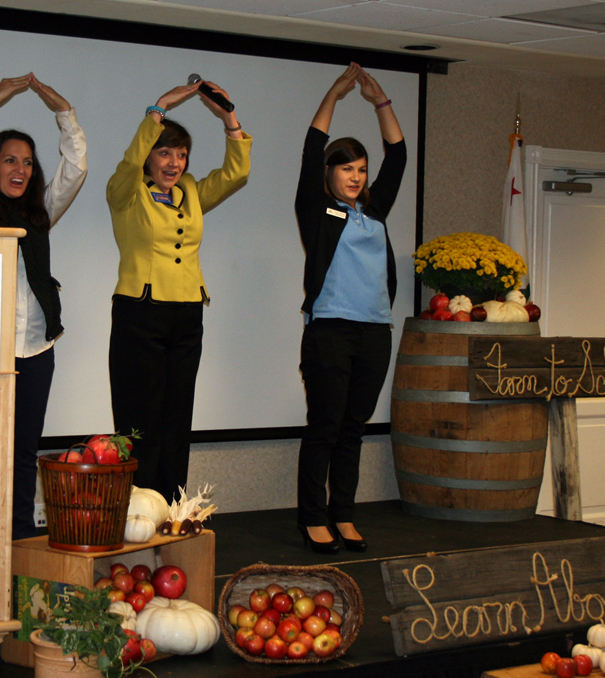
In her comments, Secretary Ross shared the importance of California agriculture, emphasizing the many things that stem from from agriculture, and helped teach the educators the 5 F’s of agriculture – Food, Fiber, Forests, Flowers, and Fuel.

From cut flowers and strawberries to artichokes and timber, Santa Cruz County is the smallest agriculture producing county in California in land mass and one of the most diverse.

The California Ag in the Classroom conference empowers attendees to return to their classrooms and school communities confident and capable of sharing the importance of agriculture’s significant impact on California and its economy with their students.

2016-05-31T19:32:18-07:00October 27th, 2014|

World Ag Expo Offers $3,000 Grand Prize for Video Contest

By: Monique Bienvenue; Cal Ag Today Social Media Manager/Reporter

World Ag Expo is calling for video submissions to tell the story of agriculture for a chance to win $3,000. The contest will focus on the theme, “Where Would We Be Without Farmers?”

Entrants are asked to tell the story of agriculture and the people who work to provide the products we enjoy. Entries will be evaluated by a panel of judges. The top videos will be posted at www.WorldAgExpo.org and the public will vote for their favorites beginning in December 2014.

“Farmers play an integral role in every part of our lives,” said Jerry Sinift, chief executive officer of the International Agri-Center. “We’re asking for talented individuals to portray the connection between farmers and the world they feed and clothe.”

The winner will be announced on January 30, 2015 and awarded the $3,000 cash prize. The top video will be posted on World Ag Expo’s website; will play during the show, February 10-12, 2015 in Tulare, California and the winner will be recognized at World Ag Expo.

To enter, upload your video to your own YouTube or Vimeo account and complete the online entry form on the World Ag Expo website. Videos must be at least 30 seconds long and may not exceed six minutes. Anyone of any age is eligible to enter. All videos must be submitted by December 1, 2014. Visit www.worldagexpo.org/video-contest for full rules and online entry form.

2016-05-31T19:32:18-07:00October 25th, 2014|

California FARMS Leadership Program Aims to Get Youth in Ag Business

Christine McMorrow Heads up FARMS Leadership Program

By Colby Tibbet, California Ag Today Reporter

California-based “Farming, Agriculture, and Resource Management for Sustainability,” or FARMS Leadership Program, is a special Center for Land-Based Learning program that provides innovative, hands-on experiences to urban, suburban and rural youth at working farms, agri-businesses and universities.

“We currently serve students in 10 California counties, seven sites throughout the state, and because agriculture is becoming such a key issue in California and more people are becoming interested in farming practices, knowing where their food comes from, and how it’s grown,” said Christine McMorrow, FARMS Leadership Program Director.

McMorrow said, “Our primary goal is to get high school students out on farms and ranches, into Agri-businesses, learning about jobs in agriculture, especially jobs that go beyond production agriculture. Those jobs that involve science, technology, engineering, and math,” said McMorrow.

As industry partners are always looking for qualified people, McMorrow explained, “We want to help generate those qualified people, so we are getting students from ag backgrounds and students who are not from ag backgrounds and exposing them to the wide variety of careers available to them in agriculture.”

She said the best way to enable those students to know what all the different jobs in agriculture is to get them to where the work is happening.“We give them opportunities to do work on these farms and in these businesses. We also make sure they have plenty of opportunities to speak with people working there and find out how they became interested in agriculture and how they got to where they are today,” said McMorrow.

For more information the program, go to the FARMS website. If you represent an agricultural company that needs good qualified help, go to the Center for Land-based Learning website for contact information.


2016-05-31T19:32:18-07:00October 23rd, 2014|

WAPA Webinar on Revisions to Proposed FSMA Rule

The Western Agricultural Processors Association (WAPA) will be hosting a very special webinar on Thursday, November 13, covering the U.S. Food and Drug Administration’s (FDA) proposed changes to the Produce Rule and Preventive Controls Regulation of the Food Safety Modernization Act (FSMA). 

Jennifer McEntire of The Acheson Group will be providing the update.  Find out how the FDA is proposing to handle hullers and what the requirements will be under these revisions.  This free webinar is an absolute must for all huller and processor members.

For more information about WAPA, click on the link http://www.agprocessors.org. Register here for the webinar.
webinar

The Western Agricultural Processors Association (WAPA) represents facilities involved in the processing of almonds, pecans, pistachios and walnuts. Regular WAPA memberships are limited to almond hullers or processors, pecan and pistachio processors, and walnut dehydrators and processors. Associate memberships include any individual or business entity which is not engaged in agricultural processing, but which provides products or services directly related to the agricultural processing industry, such as commodity brokers, accounting firms, and insurance brokers.

Featured photo: WAPA


2016-05-31T19:32:19-07:00October 23rd, 2014|

New Farm Bill Program to Help Provide Relief to Farmers Affected by Severe Weather

By: Monique Bienvenue; Cal Ag Today Social Media Manager/Reporter

U.S. Agriculture Secretary Tom Vilsack announced the implementation of a new Farm Bill initiative that will provide relief to farmers affected by severe weather, including drought. The Actual Production History (APH) Yield Exclusion, available nationwide for farmers of select crops starting next spring, allows eligible producers who have been hit with severe weather to receive a higher approved yield on their insurance policies through the federal crop insurance program.

Spring crops eligible for APH Yield Exclusion include corn, soybeans, wheat, cotton, grain sorghum, rice, barley, canola, sunflowers, peanuts, and popcorn. Nearly three-fourths of all acres and liability in the federal crop insurance program will be covered under APH Yield Exclusion.

“Key programs launched or extended as part of the 2014 Farm Bill are essential to USDA’s commitment to help rural communities grow. These efforts give farmers, ranchers and their families better security as they work to ensure Americans have safe and affordable food,” said Vilsack. “By getting other 2014 Farm Bill programs implemented efficiently, we are now able to offer yield exclusion for Spring 2015 crops, providing relief to farmers impacted by severe weather.”

The APH Yield Exclusion allows farmers to exclude yields in exceptionally bad years (such as a year in which a natural disaster or other extreme weather occurs) from their production history when calculating yields used to establish their crop insurance coverage.

The level of insurance coverage available to a farmer is based on the farmer’s average recent yields. By excluding unusually bad years, farmers will not have to worry that a natural disaster will reduce their insurance coverage for years to come.

Under the new Farm Bill program, yields can be excluded from farm actual production history when the county average yield for that crop year is at least 50 percent below the 10 previous consecutive crop years’ average yield.

Federal crop insurance, which is sold through private crop insurance agents, offers a variety of options that may impact coverage and premium costs. Producers are encouraged to work with their crop insurance agent to determine the coverage that best meets their risk management needs. Farmers can find a crop insurance agent in their area at: www.rma.usda.gov/tools/agent.html.


2016-05-31T19:32:19-07:00October 22nd, 2014|

World Food Prize Awarded to Prestigious Wheat Scientist

By: Laurie Greene; California Ag Today Editor 
Last week, Dr. Sanjaya Rajaram, a wheat breeder, was awarded The World Food Prize among an international audience at the Iowa State Capitol in Des Moines. Rajaram has spent his life developing more than 480 varieties of the staple crop and has significantly contributed to an increase in world wheat production.
“This award honors the resilience and innovative spirit of farmers in the developing world and the national agricultural systems,” Dr. Rajaram said. “Without their contributions my research would not have been possible. The mission was – and the mission remains –  to serve them.”
The World Food Prize is the foremost international award; recognizing — without regard to race, religion, nationality, or political beliefs — the achievements of individuals who have advanced human development by improving the quality, quantity or availability of food in the world.
The Prize recognizes contributions in any field involved in the world food supply — food and agriculture science and technology, manufacturing, marketing, nutrition, economics, poverty alleviation, political leadership and the social sciences.
The World Food Prize emphasizes the importance of a nutritious and sustainable food supply for all people. By honoring those who have worked successfully toward this goal, The Prize calls attention to what has been done to improve global food security and to what can be accomplished in the future.
2016-05-31T19:32:19-07:00October 20th, 2014|
Go to Top