A Cross Sectional Study of the Association between Walnut Consumption and Cognitive Function among Adult US Populations

Objective: To examine the association between walnut consumption and measures of cognitive function in the US population.

Design: Nationally representative cross sectional study using 24 hour dietary recalls of intakes to assess walnut and other nut consumption as compared to the group reporting no nut consumption.

Method: Setting: 1988-1994 and 1999-2002 rounds of the National Health and Nutrition Examination Survey (NHANES). Population: Representative weighted sample of US adults 20 to 90 years of age. The Neurobehavioral Evaluation System 2 (NES2), consisting of simple reaction time (SRTT), symbol digit substitution (SDST), the single digit learning (SDLT), Story Recall (SRT) and digit-symbol substitution (DSST) tests.

Results: Adults 20-59 years old reporting walnut consumption of an average of 10.3 g/d required 16.4ms less time to respond on the SRTT, P=0.03, and 0.39s less for the SDST, P=0.01. SDLT scores were also significantly lower by 2.38s (P=0.05). Similar results were obtained when tertiles of walnut consumption were examined in trend analyses. Significantly better outcomes were noted in all cognitive test scores among those with higher walnut consumption (P < 0.01). Among adults 60 years and older, walnut consumers averaged 13.1 g/d, scored 7.1 percentile points higher, P=0.03 on the SRT and 7.3 percentile points higher on the DSST, P=0.05. Here also trend analyses indicate significant improvements in all cognitive test scores (P < 0.01) except for SRTT (P = 0.06) in the fully adjusted models.

Conclusion: These significant, positive associations between walnut consumption and cognitive functions among all adults, regardless of age, gender or ethnicity suggest that daily walnut intake may be a simple beneficial dietary behavior.


2016-05-31T19:30:29-07:00February 24th, 2015|

USDA announces $9 million to support Community Food Projects program

The U.S. Department of Agriculture’s (USDA) National Institute of Food and Agriculture (NIFA) announced the availability of $9 million in funding to assist low-income individuals and communities in developing local and independent food systems. NIFA is funding the grants through the Community Food Projects program (CFP), authorized by the Agricultural Act of 2014 (Farm Bill).

“Community Foods Projects provide the opportunity for low-income communities to become more self-reliant and take control of their own food systems,” said Sonny Ramaswamy, NIFA director. “These projects create food systems that are economically equitable and socially and environmentally sustainable, providing real solutions for communities most in need.”

Community Food Projects involve the entire food system. Projects assess strengths and establish connections among existing food systems, resulting in improved food systems that support self-reliance.

Grants are intended to help eligible, private, nonprofit entities in need of a one-time installment of federal assistance to establish and carry out multipurpose community food projects. Projects are funded from $10,000 to $300,000 and up to 36 months. All grants require a dollar-for-dollar match in resources.

Applications are due March 17, 2015. Please see the request for applications for specific program requirements.

CFP is an important part of USDA’s Know Your Farmer, Know Your Food initiative, which works to strengthen and support local and regional food systems. More information on the initiative, including an interactive map of CFP and other federally-supported local food projects, can be found at: www.usda.gov/knowyourfarmer.

The primary goals of the Community Food Projects program are to (1) meet the food needs of low-income individuals; (2) increase the food self-reliance of low-income communities; (3) promote comprehensive responses to local food, farm and nutrition issues; and (4) meet specific state, local or neighborhood food and agricultural needs, including needs relating to infrastructure improvement and development, planning for long-term solutions and the creation of innovative marketing activities that mutually benefit agricultural producers and low-income consumers.

Since 2009, NIFA has provided more than $28 million to 154 Community Food Project awards in 48 states to help communities improve access to healthy, local food. Past projects include Philadelphia Green, which supports small-scale growers in their efforts to bring fresh, locally grown produce to the Philadelphia metro area, and RootDown LA, which is engaging Los Angeles-area youth in community gardens.

Funding for the CFP program is authorized by the 2014 Farm Bill. The Farm Bill builds on historic economic gains in rural America over the past six years, while achieving meaningful reform and billions of dollars in savings for taxpayers. Since enactment, USDA has made significant progress to implement each provision of this critical legislation, including providing disaster relief to farmers and ranchers; strengthening risk management tools; expanding access to rural credit; funding critical research; establishing innovative public-private conservation partnerships; developing new markets for rural-made products; and investing in infrastructure, housing and community facilities to help improve quality of life in rural America. For more information, visit www.usda.gov/farmbill.

2016-05-31T19:30:29-07:00February 23rd, 2015|

Tentative Agreement Reached on West Coast Ports

Port of Oakland Applauds West Coast Ports Contract Settlement
Urges Effort to Speed up the Pace of Global Container Trade

The Port of Oakland THIS EVENING  applauded the tentative agreement of a new longshore labor contract for the West Coast ports. At the same time, it called for efforts to accelerate the movement of global container trade.

“We are pleased that an agreement has been reached,” said Chris Lytle, the Port’s executive director. “Now it’s time for all sides to pull together and get cargo moving with the speed our importers and exporters need.” The Port credited the intervention of U.S. Secretary of Labor Thomas Perez, Gov. Edmund G. Brown Jr., the Bay Area congressional delegation and Oakland Mayor Libby Schaaf. It said their involvement accelerated a final resolution.

Tentative agreement on a new 5-year contract between waterfront employers, represented by the Pacific Maritime Association, and the International Longshore and Warehouse Union (ILWU) was announced this evening. The two sides had worked without a contract since last July, their impasse slowing containerized freight operations from Seattle to Southern California. Once finalized, the contract will cover 29 U.S. West Coast Ports. It awaits union ratification.

The Port of Oakland has prepared a status update on what the settlement means and how long it will take to clear out the cargo backlog that has developed at all major West Coast ports. The update follows:

The Port of Oakland did not participate in the contract negotiations. As a landlord port, it leases facilities to marine terminal operators who employ longshore labor.

With a contract in place, the Port said its top priority is immediate resumption of uninterrupted cargo operations. It called on terminal operators, labor, truckers and ocean carriers to join forces and quickly restore productivity. “Shippers are looking to us to accelerate the flow of cargo,” Mr. Lytle said. “We owe them our best effort.”

WHAT COMES NEXT?
After more than nine months of negotiations, a tentative contract agreement has been reached on the West Coast waterfront. The Pacific Maritime Association and International Longshore and Warehouse Union announced their settlement the evening of Feb. 20. The contract covers 29 U.S. West Coast ports including the Port of Oakland. Here’s a look at what the deal means for the maritime sector and global trade.

THE CONTRACT
Q: So this nine-month dispute is finally over?
A: Not quite. Union members must vote on the proposed contract. It’s not certain yet when that vote will be taken.
Q: Will there be more slowdowns, stoppages and delays in the meantime?
A: Both labor and management will hopefully commit to full productivity at the ports while ratification of the contract is pending.
Q: Why did this take so long?
A: A number of issues were negotiated at length including labor jurisdiction, health and benefits, technology and arbitration.
Q: What are the highlights of the deal?
A: It’s best to get that from the two negotiating parties. The Port of Oakland was not involved in the contract talks.
Q: Will it be more of the same at the next negotiation?
A: There’s a history of challenging bargaining over waterfront contracts. The hope is that both sides will recognize the need to settle future contracts without further damaging the economy.

RECOVERY
Q: Now can the Port go back to normal?
A: It could take 6-to-8 weeks for Oakland and other West Coast ports to recover from the cargo backlog. Cargo movement should improve soon, but it will take time to restore full productivity.
Q: Why will it take so long to recover?
A: Ships, containers and chassis are all out of balance. They’re not where they need to be to support cargo movement. Repositioning of these assets will take some time.
Q: What’s the Port of Oakland going to do to expedite cargo movement?
A: We’ve already instituted a number of extraordinary measures. These include: weekend gates, express lanes, additional truck parking and daily status reports for shippers. We will work now with marine terminals, truck drivers and shipping lines on additional issues including chassis availability, demurrage charges and appointment systems.
Q: Will containers continue to be stranded for days and weeks inside the Port?
A: Terminal operators will develop plans to expedite the release of cargo. Once productivity is restored at the terminals and chassis and containers are back in full circulation, cargo delays should disappear.
Q: What about exports: will shippers be able to get their goods, especially perishables, on ships for foreign markets?
A: Export delays will disappear when shipping lines resume normal rotations. Some are omitting Oakland calls to compensate for significant delays after stopping in Southern California.
Q: What can cargo owners do to get their containers out of the Port?
A: They should contact the shipping line that transported their cargo or the marine terminal where it’s awaiting release.
Q: Will we continue to see long lines of trucks at terminal gates?
A: Waiting times have declined significantly in the past month. Periodic traffic build-ups are likely while full productivity is being restored at the terminals.
Q: Can we expect more slowdowns and suspended operations while the contract awaits ratification?
A: Both negotiating parties will hopefully commit to full cooperation in assisting the full recovery of West Coast ports. That should help minimize disruptions and delays.

CURRENT PORT STATUS
Q: What’s the backlog at the Port of Oakland right now?
A: Thirteen vessels were at berth today and 16 were awaiting berths at the Port of Oakland. Those numbers should decline in coming days.
Q: What’s the status of imports stored in marine terminals?
A: In some cases it could still take several days for imports to be released from terminals. Look for improvement soon now that a tentative agreement has been reached.
Q: What about exports – will they still be delayed in getting loaded to ships?
A: That situation will also improve as vessels that have bypassed Oakland to overcome schedule delays return to normal rotations.
Q: Will truckers still face long waits at terminal gates?
A: Depending on the time of day, wait times could still be extensive at several terminals. Best times are usually early mornings.
Q: Is the Port operating at full productivity?
A: No. The rate of movement on vessels and in container yards has declined over the past three months. That should improve now that the contract impasse has been resolved.
Q: Why were ships avoiding Oakland?
A: Vessels calling the U.S. West Coast stop first at the ports of Los Angeles and Long Beach. Because of significant delays there, some were bypassing Oakland, returning instead to Asia to make up lost time. That practice could end soon with announcement of a tentative contract agreement.
Q: What happens to Oakland cargo if vessels truncate voyages in Southern California?
A: It’s discharged in Southern California and shipped via rail or truck to Oakland at additional cost.
Q: Is cargo volume increasing at the Port of Oakland?
A: It was. In 2014, the Port of Oakland set an all-time record for cargo volume. But volume declined 32% in January from the same period a year ago. Cargo volume has also declined at other major U.S. West Coast ports. Further declines are expected for February when the latest statistics are released in mid-March. The decline is attributed to the nine-month contract dispute.

PORT OF OAKLAND’S ROLE
Q: How could you let this contract dispute drag on for nine months?
A: The Port of Oakland was not part of the contract negotiations. The Port is a landlord, leasing facilities to marine terminal operators. Those operators hire longshore labor and negotiate contracts with the union.
Q: So you were powerless during this whole episode?
A: We had no authority to bring about a contract settlement. We did, however, advocate vigorously for a settlement and communicated continuously with the negotiators. We also worked closely with terminal operators, shippers and truckers to mitigate the effects of the dispute.
Q: If you’re only the landlord, what can you do help restore normal operations at the Port?
A: We’re already in discussions with the Port’s stakeholders on new measures to expedite cargo flow and clear out the backlog. We’re visiting other ports in search of new ideas. We’re also stepping up communication to customers to help them restore their supply chains.

IMPACT OF THE DISPUTE
Q: How much money did the Port of Oakland lose because of this dispute?
A: It’s too soon to tell if there has been a financial impact. The real risk is jobs. If shippers divert cargo permanently away from U.S. West Coast ports, jobs will be at risk. More than 73,000 jobs depend on the Port of Oakland. A large number of those could be jeopardized if cargo owners choose alternative gateways.
Q: Why should shippers continue to use the Port of Oakland?
A: More than 85% of the imports routed through Oakland are for final destinations in Northern California. The Port of Oakland is the convenient gateway for that cargo. Likewise, for Bay Area and Central Valley exporters – Oakland is the best choice. The goal is to increase business through Oakland. The Port is gearing up with new developments that will make it the West Coast’s leading transportation and logistics center. This will include warehousing, transloading, cold storage and grain transport. Oakland is also an improving intermodal cargo gateway with good rail connections to the U.S. interior.
Q: How do you keep faith with shippers who lost business and money because they couldn’t get their cargo?
A: This is the top priority for the Port of Oakland. Service must improve. The Port must be easier to do business with. One-on-one meetings and customer forums help with understanding the needs of shippers. It’s the Port’s responsibility to meet those needs in collaboration with marine terminals, shipping lines and trucking companies.

2016-05-31T19:30:29-07:00February 21st, 2015|

Happy Chinese New Year!

Happy Chinese New Year!Hang the red lanterns, gather your citrus fruits, and cook your noodles. It’s time to welcome the lunar Year of the Sheep!

Chinese New Year (or Lunar New Year) is the most important traditional Chinese holiday, and is celebrated around the world. The celebration starts on the second new moon after the winter solstice, which is on January 31 this year, and goes on for 15 days. During this time, also known as the Spring Festival, those who celebrate visit temples to pay respect to their ancestors and pray for good fortune in the coming year. Small red envelopes of money are given to children as a token of good luck and prosperity. And, like most any family-centered holiday, everyone gathers around for a family feast, making Chinese New Year one of the biggest food holidays of the year.

Food is definitely a focus of Chinese New Year celebration, but it’s more than just nourishment. In Chinese traditions, foods served during the festival have auspicious meanings. Chinese traditions are rich with wordplay and symbolism. Some of the dishes and ingredients have names that sound similar to words and phrases referring to good wishes.

For example, “Kumquat” literally means “golden orange.” Symbolizing wealth and prosperity, the little citrus fruits, and sometimes the tree saplings, are given as gifts during Chinese New Year. Other “wealthy” fruits include Oranges and Tangerines. The larger citrus like Pummelos and Grapefruits symbolize abundance, prosperity, and family unity.

Happy Chinese New Year!

Happy Chinese New Year!

Another item that represents good fortune is Daikon or Asian Radish. In one Chinese dialect, the word for radish is a homophone for “good fortune.” This is why the savory radish cake is traditionally eaten during Chinese New Year celebration. But Daikon is more versatile than that. It can be added to soups and stews, steamed, or eaten fresh, chopped up or thinly shaved into salads.

Daikon could be a part of the mixed vegetable dish that represents family unity. This typical stir-fry is made with a touch of oyster sauce for business success and a mix of vegetables like Baby Bok Choy for close family ties, and Woodear and Shiitake Mushrooms for longevity.

The ultimate longevity blessing, however, comes from the noodles. Long and uncut, they symbolize long life. While Chow Mein is a traditional choice, other Asian noodles like Yakisoba are used for pan-fries and stir-fries, and Udons are used in soups. Shrimp may be added for liveliness and pork for abundance of blessings.

One of the many Chinese New Year wishes translates to “May your happiness be without limit.” With good eating like this, it definitely is the beginning of a very happy year!

Kung Hei Fat Choy! (Happy New Year and be prosperous!)

2016-05-31T19:30:30-07:00February 19th, 2015|

USDA Approves Apples Genetically Engineered to Resist Browning

Source: Food Safety News 

The U.S. Department of Agriculture has decided to approve new types of apples that have been genetically engineered not to brown as quickly after being cut.

Okanagan Specialty Fruits Inc., the company that developed the Arctic Granny and Arctic Golden varieties is currently engaging in a voluntary food safety assessment consultation with the Food and Drug Administration regarding the varieties.

USDA’s Animal and Plant Health Inspection Service (APHIS) said it made the decision to deregulate the apples and allow them to be commercially planted after assessments showed that “the GE apples are unlikely to pose a plant pest risk to agriculture and other plants in the United States” and that “deregulation is not likely to have a significant impact on the human environment.”

Over time, Arctic apples will age, turn brown and rot like any other fruit, but they’ve been genetically engineered to produce less of the substance that causes browning. When the apples are sliced or bruised, the fruit’s flesh retains its original color longer instead of turning brown.

Consumer groups opposed to genetically modified foods have indicated their disapproval of USDA’s decision.

“The USDA has neglected to look at the full range of risks from these apples,” said Wenonah Hauter, executive director of Food & Water Watch. “In its environmental assessment, the USDA glossed over the possibility of unintentional effects associated with the technology used to engineer these apples, potential economic impacts on the U.S. and international apple market, effects of potential contamination for non-GMO and organic apple growers and the impact of the non-browning gene silencing which also can weaken plant defenses and plant health.”

“Pre-sliced apples are a frequently recalled food product,” noted the Center for Food Safety. “Once the whole fruit is sliced, it has an increased risk of exposure to pathogens. Since browning is a sign that apples are no longer fresh, ‘masking’ this natural signal could lead people to consume contaminated apples.”

APHIS said that of the many comments it received on its draft analyses of Arctic apples, some addressed safety concerns and how Arctic apple production might impact exports of U.S. apples abroad. The agency pointed out that under its regulations and the Plant Protection Act, it can’t base its final decision on these factors, but only on the analysis of plant pest risk to agriculture or other plants in the U.S.

If there is enough consumer demand for Arctic apples, it would be several years before producers could grow the fruit. If the apples turn up in grocery stores, they’ll be recognizable by their name, but there are concerns that if the fruit is cut up and used in other foods, consumers won’t necessarily know that the apples were genetically engineered.

The Environmental Working Groups said that the approval of Arctic apples “underscores the need for a transparent and consistent national labeling standard.”

USDA’s announcement came the day after Sens. Barbara Boxer (D-CA) and Richard Blumenthal (D-CT) and Rep. Peter DeFazio (D-OR) reintroduced legislation to label genetically engineered food.

2016-05-31T19:30:30-07:00February 19th, 2015|

Grape Commission Awards Education Grants

Schools in the table grape growing regions of California’s San Joaquin and Coachella valleys are benefiting from grants awarded this academic year.

In total, 36 education grants worth up to $750 were awarded by the California Table Grape Commission on behalf of California’s table grape growers. The funded projects will be implemented in the current academic year and will reach over 4,000 students.

“California’s table grape growers have been supporting local education for years,” said Kathleen Nave, president of the commission. “This program is one of the ways table grape growers give back to the communities in which they live and work.”

Examples of the projects include raised garden boxes for children with special needs, inspiring youth through chess and music, programming robots, growing grapes, and modern microscopy and cell metabolism.

The Innovation in Teaching education grant program was created in 1993 to support innovative educational projects in the table grape growing regions of California’s San Joaquin and Coachella valleys.

For more information, go to www.grapesfromcalifornia.com/EducationGrants.php.

2016-05-31T19:30:30-07:00February 17th, 2015|

The 48th Annual World Ag Expo

The 48th Annual World Ag Expo officially kicked off at 9:00 a.m. this morning.

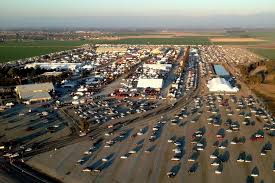
The largest annual agricultural exposition of its kind, World Ag Expo touts more than 1,500 exhibitors who display cutting-edge agricultural technology and equipment on 2.6 million square feet of show grounds. An estimated average of 100,000 individuals from 70 countries attend the show each year to learn about the latest advances in agriculture.

More than 35 seminars are offered in beef, dairy, hay and forage, international trade, irrigation and general agriculture categories. Seminars presented by professionals in the industry provide attendees with valuable information to improve their operations.

“From the locally-focused ag tours to the international attendees, World Ag Expo strives to live up to its name every year,” says Jerry Sinift, International Agri-Center’s chief executive officer. “Even as we grow and change, we remain grounded in the idea that agriculture is an invaluable asset to our communities and to the growing world. We’re here to be a consistent part of that through educational seminars and bringing in quality exhibitors for serious buyers.”

Live webcams of World Ag Expo’s show grounds, powered by Axis Communications, Valley Ag Software and HD Relay, can be viewed online at www.WorldAgExpo.org/live-webcams. Ten cameras on the grounds offer views of activity on the grounds, including exhibitors, attendees and volunteers.

World Ag Expo attendees can get the latest news, information and updates about the show by downloading the new 2015 mobile app. The free app provides mobile access to the schedule of events, an exhibitor directory, map of the show grounds and other visitor resources. The app is available for download by visiting your app store and searching for “World Ag Expo 2015.”

For a full schedule of events, more information about the show or to purchase tickets for World Ag Expo 2015, visit www.WorldAgExpo.org.

2016-05-31T19:30:31-07:00February 10th, 2015|

Fresno County 4-H Hosts Color Me Green 5K Run

On March 14, 2015, Fresno County 4-H members will host Color Me Green 5K Runs at California State University, Fresno. Fresno County 4-H is partnering with the Fresno State’s Jordan College of Agriculture and Science Technology for the Color Me Green 5K Run.

The Color Me Green 5K Runs are five kilometer runs designed to encourage youths and community members to increase their physical activity while also having fun! During each run, participants are showered with colored dye as they pass through each marker point. This run, hosted by 4-H youth members and Fresno State students, will be great opportunity for communities to come together and celebrate healthy living and being physically active.

 Through the Color Me Green 5K Runs, 4-H youth members and Fresno State students will encourage the health of Fresno County. In addition to planning, organizing, and leading the run, 4-H clubs and youth members will host interactive 4-H booths highlighting various project areas.

Online registration opened on February 1, 2015. Here is the link for the registration: http://ucanr.edu/colormegreenfresno4h


2016-05-31T19:30:31-07:00February 10th, 2015|

Zoldoske honored as state’s Irrigation Person of the Year

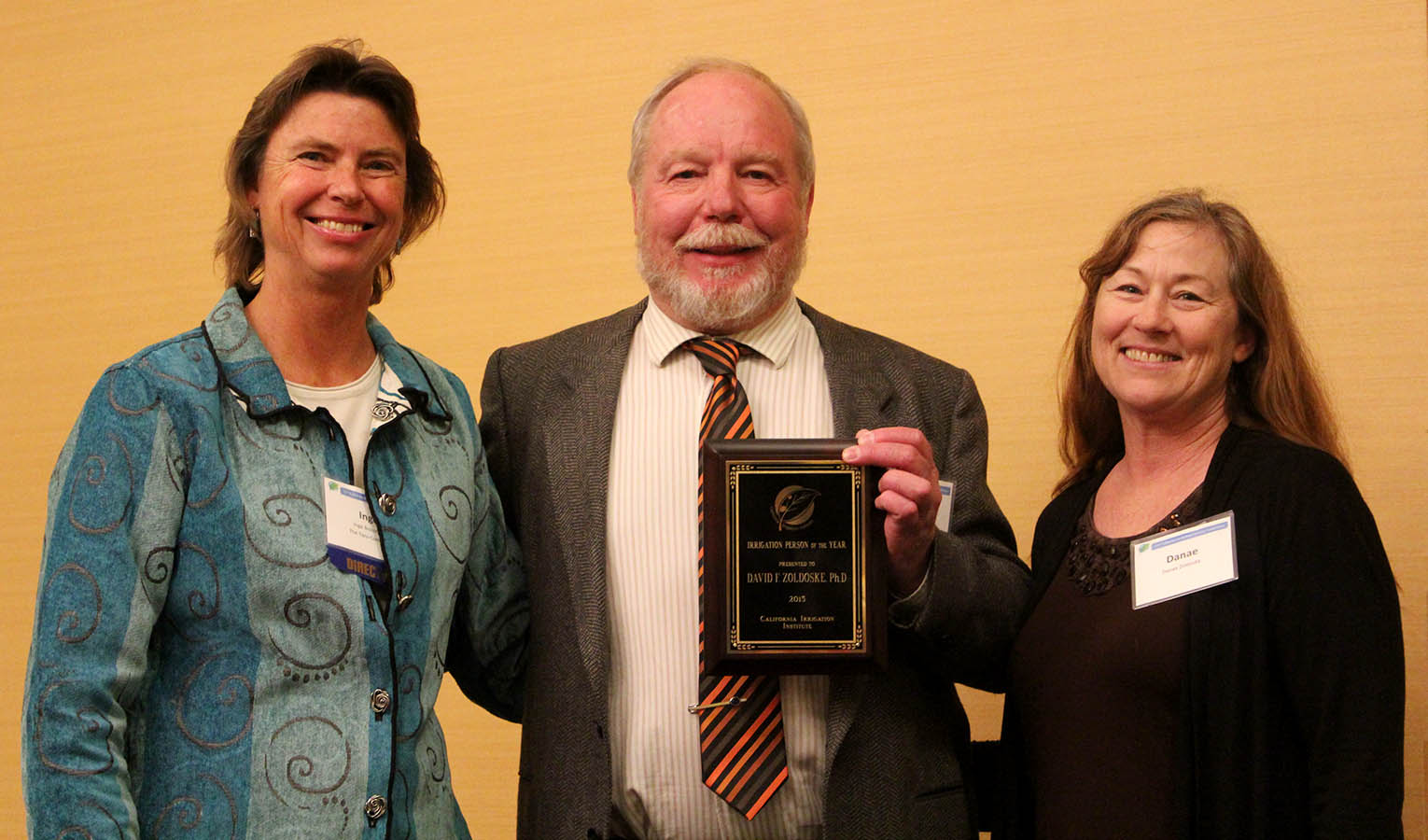
The California Irrigation Institute recognized Dr. David F. Zoldoske as its Person of the Year at its 53rd annual conference on Feb. 2-3 in Sacramento.

Zoldoske, director for the Center for Irrigation Technology at Fresno State, is the 36th recipient of the award sponsored by the state’s oldest independent forum on irrigation and water.

“On behalf of the board of directors, it is a pleasure and honor to bestow this award upon our friend and colleague, Dr. Zoldoske,” said Inge Bisconer, California Irrigation Institute board member and past president. “He has worked tirelessly for decades to promote water and resource use efficiency in agricultural and urban applications in California and beyond. We are fortunate that he chose to apply his passion, energy, skill and expertise to help address one of the most important topics of our generation: water.”

Zoldoske is the third recipient with Fresno State ties. Winston Strong, former plant science and mechanized agriculture professor was recognized in 1985 for his pioneering work in sprinkler testing, and former Center for Irrigation Technology director Kenneth Solomon was honored in 2004.

The annual conference brings together water experts, government agency representatives, water district managers, innovative farmers, urban water managers and commercial interests to focus on pressing water issues, explore innovative solutions, and discuss results of research and practical experience in the field.

Zoldoske was recognized with a similar national award in November 2013 as the Irrigation Association’s Person of the Year.

Fresno State has been involved in irrigation testing and research for more than 60 years, and Zoldoske has played a key role for four decades. He started his irrigation career as a graduate student research assistant before beginning work as a full-time research technician in 1983.

In 1994, he was named director of the center that is internationally-recognized as an independent testing laboratory, applied research facility and educational resource.

“It’s an honor to be recognized by a group representing all of California’s irrigation partners,” Zoldoske said. “The award is more of a recognition of our talented staff and all their successful and hard work. We have been tied closely with the California Irrigation Institute since the 1980s, and look forward to working with them for many years to come.”

2016-05-31T19:30:31-07:00February 5th, 2015|

Allen-Diaz honored by range management professionals

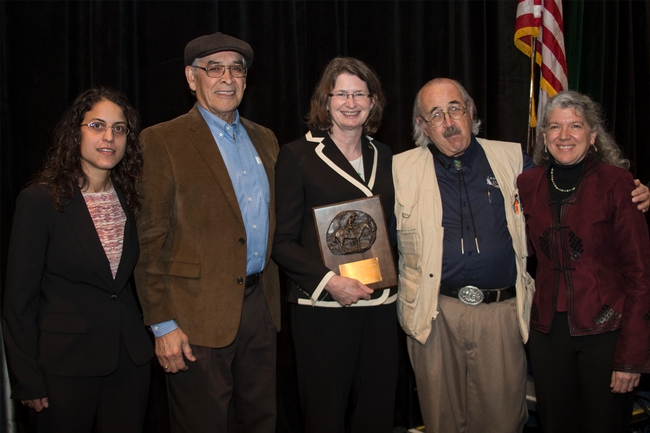
The Society for Range Management bestowed its highest honor, the Frederick G. Renner Award, on Barbara Allen-Diaz, UC vice president for the Division of Agriculture and Natural Resources at the society’s annual meeting today (Feb. 2) in Sacramento. A tremendous milestone, Allen-Diaz is the first female SRM member to receive the award in the society’s 68-year history.

The premier award is given annually to SRM members who have sustained accomplishments or contributions to rangeland management during the last ten years.

“Barbara has a record of outstanding research productivity that has affected the understanding and management of California rangelands and has had global impacts,” said Amy Ganguli, assistant professor of range science at New Mexico State University.

“Barbara is also a well-regarded educator who has mentored several graduate students and young professionals who are making significant contributions to rangeland and natural resource management,” said Ganguli, who, along with Fee Busby, Utah State University wildland resources professor, nominated her for the award.

This is not the first time Allen-Diaz has been recognized by her peers for her research on the effects of livestock grazing on natural resources, oak woodlands and ecosystems of the Sierra Nevada. The national society honored her with its Outstanding Achievement Award in 2001, and the following year the California chapter named her Range Manager of the Year.

In 2007, Allen-Diaz was among 2,000 scientists recognized for their work on the Intergovernmental Panel on Climate Change when the Nobel Peace Prize was awarded jointly to the IPCC and Vice President Al Gore. Allen-Diaz’s contributions focused on the effects of climate change on rangeland species and landscapes. She has authored more than 170 research articles and presentations. She has been an active member of the Society for Range Management, serving on its board of directors and on various government panels.

Allen-Diaz, who has served as UC ANR’s vice president since 2011, is also a tenured UC Berkeley faculty member in the College of Natural Resources and currently holds the prestigious Russell Rustici Chair in Rangeland Management. She has been with the University of California since 1986.  She earned her bachelor’s, master’s and doctoral degrees at UC Berkeley.

2016-05-31T19:30:32-07:00February 3rd, 2015|
Go to Top