California Farmer… ‘The New Endangered Species’

Ambitious filmmaker documents plight of the California Farmer from a new perspective

Simba Temba Hove grew up on a farm in the rural area of Zimbabwe in Africa. “[Farming] is all we did in my childhood. My father had ten kids, and all we did in the morning was wake up, go to the fields, work the fields the whole day and into the evening, and then go home. Everyday we did this, every day except Sundays. So, farming is very close to me. That’s all we did. I was in the rural area of Africa, so we were all subsistence farmers.”

Simba Temba Hove

Simba Temba Hove

Hove is intimately aquainted with droughts, having lived through the devastating 1982 drought in his country: “When the drought hits, there is nothing that you can do. There is no water system, and everyone is on their own. The drought hits your livestock, your fields, your plantations, your wells, your rivers, everything is gone.” Soon after, Hove came to America, went to college and became a registered nurse in the Bay Area.

When this epic drought hit California, Mr. Hove decided to combine his interest and experience with drought with his passion for filming. “The drought is the worst in a hundred years. If it were not the worst in a hundred years, I probably wouldn’t have filmed it…I want to see how the American farmer survives.”

He spoke to several farmers including Joel and Todd Allen and Vaughn Von Allman of Firebaugh in western Fresno County.  Also prominent in the film is Gayle Holman, public affairs representative for Westlands Water District in Fresno.

Simba Temba Hove, left, with those in Movie

Simba Temba Hove, left, with individuals featured in movie

Hove used these interviews to let African farmers compare their experiences: “I wanted to do a documentary like this one so I could show African farmers. When I first talked to Joel, my idea was to show this to African farmers so they could see what an American farmer’s life is like through the drought, and how he survives.”

Hove was shocked that California adheres environmental restrictions to save an endangered species of fish, the Delta Smelt, even in one of the worst draughts on record: “Honestly it would be unthinkable in Africa—to protect an endangered species when the draught is that bad. In Africa it is all about survival, it’s all about human survival.”

He kept thinking how this situation would play out in Africa, “Everyone would think you’re are crazy. Everyone would think you were out of your mind to think of protecting an endangered species like a fish.”

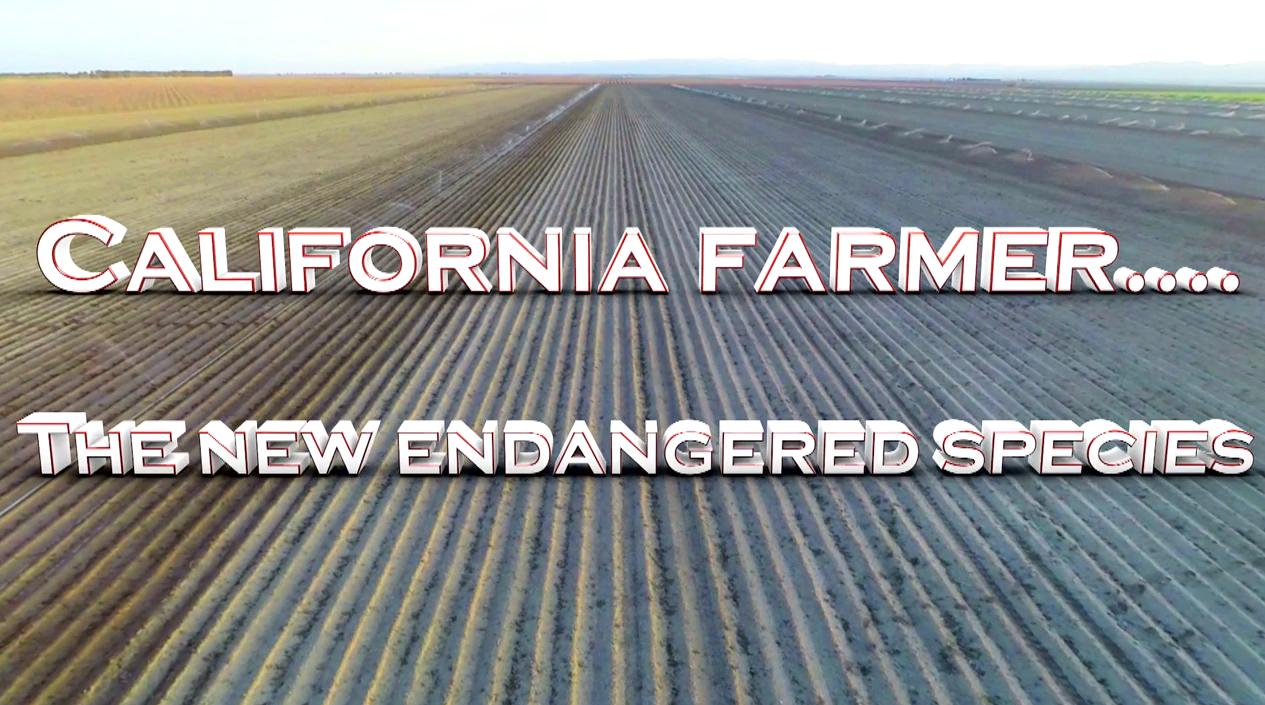
“California Farmer… ‘The New Endangered Species'” is a riveting and powerful documentary film that illustrates the challengers and the struggles faced by Central California Farmers and their communities.

Check back here to find a screening near you. To see a trailer of the film go to You Tube: https://www.youtube.com/watch?v=LOk3PyOWT5M
2016-07-23T17:03:02-07:00November 10th, 2014|

Looking ahead – December is Farm to Food Bank Month

By: Monique Bienvenue; Social Media Manager/Reporter

California produces one half of the nation’s fruits, nuts and vegetables and is also the largest dairy producing state. Yet in California, the nation’s largest agricultural producer, one in four children and one in six adults regularly go hungry. Join the California Department of Food and Agriculture, the California Association of Food Banks, and CA Grown  in combating hunger.

This is why December is ‘Farm to Food Bank Month’. It is an opportunity to not only recognize the great work that is occurring on an ongoing basis – Ag Against HungerHidden HarvestYoung Farmers and Ranchers, and Farm to Family – but also provides a chance for California farm families to give back to their communities.

CDFA is working in collaboration with its State Board of Food and Agriculture to try to increase annual farm-to-food bank donations to 200 million pounds by next year.

Help join the cause and participate at our upcoming Farm to Food Bank event on Wednesday, December 3rdfrom 10 a.m. to 11 a.m. at the Second Harvest Food Bank in San Jose.  Let’s work to end hunger in California!

2016-05-31T19:32:16-07:00November 7th, 2014|

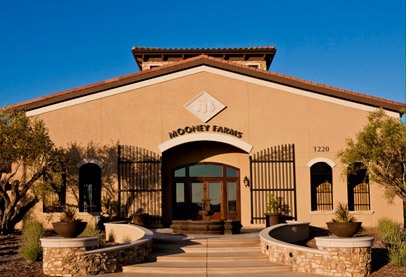
Mooney Farms, a California Produce Success Story

By Kyle Buchoff, CalAgToday reporter

After 25 years of hard work, Mooney Farms has taken its place as the #1 sun-dried tomato brand in the U.S.

The processing tomato industry is huge in California, comprising almost 100% of the US total. Farmers plant almost 270,000 acres of crop each year and the total value hovers around one billion dollars. These tomatoes are used in ketchup, salsa, sauces, dried tomato products and other foodstuffs.

Mary Mooney, owner of Mooney Farms in Chico, a premium manufacturer of sun-dried under the Bella San Luci brand, told us the rags-to-riches story of the brand. “We started about 25 years ago, actually on the side of the road. We went to farmers markets, and our first customer was Costco. We delivered one pallet, and before we knew it, we were their number one item and our products were in every Costco all over the world. So, with an interesting beginning, we jumped into the fire, and now after 25 years we are the leading producer of sun-dried tomatoes in America!”Bella Sun Luci

Mooney described the evolution of their product line, “We started with the original sun-dried tomato and olive oil pack, like in Italy, but we’ve gone into wonderful pestos, ground up with sun-dried tomatoes, walnuts and parmesan cheese. Our latest venture has been to promote the flavor of sun-dried tomatoes, whether BBQ-smoked, or basil-flavored. Customers really love the convenience and the variety.”

Mooney is proud to make quality products from the best California produce, “You know, I love working in CA. I was born and raised in Sonoma before moving to the Chico area to run the family company. All of our products are from California. We even have our own California olive oil ranch. We are enjoying all the Mediterranean-style foods, but we’re able to use the bounty of Northern California to bring that to the public. ”

“Just from a personal standpoint,” said Mooney, “I love the produce industry, working in it and bringing these products to market because produce is where consumers look for the healthiest items and we are excited to provide them. ”

2016-05-31T19:32:16-07:00November 6th, 2014|

Celebrate the Holidays – the Fun and Healthy Way

By: Monique Bienvenue; Cal Ag Today Social Media Manager/Reporter

Keeping your family healthy this holiday season can be tough. With festive cakes, pastries and candy lined up in every aisle of the grocery store, it’s easy to fall off the healthy train.

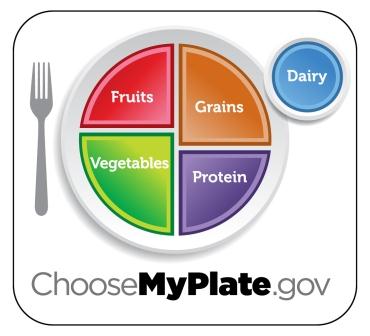
Fortunately for us, MyPlate has done a fabulous job of creating a beautifully comprehensive list of ways to incorporate healthy habits into your next holiday gathering. Here are some tips that could help you coordinate a fun and healthy event for everyone!

  1. Make healthy habits part of your holiday celebration: Make activities, not food, the center of attention at your next event. This will keep your guests moving and their hands off all the snacks.
  2. Make foods look festive: Use healthy foods, such as nuts or veggies, to decorate your meals.
  3. Add a bit of “health” to your drinks: Serve fruit infused water, or make ice cubes out of juice.
  4. Savor the flavor: Instead of scarfing down a whole meal, take time to enjoy each and every bite.
  5. Incorporate MyPlate.com to make sure every food group is represented in your main dish.
  6. Make moving part of the event: Make sure the music is on and that your guests are dancing!
  7. Experiment with healthy recipes: Make healthy recipes a mandatory part of your party-planning.
  8. Make the cleaning process fun: Get the kids involved! It’ll keep the moving and it’ll help you get the job done faster.
  9. Shop smart and eat smart: Healthy food can be expensive, try to buy products that are in season and fit your budget.
  10. Be a cheerleader for healthy habits: Children are like sponges; the more they see you maintain a healthy lifestyle, the more they’re likely to do the same.

Stay healthy this holiday season; go to http://www.choosemyplate.gov recipe ideas, nutrition facts and healthy tips. 


2016-05-31T19:32:18-07:00October 28th, 2014|

WAPA Webinar on Revisions to Proposed FSMA Rule

The Western Agricultural Processors Association (WAPA) will be hosting a very special webinar on Thursday, November 13, covering the U.S. Food and Drug Administration’s (FDA) proposed changes to the Produce Rule and Preventive Controls Regulation of the Food Safety Modernization Act (FSMA). 

Jennifer McEntire of The Acheson Group will be providing the update.  Find out how the FDA is proposing to handle hullers and what the requirements will be under these revisions.  This free webinar is an absolute must for all huller and processor members.

For more information about WAPA, click on the link http://www.agprocessors.org. Register here for the webinar.
webinar

The Western Agricultural Processors Association (WAPA) represents facilities involved in the processing of almonds, pecans, pistachios and walnuts. Regular WAPA memberships are limited to almond hullers or processors, pecan and pistachio processors, and walnut dehydrators and processors. Associate memberships include any individual or business entity which is not engaged in agricultural processing, but which provides products or services directly related to the agricultural processing industry, such as commodity brokers, accounting firms, and insurance brokers.

Featured photo: WAPA


2016-05-31T19:32:19-07:00October 23rd, 2014|

World Food Prize Awarded to Prestigious Wheat Scientist

By: Laurie Greene; California Ag Today Editor 
Last week, Dr. Sanjaya Rajaram, a wheat breeder, was awarded The World Food Prize among an international audience at the Iowa State Capitol in Des Moines. Rajaram has spent his life developing more than 480 varieties of the staple crop and has significantly contributed to an increase in world wheat production.
“This award honors the resilience and innovative spirit of farmers in the developing world and the national agricultural systems,” Dr. Rajaram said. “Without their contributions my research would not have been possible. The mission was – and the mission remains –  to serve them.”
The World Food Prize is the foremost international award; recognizing — without regard to race, religion, nationality, or political beliefs — the achievements of individuals who have advanced human development by improving the quality, quantity or availability of food in the world.
The Prize recognizes contributions in any field involved in the world food supply — food and agriculture science and technology, manufacturing, marketing, nutrition, economics, poverty alleviation, political leadership and the social sciences.
The World Food Prize emphasizes the importance of a nutritious and sustainable food supply for all people. By honoring those who have worked successfully toward this goal, The Prize calls attention to what has been done to improve global food security and to what can be accomplished in the future.
2016-05-31T19:32:19-07:00October 20th, 2014|

USDA Awards Funding for Regional Centers of Excellence in Nutrition Education and Obesity Prevention

Source: Monique Bienvenue; Cal Ag Today Social Media Manager/Reporter

Today, the U.S. Department of Agriculture awarded $4 million in grants to establish four regional centers of excellence for research on nutrition education and obesity prevention, as well as a coordinating center, which will develop and test innovative nutrition education and obesity prevention interventions for underserved, low-income families.

“Nearly one in three children today is overweight or obese, and nutrition promotion strategies, including education, public policies, health systems, and environmental changes, are the key to reversing this trend,” said Sonny Ramaswamy, Ph.D., National Institute of Food and Agriculture director. “These grants provide the opportunity to improve the health of our next generation and ensure that all children have access to the tools they need to improve their nutrition and physical fitness.”

Together, Food and Nutrition Service and the National Institute of Food and Agriculture will support effective education and extension services through two preexisting programs; the Supplemental Nutrition Assistance Program-Education (SNAP-Ed) and the Expanded Food and Nutrition Education Program (EFNEP). This joint effort, known as the SNAP & EFNEP: Regional Nutrition Education and Obesity Prevention Centers of Excellence (RNECE) will establish centers at Colorado State University, Cornell University, Purdue University, and the University of North Carolina at Chapel Hill, and one national coordinating center at the University of Kentucky.

The National Coordination Center will coordinate communications across the four regions and disseminate findings. The national center will also aggregate data to share with policy makers and other stakeholders, and will work with NIFA to organize annual meetings with the regional centers. The interventions developed through the centers will likely benefit additional populations beyond SNAP and EFNEP participants.

The $4 million in funding supports USDA’s strategic goal of developing and extending a research-based approach to obesity prevention, ultimately producing measurable improvements in health, obesity, nutrition and physical activity-related outcomes.

“This joint grant program is one of the most important and powerful tools at our disposal to promote healthier choices and improved physical health among participants in our nutrition assistance programs,” said Food and Nutrition Service Administrator Audrey Rowe. “I am thrilled that we have been able to launch this partnership to drive innovation and increase our impact in preventing and reducing obesity.”

USDA’s Food and Nutrition Service administers 15 nutrition assistance programs. In addition to SNAP, these programs include the National School Lunch and Breakfast programs and the Summer Food Service Program which together comprise America’s nutrition safety net. Improving the diets of participants is a key component of USDA’s nutrition assistance programs. For more information, visit www.fns.usda.gov.


2016-05-31T19:32:19-07:00October 17th, 2014|

Researchers Combat Aquatic Weeds

Aquatic Weeds Interfere with Water Flow, But There are Strategies for Eradication


By Kyle Buchoff, California Ag Today Reporter


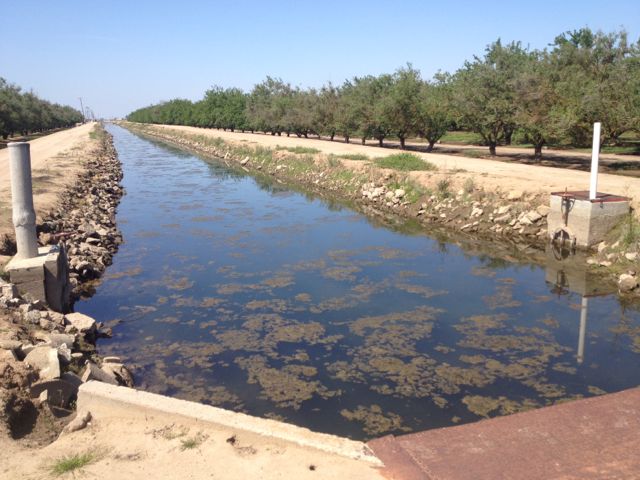
John Madsen is a Research Biologist with the USDA and is the Site Coordinator for The Aquatic Weed Research Facility at UC Davis. One of the goals of this lab is to identify aquatic weeds that might hinder the flow of irrigation water through canals, ditches or farms.

Madsen, explained, “There are many species of aquatic plants that will infest irrigation ditches and other canals and interfere with the passage of irrigation water. Some of the main species are Hydrilla, a noxious weed in California, and in the Delta, Egeria densa or  Brazilian elodea. California State Parks Division of Boating and Waterways is working on the weeds in the delta.”

Madsen said once the species is identified, the grower must choose the correct herbicide to control the weeds, “Species identification is very important, since different species are susceptible to different herbicides. There are also water restrictions on herbicides. You have make sure you choose the right herbicide for controlling the weed but also make sure it fits the constraints of the habitat. Some herbicides cannot be used too close to irrigation, the water source or drinking water, while others have fewer restrictions.”

Mike Blankinship with Davis, CA-based Blankinship & Associates, a firm that specializes in aquatic weed management, said, “Among the things that we provide are services to various growers and irrigation districts to help them understand their weeds, manage them and ultimately deliver water efficiently. Working with John and others in the irrigation community throughout California, we have come up with a variety of plans and tools that include aquatic herbicides to manage the water supply and deliver it to growers efficiently.”

2016-05-31T19:32:19-07:00October 16th, 2014|

Northern California elementary school students to visit White House Garden

By: Monique Bienvenue; California Ag Today Social Media Manager/Reporter

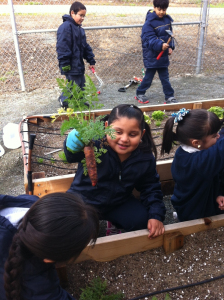
Today, five students from Willow Cove Elementary School will join First Lady Michelle Obama to harvest vegetables from the White House Garden and work with chefs to turn them into a healthy meal.

Willow Cove Elementary School is part of the Pittsburg Unified School District in Contra Costa County. The students are attending the event in recognition of the Farm to School programs the district has implemented. The district now has eight school gardens, incorporates local produce in school cafeterias, and provides nutrition education in the classroom as well as after-school programs.

The school’s garden began last year, when second-grade teacher Elba Ramirez requested milk crates to start a small classroom garden. Instead, district child nutrition director Matthew Belasco offered to build a larger garden with raised beds.

Ms. Ramirez and her students planted and cared for the garden throughout the year and then harvested the vegetables, which were served in the cafeteria.

CDFA’s Office of Farm to Fork has been working closely with Pittsburg Unified’s Food Service Department to develop these programs and incorporate more locally grown food in district cafeterias. The office is also working with Pittsburg and surrounding school districts to directly connect them with nearby farmers to provide local food.

“I am so pleased that the White House has recognized the Pittsburg Unified School District for all the hard work it has put into its amazing farm to school program,” said CDFA Secretary Karen Ross. “It helps connect our students with food grown right here in California and, to the extent possible, from Contra Costa and surrounding counties. CDFA and its Office of Farm to Fork is committed to these types of programs. They teach our kids about where their food comes from while giving them access to healthy foods, and they support California farmers and ranchers.”

2016-05-31T19:32:20-07:00October 14th, 2014|

Head, Heart, Hands & Health – The 4-H Pledge

The 4-H Pledge Means Dedication

By: Monique Bienvenue; Cal Ag Today Social Media Manager/Reporter


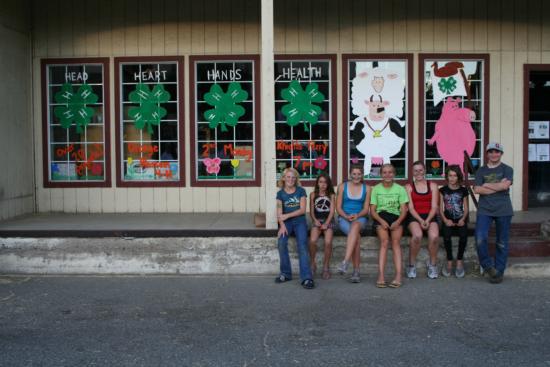
At a glance, one might not think twice about that four-word pledge. But to countless individuals, that short, simple phrase represents dedication to 4-H, a prestigious organization devoted to teaching America’s youth the skills necessary to become successful outside the classroom.

Agriculturally-based, 4-H began in the 1800s as a way for students to communicate new and innovative farming techniques to those who were disconnected from university campuses. Eventually, this education trend caught on and in 1902 the first 4-H club was formed.

4h-pledge, 4-H Head Heart Hands HealthThe Cooperative Extension System was later created in 1914, and in partnership with the National Institute of Food and Agriculture under the United States Department of Agriculture, 4-H was officially nationalized. Clubs were established all across the United States.

4-H


Today, there are hundreds of children involved in 4-H. From health issues to food security, there isn’t an issue that these young, energetic individuals aren’t taking on.

For more information about 4-H, visit their website at http://www.4-h.org.

2016-10-13T14:36:53-07:00October 13th, 2014|
Go to Top