Temperance Flat Reservoir Offers Solution for Flood Years

And Yes, Flood Years Have Always Followed Drought Years

 By Patrick Cavanaugh, Editor

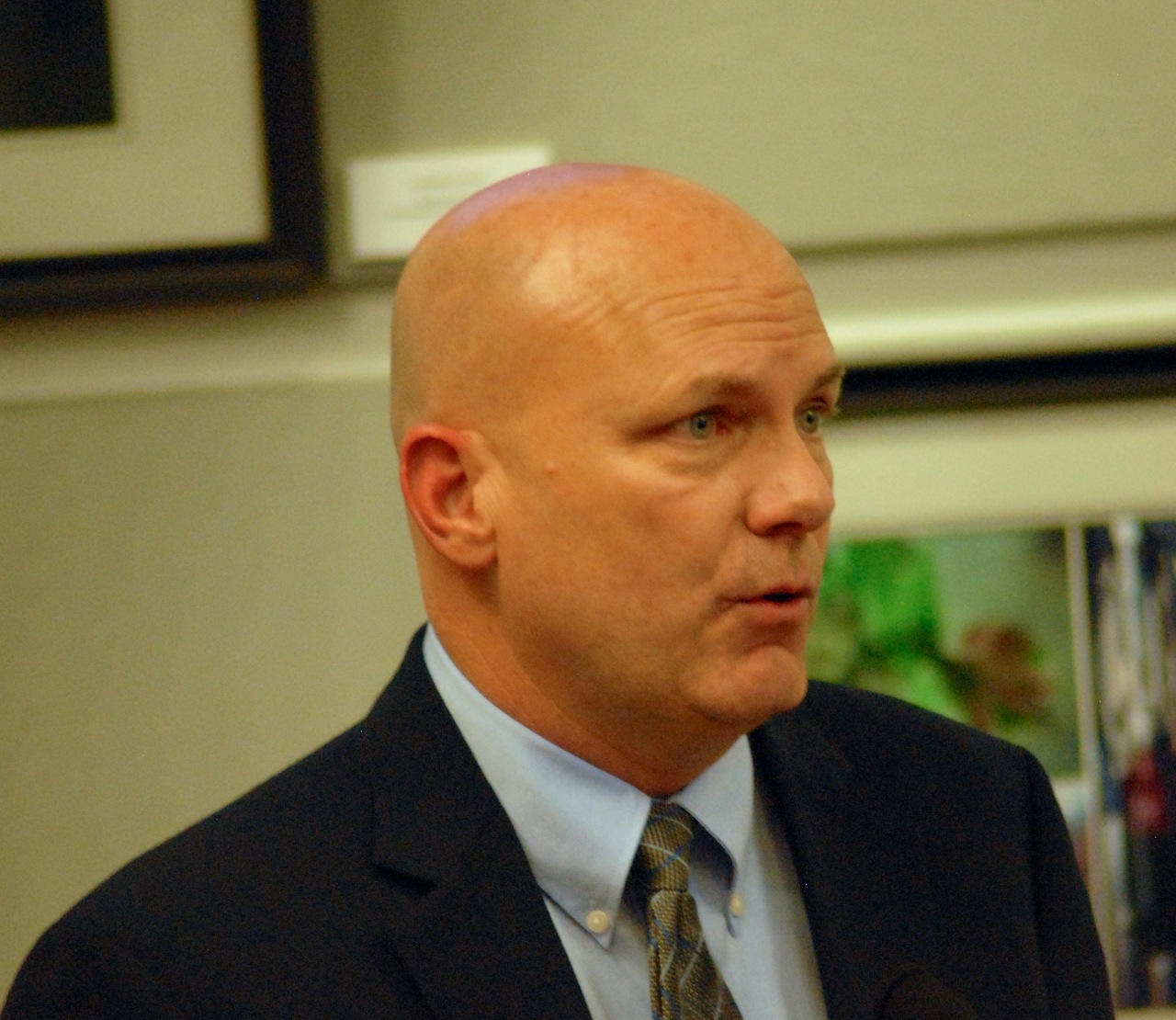
Temperance Flat Reservoir offers a big solution for flood years, said Ron Jacobsma, General Manager of Friant Water Authority, who  spoke at a special California State Board of Food and Agriculture meeting in Sacramento recently regarding solutions to California’s water situation as we may be entering a fourth year of drought.

“The bottom line: We are not in a position to waste any more flood water. We have groundwater overdrafts all over the Valley, and if we don’t start balancing our water supplies from a regulatory perspective, but also managing when we have these generous years, we are going to end up with tens of thousands of prime agricultural land taken out of production,” said Jacobsma.

Jacobsma was focused on the proposed Temperance Flat Dam that would provide an additional 1.25 million acre feet of storage behind Millerton Lake and Friant Dam which holds only 400,000 acre feet.

“We have spilled over Friant Dam more than one million acre feet of water over the years, which ends up going to the ocean, and Temperance Flat would stop this,” said Jacobsma.

“What Temperance Flat will do is enable California to use the water twice. How do you use it in a non-consumptive way for the environment? We can create cold water pools and augment flows on the San Joaquin River. But then we can pick the water back up and move it to where it needs to go, either as irrigation supplies that year, or to recharge groundwater basins. And we have to get in the other side of the aisle–if you will–and start thinking about this,” noted Jacobsma.

“We’re not talking about grabbing as much water as we can even if we really can’t define why we need it,” said Jacobsma. “We need to say, “Let’s find a way to make the consumptive part go to traditional uses like urban and agriculture, but let’s see how we can manipulate the system with more infrastructure so that we can better manage our existing supplies and get ecosystem benefits as well.”

“That’s really the whole fundamental basis of Chapter 8, which refers to the public benefits of the Water Bond that was passed overwhelmingly by voters last November. We have to find that balance because the public is going to pay only for the public benefits.”

“It would be nice if the public paid for Temperance Flat for us, but they’re not going to. And if we can provide public benefits, we can build a broader base of support. So our objective on Temperance Flat is to take the flood water, put it in the Friant system, send it within the San Joaquin Valley with partners because we are going to have to move some water around, have some flood control, and get some recreational benefits out of it.”

“But if we are going to spend a billion dollars plus trying to get a fishery on the San Joaquin River that has not been there for 60 years–a fishery that is dependent on cold water–why wouldn’t you invest in Temperance Flat and get multiple uses out of it?”

“It is going to take some time to build those coalitions. First you have to build local support, then regional support, then broader state-wide support. That is the kind of effort that we are going to have to go through,” Jacobsma noted.

 Protecting Investment

“The other consideration with regard to Temperance Flat is how we would protect the water it stores. If we get into an operational plan, how do we protect ourselves? If our water users spend more than a billion dollars on surface storage, just to have some regulation or  law passed demanding half of the yield, but we’re stuck with that price tag, that’s a huge risk for our guys,” noted Jacobsma.

“So we also need the certainty that whatever we develop will be available for us for a definitive amount of time–you know 40, 50, 100 years,” Jacobsma said. “We have to know that the money is going to be well spent in paying dividends down the road. And we will commit under the operations plan to provide the ecosystem benefits that we agreed to.”


2016-05-31T19:30:31-07:00February 9th, 2015|

Fresno State to host commencement for state ag leaders

The Jordan College of Agricultural Sciences and Technology at Fresno State will host the California Agricultural Leadership Program commencement ceremony for the first time at 10 a.m. on Saturday, Feb. 7 in North Gym, Room 118.

The commencement will cap a three-day seminar for the 44th graduating class of emerging or mid-career agricultural leaders. Graduates of the program acquire skills to enhance the long-term success of their businesses, farms, ranches and organizations.

Over the past 17 months, the group has focused on leadership theory, effective communication, motivation, critical and strategic thinking, change management, emotional intelligence, and complex social and cultural issues.

Four Fresno State graduates – Dustin Fuller, Trevor Meyers, Heather Mulholland and Carissa Koopman Rivers – are among the 24 members who will graduate and were inaugurated in October 2013 at Fresno State.

Each fellow has participated in 55 seminar days, including a 10-day national travel seminar to Gettysburg, Penn., Philadelphia and Washington D.C., and a 15-day international travel seminar to South Africa, Zambia and Zimbabwe.

“We congratulate the 24 fellows on their important achievement of completing the Ag Leadership Program,” said Bob Gray, president and CEO of the California Agricultural Leadership Foundation, which operates the program. “These leaders will continue to learn and grow, take on new challenges, assume leadership roles and make a difference.”

The 45th class, inaugurated in October 2014 at Fresno State, will also convene on campus during the three-day event. The class includes four additional Fresno State graduates –- Chris Jensen, Stanley Kjar, Lauren Reid and Justin Spellman.

Fresno State animal sciences Professor Dr. Michael Thomas serves as the Jordan College’s core faculty member for the program’s education team and as the foundation’s director of education.

“We are grateful to the Jordan College for its ongoing support of Ag Leadership and are very pleased to hold our inauguration and commencement ceremonies on campus,” Gray said. “Commencement has been held in Pomona for many decades, but we felt it was important to move it to the more centrally-located Fresno State. We also thank Wells Fargo for their generous sponsorship of commencement.”

Fresno State is one of four California universities that partner with the program. The others are Cal Poly San Luis Obispo, Cal Poly Pomona and University of California, Davis.

More than 1,200 men and women have participated in the program since the first class was introduced in 1970, making it the longest continuously-operating agriculture leadership training experience in the nation.

For more information, contact Meredith Rehrman Ritchie at 916-984-4473 or mritchie@agleaders.org.

2016-05-31T19:30:32-07:00February 5th, 2015|

State Water Board Orders More Information from Diverters Claiming Senior Delta Water Rights

State is Asking Proof of Water Rights

Persons claiming senior water rights in the Sacramento-San Joaquin Delta watershed will be required to provide the State Water Resources Control Board (State Water Board) detailed information on the water rights they claim and diversions associated with those rights under a new order issued by the State Water Board.

The order comes after the State Water Board received information that some riparian and pre-1914 water right holders may be illegally diverting stored water in the Sacramento and San Joaquin watersheds and the Delta.

To determine whether unauthorized diversions have occurred, the State Water Board needs supporting documentation for the claimed water right including the property patent date and the date of initial appropriation, as well as information on diversions made during 2014 and projected 2015 diversions.

The order applies to 1,061 water rights claims held by about 450 individuals in the Delta and the Sacramento and San Joaquin watersheds.

Failure to comply and provide the information in a timely manner may lead to enforcement action, including a Cease and Desist Order. To read the order, visit: http://www.waterboards.ca.gov/waterrights/water_issues/programs/drought/docs/2015sacsjinfoorder.pdf

More than 8,500 post-1914 water rights holders (junior water rights holders) in the Sacramento and San Joaquin watersheds were issued curtailment notices last May as a result of the continuing drought. They were required to stop diverting water to protect the rights of pre-1914 and riparian water rights holders. The junior water rights holders were entitled to continue using water that had been previously stored in reservoirs on their behalf.

In July the California Department of Water Resources and the U.S. Bureau of Reclamation, both holding junior water rights, alleged that senior water right holders in the south and central Delta were illegally diverting water stored and released by the State Water Project and the Central Valley Project. The two agencies asked the State Water Board under its statutory authority to require Delta water users to provide proof of their water rights claims, or to curtail unauthorized diversions.

The new informational order is in response to those allegations and another complaint that has been received by the State Water Board.

To view the letters from the Department of Water Resources and the Bureau of Reclamation and other related documents, visit: http://www.waterboards.ca.gov/waterrights/water_issues/programs/bay_delta/complaints/index.shtml

2016-05-31T19:30:32-07:00February 5th, 2015|

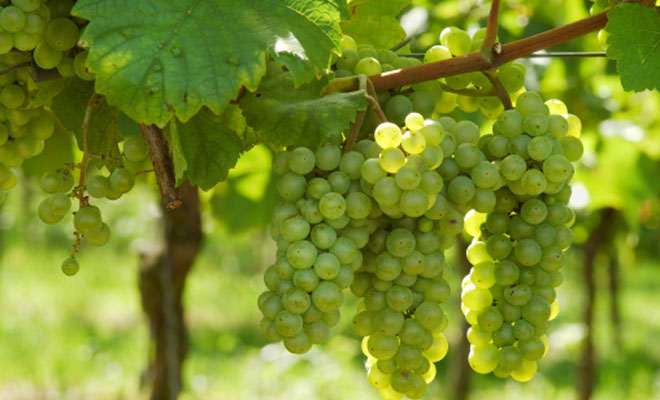
Changing Water Regulations and the Impact on Vineyard Management in California

Conference will focus on Many Ag Water Issues

Date: Friday, February 13, 2015
Time: 9:00am – 3:30pm
Location: UC Conference Center, 550 Alumni Lane (on the south campus at UC Davis)

Registration website:
http://ucanr.edu/survey/survey.cfm?surveynumber=14415

Agenda:

9:00 – 9:10: Welcome: Andy Walker, Dept of Viticulture & Enology, UC Davis

9:10 – 10:00: Groundwater Issues in California and the Impact of the New Legislation: Thomas Harter*: Robert M. Hagan Endowed Chair in Water Management & Policy, Land, Air & Water Resources, UC Davis and UCCE Groundwater Hydrologist

10:00 – 10:50: Changing Water Storage Conditions and the Implications for Agriculture: Jay Lund**: Director Center for Watershed Sciences and Ray B. Krone Professor of Civil and Environmental Engineering, UC Davis

10:50 – 11:10: BREAK

11:10 – 12:00: Water Rights Issues – the Effects of Future Regulation on Vineyard Water Use: Paula Whealen: Principal Water Rights Specialist, Wagner & Bonsignore, Consulting Civil Engineers

12:00 – 1:00: LUNCH

1:00 – 1:50: Managing a Groundwater District – Challenges and Pitfalls: Anthony Emmert, Deputy General Manager, United Water Conservation District

1:50 – 2:05: BREAK

2:05 – 3:30: Panel Discussion of the Main Water Supply Issues for Growers in the Central Coast, North Coast, San Joaquin Valley and the Northern Central Valley: Mark Battany, UCCE Viticulture Farm Advisor, San Luis Obispo County; Dan Munk, UCCE Farm Advisor, Fresno County; Alan Fulton, UCCE Irrigation & Water Resources Specialist, Tehama County; and Rhonda Smith, UCCE Viticulture Farm Advisor, Sonoma County

2016-05-31T19:30:32-07:00February 5th, 2015|

Western United Dairymen Calls on Congress to Address Farm Labor Crisis

Call to Address Farm Labor Crisis, along with E-Verify Legislation

Together with the Agriculture Workforce Coalition (AWC), Western United Dairymen (WUD) called on Congress TODAY to enact legislation that would address the farm labor crisis faced by American agriculture before implementing a mandatory E-Verify system.

The call came via the testimony of Chuck Conner, president and CEO of the National Council of Farmer Cooperatives (NCFC), a member of the AWC, during a hearing of the House Judiciary Subcommittee on Immigration and Border Security. Subcommittee Chairman Trey Gowdy (R-S.C.) called the hearing to examine The Legal Workforce Act (H.R. 1772), legislation introduced during the previous Congress.  The measure would mandate the use of the E-Verify system by employers to confirm the legal status of prospective employees.

“Mandatory E-Verify without addressing agriculture’s broader labor crisis would be devastating. As an industry, we recognize interior enforcement is needed; it just cannot be decoupled from addressing agriculture’s workforce concerns,” Conner testified. “Let me be very clear: the agricultural industry would be forced to oppose any E-Verify legislation that does not also address the agricultural workforce crisis.”

Conner noted that an estimated 70 percent of hired farm workers lack proper authorization to work in the United States, despite providing authentic-looking documents to employers. In addition, the only guest worker program available to agriculture, H-2A, is so cumbersome and divorced from the market-based needs of agriculture, that it provides just 7 percent of the workers needed by farmers and ranchers.

The vast majority of America’s farmers fully comply with the law. But the system created by Congress in 1986 is vulnerable to the use of false documents. “Employers, including farmers, are not experts in spotting false documents,” Conner said. “So long as a solution is in place to ensure access to a legal and stable workforce, including our current, experienced workersboth year-round and seasonalfarmers would welcome a verification system that is simple, efficient and certain.”

WUD is a voluntary membership organization representing more than 60% of the milk produced in California. Membership benefits include resources in labor law, environmental regulations and pricing issues. Members decide the direction of state and federal legislative efforts affecting the dairy industry.

The Agriculture Workforce Coalition (AWC) unites over 70 organizations representing the diverse needs of agricultural employers across the country. AWC serves as the unified voice of agriculture in the effort to ensure that Americas farmers, ranchers and growers have access to a stable and secure workforce. Western United Dairymen is a key member of the AWC steering committee.

2016-05-31T19:30:32-07:00February 4th, 2015|

Allen-Diaz honored by range management professionals

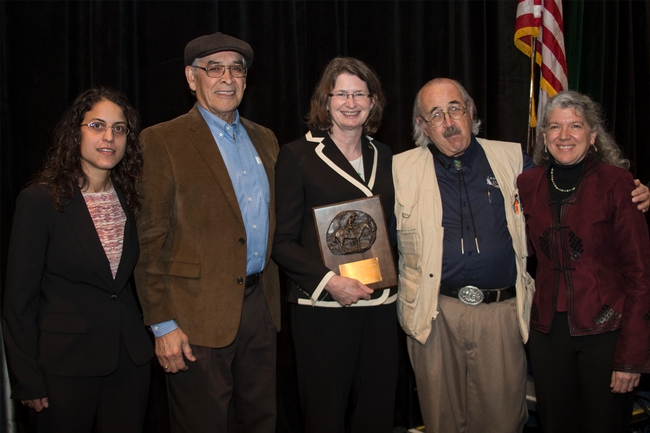
The Society for Range Management bestowed its highest honor, the Frederick G. Renner Award, on Barbara Allen-Diaz, UC vice president for the Division of Agriculture and Natural Resources at the society’s annual meeting today (Feb. 2) in Sacramento. A tremendous milestone, Allen-Diaz is the first female SRM member to receive the award in the society’s 68-year history.

The premier award is given annually to SRM members who have sustained accomplishments or contributions to rangeland management during the last ten years.

“Barbara has a record of outstanding research productivity that has affected the understanding and management of California rangelands and has had global impacts,” said Amy Ganguli, assistant professor of range science at New Mexico State University.

“Barbara is also a well-regarded educator who has mentored several graduate students and young professionals who are making significant contributions to rangeland and natural resource management,” said Ganguli, who, along with Fee Busby, Utah State University wildland resources professor, nominated her for the award.

This is not the first time Allen-Diaz has been recognized by her peers for her research on the effects of livestock grazing on natural resources, oak woodlands and ecosystems of the Sierra Nevada. The national society honored her with its Outstanding Achievement Award in 2001, and the following year the California chapter named her Range Manager of the Year.

In 2007, Allen-Diaz was among 2,000 scientists recognized for their work on the Intergovernmental Panel on Climate Change when the Nobel Peace Prize was awarded jointly to the IPCC and Vice President Al Gore. Allen-Diaz’s contributions focused on the effects of climate change on rangeland species and landscapes. She has authored more than 170 research articles and presentations. She has been an active member of the Society for Range Management, serving on its board of directors and on various government panels.

Allen-Diaz, who has served as UC ANR’s vice president since 2011, is also a tenured UC Berkeley faculty member in the College of Natural Resources and currently holds the prestigious Russell Rustici Chair in Rangeland Management. She has been with the University of California since 1986.  She earned her bachelor’s, master’s and doctoral degrees at UC Berkeley.

2016-05-31T19:30:32-07:00February 3rd, 2015|

ACP Quarantine Expands in Santa Clara County

ACP Quarantine Adds Another 61 Square Miles to the North

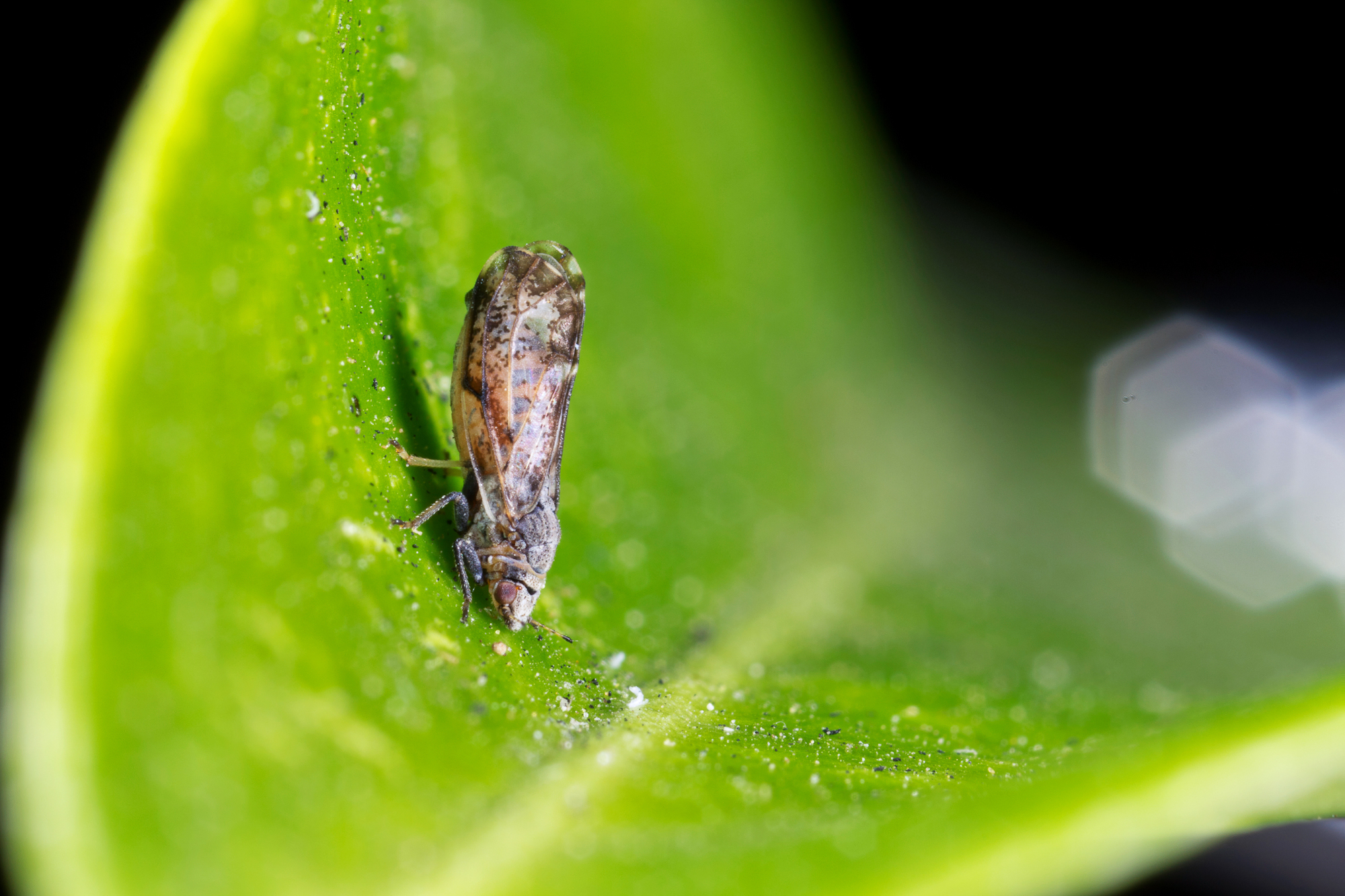
Announced TODAY, the Asian citrus psyllid or ACP Quarantine has expanded to include an additional portion of Santa Clara County following the detection of multiple psyllids in and around the City of San Jose.

The quarantine expansion adds 61 square miles to the north, bringing the total quarantine area to 160 square miles. A map is available online at: www.cdfa.ca.gov/plant/go/acp-quarantine. Residents with backyard citrus trees in the quarantine area are asked not to transport or send citrus fruit or leaves, potted citrus trees, or curry leaves from the quarantine area.

In addition to quarantines in portions of Santa Clara, Fresno, Kern, San Joaquin, and San Luis Obispo counties, ACP entire-county quarantines remain in place in Imperial, Los Angeles, Orange, Riverside, San Bernardino, San Diego, Santa Barbara, Tulare and Ventura counties.

The ACP is an invasive species of grave concern because it can carry the disease huanglongbing (HLB), also known as citrus greening. All citrus and closely related species, such as curry trees, are susceptible hosts for both the insect and the disease. There is no cure once a tree becomes infected, the diseased tree will decline in health and produce bitter, misshaped fruit until it dies. HLB has been detected just once in California – in 2012 on a single residential property in Hacienda Heights, Los Angeles County. This plant disease does not affect human health.

Residents in the area who think they may have seen ACP or symptoms of HLB on their citrus trees are urged to call CDFA’s Pest Hotline at 1-800-491-1899. For more information on the ACP and HLB, please visit: www.cdfa.ca.gov/go/acp.

2016-05-31T19:30:32-07:00February 2nd, 2015|

NASA satellite mission to help farmers and water managers

By Edward Ortiz; The Sacramento Bee

A NASA satellite being launched into space will measure moisture in the top layer of soil, including soil on California farm fields far below.

The Soil Moisture Active Passive project is expected to provide crucial information to Central Valley farmers and water resource managers dealing with the multiyear drought. The mission, which was due to launch Thursday but scrubbed by NASA because of a weather pattern, will begin a three-year mission after liftoff from Vandenberg Air Force Base aboard a Delta II rocket.

The soil moisture information gleaned from the mission can be used by farmers to decide when to plant and harvest crops, said Narendra Das, project leader at NASA’s Jet Propulsion Laboratory, which is running the SMAP mission.

“This information will be a great tool for agriculture,” said rice farmer Charley Mathews Jr. Mathews owns a 700-acre rice farm in Marysville. He is an avid believer that more data can help his farming operation.

“For rice growing, it may help is preparing our rice fields,” he said of SMAP. “There are time periods when we prepare the soil or when we have rainfall events, and that is when we want to get our timing right.”

The 128-pound SMAP satellite will map soil moisture globally every two to three days. The SMAP data will be gleaned from space, using radar, with the use of a 19-foot antenna – the largest rotating antenna of its kind ever deployed by NASA.

It will take measurements 1 inch deep. The soil moisture it estimates will be matched to other data to provide accurate information on how much water is in the soil.

Only a tiny percentage of Earth’s total water is lodged in the top layer of soil. However, the water within that tiny layer plays an important role in moving water, carbon and heat between land and atmosphere.

The mission is the latest Earth-looking satellite effort at NASA, an effort that began in 1972 with the launch of the Landsat I.

The mission is the final of a recent slate of five Earth satellite missions to be launched by NASA within the past 11 months that began with the launch of the Global Precipitation Measurement Core Observatory satellite. Each mission is culling data at never-before-attempted resolutions.

NASA said it has partnered with a large California grower, Paramount Farms, on sampling studies and airborne experiments on the run-up to the launch.

Paramount Farms, based in Kern County, is one of the world’s largest growers and processors of almonds and pistachios. Paramount Farms declined to comment on its work with NASA.

Predicting floods and suggesting improved water usage may ultimately be another benefit of the SMAP mission, said Robert Hartman, acting director with the National Oceanic and Atmospheric Administration’s California Nevada River Forecast Center.

That entity runs climate models for California, Nevada and Southern Oregon. “Once we understand what the data represents and what they mean, it may help us with runoff models,” Hartman said.

Hartman said it remains to be seen how accurate the data from SMAP will be – especially from heavily forested environments. In other areas it may help assess how much moisture exists in a given watershed, especially prior to the onset of winter storms.

“In the fall we’re sensitive to how ready the watershed is to respond to the season’s first rain,” Hartman said. “It can also help us in the period between winter storms when there has been a substantial dry period.”

NASA has also been working with the California Department of Water Resources and expects the department will use the SMAP data to run its water use models.

The DWP is allowing the use of 40 soil sensor stations throughout the state for the SMAP mission. The sensors will help NASA calibrate the SMAP satellite measurements, said Jeanine Jones, DWP interstate resources manager.

Jones said it remains to be seen how useful the data will be to the department’s water management aims.

“Currently in the water supply and flood control business, most agencies do not use soil moisture information,” Jones said. “There are no applications for that kind of data yet. We’ll see if this mission will be the impetus to develop applications for it.”

2016-05-31T19:30:32-07:00February 2nd, 2015|

Certis USA To Distribute Kocide® 2000, Kocide® 3000 and ManKocide® to U.S. Specialty Agriculture Markets

Copper Fungicide Products Now Available from Certis USA

The copper fungicides Kocide® 2000, Kocide® 3000 and ManKocide® are now available to growers in the U.S. exclusively from Certis USA. These Kocide products from DuPont were recently acquired by Kocide LLC, a newly established wholly owned subsidiary of Japan-based Mitsui & Co. and a sister company to Certis USA.

Kocide fungicides will continue to be produced in the current production facility in Houston, Texas and will be widely available to local dealers and growers from various Certis-established warehouses throughout the U.S., including a new third-party warehouse relationship that has been established in Lima, Ohio to service the Great Lakes region. Distributors, retailers and growers can expect to see high levels of service and support from Certis USA, as well as a renewed commitment to these popular disease-control products that have been key components in American crop production for more than 40 years.

Certis USA’s Dennis Long, Product Manager of the Kocide products, said, “To produce specialty high-value crops today, growers require inputs that give them flexibility in selection and use. That flexibility allows them to competitively produce, harvest and market their crops here or as exports. In the U.S. copper fungicides are the backbone of fungal and bacterial disease management programs. In our product offering, Certis USA has a low-load copper fungicide product, Cueva®. Now with the addition of the two Kocide products and ManKocide, we have the optimum selection of copper fungicides.”

Long said copper fungicides are considered “naturally occurring” or “organic” solutions for crop protection. “The Kocide copper products compliment Certis USA’s already expansive line of biopesticides and other biorational products. Trusted brand names like Kocide allow Certis USA to further expand its footprint into the U.S. specialty crop protection market,” Long said.

Headquartered in Columbia, Maryland, Certis USA is a leading manufacturer and distributor of a broad line of biopesticide products for specialty agricultural and horticultural markets and the home and garden market. Certis USA products provide valuable solutions by meeting the challenges faced by today’s growers who are seeking sustainable alternatives, resistant pest management and harvest solutions, and low pesticide residues for market flexibility and export accessibility. For more information about Certis USA or its products visit www.CertisUSA.com.

2016-05-31T19:30:32-07:00January 30th, 2015|

California State Fair announces first Extra Virgin Olive Oil Competition

Source: CDFA

The California State Fair is expanding its commercial competitions for 2015 to include a competition for extra virgin olive oil. Of all the olive oil produced in the United States, California produces 99 percent of it.

Extra virgin olive oils in more than 15 different classes and divisions, including blends and flavored olive oils will be judged during the competition. The entry deadline is April 1, 2015. The California State Fair Extra Virgin Olive Oil Competition is open only to California olive oil producers.

From July 10-26 the State Fair will feature a special California extra virgin olive oil exhibit with the award-winning extra virgin olive oils on display, interactive educational exhibits, free tastings and market research surveys.

On average, the world consumes approximately 2.25 million tons of olive oil each year and annual consumption in the United States has increased from 30 million gallons to nearly 70 million gallons a year over the last two decades.

Producers wishing to enter the Extra Virgin Olive Oil competition should visit CAStateFair.org to view the competition handbook for rules and entry information.

This project is supported by the Specialty Crop Block Grant Program, which is funded by the USDA and administered by CDFA. The goal of the project is to promote the awareness and availability of award-winning California extra virgin olive oils.

2016-05-31T19:30:33-07:00January 30th, 2015|
Go to Top