Legislative Pressure on Agriculture

Legislative Pressure Builds for Agriculture

By Jessica Theisman, Associate Editor

Dennis Albiani is a lobbyist with California Advocates based in Sacramento. California Ag Today met with him at the recent Almond Alliance meeting in Santa Barbara, where he discussed the legislative pressure on agriculture. California’s agricultural interests have had a challenging past couple of years on the subjects of overtime, minimum wage and some of the regulatory compliance areas.

“As we work with legislators, legislative process and the administration, we need to definitely find opportunities to advance the arguments on how the regulations are impacting agriculture,” Albiani said.

What also needs to be realized is that there might be some opportunities. We may be able to benefit from in the climate contained, constrained economy. We also must keep in mind the possible challenges.

Albiani looked at the almond industry as an example. “We have three crops per the drop for nuts. You have the nut, the bio-massed product, and the tree is a carbon sink,” he said. All of those are options that need to be further explored and also continue to pushed back on the regulatory constraints that they are inflicting.
2017-06-23T18:13:31-07:00May 22nd, 2017|

Safeguarding CA Farm Workers Rights – Part 2

Updates on California Farm Workers’ Rights 

By Laurie Greene, Founding Editor
Our ongoing coverage of developments among United Farm Workers (UFW), Agricultural Labor Relations Board (ALRB), Gerawan Farming, Inc. and California farm workers chronicles the continuing, increasingly complex quagmire that masquerades as protecting California farm workers’ rights.

UFW Underpaid Employees – UPDATE

As previously reported, on March 26, Monterey County Superior Court Judge Thomas Wills ruled that the UFW underpaid their own employees and mandated the UFW to pay a $1.2 million award that covers former employees, organizers, and other members of the class action suit, as well as penalties for California Labor Code Violations.

On April 27, Judge Wills added $772,000 to UFW’s court expenses for attorney fees incurred by Noland, Hamerly, Etienne & Hoss (NHEH), the law firm that represented former UFW employee Francisco Cerritos in the class action and Private Attorney General Act lawsuit on behalf of himself and other current and former UFW employees.

In issuing the additional costs to the UFW, according to a May 3 NHEH press release, Judge Wills stated that, “The Court has not placed an amount to destroy someone, and the union does serve a socially laudable purpose, but (the union) has to follow the law; and when it doesn’t do so at the expense of others and that results in drawn out, protracted and complex litigation, it cannot expect the Court to turn a blind eye to what the consequences of what that conduct are.”

Gerawan Violated Labor Law by Negotiating “in bad faith”— UPDATE

As previously published, ALRB Administrative Law Judge William L. Schmidt issued a decision on April 14 in favor of the UFW, finding Gerawan violated labor law by negotiating a collective-bargaining agreement with UFW “in bad faith—commonly called “surface bargaining”—in the eight-month period from January 2013 through August 2013.

In an April 17 news release, Gerawan Farming called the April 14 decision of the Administrative Law Judge “erroneous” in that Gerawan did bargain in good faith. Further, Gerawan maintains that imposed mandatory mediation and conciliation does not constitute volitional negotiations. Gerawan will appeal this decision. The following are excerpts from this press release:

This unprecedented ruling would punish an employer for failing to “negotiate” the terms of a “contract” dictated and imposed by the ALRB. This is an in-house judge who is not independent; he is an employee of the ALRB. He criticizes Gerawan’s positions and second-guesses how it participated in what was supposed to be a confidential mediation and trial-like arbitration, but he never asked the only relevant question: How does this forced contracting process resemble a “negotiation”?

The so-called “mandatory mediation and conciliation” procedures (MMC) are neither consensual nor voluntary. It is forced contracting. The ALRB tells the employer what wages to pay, what employees to hire or fire or promote, and what portion of the employees’ salary will be turned over to the union. The employer may not opt out, and the employees are not given the choice to ratify or reject the so-called contract that will be forced on them, even if there are provisions detrimental to them.

Gerawan had no choice but to submit to this coercive process.

…The UFW did not bargain; it asked the ALRB to impose terms, based on a forced contracting process the California Court of Appeal has since ruled to be unconstitutional (and is now under review before the California Supreme Court).

To date, UFW’s unexplained 17-year disappearance from the Gerawan farm workers remains unexplained. During its absence, the UFW never negotiated a single wage increase for any Gerawan employee, nor did it attempt to bargain for a contract, collect dues, or file a single grievance on behalf of the employees. Meanwhile, Gerawan claims its workers are among the highest paid in the industry.

Yet, the ALRB’s controversial 2002 MMC provision appears to allow this AWOL union to force current Gerawan farm workers to choose between paying union dues or losing their jobs. The majority of Gerawan employees twice asked ALRB for an election to decertify the UFW. At the ALRB’s request, the Fresno Superior Court intervened and supervised the decertification petition and election process. This was the first time in the history of the ALRB that a court oversaw an ALRB election.

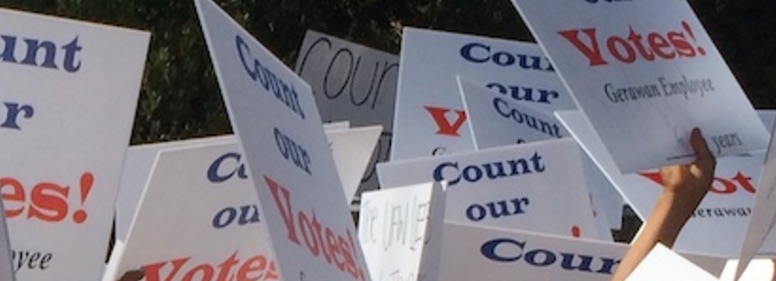
As yet, ballots cast by Gerawan farm workers in the sanctioned November 2013 election to decertify the UFW have never been counted, are being stored in an undisclosed and possibly an insecure location, and are the target of legal attempts by the ALRB and UFW to be destroyed.

The Court of Appeal is preparing to decide whether the ALRB may deny employees the right to choose who will represent them at the bargaining table—a seemingly basic American democratic right. The California Supreme Court is preparing to decide whether the UFW’s longstanding abandonment of Gerawan’s employees justifies this forced contracting process. California farm workers deserve a full and fair hearing on these issues.


Who Safeguards California Farm Workers’ Rights? Part 3 – Bargaining in Bad Faith


Resources:

Gerawan February 27, 2017 press release, Gerawan Farming Asks Court to Order Disclosure of Information Related to ALRB ‘Whistleblower’ Allegations: A 30-year ALRB Employee Alleges Corruption Inside ALRB.”

2018-05-07T01:00:56-07:00May 17th, 2017|

Heat Illness Prevention for Workers

Training is Key to Heat Illness Prevention

(Part One of a Series)

By Patrick Cavanaugh, Farm News Director

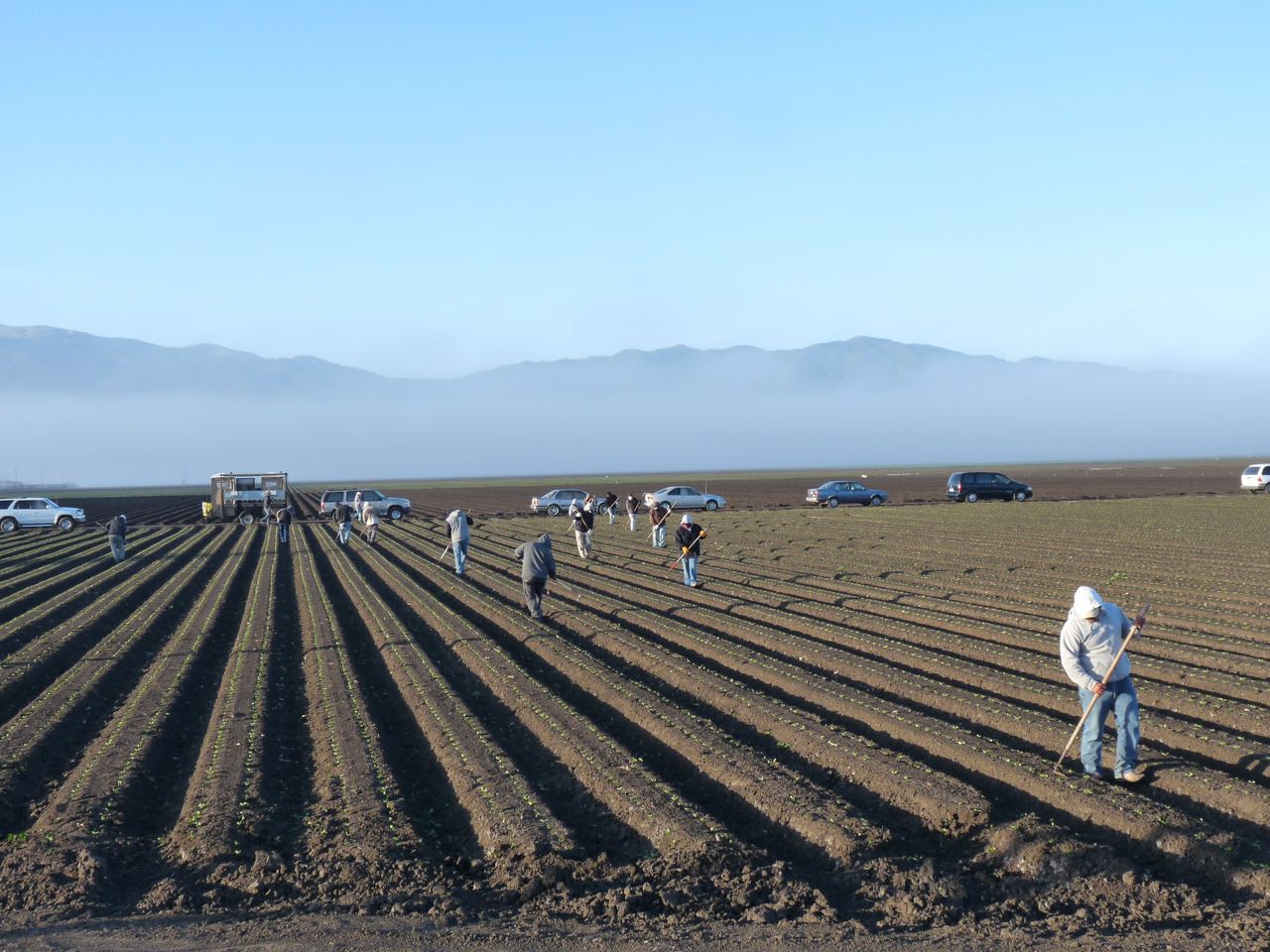
Temperatures heating up throughout Central California are a reminder of the critical importance of heat illness prevention for farm employees working in the luminous fields.

Scott Peters farms peaches and nectarines in the Reedley and Dinuba areas of Fresno County. He carefully watches his workers. “During the high heat periods, we have to be very careful so the guys don’t get heat illness, heat stroke types of symptoms. So we have shade and cold water readily available. We’re working on portable toilets now that have covers over them so they’re not as warm, for summer use.”

Scott Peters

Peters maintains that prevention is always the best way to keep workers safe. “It comes down to regular training,” he said.

“We also conduct heat illness training with all the field workers. We go over proper clothing light-colored clothing, cool clothing, hats, bandanas and sunscreento help prevent issues,” Peters said. “If the field worker is safe and happy, he does a better job. It’s better performance and, all the way around, everybody benefits.”

And Cal/OSHA rules require certain provisions to ensure workers’ safety as the days warm up. “We have postings,” Peters said. “Our crew bosses have binders with all the heat illness information, emergency contact numbers – both company and medical – such as 911 and the local hospital. [These postings] are with them in their vans and [affixed] to our restroom units in the field.”

2017-05-10T22:35:56-07:00May 5th, 2017|

Who Safeguards California Farm Workers’ Rights?

Mudslinging in the Field

By Laurie Greene, Founding Editor

In his 1984 Address to the Commonwealth Club of California, American labor leader and civil rights activist Cesar Chavez explained that he cofounded the National Farm Workers Association, the forerunner to UFW, in 1962 “to overthrow a farm labor system in this nation which treats farm workers as if they were not important human beings.” Yet recent developments among United Farm Workers (UFW), Agricultural Labor Relations Board (ALRB), Gerawan Farming, Inc. and farm workers illustrate the continuing, increasingly complex quagmire that masquerades as protecting California farm workers’ rights.

ALRB Chairman William B. Gould IV, who resigned on January 13, wrote to Governor Jerry Brown that the Agricultural Labor Relations Act (ALRA) is irrelevant to farm workers because they are unaware of the law’s provisions, procedures and rights.

“The instances of unfair labor practice charges and invocation of the Mandatory Mediation and Conciliation Act (MMC) are few and far between,” Gould explained. “There is no union organizing which might make workers aware of the [ALRA].” He added that only one union representation petition was filed during his 3-year tenure.

Nevertheless, under Gould’s watch, the ALRB doubled both its staff and taxpayer-funded budget to harass Gerawan and its farm workers.

Remarkably, on March 26, Monterey County Superior Court Judge Thomas Wills ruled that the UFW underpaid their own employees. Consequently, UFW must pay a $1.2 million award that includes funds to plaintiff former UFW employee Francisco Cerritos and other internal organizers, sums to other members of the class action suit for pay stub violations and penalties for California Labor Code Violations.

“It’s unfortunate that a union asks for laws to be respected,” plaintiff Cerritos said, “but [the union does] not respect them.” The UFW, Cesar Chavez’s legacy, has shortchanged its own workers.

Furthermore, ALRB whistleblower Pauline Alvarez, a 30-year former ALRB field examiner, filed a retaliation lawsuit in 2015 against the ALRB, which is still pending in Sacramento Superior Court. According to a February 27 Gerawan press release, Alvarez alleges that she recommended to former ALRB chief counsel Sylvia Torres-Guillén the dismissal of cases in which the UFW failed to cooperate and provide witnesses and evidence to support its allegations. Alvarez claims Torres-Guillén directed her and other field examiners “to dredge up witnesses that would assist the UFW’s position.”

Alvarez also asserts that she protested the settlement of farm worker cases against the UFW that contained sufficient evidence to establish UFW violations of the law. Stunningly, she affirms that the ALRB refused “to notify workers of their rights to file charges against the UFW when the UFW violated the workers’ rights,” and the “ghostwriting” of the UFW legal brief by the ALRB staff.

Perhaps most astonishing, the ALRB withheld this whistleblower’s report from ongoing legal proceedings with Gerawan and Gerawan farm workers for seven months.

Most recently, ALRB Administrative Law Judge William L. Schmidt issued a decision on April 14 in favor of the UFW, finding Gerawan violated labor law by negotiating a collective-bargaining agreement with UFW “in bad faith”— commonly called “surface bargaining”— in the eight-month period from January 2013 through August 2013.

To explain this decision in context, the UFW was voted in by Gerawan farmworkers in a runoff election in 1990 and certified by the ALRB in 1992. Significantly, UFW never reached a contract to represent Gerawan farm workers in wage negotiations with their employer. Neither did the UFW collect dues from or provide services for the farm workers, reportedly among the highest-paid in the industry.

The UFW effectively abandoned the Gerawan farm workers – that is, until 2012, after the California State Legislature amended the Agricultural Labor Relations Act to allow and accelerate an imposed mandatory mediation and conciliation process for union contracts. Thus, UFW offered a new contract proposal, via imposed mandatory mediation, to Gerawan farm workers.

Meanwhile, during the same time period in which Gerawan supposedly negotiated with UFW in bad faith, Gerawan farm workers were actively collecting signatures to petition the decertification of the UFW as their bargaining representative. The ballots cast in the ALRB-certified election in November 2013 have never been counted, to this day. Rather, they were sealed and stored in an undisclosed location, allegedly in ALRB custody.

Who is safeguarding California farm workers’ rights?

An ongoing conversation.


Safeguarding CA Farm Workers Rights – Part 2


Resources

Chavez, Cesar. “Address to the Commonwealth Club of California,” San Francisco, CA, November 9, 1984.

Cloud, Tal and Matt Patterson, “The ALRB and UFW: Partners in Crime,” The Fresno Bee, 4/24/17.

Gould’s January 13, 2017 Resignation Letter provided by the LA Times.

Grimes, Katy, “ALRB Spent $10 Million To Prevent Gerawan Workers’ Ballots From Being Counted,” FlashReport, March 22, 2016.

Mohan, Geoffrey, “California Farm Labor Board Chairman Quits in Anger,” LA Times, January 13, 2017, http://www.latimes.com/business/la-fi-alrb-resignation-20170112-story.html 

Sheehan,Tim, “Rising expenses, accusations of bias confront state agency in Gerawan farm-labor conflict,” Fresno Bee, July 31, 2015.

State of California Agricultural Labor Relations Board Decision And Recommended Order, signed by William L. Schmidt, ALRB Administrative Law Judge, on April 14, 2017.

Wu, Amy, “UFW ordered to pay $1.2M in wages, OT,” The Californian, March 29, 2017, updated March 31, 2017.

2018-11-16T12:45:16-08:00May 1st, 2017|

Atmospheric Rivers Hit California

Many Atmospheric Rivers Hit State

By Patrick Cavanaugh, Farm News Director

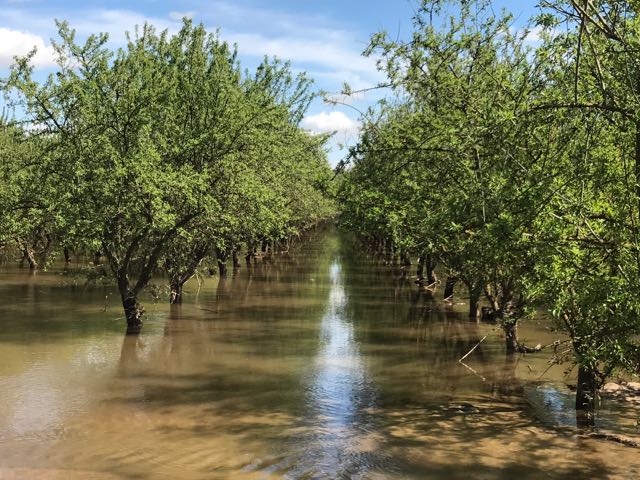
California needs an average of three atmospheric rivers annually to reach its average yearly rainfall. So far this year, the state has seen an incredible 46 atmospheric rivers. This intense rainfall has pushed much of California out of longstanding drought conditions.

California Ag Today spoke with Steve Johnson, a private meteorologist for farmers in California. We discussed atmospheric rivers (AR) and the abundance of rain California has seen in late winter and early spring.

“We had four very big AR flows, and that made a big difference. I think we’re up to 46, and that’s what has made the big difference this year,” Johnson said. With the additional 41 smaller AR, we have seen a very wet California; it is an astounding amount of atmospheric rivers.

Johnson explained that because the storms have been so difficult to predict, it has made things difficult for farmers planning their season. “This year, there was no signal at all. These storms crept up on us this winter. It was very, very dicey for forecasting,” he said. “The year was difficult because some of these storms – in fact the big ones – even though they showed up in the 14, 16-day period, they didn’t look gigantic until about day seven or eight. Then they start gaining and gaining and gaining, and by day four or day five they looked monstrous. Well, that’s not very much time to prepare.”

Johnson noted that these unpredictable storms were caused by an anomaly in the Pacific Ocean that is a remnant of last year’s El Nino. “The predominant reason that we kept getting these atmospheric rivers has been the fact that the sea surface temperatures across the Pacific Ocean have been in a very unusual anomaly,” he said. “They’ve been cold in the Gulf of Alaska, and we have a leftover bit of warmth from last year’s record-setting El Nino that has spread north to just west of the California coast – very warm waters that go all the way over to Japan.”

“If you take a look at the differentiation between the cold water in the Gulf of Alaska versus the warm water, the anomalies between Japan and California, that has created a zonal flow since October.

“Those atmospheric rivers have been grabbing a lot of moisture coming up from that warm water off the California to the Hawaii coast, and then coming into California. It’s just been one right after another,” Johnson said.


2021-05-12T11:05:16-07:00April 25th, 2017|

Farmers Not Respected by CA Politicians

Farmers Unfairly Impacted by Politicians

By Patrick Cavanaugh, Farm News Director

California Ag Today recently had an exclusive interview with Frank Lunz, an American political consultant, polster and public opinion guru. Lunz had some things to say about how politicians treat farmers.

“The rules that the politicians are making farmers live under are not the rules that provide the most efficient and effective agriculture. … Farmers are efficient, effective, and accountable, in everything that you do,” Lunz said.

“The farming profession has more respect than just about anyone. I think firemen come in first, and I believe farmers are second. That’s because they work with their hands, and the public does realize how hard they work.

“However, what the American people, particularly Californians, don’t realize is just how often the legislation that is passed by their elected officials makes the life of a farmer much more difficult, or how appreciative employees are to have a job, of how this is seasonal work,” Lunz said.

“Forcing farmers to pay overtime is unreasonable. You have to make exceptions for some of these rules, because they simply don’t make common sense,” Lunz explained.

“The farming community is completely different than most other professions. Farming is not a machine where you’re making the same product every day, every month, every year. Things like overtime, and worker compensation laws, don’t make sense in this community. Bottom line: It’s a tragedy the politicians don’t seem to be listening to the farmers,” Lunz said.

2017-04-19T16:49:22-07:00April 19th, 2017|

SJV Olive Oil Competition Winners Revealed

Big Fresno Fair Names Winners of SJV Olive Oil Competition

News Release

After extensive judging of quality olive oils, The Big Fresno Fair is excited to reveal the winners of the 3rd Annual San Joaquin Valley Olive Oil Competition (SJVOOC).

This competition, open to all olive oil producers in the State of California with products made from their most recent olive harvest, received a total of 69 entries from 18 different olive oil producers from throughout the State.

Entries were received in two classes, Extra Virgin Olive Oil and Flavored Olive Oil, with 9 subcategories in total. Gold and Silver Medals were awarded, as well as an overall “Best of Show” selected from all of the highest scoring gold medal entries received in the EVOO and Flavored Oil categories.

All of the flavored oils used for the Best of Show, were all co-milled. In total there were 47 EVOO and 22 Flavored Olive Oil entriesthat were entered for judging. The winners of the 3rd annual San Joaquin Valley Olive Oil Competition are:

  • Best of Show

Organic Roots Olive Oil’s Organic Roots Koroneiki (Maxwell)

Calivirgin – Coldani Olive Ranch’s Calivirgin Hot Virgin Jalapeno (Lodi)

Extra Virgin Olive Oils

  • Gold Medal Winners

Spanish Blends: Corto Olive Co.’s Corto Olive Company Olive Oil (Lodi), La Panza Ranch’s Outlaw Blend (Santa Margarita) and Kimberley Wine Vinegars’ KimberleyCalifornia Olive Oil (Acampo)

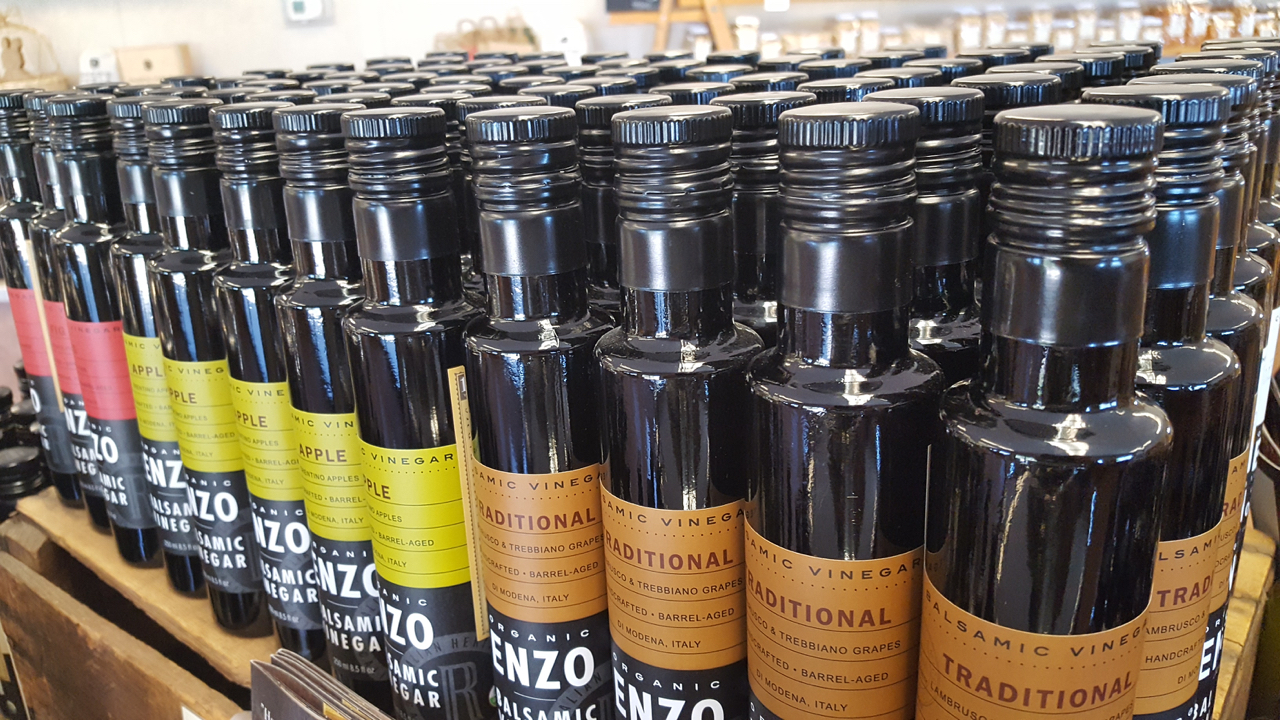
Spanish Singles: The Mill at Kings River’s The Mill (Sanger), ENZO Olive Oil Company’s Delicate Ranch 20 (Clovis), The Olive Press’ Empeltre EVOO (Sonoma),The Olive Press’ Sevillano EVOO (Sonoma) and Organic Roots Olive Oil’s Arbosana (Maxwell)

Italian Blends: Alta Cresta Olive Oil’s Italian Blend (Paso Robles), The Olive Press’ Italian Blend (Sonoma), Scarlata Farms Olive Oil’s Tuscan Blend Reserve (Tracy), San Miguel Olive Farm’s Tuscan Gold Nectar (San Miguel) and San Miguel Olive Farm’s Tuscan Gold/Pristine (San Miguel)

Italian Singles: Bozzano Olive Ranch’s Bozzano Organic (Stockton) and Calivirgin – Coldani Olive Ranch’s Lodi Olive Oil Early Harvest Ascolano (Lodi)

Other Blends: Mangini Ranch Olive Oil Company’s Mangini Ranch (Wallace)

Other Singles: Organic Roots Olive Oil’s Koroneiki (Maxwell)

  • Silver Medal Winners

Spanish Blends: ENZO Olive Oil Company’s Tyler Florence Test Kitchen EVOO (Clovis)

Spanish Singles: Calivirgin – Coldani Olive Ranch’s Calivirgin Premium EVOO (Lodi), ENZO Olive Oil Company’s Medium Ranch 11 (Clovis) ENZO Olive Oil Company’s Delicate Ranch 11 (Clovis), ENZO Olive Oil Company’s Medium Ranch 20 (Clovis), The Olive Press’ Arbequina EVOO (Sonoma), The Olive Press’ Arbosana EVOO (Sonoma), The Olive Press’ Picual EVOO (Sonoma), Corto Olive Company’s Truly EVOO – Arbosana (Lodi), Corto Olive Company’s Truly EVOO – Arbequina (Lodi), Organic Roots Olive Oil’s Arbequina (Maxwell) and Rosenthal Olive Ranch’s Arbosana (Madera)

Italian Blends: Scarlata Farm’s Olive Oil’s Tuscan Blend (Tracy), Bozzano Olive Ranch’s Toscana Organic (Stockton), Calivirgin – Coldani Olive Ranch’s Lodi Olive Oil – Miller’s Blend (Lodi) and Winter Creek Olive Oil’s Winter Creek (Winter Creek)

Italian Singles: Calivirgin – Coldani Olive Ranch’s Lodi Olive Oil Frantoio (Lodi)

Other Blends: Bozzano Olive Ranch’s A2 (Stockton) and Rancho Azul y Oro’s Estate EVOO (San Miguel)

Other Singles: ENZO Olive Oil Company’s Bold Ranch 11 (Clovis), ENZO Olive Oil Company’s Bold Ranch 20 (Clovis), The Olive Press’ Heritage Mission EVOO (Sonoma), Bamford Family Farms’ Silverstar Early Harvest Mission (Oroville), Mangini Ranch Olive Oil Company’s Mangini Ranch (Wallace), Rosenthal Olive Ranch’s Koroneiki (Madera) and Corto Olive Company’s Truly EVOO (Lodi)

Flavored Olive Oils

  • Gold Medal Winners

Citrus: Enzo Olive Oil Company’s Clementine Crush (Clovis) and The Olive Press’ Limonato (Sonoma)

Herbal: CaliVirgin – Coldani Olive Ranch’s Calivirgin Bountiful Basil Olive Oil (Lodi)

Other Flavors: ENZO Olive Oil Company’s Fresno Chili Crush (Clovis) and Calivirgin -Coldani Olive Ranch’s Calivirgin Hot Virgin Jalapeno (Lodi)

  • Silver Medal Winners

Citrus: Calivirgin – Coldani Olive Ranch’s Calivirgin Blood Orange Olive Oil (Lodi) and Calivirgin – Coldani Olive Ranch’s Calivirgin Lusty Lemon Olive Oil (Lodi)

Herbal: ENZO Olive Oil Company’s Basil Crush (Clovis) and Calivirgin – Coldani Olive Ranch’s Calivirgin Rustic Rosemary Olive Oil (Lodi)

Other Flavors: The Olive Press’ Jalapeno Olive Oil (Sonoma), Calivirgin – Coldani Olive Ranch’s Calivirgin Jalapeno Garlic (Lodi), Calivirgin – Coldani Olive Ranch’s Calivirgin Extreme Heat Habanero (Lodi) and Calivirgin – Coldani Olive Ranch’s Calivirgin Guilty Garlic Olive Oil (Lodi)

“The SJVOOC continues to grow each year, and we are very excited to have received a record number of entries this year,” said Stacy Rianda, Deputy Manager II at The Big Fresno Fair. “California has such a vast and rich food-producing community that it is important to hold competitions, like this, that showcase some of the great products our regions offer the world.”

Participating producers had the opportunity to submit multiple entries under one category but could not submit a particular entry to more than one category. For each entry, producers had to submit two, 250 ml bottles of their olive oil with retail labels and a $60 non-refundable fee, per entry.

Additionally, each entry had to be available for commercial sale at the time of submittal. Submissions were accepted starting mid-January through March 24.

All submissions were evaluated and scored on the following criteria:

  • Gold Medal: Awarded to an olive oil that demonstrated its type and/or varietal character, balance, structure and complexities to the highest standards. Gold Medals were awarded to those oils receiving scores between 86 – 100 points.
  • Silver Medal: Awarded to an olive oil reflecting the correct distribution of balance and character of its type or variety; an oil deemed to be well crafted and of excellent quality. Silver Medals were awarded to those oils receiving scores between 76 – 85 points.
  • Best of Show: Awarded to an olive oil recognized to possess special characteristics of the highest quality overall.

Gold Medal and Best of Show winners will have the opportunity to have a booth in the Wells Fargo Agriculture Building on one day during a weekend of the 2017 Big Fresno Fair where they can taste, display and sell their award-winning product. Additionally, educational information will be set up so that fairgoers can learn more about the art of making olive oil, its health benefits, recipes and more.

2017-04-18T17:28:14-07:00April 18th, 2017|

Data Loggers Could Impact Cattle Comfort

Data Loggers Could be Hardship on Cattle Being Transported

By Patrick Cavanaugh, Farm News Director

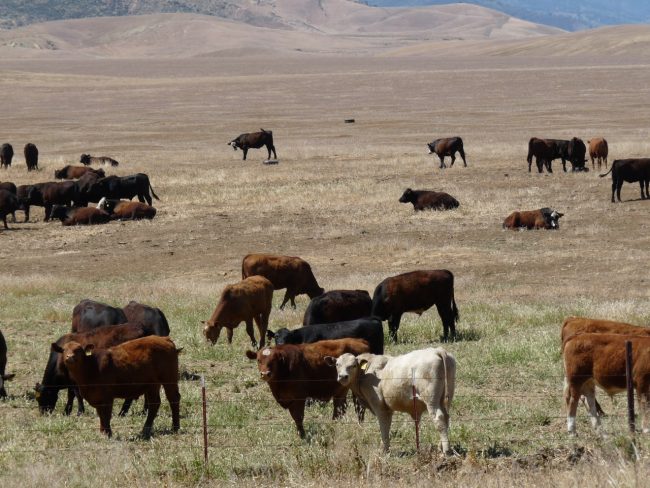
Transporting cattle, or any livestock for that matter, has special nuances so drivers can get to the destination quickly for the animals’ comfort. Occasionally a driver can self-adjust the drive time beyond the mandated limit.

But now a new regulation regarding electronic logging devices by the Federal Motor Carrier Safety Administration in Washington D.C., may be implemented December this year, forcing drivers to stop.

“It would essentially require commercial truck drivers to use a electronic device to comply with the hours of service schedule that they’re required to meet, which limits both on-duty time and driving time,” said Justin Oldfield, a California cattleman and vice president of governmental affairs with the California Cattlemen’s Association in Sacramento.

“We not only have the cattle’s welfare that we need to take into account for, but we’ve got to get to that destination and make sure those cattle are off-loaded properly and safely,” Oldfield said.

Oldfield said they’re looking at some alternatives that would help the California Cattlemen’s Association members. “One of the things that we are concerned about is our distance to a lot of buyers, which would be in the Midwest,” Oldfield explained. “So any additional cost that this regulation might cause would probably be felt more significantly farther from the Midwest, which would primarily represent California, other states in the West and the Southeast.”

The current regulation is maximum on-duty time of 14 hours, with maximum driving time being 11 hours, with a 10-hour break. If a driver hauling cattle was only 100 miles from the destination, he would want to keep going for the comfort of the cattle. But with the electronic logger in place, he’d be forced to take that 10-hour break.

“Some of the issues that we have, for instance, is technically you’re on-duty even if you’re waiting to load cattle. So there are situations to where maybe there’s eight trucks waiting to load cattle, and you could be waiting in line for 2, 3 hours. And that entire time is counting against your on-duty time,” Oldfield said.

“We’re looking at where we can try to ensure that those hours are not counted against your maximum on-duty time,” he said.

And another area that’s being looked at is an exclusion for drivers hauling live animals, in order to have time to get to destinations.

“Our membership is basically past policy that asks us to look at everything, including that. There’s of course the challenge politically of making these changes on the regulatory side. I can tell you that nothing is off the table at this point,” Oldfield said. “Again, the reform is not necessarily the electron log-in device. The reform itself is the hours of service.”

2021-05-12T11:17:10-07:00April 11th, 2017|

Water District Talks Low Water Allocation

Water District’s Water Allocation Disappoints

 By Brian German, Associate Broadcaster

The Bureau of Reclamation announced an initial 2017 water allocation for the Central Valley Project, and it’s considerably lower than what was expected.  Despite a wet winter and a significant snowpack, the Bureau has only allocated 65 percent of their contract supply to South-of-Delta contractors.

Johnny Amaral is the Deputy General Manager for the Westlands Water District – the largest agricultural water district in the United States.  Amaral thinks the deck is stacked against area growers as a result of water policy. “There are laws on the books that were deliberately put into place that created this bottleneck in the CVP and have hamstrung the CVP. This is the outcome that you get when you purposely curtail project operations or pumping: You get shortages,” Amaral said.

San Luis Reservoir is full this season, yet the allocation is only 65 percent.

The 65 percent allocation is especially disheartening since the announcement was not released until well into the planting season, forcing farmers to make decisions about land use and labor without any assurance of water supplies.  Amaral thinks there’s a need for a serious policy discussion as to whether the government truly values what growers produce.  “Those laws are going to have to be changed if we’re ever going to restore water supply to a situation where the westside ag contractors get 100 percent,” Amaral said.

Westlands Water District is made up of more than 1,000 square miles of premier farmland in western Fresno and Kings counties and provides water to 700 family-owned farms, averaging about 875 acres in size.  Amaral believes that it is time for legislators to reevaluate their priorities.  “It really comes down to a very simple but more fundamental policy question about, ‘Do we value being able to grow our own food in a safe way? Does that matter to people?’ ” Amaral said.

During election season last fall, then-candidate Donald Trump vowed to fix the water problems in California.  Farmers are going to need to be patient in their desire to see some action on those promises. “The agencies that have direct influence over western water issues and western resources issues, it’s really the Department of Interior. The Secretary of Interior was just confirmed a couple of weeks ago. … There are a whole host of positions and people that need to be nominated and put into place for the Trump Administration to really have a day to day impact over how the decision’s made on water supply and project operations,” Amaral said.

2017-04-06T11:42:51-07:00April 6th, 2017|

Citrus Referendum Coming Up

Citrus Growers to Vote on Referendum

News Release from Citrus Research Board

California citrus growers soon will receive a critical citrus referendum ballot from the California Department of Food and Agriculture (CDFA) asking them to vote on continuing the work of the Citrus Research Board (CRB) for the next five years.

The grower-funded and grower-directed CRB was chartered nearly 50 years ago to enable California citrus growers to sponsor and support needed research that industry members otherwise would be unable to individually fund or access on their own. The Board’s mission is to ensure a sustainable California citrus industry for the benefit of growers by prioritizing, investing in and promoting sound science.

Some key areas funded include general production research, a variety improvement research program, a quality assurance program on agricultural chemical residues, and pest and disease control activities. Currently, disease control is crucially important.

The California citrus industry is now in the fight of its life to prevent the spread of the devastating disease huanglongbing (HLB) from California’s orchards.

HLB already has decimated most other major citrus growing regions, including Florida.

In California, HLB so far only has been found in 40 residential trees in Los Angeles; however, unless researchers are able to find a solution, HLB could gain a foothold in the state’s commercial groves. Currently, the CRB is dedicating its primary research efforts to controlling the spread of HLB and eradicating the disease. The Board is beginning to see some promising results; but without the CRB, much valuable research will go unfunded.

“We urge all citrus growers to vote when they receive their ballots from the CDFA,” CRB President Gary Schulz said. “Citrus is important to our state’s economy, employment, health and positive identity. We are proud to proactively protect and sustain the world’s largest fresh citrus market. The work that our researchers are conducting is vital to sustaining the California citrus industry and ensuring its continued success.”

The CRB administers the California Citrus Research Program, the grower funded and grower-directed program established in 1968 under the California Marketing Act as the mechanism enabling the State’s citrus producers to sponsor and support needed research. More information about the Citrus Research Board may be found at www.citrusresearch.org.

2021-05-12T11:01:59-07:00March 30th, 2017|
Go to Top