SALMONELLA IN CHICKEN

BREAKING NEWS
Public Health Alert 
For Three Foster Farms Facilities
The U.S. Department of Agriculture’s (USDA) Food Safety and Inspection Service (FSIS) issued a public health alert TODAY due to concerns that illness caused by strains of Salmonella Heidelberg are associated with raw chicken products produced by Foster Farms at three facilities in California.

At this point in the investigation, FSIS is unable to link the illnesses to a specific product and a specific production period. Raw products from the facilities in question bear one of the establishment numbers inside a USDA mark of inspection or elsewhere on the package:

  • “P6137”
  • “P6137A”
  • “P7632”
The products were mainly distributed to retail outlets in California, Oregon and Washington State.
This public health alert is being issued after an estimated 278 illnesses were recently reported in 18 states, predominantly in California. The outbreak is continuing. 
The investigations indicate that consumption of Foster Farms brand chicken and other brand chicken produced at Foster Farms plants are the likely source of this outbreak of Salmonella Heidelberg infections. Illnesses were linked to Foster Farms brand chicken through epidemiologic, laboratory and traceback investigations conducted by local, state, and federal officials.  
The Centers for Disease Control and Prevention (CDC) is partnering with state health departments to monitor the outbreak while FSIS continues its investigation.
The investigation is ongoing and FSIS is prepared to take additional actions or expand the investigation based on new evidence.
FSIS reminds consumers to properly handle raw poultry in a manner to prevent contamination from spreading to other foods and food contact surfaces. 
FSIS further reminds consumers of the critical importance of following package cooking instructions for frozen or fresh chicken products and general food safety guidelines when handling and preparing any raw meat or poultry. In particular, while cooking instructions may give a specific number of minutes of cooking for each side of the product in order to attain 165 °F internal temperature, consumers should be aware that actual time may vary depending on the cooking method (broiling, frying, or grilling) and the temperature of the product (chilled versus frozen) so it is important that the final temperature of 165 °F must be reached for safety. Please do not rely on the cooking time for each side of the product, but use a food thermometer.

All poultry products should be cooked to a safe minimum internal temperature of 165° F as determined by a food thermometer. Using a food thermometer is the only way to know that food has reached a high enough temperature to destroy foodborne bacteria.

Consumption of food contaminated with Salmonella can cause salmonellosis, one of the most common bacterial foodborne illnesses. Salmonellainfections can be life-threatening, especially to those with weak immune systems, such as infants, the elderly and persons with HIV infection or undergoing chemotherapy. The most common symptoms of salmonellosis are diarrhea, abdominal cramps, and fever within eight to 72 hours. Additional symptoms may be chills, headache, nausea and vomiting that can last up to seven days.

Consumers with food safety questions can “Ask Karen,” the FSIS virtual representative available 24 hours a day at AskKaren.gov. The toll-free USDA Meat and Poultry Hotline 1-888-MPHotline (1-888-674-6854) is available in English and Spanish and can be reached from l0 a.m. to 4 p.m. (Eastern Time) Monday through Friday. Recorded food safety messages are available 24 hours a day.


2016-05-31T19:44:23-07:00October 8th, 2013|

GOVERNOR VETOES CITRUS BILL AB 571

Governor Abandons Citrus Industry In Crisis
California Citrus Mutual issued the following assessment and response to Governor Brown’s veto of AB 571:

“With his veto pen in hand, Governor Jerry Brown once again signaled to Californians and the Nation that agriculture is not an important industry for California.”
“His veto of AB 571 is a clear message to our industry that citrus no longer has a home in California,” states CCM President Joel Nelsen. “AB 571 passed through four committees and two houses of the state legislature without opposition. The Governor vetoed a bill designed to protect Southern California homeowners, the commercial citrus industry, and the pioneering use of biological control to stop the Asian citrus psyllid and deadly citrus disease Huanglongbing.”
“He sent the same message 30 years ago with his unwillingness to eradicate the medfly and now California’s $2 billion iconic citrus industry has been given the same message – that we are not important.”
The California citrus industry exists significantly in eight counties, employs over 12,000 people, with a foundation of over 3,900 producers, the vast majority of whom are family farmers who ship fresh product from approximately 100 shippers, generating an additional $1.5 billion in economic activity.
Citrus growers, packing houses, and their employees submit $500 million in general fund support via taxes each year. In terms of fees and permits, the industry forwards another $112 million to underwrite state government mandates. “But I guess none of that is important,” continues Nelsen.
The California citrus industry has assessed itself over $60 million in detection and treatment for the Asian citrus psyllid. The federal government has put forth an estimated $40 million in an effort to protect the nation’s number one fresh citrus industry. The state of Florida has financially partnered with their industry to defend against the ravages of Huanglongbing.
“But not our Governor,” states Nelsen. “Governor Brown’s veto of AB 571 sends a clear message to all agriculture stakeholders, that this administration does not care about the citrus industry or California agriculture.”
There are more citrus trees in Southern California backyards than in the entire commercial citrus industry. “Funds from AB 571 were destined for biological control in the Los Angeles Basin,” continues Nelsen. “Biological control would reduce the threat of diseased Asian citrus psyllids from infecting back yard trees.
“That’s how it started in Florida and now over 250,000 acres of prime citrus have been destroyed or abandoned in that state. Brazil has eliminated over 12 million trees because of the disease. Every state in Mexico with citrus is infected with the disease for which there is no known cure. But I guess none of that is important to the Governor.”
In his veto message the Governor states, “Let’s review our options during the budget process.”
To this Nelsen responds, “The Governor’s veto message is laughable! The legislature approved $1 million to the California Department of Food and Agriculture, but his Department of Finance will not release the funds!”
AB 571 was initiated by members of his own party as a vehicle to better protect their constituents. “But the Governor states with his veto that this visionary approach is not important.”
Designed by representatives of the citrus industry in partnership with the scientific community and regulatory bodies at the state and federal level, the California’s effort to stop the Asian citrus psyllid and Huanglongbing has been touted across the country as a vibrant example of private and public sector partnerships.
“But I guess that’s not important to this Governor,” concludes Nelsen. “His
definition of leadership is duplicating the destruction that continues to spread throughout the United States, Mexico, Brazil, Belize and China.”
For more information, contact CCM President Joel Nelsen, 559-592-3790
2016-05-31T19:44:23-07:00October 7th, 2013|

THE COST OF PIERCE’S DISEASE and GWSS

Grapevine Diseases Costs Wine Grape Growers and State

Issues relating to various grapevine diseases, including Pierce’s Disease (PD), grapevine leafroll, and powdery mildew, are under scrutiny by Kate Binzen Fuller, a post-doctoral researcher in the Agricultural and Resource Economics Department at UC Davis, and colleagues.

Kate Fuller, post-doctoral researcher at UC Davis
The team’s PD research, a CDFA-funded effort, analyzes the costs of PD and associated control measures for grape growers and nurseries, and the benefits from state and federal programs that have been put in place to control its spread.  

“To understand the effects of PD in California requires an understanding of differences in disease characteristics and wine grape production characteristics in different parts of the state,” said Fuller. “In northern California, especially in Napa and Sonoma Counties, the Blue-Green Sharpshooter has spread the disease for many years, causing chronic but manageable damages. Wine grapes in Napa and Sonoma are typically very expensive and yield per acre is managed to be very low.”

“In southern California,” Fuller continued, “wine grapes are produced with much higher yields per acre and fetch much lower prices per ton, and the insect that spreads the disease is much more efficient at doing so. In Riverside County in particular, a non-native vector, the Glassy-Winged Sharpshooter (GWSS), decimated many acres of vineyard land in the late 1990s and early 2000s.

“As a result, the CDFA put programs in place in to prevent GWSS spread from southern California where the GWSS is now managed but endemic, to northern California’s high value wine regions,” stated Fuller.

“Our research suggests that PD of grapevines costs more than $100 million per year, even with public control programs in place that cost $50 million per year,” said Fuller. “This amount includes the costs of state and federal efforts to monitor and control the GWSS, research on PD/GWSS, and costs of compliance with the regulations by private firms including nurseries.”  

Fuller estimates that under the current program, PD costs wine grape growers and consumers $92 million annually. If the control program ended and the GWSS became widespread throughout California, the annual cost borne by growers and consumers could increase by as much as $185 million.

In additional research, Fuller and her colleagues estimate that benefits from research, development, and adoption of PD-resistant vines range from $4 million to $125 million annually over a 50-year horizon, depending on the length of the amount of time until these vines are available to growers, and the rate of adoption. The sooner the resistant vines are available and the more growers adopt them, the greater the benefit. 

2016-05-31T19:44:23-07:00October 7th, 2013|

ALERT: UFW NOTICES OF INTENT TO TAKE ACCESS


California Farm Employers’ Rights


Courtesy of Farm Employers Labor Service via Monterey County Farm Bureau


FELS has learned additional information that may be useful while dealing with United Farm Workers Union (UFW) Notices of Intent to Take Access (NAs).


First, regional Agricultural Labor Relations Board (ALRB) offices have recently requested certain information from employers within seven days: 
  • the number of current agricultural employees including employees hired through farm labor contractors;
  • the principal crops produced by the employer; and,
  • the worksites and addresses of all of employees, including those hired through FLCs.
Such a request by the ALRB is previously unheard of; an investigation of an NA and provision of this information is not required by the ALRB’s access regulation. 


Second, let your employees know that you and other agricultural employers and their organizations have been working very hard for a long time for the passage of an immigration-reform law that will benefit them and their family and friends, along with employers. 


Also before UFW agents take access, reassure your employees that you respect their right and the right of UFW agents to communicate with each other confidentially during access periods. You should also let employees know they have the rights:  

  • Not to talk to UFW agents if they do not wish to do so.
  • To fully understand for themselves what it is that UFW agents are asking them to sign before they sign it.

Third, there are limitations on UFW’s access rights in addition to those mentioned in the September 30 FELS eNews
  •    Access may be taken by only two UFW agents for each work crew on your land, except that if there are more than 30 employees in a crew, one additional agent is allowed for up to every 15 additional employees.
  • You may deny access to UFW agents if no NA was filed and served or if the agents fail to identify themselves upon request.
  • You may end access and order UFW agents off your land once the mandated access time has expired or if the agents disrupt work or harm equipment, crops or other property.

If you have further questions or concerns, please contact FELS at 800-753-9073 or info@fels.net
2016-05-31T19:44:23-07:00October 7th, 2013|

KIWI FRUIT COMING TO PRODUCE AISLES

California Kiwifruit Shipments Started

By the beginning of next week all of the packers and handlers of California kiwifruit will be packing and shipping the harvested fruit. 

Some small volumes of California kiwifruit have been shipped to date, and the Kiwifruit Administrative Committee will likely begin its broadcast of the KISS Weekly Price-Shipment Reports next week.  The reports are posted on the California Kiwifruit industry website by the end of the reporting week at the following link: http://www.kiwifruit.org/industry/reports.aspx.

Monthly Inventory Reports will also be posted on the above link.  The first such report will be posted the week of November 5.

2016-05-31T19:44:23-07:00October 5th, 2013|

BAGRADA BUG IS NEW PEST IN FRESNO COUNTY

Bagrada Found in Eastern Fresno County

 By Patrick Cavanaugh, Editor
Michael Yang, a UC Cooperative Extension Fresno County ag assistant specializing in small farms operated by Hmong Farmers, said a farmer who had a mustard plant infested with a bug called him out. “The farmer in Eastern Fresno County wanted to know what he could spray to kill the bugs,” Yang said.

He said that hundreds of the insects were infesting the mustard plant—a favored host of the pest.

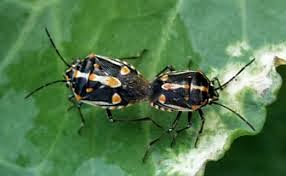
Bagrada Bugs are often seen in the mating activity.

“I did some research and it looked like the pest was the Bagrada bug. So, we we bagged part of the plant with the bugs and sent them to the Fresno County’s Ag Commissioner office. They forwarded the sample to the CDFA in Sacramento, and CDFA confirmed that it was the Bagrada bug,” said Yang. 

Yang noted the low rainfall this year left the foothills dry and many insects started coming into the lush fields grown by Asian famers.

According to UC IPM, Bagrada bug, Bagrada hilaris, is an invasive stinkbug spreading through western Arizona and southern California since 2008, causing severe crop, nursery, and landscape losses. Bagrada bugs gather on plants in large groups. In agriculture, Bagrada bug is a pest of cole crops and other mustard family plants.

Growers are asked to alert their county UC Farm Advisor if they see Bagrada bugs in their fields, as it is a new pest in Fresno County. The pest has been widely observed in southern California Counties and more recently in Monterey County.

There are several pest control products that are registered and effective on the pest. Growers should contact their pest control advisor for advice.

Below is a link to a video with more information on the Bagrada bug

http://www.youtube.com/watch?v=gSj3AZoJIRM

2016-05-31T19:44:23-07:00October 5th, 2013|

FIGHT FOR WATER FILM IN FRESNO

Fight For Water Film in Fresno Oct. 19

The Fight for Water Film: A Farm Worker Struggle is the “Official Selection” at the Viña de Oro Film Festival, which will be taking place October 16 – 19 at the historic Tower Theatre. The festival will close with the documentary on Oct. 19 at 6pm.


Tickets can be bought at the door or in advance.  For more information they can call the Viña de Oro Film Festival at 559-492-7878.

The Fight For Water Film documents the struggle of two farmers, and thousands of farm workers on the Westside, Fresno County, in 2009 when there was only a 10 percent water allocation.

Filmmaker/Director Juan Carlos Oseguera focuses on the 50-mile historic water march in his film, the only film that documents this journey that brought more than 1,000 farmers and farm workers from all over the state.

The film also records the many food lines that became necessary in towns such as Firebaugh, Mendota, San Joaquin and Huron. Farmworkers, though humiliated, were forced to resort to these food lines due to the high unemployment that reached in excess of 40 percent as a consequence of the non-irrigated fields.

Ironically, though The Fight For Water Film documents this event in 2009 and 2010, nothing has changed. In fact, farmers in the Westside Federal Water Districts are currently facing what could be an even worse year in 2014. The Bureau of Reclamation has warned that if there is not significantly more than average rain and snowfall this winter, there could be an unprecedented zeroallocation.

No water allocation may force many farmers out of business and cause massive unemployment in the Westside communities already suffering from severely reduced water allocations. This season, farmers received only 20 percent of what they needed and paid for.

Oseguera said, “I have found that Californians outside of the Central Valley, and Americans out of state, are unaware of the plight of farmers and farmworkers here. So, we need to expand distribution of the film to educate everybody.”

“There is growing interest from film distributors to advance the film to wider audiences,” said Oseguera. “A good way to tell the distributors that the film needs to be seen by others outside of California is to like the Fight For Water Facebook page,” he noted.

2016-05-31T19:44:23-07:00October 5th, 2013|

POMEGRANATE JUICE MARKET IN BAD SHAPE

Pomegranate Juice Market
Nearly Nonexistent 

By Patrick Cavanaugh, Editor
“The pomegranate for juice market is upside-down. It’s ugly,” said Mark Van Klaveren, a Madera County farmer. “It’s been that way since last year.”

“For fresh pomegranates, there is some movement; but as far as the market for juice—it is pretty quiet,” he said

“The crushing company I worked with in the past said they would contact me at harvest time. So far, I haven’t heard anything from them; of course, it was the same thing last year,” Van Klaveren remarked. “They are not paying enough to really get too excited about.

“Stiebs, in Madera, is one of the companies in the area,” Van Klaveren said. Stiebs has been an industrial ingredient pomegranate processor for more than forty years.

Van Klaveren commented, “We’re not paying labor for pomegranate harvesting yet. When we are done with almonds, we’ll shift gears and start to harvest pomegranates. While we get the almonds, we’ll keep the pomegranates on the trees. I have guys on my crew and I need to keep them busy, and that’s one way to keep them busy.”

“We do not grow on contract; we use open market. I set my price based on last year’s price and the market price. It pays the labor to pick and pack.”
Mike Thomas is a field rep for Steibs. He noted that he has heard that Paramount Farms, which owns the POM Wonderful brand of juice, and the industry leader in processed product and acreage, had excess juice last year and the price has dropped significantly.

In 2002 Stewart and Lynda Resnick started POM Wonderful, and grocery stores around the world stocked the unique bottle of 100 percent pomegranate juice. At the same time, with the help of the Resnick’s deep pockets and talented staff promoted the health benefits of pomegranates, and sure enough there was dramatic increased demand for pomegranates to be planted.  (Editor’s note: Paramount was contacted and no calls were return as of late Friday afternoon.)

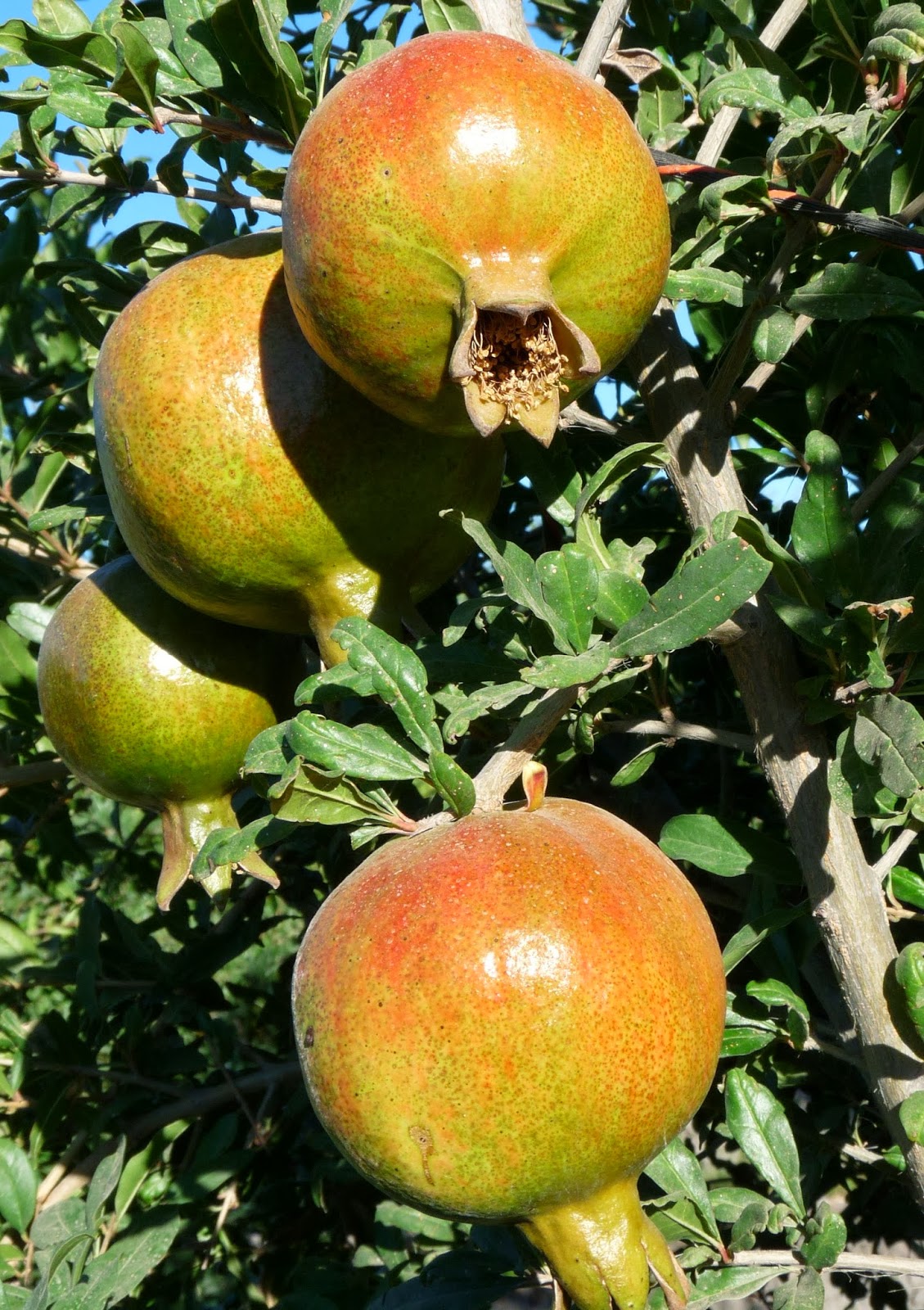
With the crop fetching $400 a ton for juice, more central valley acreage was planted for the relatively low input crop (accept for aphids, leaf-footed plant bug, requiring one or two sprays.)  Yields were as much as 12 tons per acre.

Sure enough, after about seven good years, there was a huge excess of pomegranate juice in stainless steel tanks a Paramount’s Crush Facility in the Fresno County town of Del Rey. It was reported that part of the excess was dumped.

“Last year, the $400 price dropped to $75 and this year there is virtually no market for pomegranates for juice. In fact there has been no price announced,” said Thomas. “Again, there is limited market for fresh product. Needless to say, there will be a lot of crop left hanging on trees.”

About 4,500 acres were pulled last year. More is sure to be pulled this year. It would be nice if Food Banks could get access to the fruit.

2016-05-31T19:44:23-07:00October 5th, 2013|

SHORT CROP FOR PISTACHIOS

Off-Year Pistachio Production

Much Less than Expected

By Patrick Cavanaugh, Editor

The U.S. Pistachio industry, which includes mostly California, but also Arizona and New Mexico is about to harvest nearly one hundred million pounds less than what was expected earlier this year.

Richard Matoian
Richard Matoian, executive director of the Fresno-based American Pistachio Growers told California Ag Today that the current subjective estimate by the Administrative Committee for Pistachios, the industry’s Federal Marketing Order, is 450 to 475 million pounds.

“We had thought that we would be producing 550 million pounds this season and it’s based on two things,” noted Matoian. “First, last season’s on-year crop was not as large as we thought when it came in at 555 million pounds—a record crop. Secondly we were anticipating all the new acres that would be bearing this year.”

“But there was a prolonged hot spell during the summer, which produced a smaller-sized nut, which means less weight,” Matoian said. “And there are also reports of higher than normal blanking—greater than 20 percent. In addition there were less nuts per tree.”

Fewer Nuts Per Cluster were observed this year.
Less volume in a tremendously high demand crop tends to raise prices, which is good for growers. However there may be shortages of crops, which will mean some customers may not get what they expect in volume.

“We would rather have a moderate and profitable price instead of high spikes,” said Matoian. “On top of that, we want a good supply for our customer base as well as our expanding base.”

“There may be an issue of allocation for all of our customers, and we are disappointed that we will not be able to expand our markets as we have planned,” he noted. “It’s critical that we expand our markets because we know we have big crops coming.”

A short crop limits the opportunities of marketing and promoting pistachios around the world.  “We were hoping to increase business in countries such as Korea and Vietnam, but a shorter crop will hinder us in expanding out,” Matoian said.

2016-05-31T19:44:23-07:00October 4th, 2013|

BOB CURTIS TO BE HONORED AT UC DAVIS

Almond Industry Leader Will Be Honored


Robert “Bob” Curtis, an almond industry leader whose efforts have helped university research and extension programs improve production practices and environmental stewardship, will be honored Oct. 11 with an “Award of Distinction” from the UC Davis College of Agricultural and Environmental Sciences (CA&ES).

Bob Curtis Will be Honored


The award is presented annually during a College Celebration event to those whose contributions and achievements enhance the college’s ability to provide cutting-edge research, top-notch education and innovative outreach. Curtis, an executive with the Almond Board of California, is being recognized as a “Friend of the College” for his work as as a liaison between the industry and the agricultural research community. Six other people—faculty, staff, alumni, and administrators—will also receive the award.


“College Celebration is the premier community event for our college and its many supporters who stand with us through thick and thin,” said Mary Delany, interim dean for CA&ES. “This year, in particular, we have much to celebrate, including the 25th anniversary of a harvest-season gathering that has come to mean so much to us. The Award of Distinction recipients have made, and continue to make, remarkable contributions that bring great inspiration, honor, and distinction to the College of Agricultural and Environmental Sciences.”


Yields of California almonds have doubled over the last 20 years through advancements in horticultural practices. Production research has contributed to the growth and success of California almonds, which now encompass 835,000 acres, rank second in California farm gate value, and are the nation’s largest horticultural export. Research funded by the Almond Board has also helped improve fertilizer management and elevate food safety and quality.


Curtis’ impact has been felt beyond the almond industry, as well. He chaired the California Commodity Committee (2007–2012), leading an effort to develop a strategy for promoting and funding commodity research and extension. He was a member of a national specialty crop research team that outlined strategic research, extension, and education priorities for the 2008 Farm Bill, which led to grant funding in areas such as nutrient budgeting, irrigation management, precision agriculture, rootstock evaluation, and honey bee health.


Curtis serves on many UC Davis advisory groups, including the CA&ES Dean’s Advisory Council. He has written or contributed to more than 200 articles, booklets, and manuals on crop production practices, pest management, postharvest handling, and food safety and has given presentations to a wide range of domestic and international audiences.


“As a commodity representative, Bob has worked tirelessly to the betterment of industry-university partnerships that are at the heart of the CA&ES mission,” said plant sciences professor Patrick Brown. “He has made many very significant contributions to the programs of faculty and extension personnel throughout the UC system and above all he has been a true friend of the college.”


To learn more about College Celebration and the other Award of Distinction recipients, please visit http://collegecelebration.ucdavis.edu.

2016-05-31T19:44:24-07:00October 4th, 2013|
Go to Top