INTERVIEW WITH DAN GERAWAN

UFW and ALRB Want to Impose Contract on Gerawan Employees

“The UFW won an election to represent Gerawan workers 23 years ago; but then, after only one bargaining session, the union disappeared and hasn’t been heard from in 20 years,” Gerawan Farming said in a recent statement. “Last October, the union reappeared and is using decade-old legislation to now impose a contract on the employer and the employees without a vote.”
California Ag Today associate editor Laurie Greene interviewed Dan Gerawan this week on what he is going through regarding the UFW and ALRB. 
Greene: Please introduce your company’s products, # employees, etc.
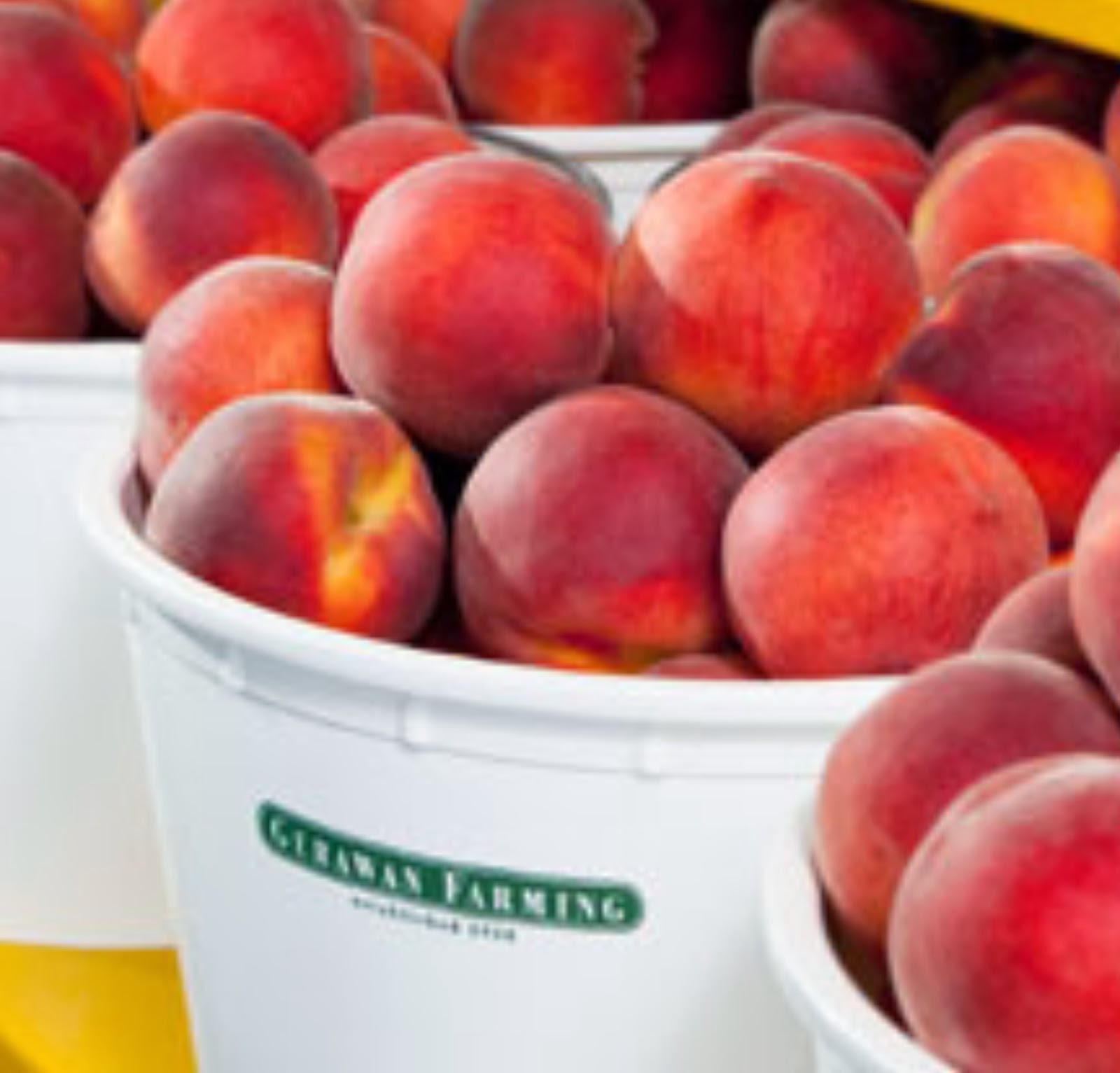
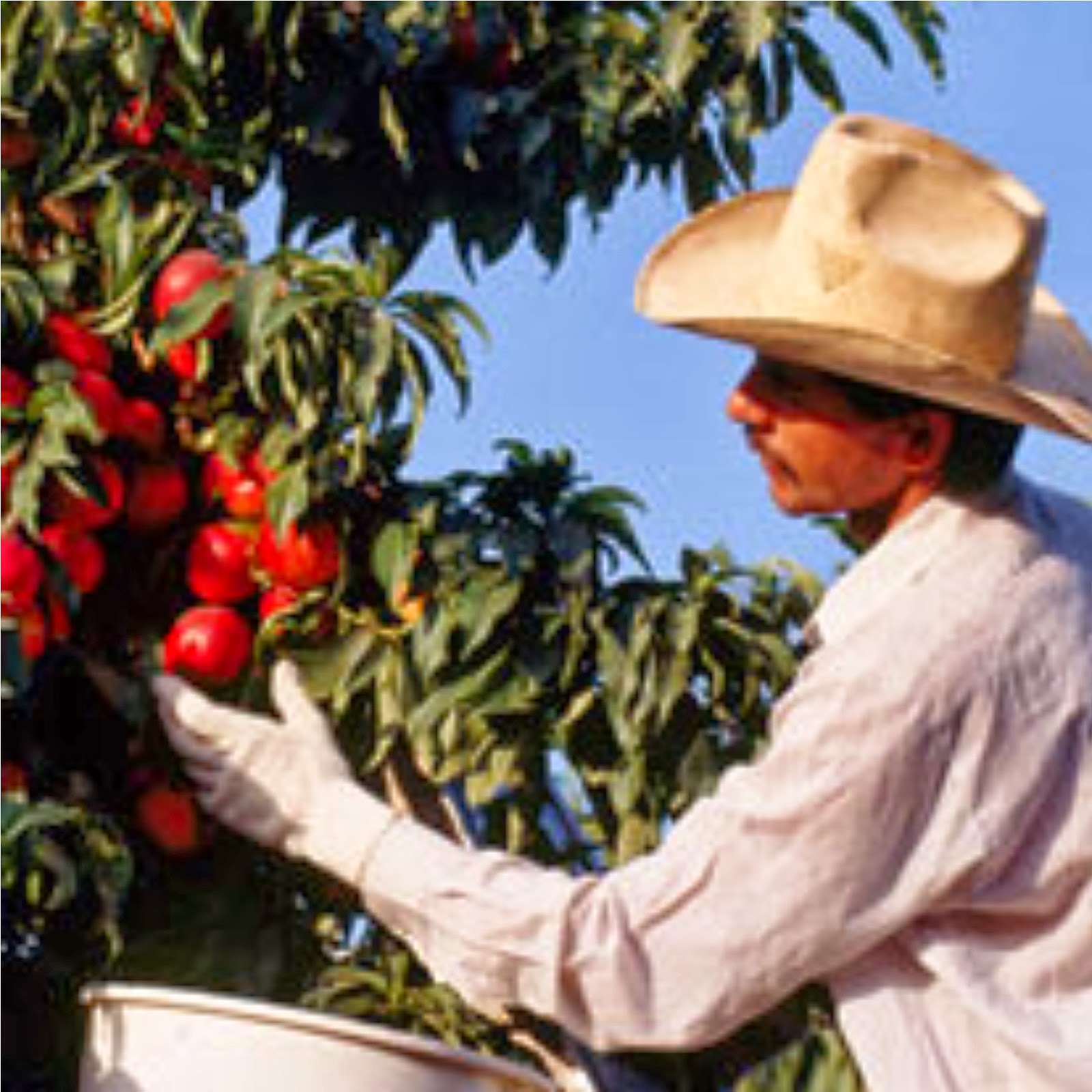
Dan Gerawan: Gerawan Farming Inc., which grows and ships under the Prima label, is the world’s largest peach grower and employs about 3,000 workers. The company also farms table grapes, nectarines, and plums. We are a family-owned and operated company. Despite our size, I farm with my father, Ray, my brother, Mike, and my wife, Norma. We are very hands-on; this is what we do.
Greene: There are press reports that Gerawan is having a dispute with the UFW. What is that dispute?
Gerawan: We are not having a dispute with the UFW. Our employees are having a dispute. As a company, our dispute is with the state government that is trying to force a contract on us without giving the workers an opportunity to vote. People need to understand that this is not a normal union situation; it has to do with a law being used for something it was never meant for.
Greene: What is your stance on employees having a vote?
Gerawan: We believe the employees should have a vote, and they have made it known they want a vote. They are not saying how they will vote; they just want a vote. When they often express their opinions to us, we stop them and say, “Don’t tell us your preference; we support your right to vote, that’s enough. Everything else is your choice.”
Greene: Can you describe the chronology of your circumstances with the UFW and ALRB?
Gerawan: We lost an election with the UFW in 1990. We had our only bargaining session in 1995. There was never a contract, and the union failed to continue bargaining. The union disappeared; they abandoned our workers.
To this day, we don’t know why. They have told us, “We have no legal obligation to tell you.” We responded, “But you do have a moral obligation. How can you come back after 20 years and tell our workers that you want 3% of their money or you are going to fire them?”
The UFW wrote us a letter in October 2012 saying, “We’re ready to negotiate.” At the time, we couldn’t believe it since the employees didn’t even know they were represented by the union and had been working quite happily earning the industry’s highest wages. But then attorneys explained to us that the UFW would force us into a mandatory process where the state would actually impose the contract on us and our employees, and we would have no right to opt out.
So, the UFW pretended to negotiate for a while. After just eight brief bargaining sessions over a three-month period, during which the UFW never made an economic proposal, the UFW suddenly asked the government to step in to write and impose a contract us.
Greene: Can you explain the Mandatory Mediation Law?
Gerawan: In 2002, the state legislature passed an amendment to 1975’s Agricultural Labor Relations Act. That amendment allowed for mandatory mediation to be imposed in ag labor situations. However, ‘mediation’ is a misnomer; it is really mandatory arbitration. The legislature passed the law in response to a few employers, including one employer (not us) who supposedly dragged out negotiations for many years, 20 years in that particular case.
When the legislature passed that 2002 law, their thought was that that if an employee votes for a union, they are voting for a contract. However, in most industries, employees vote for representation and negotiation for a contract. This is not a normal situation where the union comes in to negotiate, with power, backing up the workers, and then the two parties negotiate a mutual agreement. This is the union invoking a law that allows the state to literally force a contract on the employer and employees.
Keep in mind that the law was meant to remedy dragged-out negotiations. There were no negotiations here to drag out; the union had disappeared. There is nothing in the legislative history that shows the law was to be used in these situations. The UFW’s and ALRB’s stance is basically, “The letter of the law… says if you failed to reach an ‘agreement,’ we can invoke this.” We responded, “That implies that you tried to reach an agreement. You guys never tried. You went away.” Their response, “Well the law doesn’t say we had to try, so we are using that law now to impose a contract.”
Greene: How do you respond to ALRB’s accusations of coercion and forgeries?
Gerawan:  The Company has done nothing to coerce any signatures. We do not know anything about forgeries. We don’t know how many there supposedly are. We don’t know who caused those forgeries, and by that I mean I don’t know if they are saying we caused them or the union caused them.
It doesn’t take any coercion for the highest paid employees in the industry to realize that it is wrong for a union to come back after a twenty-year absence and tell them they will take 3% of their pay or fire them—without a vote. Not even a vote to ratify any contract that might happen.
After hearing this for a few months and being harassed at their homes multiple times by UFW people, the employees, on their own, began a decertification effort. They started a petition and turned it in to the ALRB. Immediately, the UFW started filing unfair labor practice charges against us saying that we were coercing our employees. That is silly.
We did not coerce, and in fact we invited ALRB to go out to our fields to make sure the workers understood they have the right to vote however they want. The ALRB did that.
We also did that. My wife, Norma, and I met with all the employees and told them, “Do whatever you want, choose however you want to choose. But congratulations on having achieved that right through your petition. We are not asking how you will vote.”
Greene: Could the signatures have been forged after you submitted them?
Gerawan: I really don’t know. All I know is thousands of signatures apparently were delivered.
Keep in mind, the union does not want the employees to have a choice, and they are fighting hard to stop the employees from having a choice, especially when the adjudicating agency has shown overwhelming bias against the employer and the employees.
The ALRB’s role, under the Agriculture Labor Relations Act, is to protect employees’ rights as a whole and to cause peace in the fields (which we had before the UFW and ALRB came into the situation). So why is the ALRB stopping the employees from having their vote just because of a relatively few questionable signatures from an unknown source?
After all, this is merely a vote.
We need to keep in mind that this is a declining union that has been gone for twenty years, has done nothing for these workers, and has returned only to pick the pockets of the industry’s highest paid workers and not even allow them to have a vote. I think it is unconscionable that the ALRB has done nothing to stop it, but in fact has taken every opportunity to accommodate this travesty.
Greene: Gerawan Farming has claimed that the ruling by Silas Shawver, regional director of ALRB, failed to provide a count of signatures filed, the number needed for a vote, and the number judged invalid.
Gerawan: This is correct. The ALRB blocked the election citing forgeries and coercion. Mr. Shawver is refusing to give out any information.
My wife and I informed our employees that the ALRB regional director in Visalia canceled their vote because supposedly we and the management of our company coerced our workers’ signatures. Our employees told me flat out that the only coercion has come from UFW and ALRB themselves.”
To continue this interview, please press “more” below!  


Greene: What is behind the ALRB’s finding that Gerawan directly assisted the petitioner and others in the decertification effort?
Gerawan: We have not directly assisted the petitioner. So, what the ALRB is saying is not true. It is simply did not happen.  
When the employees turned in their petition, the ALRB did not announce an election. The employees got very upset and demonstrated at the ALRB office in Visalia to demand their right to vote.
ALRB did not respond, but subsequently cancelled the vote, citing forgeries and coercion. The regional director is refusing to give out any information.
So, on September 30,over 1,500 of our employees reacted by going on strike to protest the ALRB’s and UFW’s cancellation of the vote. We thought we’d be harvesting peaches and grapes that day, but we didn’t.
Greene: Did Gerawan support the stoppage?
Gerawan: Oh no, we did not support the stoppage. We support the workers’ right to choose. But we did not want to see work stopped because we had fruit to harvest that day. But because the workers did stop, the cost for us was significant.
Greene: In a statement you said, “It is unfortunate that our employees felt they needed to take such a drastic action to have their voices heard. We are still hopeful that [the board] will protect the workers’ right to choose.” Are employees grateful for your company’s advocacy or opposed?
Gerawan: The employees have told us that they are grateful that we support their right to choose. At no time have we ever expressed a preference to them one way or the other. We want them to choose.
Greene: What rights do the UFW and ALRB have?
Gerawan: The UFW itself doesn’t have much power because they have such a small membership and are declining, but they have been handed an inordinate amount of power by the legislature. With such power, the UFW no longer needs workers’ support. They no longer need to organize the way a normal union organizes. Their members are created by legislation, not a vote.
We are about to have a contract literally written for us by a state agency and imposed on us. No one signs anything. Neither we nor our employees can opt out.
This type of ag labor unrest hasn’t happened since the 60’s and 70’s, and back then it was completely the opposite of what’s happening now. Back then, the workers wanted union and government protections. Now, the workers are fighting to be free from union coercion and government imposition. It’s hard to believe that the very law that was created to protect farm worker rights is now being used to rob those workers of their rights.
Greene: Why do you think the UFW is targeting Gerawan Farms?
Gerawan: I think they are going after the old abandoned elections.
We have the highest paid employees in the table grapes and tree fruit industry. No one disputes that, not even the union.
By the way, the union has no contracts with table grapes or stone fruit farm employees, and they have not been able to secure any. The last contract they had was with a Hanford farmer, and after a few years, those workers voted to throw the union out.
Clearly we are the biggest target, especially for a union that now is barely 3,000 members. If they prevail against our employees, this would double their size. Overnight, the majority of UFW members will be co-opted members created by legislative fiat, not by worker choice. The UFW needs this badly because their expenses exceed their income, and this is all public knowledge.
Greene:  What is the employer mandated to do?
Gerawan: To live within the terms of the contract. There will be no other option. As an example of what the imposed contract will do, it will throw out our meritocracy, which has been an important part of our success, and replace it with seniority. That’s something we specifically told the ALRB arbitrator would harm us.
We made it clear to the ALRB, “Do not mess with that. We have been a shining example of success in creating high wages in an industry that has had a lot of failures. Don’t mess with our formula for success, please.” They completely ignored our plea.
Imagine any business having a contract written by the state and imposed on them–wages, working conditions and everything else. It’s hard to believe that it is actually happening, especially when we’re already paying the highest wages and benefits.
Greene:  Did they have to prove any wrongdoing to do this?
Gerawan: To invoke mandatory mediation there has to be an unfair labor practice. We were found guilty of an unfair labor practice in the 1990s after the election. I think it was for laying off a crew at the end of the season.
Now that the union has come back, we have more unfair labor practice allegations. For example, for the buses to Sacramento, that we had nothing to do with, we have an unfair labor practice charge against us. For the employee walk out, that we had nothing to do with and which cost us a huge amount of money, we have an unfair labor charge against us.
Who adjudicates them? The ALRB. A charge does not mean you are truly guilty of doing something; it only means that the union has accused you of something.
Greene: What are your other unfair labor practice charges?
Gerawan: There have been many. It seems to be part of the game. For example, last October, when the union came in, we felt compelled to let our employees know about this. With our lawyers’ review, we sent our employees a letter with the facts only, but we received an unfair labor practice charge just for that.
So, because the UFW suddenly decides to reappear after being gone twenty years, we can no longer communicate with our employees?
Once the union files an unfair labor practice charge, the ALRB investigates, which takes months. Then, they will often side with the union against the employer and file official changes, which will eventually be heard by an administrative law judge. It could be a year or more before the facts come out. Meanwhile, the ALRB and UFW use those charges to damage your reputation, even though there has been no proper discovery or hearing.
Plus, if the unfair labor charge is used to block an election, and the investigation takes months, then the available time window for the election will probably lapse, and the employees’ right to a vote will be taken away from them. The system actually seems designed for that to happen.
Greene: Is there a pattern of unfair labor practices against you?
Gerawan: They come in batches. We got seven a few days ago for the bus trip, the strike, for whatever they conjure up. The unfair labor practice charges are just one or two sentences. From the union standpoint, they fill out a form, and then ALRB does the rest. ALRB sends their team of investigators out to “prove or disprove the unfair labor practice,” but I do not think they want to disprove anything. The ALRB has shown a clear pattern of wanting to rob our employees of their right to choose.
Greene: Gerawan is well known in taking good care of their employees. With this in mind, what could the UFW offer that is missing?
Gerawan: First of all, wage-wise, we are far above the rest of the industry. In fact, many in the industry have told me that they cannot believe that this is happening to the company that pays the highest wages and offers the best working conditions.
So what could the UFW possibly offer? Whatever it is that the state feels it can force the grower to pay whether or not it makes sense or is viable for the business. Again, this is not a normal situation where union organizers represent workers at the bargaining table.
Greene: What is it like for your employees?
Gerawan: The employees have told me that they cannot believe this is happening to them. They say they left Mexico because of things like this. They said, “You wait Dan, we’re going to have a vote.” I said, guys, I hope you do, but you may not have the chance. The employees said, “What do you mean? This is America! When the state hears that all we want is to vote, then they will understand.”
I had to tell them that I was sorry that this it is such a tragedy. We all assume that we will have the simple basic right to vote, but apparently that’s not how it is anymore.
Greene: You have met with Sylvia Torres-Guillén, the general counsel with the California ALRB. How did your conversation go with her?
Gerawan: Yes, my wife and I met her during one of our hearings. She was very cordial. We both had just heard my attorney tell the Judge that ALRB was so biased that it would never let our workers have a vote. We told her that we hoped that she would prove my attorney wrong because our employees need her help to protect their right to vote.
She said she would let them vote if… at which point I politely interrupted and pleaded to her that it was her responsibility to get rid of the “if,” and to make sure the rights of the workers were protected so that peace would be restored to our fields.
2016-10-25T21:53:22-07:00October 14th, 2013|

YOU-PICK-IT AT APPLE HILL

–>

Plenty of Time to Visit Apple Hill and Pick Apples

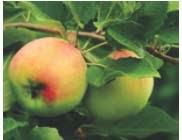
The Apple Hill Growers Association (AHGA), located in Camino, Cedar Grove, Placerville and Pollock Pines, CA, was once a fledgling association comprised of 5 ranches. 

Growers on these ranches began with a well-founded hope in strong families and a future in farming traditions. Many of the original families have passed those traditions on to the next generations.

The Association will be celebrating 50 years in 2014 and has over 50 ranches including fruit growers, bake shops, wineries, a micro-brewery, a spa and Christmas tree growers.

“Thoughts of the spring blossom season in our orchards, fields and vineyards sustain us during the long winters and give time for planning improvements for the coming season,” said Lynn Larsen, AHGA President. “As the summer season approaches, we welcome our new and returning guests that visit our year-round wineries, brewery and fruit stands. 

Fresh local berries, cherries, pears, peaches and a large variety of fabulous apples supply us with fruits from May through December. Fall pumpkins and gourds color the way to the Christmas season that opens with choosing a fresh tree from our many tree growers.” Larsen also suggests visitors will enjoy the beautiful scenic drive on country roads that lead to all of the activities offered.

California Ag Today staff makes an annual pilgrimage to Apple Hill to pick apples, and we highly recommend a visit.

2016-05-31T19:44:20-07:00October 14th, 2013|

Farm Bill Conference Committee Named

Boehner Names Californian Rep. Jeff Denham

As Part of Farm Bill Conf. Committee

WASHINGTON, DC – House Speaker John Boehner (R-OH) TODAY named the following House Republican negotiators to serve on the House-Senate Conference Committee charged with resolving differences between the House and Senate-passed Farm Bills: 

“The Farm Bill extension measures passed by the House include much-needed reforms that cut spending and help strengthen our agriculture and food stamp programs.  I’m confident that the negotiating team named today will do an excellent job of ushering these reforms through Congress and to the president’s desk, and I thank each of them for their willingness to serve.”

NOTE:  Here are the House Republicans the Speaker is naming to serve on the House-Senate conference committee: 

Leadership conferee:

    Rep. Steve Southerland (R-FL)

House Agriculture Committee conferees:

    Rep. Frank D. Lucas (R-OK), chairman of the House Agriculture Committee

    Rep. Steve King (R-IA)

    Rep. Randy Neugebauer (R-TX)

    Rep. Mike Rogers (R-AL)

    Rep. Mike Conaway (R-TX)

    Rep. Glenn ‘GT’ Thompson (R-PA)

    Rep. Austin Scott (R-GA)

    Rep. Rick Crawford (R-AR)

    Rep. Martha Roby (R-AL)

    Rep. Kristi Noem (R-SD)

    Rep. Jeff Denham (R-CA)

    Rep. Rodney Davis (R-IL)

House Foreign Affairs Committee conferees:

    Rep. Ed Royce (R-CA), chairman

    Rep. Tom Marino (R-PA)

House Ways & Means Committee conferees:

    Rep. Dave Camp (R-MI), chairman

    Rep. Sam Johnson (R-TX)

– See more at: http://www.speaker.gov/press-release/speaker-boehner-

Denham’s Remarks Following Appointment: 

U.S. Representative Jeff Denham (R-Turlock) issued the following statement after being appointed to the conference between the House and Senate on the 2013 Farm Bill:

“I am honored to have been appointed to the Farm Bill Conference Committee. As an almond farmer and representative of California’s Central Valley, where agriculture is one of the primary drivers of the local economy, I know how vital the Farm Bill is to farmers and ranchers, not to mention to the American people who rely on a safe and affordable food supply. The Farm Bill represents significant reforms to long established programs, and I look forward to working with Senate counterparts to produce a final product that will give American growers and producers a competitive and productive global edge while saving taxpayers money.”


2016-05-31T19:44:20-07:00October 12th, 2013|

FARM BILL FOR FINAL FACE-OFF

On Table are Food Stamps, Anti-Hunger Program, Crop Insurance

Reuters reported TODAY the final stage of the long-delayed U.S. farm bill is about to begin, but drafting a legislative compromise between the Senate and House of Representatives is still hampered by deep partisan divisions over cuts in food stamps for the poor.

Lawmakers in the House agreed on today to open negotiations with the Senate over a final version of the five-year, $500 billion bill. Its salient agricultural initiative, but one that is mostly not controversial, is an expansion of federally subsidized crop insurance by 10 percent.

The major dispute in the bill is food stamps, which help low-income Americans, mostly children, the elderly or disabled, to buy food. The latest figures show a near-record 47.8 million people received benefits averaging $133 a month.

The Republican-controlled House wants to cut the major U.S. anti-hunger program by $39 billion over a decade, nearly 10 times the reduction proposed by the Democrat-run Senate. The tighter eligibility rules in the House plan would cut 4 million people from the program in 2014.

House Majority Leader Eric Cantor was the leading proponent of the cuts. Virginia Foxx, a North Carolina Republican said, “We believe by reforming food stamps we will save the program for the truly needy,”

House Democrats regard the Republicans as putting an undue burden on recipients.

Jim Clyburn of South Carolina cited language to require food stamp applicants to take a drug test and suggested, “You ought to test all those people getting farm subsidies and see if they are deserving of federal benefits.”

In a tactical move, House Republicans would split the farm bill in two for review in the future. The food stamp program would be considered every three years, while agricultural programs would be on a five-year cycle.

Conservatives say it will be easier to win reforms under that format. Nutrition and farm subsidy programs have been tied together since the 1970s, creating a coalition of farm-state and urban lawmakers.

Colin Peterson of Minnesota, the Democratic leader on the House Agriculture Committee, said the division could mean the end of farm bills, as they have been known until now.

“We need a full conference to work out some big differences,” conceded Frank Lucas, chairman of the House Agriculture Committee.

Congress is a year behind schedule in writing a successor to the 2008 farm law, which expired a year ago and was revived early this year. It died again at the same time the government went into a partial shutdown.

“The big question is if we’re going to get a new farm bill,” said Craig Cox of the Environmental Working Group. “I think there’s a long way to go from where we are today to a farm bill that can pass on the floor of the Senate and the House.”

Democrats voted en masse against food stamp cuts. Tea Party-influenced Republicans assured defeat of the original House farm bill in June because they wanted deeper cuts than the $20 billion proposed. It was the first time the House defeated a farm bill.

Among agricultural provisions, the most contentious are likely to be Senate proposals to require farmers to practice soil conservation to qualify for premium subsidies on crop insurance, and to require the wealthiest growers, with more than $750,000 adjusted gross income a year, to pay a larger share of the premium. The House has rejected similar ideas.

Crop insurance is the largest part of the farm safety net, costing about $9 billion a year.

Source: Reuters

2016-05-31T19:44:20-07:00October 12th, 2013|

LOW CORN PRICE MAY HELP DAIRIES IN SHORT TERM

Corn Closed Friday at Its 
Lowest Price in 37 Months

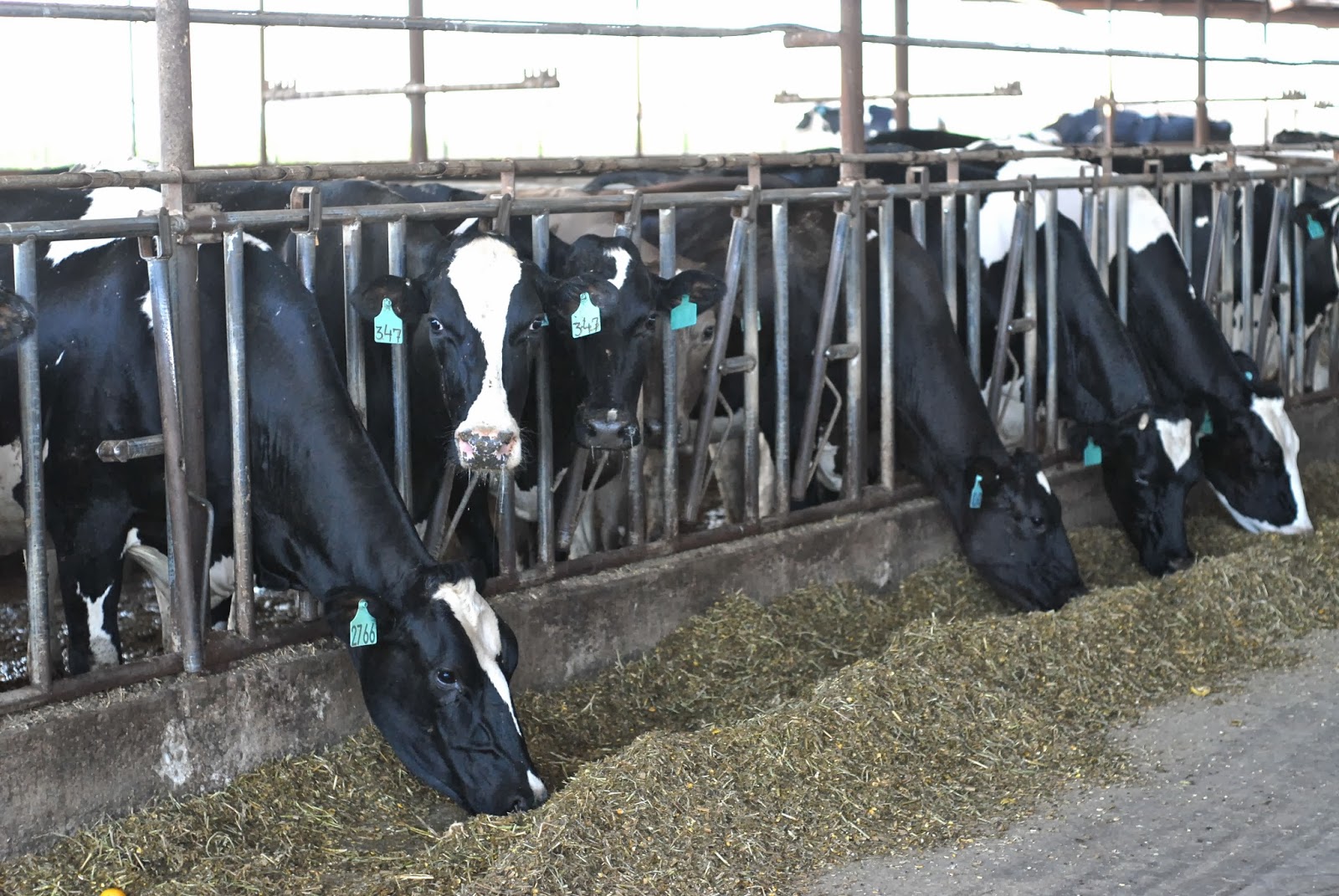
In news that could help the ailing California Dairy Industry, the Wall Street Journal reported TODAY that corn closed at its lowest price in 37 months as farmers speed the harvest of what is forecast to be a record crop, boosting availability for processors of food, ethanol and animal feed.

Wheat also declined while soybean prices gained slightly. U.S. corn growers are expected to harvest 13.8 billion bushels this year, the most ever, as yields increase by 26% to 155.3 bushels an acre, according to the Department of Agriculture.

Dry weather in the past week and little rain in the next 72 hours will allow farm-ers to accelerate the harvest, replenishing stockpiles for commercial users and exporters of the grain.

Yields for corn that has been harvested in the U.S. are also coming in better than forecast earlier this year, analysts said. Analysts surveyed by Dow Jones Newswires said they expect yields to total 156.8 bushels an acre, up from USDA’s outlook.

2016-05-31T19:44:21-07:00October 12th, 2013|

FIGHT FOR WATER FILM IN FRESNO NEXT WEEK

Local film ‘The Fight for Water’ goes International, with Additional Festival Screenings in Fresno and Bakersfield


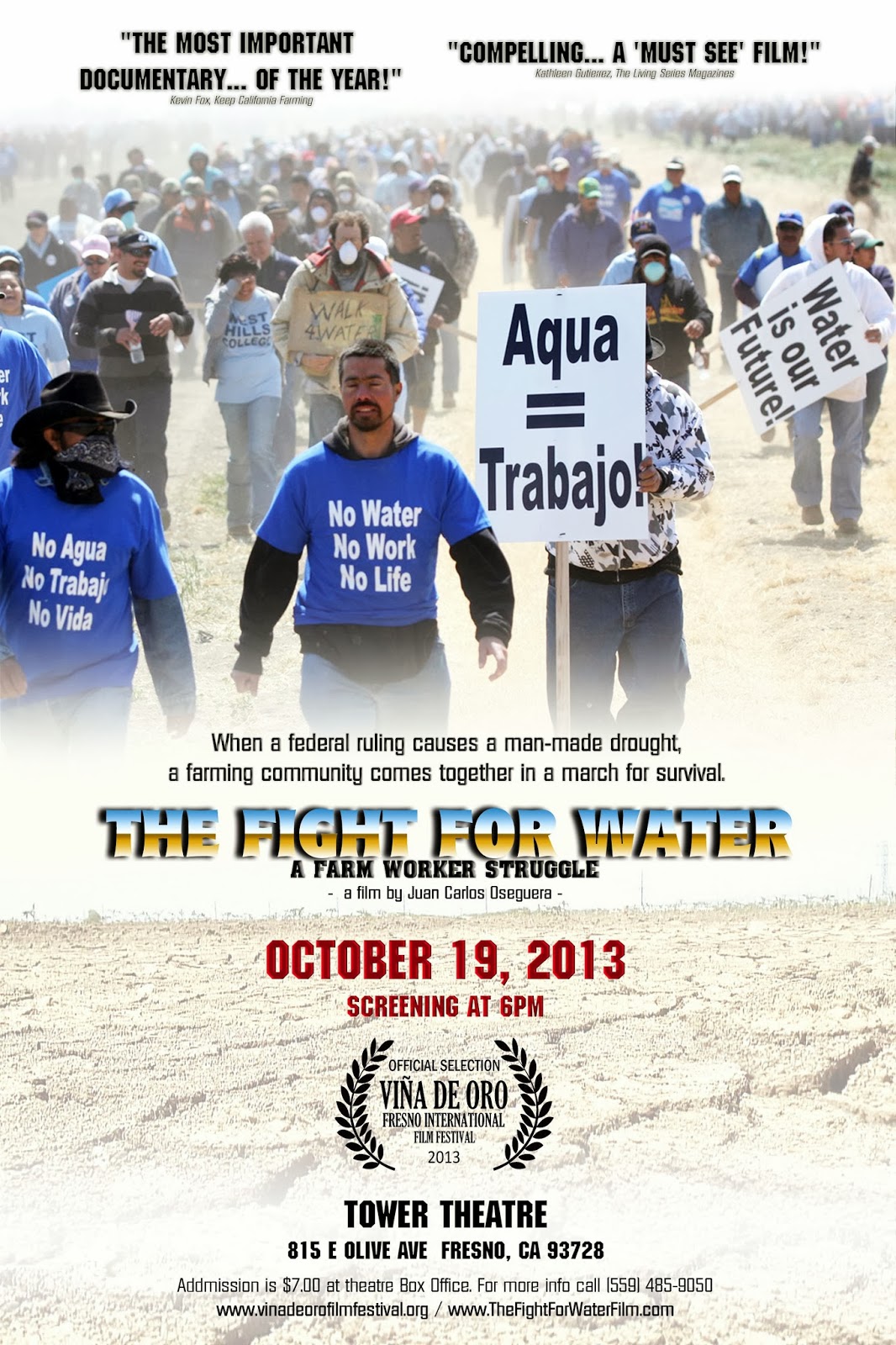
The award-winning documentary, “The Fight for Water: A Farm Worker Struggle”,  which was recently nominated for Excellence in Filmmaking and was Runner Up Winner for Best Documentary in Cinematography at the Action on Film International Film Festival,  will have several screenings in October and November.


The documentary, which put a human face to the historic 2009 water crisis and the environmental decision that impacted a farm working community in the Westside of the California Central Valley, has been invited to screen internationally at two major environmental film festivals: at the Kuala Lumpur Eco Film Festival in Malaysia, where it will screen alongside other award-winning environmental films from around the world on October 13, and at the Life Sciences Film Festival in Prague, Czech Republic, on October 14 – 18.


It will also screen at this year’s Viña de Oro Fresno International Film Festival, which will be held October 16 – 19, 2013, at the Historic Tower Theatre in Fresno.  The film, which features a historic water march that spanned across the Westside of the California Central Valley to the San Luis Reservoir by farmers and their farm workers, will screen Saturday, October 19 at 6 pm and will be the closing film of the festival, followed by an awards ceremony.


The film will then screen at the Historic Fox Theater in Bakersfield, California, as the “Official Selection” at this year’s first ever Outside the Box Bakersfield Film Festival, which will be held November 8 – 10, 2013.


Hollywood actor Paul Rodriguez, who helped organize the water march in the style of Cesar Chavez, is featured in the film for his activism in this cause. Major political figures from throughout the state, and community leaders representing the Fresno community, who stood in favor and against the water cause, also appear on the film.  Arnold Schwarzenegger also makes an appearance.


The film was produced by Juan Carlos Oseguera, an alumnus of San Francisco State University who has been a published film critic and has won awards and recognitions in writing, producing and directing.  This is his first feature length documentary which he wrote, edited, directed and produced under his production studio, Filmunition.


The documentary features two Latino farmers, Joe Del Bosque and George Delgado, who describe how federal water measures contributed to fields going dry in the West Side of the California Central Valley in 2009 while refuges that protect a threatened fish received all of the water designated for them.  This affected their community tremendously.  Because of that, the governor had to declare the affected area a disaster and provide government-run food assistance for over two-hundred thousand farm working people who were displaced from their jobs.


Oseguera, 39, who was raised in the California Central Valley by parents who were migrant farmworkers, understood the struggle they were facing and set out to document the their plight as a lesson to be learned and as a voice to be heard.  He wants viewers to understand that migrant farm workers are a driving force to our economy.  Yet in his quest to understand this water situation, he uncovers class, racial and environmental intricacies behind water access and distribution in California, and the ripple effect it has on all of us. It is an eye opening documentary that everyone must see.


For additional information about the film, the film festivals and film screenings, visit:


The Viña de Oro Film Festival can be contacted at (559) 709-8875.


Questions about the film, contact filmunition@yahoo.com or call (209) 675-2988.


2016-05-31T19:44:21-07:00October 11th, 2013|

CDFA FERTILIZER RESEARCH CONFERFENCE

CDFA’s 21st Annual Fertilizer Research Conf., Oct. 29-30th, Modesto
The California Department of Food and Agriculture’s (CDFA) Fertilizer Research and Education Program (FREP) and the Western Plant Health Association (WPHA) announced TODAY they are teaming up again this year to present a conference on managing agricultural nutrients. This year’s conference will be held on October 29 and 30 at the DoubleTree Hotel in Modesto.

The broad agenda, including effective management of nitrogen fertilizers, is geared toward a wide range of agriculturalists, including agricultural supply and service consultants; growers; university extension specialists; crop advisers; and local, state and national governmental agency personnel. 

Presenters from academia, industry and agricultural consulting will provide general and technical information, current research data, and practical applications addressing statewide and regional nutrient management issues. 
The agenda features updates on FREP’s technical education, research, and outreach initiatives-including an update on the CDFA Nitrogen Management Training Program for CCAs, searchable FREP research database, crop fertilization guidelines, and a wide range of other FREP funded research projects.

Certified Crop Adviser (CCA) and Pest Control Adviser (PCA) continuing education units (CEUs) are available for both days of the conference. Registration fees are $90 per day or $175 for both days. Currently enrolled students pay only $50 per day or $90 for both days.

To view the agenda, register online, and see the list of the approved CEUs, please visit the FREP conference website.

For more information about the annual conference or the FREP program, please contact FREP staff at frep@cdfa.ca.gov or (916) 900-5022.


2016-05-31T19:44:21-07:00October 11th, 2013|

SONOMA COUNTY 2013

Sonoma County Harvest Nearly Complete

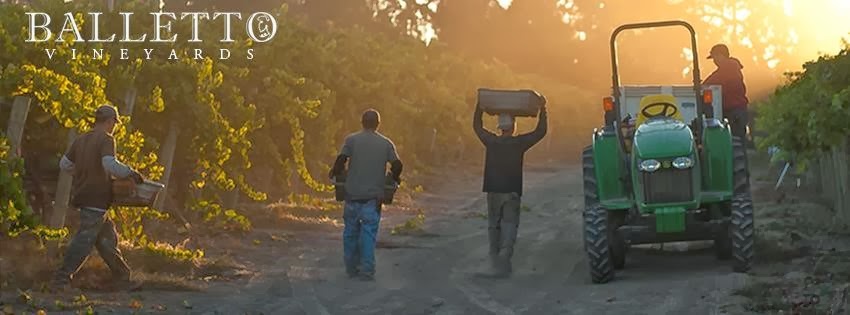
            Workers in Sonoma County Harvest the 2013 Bounty.
Source: Balletto Vineyards
Sonoma County’s 2013 harvest season has turned the corner and headed down the home stretch.  Current reports are showing that the region is approximately 85%-90% complete, with mostly Zinfandel and some Cabernet Sauvignon, Grenache, Pinot Noir, and Syrah still on the vines.

Winegrowers anticipate harvest finishing up within the next week or two, which would put this year’s harvest about 3 weeks ahead of schedule compared to previous vintages.

Reports from winemakers and winegrowers about fruit quality continue to be positive, despite the recent rainstorm that had minimal influence on picking schedules and was characterized by one winegrower as “washing off the dust on the leaves.”  In fact, several regions around Sonoma County reported that the rain storm was accompanied by some high winds that helped dry out moisture.  

This year’s grape crop continues to come in at average to above-average size with excellent flavor profiles that are lush, balanced, and consistent. Overall, winegrowers and winemakers are thrilled about this year’s harvest and the potential of these 2013 wines.

Source: We Are Sonoma County

2016-05-31T19:44:21-07:00October 11th, 2013|

AGRICULTURAL RESEARCH FOR GROWERS

CDFA Board to Meet Growers’ Research Needs

State Board Panel Discussion
This week’s meeting of the California State Board of Food and Agriculture focused on agricultural research and how the state can best position itself to meet future research needs, according to State Board of Food and Agriculture President Craig McNamara TODAY. With increasing on-farm challenges, research institutions need to be flexible and responsive in meeting the needs of California’s farmers and ranchers.

State Board Panel Discussion (left to right: Richard Waycott, Almond Board; Ken Keck, Citrus Research Board; Bonnie Fernandez-Fenaroli, Center for Produce Safety; President Jeffrey Armstrong, Cal Poly; Chancellor Linda Katehi, UC Davis; Paul Wenger, CA Farm Bureau Federation; Mary Wadsworth; J.G. Boswell Company)

Research is critical for California agriculture and the public investments we make in research today will have significant advantages for our future. We need to develop more partnerships between our agricultural organizations and our academic research institutions to leverage the outstanding research resources we have available within this state. California agriculture has had a long legacy of partnership with the UC and CSU system, but in reinvigorating this collaboration across multiple disciplines, we can see great gains for our industry.

What we heard from several farm and commodity representatives at the meeting is that improved communications are necessary to ensure research meets academic and research priorities; that there are questions and issues to be addressed regarding intellectual property protections; and that there needs to be a process to allow agriculture a seat at the table in funding and research decisions. We have world-class research institutions with the UC and CSU systems and working collaboratively with our agricultural community we can address some of the key challenges and opportunities that are before us.

“Promoting Agricultural Research that Anticipates 21st Century Challenges” is a core recommendation of the California Ag Vision.  As a convener, this Board will work with CDFA and our agricultural stakeholders to further the discussion and address concerns that could hinder the ability of California agriculture to be continue its leadership in fast-changing regional, national and global markets.

Source: CDFA

2016-05-31T19:44:21-07:00October 11th, 2013|

Handle Poultry With Care To Reduce Illness

Karen Ross on Salmonella in Poultry

We share the concerns over the recent reports of salmonella illness connected to poultry and wish to convey our empathy for the people who have contracted illness and their families.

Food safety is a primary concern of California food producers and for California government as it works with food producers to provide a wholesome, nutritious and safe food supply for all people. All of agriculture and the food-supply chain have a responsibility to protect people from food-borne illness, and I am determined to do all I can as secretary to accomplish that to the best of our ability. The key is a commitment to continual improvement. We have that in California.

The California Department of Public Health (CDPH)which has jurisdiction over food recalls, has not requested Foster Farms to recall chickens because, with proper handling and preparation, CDPH says the product is safe for consumption. A key message for consumers is that they should follow safe food-handling practices with raw poultry, as it is a raw animal protein that is expected to have some level of naturally-occurring bacteria present. It is important to understand that cooking chicken fully to 165 degrees Fahrenheit will kill the bacteria that are present. According to Dr. Ron Chapman, director of CDPH, chicken is safe to consume as long as consumers follow that guideline and do not cross-contaminate fully cooked chicken with raw chicken juices.

The illnesses being investigated by CDPH, the U.S. Centers for Disease Control and Prevention and the USDA have been detected over a seven-month period. These agencies are working with Foster Farms to ensure proper manufacturing processes, and to ensure proper interventions are in place to reduce the presence of naturally-occurring bacteria. Additionally, Foster Farms is continually working to implement improved processes to reduce the presence of bacteria.

2016-05-31T19:44:21-07:00October 10th, 2013|
Go to Top