
Broccoli Price Up, Growers Happy

Broccoli Prices Soar Upward


Mike Hornick with The Packer Reports:

Broccoli prices have soared in the wake of diminished California yields and storm damage to Mexican crops.

California grower-shippers on Oct. 14 were quoting $32-35 for 20 pounds of loose crown-cut broccoli out of Salinas and Santa Maria. That’s up from $7.65-10.48 on July 15, according to U.S. Department of Agriculture statistics reported before the government shutdown Oct. 1.

Crown-cut broccoli breached the $20 mark around Sept. 23, soon after Hurricane Manuel hit Mexico, and kept climbing. The high markets are expected to continue at least two more weeks.

“The hurricane came in and clobbered Acapulco at the same time a storm came in off the Gulf of Mexico, so the production areas in central Mexico got a one-two punch that reduced their volume,” said Mark McBride, salesman for Salinas, Calif.-based Coastline Produce. “We’ve been $29-31 for bunches (of 14s and 18s), and crowns anywhere from $32-35.”

Linda Kivlehan, retail manager for Coastline, noted it has been a nice run also due to the wet weather hurting broccoli fields in Yuma. “It washed a lot of broccoli fields away. We should be seeing some good prices all the way into December,” said Kivlehan.

Memories of weak markets past kept California acreage down this year, particularly in Salinas. But yields were also down as fall came on, as seeds fine-tuned for the Central Coast climate often ran into temperatures or humidity slightly higher or lower than they like.

“The majority of the broccoli this time of year comes from Santa Maria, and a lot of varieties there are not responding well to changes in weather,” said Henry Dill, sales manager for Pacific International Marketing. “A lot of guys have acreage just sitting there doing nothing for a couple of weeks.”

“Warm and cold in Salinas are not what people experience in other parts of the country,” McBride said. “It’s relative, but if you’ve got a seed bred for the warmer temperatures we typically have in the fall, and we don’t get them, the seeds underperform.”

Broccoli is a $316 million crop in Monterey County — fourth behind leaf lettuce, strawberries and head lettuce — but growers don’t always speak of it glowingly.

“I can’t remember the last time we planted broccoli in Salinas and it was profitable,” Dill said. “In past years, the broccoli market has been pretty dismal here, and many grower-shippers have been hesitant to put a lot of broccoli in the ground. We have to plant some for rotation.”

Pacific International was quoting $34 or $35 on crowns, Dill said.

“People are hoping for a more normal situation when we get production established in the desert,” McBride said. “But we’re not out of the woods there either because there was rain a few weeks ago in northern Baja and across the desert areas. Some of the first fields on many items are showing a bit of damage.”

The transition to desert broccoli production varies by grower-shipper, but happens mid-to late-November.

2016-05-31T19:44:19-07:00October 18th, 2013|

NEW PESTICIDE REGISTRATIONS

–>

Department of Pesticide Regulation,
Pesticide Registration Branch

Notice of Final Decisions to Register Pesticide Products and Written Evaluations for the following:

Nichino America, Inc.
Fujimite Xlo Miticide/Insecticide
Use: Insecticide, Miticide – For The Control Of Various Insects Such As Mites, Leafhoppers, And Mealybugs On Crops Such As Cranberries, Grapefruits, And Kumquats

Omex Agrifluids, Inc.
Sulfomex Fungicide
Use: Fungicide – For The Control Of Powdery Mildew On Crops Such As Apples, Tomatoes, And Carrots

Bio-Ferm Gmbh

Botector
Use: Fungicide – For The Control Of Various Diseases Such As Gray Mold, Blossom Blight, And Brown Rot On Crops Such As Strawberries, Apples, And Almonds

Type: California Only Registration –
Gowan Company
Sandea Herbicide
Use: Herbicide – For The Control Of Various Weeds Such As Mildweed, Goosefoot, And Jimsonweed In Various Crops Such As Asparagus, Cucumbers, And Pumpkins

Loveland Products, Inc.
Dyna-Shield Metalaxyl 318 Fs Fungicide
Use: Fungicide – For The Control Of Various Diseases Such As Systemic Downy Mildew, Pythium Seed Rot, And Pythium Damping-Off On Various Crops Such As Cotton, Onions, And Peanuts

Nufarm, Inc.
Nufarm Weedone Lv4 Ec Broadleaf Herbicide
Use: Herbicide – For The Control Of Broadleaf Weeds And Brush In Crops Such As Corn, Red Potatoes, And Soybeans And In Non-Crop Areas Such As Lawns, Pastures, And Rangeland

Valent U.S.A. Corporation
Seize 35 Wp Insect Growth Regulator
Use: Insect Growth Regulator – For The Control Of Various Insects Such As Leafrollers, Codling Moth, And San Jose Scale On Apples, Pears, And Almonds
Type: Section 3 Label Amendment – To Add Control Of Whiteflies On Kiwifruit

2016-05-31T19:44:19-07:00October 18th, 2013|

NEW WATER QUALITY REGULATIONS

Public Commentary Invited at
Water Quality Meeting 
There will be a set of new water quality regulations imposed on Sacramento Valley irrigated agriculture and managed wetland owners as soon as April 2014! This is due to adoption of a waste discharge requirements General Order for the Long-Term Irrigated Lands Regulatory Program (ILRP).


An upcoming public workshop, held by the Central Valley Regional Water Quality Control Board (CVRWQCB), will summarize the proposed new regulations based on those in the Sacramento Valley and provide an opportunity for interested persons who already signed up by October 11 to provide commentary.

The primary duty of the CVRWQCB is to protect the quality of the waters within the Region for all beneficial uses. This duty is implemented by formulating and adopting water quality plans for specific ground or surface water basins and by prescribing and enforcing requirements on all agricultural, domestic and industrial waste discharges.


The new regulations could increase each farmer’s costs; require them to prepare, maintain and submit an on-site farm evaluation report and nutrient management plan and summary; implement a sediment and erosion control plan; participate in grower outreach events; cooperate in requested assistance for groundwater quality monitoring; and implement management practices protective of surface or groundwater.
Revised meeting location:

WEDNESDAY, OCTOBER 30, 2013, 10:00 A.M.

Colusa Indian Community Council

Community Center

3730 HWY 45, Colusa, CA

Sources: Glenn County Resource Conservation District, Calif. EPA CV Regional Water Quality Board.


2016-05-31T19:44:19-07:00October 17th, 2013|

Winter Vegetable Deal Hurt By Gov. Shutdown

Fallout of Government Shutdown Threatens

U.S. Four Billion Dollar Winter Vegetable Supply

America’s nearly four billion dollar winter vegetable harvest is in jeopardy, according to the Irvine based Western Growers Association.  The Obama Administration needs to take immediate action to expedite pending foreign worker visa applications that have been stalled during the government shutdown. 

The Office of Foreign Labor Certification at the U.S. Dept. of Labor (DOL) has been shuttered since October 1 and the processing of H-2A applications were halted just when the growing season for winter vegetables was getting under way. 

Ninety percent of the country’s vegetables are grown in the desert regions of Arizona and California in winter time.  Applications have not been processed for more than two weeks and the backlog of paperwork has grown.  If H-2A workers are not in place by November 18, consequences will be dire.  It usually takes at least eight weeks to process the applications of H-2A workers.

“The H-2A program has never been efficient, or responsive to the needs of employers or workers even in the best of times,” said Tom Nassif, president and CEO of Western Growers. “Inaction by Congress on immigration reform has forced many farmers to turn to the H-2A program in desperation, but if these applications are not processed in an expedited manner, the Yuma and Imperial winter vegetable harvest, which relies on thousands of H-2A workers, will suffer from lack of workers and consumers will face a shortage of domestic fresh produce.  Prices will surely rise as supplies diminish.”

The H-2A visa program is the only visa program U.S. farmers can use to hire much-needed foreign workers when the labor supply in agriculture expands at harvest time.  Thirty to 50 percent of agricultural workers in Yuma County (AZ) and Imperial County (CA) are H-2A guest workers during the winter season. 

The government agencies involved in the H-2A process must implement contingency plans for expediting these applications immediately upon the resumption of the government so workers can be ready when needed.

2016-05-31T19:44:19-07:00October 17th, 2013|

Walnut Quality is High Throughout state

California Walnut Industry Doing Very Well

Quality Is Great, Demand is Up, So are Prices

Like other nut crops California walnuts are doing very well on increased shipments and good pricing for growers

According to the latest figures there are 245,000 bearing acres in the state producing 497,000 tons last year

“This year, early varieties production was down and that created a shortage early on, Carl Edith, Technical Support Director for the California Walnut Commission in Folsom, Calif.

“Of course the late Chandler variety, the star of the industry is just being harvested now and is high in shell demand in China and Turkey, said Eidsath.  Driving demand even stronger is the nut’s high quality, especially its size this season. “Prices are up for growers, especially on the jumbo/ large Hartley variety, which was exceeding $2.00 a pound. Chandlers should do equally well and most likely better.”

Eidsath note that consumer demand is increasing especially in China and Turkey. “Domestic is still the biggest user even though we export 60 percent of the crop,” he said.


2016-05-31T19:44:19-07:00October 17th, 2013|

Pear Meeting is in Hopland, Calif.

PEAR ORCHARD SYSTEMS FIELD MEETING

An upcoming Meeting for the California Pear Industry is scheduled for Tuesday, October 22, 10:00 a.m. to Noon at the  Shadowbrook Farms, 13850 Old River Road, Hopland

Meeting speakers include: Rachel Elkins, Pomology Farm Advisor, U.C. Cooperative Extension Kurt Ashurst, host grower; Bruce Lampinen, Extension Orchard Management Specialist and Ted DeJong, Professor/ CE Pomologist, UC Davis; Todd Einhorn, Assistant Professor, Oregon State University Mid-Columbia Agricultural Research and Extension Center (MCAREC), Hood River; Stefano Musacchi, Associate Professor, Washington State University – Tree Fruit Research and Extension Center (TFREC), Wenatchee

AGENDA

   Welcome and overview of California collaborative pear systems trials

   2013 NC-140 ‘Bartlett’ Pear Systems Trial
 Planted May 1-2, 2013; trees from Willow Drive Nursery, Ephrata, WA
Training systems: “V”, tall spindle, bi-axis, 2-leader, completely unpruned (unreplicated) In-row spacing: 3’, 4.5’, 6’. Between row spacing: 12’
Rootstocks: OHxF 69, OHxF 87, Pyro 2-33

   Fire blight Resistant Pear Selections
 2013 selections from Dr. Richard Bell, USDA-ARS, Kearneysville, WVA Planted May 16, 2013 and headed to 30”; all on OHxF 87.Other locations: Sacramento Delta (Chuck Ingels), Hood River (Todd Einhorn); Wenatchee (Kate Evans); Michigan (2 sites) (Bill Shane); West Virginia (R. Bell)

  The Organizers wish to thank the following for helping with this meeting.
 Kurt Ashurst and crew, Shadowbrook Farms, A&P Ag Structures, Visalia, Willow Drive Nursery, Ephrata, WA, Adams County Nursery
and
 California Pear Advisory Board for partial funding. 

2016-05-31T19:44:20-07:00October 17th, 2013|

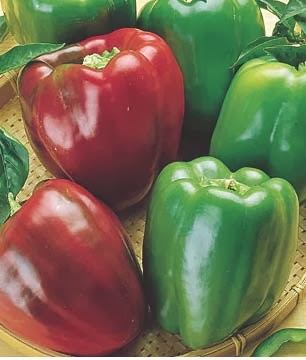
VOLUNTARY BELL PEPPER RECALL

Orange County Produce, LLC Voluntarily Recalls Bell Peppers


Orange County Produce, LLC (OC Produce) is voluntarily working with the Food and Drug Administration (FDA) and California Department of Public Health (CDPH) to coordinate a recall of fresh red and green Bell Peppers for potential Salmonella contamination. The FDA has advised that a random sample of OC Produce Bell peppers has tested positive for Salmonella.

The product is typically sold to retail, food service, and farmer’s market level in bulk weight and has no retail packaging associated with it. All retail suppliers that received these affected lots have been notified and were directed to immediately remove and destroy any remaining product in their inventories.

This recall was the result of a random sampling event on September 25, 2013 by the USDA which revealed the presence of Salmonella on some of the product. OC Produce’s recall and traceability program enabled the company to quickly identify the company field and harvest dates of the affected product, which originated in Southern California.


The red and green Bell Pepper recall is limited to 3 lots (Lot # SB 7 920, 923, 924) containing 1,208 25# cartons of peppers. The source of the contamination is unknown. The lots were distributed to farmer’s markets and wholesale food service within Southern California between September 21 and September 24, 2013.

No illnesses have been reported to date. Other than the red and green Bell peppers described above, no other OC Produce product has been affected by this recall.

OC Produce has ceased the distribution and harvest of product from the implicated field while the FDA, the California Department of Public Health and the company continue their investigation into the source of the contamination.

In a statement by Orange County Produce, OC Produce “is proud of its longstanding reputation for safety and quality throughout its operations and has taken immediate precautionary measures to protect public health by issuing this voluntary recall and removing product from the market. OC Produce takes its food safety responsibilities very seriously and is working diligently to investigate and prevent any further occurrence.”

Consumers who purchased the above described Bell peppers between the dates of September 21 and October 5, 2013 should contact the store, restaurant or farmers market from where they purchased the product and inquire as to whether the affected product was sold by that store, restaurant or farmers market location. If so, the customer should discard or return any unused product to that store for a refund.
2016-05-31T19:44:20-07:00October 17th, 2013|

NEW CATTLE THEFT LAW

Brown Signs Livestock Theft Bill
GovernorJerry Brown has signed the California Cattlemen’s Association-backed bill to crack down on livestock thefts.

The bill by Assemblyman Frank Bigelow (R-O’Neals) will devote as much as $5,000 from each fine to the state Bureau of Livestock Identification to bolster theft investigations.

Earlier this year, lawmakers removed a provision to allow prosecutors to seek jail time for repeat offenders because concerns about prison overcrowding threatened to stall the bill. The bill came as the state reported that 1,110 head of cattle were stolen in California last year.

(Source: Western United Dairymen’sCalifornia Dairy Industry Headline News, Capital Press)

2016-05-31T19:44:20-07:00October 16th, 2013|

ALLEN-DIAZ TO BECOME BEE LADY TO HELP WITH SCHOLARSHIPS

Allen-Diaz promises to Wear Bees

To Raise Scholarship Dollars for UC Students

Barbara Allen-Diaz, a top administrator in the University of California, has vowed to create a big buzz — a big buzz with bees — if she can raise $2500 by Oct. 31 for UC’s “Promise for Education” campaign, aimed at providing scholarships for UC students in need of financial help.
Allen-Diaz, vice president for UC Agriculture and Natural Resources (UC ANR), has agreed to participate in a stunt with thousands of buzzing honey bees clustered on either a UC ANR T-shirt or on a UC ANR banner in a project coordinated by the world-renowned bee wrangler Norm Gary, UC Davis emeritus professor of entomology.

Allen-Diaz holds several other titles: director of the Agricultural Experiment Station, director of Cooperative Extension, and professor and Russell Rustici Chair in Rangeland Management at UC Berkeley. But next spring, she will become “The Bee Lady” or “The Bee-liever,” surrounded by thousands of buzzing honey bees.

And, if the UC ANR administrator raises $5,000, she’s promised to eat insect larvae to promote awareness of alternative protein sources. (To donate, see http://promises.promiseforeducation.org/vpanr)

Allen-Diaz has never intentionally been near a cluster of bees. “I have to say that most of the bee interactions that I’ve had in the past have been stepping on them barefoot on the lawn as a child in Edmonds, Wash.; jumping off a rock wall into a bee hive as a child – 11 stings on my neck and face; and trying to control meat-eating wasps (protecting her families’ hands, faces and legs) at our Oregon home,” she said.

“That said, I am a true believer in the importance of honey bees and the importance of bees as pollinators in our agricultural and wild ecosystems,” Allen-Diaz said. “The health of agriculture and the health of the planet depend on the health and survival of our honey bees. I am very much looking forward to meeting Norm Gary and will participate with fascination as he ‘wrangles’ these bees. I hope they like me as much as Norm! And I hope that I am able to raise some dollars to support undergraduate education at UC.

Norm Gary said he will set up the project sometime in the spring, when the weather warms and the bees begin their annual population build-up.

Gary, who turns 80 in November, retired in 1994 from UC Davis after a 32-year academic career. He also retired this year as a bee wrangler and as a 66-year beekeeper, but “I’m coming out of retirement to help with this cause,” he said.

“Bees are not inclined to sting if they are well-fed, happy and content and are ‘under the influence’ of powerful synthetic queen bee odors — pheromones — which tend to pacify them,” Gary said.

While at UC Davis, he formulated a pheromone solution that is very effective in controlling bee behavior. Bees, attracted to pheromones, cluster on the drops of pheromones, whether it be a sign, a t-shirt or a plastic flower.

“Bees wrangled by this procedure have no inclination to sting,” he said. “Stinging behavior occurs naturally near the hive in defense of the entire colony not for the defense of the individual bee, because bees that sting die within hours.  Using this approach I have had as many as a million bees clustered on six people simultaneously.”

“Most people fear bees,” Gary acknowledged. “They think bees ‘want’ to sting them. Wrong!  They sting only when the nest or colony is attacked or disturbed or when they are trapped in a physical situation where they are crushed.”

Over the last four decades, Gary has trained bees to perform action scenes in movies, television shows and commercials. Among his credits are 18 films, including “Fried Green Tomatoes.” “My Girl,” “The X Files,” “Terror Out of the Sky,” “Invasion of the Bee Girls” and “Candyman” and the sequels. He appeared on more than 70 television shows, including the Johnny Carson and Jay Leno late night shows. He starred as the first guest on the TV show “That’s Incredible” and returned for four additional shows.

Gary holds a Guinness Book of World Records for most bees (109) in his mouth; he trained the bees to fly into his mouth to collect food from a small sponge saturated with his patented artificial nectar. He kept the bees inside his closed mouth for 10 seconds.

The retired bee scientist is the author of the popular book, “Honey Bee Hobbyist: The Care and Keeping of Bees,” now in its second printing. During his academic career, he published more 100 peer-reviewed scientific papers and four book chapters.

Gary, who received his doctorate in apiculture from Cornell University in 1959, is known internationally for his bee research. He was the first to document reproductive behavior of honey bees on film and the first to discover queen bee sex attractant pheromones. He invented a magnetic retrieval capture/recapture system for studying the foraging activities of bees, documenting the distribution and flight range in the field. His other studies revolved around honey bee pollination of agricultural crops, stinging and defensive behavior, and the effects of pesticides on foraging activities, among dozens of others.

A professional jazz and Dixieland musician, Gary is also known for playing the “B-flat clarinet” while covered from head to toe with bees. He continues to play professionally in the Sacramento area—minus the bees.

“I’m looking forward to the big buzz next spring,” he said. “I promise it will be un-bee-lievable.”

2016-05-31T19:44:20-07:00October 16th, 2013|

Monterey County Herald Op-Ed

Secretary Ross Co-Authors Op-ed

On Farms and Food Banks 
By Karen Ross and Sue Sigler
It’s another day at Ocean Mist Farms in Castroville, and work crews are picking broccoli and cauliflower for two clients — with one harvest bin for retail customers and another for the state’s food banks. It’s a prime example of California farmers and ranchers doing their share to help people in need, a need that continues to grow.

One in six Americans — nearly 47 million people — and one in four children are food-insecure and must rely upon others to help them get enough to eat. In California, more than 4 million people don’t know where their next meal is coming from. In Monterey County, more than 67,000 people are food insecure.

As our nation faces epidemic rates of diet-related diseases, we have developed a deeper understanding of the value of high-quality food. Food banks around the state place a high value on distributing fresh fruits and vegetables to people in need.

Ocean Mist Farms is a stalwart supporter, contributing more than 1 million pounds of produce last year to a California Association of Food Banks (CAFB) program called Farm to Family. Not far away, a Watsonville farming operation, Driscoll Berries, donated 4 million pounds of berries last year to local food banks. This year, the state’s farmers and ranchers are expected to donate approximately 135 million pounds of product to food banks through the Farm to Family program alone. Many support other outstanding efforts, such as Ag Against Hunger in Monterey County, which provides well over 11 million pounds of produce to food banks and distribution agencies each year.

As advocates for food banks, we’re hoping the numbers will increase. One measure that may help is legislation passed last year to create a state tax credit for 10 percent of the inventoried value of fresh fruit and vegetable donations to food banks. If growers have product available but not a workable logistical operation for donations, CAFB may be able to provide funding to cover picking and pack-out costs.

CAFB is committed to moving product quickly from farm or packing house, helping to free dock, cooler and warehouse space. This can reduce farmer costs by eliminating dumping fees and allowing coolers to be emptied and turned off, saving energy costs. When a donation is accepted, CAFB provides reliable on-time pick up from a professional carrier. CAFB can move truckloads of inventory within 24 to 48 hours. Regular weekly pickups can also be scheduled.

State board (of food and agriculture) members, many of them farmers, are making contributions and encouraging friends, neighbors and associates to join in. J. Miles Reiter, CEO of Driscoll, says the objective is to get nutritious foods to people rather than the landfill.

The process is simple, said Fresno County almond grower and state board member Marvin Meyers.

“We just called our handler, told him how much product we wanted to contribute, and that was all there was to it,” he said.

We envision a day when farmers plant a small percentage of their crop for the benefit of those in need. With a streamlined food bank system in place, the availability of a tax credit and the ability to help cover some production costs, we hope all farmers and ranchers will consider joining us.

Karen Ross is California secretary of food and agriculture. Sue Sigler is executive director of the California Association of Food Banks. More information: cafoodbanks.org or, for the Farm to Family Program, SteveLinkhart@cafoodbanks.org

2016-05-31T19:44:20-07:00October 16th, 2013|
Go to Top