FDA Extends Comment Period

Risk Assessment on Salmonellosis and Tree Nuts
The U.S. Food and Drug Administration (FDA) has extended the period for submission of comments, and for scientific data and information related to its planned assessment of human salmonellosis associated with eating tree nuts. 

The new deadline is December 16, 2013.  The FDA has extended the submission period in response to requests for an extension to allow interested persons additional time to submit information. 

Please see the Constituent Update for more information.

2016-05-31T19:44:18-07:00October 23rd, 2013|

POTENTIAL RELIEF FOR CALIF. PASTURE AND RANGELANDS

Hope for Needed Winter Moisture


USDA reported TODAY that California is a major area of concern over its pasture and rangeland conditions.


Two very bad years in much of the state have caused the situation to be as rough as it is, as the cool season months approach.

The wet season has already begun in the Pacific Northwest, so as we head into November and December, we await possible seasonal rain and high elevation snow to arrive before we reach about the halfway point of the year in January.
2016-05-31T19:44:18-07:00October 22nd, 2013|

Ag and the Local Economy Features in Video

Video Highlights Importance of Ag

 For Communities

On Oct. 3, local businesses and ag entities were part of an event in an alfalfa field, west of Firebaugh in Fresno County. The goal of the event was to show how important an alfalfa crop is to the economy of a local community. It highlighted everything involved in producing a field of alfalfa from fertilizers to PCAs to the milk produced by the cows who will eat the alfalfa.

The impact of not producing an alfalfa field due to a zero water allocation next year is highlighted in the video, which was produced by the California Farm Water Coalition.

Be sure to watch the video link to see how the agriculture community came together to obtain this wonderful visual of the many businesses affected by ag.

The video links are available at:

2016-05-31T19:44:18-07:00October 22nd, 2013|

USDA PROGRAM PAYMENTS

Enrolled Calif. Farmers to Receive USDA CRP, Direct and ACRE Payments
USDA has begun distributing Conservation Reserve Program (CRP) annual rental payments to participants across the country, Agriculture Secretary Tom Vilsack announced TODAY.

USDA will also distribute 2013 direct payments and 2012 Average Crop Revenue Election (ACRE) program payments beginning Oct. 24. Payments were originally to be issued earlier in the month, but were delayed due to the lapse in Federal funding.

“Farmers, ranchers and rural landowners across the country count on USDA programs and the payment delays due to the shutdown were an unnecessary burden,” Vilsack said. USDA will schedule these payments without further delay. “Farm Service Agency staff have worked hard to get this assistance out the door as quickly as possible,” he added.

CRP

California producers hold a total of 508 CRP conservation contracts for their farmland and will receive an average of $35.11 per acre for their habitat and environmental protection measures. Statewide, California producers will receive $4,421,800 in conservation payments for 125,934 acres.
  

U.S. producers will paid for nearly 700,000 CRP contracts on 390,000 farms covering 26 to 31 million acres, making this FSA voluntary program the largest public-private partnership for conservation and wildlife habitat in the nation. Specifically, the program helps ag producers safeguard environmentally sensitive land from agricultural production and provide millions of acres of habitat for game and non-game wildlife species, while improving water quality.

USDA also issues non-rental CRP payments throughout the year. These payments for certain contracts include a 50 percent expense reimbursement for establishing and managing cover as well as incentive payments for enrolling eligible high priority conservation practices. Nationally, CRP reduced runoff and leaching of nitrogen and phosphorus into waterways by an estimated 605 million pounds and 121 million pounds, respectively, in 2012, and soil erosion reductions totaling 308 million tons in 2012.

DCP and ACRE

The 2013 DCP and ACRE programs are issuing direct payments to the more than 1.7 million farms and ranches across the nation enrolled in the Farm Service Agency’s programs. Producers with base acres of certain commodities are eligible for DCP payments. These commodity stabilization programs form a safety net for farm and ranches to deal with the rise and fall of both market prices and production costs and to stabilize production in key crops in the U.S.

2016-05-31T19:44:18-07:00October 22nd, 2013|

NEWMAN SERVED IN VENTURA AND SANTA BARBARA COUNTIES

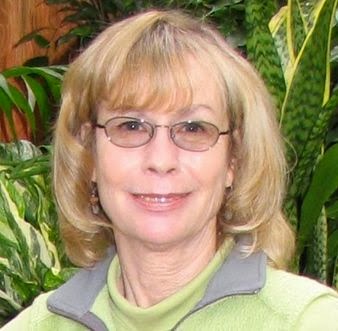
UC Farm Advisor Julie Newman

Retires after 28 years

By Pamela Kan-Rice, UC ANR
She helped growers and nurseries in Ventura and Santa Barbara counties solve pest and water problems

Julie Newman’s first exposure to Cooperative Extension occurred while pursuing her undergraduate degree in Seattle and working for Vista. “My position as community garden project coordinator for Vista’s University Year for Action Program gave me the opportunity to work with Cooperative Extension during the establishment of our nation’s first Master Gardener program,” Newman explained. “The work was exciting and it inspired me to pursue an extension career.”

UC Farm Advisor Julie Newman Retires
Newman, University of California Cooperative Extension advisor in Ventura and Santa Barbara counties, retired in July after 28 years of providing research and educational programs in environmental horticulture.

Newman completed her B.S. in botany at the University of Washington and then earned her M.S. in horticulture from Washington State University. After graduation, she taught ornamental horticulture classes at California State University, Chico and volunteered on UC Cooperative Extension projects in Glenn, Alameda and San Mateo counties. In 1985, Newman began her career as a UCCE advisor.

Early on, a focus of Newman’s research and extension program focused on integrated pest management, or IPM, for ornamental crops. She collaborated with other UC researchers to evaluate sampling strategies, monitoring methods, biological control and reduced-risk pesticides.

“We developed IPM demonstration sites in commercial nurseries and bilingual scouting training programs throughout the state,” Newman said. “We documented reductions in pesticide use in nurseries where IPM programs were implemented.” Scouting and the use of nonchemical approaches are now standard practices in the industry.

Later, Newman turned her attention to water quality issues and brought in over $4 million in grant funding. She worked with other UC Cooperative Extension advisors and specialists to develop water quality projects that assisted more than 200 growers, representing more than 21,000 farm acres draining into Ventura County watersheds. These research and extension activities resulted in substantial improvements in water use, irrigation efficiency, infiltration rates and reduced runoff from nurseries, farms and orchards.

“Water is a major issue for California growers,” said Fred Van Wingerden, president and CEO of Pyramid Flowers in Oxnard and advisory board member of the UC Hansen Agricultural Research and Extension Center. “Julie helped nursery growers in Ventura and Los Angeles counties to be proactive by establishing a cost-share program for improvements and providing on-farm assistance in implementing BMPs.”

One nursery that participated in Julie’s cost-share program was Plants Plus Growers Nursery in Somis.  “Julie helped me update the irrigation system and showed me how to do it right,” said José Acevo, owner and president of the nursery.  The grant funding enabled Acevo to install a system for capturing and recycling irrigation water.  Plants Plus states on its website that it now operates with zero runoff from irrigation and catches 100 percent of storm runoff for reuse.  

Newman expanded her understanding of water quality issues through a sabbatical study in Australia and New Zealand, which led her to work with researchers in other states on national water quality programs. She was the technical editor and an author of UC ANR’s “Greenhouse and Nursery Management Practices to Protect Water Quality,” which has been consulted by growers and researchers all over the world.

Newman was a leader in efforts to establish the UC Nursery and Floriculture Alliance (UCNFA). This program, associated with the UC ANR Floriculture and Nursery Workgroup, delivers workshops, hands-on demonstrations, field days and tours that benefit flower and nursery growers statewide. Many of the programs are presented in both English and Spanish. Newman has served as chair of the educational committee and co-editor of the newsletter.

“Julie’s coordinated efforts with UCNFA and our nursery association have been extremely valuable in providing programs and expert speakers that address key issues facing our industry,” said June Van Wingerden, president of the Santa Barbara County Flower and Nursery Growers Association and vice chair of the California Cut Flower Commission.

Over her career, Newman won numerous accolades. This included the Western Extension Directors’ Award of Excellence for team farm water quality project in 2008, California Association of Farm Advisors and Specialists Distinguished Service Award in 1994, Outstanding and Creative Academic Teamwork Award from ANR four times, and the prestigious Alex Laurie Award in 2007 for most outstanding team floriculture research paper. She also received two awards from the interior landscape industry for her pioneering work in the development of statewide educa­tional programs for interior landscapers and for establishing the California Interior Plantscape Association (now known as the Plantscape Industry Alliance). Most recently, she received the California Association of Nurseries and Garden Centers 2013 Research Award for her work benefitting the nursery industry. The award was presented at the California Nursery Conference in Etiwanda on Oct. 9.

“One of the most rewarding aspects of my career has been the opportunity to work as a team with other UC CE advisors and campus researchers to solve real industry problems and develop cutting-edge technologies,” Newman stated.

Barbara Allen-Diaz, UC vice president for Agriculture and Natural Resources, has granted Newman emeritus status. “I hope to continue to have positive impacts through my work as a Cooperative Extension advisor emeritus,” Newman said. She is currently working on the “Container Nursery Production and Business Management” manual as technical editor and an author. UC ANR plans to publish the manual next spring.

2016-05-31T19:44:18-07:00October 22nd, 2013|

Agriculture Teaching Agriculture

THE FARM DAY EXPERIENCE

Thursday, October 24, 2013

9:00 a.m. to 1:00 p.m.

Monterey County Fairgrounds

2004 Fairground Rd., Monterey

The agriculture industry of Monterey County is a world leader in food production, innovative techniques and progressive science. Monterey County Agriculture recognizes the importance of increasing the level of agricultural literacy in its own community.

Each year, the agriculture industry in Monterey County comes together to offer THE FARM DAY EXPERIENCE, nationally recognized as one of the leading agriculture education awareness programs in the nation. This hands on educational program is the largest event of its kind in the nation, as well as the longest running program. Every third grade class in Monterey County is invited to participate in this program that reaches 7,800 third graders and over 1,500 adults and teachers.

Monterey County Ag Education Inc. hosts three Farm Day’s per year in order to rech every student in the county. The first Farm Day Experience of the season will be held at the Monterey County Fairgrounds on October 24thand will be located at 2004 Fairground Rd., Monterey. County agriculturalists including; cattle ranchers, produce growers, nurserymen, wine grape growers, salad processors and industry support representatives, all unite to share their way of life with third grade students from throughout Monterey County to educate children about the origin of their food. Future Farm Day Experiences will take place in Salinas and King City.

Monterey County Ag Education Inc. (a non-profit organization) conducts The Farm Day Experience with the help of 700 volunteers from agriculture and the community. All costs associated with The Farm Day Experience are paid by Monterey County Agricultural Education, Inc., including bus transportation and teacher training. By funding the entire program, no class, school or district in Monterey County is left out because of budget concerns.

We are always in need of event volunteers. PLEASE LET US KNOW IF YOU WOULD LIKE TO HELP OUT WITH THE FARM DAY EXPERIENCE BY VOLUNTEERING YOUR TIME OR DONATING TO OUR ALL-VOLUNTEER ORGANIZATION AS WE CONTINUE TO EDUCATE MONTEREY COUNTY ABOUT AGRICULTURE

Please contact Candi Depauw (831) 905-3669 or visit our website at www.montereycountyageducation.org 

2016-05-31T19:44:18-07:00October 22nd, 2013|

APPLICATIONS DUE FOR TWO NCRS OPPORTUNITIES

NRCS Assistance for Catastrophic Fire Recovery, Conservation Planning

The USDA Natural Resources Conservation Service (NRCS) announced on Friday that applications will be accepted to assist private landowners of forestlands and rangelands in California affected by recent catastrophic wildfires in the last 18 months with immediate resource protection.


Applications for this initiative, funded by the Environmental Quality Incentives Program (EQIP) can be submitted for primary consideration and ranking through Nov. 15, 2013.


The Catastrophic Fire Recovery EQIP Initiative addresses prioritized concerns such as protecting immediate soil erosion, minimizing noxious and invasive plant proliferation, protecting water quality, fish and wildlife habitat, bringing back forests, and restoring livestock infrastructure necessary for grazing management.


Additionally, EQIP has continuous sign-up for the voluntary conservation planning and technical assistance program, and applications can be submitted throughout the year. An EQIP application received by Nov. 15, 2013, will be considered for FY 2014 funding, and applications received after Nov. 15, 2013, may be considered later in the year depending on funding availability.


Interested applicants are encouraged to request from a local NRCS field office to help with the development of a conservation plan.


In order to be considered eligible for EQIP, the applicant must have a vested interest in production agricultural or non-industrial private forestland and meet other program eligibility requirements.


EQIP, NRCS’s largest conservation program, helps eligible producers plan and implement conservation practices that address a wide range of natural resource concerns and provide opportunities to improve soil, water, plant, animal, air and related resources on agricultural land and non-industrial private forestland.


NRCS has provided leadership in a partnership effort to help America’s private landowners and managers conserve their soil, water and other natural resources since 1935.

2016-05-31T19:44:18-07:00October 22nd, 2013|

"Fight for Water" Film Wins Award in Fresno

New Screenings in Bakersfield, Pacific Grove

The award-winning documentary, “The Fight for Water: A Farm Worker Struggle”, was awarded another special award for Best Documentary, at the Viña de Oro Fresno International Film Festival  which was held October 16 – 19, 2013, at the Historic Tower Theatre in Fresno, California.  The film, which features a historic water march that spanned across the Westside of the California Central Valley to the San Luis Reservoir by farmers and their farm workers, screened October 19 as the closing film of the festival.


The documentary, which put a human face to the historic 2009 water crisis and the environmental decision that impacted a farm working community in the Westside of the California Central Valley, now moves on to Bakersfield, California, as the “Official Selection” at this year’s first ever Outside the Box Bakersfield Film Festival, which will be held November 8 – 10, 2013 at the Historic Fox Theatre.  The film will screen at 1:50 pm on Friday, November 9.


The film will also screen in Pacific Grove, California as the “Official Selection” at this year’s International Monarch Film Festival, which will be held December 11 and 12, 2013.


The film, which was also nominated for Excellence in Filmmaking and was Winner Runner Up for Best Documentary in Cinematography and Runner Up for Best Documentary Political Film at the Action on Film International Film Festival,  also screened internationally at the Kuala Lumpur Eco Film Festival, in Malaysia, and the Life Sciences Film Festival in the Czech Republic.


The film is truly an independent film.  Juan Carlos Oseguera, who wrote, produced, edited and directed the film, is not associated with the California Latino Water Coalition, which was the most prominent organization behind the 2009 Water March, nor did he receive any funding from any political organization to make the film.  This film is his sole vision and perspective.  He is an alumni of San Francisco State University who has been a published film critic and has won awards and recognitions in writing, producing and directing.

Hollywood actor Paul Rodriguez, who helped organize the water march in the style of Cesar Chavez, is featured in the film for his activism in this cause.  Major political figures from throughout the state, and community leaders representing the Fresno community, who stood in favor and against the water cause, also appear on the film.  Arnold Schwarzenegger also makes an appearance.


The documentary features two Latino farmers, Joe Del Bosque and George Delgado, who describe how federal water measures contributed to fields going dry in the West Side of the California Central Valley in 2009 while refuges that protect a threatened fish received all of the water designated for them.  This affected their community tremendously.  Because of that, the governor had to declare the affected area a disaster and provide government-run food assistance for over two-hundred thousand farm working people who were displaced from their jobs.


Oseguera, 39, who was raised in the California Central Valley by parents who were migrant farmworkers, understood the struggle they were facing and set out to document the their plight as a lesson to be learned and as a voice to be heard.  He wants viewers to understand the migrant farm workers and how they are a driving force to our economy.  Yet in his quest to understand this water situation, he uncovers class, racial and environmental intricacies behind water access and distribution in California, and the ripple effect it has on all of us. It is an eye opening documentary that everyone must see.


For additional information about the film, the film festivals screenings visit:


Questions about the film contact filmunition@yahoo.com or call (209) 675-2988.

2016-05-31T19:44:18-07:00October 21st, 2013|

Fresh Summit New Orleans

Fresh Summit Is Big

New Orleans is Great Host City

The produce industry from around the world is in New Orleans TODAY at the Produce Marketing Association’s (PMA) Fresh Summit 2013.

California Ag Today Editors are there as well to gather information for the blog.

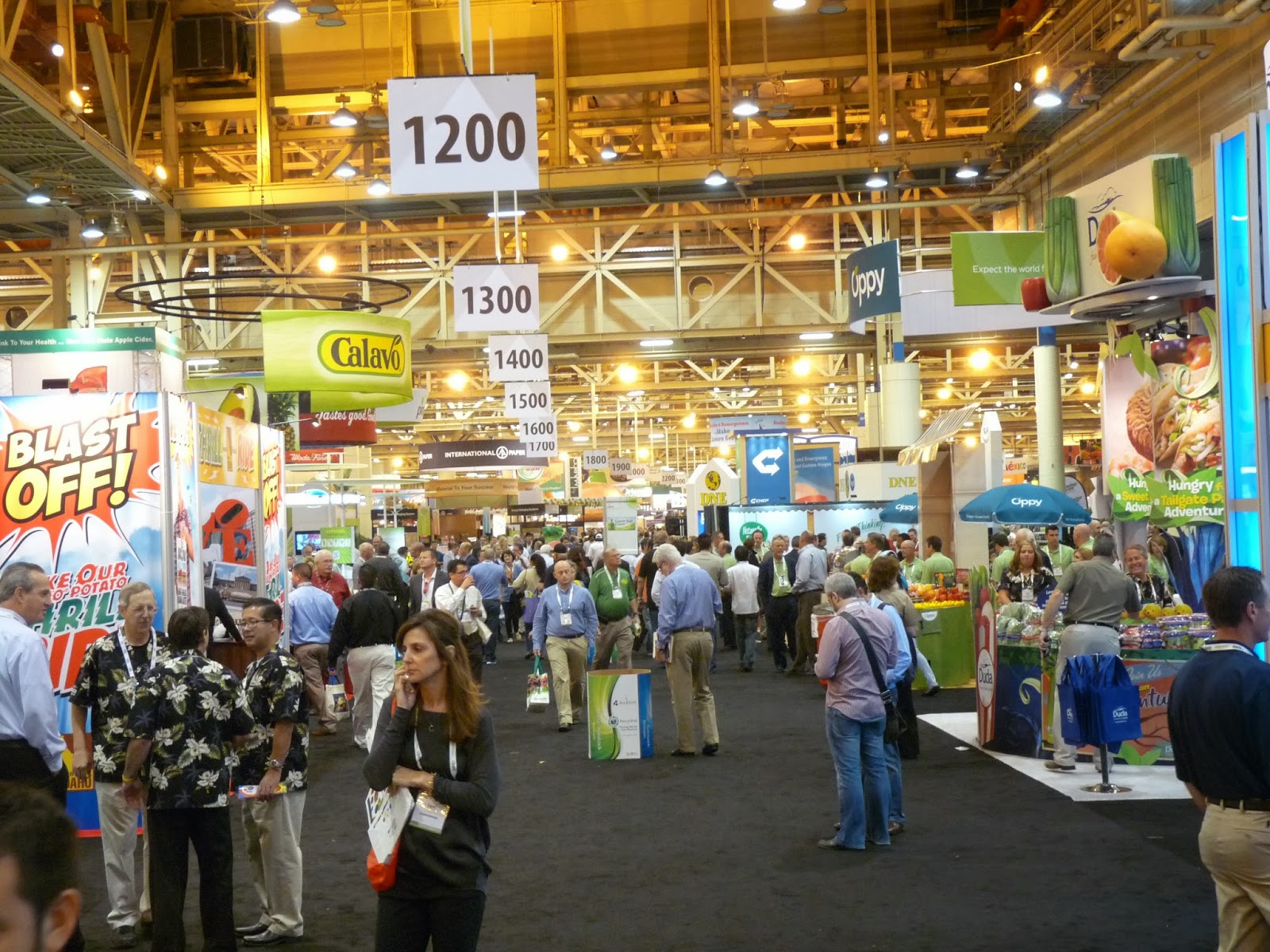
New innovations, produce safety, and workshops on creating fruit and veggie passion were just come of the popular seminars on Friday. Then Saturday came and the first day of the grand exhibit hall opened and about 5,000 people entered the doors to do business and meet produce suppliers from around the world.

Most of the U.S. companies there are from California. They include many nut suppliers such as Setton, Keenan, Nichols, and Mariani.  Raisin suppliers such as Sun Maid are hear as well as treefruit, vegetable and berry growers including Kingsburg Orchards, Parmamount Farms. Mann Packing, Bolthouse Farms, Apio, Gills Onions, J. Marchini Farms, Christopher Ranch, Driscolls, Well-Pict, D’Arrigo Brothers, Chiquita Brands, Naturipe, Grimmway Farms, Church Brothers, to name a few.

Crowds visit more than a 1000 exhibitors.

Additional California growers of dates, table grapes, pears, prunes, dried tomatoes, mushrooms and other commodities are all there to do business.

There were many international exhibits from many countries in South America, and Central America, along with Mexico, and Canada. Visitors and produce buyers were from all over the world.

Connections were made, deals were struck, friendships were strengthen, ideas were exchanged, and much knowledge was transferred. It’s all part of PMA’s Fresh Summit 2013 in New Orleans.

2016-05-31T19:44:19-07:00October 20th, 2013|

CONSERVATION PRACTICES ON CALIFORNIA FARMS

CDFA Database Highlights Growers’ Use Of Conservation Practices


As the clock ticks closer to Thanksgiving, it’s a popular time to recognize farmers for the fruits, vegetables, meats, grains and dairy products they produce throughout the year, according to the American Farmland Trust. However, it is also important for the public to understand the significant environmental benefits farmers also produce by using conservation practices on their land. These practices help protect water quality in streams and lakes, provide vital wildlife habitat, and contribute to the reduction of greenhouse gas emissions.


To highlight both the environmental and economic benefits of implementing these conservation practices on California farms, the California Department of Food and Agriculture (CDFA) recently compiled an interactive database of the many ecosystem services—defined by the CDFA Environmental Farming Act Science Advisory Panel as “the multiple benefits we gain from farming and ranching”—currently being produced by California farmers and ranchers.


The new database provides detailed information on nearly 400 farms implementing conservation practices across the state. The database can be sorted by keyword, county, crop type, and ecosystem services provided (such as pest control and nutrient management).


The database “is a fantastic tool for farmers looking for information on a variety of conservation practices,” explains American Farmland Trust’s Environmental Consultant, Steve Shaffer. “Examples of everything from efficient irrigation practices to building soil fertility are now at farmers’ fingertips with this database.”


In addition, American Farmland Trust is working in California to increase the adoption of Beneficial Management Practices (BMPs) that yield the ecosystem services profiled in the CDFA database. We work closely with CDFA, the USDA Natural Resource Conservation Service (NRCS), and farm and ranch organizations across the state to promote BMPs that meet the “triple bottom line” of farm profitability, environmental sustainability, and community responsibility.


American Farmland Trust’s recent work includes:
  • Ag Vision Stewardship Case Studies that compliment the CDFA database by providing a more in-depth look at the environmentally-beneficial agricultural practices being used by California family farmers and ranchers. 
  • BMP Challenge to adopt conservation practices on California farms through our yield guarantee program.
  • Published report with recommendations for increasing the use of improved irrigation and nutrient management practices among California’s many specialty crop farmers.
  • Conservation Practices Resource Guide for growers who want to learn more about NRCS conservation practices. 
Stewardship Index for Specialty Crops (SISC):  member. SISC released its first suite of working metrics that provides a system for measuring sustainable performance throughout the specialty crop supply chain, including farms growing fruits, nuts, and vegetable crops.


Source: American Farmland Trust

2016-05-31T19:44:19-07:00October 18th, 2013|
Go to Top