California Cattle Production

Cattle Ranching Critical to Environment, Even During Drought

By Karen Sweet,  a cattle rancher in Livermore, CA.

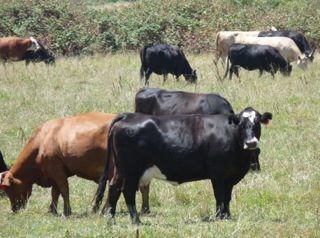
As reported by CDFA TODAY, It is human nature to come at a crisis from one’s own point of view. Sometimes, however, that can lead to conclusions and courses of action that are ineffective at best and drastically short-sighted at worst. With the drought and its impact on agriculture in the news, I am taking this opportunity as a beef cattle rancher to provide insight into California’s cattle production, its value to our environment and our state’s economy, and what ranchers are doing to conserve water not only during this severe drought, but all the time.

First, let’s start with the water usage numbers. A lot of erroneous statistics have been tossed around that aren’t based in cited evidence. In reality, it takes 441 gallons of water to produce one pound of boneless beef—a fraction of the amount of water that is used to produce everyday items such as one cotton T-shirt. That 441 gallons of water includes the water the animals drink daily, water used to irrigate pasture land and grow crops cattle are fed, and the water used in processing the beef.

Water conservation has long been a commitment of U.S. ranchers, and we have reduced the amount of water used to raise beef by 12 percent compared to 30 years ago. (Source: “The environmental impact of beef production in the United States: 1977 Compared with 2007,” J. L. Capper, Journal of Animal Science, 2011)

Secondly, cattle production has many positive aspects beyond providing food that benefit everyone. California ranchers—in fact, all ranchers—think about the environment daily. We understand that raising cattle requires careful use of resources with an eye toward both sustainability of the cattle operation and preservation of wildlife habitat.

Contrary to what you might have heard, ALL beef cattle spend the majority of their lives eating grass on pastures. About 85 percent of U.S. rangeland is unsuitable for crop production, but it is suitable for grazing and for complementary wildlife habitat. This is particularly true for California, a state with more diversity in our rangeland than any other in the country. Some 60 to 70 percent of California’s endangered species such as the California tiger salamander and the California red-legged frog live on privately-owned rangeland. This rangeland also plays a critical role in California’s water supply. According to the California Department of Conservation, while California’s rangeland is about 25 percent of all land in California, about 85 percent of California’s drinking water is collected and stored within these rangeland watersheds. Ranchers actively support on-going watershed research to help them improve their land stewardship practices and protect the water quality leaving their ranches.

In addition to the interconnectedness of rangelands, water, and wildlife, farmers and ranchers have a huge impact on our state’s economy. According to the California Department of Food and Agriculture, there are 80,500 farms and ranches in California and agriculture is a $44.7 billion dollar industry generating at least $100 billion in related economic activity.

Milk, cattle and calves are among the top five valued commodities for California agriculture. Most people don’t realize that across the United States, 97 percent of the cattle ranches are family-owned. These are individuals and families like mine that have been doing this work for generations, and who have been working to continually improve the sustainability of what they do. My grandchildren, for example are the seventh generation to live on the ranch in the East Bay.

California’s ranchers and farmers are caring for our animals during this stressful time, often at great financial risk to purchase hay and other carbohydrate feedstuffs like almond hulls. There is less rain water for the pastures, and some stock ponds and creeks have gone dry since there has not been rainwater runoff.

Ranchers are using our compromised water and forage sources carefully.  In too many cases some need to sell some or all of their livestock to others who have both sufficient feed and water to take care of the animals.

It hurts ranchers to lose their hard-earned enterprise and animal husbandry efforts for the year and, perhaps permanently. But it hurts even more when our neighbors regard us as perpetrators of the water problem and not a key component of California’s food supply and natural resources – affecting their own daily lives.


2016-05-31T19:38:50-07:00March 14th, 2014|

Dole Fresh Vegetables Announces Precautionary Recall of Limited Number of Salads

The U.S. Food and Drug Administration reported TODAY that Dole Fresh Vegetables, a subsidiary of Dole Food Company based in Monterey, California, voluntarily recalled a limited number of cases of bagged salad yesterday.

The products being recalled are Dole Italian Blend, Fresh Selections Italian Style Blend, Little Salad Bar Italian Salad and Marketside Italian Style Salad, with Use-by date of March 12, 2014 due to a possible health risk from Listeria monocytogenes. Dole Fresh Vegetables is coordinating closely with regulatory officials and has posted the recall on their website.dole_logo

No illnesses have been reported in association with the recall. This precautionary recall notification was issued based on one sample of Dole Italian salad that yielded a positive result for Listeria monocytogenes in a random sample test conducted by the Canadian Food Inspection Agency.

The salads were distributed in 15 U.S. states (Connecticut, Florida, Illinois, Indiana, Kentucky, Maryland, Massachusetts, Michigan, New Jersey, New York, North Carolina, Ohio, Pennsylvania, South Carolina, Virginia) and 3 Canadian provinces (New Brunswick, Ontario & Quebec).

William Goldfield, Director of Corporate Communications at Dole Fresh, said, “On the trace back, we’ve  been able to identify where the lots came from, the plant they were processed in, and that allows us to trace forward to the distribution points for these salad products.” Dole Fresh Vegetables customer service representatives are already contacting retailers and are in the process of confirming that the recalled product is being removed from the stream of commerce.

Dole employees

Although the products are one day past the Use-By date, it is highly unlikely that any product is still available at retail; however, retailers should check their inventories and store shelves to confirm that none of the product is mistakenly present or available for purchase by consumers or in warehouse inventories.

“Overall, we  have found that getting in front of an issue like this and identifying it head-on gets the best response from consumers,” commented Goldfield.  “The worst thing you can do, I think, is is to pretend that something like this isn’t occurring. We try to do our best to explain what’s happening to keep people informed.”

Listeria monocytogenes is an organism that can cause foodborne illness in a person who eats a food item contaminated with it. Symptoms of infection may include fever, muscle aches, and gastrointestinal symptoms such as nausea or diarrhea. The illness primarily impacts pregnant women and adults with weakened immune systems. Most healthy adults and children rarely become seriously ill.

No other salads are included in the recall. Only the specific Product Codes, UPC codes and March 12, 2014 Use-by date identified above are included in the recall. Consumers who have any remaining product with these Product Codes should not consume it, but rather discard it. Retailers and consumers with questions may call the Dole Food Company Consumer Response Center at (800) 356-3111, which is open 8:00 am to 3:00 pm (PT) Monday – Friday.

Founded in Hawaii in 1851, Dole Food Company, Inc., with 2010 revenues of $6.9 billion, is the world’s largest producer and marketer of high-quality fresh fruit and fresh vegetables. Dole markets a growing line of packaged and frozen foods, and is a produce industry leader in nutrition education and research. The Company does business in more than 90 countries and employs, on average, 36,000 full-time, regular employees and 23,000 full-time seasonal or temporary employees, worldwide.

2016-05-31T19:38:50-07:00March 14th, 2014|

Tragedy: Court Rules in Favor of Smelt Over Humans

Excerpted from: DAN LEVINE, Reuters*

Photo: Hypomesus transpacificus (Delta Smelt), Wikipedia

A California appeals court sided with environmentalists over growers TODAY and upheld federal guidelines that limit water diversions to protect Delta smelt, in a battle over how the state will cope with its worst drought in a century.

The 9th U.S. Circuit Court of Appeals ruled that a lower court should not have overturned recommendations that the state reduce exports of water from north to south California. The recommendations leave more water in the Sacramento Delta for the finger-sized fish and have been blamed for exacerbating the effects of drought on humans.9th circuit court of appeals

The 2008 report by the U.S. Fish and Wildlife Service, which concluded that the fish’s existence was threatened, recommended limited exports of water to farmers and southern California. Farmers and allies sued, and a lower court called the federal biological opinion “arbitrary and capricious.”

Reaction from both sides was swift in the national political issue. In a blog post, Damien Schiff, an attorney for growers, said the ruling “bodes ill for farmers, farm laborers and millions of other Californians dependent on a reliable water supply.”

Efforts to save the Delta smelt, which lives only in the wetlands stretching north of San Francisco, have been described as a human vs. fish battle.

Kate Poole, a senior attorney for the Natural Resources Defense Council, said growers’ hopes of taking more water out of the Delta wouldn’t solve California’s problems.

“It’s the drought, not the Delta, that’s affecting the water supply this year,” Poole said in a statement. “While we can’t make it rain, we can take charge of our water use by investing in smart water practices that protect and preserve our water supply.”

However, in TODAY’S opinion, 9th Circuit Judge Jay Bybee, an appointee of President George W. Bush, ruled that the lower court should have been more deferential to the Fish and Wildlife Service.

“We recognize the enormous practical implications of this decision,” Bybee wrote. “But the consequences were prescribed when Congress determined that ‘these species of fish, wildlife, and plants are of esthetic, ecological, educational, historical, recreational, and scientific value to the Nation and its people.'”

Paul Weiland, an attorney who represented Kern County Water Agency and a coalition of Central Valley water users in the case, said he hopes the ruling will clear the way for all sides to come together and make progress on the Bay Delta Conservation Plan.

The plan seeks to restore the Sacramento-San Joaquin Delta ecosystems and secure California water supplies into the future. A draft of the plan is currently open for public comment.

Progress of the plan could be delayed if one or more of the parties in the case ask the 9th U.S. Circuit Court of Appeals to rehear the case or ask for a Supreme Court review, Weiland said.

Thursday’s ruling could also pave the way for a ruling in another pending case regarding the water needs of wild salmon and steelhead trout in the state, which involves many of the same players. A February hearing on that case was postponed until after the Delta smelt decision was handed down.

*(Reporting by Dan Levine; Additional reporting by Rory Carroll; Editing by Stephen Powell, Peter Henderson and Richard Chang)

2017-09-03T00:01:45-07:00March 13th, 2014|

California Agriculture Provides Healthy Choices for World Kidney Day!

Today is World Kidney Day, and California agriculture provides most, if not all, of the typicality recommended foods for those with kidney disease. While one in ten adults living in the U.S. has kidney disease, most don’t know it because there are often no symptoms. Kidney disease challenges kidneys to remove protein waste and minerals. Kidney diets generally limited include protein, phosphorus, potassium and sodium.

Drink plain water without sodium, potassium or phosphate and home-brewed tea or homemade lemonade.

Protein – Choose fresh poultry and pork while avoiding products that contain sodium, phosphate and potassium additives. Choose egg whites and high omega-3 fish to get essential amino acids.

Vegies – Eat meatless or modest amounts of meat and make low-sodium homemade soup.World Kidney Day

Choose Dairy foods low in phosphorus, and consider the non-fat or lowfat versions such as butter and tub margarine, cream, Sherbet and strong-flavored natural cheese in limited amounts. Consider substituting saturated fats such as shortening, animal fats and hydrogenated margarine with healthy fats, such as olive oil and trans fat–free margarine.

Go Heavy on the Antioxidants – Powerful compounds called antioxidants found in certain foods may help protect you against kidney disease, cancer, heart disease, Alzheimer’s and Parkinson’s disease.

Eat antioxidant-rich apples, berries, cherries, peaches, pears, pineapple, plums, tangerines, watermelon, red grapes, cabbage, cauliflower, red leaf lettuce, garlic, onions and red bell peppers to help decrease chronic inflammation associated with kidney disease, cardiovascular disease and cancer. Avoid fruits that have high potassium levels.

Antioxidants neutralize harmful molecules in your body called free radicals, so they are good for your health. Use colors in fruits and vegetables to identify antioxidants, and eat a daily variety of colorful foods.

  • White/Green = Allyl sulphides, quercetin
  • Yellow/Green = Lutein, zeaxanthin
  • Green = Indoles, sulforaphanes, lutein
  • Red = Lycopene
  • Red/Purple = Anthocyanins, polyphenols, resveratrol
  • Orange = Beta-carotene
  • Orange/Yellow = Cryptoxanthin, flavonoids 

Add flavor to food with antioxidant-rich spices such as cinnamon, pepper, curry powder, turmeric and oregano.

2016-05-31T19:38:50-07:00March 13th, 2014|

Governor’s Office Creates Drought Toolkit

Source: Matt Williams in Water News

The Governor’s Office of Planning and Research (OPR) has created a new toolkit for local governments that provides guidance for coordinating on drought response and meeting the governor’s call for a 20% reduction in water use.

The document, available here, contains a list of regional contacts for the Office of Emergency Services, State Water Board and other water-related state agencies; templates for a proclamation declaring a local drought emergency or a resolution calling for voluntary water conservation; web links to drought information and resources for local governments; and water-related curricula for grades K-12.

CA

Gov. Jerry Brown’s administration is encouraging local governments to enact water use reduction plans at their facilities, share well data, pursue emergency drinking water grants if necessary, and update local ordinances to encourage water conservation.

The tools were designed with city and counties in mind, and are appropriate for use by water districts, officials said.

OPR has launched a Local Drought Clearinghouse to ensure local governments can quickly access the toolkit and other resources.

For more information, contact Debbie Davis, local drought liaison, at (916) 327-0068 or drought.clearinghouse@opr.ca.gov.

2016-05-31T19:38:50-07:00March 13th, 2014|

California Water Alliance: SWRCB Water

SUMMARY

California State Water Resources Control Board

Water Rights Prioritization Proposal

March 2014

SUMMARY

California State Water Resources Control Board (“SWRCB”), in response to a Temporary Urgency Change Petition filed by the CVP and SWP operators, issued an order that had the effect of undermining water rights and contracts, regardless of historic priority, under SWCRB control for “health & safety” purposes. The current proposal would cause State Water Project (SWP) and Central Valley Project (CVP) agricultural surface water deliveries to cease until 2015. Areas in need of “health & safety” water for the next year are undefined and not one evidentiary hearing has occurred.

Further, an official SWRCB decision was scheduled for March 12, 2014. A formal request for a delay of decision until March 21, 2014 was submitted by Senator Feinstein, Senator Boxer, Congressman Garamendi, and Congressman Costa on March 5, 2014. SWRCB’s response was received on March 10, 2014, but with no clarity as to when they will implement further orders or hold hearings.

STATE WATER RESOURCE CONTROL BOARD

The State Water Board’s mission is to preserve, enhance and restore the quality of California’s water resources, and ensure their proper allocation and efficient use for the benefit of present and future generations. The State Water Resources Control Board (SWRCB) and the nine Regional Water Quality Control Boards (Regional Boards) protect water quality and administers surface water rights.

  • Felecia Marcus; Chair – Appointed in May 2012 by Gov. Jerry Brown
  • Frances Spivy-Weber; Vice-Chair – Reappointed in March 2013 by Gov. Jerry Brown
  • Steven Moore; Member – Appointed in May 2012 by Gov. Jerry Brown
  • Tam M. Doduc; Member – Reappointed in March 2013 by Gov. Jerry Brown
  • Dorene D’Adamo; Member – Appointed in March 2013 by Gov. Jerry Brown
  • Tom Howard; Executive Director – Appointed in August 2010 by Gov. Arnold SchwarzeneggerNo Water Logo


AREA of IMPACT

  • Area of impact includes 3,750,000 irrigated acres.
  • State Water Project Service Area includes Greater Los Angeles Area, Greater San Diego Area, Greater San Francisco Area, Santa Clara Valley, Inland Empire, Central Coast, Sacramento Valley, and San Joaquin Valley.
  • Central Valley Project Service Area spans 400 miles from the Cascade Mountains near Redding to the Tehachapi Mountains near Los Angeles. CVP manages 9 million acre feet of water for California cities, businesses, farms, and wildlife refuges. Including 1 million households daily water needs, 1/3 California’s farmland, 11 power generating facilities, and over 420,000 acres of fish & wildlife refuge annually.
  • Impacted Counties: Contra Costa, San Joaquin, Fresno, Kern, Kings, San Joaquin, Merced, Madera, Stanislaus, Alameda, Santa Clara, Tulare, Shasta, Trinity, Tehama, Colusa, Butte, Glenn, Sutter, Yuba, Yolo, Sacramento, Mariposa.


PROJECTED ECONOMIC IMPACTS

  • 40-80% unemployment in impacted SWP & CVP service areas.
  • 700,000-800,000 acres of farmland fallowed. Equivalent of 1,100 square miles or the Greater Los Angeles & San Diego areas combined.
  • Estimated $2.5 billion direct loss to California farm economy.
  • Estimated additional $5 billion loss to state economy from reduced related economic activity. Related industries include, but are not limited to, processing, transportation, wholesale, retail, cargo shipping via ports of Oakland, Stockton, Los Angeles, & Long Beach.
  • Increased consumer level food and milk prices estimated at $10 – $15 per trip to the market, and 10% – 15% increase in fruit, vegetables, beef and poultry prices in the short-term.
  • Increased utility costs, including energy & water. Projections based on 2007-2009 drought data where consumers paid $1.7 billion more in energy bills.


ECOLOGICAL IMPACT

  • Habitat for migratory waterfowl and shorebirds will be reduced by up to 550,000 acres.
  • Water for refuges are expected to be reduced or eliminated impacting up to 230 species of wildlife.
  • Depleted aquifers due to over reliance on groundwater, and inability to annually recharge aquifers with surface water.


LEGAL IMPACT

  • Water rights within impacted SWP & CVP service areas, including historic pre-1914, are being undermined, fundamentally changing California state law.
  • Reassessment of all property values with effected water rights, changing all tax assessment & revenues in all impacted counties.  Estimated reduction of property values, on average, by approximately 50%.


SOURCES

http://www.news10.net/story/news/local/california/2014/02/22/drought-will-impact-food-prices/5723079/

http://www.nbcnews.com/video/nightly-news/54502245#54502245

http://www.huffingtonpost.com/peter-h-gleick/the-costs-of-californias_b_4747043.html

http://m.westernfarmpress.com/markets/average-california-farm-real-estate-value-7200-acre


2016-05-31T19:38:51-07:00March 12th, 2014|

Milk Price Changes for April 2014

The minimum price of milk is the price that dairy processors must pay for milk used to produce dairy products.

National commodity prices, primarily Grade AA butter, cheddar cheese, nonfat dry milk, and dry whey are significant factors in determining the minimum milk price.

Compared to last month, the national commodity prices for western dry whey and nonfat dry milk increased, while cheddar cheese and Grade AA butter decreased.

CDFA reports:

  • whole milk decreased four and three tenths cents per gallon
  • reduced fat milk decreased four and six tenths cents per gallon
  • lowfat milk decreased four and nine tenths cents per gallon
  • skim milk decreased four and one tenth of a cent per gallon

The Dairy Marketing and Milk Pooling Branches are involved with the economic and fiscal regulation and oversight of the dairy industry.

Activities and responsibilities of the Dairy Marketing Branch include oversight of the production and marketing of milk and dairy products which includes the regulation of minimum milk farm prices and dairy trade practices in the marketplace.

Activities and responsibilities of the Milk Pooling Branch include the administration of the Milk Pooling Act which provides standards for distributing monthly statewide market milk revenues to all California dairy producers.

The Branch also administers the Milk Producers Security Trust Fund which provides a resolution for defaulted payments to dairy farmers from milk buyers.

2016-05-31T19:38:51-07:00March 10th, 2014|

Protecting Farmland in the Coyote Valley

Excerpted with permission from Sustainable Agriculture Education (SAGE).

Five years ago, the Coyote Valley, one of the last large swaths of agricultural land in the region, seemed destined to be plowed under and paved over for more housing.

Today, there is a viable option to choose a very different future for the Valley that would include protected open space, public trails and recreation, and expanded farming to serve demand for locally grown vegetables, fruits, and ethnic specialty produce.

This alternative vision emerges from a partnership between the Santa Clara Open Space Authority and the nonprofit organization Sustainable Agriculture Education (SAGE).

The proposal could save significant portions of the 7,500-acre Valley from development and foster increased agricultural viability for current farmers as well as a new generation of farmers growing high-demand and high-value crops.

The Authority approved a management plan for the Coyote Valley Open Space Preserve earlier this year for resource conservation and stewardship, and development of multi-use trails and other recreation amenities.

The partnership with SAGE to promote local-serving agriculture that also enhances conservation of natural resources on nearby Valley parcels was a natural fit.

SAGE develops urban edge Agricultural Parks and agricultural resource areas, in the Greater Bay Area and beyond, that support local food systems.

SAGE applied for and in September, won a State Dept. of Food and Agriculture grant for $252,000 to help revitalize diversified specialty crop agriculture in the Coyote Valley.

“The Open Space Authority is excited to work with SAGE to help revitalize the rich agricultural heritage of the Coyote Valley and contribute to local community health,” said Authority General Manager Andrea Mackenzie. “The Coyote Valley helps maintain the region’s clean air and fresh drinking water, offers families great outdoor recreation opportunities, and, through this partnership, will support local production of healthy crops such as fruits and vegetables for local consumption.

During the first three years, the Authority and SAGE will work to leverage the grant funding to raise more public and philanthropic funding to be invested in farmland protection and a new type of diversified, sustainable agriculture in the Coyote Valley.

2016-05-31T19:38:51-07:00March 10th, 2014|

Ag Council Annual Meeting

Ag Council Meet  “Sow Seeds of Success” At 95th Annual Meeting


Stormy weather was a welcome travel inconvenience for the more than 160 cooperative leaders and farmer members who made their way to Huntington Beach, Calif. this past week for the 95th Annual Meeting of the Agricultural Council of California (Ag Council) that was held in conjunction with CoBank’s Pacific West Customer meeting.

“Financially the Ag Council has never been stronger,” said Rich Hudgins, 2014 chair of Ag Council and president and CEO of the California Canning Peach Association. “2013 has been a very good year for our organization with a dramatic increase in our membership base. In the words of Henry Ford, ‘Coming together is a beginning; keeping together is progress; and working together is success.’ Farmer-owned cooperatives are the perfect example of the power of working together toward a common goal.”

California’s historic drought was a key topic during the Ag Council Annual Meeting, and was a primary focus of the organization’s advocacy work during the past year, according to Ag Council President Emily Rooney in remarks she made during her annual address.

“Given the state’s water crisis and the many pending regulations surrounding ground water, the top issues facing our membership heading into the coming year are related to water—both quality and quantity,” she said during her annual address. “Proposed increases in several fees associated with water use have the potential to be very challenging to our members’ food production businesses.”

In addition to water, Rooney also said that recent surveys conducted by Ag Council ranked air quality, cap and trade, and labor regulations as challenges that will figure prominently in the group’s advocacy efforts in 2014.

Ag Council represents more than 15,000 California farmers who are affiliated with the organization’s 33 coop and agricultural industry association members. Allied members of Ag Council represent a diverse array of businesses and associations that support the state’s $44.7 billion agricultural industry.

California’s historic drought has meant that Ag Council is also focusing a significant amount of its legislative efforts on water issues, said Tricia Geringer, vice president of Ag Council while addressing members during the group’s Delegate Body Meeting.

“The only silver lining to the fact that we are facing the driest year on record since the state first began keeping track in 1885, is that water shortages are touching every California resident personally,” said Geringer. “That means, as in the words of Governor Jerry Brown during his remarks to our members at the World Ag Expo in February, ‘the drought seems to have been a wake-up call to people regarding how critical water is to our state’s prosperity.’”

“Nearly one-third of legislators were freshman members in 2013, so our work in familiarizing law makers with the agricultural industry and its importance in California’s economy is a constant priority,” added Geringer.

More information about Ag Council’s advocacy efforts can be found in the 2013 Impact Report, which the organization released during the 95th Annual Meeting. The full report can be accessed at the Ag Council web site (www.agcouncil.org).

The Ag Council Annual Dinner on March 2, featured keynote speaker Senator George Runner (Ret.), and current member of the State Board of Equalization. “This is a tough state to do business in,” said Runner during his remarks. “You are overtaxed and overregulated, so I have a great deal of gratitude for those of you who establish a business and stay in California.” Runner discussed his efforts in tax reform and his interest in seeing California taxpayers receive a fair benefit for the taxes they pay.


2016-05-31T19:38:51-07:00March 8th, 2014|

Scholarships Available for the 2014 – 2015 School Year

Source: The Fresno County Farm Bureau 

Proteus offers academic scholarships

Proteus is now accepting applications for its Standard and William Maguy Scholarships for the 2014-15 academic year.

The $500 Standard Scholarship is open to full-time college students or those planning to enroll as full-time students for the 2014-2015 school year, who are low-income status, farmworkers, dependent of a farmworker, or who have been served by a Proteus program in the past two years.

This scholarship program targets new or continuing students enrolled in two or four-year colleges, or accredited post -secondary institute.

The $1,000 William Maguy Scholarship is open to full-time students who have completed at least two years at a university or community college.

This scholarship will be given to a person who exemplifies the larger-than-life quality of Proteus’s former CEO, William Maguy, who focused on empowering and serving people.

Those interested in applying should have a GPA of 3.0 or higher and demonstrate their community involvement in organizations that serve others.

All applicants’ primary residence must be in, Kern, Kings, Fresno, or Tulare counties.  The deadline to apply for the Standard Scholarship is April 2, 2014, and the deadline to apply for the William M. Maguy Scholarship is April 30, 2014.

For more information, or to download the application at http://www.proteusinc.org/.


Charles P. Lake Rain for Rent Scholarship now available

Twenty scholarships in the amount of $1,500 will be awarded to students to help them pursue a career in agriculture, engineering or construction management.

Applications will be accepted through Friday, April 18, and must be submitted to the Fresno County Farm Bureau, 1274 W. Hedges Ave., Fresno, 93728. To read/print the Charles P. Lake/Rain for Rent Scholarship Brochure, please visit, www.rainforrent.com/company/scholarship.aspx.

Scholarship applicants must have completed their freshman year at an approved college/university and must be currently enrolled for the next school year.

Junior college students who are registered as sophomores and fall within the requirements may apply.

To obtain a scholarship application, please contact Katie Rodgers at 559-237-0263 or info@fcfb.org.


Farm Grown scholarships available for 2014 high school graduates

The Gar and Esther Tootelian Charitable Foundation Farm Grown scholarship applications are now available for graduating high school seniors.

The successful candidate will be awarded $1,000 each year and an honorable mention finalist will receive $500.

Candidates must be high school seniors graduating in 2014 who will pursue a degree in an agriculturally-related field.

Applicants must be in good standing and go to school in Fresno, Tulare, Kings, Merced, Madera, Mariposa or Kern counties.

For more information and to apply, click here.  The deadline to apply is April 1.


Friends of the California State Fair Scholarship available

The Friends of the California State Fair Scholarship Program awards California’s most promising students with scholarships ranging from $500 to $5,000.

This year, they will award more than $34,000 in scholarships to deserving California students.

College students and graduating high school seniors who exhibit academic excellence, leadership potential, civic engagement and a strong sense of personal commitment to continuing education are eligible to apply.

The deadline is March 7. For more information, or to apply, visit www.bigfun.org.


Central Valley Chapter California Women for Agriculture Scholarship available

The Central Valley CWA is pleased to announce the call for 2014 scholarship applications.

Scholarships are offered to high school and college students studying for careers in agriculture-related fields.

The applications must be received by mail on or before March 28, 2014.  No hand-deliveries or email applications will be accepted.

For more information, or to download the application, click here.


San Joaquin Valley Quilters’ Guild Scholarships available

The San Joaquin Valley Quilters’ Guild is pleased to offer one $500 scholarships to students interested in fiber related arts.

Qualified applicants include those focusing on fiber as an art medium or those with skills in costume or clothing design or textiles and textile conservation.

High school seniors and college students may apply.

Preference will be given to students enrolled at least halftime in a Fresno County college or university.

Application, two recommendations and a photo of the applicant must be postmarked by April 1 to receive consideration for this year’s scholarship.

Email the 4-H program coordinator at evillalobos@ucanr.edu for a scanned copy of the application.


Fresno-Kings County Cattlewomen’s Association Scholarship available

The Fresno-Kings County Cattlewomen’s (FKCCW) Association is offering a scholarship.

Applications and information are available online at http://www.fkccw.com/.


4-H Scholarships available

There are a number of scholarships available to 4-H members and alumni.

Visit http://ucanr.org/scholarships for more information about Fresno County 4-H, California 4-H or other scholarships.

2016-05-31T19:38:51-07:00March 7th, 2014|
Go to Top